Book Review: Exit Stage Left (The Curious Afterlife Of Pop Stars) by Nick Duerden

The story goes that The Human League’s Phil Oakey smashed the phone to pieces immediately after hearing from his manager that ‘Don’t You Want Me’ had gone to number one in America.

There was a creeping suspicion that he had peaked too early, and the only way was down.

Maybe it was a natural reaction in those competitive, cut-throat pop years of the early 1980s, but little did he know that that song would probably come in very handy over the years and pay for kids’ school fees, parents’ homes, tax bills, etc etc.

Nick Duerden’s gripping, important new book ‘Exit Stage Left’ doesn’t interview Oakey but does many others from the pop pantheon who have had some early success and then swiftly asked ‘Is that all there is?’ after a career downturn or ‘change of musical direction’.

Duerden has a formidable contacts book and gets candid quotes from some surprisingly big names. Shaun Ryder tells of having to pay back huge debts after being hit with a legal bill in 1998. Robbie Williams discusses his surprisingly lonely, low-key bachelor life when moving to Los Angeles after becoming the UK’s biggest pop star.

Suzanne Vega relates the shame of having to ‘downsize’ her band and crew mid-tour when audiences failed to fill large enues and The Boo Radleys’ Martin Carr discusses saying no to licensing requests for ‘Wake Up Boo’, trying to hold onto his punk credentials, but then ‘teaching himself to say yes’. Ex-Frankie Goes To Hollywood guitarist Brian ‘Nasher’ Nash talks about his PTSD diagnosis (as do a few other artists).

Elsewhere there are fascinating interviews with Lloyd Cole, Natalie Merchant, Roisin Murphy and Wendy James on the relative benefits of success and the words of Kevin Rowland, Musical Youth’s Dennis Seaton and Ed Tudor-Pole are touching and somewhat humbling.

Duerden writes with compassion and has a winning way of summing up his interviewees’ physical essences – Stereo MC’s Rob Birch ‘never rose to his full height but rather hovered in a perpetual half crouch, as if his bones were made from elastic bands.’ Billy Bragg ‘looked like he would sunburn easily and so was best kept far from exotic beaches.’

‘Exit Stage Left’ is a sobering read and will ring true to anyone who’s ever been stung by the business, or had their dream job whipped from beneath them. Thanks to Duerden’s witty, fast-moving style, it’s pithy and powerful but never too depressing.

The book also touches on areas generally not touched with a ten-foot (Tudor) pole by the music biz – mental illness, poverty, shame, family estrangement, divorce, burnout. Like any other industry, the music biz sure has its casualties. And if the more discerning, slightly cynical reader may at points be shouting: ‘Why don’t you just go and get a NORMAL job?’ – well, a surprising amount of the interviewees did just that.

Along with Simon Garfield’s ‘Expensive Habits’, Eamonn Forde’s ‘The Final Days Of EMI’ and Seymour Stein’s ‘Siren Song’, ‘Exit Stage Left’ is one of the most illuminating books this correspondent has read about the music industry – how it really operates. As Duerden says, ‘Successful businesses tend to be the most ruthless, and the music business is very successful indeed.’ Don’t miss.

Duerden talks about ‘Exit Stage Left’ in this recent WORD podcast.

Alex Higgins wins the World Snooker Championship: 40 Years Ago Today

Alex ‘Hurricane’ Higgins’ semi-final against Jimmy White had really been my gateway match in terms of getting into snooker, but the World Championship final of 15/16 May 1982 sealed the deal, as it did for millions of young people around Britain.

40 years ago today, Higgins won his second championship, beating Ray Reardon (a six-time winner who had never lost in a final) 18-15 in a classic match. The Hurricane’s frame-winning break of 135 and his raw emotion will live long in the memory.

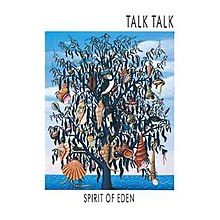
11 May 1987: Talk Talk commence recording Spirit Of Eden

35 years ago today, Mark Hollis (guitar, keyboards, vocals), Tim Friese-Green (keyboards, production), Lee Harris (drums), Paul Webb (bass) and engineer Phill Brown convened at London’s Wessex Studios (don’t look for it – it’s not there any more) to begin work on the Talk Talk album Spirit Of Eden.

During May, June and July 1987, this core unit worked five-day weeks from 11am until midnight, in near darkness apart from an oil projector, a gentle strobe lighting effect and three Anglepoise lamps.

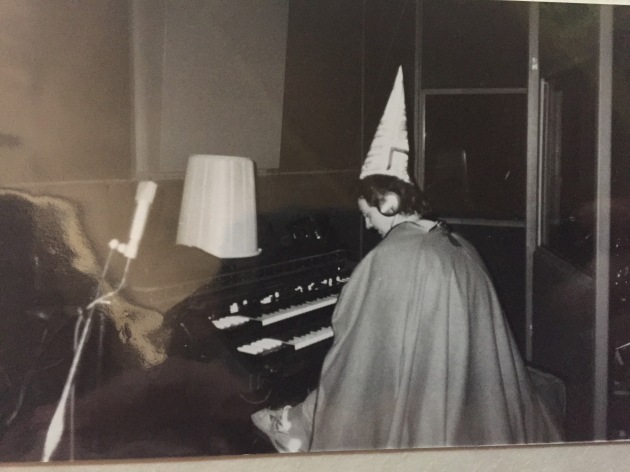
Tim Friese-Green on the Hammond organ, Wessex Studios

Basic tracks laid down, they took a break. On 19 October 1987, work resumed with instrumental overdubs; first woodwinds, then a coterie of world-class musicians including David Rhodes, Bernie Holland and Larry Klein, whose contributions would end up on the cutting-room floor. But those whose performances did make the cut include Nigel Kennedy, Danny Thompson, Robbie McIntosh, Martin Ditcham and Henry Lowther.

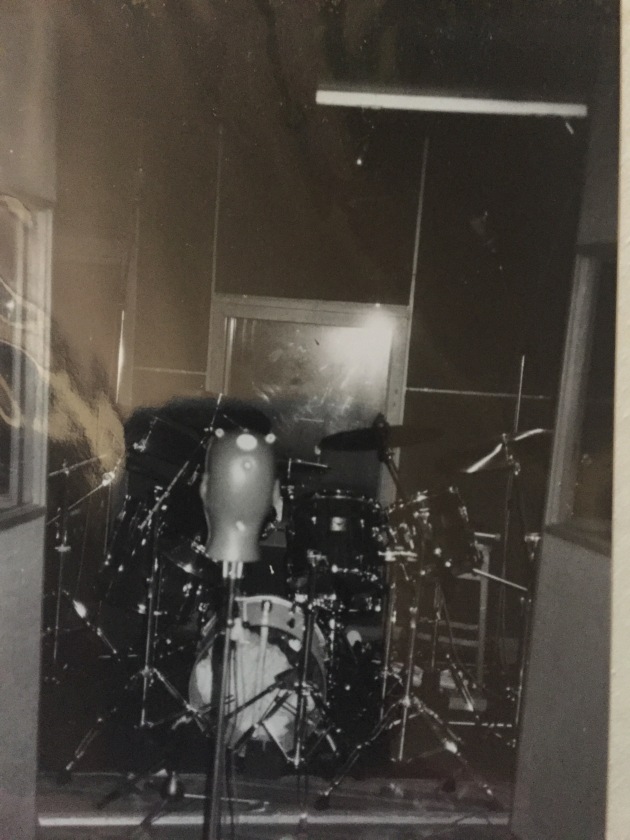
Lee Harris’s drum booth, Wessex Studios

Almost a year in the making, Spirit Of Eden was finally released on 12 September 1988 (after a long delay while EMI panicked – it was actually completed on 11 March 1988) and remains one of the most influential, least-dated ‘rock’ albums of the 1980s.

Thanks to Phill Brown for use of his photos.

‘Mark Hollis: A Perfect Silence’ is published by Ben Wardle.

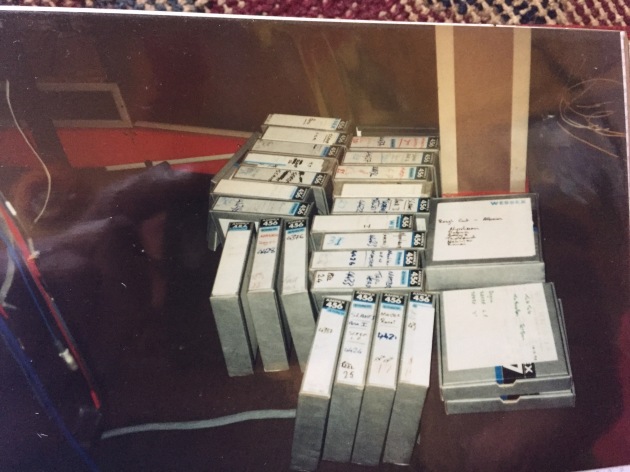
The ‘Spirit Of Eden’ master tapes

Guest post: Gary Grimaldi reviews my new album for Bandcamp Friday

Hey guys, Gary Grimaldi here, eminent music scribe, checking in from The Big Apple.

I’m here to hip you mothers to a new release from this mattjoplin kid. You know, that London guy who writes/plays everything himself and records in his local ‘park’?

Well, the douchebag calls me the other week – sounded like he was ringing from the eye of a hurricane actually – and shouts something about a new album. Melody Attack – that’s the title, that’s what he’s called it. Tell me more, I spake unto him. No answer was forthcoming. Dead air, man.

What a lowlife, Limey a**hole.

Whatever. The files arrive in my inbox next day. I check them out. I can’t deny it – the sonofabitch has done it again. He’s got a whole bunch of mess on there – rockabilly, psych, jazz/fusion, acoustic/’sensitive’ crap, spoken word, ambient/soundtrack/whatever.

It’s a trip, man. A journey through space and time.

So. Help a bro. Get hold of Melody Attack here. And you can find his first album Dream Avenue here. And it’s Bandcamp Friday today, so the artists get all the profits, not the suits. Cool beans.

Anyways. That’s it from me. I gotta get down to the Vanguard to catch Archie Shepp’s late set. Keep it greasy, babies, and see you further down the trail.

From the desk of Gary Grimaldi
Head of Popular Musics
The Village View
NYC
May 6, 2022

Gig Review: Mark Stewart & The Maffia/Tackhead @ The Forum, 30 April 2022

This was a twice-rescheduled London gig, initially designed to celebrate the 40th anniversary of On-U Sound Records.

And what a line-up was brought together to celebrate mixmaster general (and birthday boy) Adrian Sherwood’s iconic dub/funk/post-punk/industrial indie label (motto: ‘disturbing the comfortable, comforting the disturbed’): Creation Rebel, African Head Charge, Tackhead and Mark Stewart & The Maffia.

And what a pleasure to hear this music in a big hall, in front of a near-sell-out crowd. There were no half-measures here – this was an ageless performance from all the artists, and, refreshingly, also bone-crunchingly loud. Club gigs are all well and good but sometimes you need to hear this stuff in full effect.

Augmented by a striking set of projected visuals, taking in everything from Malcolm X to 1980s CND marches (On-U always championed agents of protest), Creation Rebel and Head Charge fused slow dubs and occasional bursts of metal guitar.

But the real draw was the return of Tackhead, their first London date for 14 years, and they didn’t disappoint – drummer Keith LeBlanc always swings even when tied to drum machines and loops, playing with dynamics and a killer right foot.

If there’s a greater contemporary rhythm section than him, bassist Doug Wimbish and guitarist Skip McDonald, I haven’t heard it – and these guys are not young any more. Joined by sermonising vocalist Bernard Fowler, they unleashed tracks taken mainly from their 1989 Friendly As A Hand Grenade album, excellent versions of ‘Stealing’, ‘Tell Me The Hurt’, ‘Mind At The End Of The Tether’, ‘Ticking Time Bomb’, and a brilliant take on ‘White Lines (Don’t Do It)’.

Mark Stewart, skulking around at the back of the stage for most of the Tackhead set, then took the mic, seriously pissed off with the state of the world – and who can blame him? He laid into ‘Hysteria’, ‘Liberty City’, ‘Passcivecation Program’ and ‘Resistance Of The Cell’ with the intensity of a man who knows everything he predicted 40 years ago has come to pass, but also found time to lead the crowd in a verse of ‘Happy Birthday’ for Sherwood.

Then, gig over and job done, Stewart was soon spotted in the stalls, chinwagging with fellow travellers. As he once said, the On-U audience is just as interesting as those on stage. Great gig.

The Cult Movie Club: Lenny Henry Live And Unleashed (1989)

In her book ‘Hooked’, legendary movie critic Pauline Kael said that the only fresh element in American films of the 1980s may have been what comedians (Robin Williams, Steve Martin, Bill Murray et al) brought to them.

Could we say the same about British films of the 1980s? Looking at ‘Supergrass’, ‘Eat The Rich’, ‘Morons From Outer Space’ and, er, Cannon & Ball’s ‘The Boys In Blue’, it would seem not. A shame, and strange in a way that the ‘Comic Strip’ generation couldn’t quite make the transition to the big screen.

But Lenny Henry – best known as a British TV star in the 1980s – made a damn good fist at the stand-up concert movie with ‘Lenny: Live And Unleashed’, mostly shot at London’s Hackney Empire, taking on the Americans (Eddie Murphy’s ‘Raw’, Richard Pryor’s ‘Live On The Sunset Strip’ etc.) at their own game, complete with a posh credit sequence featuring brilliant impressions of Martin, Murphy and Pryor plus a not-very-funny skit with Robbie Coltrane as the most annoying taxi driver in the world (Why didn’t Lenny fit in another impression there? Couldn’t he have dusted off a De Niro?).

His flashes of surrealism evoke Alexei Sayle and Martin and also it’s clear that by 1989 Lenny had developed into a superb physical actor. He addresses political and racial topics head-on, beginning one skit with the simple statement: ‘We need to see more Black faces on British TV.’

There’s a great celebration of Black music (evidenced also in his appearance on the BBC’s Desert Island Discs just before this was filmed) with homages to Prince and Bobby McFerrin, a good bit on Michael Jackson’s ‘Bad’ tour, and the striking ‘Fred Dread’ section featuring Dennis Bovell’s natty dub soundtrack.

Other character favourites Delbert Wilkins, Deakus and the Teddy Pendergrass-lampooning Theophilus P Wildebeeste (you couldn’t do that sketch these days…) get a lot of stage time – superb portraits, with heart and soul. A new character, ageing blues singer Hound Dog Smith, gets a workout too, featuring an amusing guest spot from Jeff Beck (who also turned up in a few Comic Strip films around this time).

The box-office performance of ‘Lenny: Live And Unleashed’ is hard to uncover but does it have enough appeal to a non-British audience? Judge for yourself (and I must check out Henry’s next foray into the movie world, 1991’s ‘True Identity’, at some point…)…

McCoy Tyner/Freddie Hubbard Quartet: Live At Fabrik

These two giants of their instruments – Tyner on piano, Hubbard on trumpet/flugelhorn – crossed paths many times in the 1960s, particularly on three of the latter’s most famous Blue Note albums. (Tyner of course is probably best known for his work with the fabled John Coltrane Quartet.)

So it was only natural that they should co-headline a powerful touring quartet in the mid-1980s. And now we can hear it in all its glory courtesy of this 2-CD/streaming package, a complete radio broadcast from an 18 June 1986 gig in Hamburg, Germany.

And it’s a classic – full of cogent lines, attractive melodies, power and poise, here’s an album to play to people who say they hate jazz. And tell ‘em we sent you.

It may even be the most impactful live ‘jazz’ album this correspondent has heard since 1977’s epochal VSOP The Quintet (which also featured Hubbard, alongside Herbie Hancock, Tony Williams, Wayne Shorter and Ron Carter).

It’s a very ‘hot’ concert recording, with a lot of presence and ‘room’. You can hear everything, including members of the band frequently urging each other on. It helps that the crowd is so respectful – silent when the band take things down, loud when things get intense.

The quartet were apparently unaccountably late onto the stage that night, Hubbard apologising after the first tune – irritatingly not explained in the liner notes. But the tardiness might help explain the players’ agitated impatience which definitely serves the music. ‘Inner Glimpse’ features a remarkable Hubbard tour de force of rhythmic intensity and characteristically wide intervals. The audience, appropriately, go mad.

On Tyner’s majestic ‘Latino Suite’, Avery Sharpe treats his acoustic bass like an electric, slapping it, popping it and even playing power chords, Stanley Clarke-style. ‘Body And Soul’ kicks off with a striking, unaccompanied, two-minute Hubbard flugelhorn statement. Then, after what sounds like an edit, there’s a further eight-minute solo – it’s edge-of-the-seat stuff. He was really cutting loose from the mostly pretty staid studio albums made for Blue Note during this period. Drummer Louis Hayes accompanies with a lot of fire, channelling both Billy Cobham and Tony Williams but with an original soloing style.

Only one minor gripe: a few tracks are too long, an obvious/excusable liability when an entire gig is documented. But what a specimen. And what a shame that these two giants of the music are gone, and also that such intense live jazz albums are so few and far between.

Conspiracy Theories Of 1980s Music

Bob Carolgees and friend

‘Conspiracy theories’: you can’t move for ’em these days, and things aren’t much different here at movingtheriver.com.

The 1980s: a decade when uncredited ‘guest’ performances were many, Emulators and Fairlights ‘appropriated’ the sounds of acoustic instruments, producers demanded rip-offs of other musicians (a popular drummer joke* of the 1980s, with many variations: how many drummers does it take to change a lightbulb? Ten. One to change the bulb, nine to talk about how Steve Gadd would have done it…), hits came with writs and things were never quite what they seemed.

So it’s not surprising that conspiracy theories flourished during the 1980s. Here are some good ones. Bullsh*t or not? YOU decide. Maybe none are as famous as the ‘Paul Is Dead’ saga, but wtf…

8. Kirsty MacColl sings backup vocals on Dire Straits’ ‘Walk Of Life’
Uncredited of course, but these pre-chorus stacks, first heard at 1:19, sound very much like the much-missed vocalist.

7. Donna Summer performed all of Irene Cara’s vocals
Come on, they are interchangeable. Apologies to anyone in Cara’s family or Cara herself but she sounds freakily like Summer on ‘Fame’ and ‘Flashdance (What A Feeling)’.

6. George Michael wrote ‘Round And Round’ for Jaki Graham
In exchange for what? The classic single is just so in George’s ballpark, of course helped by Derek Bramble’s sparkly state-of-1985 production (he gets the songwriting credit too).

5. Adrian Edmondson of ‘The Young Ones’/The Comic Strip/’Bottom’ fame made the spoof 1984 jazz/funk classic ‘F*cking C*unt/Awkward Bastard’
Rumours abound that it’s Ade, or a few members of The Damned. No one is quite sure and no one has ever owned up, but it’s still brilliant.

4. The Dukes Of Stratosphear’s ‘Brainiac’s Daughter’ is actually a Paul McCartney joint
No one has done ‘Happy Macca’ circa 1968 as well as the Dukes, AKA XTC. But was this ACTUALLY a lost Beatles track?

3. John Bonham stuck around long enough to drum on Survivor’s 1982 hit ‘Eye Of The Tiger’
It’s just sounds so much like the Led Zep sticksman, who died in 1980. It’s the feel, and the sound of his kick and snare drums.

2. Level 42’s Mark King played bass on David Bowie’s ‘Tumble And Twirl’
Actually this one is probably ‘true’. He doesn’t get a credit on the album liners but King himself mentioned (in this podcast) doing a few sessions at the Townhouse Studios in Shepherds Bush around spring 1984 with producer/engineer Hugh Padgham so it’s quite probable. In any case it’s certainly right in his ‘Lopsy Lu’/’Heathrow’ comfort zone, and brilliant slap playing.

1. Bob Carolgees played the famous sax melody on George Michael’s ‘Careless Whisper’(That’s enough ‘conspiracy theories’, Ed…)

*Here’s a bonus drummer joke, because I’ve just read and loved it: What does a drummer use for contraception? His/her personality.

John Martyn: The Apprentice

Island Records undoubtedly did a lot of good for John Martyn but they also royally messed around with arguably his two best post-1970s albums.

First there was the delayed, eventually botched release of 1980’s Grace And Danger, then the complete rejection of The Apprentice when first delivered in 1988.

The album eventually saw the light of day on Permanent Records (owned by Martyn’s then-manager) in early 1990, after John finished it at his own expense at Glasgow’s Ca Va Studios. It immediately sold strongly and got a great review in Q magazine (alongside a memorable interview) amongst other rags.

But co-producer Brian Young reckons it could have done a lot better – the idea apparently had been to tout it around the major labels, but John’s manager decided to steer clear of the suits this time around. We’ll never know if that was wise (and sadly it’s currently on streaming platforms with completely the wrong artwork attached).

Most importantly, The Apprentice is full of memorable songs which easily offset the sometimes fairly flimsy production. He was expanding his harmonic horizons (and vocal range – this is probably his best singing on record) and there’s a strong Latin influence throughout, helped enormously by the return of Danny Cummings on all kinds of percussion.

‘Live On Love’, ‘Deny This Love’ and ‘Send Me One Line’ could have made cracking singles, the latter apparently penned for the movie ’84 Charing Cross Road’ but not used. ‘The Moment’ and ‘Patterns In The Rain’ suggest a hitherto unacknowledged influence from the Great American Songbook.

‘Look At That Girl’ is a gorgeous ballad for his daughter Mhairi, while the title track was a rare insight into Martyn’s political leanings, written from the point of view of a terminally-ill worker at the Sellafield nuclear plant. ‘Income Town’ may just be the standout, another attack on rampant capitalism featuring a meaty guitar solo.

In short, there was something for everyone. Long-term fans just had to accept that he wasn’t going to be playing the acoustic through an Echoplex anymore; but his collaboration with keyboard player Foss Patterson was hitting its peak, after promising beginnings on 1986’s Piece By Piece.

John sold out no less than eleven nights at London’s Shaw Theatre to promote The Apprentice, enlisting Dave Gilmour to guest on guitar (‘Which one’s Pink?’!), and then played at the Glasgow Big Day festival a few months later. 1990 turned out to be a pretty good year (reportedly followed by one of his worst, though I saw him live several times in 1991 and he was always superb) for Big John.

Book Review: Red Machine (Liverpool FC In The 1980s) by Simon Hughes

If Liverpool weren’t your favourite football team in the 1980s, they were probably your second or third team.

They set new standards with their ‘pass and move’ philosophy, brilliant goalscorers (Ian Rush, John Aldridge etc), probing wingers/midfielders and a famously tight defence (Alan Hansen, Mark Lawrenson et al).

But of course the team saw more than its fair share of tragedy during the decade too, the Heysel and Hillsborough stadium disasters looming large to this day.

Simon Hughes (namesake of the ex-cricketer/journalist) has interviewed many of the key players from that fabled 1980s Liverpool unit, plus notoriously strict coach Ronnie Moran, to create a candid, funny, sometimes touching account of the decade.

Aided by Hughes’s crisp, witty scene-setting, ‘Red Machine’ is chock-full of amusing anecdotes (frequently homesick Ian Rush’s nickname amongst the team was ‘E.T.’ – he was always phoning home…) and pithy observations.

It’s fair to say that many of these players have intriguing backstories. Bruce Grobbelaar (lest we forget, the most decorated goalkeeper in the history of English football) talks about fighting in the Rhodesian Bush War before his time at Liverpool, while John Barnes and Howard Gayle discuss their experiences of racism inside the game and outside it.

Craig Johnston’s life story would make a great movie, and many probably don’t know that he retired at the peak of his footballing career to care for his chronically-ill sister.

Heysel and Hillsborough are discussed in detail by all who were present, with player/manager Kenny Dalglish emerging as a hero. Margaret Thatcher’s regime and Liverpool’s social, economic and racial divisions are regular talking points.

Football-wise, Graeme Souness is frequently named as the team’s greatest player of the era (indeed many describe him as Europe’s best during the 1980s).

But ‘Red Machine’ also scores highly by offering the views of players who didn’t quite ‘make it’ – Michael Robinson, Gayle, Kevin Sheedy – and also exploring what it was like for a true southerner (Nigel Spackman) to establish himself on Merseyside.

I had also been looking for a decent history of English football in the 1980s – ‘Red Machine’ does that very nicely too. It’s highly recommended, and spawns memories of a great time to be a football fan, despite the obvious issues.