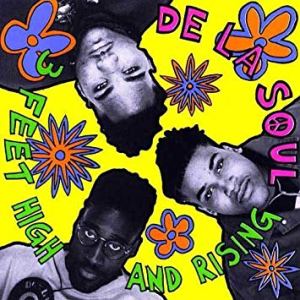
De La Soul: 3 Feet High And Rising 30 Years Old Today

The citizens of Punxsutawney have the groundhog to tell them whether there’ll be an early spring (much to Phil Connors’ disgust).

But my yardstick is generally: is it time to listen to 3 Feet High And Rising yet? Perhaps prompted by the recent freakishly-warm weather in London, the answer is a resounding yes.

Because De La Soul’s debut album, released 30 years ago today, can refresh the most jaded of pop palettes and may be the ultimate summer record.

At my school, it was all the rage and a relief from the incessant INXS, Simple Minds and U2. Probably because De La Soul were from the suburbs of Long Island rather than the inner city, they brought a playful spirit and much-needed humour to hip-hop.

It also reminded older music fans (or – let’s be honest – music critics) of that other ‘summer of love’ anthem, Sgt Pepper, even if the band denied any knowledge of that album.

To my ears, it was the first time sampling was used to bring about a truly surreal vision of music. This was a carefree world where it was perfectly normal for a ‘how to speak French’ lesson to accompany The Turtles’ ‘You Showed Me’, or for Sly Stone’s ‘Poet’ to back up some nursery-rhyme rapping.

Liberace, The Headhunters, Fats Domino; they were all fair game (though controversial – see below). If it sounded good, it was good.

There’s a silly-but-funny fake quiz show schtick running through the album and it’s not often you hear a whispered rap. Almost every track is under three minutes.

There are rhymes about school, haircuts and soap, and if you don’t like one song, there’ll be another one along very shortly.

3 Feet High And Rising was the gateway to some brilliant retro music too, especially for my generation who were too young or not even born the first time around.

A theory: it single-handedly led to a resurgence of interest in Hall & Oates, Steely Dan, early Michael Jackson and Funkadelic.

At the time of writing, the album is unavailable on streaming platforms, pending a stand-off between the band and Tommy Boy Records. Is it karmic payback for the boys being so trigger-happy with the samples? Who knows.

But it doesn’t stop 3 Feet High And Rising being a classic of the ’80s or any other decade.

The 13 Most Unlikely #1s Of The 1980s

Number ones: they were the G-spot of all ’80s pop action.

Anyone brought up on Bowie or Bolan’s ‘Top Of The Pops’ shenanigans could die and go to heaven if they achieved a chart-topper (except for The Human League’s Phil Oakey, who reportedly smashed his phone after being told ‘Don’t You Want Me’ was #1 in America…).

And we can probably all still remember the wow factor of singles going ‘straight in at #1’ in the 1980s (pop quiz: how many can you name? Only The Jam’s ‘Town Called Malice’  and Frankie Goes To Hollywood’s ‘Two Tribes’ spring to mind…).

But there were some damn weird UK number ones during the decade, in all kinds of styles. For every Madonna (a record-breaking six solo chart-toppers, though George Michael had a hand in eight), there was a Goombay Dance Band. For every ‘Two Tribes’ (most weeks at #1 in the 1980s: nine), there was an ‘It’s My Party’.

Here are some of the strangest, in chronological order:

13. Kenny Rogers: ‘Coward Of The County’ (12 February 1980)
There was definitely a country ‘thing’ going on in the UK at the turn of the decade, especially in Scotland. But surely no-one could have predicted the success of this slow chugger, beautifully sung though it is.

12. Don McClean: ‘Crying’ (17 June 1980)
After Roy Orbison but before k.d. lang, there was Don’s sepulchral take on this evergreen tearjerker…

11. Joe Dolce Music Theatre: ‘Shaddap You Face’ (17 February 1981)
We’ve discussed this masterpiece a few times before on movingtheriver.com…

10. Smokey Robinson: ‘Being With You’ (8 June 1981)
Who would have predicted Smokey would hit so big with this charming but not exactly earth-shattering mid-tempo ballad? But hey, let’s celebrate it: this was his first – and to-date only – solo UK #1.

9. Dave Stewart/Barbara Gaskin: ‘It’s My Party’ (13 October 1981)
This was the first thing keyboard wiz Stewart recorded after leaving Bill Bruford’s techno-fusion band and it sounds like it. Certainly one of the weirdest covers of the decade, emphasised by the drummer’s (Bruford?) insane opening fill at 1:02.

8. Goombay Dance Band: ‘Seven Tears’ (23 March 1982)
No words (apart from those…and those…).

7. Jim Diamond: ‘I Should Have Known Better’ (25 November 1984)
The Glasgow-born singer made it to #1 for one week with this peculiar ballad, replaced fairly swiftly by Frankie’s ‘The Power Of Love’. He sportingly requested that punters stopped buying his single and buy Band Aid’s ‘Do They Know It’s Christmas?’ instead, the latter swiftly became 1984’s Christmas #1.

6. Phyllis Nelson: ‘Move Closer’ (28 April 1985)
UK singles-buyers have always had a thing for soft soul ballads, but this still seems like a particularly peculiar smash hit. Having said that, if it had been revealed as a cover of an early Prince track, no one would have been that surprised.

5. Jackie Wilson: ‘Reet Petite’ (21 December 1986)
There’s no question about the quality of this life-affirming ditty, but the R’n’B/rock’n’roll revival of 1986/1987 was strange and unexpected.

4. Fairground Attraction: ‘Perfect’ (4 May 1988)
Imagine the pitch: it’s in a swing/jazz style, it’s going to be recorded live in one take, there’ll be no keyboards on it and the drummer will play brushes throughout. And don’t forget the brilliant, none-more-Scottish video.

3. Enya: ‘Orinoco Flow’ (23 October 1988)
Enormo-selling – but still completely bonkers – single by the singer/songwriter who had previously been a member of Clannad. It was the lead-off single from her second solo album Watermark.

2. Marc Almond/Gene Pitney: ‘Something’s Gotten Hold Of My Heart’ (22 January 1989)
It’s the sheer audacity of this duet which beggars belief. On paper, it looks like a crackpot idea – two of the ‘edgiest’ male vocalists on the planet letting it all hang out… But it was #1 for four weeks.

1.  Simple Minds: ‘Belfast Child’ (19 February 1989)
Almost all the tracks on this list are slow-burners that would barely survive the Spotify ‘grab-’em-in-the-first-five-seconds’ rule. But this epic still delivers, 30 years on.

Moonlighting: Cybill Shepherd, Bruce Willis & Al Jarreau

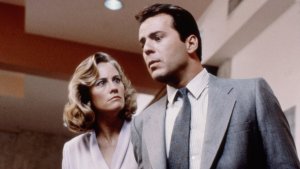
Bruce Willis as David Addison, Cybill Shepherd as Maddie Hayes in ‘Moonlighting’

What music delivers a headrush of nostalgia, makes you feel everything’s for the best in this best of all possible worlds and we’re not all going to hell in a handbasket?

For me, it’s the short reprise of the ‘Moonlighting’ theme that used to play over the end credits, featuring Toots Thielemans’ (citation needed… Ed.) harmonica swooping gorgeously over swooning strings.

It shouldn’t be any surprise that Lee Holdridge’s title song (with lyrics added later by Al Jarreau) was reminiscent of an old standard in the Porter/ Gershwin mould. After all, the TV show, which ran in the States and on the BBC from 1985 to 1989, most assuredly harked back to the romantic comedies and private-eye noirs of the ’30s and ’40s.

Co-star Cybill Shepherd, upon reading the script for the pilot episode, apparently called it a ‘Hawksian comedy’ (as in ‘Bringing Up Baby’/’His Girl Friday’ director/writer Howard Hawks), an influence of which creator/co-writer Glenn Gordon Caron was fairly unaware. He had instead been focusing his energies on lampooning the in-vogue detective shows of the early ’80s, one of which (‘Remington Steele’) he’d helped usher into existence.

‘Moonlighting’ made a star out of Bruce Willis and reignited Cybill Shepherd’s career, though she was apparently an exceptionally reluctant contributor and not a huge fan of her male co-star.

For the part of David Addison, Willis apparently had to audition not once but 11 times, and even then almost lost the role until a lone female NBC executive said (in front of a cadre of other male execs): ‘He looks like a dangerous f*ck’!

I was hooked on ‘Moonlighting’ in the mid-’80s, helped no doubt by a teenage crush on Shepherd. I watched two eps again recently – the pilot, which seemed overlong and clunky, and the absolutely superb ‘A Womb With A View’, the big-budget Season 5 curtain-raiser first transmitted in December 1988.

Gleefully jumping the shark, it has an exuberant, self-referential song-and-dance number (‘A chance for critics to scoff and sneer’), a chubby Willis in a diaper playing Shepherd’s unborn child, and some startling, creative visuals.

It also brought home how the show always assumed the audience was smart, rather than most modern TV which assumes it’s dumb. And the production values were super high, even though the pressure was on – they had to make around 17 x 50-minute episodes per season.

But back to the music. I’m partial to the original version of the theme song with its cool rhythm guitars and JR Robinson drums, but not so keen on Al’s re-recording with producer Nile Rodgers which – rather incredibly – made the UK top 10.

Frank Gambale Live! 30 Years On

I’ll never forget it. Circa 1990, I was on holiday with my parents in Kent, near the Cliffs of Dover.

A summer storm was chucking it down. Holed up inside, I flicked through some French music stations on my longwave radio.

Suddenly I heard this absolutely ridiculous guitar playing – deafeningly loud, hysterical, but totally precise, with great phrasing and notes that spluttered out in absurdly wide intervals.

The tone was heavily distorted but the feel was closer to jazz/rock than metal. And the rhythm section didn’t sound too shabby either.

By this time, I had heard Allan Holdsworth, Paul Gilbert, Yngwie Malmsteen, John McLaughlin, some pretty outrageous guitarists, but this was different. Who the hell was it? I strained my ears and just about heard the French DJ utter the words ‘Frank Gambale’.

Yes, it was the Italian-Australian wunderkind, the man who introduced so-called ‘sweep picking’ to a wider audience than before. And the album was revealed to be Live!, released 30 years ago this week and recorded at LA’s jazz/rock haven The Baked Potato on 21st August 1988.

What was really weird was that I had heard Gambale with the Chick Corea Elektric band before this, and even seen them live a few times, but he seemed pretty anonymous in that band.

Not here. To this day, ‘Credit Reference Blues’, ‘Fe Fi Fo Funk’, ‘Touch Of Brasil’ and ‘The Natives Are Restless’ sound like guitar landmarks.

But he was way more than a chops phenomenon – he’s an excellent composer too, clearly influenced by Chick Corea and Larry Carlton but with some moves all of his own.

The album also introduced me to the fantastic Joey Heredia on drums, a completely original player who can do fiery jazz/rock, spicy Latin and Police-style rock, sometimes all in the space of one tune. And the excellent keyboard player Kei Akagi was moonlighting with Miles Davis while playing some sh*t-hot stuff on this album.

Frank Gambale Live! was a key artefact in the golden age of shred guitar, and it gained him some crossover success with metal fans and lots of coverage in guitar magazines.

Sadly his solo career refused to fire after this release, with only moments of 1990’s Thunder From Down Under subsequently holding much interest for me, but this was a sporadically brilliant live jazz/rock album – and one of the best. (It has to be said, there’s not much competition – Larry Carlton’s Last Nite, Weather Report’s 8:30, Jeff Beck With The Jan Hammer Group Live!, Mahavishnu’s Between Nothingness And Eternity, and…er…)

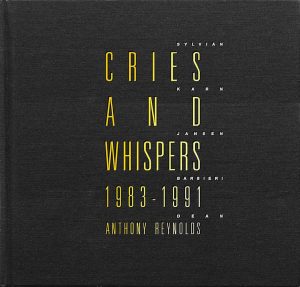
Book Review: Cries And Whispers 1983-1991 (Sylvian, Karn, Jansen, Barbieri) by Anthony Reynolds

Which ‘rock’ artists are the most likely to be subjects of not one but a series of biographies? The Beatles, The Stones, Dylan?

Japan are possibly unlikely recipients of such a legacy, but Anthony Reynolds’ superb new ‘Cries And Whispers’ – carrying on from where ‘A Foreign Place’ left off – holds the attention with ease.

His luxuriously-appointed new book takes an indepth look at all the protagonists’ (Sylvian, Steve Jansen, Mick Karn, Richard Barbieri) careers between 1983 and 1991, a mouth-watering prospect when you realise how scant the serious coverage of these groundbreaking musicians really is, Martin Power’s half-decent 1998 biography of Sylvian aside.

Here you get rigorous research, rare photos and unexpectedly candid interviews from producers, engineers, designers, record company execs, hangers-on and of course the musicians themselves.

There are fascinating glimpses under the ’80s pop bonnet, with details of record company correspondence, press releases, tour itineraries/diaries and testimonies from session players. There’s the odd unqualified muso revelation (did Mark King really get asked to play bass on ‘Pulling Punches’?!) and tasty gossip a-plenty, hardly surprising when you consider that the book covers the troubled Rain Tree Crow project.

In the main, Reynolds wisely keeps musical analysis to a minimum, letting the facts and musicians speak for themselves, and he also – admirably – is as interested in the murkier corners of Sylvian’s ’80s work (the one-off ‘Pop Song’ single, his involvement with Propaganda’s A Secret Wish album) as he is with the better-known stuff. Indeed, all the chapters on Sylvian’s solo work are terrific, particularly the lengthy portrait of his punishing ‘In Praise Of Shamans’ 1988 world tour. The Rain Tree Crow section is also gripping.

There are minor gripes here and there: some quotes from relatively peripheral figures – clearly cut and pasted from email correspondence – could do with trimming, and does anyone really want such a lengthy analysis of Dalis Car or The Dolphin Brothers? But even these longeurs have their fascinating moments.

This writer almost read ‘Cries And Whispers’ in one sitting, passing it from desk to sofa to dinner table to bath to bed, and you may well do the same. It’s another fine achievement by Reynolds and another classic music book to boot. We eagerly await the next instalment.

28 Great One-Hit Wonders Of The 1980s

Nobody knows anything: that was the late screenwriter William Goldman’s famous maxim for determining the likely commercial viability of a movie.

But it could also apply to the pop landscape of the 1980s. While the essential ingredients for a chart smash – great melodies, interesting sounds, emotional material – were intact, there were also novelty hits by the dozen. Soap-opera actors, kids and comedians were all over the shop.

But then there were the really striking, original one-time deals. Indeed the question hanging over most of the following is: why only the one hit?

Yet maybe there is something singular about these songs. Even this writer, a big It Bites fan, can – almost grudgingly – hear only too well why ‘Calling All The Heroes’ was a hit when all of their other perfectly-worthy singles stalled just outside the top 40. But if one hit doesn’t make for a lasting career, with a bit of luck it can still be a cash cow.

So here’s a trawl through some of the best one-hit wonders (all made the UK top 40) of the 1980s…

28. Wendy & Lisa: ‘Satisfaction’ (1989)

27. PHD: ‘I Won’t Let You Down’ (1982)

26. Anita Baker: ‘Sweet Love’ (1986)

25. Joan Jett & The Blackhearts: ‘I Love Rock And Roll’ (1982)

24. The Pinkees: ‘Danger Games’ (1982)

23. Robbie Robertson: ‘Somewhere Down The Crazy River’ (1987)

22. Ollie & Jerry: ‘Breakin’ (There’s No Stopping Us)’ (1984)

21. Champaign: ‘How ‘Bout Us’ (1981)

20. Orange Juice: ‘Rip It Up’ (1983)
It’s mystifying why Edwyn Collins and the gang only managed one hit, but they did. And what a beauty. Reached #8 in February 1983.

19. Joe Dolce Music Theatre: ‘Shaddap You Face’ (1981)
It’s just the audacity of it, I guess – an American/Australian comes over ‘ere and makes a random, totally un-PC, comedy record. Kept Ultravox’s ‘Vienna’ off #1 in February 1981.

18. The Passions: ‘I’m In Love With A German Film Star’ (1981)
Clive Temperley’s gorgeous Echoplex-laden guitar, a great blanked-out vocal from Barbara Gogan and the early-’80s penchant for all things European ushered this into the top 30.

17. Re-Flex: ‘The Politics Of Dancing’ (1984)
Included mainly for a great vocal by lead singer John Baxter.

16. Yarbrough & Peoples: ‘Don’t Stop The Music’ (1981)

15. Fern Kinney: ‘Together We Are Beautiful’ (1980)

14. Breathe: ‘Hands To Heaven’ (1988)
A love or hate song depending on your proclivity for soppy tearjerkers, but a pretty damn committed piece of work either way.

13. Fiction Factory: ‘(Feels Like) Heaven’ (1984)
Produced by Police-helmer Nigel Gray, this Perth (in Scotland) band produced a memorable piece of sophisti-pop with a great vocal by Kevin Patterson.

12. Ashford & Simpson: ‘Solid’ (1984)
They had of course written dozens of hits for others, and Valerie Simpson had sung back-up with everyone from Steely Dan to Quincy Jones, but this was the couple’s only UK hit.

11. Furniture: ‘Brilliant Mind’ (1986)
Fronted by future MOJO music writer Jim Irvin, this was a smart, intriguing single. Will also be familiar to fans of ‘Trigger Happy TV’. And Pulp may have checked it out too…

10. It Bites: ‘Calling All The Heroes’ (1986)

9. Kim Carnes: ‘Bette Davis Eyes’ (1981)
Apparently originally written as a loping country and western tune, it was given an icy synth-rock makeover and great John Bettis lyric, and eventually reached #10 (#1 in the USA) and earned Carnes a Grammy.

8. Martha And The Muffins: ‘Echo Beach’ (1980)

7. Rosie Vela: ‘Magic Smile’ (1986)

6. The Icicle Works: ‘Love Is A Wonderful Colour’ (1984)
How did this end up being the only top 40 hit for Ian McNabb’s talented Merseysiders? When the likes of contemporaries Pete Wylie and Pete Burns were raking in the hits?

5. Will Powers: ‘Kissing With Confidence’ (1983)
Co-written by Steve Winwood, Todd Rundgren, Nile Rodgers and Jacob Brackman and featuring an uncredited Carly Simon on vocals and some brilliant stacked backups by…who? Of course Will Powers was a pseudonym for star-snapper Lynn Goldsmith.

4. Hipsway: ‘The Honeythief’ (1986)
The Glaswegians’ funky pop gem showed the way forward for Curiosity and Love & Money, but sadly they failed to follow it up.

3. Nena: ’99 Red Balloons’ (1984)
A rather excellent lyric and musically rich #1 single. The closing 30 seconds can still send a shiver down the spine.

2. Boy Meets Girl: ‘Waiting For A Star To Fall’ (1989)
Yes yes yes, it’s shiny and toothless, but anyone who loves ’80s pop surely has to like this.

1. The Lotus Eaters: ‘The First Picture Of You’ (1983)
Another Merseyside pop gem, this slow-building classic can immediately send one into the reverie of a sun-kissed, first-love British summer.

20 Songs Played Too Often On Absolute 80s

We love it, but Absolute 80s possibly needs a bit of an update on the playlist front…

20. The Police: ‘So Lonely’

19. Pet Shop Boys: ‘It’s A Sin’

18. Survivor: ‘Eye Of The Tiger’

17. Yazz: ‘The Only Way Is Up’

16. The Communards: ‘Don’t Leave Me This Way’

15. The Bluebells: ‘Young At Heart’

14. The Jam: ‘A Town Called Malice’

13. Europe: ‘The Final Countdown’

12. Feargal Sharkey: ‘A Good Heart’

11. The Cure: ‘Close To Me’

10. Eurythmics: ‘Sweet Dreams (Are Made Of This)’

9. Belinda Carlisle: ‘Heaven Is A Place On Earth’

8. Fleetwood Mac: ‘Everywhere’/’Big Love’

7. The Proclaimers: ‘I’m Gonna Be (500 Miles)’

6. Kate Bush: ‘Running Up That Hill (A Deal With God)’

5. Madness: ‘It Must Be Love’

4. Blondie: ‘Call Me’

3. Duran Duran: ‘Wild Boys’/’Rio’

2. Tears For Fears: ‘Mad World’

1. Blow Monkeys: ‘Digging Your Scene’

Narada Michael Walden: Looking At You, Looking At Me/The Nature Of Things/Divine Emotion

Singing drummers: the ’80s were chock-a-block with ’em.

But Narada seems a somewhat forgotten example, at least compared to the far more popular Phil C, Don H, Stevie W and Sheila E.

Yet he started the decade as the one you’d probably have put your money on, ending the ’70s as he did with an impressive run of R’n’B hits.

Narada had of course started his music career as a jazz/rock drumming tornado in the second incarnation of John McLaughlin’s mighty Mahavishnu Orchestra, going on to record famous fusion sides with Jeff Beck, Weather Report, Tommy Bolin, Alphonso Johnson and Jaco Pastorius.

During the ’80s, he was one of the most in-demand producers on the planet, helming Whitney Houston’s ‘I Wanna Dance With Somebody’, Aretha Franklin/George Michael’s ‘I Knew You Were Waiting For Me’ and Starship’s ‘Nothing’s Gonna Stop Us Now’. But his solo career was somewhat in limbo during this period, so it’s fascinating to check out a new, nicely-appointed three-album survey of his 1983-1988 output.

Looking At You, Looking At Me (1983) is the best of the three albums, but a frustratingly inconsistent record. Listening to the superb title track, you’d think he might have found hit his true metier, a languid, luxurious, West Coast pop/jazz, similar to the kind of music Al Jarreau or Manhattan Transfer were making at the time.

But an OK duet with Angela Bofill, passable cover of ‘Reach Out (I’ll Be There)’ and sick drum-machine/horn workout ‘Shake It Off’ aside, the rest of the album is fairly unmemorable R’n’B with occasional virtuosity from guitarist Corrado Rustici and bassist Randy Jackson.

The followup, 1985’s Nature Of Things, is even more problematic, sounding mainly like a kind of soft R’n’B version of the ‘Top Gun’ soundtrack, with way too many synth-based ballads. But Divine Emotion (1988) was a partial return to form, led by the effervescent title track (with one of the great ’80s basslines) which gave him a timely UK hit. Narada had obviously been prompted into action by his highly successful production work – his vocals and arrangements have never been better.

But while Divine Emotion sounds like a million dollars, there are still issues on the songwriting front. Put simply, only the title track, ‘But What Up Doh’ and closer ‘We Still Have A Dream’ have memorable hooks (the latter also features some brilliant jazz/rock kit work from Narada).

One wonders what might have happened if he had hooked up with some great ‘pop’ songwriters like Kenny Loggins, Rod Temperton, Michael McDonald, Carole Bayer Sager or even Burt Bacharach at the outset of the decade rather than relentlessly ploughing his own furrow; ‘Looking At Me, Looking At You’ offers tantalising possibilities.

But looking at his career as a whole, it’s all turned out fine – Narada’s always been one of the coolest, most talented musician/producers around, and apparently he’s a joy to work with.

The 20 Worst Cover Versions Of The 1980s

We’ve looked at some of the good covers of the 1980s before – but how about the stinkers?

Reader: I’m pleased to report that finding them was not an easy task. A quick Google survey of ‘worst covers of all time’ will not reveal many from the ’80s (no, Rockwell’s version of ‘Taxman’ really isn’t that bad…).

But the variety of crap covers is worth noting. In the 1980s, anyone was liable to produce a shocker, from the ageing chart regular to the littlest indie.

Some took them to the toppermost of the poppermost – indeed most of the below were big hits. But of course familiarity breeds contempt… Most of these efforts, though, smack of both desperation and a dearth of material. The net result is usually a kind of audio shrug. And hey, there’s also that other reliable, recurring theme – the overproduction of post-1985 offerings…

20. The Mission: ‘Tomorrow Never Knows’ (1987)

19. Midge Ure: ‘The Man Who Sold The World’ (1983)

18. Club Nouveau: ‘Lean On Me’ (1986)
Swing-beat-flavoured travesty of the Bill Withers classic.

17. Tin Machine: ‘Working Class Hero’ (1989)
Pointless cover which is one of several fillers on the ‘difficult’ second side of Bowie’s rather good band debut.

16. The Power Station: ‘Harvest For The World’ (1985)
Interesting to hear Robert Palmer challenge himself range-wise but the limp arrangement removes all majesty from the Isley Brothers original.

15. Simple Minds: ‘Sign O’ The Times’ (1989)
Desperately tries to be hip but comes across as a bit desperate. Kerr’s irritating vocal intrusions don’t help.

14. Aztec Camera: ‘Jump’ (1984)
Why oh why, Roddy? Some grotty Linn drum programming and an insipid vocal on a pointless Van Halen cover which takes away all the fun of the original. Maybe that’s the point.

13. The Communards: ‘Don’t Leave Me This Way’ (1986)
I’m reluctant to diss the brilliant Jimmy Somerville but this cover of a Philly classic just drove one to distraction, not helped by the desperately upbeat video.

12. Yazz: ‘The Only Way Is Up’ (1988)
A ghastly version of Otis Clay’s 1980 post-disco classic which seemed to stay at #1 for an eternity…

11. The Housemartins: ‘Caravan Of Love’ (1986)
The concept is a good one – Isley Jasper Isley’s brilliant original was an electro/gospel mashup crying out for an a cappella – but Paul Heaton’s lead vocals and a very unadventurous arrangement scupper this UK #1 from the start.

10. The Flying Pickets: ‘Only You’ (1983)
Yes, it’s the other a cappella song to hit UK #1, but where to start? How about: out-of-tune vocal stacks (and a very unsubtle use of Fairlight vocals) and a chronically unhip bunch of guys? Oh, and it also came out too soon after the Yazoo original.

9. Pet Shop Boys: ‘Always On My Mind’ (1988)
Effective but gross cover, and of course another UK #1 single. Like gorging on cream cake, there’s a brief rush but then a lingering nausea.

8. Dave Grusin: ‘Thankful ‘N Thoughtful’ (1984)
Sly & The Family Stone’s gospel/funk classic becomes a robotic downer in the hands of the smooth jazz keyboard maestro. Even Marcus Miller’s bass playing can’t save this.

7. Bomb The Bass: ‘Say A Little Prayer’ (1988)
An on-the-nose, in-your-face curio which never convinces. The vocals just set my teeth on edge right from the off. But it still got to #10 in the UK.

6. Bananarama: ‘Venus’ (1987)
See 9.

5. Rick Astley: ‘When I Fall In Love’ (1987)
This was the 1987 Christmas #2 and, to be fair, it was only Rick’s third single. But it was asking a lot of the lad to take on Nat ‘King’ Cole. And whose idea were the horrible fake strings?

4. Kim Wilde: ‘You Keep Me Hangin’ On’ (1986)
See 6 and 9.

3. Gary Numan/Leo Sayer: ‘On Broadway’ (1984)
This is so bad it’s almost good. But only almost. You can’t help but feel sorry for these two gents whose careers had gone properly arse-over-teacup by this point. Numan fans in particular must have been hiding behind the sofa.

2. Band Aid II: ‘Do They Know It’s Christmas’ (1989)
Stock Aitken & Waterman were tasked with updating this one, coming up with a pointlessly-reformatted, boil-in-the-bag cover without any of the original’s musical grace notes, though singer Matt Goss gives a good account of himself.

And…badly-played drum roll…the worst cover of the ’80s is…

1. Thompson Twins: ‘Revolution’ (1985)
The Twins go rawk, with disastrous results. It was also the point where they started to believe the hype – always a bad move. Tom Bailey’s lead vocal is a travesty and it’s also a bum note in Nile Rodgers’ production career.

The Cult Movie Club: Modern Romance (1981)

It might seem a bit churlish to say about a guy who’s co-written/directed seven movies and received a Best Supporting Actor Oscar nomination (for ‘Broadcast News’) that it never quite happened for Albert Brooks the way it did for some of his contemporaries.

But somehow he has always seemed too niche for widespread popularity. His always-intelligent, nervy schtick is like a West Coast Woody Allen, but his comic bedfellows are probably Garry Shandling and Larry David rather than Allen and Diane Keaton.

‘Modern Romance’ was Brooks’ superb second film as co-writer/director, and it’s kind of an extended, darker episode of ‘Curb Your Enthusiasm’. I caught it completely by chance on Channel Four in the mid-’90s and am grateful I captured it on VHS because it seems almost impossible to find these days.

The studio apparently loathed it and barely gave it any marketing, but it has only gained in reputation over the years. And reportedly Stanley Kubrick rated it as one of his all-time favourite films, even ringing Brooks to congratulate/commiserate after its tepid box-office reception.

Watching it again, the movie it most reminded me of is ‘Groundhog Day’. Brooks plays Robert Cole, an amiable if somewhat self-serving film editor stuck in a kind of romantic ‘loop’, endlessly playing out his on/off relationship with talented, gorgeous but hard-to-know Mary, portrayed by the excellent Kathryn Harrold.

Kathryn Harrold and Albert Brooks in ‘Modern Romance’

So Robert dumps Mary (yet again) at the beginning of the movie and tries (yet again?) to embrace the new romantic ‘rules’ of the Me Decade, taking up jogging, health supplements and blind dates. But nothing works. He just can’t seem to get comfortable. Why? Is he really meant to be with Mary? Or is it that he just can’t assuage his loneliness and modern ennui? The movie explores the options with amusing, thought-provoking results.

‘Modern Romance’ is full of great secondary characters: Brooks’ brother Bob Einstein (best known as Marty Funkhouser in ‘Curb’) plays a pushy shop assistant, Bruno Kirby is his loyal co-editor, George Kennedy of ‘Naked Gun’ fame is a self-important B-movie actor and there’s a droll, jittery turn by James L Brooks as a suspiciously George Lucas-like director.

James L Brooks, Albert Brooks and Bruno Kirby

Modern Romance’ also makes for a pithy Hollywood pastiche. Robert’s day job consists of editing a cheapo ‘Star Wars’ rip-off, pitting him against bored techies, unpredictable directors and egotistical character actors. The irony, of course, is that we know Robert is capable of much more, but he seems to have some kind of tragic flaw. He’s an ’80s version of Bobby Dupea, Jack Nicholson’s character in ‘Five Easy Pieces’.

The other thing about ‘Modern Romance’ is that it’s very quiet. Compared to modern comedies, it’s positively moribund. Brooks spends a lot of time alone, talking to himself. He makes stoned phone calls, goes jogging, drives around deserted LA locations. There’s very little incidental music but there is a funny segue of heartbreak songs heard on a car radio.

It works as a quirky, neurotic, droll comedy, but ‘Modern Romance’ also lingers in the brain, revealing far more serious concepts. Why can’t Robert leave Mary alone and get on with his life? Or, as the trailer tagline so aptly puts it: if this is not love, what is it?