It’s probably fair to say that Neil had a dodgy old 1980s; at least that’s the critical consensus.
In 1983, he was sued by Geffen for delivering ‘unrepresentative’ albums.
But by 1988, he was back on his original label Reprise (Sinatra’s invention, natch) and had delivered This Note’s For You, ironically just the sort of record that had got him into such trouble at Geffen.
But it was the follow-up Freedom, released 30 years ago this week, that really got Neil back on track.
He retained This Note’s fine rhythm section (drummer Chad Cromwell and bassist Rick Rojas) and co-producer (Niko Bolas) and delivered a dizzyingly diverse selection, by turns sweet and savage, mostly recorded live in the studio.
I don’t particularly dig country, but love ‘Hangin’ On A Limb’ and ‘The Ways Of Love’, simple heartfelt love songs (Linda Ronstadt’s contributions sure help). I don’t dig grunge, but I love ‘Don’t Cry’, ‘Rockin’ In The Free World and the raucous cover of Lieber and Stoller’s ‘On Broadway’.
So how does he do it? I’d cite four major differences between Young and the also-rans – intelligent lyrics, a great drummer, Neil’s sense of space and his lead guitar playing (‘Don’t Cry’ features a few of his most unhinged solos).
Of the former, the album’s title seems to refer to a few tracks’ investigation of freedom in Reagan’s America, especially the scarily prescient ‘Rockin’ (‘There’s a lot of people sayin’ we’d be better off dead/Don’t feel like Satan/But I am to them‘), epic ‘Crime In The City’ and Peckinpahesque ‘Eldorado’. ‘Rockin’ could almost be Young’s ‘Born In The USA’.
The gentler tracks arguably take one back to the feeling of freedom long before Reagan was around. This Note’s For You outtake ‘Someday’ – complete with chain-gang chanting and tubular bells – and the gorgeous ‘Wrecking Ball’ still sound like timeless classics, both romantic and anthemic.
Conversely, ‘Don’t Cry’ gives Lou Reed and Bret Easton Ellis a run for their money, a chilling, blanked-out vision of a love affair gone wrong (with closing gunshot?).
Freedom was a gamechanger for Young, a near-perfect distillation of styles that would see him through the ’90s and beyond. It’s still an absolutely essential work and rightly seen as one of his greatest albums.
Prog fans – perhaps understandably – are not generally known for their benevolence when a favourite band undergoes a personnel change.
Steve Howe has talked publicly about the poor reception Trevor Horn received when the latter made his debut as Yes’s new vocalist during their North American tour of 1980.
Phil Collins still believes some Genesis fans were convinced he was scheming to take Peter Gabriel’s place as the band’s singer.
But Marillion fans seem a far more amiable bunch. When Steve Hogarth was installed as their new frontman in 1989, he seems to have been welcomed pretty much with open arms (if this superb televised gig from only his second UK tour is anything to go by).
Seasons End, (no apostrophe?), released 30 years ago this week, was a weirdly assured debut from Hogarth and easily this writer’s favourite Marillion album (1989 was a bit of a Year Zero for me in terms of the band, the Fish era barely appearing on my radar).
Hogarth’s melodies are fresh and exciting and his vocals always strong. It helped of course that he was a triple threat, a proven singer/songwriter with mid-’80s bands The Europeans and How We Live (though he was apparently eyeing a job as a milkman when the latter wound down in early 1988) and possessing some decent keyboard chops.
His natural magnetism as a frontman didn’t hurt too, and he even brought a few gimmicks to the party, like the magic gloves and musical cricket bat (a tribute to Ian Faith? Ed.).
So how does Seasons End stack up these days? Pretty well. The singles ‘Easter’ (UK #34), ‘The Uninvited Guest’ (UK #53) and ‘Hooks In You’ (UK #30) were distinctive, well-arranged and featured soaring guitar playing from Steve Rothery.
Ian Mosley is that rare rock drummer, solid but expressive, and capable of great subtlety. Keyboardist Mark Kelly had become a superb texturalist too, as demonstrated on the Steve Reich-esque second half of the title track, plus ‘Holloway Girl’ and ‘The Space’.
Marillion, Genesis and It Bites were flying the UK prog/pop flag at this point, and their late-’80s careers make for interesting comparison. As for Seasons End, it did very nicely, touching down at #7 in the UK album chart and ensuring a long, fruitful career for the band’s new line-up.
Another song-by-song study of Bowie’s output is certainly an ambitious undertaking; we already have Nicholas Pegg’s excellent ‘The Complete David Bowie’ and David Buckley’s brief but arresting ‘The Complete Guide To The Songs Of David Bowie’.
But O’Leary is more qualified than most, having run the popular Pushing Ahead Of The Dame website for over 10 years now. And, by and large, ‘Ashes To Ashes’ pulls it off, offering a far more personal, florid take on Bowie’s songs than the aformentioned books.
He makes the decision to discuss the songs not in alphabetical order but, roughly, in the order in which they were ‘conceived’ and/or recorded. While this doesn’t allow for easy reference, an alphabetical title index is included at the back of the book.
The section on Low/”Heroes”/Lodger is excellent, with up-to-date interview material from Tony Visconti and Adrian Belew, and a focus on the city’s geography/history mostly missing from previous Bowie books. And it’s great to see the ‘Baal’ sessions getting the detailed analysis they deserve.
Fascinating items also emerge around Bowie’s late-’80s/early ’90s work, from Never Let Me Down through ‘Pretty Pink Rose’ to The Buddha Of Suburbia, with more detail than usual about the formation of Tin Machine. And it would be hard to find a better study of Bowie’s final two albums, even if they are this writer’s least favourite works of the era.
There are predictable put-downs of Tonight (but an excellent analysis of ‘Loving The Alien’, complete with reading list!), Black Tie White Noise and Tin Machine II. And there are also oft-repeated errors about the Let’s Dance era, like the listing of Tony Thompson’s drum appearances (he didn’t play on ‘Ricochet’ or ‘Shake It’), but a fascinating section on the fact that Bowie was actually more of an actor than a singer when he made that album.
Musical appreciation doesn’t seem the author’s strong point – for example, ‘Always Crashing In The Same Car’ is described as ‘being ‘mostly in E minor, the harmonic murkiness finally resolved with a closing Em chord’. This ignores the fact that the verse’s home key is clearly G major. And he denegrates Hakim’s ‘gated tom fills’ in ‘I Keep Forgettin’, but they’re actually the dreaded Simmons electric drums. But elsewhere there are interesting, original observations, like the comparisons between ‘Modern Love’ and ‘Lust For Life’.
One thing’s for sure – ‘Ashes To Ashes’ takes one back to the music. Revisiting Scary Monsters in particular was very illuminating in light of the book. So even if one can’t avoid O’Leary’s natural aversion to much of this material, it’s a valuable addition to the Bowie bibliography.
The question is, will one reach for ‘Ashes To Ashes’ for quick reference ahead of the Pegg and Buckley works? Only time will tell… (NB – one has definitely reached for the book on many occasions since this first reading, so it’s doing its job…)
There were a lot of good quiffs around in the ’80s.
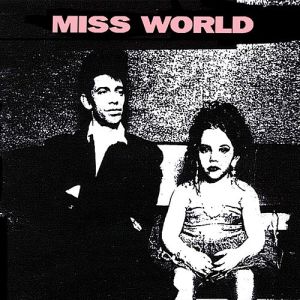
The rockabilly and psychobilly revivals certainly wouldn’t have been the same without them, but one of the best was sported by Jonathan Perkins, lead singer/songwriter of Miss World.
Though Miss World’s self-titled debut album came out in early ’90s, it seems very much informed by the music of the 1980s.
It was released on David A Stewart’s Anxious Records, featured cameos from Pretenders drummer Martin Chambers and was very much under the influence of Iggy Pop’s Blah-Blah-Blah, INXS and Nick Cave, as well as Lou Reed, The Doors and Berlin-era Bowie.
I bought the first album after seeing their mightily impressive set supporting Shakespear’s Sister at the Hammersmith Odeon in summer 1992.
An internet search of Perkins reveals very little, except that he was born in Swindon, was possibly an early member of XTC and probably later turned up in mid-’80s nearlymen Silver Spurs.
But whatever his pedigree, Perkins certainly seems to have a great record collection. Miss World opener ‘The First Female Serial Killer’ has a super-cool vocal delivery (is it about Aileen Wuornos?) while ‘Nine Steps To Nowhere’ sounds like Michael Hutchence fronting The Doors.
‘Watch That Man’ marries Iggy Pop’s ‘Isolation’ with Bowie’s ‘New Career In A New Town’ to superb effect. ‘Dead Flowers’ comes on a bit like Jim Morrison singing with The Clash, and then there are great, weirdo murder ballads ‘Highway Of Dead Roads’, ‘Thief Inside’ and ‘British Pharmaceuticals’.
Lou Reed couldn’t have done a better job at covering ‘What A Wonderful World’. ‘Love Is The Whole Of The Law’ might be the best of the lot, the only co-write with David A Stewart.
Perkins also has a great ear for a strong first line: ‘You make me act like a locust‘ (‘Nine Steps To Nowhere’), ‘I’m wasting away/The voices in my head have come out to play‘ (‘Highway Of Dead Roads’) and the Withnailesque ‘I was feeling very beautiful/Having taken pharmaceuticals‘.
And – good news for us – the songs either seem to be about sex, drugs, death or religion, sometimes all four at once.
Legendary recording engineer Phill Brown (Spirit Of Eden, Solid Air etc) gets a gorgeously uncluttered sound and then there’s the none-more-David-Lynchian cover image.
Not much has been heard from the band since this excellent debut, though some weird footage emerged a few years ago of a comeback gig with Perkins sporting a natty turban.
And they seem to have some more recent tracks on streaming platforms. But they never quite caught on after this strong start, more’s the pity.
Funny how a brief spell of good weather stirs happy musical memories (that’s England for you).
Round my way, if the summer of 1983 was all about Thriller, Let’s Dance and The Kids From Fame, summer ’84 was breakdance and electro.
When our playground wasn’t being used for tennis-ball soccer, British Bulldog or kiss chase (all probably outlawed now…), the cooler kids were dragging an old piece of tarpaulin over from the sports hall and having a go at breaking – to various degrees of success.
Here’s the soundtrack. Breakdance/electro was a short-lived musical relation to early hip-hop and digital funk, but some genuine pop classics emerged from era. Sure, they’re at the commercial end of the burgeoning electronic scene but they all deliver an instant nostalgia rush. The videos are great too.
7. Break Machine: ‘Street Dance’
Reached UK #3 in January 1984, and spent 16 weeks in the charts.
6. Ollie & Jerry: ‘Breakin’ (There’s No Stopping Us)’
Reached #5 in June 1984 and spent 11 weeks in the UK chart. Their only UK top 40 single.
5. Grandmaster Melle Mel & The Furious Five: ‘Beat Street Breakdown’
Only reached #42 in the charts but reverberated widely.
4. Herbie Hancock: ‘Rockit’
Reached #8 in July 1983. This mind-blowing performance on ‘The Tube’ opened the floodgates for a lot of kids of my generation. Has a jazz musician ever ‘crossed over’ more successfully?
3. Grandmaster Flash & Melle Mel: ‘White Lines (Don’t Do It)’
It was just massive in the UK, hitting #7 in July ’84 and staying in the top 40 for 17 weeks.
2. Rock Steady Crew: ‘(Hey You) The Rock Steady Crew’
Hit #6 in October 1983. Co-produced by future New Order/Pet Shep Boys helmer Stephen Hague.
1. Afrika Bambaataa & The Soul Sonic Force: ‘Planet Rock’
Reached only #53 on its initial August 1982 release, but was an incredibly influential track.
Dedicated to Miss Walford, Mr Hall, Mr Richards, Miss Patrick, Tony Gourvish, Phil Hambridge and all the B-boys and girls at E.S.P.
From Richard E Grant’s gloriously-English ‘Monty, you terrible c*nt!’ (‘Withnail & I’) to Harvey Keitel’s epochal ‘You rat-f*ck!’ (‘Bad Lieutenant’), modern cinema was made for despicable language.
Your mum told you that cursing was a sure sign of a limited vocabulary, but try telling that to writer/directors David Mamet, John Hughes, Bruce Robinson and Oliver Stone, who consistently broke out the memorable humdingers.
To celebrate the cinematic four-letter word, we proudly present some of the best swear scenes of the 1980s, in no particular order. A few rules: no cartoons, because…I hate them. And it has to be dialogue, not a stand-up routine or monologue. And yes, a few of these movies were released in 1990 but surely shot in ’89 (and I need them in the list…).
WARNING: this piece is rated X, not suitable for minors or those easily offended…
7. ‘Casualties Of War’ (1989)
We start with the only ‘serious’ item in the list, a well-placed profanity during one of the more poetic dialogue scenes in this underrated David Rabe-penned, Brian De Palma-directed drama.
6. ‘Planes, Trains And Automobiles’ (1987)
Steve Martin’s ’70s stand-up act wasn’t particularly known for the four-letter tirades, but he had his moments (including the memorable skit on The Steve Martin Brothers album that begins: ‘Well, good evening, motherf*ckers…’). But this endlessly-watchable John Hughes-penned blowout had even Steve’s hardcore fans hiding behind the sofa. The scene is also notable for featuring the brilliant Edie McLurg.
5. ‘Scarface’ (1983)
De Palma’s drama is surely the doyenne of swear movies, so we won’t pick out a single Oliver Stone-penned humdinger but rather itemise the entire film’s swearing thus. Thank you, YouTube (according to an urban myth, the band Blink-182 were named after the amount of f-words Pacino drops in ‘Scarface’).
4. ‘Withnail & I’ (1987)
Impossible to leave out Bruce Robinson’s sweary masterpiece, a killer in almost every line of dialogue. But every profanity in the film earns its keep, none more so than this panic-stricken classic.
3. ‘This Is Spinal Tap’ (1983)
Apparently performed very much under the influence of the notorious Troggs Tapes, this beautifully conjured the annoyances of a duff recording session. I particularly like David St Hubbins’ (Michael McKean) moment of total exasperation, when words begin to fail him. Here’s the full uncut version:
2. ‘The Godfather Part 3’ (1990)
Pacino again, and why not? When Shouty Al gets going, there’s always a good chance he’s going to deliver some quality swearing. In this unsung sequel, he remains fairly buttoned up until basically going ballistic…
1. ‘Goodfellas’ (1990)
Tommy (Joe Pesci) meets ‘old friend’ Billy Batts (Frank Vincent) who is none too complimentary about the days when Tommy used to shine shoes…
BONUS! Let’s extend our look at great swear scenes into the 1990s. Because we can…
4. Bad Lieutenant (1992) The Bad Lieutenant (Harvey Keitel) is driving his two young sons to school.
Boy 1: Aunt Wendy hogged the bathroom… All morning we couldn’t get in… So how are we supposed to be on time? The BL: Hey, listen to me. I’m the boss, not Aunt Wendy. When it’s your turn to use the bathroom, tell Aunt Wendy to get the f*ck out. What are you, men or mice? If she’s hogging the bathroom, call me, I’ll throw her the f*ck out…
3. One False Move (1992) Pluto (Michael Beach) and Ray (Billy Bob Thornton) drive along having a row about the money they’ve stolen, which Ray may have given to his girlfriend…
Pluto: Where’s my f*cking money, Ray? Ray: I said I ain’t got any money. She took the f*cking money, all right? I’ve got 56 f*cking dollars, she took it, now let me go. Pluto: You’re a pussy-whipped motherf*cker! Ray: Don’t throw that sh*t at me, man. They’re your f*cking buddies back there that don’t have any money. That good friend of yours, Billy. Pluto: I don’t know what the f*ck I’m doing with you, man! You’re a pussy-whipped, sorry-assed motherf*cker!
2. Glengarry Glen Ross (1992) Blake (Alec Baldwin) turns up at a real estate office and makes his presence felt amongst the salesmen…
1. Fargo (1996) Carl (Steve Buscemi) wants to leave a car park but the Attendant (Don William Skahill) isn’t making it easy…
In a recent podcast, Donald Fagen spoke about the importance of vocal tone, saying that he’d rather listen to Ray Charles singing a mediocre song completely ‘straight’ than a jazz singer pointlessly embellishing a songbook standard.
It got me thinking about Phyllis Hyman’s crackerjack performance on ‘I’ll Be Around’ (not to be confused with the Alec Wilder standard sung by many including Frank Sinatra and Chaka Khan), from McCoy Tyner’s 1982 CBS album Looking Out.
The song, which has haunted me since I first heard it in the late 1980s, was mainly written by Stanley Clarke and recycled from his lacklustre (despite featuring Stan Getz on saxophone) 1979 track ‘The Streets Of Philadelphia’. ‘I’ll Be Around’ comes from an otherwise fairly mediocre McCoy album, mainly notable for featuring Carlos Santana, Clarke and Gary Bartz on several tracks.
But Tyner’s fabled work with John Coltrane must have seemed a distant memory by 1982. In jazz terms, CBS was obsessed with Wynton Marsalis and neo-classicism, though still had time for Herbie Hancock’s hip-hop explorations and Miles’s comeback.
Phyllis and McCoy in the studio
Maybe McCoy in turn thought he’d hit paydirt by grabbing Santana, Bartz and Clarke (huge Coltrane fans, all), but Looking Out is now barely a footnote to his illustrious career – it was his second and last album for Columbia.
‘I’ll Be Around’ doesn’t feature Santana or Bartz, and was the sole LA-recorded track on the album (the other tracks being recorded at the Power Station in NYC), adding the excellent pairing of Charles ‘Icarus’ Johnson on guitar and Ndugu Chancler on drums.
Chancler and Tyner work together almost telepathically, the former driving the song forward, though always with one ear on the groove, the latter sprinkling on his majestic chord voicings. Hyman’s vocals are huge, luscious, but she also adds some subtle flavours over Tyner’s piano solo, consciously removing vibrato and sometimes singing ever-so-slightly sharp for emotional effect.
Of course it’s virtually impossible now to assess this heartfelt performance without considering her tragic suicide in 1995. But, happily, ‘I’ll Be Around’ gives a different slant on a fine career and shows Hyman’s mastery of Black Music.
The great jazz/rock pioneers of the early 1970s generally had a very mixed 1980s.
But when keyboard genius Jan Hammer left the Mahavishnu Orchestra in 1973, no-one could have predicted that he’d become a bona fide pop star just over ten years later.
Two fascinating albums – originally on CBS, now re-released as a two-fer by BGO – trace Hammer’s early-1980s journey to ‘Miami Vice’, via a collaboration with Journey/Santana guitarist Neal Schon.
Of course Hammer had spent a few years in the late ’70s touring big venues with Jeff Beck and making ever-rockier solo albums. But Schon was probably a more successful musician than Hammer in 1981, if a more anonymous one – his playing has a lot of chops but isn’t particularly distinctive.
The first Schon/Hammer album, 1981’s Untold Passion, has a pleasingly dry, lo-fi quality, recorded solely at Hammer’s home studio in upstate New York, with the Czech genius also playing some great drums and engineering. The musicianship is exemplary and the sound has a real consistency. Unfortunately the same can’t always be said of the material.
Schon’s Phil Lynott-like vocals have some charm, particularly on the excellent ‘Hooked On Love’ and ‘I’m Talking To You’, but predictably it’s the three instrumentals that really do the business.
‘The Ride’ is a super-catchy Schon composition, while Hammer’s ‘On The Beach’ and the title track look forward to ‘Miami Vice’, the latter with a distinct Giorgio Moroder flavour and some kick-ass solos.
The second album, 1982’s Here To Stay, is less successful, adding a cameo from the other members of Journey and lots of stereotypical 1980s production values, and the duo are obviously making a far more concerted effort to get onto MTV.
They made it with the crunching ‘No More Lies’, and almost grabbed a minor hit too. The hilariously ill-judged video is well worth a look.
Neither Untold Passion nor Here To Stay were big hits – the former stalled at #117 in the US album charts, the latter sunk without trace, but these are really interesting projects for Hammer fans. When they work, they really work, and there are some great instrumental duels between the two virtuosos.
The genre ‘sophisti-pop’ is bandied about quite a lot these days – mainly ’80s music of an ‘aspirational’, elegantly-appointed variety, jazzy in hue with slinky grooves and dense harmony.
Dundee band Danny Wilson were one of its key practitioners and their second and final album Bebop Moptop, released 30 years ago this week, is a key exhibit.
And yet, despite featuring hit single ‘The Second Summer Of Love’ and a host of other superb compositions, Bebop has somehow fallen off the ’80s pop radar – it has never received the deluxe re-release treatment. (Nor, for that matter, has Danny’s superb debut Meet Danny Wilson...)
But it’s definitely due a critical reappraisal. So we caught up with singer/principal songwriter Gary Clark to discuss the ‘lost’ Danny Wilson album and loads of other stuff.
MP: Preparing for album number two, were there record company expectations? Presumably ‘Mary’s Prayer’ opened the door and Virgin wanted ‘the big hit’? You give (Virgin MD) Simon Draper credit in the liner notes for staying out of the way…
GC: That pressure is there in some form but doesn’t necessarily come from the record label. It comes from your own desire to be competitive, from management, from peers. The trick is trying to stay true to your artistic vision, and I think we always managed to fall on the artistic side of that seesaw.
There were rumours that a few big American producers almost came onboard for Bebop – is there any truth in that?
Our plan was always to record every song in Dundee with our friend Allan McGlone who had a studio in town, and at some point to bring in an outside influence to tie up the loose ends and add some perspective. We did that and throughout the process were keeping an open mind about that third party. We did meet Don Was. He came to the studio in Dundee. We played him a few tunes and went out on the town. A lovely, talented and very cool gentleman. Schedules didn’t pan out though and no more came of it. Ged suggested Fred DeFaye as he’d been listening to Eurythmics’ Savage album. We met and hit it off and pretty quickly decided to work together.
Were there any more contemporary influences going into Bebop? I hear some Prince and Pogues here and there and you play a lot more lead guitar on this than you did on Meet Danny. A conscious decision or just doing what’s right for the songs?
On the guitar, definitely the latter. I probably play just as much guitar on Meet Danny but it’s maybe more upfront on Bebop. On our influences, I guess what people are listening to has a constantly fluctuating and evolving influence, and you had three individuals all with very eclectic taste contributing. We were very open in the creative process so nothing was off limits.
‘The Second Summer Of Love’ was incredibly prescient and the hit single from the album – where did it come from? Was it a late addition?
It was definitely written in the fourth quarter of songs for that record. It was a day where we were all huddled round a phone at my girlfriend’s flat doing phone interview after phone interview. I needed to take a break so walked to the local store to buy snacks for everyone and it came to me in one piece. I had to grab a guitar when I got back, to work out and lay down on a Dictaphone what was in my head. It was originally a-minute-and-a-half long and the US label bosses heard it and asked us to extend it because they believed it was a potential radio hit. We went back into the studio and added a bridge and a harmonica solo. Ironically, it was never released as US single…
Talking of singles, I count ‘I Was Wrong’ as a missed opportunity…
After hearing a demo, the label thought so too and they encouraged us to record an early version with producer Phil Thornally. As often happens with early versions, it was never released and by the time it came to pick singles, everyone had lived with that song for around a year and it fell by the wayside when being held against newer songs that were fresher in peoples’ psyches.
The fantastic ‘Loneliness’ seems to be beamed in from a totally different world. Can you remember the genesis of that song?
Another song that I wrote mainly in my head, and indeed, in my bed. I remember sitting up with a note pad writing out the lyric like a poem at 2 or 3 in the morning. I had a melody in mind, and hashed out the musical elements on the piano over the following days and weeks.
The ‘Imaginary Girl/Shirley MacLaine’ prologue/epilogue is such a neat touch – did you ever think of Bebop as a ‘concept’ album?
Not the album as a whole, but I was aware in the writing of pockets of songs that were designed, almost like musical theatre, to live together.
Bebop got some great reviews including a rave in Q magazine, but I also remember a snarky interview in the Melody Maker… Did you care about reviews?
The music press was very powerful at that period of time and, of course, bad reviews sting. And very occasionally, when they have the ring of truth, they actually influence your thought process. But generally I would say that by the time of the second album, we had become more hardened to reviews good and bad.
You toured Bebop (I was there at London’s Town & Country Club). Did you enjoy playing this stuff live? There was a rumour that the drummer (whose name escapes me) cost more than the rest of the band put together…
Drummer Bobby Clarke and percussionist Karlos Edwards were cousins, and came as a team. They auditioned for us in London and we knew immediately that we needed them in the band, and they were such wonderful guys and wonderful musicians who brought so much to the DW party. All of the band were paid equally, but by album two we were playing bigger venues and so that would have meant higher wages than on the first album, just by the nature of economics of playing to more people.
Did you know during its recording that Bebop would be the band’s final album? Were there ever plans for record number three?
We started the songwriting process for number three and even recorded demos for a few songs that became part of my later solo album Ten Short Songs About Love but it became clear that everyone involved wanted a larger part of the writing and that would’ve meant me diminishing my input, which wasn’t going to happen, so I would say that – certainly for me – it was the underlying source of unhappiness that ultimately came to a head and ended the band.
What do you think of the Danny legacy now? Any regrets? Any temptation to do the ’80s nostalgia thing and reform, even just as a one-off?
I’m proud of what we achieved in a short period of time and I miss the creative process of working with Ged and Kit, who were and are exceptionally talented and creative people. Nostalgia is not something that any of us feed off but I would never say no to doing something if it was forward-thinking and creative. On regrets, I don’t really think about it, but if we had been able to take a break from living in each other’s pockets and faces, and stepped back a bit, we might’ve been able to keep the band going in some capacity. We are still great friends – Ged and Kit still occasionally play on music I’m involved in. They also both have amazing and separate careers in music, with a billion things going on (Ged is currently the bass player with Simple Minds – Ed.) so getting us all available at the same time would require a miracle of logistical organisation.
When we last spoke, you had just finished co-writing a lot of excellent songs for the movie ‘Sing Street’. What are you up to at the moment?
I’m executive music producer on John Carney’s new Amazon TV series ‘Modern Love’ and have played a large role in curating, producing, co-writing songs and and doing the score for that series. I even sing a little! ‘Sing Street’ is in production as a stage musical too, and is scheduled to open at the New York Theatre Workshop in their 2019/2020 season. The whole team and cast are incredible and I’m very excited about that. I’ve also been writing the musical ‘Nanny McPhee’ with Emma Thompson, which has been a thrill, and between Emma and John Carney I get to work with the most creative, talented, smart and funny collaborators that anyone could wish for. I feel very blessed and am, quite possibly, having the time of my life.
In an interview, Randy Newman once talked about how, on his self-titled debut album, he tried to use the orchestra rather than the drums to ‘move things along’.
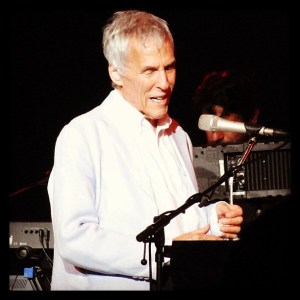
It was impossible not to think about that while watching Burt Bacharach’s triumphant Hammersmith gig last night, featuring a large band and huge string section.
This is music relying on texture, melody and counterpoint – it’s the world of Pet Sounds and Oliver Nelson’s The Blues And The Abstract Truth, with barely a guitar lick or drum fill.
Every chord has a flavour and intention – but few of the voicings are quite how you remembered them. ‘I’ll Never Fall In Love Again’, ‘This Girl’s In Love With You’ and ‘Alfie’ were elliptical and mysterious last night, with beautiful, ‘floating’ harmony.
Joss Stone treats any stage like her backyard, totally at ease, barefooted and gorgeous. And if she did a great job on the melodic, medium-paced material (‘Walk On By’, ‘Wishin’ And Hopin”, ‘Say A Little Prayer’), sometimes there was a ‘screechy’ element to her voice when improvising on the slower tracks.
And some may have found her between-song ‘chats’ with Burt a little mawkish. But to be fair he did tell some good stories, particularly the one about being inspired by Ursula Andress – not his then-wife Angie Dickinson – to write ‘The Look Of Love’ for the original ‘Casino Royale’ movie.
And though Hal David’s name was only mentioned once by Bacharach, the lyricist’s influence hung heavy over proceedings. It came to mind just how brilliantly he evoked the nooks and crannies, the high stakes, of all romantic relationships, particularly when one party is looking for the door.
The inclusion of some more recent stuff was a revelation to this writer, particularly a couple of fervent – though musically gentle – anti-Trump songs, and the remarkable Elvis Costello co-write ‘This House Is Empty Now’, with its stratospheric middle eight and an excellent vocal from John Pagano.
‘On My Own’ and ‘Close To You’ were reinvented as spine-tingling, slow-motion ballads, even slower than the originals, while Josie James’ powerful take on ‘Anyone Who Had A Heart’ got the biggest ovation of the evening. Such is Bacharach’s range as a songwriter, you kept hoping he would throw in a few more outliers, ‘Arthur’s Theme (Best That You Can Do)’ or ‘Love Power’.
But ‘That’s What Friends Are For’ was the perfect closer, sending us out into that good night with a smile (though it was odd that Joss didn’t return for a final song).
One left the gig uplifted but also, truth be told, emotionally spent. Still, it was a weird, wonderful, affecting two hours of pop music. And you try to tell the kids these days…

 It’s probably fair to say that Neil had a dodgy old 1980s; at least that’s the critical consensus.
  Prog fans – perhaps understandably – are not generally known for their benevolence when a favourite band undergoes a personnel change.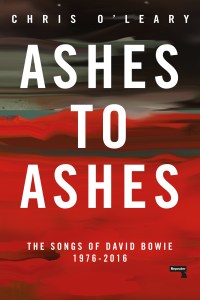
 Funny how a brief spell of good weather stirs happy musical memories (that’s England for you).
  We all know good movie swearing when we hear it.
  What makes a ‘good’ singer?


 You toured Bebop (I was there at London’s Town & Country Club). Did you enjoy playing this stuff live? There was a rumour that the drummer (whose name escapes me) cost more than the rest of the band put together…
 In an interview, Randy Newman once talked about how, on his self-titled debut album, he tried to use the orchestra rather than the drums to ‘move things along’.
