Back in those early days of VHS fever at the beginning of the ’80s, my parents would occasionally invite friends round to watch a scary movie.
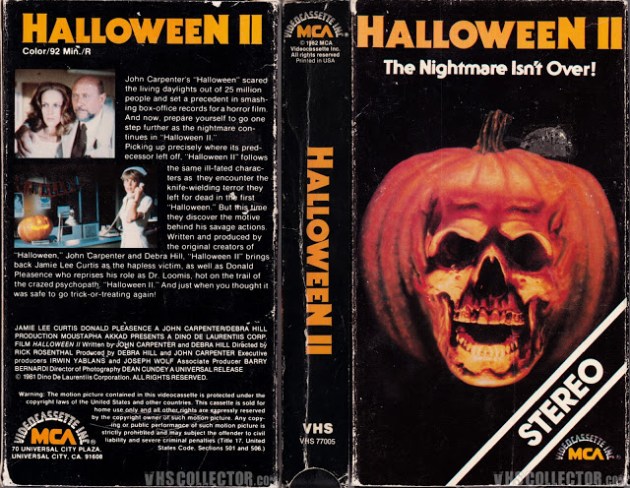
I remember tip-toeing out of my bedroom very late at night, creeping along the corridor and trying to snatch a peek at ‘Halloween II’ or ‘Straw Dogs’.
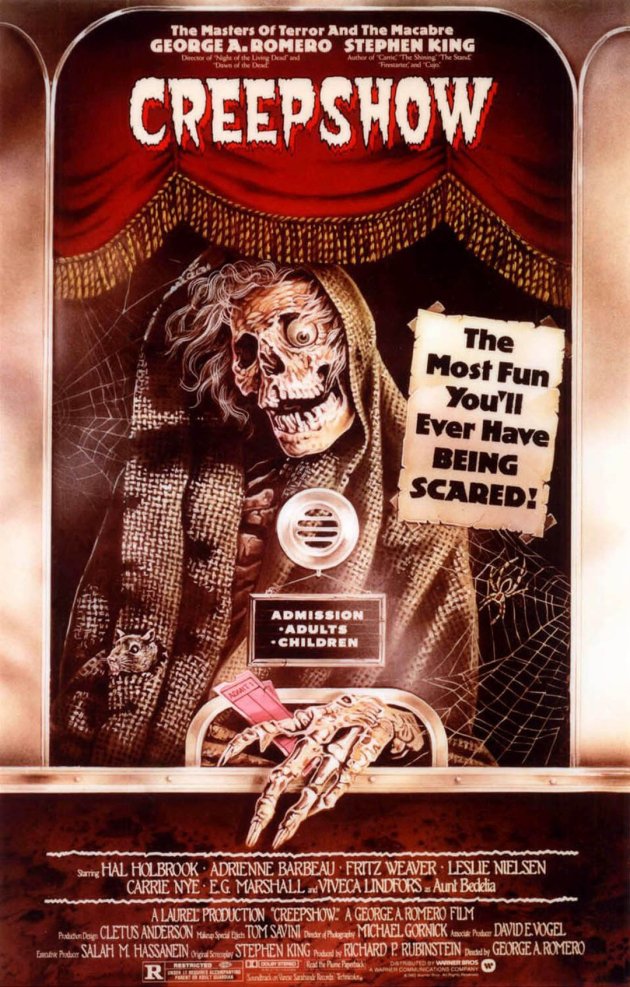
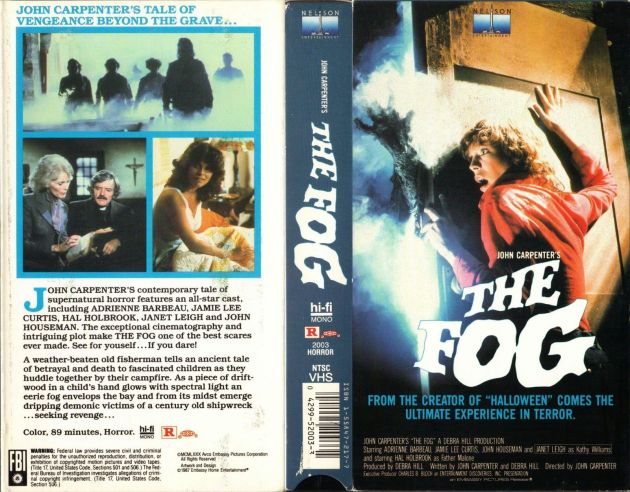
I wasn’t allowed to watch those kind of movies, though later was granted a bit of license with regards to ‘The Fog’, ‘Creepshow’, ‘The Island’ and ‘American Werewolf In London’.
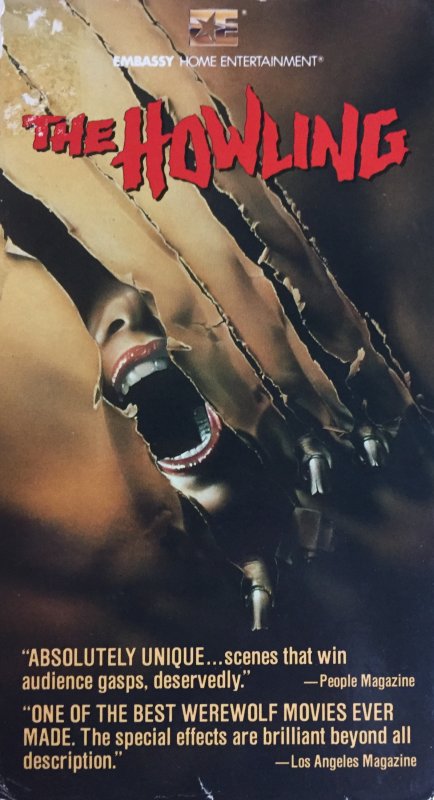
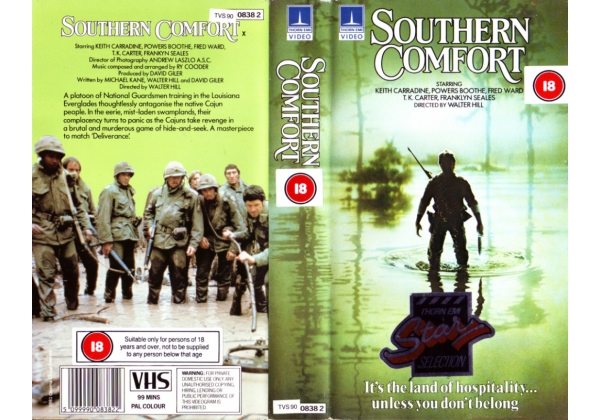
The Video Masheen shop on Sheen Lane was a treasure trove of interesting VHS covers, a weird showroom advertising movies I’d never get to see. What kind of deranged mind could conceive of these images? The mind boggled. Some surely qualify as genuinely surreal pieces of art, though the #MeToo movement would probably put pay to a few more these days.
Here are some VHS covers of the era that stuck in the mind. Straight from the shelf of Video Masheen. Happy Halloween…
Stanley’s music first grabbed me sometime in the mid-’80s.
It was the bassist/composer’s incredible 1974 self-titled album featuring Tony Williams on drums, Jan Hammer on keyboards and Bill Connors on guitar.
Clarke remains a hero – I still greet his new albums with some enthusiasm and his career seems to have enjoyed a new lease of life over the last 10 years or so.
2006’s Toys Of Men was a huge return to form, and releases since then have been prolific if less impressive.
Which brings us to Stanley’s new album, The Message. It continues his tried-and-tested formula: some sh*t-kickin’, symphonic jazz/rock, vocal-based R’n’B, acoustic interludes with a classical bent and brief novelty curios featuring some guest star or other (this time Doug E Fresh on rapping and human beatbox).
On previous classics like School Days and If This Bass Could Only Talk, the formula worked a treat. But this time, besides the typically great playing, there are a few issues – with Stanley’s production, compositions and ‘message’.
The opener ‘And Ya Know We’re Missing You’ is a tribute to all of the following: Al Jarreau, Ndugu Chancler, Tom Petty, Chuck Berry and Larry Coryell. It sounds suspiciously like a demo, complete with distortion and rudimentary ‘slap in E’ groove. Sure, he can pay tribute to whoever he likes in whichever way he deems suitable, but this seems a really uncommitted two minutes of music.
A re-tread of the Return To Forever classic ‘After The Cosmic Rain’ also emphasises the problem with contemporary production. The new one sounds hemmed in, dried out, panicky. Drummer Mike Mitchell must take some of the blame too – he has perfected the lightning-fast single-stroke rolls but they get boring very quickly. It doesn’t help that he tunes his drums to choking point.
There are substantial pieces of music here: the title track, ‘The Rugged Truth’ and ‘The Legend Of The Abbas And The Sacred Talisman’ are great compositions which bear comparison with Stanley classics like ‘Light As A Feather’, ‘Life Is Just A Game’ and ‘Song To John’.
The acoustic-bass take on Bach’s Cello Suite is gorgeous too, but a few other tracks are beyond help – the treacly ‘Lost In A World’ and ‘To Be Alive’ irritate, while only Stanley knows what’s behind ‘Combat Continuum’, a nutty futuristic spoken-word/fusion piece about impending war.
What a shame. It could have been a classic, but The Message has 5/10 written all over it. It’s definitely one for filleting on streaming services though, and I’m sure the music will come alive in concert.
We’ve briefly looked at crap cover versions before (though doubtless there’ll be more to come), but how about good ones from the 1980s?
It was quite easy coming up with a fairly long list. I guess the ultimate test is that at the time most people (including me) didn’t know – or didn’t care – that they were cover versions.
There wasn’t a great deal of looking back in this golden period for pop.
But it did seem as if a lot of ’80s acts had the magic touch, or at least a total lack of fear, making almost everything sound like their own. Punk probably had quite a lot to do with that.
Some of the following choices get in for sheer weirdness but most are genuine artistic achievements. Recurring themes? The Beatles, Motown, Otis Redding. Probably not too much of a surprise there. And 1981 seems a particularly good year for covers.
Anyway, enough of my yakkin’. Let the countdown commence…
33. Bow Wow Wow: ‘I Want Candy’ (1982)
32. David Bowie: ‘Criminal World’ (1983)
31. Ry Cooder: ’13 Question Method’ (1987)
Ry’s brilliant solo take on Chuck Berry from the Get Rhythm album.
30. Propaganda: ‘Sorry For Laughing’ (1985)
The Dusseldorf pop mavericks take on Josef K’s post-punk curio (apparently at Paul Morley’s urging) to produce a sweeping, majestic synth-pop classic.
29. Joan Jett & The Blackhearts: ‘Little Drummer Boy’ (1981)
28. Living Colour: ‘Memories Can’t Wait’ (1988)
27. Sting: ‘Little Wing’ (1987)
26. Randy Crawford/Yellowjackets: ‘Imagine’ (1981)
Who knew this would work? Sensitive and imaginative reading of the Lennon classic, with a classic Robben Ford guitar solo.
25. Lee Ritenour: ‘(You Caught Me) Smilin” (1981)
Gorgeous West-Coast version of Sly Stone’s pop/funk opus. Surely one of the most unlikely covers of the decade, but it works a treat.
24. Luther Vandross: ‘A House Is Not A Home’ (1982)
23. John Martyn: ‘Johnny Too Bad’ (1980)
Originally a reggae track by The Slickers and first released on ‘The Harder They Come’ soundtrack in 1972, Martyn and drummer Phil Collins rearranged it and added some lyrics. It featured on John’s fantastic Grace And Danger album.
22. Soft Cell: ‘Tainted Love’ (1981)
Cracking version of Gloria Jones’ ’60s Northern Soul classic (written by Ed Cobb). A hit all over the world, with pleasingly remedial synth arrangement, instantly recognisable soundworld and classic intro.
21. Grace Jones: ‘Use Me’ (1981)
The Nightclubbing album featured a veritable smorgasbord of good cover versions, but this take on Bill Withers scores particularly highly for originality.
20. The Flying Lizards: ‘Sex Machine’ (1981)
19. The Replacements: ‘Cruela De Vil’ (1988)
From the brilliant Hal Willner-helmed Disney tribute album Stay Awake, you’d have been a brave punter to bet a dime on this one working, but work it does.
18. Quincy Jones: ‘Ai No Corrida’ (1981)
17. Donald Fagen: ‘Ruby Baby’ (1982)
16. Stanley Clarke: ‘Born In The USA’ (1985)
Who knows, maybe this could have provided Stanley with a novelty hit if CBS had been quicker off the mark. He references John Coltrane’s ‘A Love Supreme’ in the intro while Rayford Griffin lays down seismic grooves and a funny old-school rap.
15. The Power Station: ‘Get It On’ (1985)
‘If cocaine was a sound…’, as a YouTube wag described it. This near-hysterical rave-up is mainly the sound of a fun late-night jam (Tony Thompson’s drumming being particularly notable). Also check out guitarist Andy Taylor’s little ode to Talking Heads’ ‘Burning Down The House’ throughout.
14. Deborah And The Puerto Ricans: ‘Respect’ (1981)
A one-off solo single from The Flying Lizards’ singer, this Dennis Bovell-produced curio missed the charts but remains a fascinating post-punk artefact.
13. Roxy Music: ‘In The Midnight Hour’ (1980)
Roxy’s first cover version presumably raised some eyebrows but the lads pull it off with some aplomb, aided by Allan Schwartzberg’s tough NYC drum groove – and the fact that Bryan Ferry can’t resist adding some typical weirdness in the first 20 seconds.
12. Ringo Starr & Herb Alpert: ‘When You Wish Upon A Star’ (1988)
Another once-heard-never-forgotten cracker from the aforementioned Stay Awake collection, the album version is preceded by a very menacing Ken Nordine spoken-word intro.
11. Japan: ‘Ain’t That Peculiar’ (1980)
David Sylvian probably hates this but no matter. It’s hard to think of another band pulling it off. Ominous synthscapes from Richard Barbieri, a nice recorder solo by Mick Karn and brilliant ‘where’s-one?’ beat from Steve Jansen.
10. Everything But The Girl: ‘I Don’t Want To Talk About It’ (1988)
It definitely divides opinion, but certainly fits the ‘sounds like they wrote it’ criterion.
9. Bananarama & Fun Boy Three: ‘Really Saying Something’ (1982)
Penned by Motown songsmiths Norman Whitfield, Micky Stevenson and Edward Holland Jr and first performed by The Velvelettes in 1964, it’s hard not to smile when this comes on the radio. I love the way the ladies pronounce ‘strutting’.
8. David Bowie: ‘Kingdom Come’ (1980)
The Dame’s magnificent take on a little-known track from Tom Verlaine’s 1978 debut album.
7. UB40: ‘Red Red Wine’ (1983)
No apologies for including this Neil Diamond-penned perennial. Great bassline, nice groove, lovely Ali Campbell vocal performance.
6. Phil Collins: ‘Tomorrow Never Knows’ (1981)
Phil closed his Face Value album with this oft-forgotten corker, featuring a classic John Giblin bassline (later cribbed by Pearl Jam for the opening of their ‘Once’) and cool Shankar violin.
5. Robert Palmer: ‘Not A Second Time’ (1980)
Robert adds some New Wave grit to this Lennon-penned rocker, and his singing has rarely been better.
4. Siouxsie And The Banshees: ‘Dear Prudence’ (1983)
3. Joan Jett & The Blackhearts: ‘I Love Rock And Roll’ (1982)
First recorded by The Arrows in 1975, this is simply one of the great singles of the 1980s and a huge hit to boot.
2. Hue & Cry: ‘The Man With The Child In His Eyes’ (1988)
It shouldn’t work but it does, courtesy of singer Pat Kane’s excellent tone and phrasing. His trademark ‘na-na-na-na’s help too. I wonder what Kate thought of it.
1. Blondie: ‘The Tide Is High’ (1980)
Written by reggae legend John Holt and first performed by The Paragons in 1966, this was an inspired – if somewhat cheesy – choice for the band. It’s mainly included here for Debbie Harry’s delightfully off-the-cuff vocal, sounding like her first crack at the song.
It’s difficult to believe but today marks 30 years since the release of FZ’s final ‘rock’ album, Broadway The Hard Way.
After that, there were just a few more official live collections, and then he was gone.
Posthumous Zappa books seem to have mainly focused on his status as a countercultural hero (though Ben Watson’s incisive works deserve a special mention) and the musicians around him.
Even the entertaining 1989 ‘autobiography’ (ghosted by Peter Occhiogrosso) propagated most of the myths and featured only one chapter about music.
Charles Ulrich’s ‘The Big Note’ redresses the balance. This is the book Zappa fans have been waiting for. It’s an alphabetical album guide featuring everything you’ll ever need to know about his songs, musicians and concerts.
The title comes from Zappa’s theory that all of his recorded, live and written work formed a kind of ‘Big Note’, with overlapping themes and recurring motifs.
The book features very little – if any – critical appreciation of this work, just detailed notes on the lyrical and musical references alongside many explanatory quotes from FZ himself.
Ulrich’s approach works a treat. The book functions as both a meticulously-researched reference guide and a ‘gospel according to FZ’. For example, it’s been bugging me for nearly 30 years what the band plays after Frank’s exclamation: ‘…who was strictly from commercial!’ in ‘Nanook Rubs It’ – I found out in an instant.
I was also pleased and amazed to read that ‘Rat Tomago’ from Sheik Yerbouti was nominated for a 1979 Best Rock Instrumental Performance Grammy (but lost out to Wings’ ‘Rockestra Theme’!).
There’ll never be anyone else quite like Zappa. Long overdue, this is the book his music deserves.
‘The Big Note’ by Charles Ulrich is published now by Newstar Books.
It doesn’t happen very often, but occasionally a documentary comes along that makes you question everything, puts a new slant on life and death, the whole shebang.
Or just gives you a damn good scare. Paul Hamann’s ‘Fourteen Days In May’ definitely fits the bill.
Shot over two weeks during the summer of 1987 at the infamous Mississippi State Penitentiary – AKA Parchman Farm – ‘Fourteen Days In May’ follows a young black man Edward Johnson as he prepares for – and, with the help of his lawyer Clive Stafford Smith, tries to evade – the gas chamber.
First shown on the BBC over 30 years ago, it has become a landmark film. Similar areas have recently been explored by Werner Herzog, Louis Theroux and Nick Broomfield, but arguably ‘Fourteen Days In May’ trumps all of them for sheer emotional impact.
It explores the inner workings of a prison geared up for taking human life. Astonishing shots shed light on a kind of modern slavery, with policemen on horseback brandishing shotguns, calling out loud reprimands and instructions to large groups of (almost exclusively) young black detainees as they dig ditches or clear roadside vegetation.
Elsewhere we are witness to the last few minutes of another (white) inmate’s life as he is strapped into the electric chair, though thankfully we don’t see the moment of truth. The gallows humour of both the killers and killed will linger long in the memory.
As ‘Fourteen Days In May’ moves painfully and inexorably on, it becomes increasingly clear that Johnson is innocent. But no-one can do anything about it. Various (black and white) prison officers bravely profess their doubts as to his guilt, while Johnson’s family rally around the quiet, unfailingly polite young man, singing him songs to keep his spirits up.
Hamann breaks the fourth wall to says his goodbyes to Johnson in a memorable scene. But shorn of a voiceover or title cards, ‘Fourteen Days In May’ offers no explicit critique of capital punishment. It doesn’t need to. The facts do that for themselves.
It would seem churlish and pointless not to reveal the ‘ending’ of the film here – Edward Johnson meets his maker. The crushing coda reveals that a young black woman came forward after the execution to verify that she saw him in a pool hall during the time of the alleged crime, but when reporting this to a white police officer soon after was threateningly advised to mind her own business.
What do we take away from ‘Fourteen Days In May’? The only correct response would seem to be rage. And fear. But after that, there’s a helplessness and a slow-burning disgust.
The only slight light at the end of the tunnel is the knowledge that it was in direct response to this documentary that the Lifelines organisation was set up, arranging pen pals for death row prisoners. Stafford Smith has also founded Reprieve.
Is America still like this? The suspicion would have to be that it is.
September’s here again. The leaves brown, the nights draw in; thoughts and ears turn towards Sylvian’s music.
The exquisite Brilliant Trees, released in July 1984, is one of those collections that I must have owned on almost every format over the years, and probably bought a few times on each.
A period of extreme introspection and even depression descended upon Sylvian following the split of Japan in late 1982.
Although his relationship with Mick Karn’s ex Yuka Fujii (who took the photos in the stylish Brilliant Trees album package) was largely thought to be the main catalyst, it still represented for Sylvian a distressing rupture of childhood friendships.
He later claimed that he could barely stay awake during this period, so degraded were his immune system and emotional reserves.
Sylvian gathered co-producer Steve Nye and some of his favourite musicians at Berlin’s Hansa Studios and RAK in London. Influences came from ambient music, NYC avant-funk, John Martyn, Nick Drake and ECM jazz.
His friend/ frequent collaborator Ryuichi Sakamoto and brother Steve Jansen were the main musical cohorts, though ex-Japan keyboard texturalist Richard Barbieri also appeared to great effect.
Brilliant Trees is very much an album of two sides. The opener ‘Pulling Punches’ is a sweetener, an effective but unrepresentative slice of white funk featuring NYC sessioneers Wayne Braithwaite and Ronnie Drayton on bass and guitar. The nearest thing to the Tin Drum sound, there’s nothing remotely like it on the rest of the album.
What a treat to hear Kenny Wheeler and Mark Isham’s flugelhorn/trumpet breaks on the classic singles ‘Ink In The Well’ (UK #36) and ‘Red Guitar’ (UK #17). Side two is a different matter altogether – it’s dark, foreboding, autumnal.
Sylvian and Nye mostly eschew ‘conventional’ solos in favour of ‘found’ sounds courtesy of Holger Czukay’s Dictaphone (see below) or Jon Hassell’s extraordinary conch-like trumpet, both used to especially brilliant effect on ‘Wailing Wall’.
‘Backwater’ begins with a powerful build up of (sampled?) strings (and check out Jansen’s inspired groove, a queasy 6/4 over a very strange programmed shaker pattern), while the almost hymnal title track is beautifully performed by Sylvian and adorned with a gorgeous ethno-jam outro.
Listening 30 years on, what strikes one is the minimalist nature of the whole album. It has dated remarkably well. Many tracks are built around a cyclical Jansen groove, sparse bass, strong Sylvian melody and then tasteful, painterly touches from clean guitar, piano, Dictaphone or synth.
This stunning collection set in motion a superb four-album run of form for Sylvian. Brilliant Trees is an almost-perfect blend of songcraft and the avant-garde at a time when pop was drawing on jazz, ambient and world music to occasionally spectacular – and commercial – effect (the album reached #4 in the UK charts and sold over 100,000 copies). You might say things were never quite the same again.
It would be tempting to call Kevin Armstrong the ultimate ‘nearly man’ of 1980s pop – he nearly joined a post-Johnny-Marr Smiths, was nearly a founder member of David Bowie’s Tin Machine, nearly joined Level 42 Mark II, and nearly became Paul McCartney’s right-hand man during the ex-Beatle’s late-decade renaissance.
But that would be unfair on the guitarist; as well as stellar work with Bowie (Live Aid, ‘Absolute Beginners’, ‘Dancing In The Streets’) and Iggy Pop (Blah-Blah-Blah, countless world tours), he has also contributed to classic albums by Prefab Sprout, Thomas Dolby and Morrissey and performed live with Roy Orbison, Sinead O’Connor, Grace Jones, Propaganda and PiL.
This entertaining Pizza Express show was half wonderfully-indiscreet spoken-word memoir and half gig. Decked out in all-black rock-star garb, Armstrong described his initiation into the music world via an obsession with Zappa’s ‘Black Napkins’ and postal-order guitar handbooks, and lamented the current pop scene as ‘just another part of consumer culture’.
He spoke of one life-changing morning in early 1985 when he received the call from legendary (and brilliantly-named) EMI A&R man Hugh Stanley-Clarke: an invitation to Abbey Road to record with ‘Mr X’. Arriving at the famous address, Armstrong was shown upstairs to a tiny demo studio (not the big Beatles-frequenting Studio 1 downstairs) to find a bunch of session players and a smiling, suited Bowie holding an omnichord and uttering the totally superfluous ‘Hi, I’m David!’. Bowie then proceeded to teach the band a song called ‘That’s Motivation’ (from the ‘Absolute Beginners’ soundtrack) two bars at a time – and they then recorded it that way too.
A few days later, Bowie summoned Armstrong to Westside Studios near Ladbroke Grove for the ‘Absolute Beginners’ and ‘Dancing In The Street’ recordings (the former with vocals by Armstrong’s sister, then working behind the till at Dorothy Perkins, responding to Bowie’s request for a ‘shopgirl’ to sing duet with him!). The latter session was of course graced by an absurdly perky Mick Jagger. Apparently Bowie and Jagger spent most of the vocal sessions shouting ‘Let’s ring Maureen!’, their nickname for Elton John.
Armstrong then told great tales of Live Aid, mainly highlighting Bowie’s incredible generosity: fluffing the names of backing vocalists Helena Springs and Tessa Niles during his onstage band introductions (no other solo artist introduced his/her band on the day), according to Armstrong he immediately apologised profusely to the singers as soon as they were offstage.
There were further funny tales of Gil Evans, Iggy and McCartney (who apparently once smoked some unbelievably strong grass with Armstrong, said ‘That’s you stoned!’ to the erstwhile guitarist, then promptly disappeared) and an exceptionally eccentric Grace Jones who allegedly took a distinct liking to Armstrong at a party, taking him by the hand and leading him away for some sexual shenanigans. Who should intervene but Bowie, grabbing Armstrong’s other hand and whispering in the guitarist’s ear: ‘No you don’t. She’ll have you for breakfast, sunshine…’
In the second half of the evening, Armstrong was joined by Iggy bandmates Ben Ellis on bass and Matt Hector on drums to perform songs that he’d played live with all the aforementioned stars. Efficiently sung and superbly played, it nevertheless emphasised the difference between a perennial sessionman and born headliner.
But this was still a hugely enjoyable evening, foregrounding a time when music really was transformative. We await Armstrong’s forthcoming memoir with great anticipation.
The 1980s produced some fine lyricists. You couldn’t move for decent wordsmithery. But interesting lyrics came from the damndest places.
What was that Trevor Horn maxim? A good pop song should be like a good story, such that the listener is always asking: what’s going to happen next?
And, like a good story, pretty much every good song starts with an intriguing opening line or two. As the proverbial cigar-munching music-biz mogul might say: ‘You gotta grab ’em from the first bar, kid…’ So here are some great opening lines from 1980s songs, lines that hopefully satisfy Horn’s requirements.
Everything But The Girl: ‘Each And Every One’
‘If you ever feel the time/ To drop me a loving line/ Maybe you should just think twice/ I don’t wait around on your advice’
Associates: ‘Club Country’
‘The fault is/I can find no fault in you’
Wet Wet Wet: ‘Wishing I Was Lucky’
‘I was living in a land of make believe/ When my best friend wrote and told me that there may be a job in the city’
Lou Reed: ‘How Do You Speak To An Angel’
‘A son who is cursed with a harridan mother or a weak simpering father at best/ Is raised to play out the timeless classical motives of filial love and incest’
Steely Dan: ‘Babylon Sisters’
‘Drive west on Sunset to the sea/ Turn that jungle music down/ Just until we’re out of town’
Associates: ‘Party Fears Two’
‘I’ll have a shower then call my brother up/ Within the hour I’ll smash another cup’
Joni Mitchell: ‘Chinese Cafe’
‘Caught in the middle/ Carol, we’re middle-class/
We’re middle-aged/ We were wild in the old days/ Birth of rock’n’roll days’
The Smiths: ‘Reel Around The Fountain’
‘It’s time the tale were told/ Of how you took a child and you made him old’
Thomas Dolby: ‘Screen Kiss’
‘Miller Time in the bar where all the English meet/ She used to drink in the hills/ Only now she drinks in the valleys’
Love And Money: ‘Hallejulah Man’
‘On the blind side and down the back ways/ The roots of sadness crawl/ When you can’t get what you need/ You feel like taking a torch to it all’
Joy Division: ‘Love Will Tear Us Apart’
‘When routine bites hard and ambitions are low/ And resentment rides high but emotions won’t grow’
The Teardrop Explodes: ‘Reward’
‘Bless my cotton socks/I’m in the news’
Tom Waits: ‘Swordfishtrombones’
‘Well, he came home from the war with a party in his head/ And a modified Brougham DeVille and a pair of legs that opened up like butterfly wings’
Prefab Sprout: ‘Moving The River’
‘You surely are a truly gifted kid/ But you’re only as good as the last great thing you did’
Lloyd Cole & The Commotions: ‘Brand New Friend’
‘Walking in the pouring rain/ Walking with Jesus and Jane/ Jane was in a turtleneck/ I was much happier then’
Siouxsie & The Banshees: ‘Cascade’
‘Oh the air was shining/ Shining like a wedding ring’
Bob Dylan: ‘Jokerman’
‘Standing on the waters casting your bread/ While the eyes of the idol with the iron head are glowing/ Distant ships sailing into the mist/ You were born with a snake in both of your fists while a hurricane was blowing’
Robert Palmer: ‘Johnny And Mary’
‘Johnny’s always running around trying to find certainty/ He needs all the world to confirm that he ain’t lonely’
Prefab Sprout: Talking Scarlet
‘You hide under the eiderdown/ All you can’t sweep underneath the carpet’
The Human League: ‘Don’t You Want Me’
‘I was working as a waitress in a cocktail bar/When I met you’
Talking Heads: ‘Crosseyed And Painless’
‘Lost my shape/ Trying to act casual/ Can’t stop/ Might end up in the hospital’
Scritti Politti: ‘A Little Knowledge’
‘Now I know to love you/Is not to know you’
The Smiths: ‘Bigmouth Strikes Again’
‘Sweetness, I was only joking/ When I said I’d like to smash every tooth in your head’
One thing you could never say about the man born Seymour Steinbigle: he’s led a dull life. And his new autobiography ‘Siren Song’ is anything but a dull book.
Born in a down-at-heel corner of Brooklyn, he did his time at Billboard, Tin Pan Alley, CBGB and Studio 54 and either discovered or nurtured Madonna, Talking Heads, k.d. lang (who calls him ‘the man with the golden ears’), Ramones, Depeche Mode, Erasure, Ice-T, Soft Cell, Squeeze, The Smiths, The Cult (by now you’ll be gleaning that he’s somewhat of an Anglophile), Lou Reed and Brian Wilson, all via his imprint Sire Records (which he co-founded with Richard Gottehrer).
So far, so common Rock Snob knowledge. And there’s no question that ‘Siren Song’ is a great resource for those who want to know about the making of and/or music-biz machinations behind some of the great modern pop/rock albums: Fear Of Music, Like A Virgin (complete with fascinating gossip about Nile Rodgers’ business dealings), My Life In The Bush Of Ghosts, The Queen Is Dead, Ramones, New York.
And then there are the fascinating tales of Stein signing Madonna from his hospital bed, visiting Talking Heads’ weird Long Island City loft and stalking Jethro Tull. He also writes superbly about the early ’80s music scene, when electro, hip-hop, Afro-beat, indie, new wave, reggae and post-disco combined to produce arguably the greatest ever pop period.
But two aspects separate ‘Siren Song’ from other similar tomes: Stein’s sheer love of music and his penchant for a pithy – but seldom tawdry – one-liner. On his lack of musical knowledge: ‘It’s usually better not to know the disgusting secrets of how the sausage got made.’
On David Byrne’s quirkiness: ‘He was someone I’d always support even if he wanted to make a concept album about toothpicks.’ On seeing Depeche Mode live for the first time: ‘They were four kids poking synths in a dump in the English suburbs.’ On the future of music: ‘Labels will always be needed, because only maniacs like me are insane enough to roam the globe, trawling through miles and miles of sh*t to just every now and then pick out a tiny diamond.’
Stein writes powerfully about the AIDS epidemic and the ramifications of being a gay man living a ‘straight’ life in the ’70s and ’80s (he had a wife and two daughters during the period). He superbly explains the timeless appeal of English guitar bands to Americans.
The prologue is also a classic, describing what it means to love music and the joys, perils and sacrifices involved (especially if you’re coming from a working-class family) with seeking a career in A&R (artist and repertoire, or, in Stein-speak, people and songs).
‘Siren Songs’ is an unexpected gem and highly recommended.
‘Siren Song’ by Seymour Stein and Gareth Murphy is published by St Martin’s Press.
Studio technology was blossoming fast and there was constant temptation (and pressure?) to come up with new sounds. Fairlights, Emulators, Synclaviers, gated snare drums: there had never been more ways to skin a cat.
But woe betide the ’80s popster who neglected the basic tenets of songcraft; the trick was coming up with memorable bits that fitted seamlessly into a track and bore repeated listening.
Thankfully, for every what-does-this-button-do novelty, there was a genuinely innovative, memorable pop moment, and some great instrumental solos to boot. So here’s a compendium of good bits from the 1980s, details that mark the decade out as a unique musical era. The rules: one artist per slot and every song has to have made the UK or US top 40 singles chart, or both…
41. Ian Dury’s ‘…and!’ during his monologue/introduction at the start of ‘I Wanna Be Straight’
40. Helen Terry’s backing vocals on Culture Club’s 1984 hit ‘It’s A Miracle’.
39. The spoken word bit in SOS Band’s ‘Weekend Girl’.
38. Nigel Kennedy’s violin solo on Paul McCartney’s ‘Once Upon A Long Ago’.
37. Greg Phillinganes’ synth bass on Donna Summer’s ‘Love Is In Control (Finger On The Trigger)’, especially the ‘squelch’ at 2:53 below:
36. Lee Thompson’s sax in the second verse of Madness’s ‘My Girl’
35. Marc Almond’s spoken-word line in Soft Cell’s ‘Say Hello Wave Goodbye’
34. Mel Gaynor’s volcanic snare-drum fill after the breakdown in Simple Minds’ ‘Alive And Kicking’
There’s a similar eruption in ‘Don’t You Forget About Me’, but this one wins out for sheer audacity. I wonder what ‘anti-muso’ co-producer Jimmy Iovine had to say about it…
33. The fade of The Police’s ‘Every Little Thing She Does Is Magic’
32. The Middle Eastern synth riff in Blancmange’s ‘Living On The Ceiling’
31. Steve Jansen’s marimba solo on Japan’s ‘Ghosts’
30. Mark Knopfler’s lead guitar at the tail end of Dire Straits’ ‘Romeo And Juliet’
29. Martin Drover’s trumpet riff on Adam Ant’s ‘Goody Two Shoes’
28. The bassline enters at 0:20 of The Cure’s ‘Love Cats’
Phil Thornalley is a veritable Zelig figure in ’80s pop, but even he couldn’t have imagined that his superbly simple-yet-complex bassline (try playing along) could have had such an impact on this stand-alone UK top 5 single.
27. Martin Fry’s hysterical ‘You think you’re smart/That’s stupid/Right from the start/When you knew we would part!‘ at the tail end of ABC’s ‘Poison Ivy’
Pointing the way forward for similar outbursts from Jarvis Cocker et al.
26. The weird coda of Stephen Tin Tin Duffy’s ‘Kiss Me’
Just when you thought this slightly-annoying-but-effective UK top 10 single was all done and dusted, there’s that menacing little DX7 kiss-off…
25. Melle Mel’s laugh-rap on Grandmaster Flash’s ‘The Message’
24. The guitar riff on The Pretenders’ ‘Back On The Chain Gang’
The jury seems to be out on whether Billy Bremner or Robbie McIntosh played this (answers on a postcard please).
23. Pino Palladino’s opening bass salvo at 0:04 of Paul Young’s ‘I’m Gonna Tear Your Playhouse Down’
22. David Williams’ guitar break on Michael Jackson’s ‘Wanna Be Startin’ Somethin”
21. The jangling piano motif of Associates’ ‘Party Fears Two’
Who came up with this weird brilliance? For a generation of listeners, it’ll always be the theme to BBC radio’s ‘Week Ending’.
20. The post-chorus drum fills on It Bites’ ‘Calling All The Heroes’
Deceptively simple (leading with the left hand is not easy for a right-handed drummer), tasty fills from Bob Dalton, the Cumbrian four-piece’s sticksman.
19. The backing vocals at 1:45 of Quincy Jones’ ‘Razzamatazz’
Patti Austin’s kaleidoscopic overdubs on the Rod Temperton-penned single which reached #11 in the UK chart.
18. ‘Heeeere’s Grace!‘ on ‘Slave To The Rhythm’
17. ‘Science!’
Dr Magnus Pyke’s outburst on Thomas Dolby’s ‘She Blinded Me With Science’ still raises a titter, but apparently he quickly came to regret his contribution to this US #5 single.
16. The Emulator string stabs which close Paul Hardcastle’s ’19’
15. The spoken-word bits in Frankie Goes To Hollywood’s songs
Take your pick from: ‘Well ‘ard!’, ‘Are you flipping me off?’, ‘In Xanadu did Kublai Khan/Pleasuredome erect!’ or my favourite: ‘In the common age of automation, where people might eventually work ten or twenty hours a week, man for the first time will be forced to confront himself with the true spiritual problems of livin”!
14. Neneh Cherry’s cockney accent on ‘Buffalo Stance’
13. The Sweetbreaths’ backing vocals at 1:36 on Tom Tom Club’s ‘Wordy Rappinghood’
Tina Weymouth’s sisters Lani and Laura bring the silliness, interpreted by Google thus: ‘Ram sam sam, a ram sam sam/Guli guli guli guli guli ram sam sam/Haykayay yipi yaykayé/Ahou ahou a nikichi’.
12. Bill Wyman’s French accent in the chorus of ‘(Si Si) Je Suis Un Rock Star’
11. Stevie Wonder’s harmonica solo on Eurythmics’ ‘There Must Be An Angel’
Is there any musician in pop music history who has better communicated pure joy?
10. The ‘Hey!’ sample on Art Of Noise’s ‘Close (To The Edit)’
Not the Noise’s Anne Dudley apparently, but Camilla Pilkington-Smyth (Who she? Ed.). A song of good bits.
9. The ‘Oh yeah!’ sample in Yello’s…’Oh Yeah’
8. Eric B’s ‘Pump up the volume!’ on ‘Paid In Full’
7. That Phil Collins drum fill on ‘In The Air Tonight’
It’s always a bit louder than you think it’s going to be…
6. Roy Bittan’s flanged piano on David Bowie’s ‘Ashes To Ashes’
5. The banshee-wailing on The Specials’ ‘Ghost Town’
It’s a close call between that and the haunting air-raid sirens at the end.
4. The whistling on XTC’s ‘Generals And Majors’
Real whistling or a synth? Who cares? Colin Moulding’s song has more great pop hooks than you can shake a stick at.
3. Abby Kimber’s cod nursery rhyme at the end of Bucks Fizz’s ‘Land Of Make Believe’
2. The synth riff of Human League’s ‘Love Action (I Believe In Love)’
1. Ryuichi Sakamoto’s funky piano on David Sylvian’s ‘Red Guitar’

 Back in those early days of VHS fever at the beginning of the ’80s, my parents would occasionally invite friends round to watch a scary movie.



 Stanley’s music first grabbed me sometime in the mid-’80s.
  We’ve briefly looked at crap cover versions
 It doesn’t happen very often, but occasionally a documentary comes along that makes you question everything, puts a new slant on life and death, the whole shebang.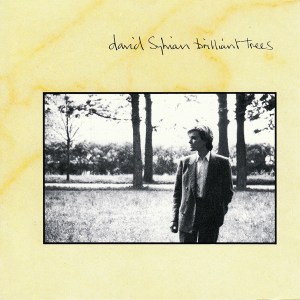


 The 1980s produced some fine lyricists. You couldn’t move for decent wordsmithery. But interesting lyrics came from the damndest places.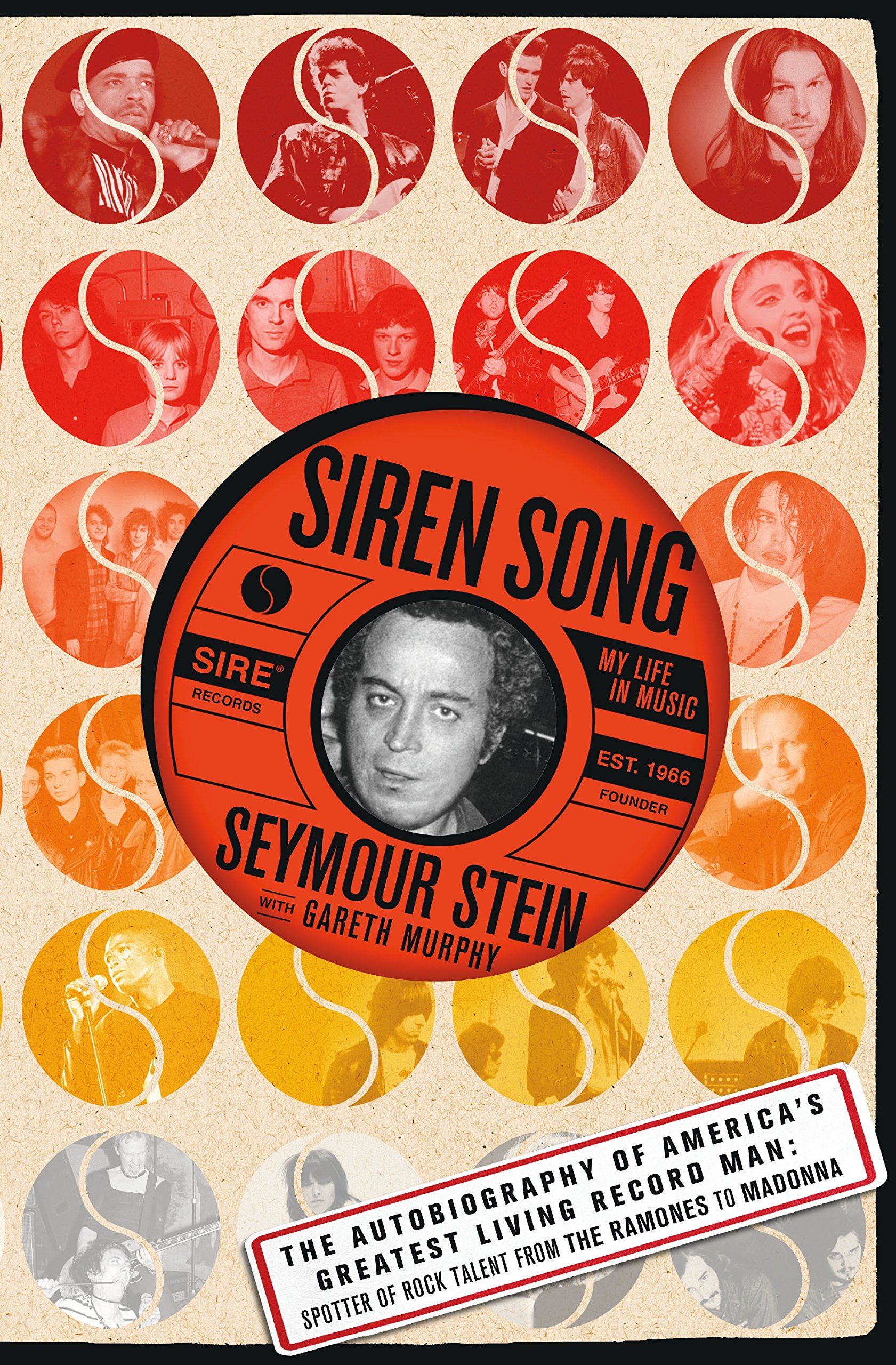
 Earworms: 1980s pop was chock-a-block with ’em.
  movingtheriver.com