Curiosity Killed The Cat: Keep Your Distance 30 Years On

If you’d taken a walk along London’s King’s Road in the summer of 1987, chances are you would have seen a lot of lads who looked just like Curiosity Killed The Cat; jeans from Dickie Dirts in Westbourne Grove, black polo neck, white T-shirt or Fred Perry, bomber jacket or cardigan, loafers or Doc Martens, and a flat-top haircut with a bit of gel.

Certainly most of the girls at my school fancied Curiosity. But then there was the music. You knew they had raided their parents’ cool record collections – they had a bit of Sly & Robbie, Trouble Funk, Robert Palmer, Dr John, Michael McDonald and Chic in there, also a large dollop of Little Feat.

Singer Ben Volpeliere-Pierrot had a light, attractive baritone voice, some eccentric dance moves and ‘relaxed’ stage patter. Drummer Migi Drummond and bassist Nick Thorpe definitely knew where ‘one’ was, and the band rounded out their sound with some fine horn and percussion arrangements.


Curiosity were the slightly sloaney South-West London lads who found the funk, probably the most musically accomplished of ’80s ‘teenybopper’ bands.

They formed in 1984 from the ashes of Twilight Children, a post-punk band originally formed by Drummond and Thorpe. Offered studio time by family friend Eric Clapton, they cut a number of demos and quickly got the attention of businessman/impressario Peter Rosengard, who became their manager.

Curiosity played their first gig at London’s Embassy Club in December 1984 and quickly picked up quite a big live following. After co-writing ten tracks with session keyboardist Toby Andersen, they were snapped up by Phonogram/Mercury Records in summer 1985 after a considerable bidding war.

Simply Red/Crusaders/Randy Crawford/Sly and the Family Stone producer Stewart Levine was selected to rescue their debut album after aborted sessions with Sly & Robbie, Paul Staveley O’Duffy and Culture Club’s Roy Hay.

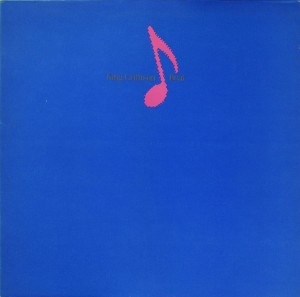
First single ‘Misfit’ stiffed in August 1986, even though its video featured early champion Andy Warhol (who writes amusingly about Curiosity in his diaries). But ‘Down To Earth’ crashed into the top 10 soon after and Keep Your Distance went straight into the UK album charts at number one in April 1987, and also made the US top 60.

A rereleased ‘Misfit’ then hit the UK top 10, and the Staveley O’Duffy-produced ‘Ordinary Day’ was a further hit. A fourth single, the Sly & Robbie-helmed ‘Free’, missed the top 40 entirely, possibly because its chorus featured one of the most hare-brained lyrical couplets of the decade.

But apart from Keep Your Distance‘s singles – all of which stand up pretty well these days – the album’s deep cuts showcase what the band were all about: the rather lovely ‘Red Lights’ and shimmering ‘Know What You Know’ are a winning fusion of Sade and Little Feat.

Andersen was dumped by the band just three months after the album’s release. He kvetched about it to Q Magazine in the December 1987 issue, saying ‘I suppose it could have been down to looks…’ Ben V-P disagreed, saying Andersen’s replacement ‘was just a better player’. What did Toby do after Curiosity? A Discogs search doesn’t reveal much beyond a few sessions for Belouis Some.

Curiosity’s impact was sudden, but their success short-lived. Why? Sacking a key songwriter and then waiting two years to release a follow-up didn’t help. Also their good looks and immediate success skewed record company expectations which would subsequently be almost impossible to fulfil, and also possibly blunted their musical potential.

Who knows what else they could have achieved? With a bit of luck and better guidance, they might have developed into a Simply Red-style crossover soul/funk band, if that’s what they wanted to do. Still, they departed the 1980s with two very decent studio albums and some memorable gigs.

XTC: Skylarking Uncovered

It’s only natural that a young(ish) man’s fancy should turn to Skylarking at this time of year.

And though I must have listened to it tens of times, Steven Wilson’s new instrumental mix uncovers many of the album’s sonic secrets.

Though lead songwriter/vocalist Andy Partridge had a somewhat ‘strained’ relationship with producer Todd Rundgren, this version demonstrates once and for all that Todd played a blinder on Skylarking, as arranger, sound designer, occasional keys player and backing vocalist.

And the others (Dave Gregory, Colin Moulding, Prairie Prince, sundry guest players) weren’t too shabby either.

Things to listen out for: the charmingly ramshackle 12-string guitars and Mellotron underpinning ‘Summer’s Cauldron’, the dramatic cello gracenotes that punctuate ‘Grass’, Partridge’s Stax-flavoured guitar and Todd’s synths on ‘That’s Really Super Supergirl’, Gregory’s superb piano on ‘Ballet For A Rainy Day’ and ‘Season Cycle’ and intricate guitar on ‘Earn Enough For Us’, the mad mariachi trumpets that kick off ‘Big Day’, Prairie’s subtle drums on ‘Mermaid Smiled’, and…well, you get the idea.

It seems unlikely that this will appeal to any but the most hardcore XTC fans, but who knows? The top-notch songcraft and synaesthetic textures may even draw in some new punters.

11 Great 1980s Movie Taglines

Movie taglines: you know the drill (actually the tagline for a dental-themed slasher pic whose name escapes me…). One, two or three sentences that sum up a film’s flavour or sometimes entire plot.

To cineastes of a certain generation, a tagline can be as memorable as the movie itself. Some even become part of the modern lexicon. But what makes a good one? Perhaps it’s common words uncommonly used. Horror and sci-fi films seem to lend themselves to memorable tags. Is it because of their promise of the perverse, the uncanny, the unexpected, the taboo?

Quotable taglines are scarce these days. Perhaps the proliferation of films as ‘lists’ has snuffed them out. Walk into your local multiplex and you’ll see some extremely lame offerings. But the 1980s threw up a fair few humdingers, prompted by a need for eye-catching posters and proliferation of horror movies. Here are some of the best:

11. ‘The Shining’ (1980): The tide of terror that swept America is HERE.

A spine-tingler whose possible meaning is explored in excellent recent documentary ‘Room 237’.

10. ‘Ferris Bueller’s Day Off’ (1986): One man’s struggle to take it easy.

Does the job perfectly in just seven words.

9. ‘Scarecrows’ (1988): When it comes to terror, they’re in a field of their own.

8. ‘The Fog’ (1980): Bolt your doors. Lock your windows. There’s something in the fog!

Does what it says on the tin, but terrified me looking at the video cover in my local rental shop circa 1983.

7. ‘The Burning’ (1981): Don’t look, he’ll see you. Don’t breathe, he’ll hear you. Don’t move…you’re dead!

Only really comes into its own when heard in the original cinematic trailer.

6. ‘The Fly’ (1986): Be afraid. Be very afraid.

What does it have to do with the movie? Not a lot, but has entered the lexicon with ease.

5. ‘Jaws: The Revenge’ (1987) This time it’s personal.

See above.

4. ‘Poltergeist’ (1982): They’re here.

Simple. Chilling. Timeless.

3. ‘The Prey’ (1984) : It’s not human and it’s got an axe!

Silly, tasteless and great.

2. ‘Maniac Cop’ (1988): You have the right to remain silent…forever.

See above.

1. ‘The Thing’ (1982): Man is the warmest place to hide.

Brilliantly evokes the movie’s underlying theme: what makes us human?

Sonny Rollins: Saxophone Colossus

51dnFsTtIPLEvery serious jazz fan seems to have a favourite Sonny Rollins story.

A good one is recited by musician Matt Glaser in Ken Burns’ ‘Jazz’ documentary. Sonny was playing a late-night Carnegie Hall gig on Easter Saturday during the 1990s. He embarked on a typically Herculean solo at around 11:30pm. This went on for quite a while. At EXACTLY ten seconds to midnight he quoted from Irving Berlin’s ‘Easter Parade’…

Truth or fiction, it’s the kind of story that has followed the brilliant Harlem-born saxophonist around throughout his career. It also speaks volumes about his intellectual and musical vigour.

Robert Mugge’s excellent 1987 documentary ‘Saxophone Colossus’ spawns yet more Sonny stories, inadvertently filming an extraordinary moment during an outdoor New York gig. Jumping off the stage mid-solo to join the audience, he misjudges the height and breaks his heel in the process. Lying stricken on the floor, alone and unaided though still holding his horn, there’s the briefest of pauses before he continues soloing as if nothing was amiss.

The film also features fascinating interviews with Sonny and his wife/manager/producer (and now sadly departed) Lucille. Writers Gary Giddins, Francis Davis and Ira Gitler contribute intelligent, revealing summations of Rollins’ career. There’s also some superb concert footage of Sonny’s ‘Concerto For Tenor Saxophone And Orchestra’ premiere in Japan.

Watching the film again has led to a period of Sonny woodshedding, and I’m unearthing some real gems. It’s exciting that he has continued to be an absolutely vital presence on the jazz scene, performing when possible and frequently contributing to media debates about the music.

He has also written obituaries for his long-time producer Orrin Keepnews and long-time bassist Bob Cranshaw in recent issues of JazzTimes magazine. More power to Mr Rollins. Here’s some of that woodshedding, in chronological order:

Prince: Sign ‘O’ The Times 30 Years Old Today

Paisley Park/Warner Bros, released 30 March 1987

Album chart position: #6 (US), #4 (UK)

Singles released: ‘Sign O’ The Times’ (#3 US, #10 UK)
‘If I Was Your Girlfriend’ (#67 US, #20 UK)
‘U Got The Look’ (#2 US, #11 UK)
‘I Could Never Take The Place Of Your Man’ (#10 US, #29 UK)

At the time of Sign O’ The Times’ release, the general critical consensus seemed to be that it was a great double album but, shorn of a few tracks, would have made a sensational single album. But what the press probably didn’t know was that Prince had actually intended to release a triple album.

He believed the three-record set Crystal Ball would have been be a huge artistic statement after a relatively disappointing 1986, but the idea scared the hell out of Warner Bros and also his manager Bob Cavallo. Prince was reluctantly forced to back down.

The tracks intended for Crystal Ball but later abandoned for Sign O’ The Times were ‘Rebirth Of The Flesh’, ‘Rockhard In A Funky Place’, ‘The Ball’, ‘Joy In Repetition’, ‘Shockadelica’, and ‘Good Love’ (all hoovered up from two other aborted album projects, Dream Factory and Camille).

But even after Prince removed these, he was still left with a 16-track double album, a brilliant mix of the sacred and profane, and a record which many fans believe was his finest hour.

The famous title track was recorded on 15 July 1986 in a single ten-hour session at LA’s Sunset Sound. Prince was experimenting with a new piece of kit – the Fairlight sampler/synth – but characteristically made the technology swing in a way that no other artist could.

The track also demonstrates his love of space; it’s essentially just a minimalist blues featuring a three-note melody line, some sampled drums/bass and a bit of electric guitar. Listening again on the day after the Westminster Bridge ‘terrorist’ attack of 23 March, the song’s lyric also seems as relevant now as it was in 1987:

Hurricane Annie ripped the ceiling of a church and killed everyone inside
You turn on the telly and every other story is tellin’ you somebody died
Sister killed her baby cos she couldn’t afford to feed it
And we’re sending people to the moon
In September my cousin tried reefer for the very first time
Now he’s doing horse, it’s June

It’s silly, no?
When a rocket ship explodes
And everybody still wants to fly
Some say a man ain’t happy
Until a man truly dies

‘Play In The Sunshine’ and ‘Housequake’ are pure party pop – it’s scarcely believable that Prince alone could generate such a raucous studio atmosphere with only Susannah Melvoin’s backing vocals, a few guests and Eric Leeds’ sax for company. The latter also represents his first recorded attempt at hip-hop (unless you count the brief ‘rap’ in ‘Girls & Boys’), typically supplying something usually missing from the genre: humour.

‘The Ballad Of Dorothy Parker’, recorded in Prince’s Minneapolis home studio on 15th March 1986, may be his most psychedelic recording, the soundtrack to a dream with seemingly-spontaneous musical moments that no one else could have created. He demonstrates his mastery with the LM-1 drum machine and, vocally, sets up a novel ‘Greek chorus’ effect.


‘Forever In My Life’ takes a melody line very similar to Sly And The Family Stone’s ‘Everyday People’ (and maintains Sly’s key of G) but again demonstrates Prince’s remarkable sense of space and also features another extraordinary backing vocal arrangement.

The heartfelt lyric was written when he believed he would settle down with fiancée Susannah Melvoin (twin sister of Wendy) – sadly it wasn’t to be.

‘It’, another bold experiment with the Fairlight, returns to the cold, sexualised world of 1999, while ‘Hot Thing’ is its flipside, a funky, James Brown-inspired one-chord romp with some great Leeds tenor sax.

‘If I Was Your Girlfriend’ (another song about Susannah/Wendy), ‘Strange Relationship’ (another big nod to Sly), ‘It’s Gonna Be A Beautiful Night’, ‘Starfish And Coffee’, ‘U Got The Look’ and ‘I Could Never Take The Place Of Your Man’ are just brilliantly performed, beautifully written pop tunes with dashes of psychedelia and soul.

According to engineer Susan Rogers, Prince was very influenced by Kate Bush’s Hounds Of Love during the recording of SOTT, the track ‘Cloudbusting’ a particular favourite. Other songs showed contemporary influences too – ‘Adore’ was apparently Prince’s response to the popularity of Luther Vandross’s Give Me The Reason and Patti Labelle’s The Winner In You, and it also hugely influenced the neo-soul movement, particularly D’Angelo’s ballad style.

‘U Got The Look’ – the last song recorded for Sign O’ The Times on 21 December 1986 – was apparently inspired by Robert Palmer’s ‘Addicted To Love’.

Sign O’ The Times sold 1.8 million copies in the US, a very similar number to Parade. Some believed the slightly disappointing sales were due to the choice of ‘If I Was Your Girlfriend’ as the second single; it is strange that ‘U Got The Look’ didn’t get the nod. But if Prince’s popularity was levelling out in the States, it was growing across Europe.

You Terrible Cult: Seven Reasons Why ‘Withnail And I’ Has Enduring Appeal

Which films do you revisit every couple of years?

I never tire of ‘Sideways’, ‘Diner’, ‘Duel’, ‘Career Girls’, ‘Tape’, ‘This Is Spinal Tap’, ‘The Long Goodbye’, ‘The Apartment’, ‘Eyes Wide Shut’, and a few others too.

But ‘Withnail’, released 30 years ago this week, should probably go right at the top of that list. I first saw it around 1988 when my dad rented the video. I think he was a vague acquaintance of the movie’s writer/director Bruce Robinson at the time and had an inkling that it would float my boat.

How right he was. I was immediately smitten, drawn in by the superb swearing, anti-establishment mood, hilariously down-at-heel, self-important protagonists and low-key ending.

By the early ’90s, there was an outbreak of Withnails all over Britain – pasty, unshaven, rather insolent youths mooching around in leather overcoats and muttering about ‘wanting the finest wines available to humanity’…

Not a big hit on its original release, ‘Withnail’ has nonetheless become a classic cult movie, inspiring many devotees and even a notorious drinking game. But why has it endured? Here are seven reasons why it doesn’t seem to date as the years go by (swearing and spoiler alerts…).

7. No ‘Crap Bits’
Actor Ralph Brown – who plays Danny the Dealer – analysed ‘Withnail”s appeal thus. Almost every movie has a clunky change of pace/tone or a dodgy character beat – not this one, though Bruce Robinson has pinpointed an uncertain moment in the final reel when Danny embarks on his ‘They’re selling hippy wigs in Woolworths’ speech.

6. Lack Of Plot
Let’s face it, nothing much happens in ‘Withnail’. There are no ‘life lessons’. But that’s its main strength. Two out-of-work actors try to go on holiday, one of their uncles comes to stay, falls in love with and attempts to seduce the other one, then they come home. It’s two fingers up to the screenwriting template taught in most film schools. But, framed another way, it’s actually the classic plot: put your hero(es) up a tree, throw rocks at him and get him down, though poor Withnail seems destined to stay up the tree forever…

5. Endlessly Quotable Dialogue
This is probably the key to the film’s longevity. ‘Fork it!’… ‘Monty, you terrible c**t!’… ‘We’ve gone on holiday by mistake’, ‘I demand to have some booze!’ ‘My thumbs have gone weird…’ etc. But as the years go by, it’s the throwaway lines that now make me chuckle the most: ‘Out-vibe it’, ‘Jesus, you’re covered in sh*t,’ ‘I’ve waited an aeon for assistance’, ‘Drugs banned in sport…’ ‘We’ll be found dead in here next spring…’ etc., etc…

4. Memorable Minor Characters
The film is chock-a-block with them. There’s Ralph Brown’s classic turn, Noel Johnson’s delightfully-plastered pub landlord, Llewellyn Rees’s tea-shop proprietor, Michael Elphick’s psychotic poacher and Anthony Strong’s manic traffic cop. All perform as if their lives depended on it. Late, great casting director Mary Selway must take a lot of credit.

3. Outstanding Lead Performances
Has there ever been a better movie drunk than Richard E Grant? (How about Ray Milland in ‘The Lost Weekend’? Ed.) It’s a superb breakout performance, especially coming from a famous teetotaler. In a far less showy role, Paul McGann does a fine job of tethering the movie (Kenneth Branagh and Michael Maloney were apparently sniffing around his part, so to speak), even if his accent flies around a bit. And of course Richard Griffiths as Uncle Monty is a delight.

2. Lack Of A Remake/Sequel
Please, please, please may it stay this way. Hollywood: stay away from ‘Withnail’. ‘Edgy’ young Brit writer/directors: leave well alone. You can just imagine the horror of a remake – lots of touchy-feely moments about ‘friendship’, and Withnail going on a ‘journey’… Just NO.

1. Good Grammar
It’s not called ‘Withnail And Me’… (Enough reasons already… – Ed.)

Thomas Dolby: The Golden Age Of Wireless 35 Years Old Today

London-born Thomas Morgan Robertson had already made a bit of a name for himself as a synth wiz for hire – working with Bruce Woolley/The Camera Club, Joan Armatrading, Thompson Twins, Lene Lovich and Foreigner – before embarking on his debut solo album in late summer 1981.

But, as he once said, he knew ‘too many chords’ to get any regular employment in the punk and new-wave bands of the era, so was pretty much forced to go it alone.

The Golden Age Of Wireless was mainly recorded at Tapestry (a subterranean South-West London studio built and owned by John Kongos), essentially a one-man-band operation with occasional contributions from various muso mates (Daniel Miller, Tim Friese-Greene, Andy Partridge, Simon House, Kevin Armstrong, Mutt Lange).

Lyrically, the album seemed to be a Janus-like vision of England – looking back to its WW2 past and forward to the kinds of urban dystopias explored by novelist JG Ballard.

‘Europa And The Pirate Twins’ emphasises this collision of past and future with Andy Partridge’s blues harmonica and the song’s rockabilly feel rubbing up against a barrage of synths and sequencers.

The haunting ‘One Of Our Submarines’ repeats the trick with ‘futuristic’ vocal samples alongside ARP string synths more redolent of the mid 1970s.

The album is also for me inextricably linked to the coastal area of South-East England near the White Cliffs Of Dover where I spent family holidays during my late teens, an area of course also reverberating with military history. I’d comb the beaches and walk the cliffs with Wireless playing loud on my Walkman.

But first to ‘She Blinded Me With Science’. The title is taken from a war-time phrase, an expression of female appreciation, as in: ‘Cor, she fair blinded me with science, guvnor!’

For a ‘novelty’ single, it has aged pretty well, mainly due to the incredible amount of detail placed across the stereo image: TV scientist Magnus Pyke’s still-pretty-funny interjections, Simon House’s beguiling, Middle-Eastern violin licks, Matthew Seligman’s pithy synth bass and Dolby’s intriguing sonic ‘events’.

The song was a huge American hit, making #5 in May 1983, but could it have been any more British? Never mind the title – one wonders how many Americans even came close to understanding a lyric such as ‘She blinded me with science and failed me in biology’.

But ‘Blinded’ was somewhat of an anomaly. Much of Wireless is downbeat, enigmatic and haunting. Dolby proves himself a brilliant producer and arranger, a master of painting pictures with sound: the shortwave radio which kicks off ‘Radio Silence’; the shipping forecast closing ‘One Of Our Submarines’, the ‘doom’ vocals which introduce ‘Weightless’ and close ‘Cloudburst At Shingle Street’.

He’s also obviously a tremendous keys player, with endless excellent arrangement ideas and even a few chops (you wouldn’t catch anyone from OMD attempting anything like the extended Moog solo in the very Prefab-esque ‘Commercial Breakup’).

In the middle of recording his second album (and second masterpiece) The Flat Earth, ‘Blinded’ took off in the States, becoming a signature tune of the Second British Invasion. Dolby had to drop everything and get over there pronto. Michael Jackson wanted to meet him.

But he would never again trouble the singles charts in the States, and the ‘mad scientist’ image would only very occasionally be dusted off from here on in. Not necessarily a bad thing.

Story Of A Song: Donald Fagen’s ‘True Companion’ (1981)

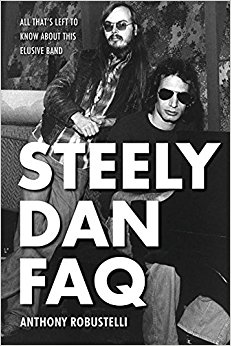
Steely Dan’s breakup was officially announced on 17 June 1981 when Donald Fagen gave a scoop to journalist and long-time fan Robert Palmer in the New York Times.

In the interview, Fagen didn’t rule out the possibility that he would one day reunite with Steely co-leader/co-songwriter Walter Becker, but neglected to mention that he had already returned to the studio as a solo artist.

Until a few years ago, I assumed The Nightfly was Fagen’s ’80s debut, but the one-off track ‘True Companion’ preceded it by a year. It was part of the ‘Heavy Metal’ soundtrack, an animated film based on the sex’n’slash fantasy comic book of the same name. Fagen used the song as an excuse to get back into the studio after a few years off.

‘True Companion’ was recorded at Automated Sound in New York and co-produced by Fagen and legendary engineer Elliot Scheiner (Dan helmer Gary Katz was busy producing Eye To Eye’s debut album).

Lyrically, the song seemed to be a ‘Dark Star’-esque meditation on the spiritually-bereft inhabitants of a spaceship, possibly narrated by God, or at least some kind of omniscient being…

Crewmen of the True Companion
I can see you’re tired of action
In this everlasting twilight
Home is just a sad abstraction

Just beyond the troubled skyways
Young men dream of fire and starshine
I’ve been dreaming of my own green world
Far across the reach of space time

Musically, the track showcased some exceptionally dense Fagen vocal harmonies (prefiguring a similar approach on The Nightfly‘s ‘Maxine’), and typically tasty Fender Rhodes playing by Steely regular Don Grolnick.

But the first half of the tune was almost a mini guitar symphony for Steve Khan. I asked Steve for his recollections of recording ‘True Companion’:

During those years, I think that Donald was trying  to find the confidence to move forward with a solo career because, after Gaucho, it seemed that he and Walter were going to need a long, long break! “True Companion” was one of a few experiments Donald recorded just to test the waters, as it were. To be in the studio with old friends and bandmates like Don Grolnick, Will Lee and Steve Jordan and with Elliot Scheiner engineering, nothing could have felt more familiar. Actually, for working with Donald, things went really fast. I would imagine that I played the electric parts first, then overdubbed the solo, and thereafter the acoustic steel-string. With the Les Paul, I know that I was playing REALLY loud in the room, but I did that because I felt that this was the underlying attitude of the song. It was a blend of subtlety and power. So I tried to give it both…

On the ‘Heavy Metal’ soundtrack album, ‘True Companion’ sat incongruously alongside tracks by Black Sabbath, Grand Funk Railroad, Journey, Sammy Hagar and Stevie Nicks, a state of affairs that no doubt tickled Fagen.

But, most importantly, he had taken his first major steps back into the recording studio, and by late summer 1981 was recording The Nightfly. Almost 15 years later, a reunited Steely Dan also played ‘True Companion’ live on their second comeback tour.

Book Review: Life And Death On The New York Dance Floor by Tim Lawrence

No less a pop personage than Brian Eno called the early 1980s ‘the most exciting era of New York music’, and he should know a thing or two about the subject.

Tim Lawrence’s excellent ‘Life And Death On The New York Dance Floor 1980-1983’ backs up Eno’s claim.

The book traces the many musical and cultural strands of the early ’80s NYC scene, from the ‘Disco Sucks’ movement which briefly blossomed at the beginning of the decade through to the end-of-an-era AIDS panic of late ’83.

Lawrence vividly brings to life a scene where musicians, DJs, dancers, artists and club owners fused new-wave, no-wave, punk, dub, pop-art, Afro-funk, kitsch, S&M, psychedelia, disco, gospel, electro and hip-hop to create an exciting, vibrant, anything-goes aesthetic.

Along the way, the book also looks at the making of some of the key NYC records of the era – ‘The Message’, ‘Rapture’, ‘Moody’, ‘Blue Monday’, ‘Planet Rock’.

Pretty much all the key players of the scene make memorable appearances, a fascinating roll call including Larry Levan, David Byrne, Madonna, Afrika Bambaataa, Fab 5 Freddy, Sylvia Robinson, Keith Haring, Jean-Michel Basquiat, Kool Herc, Arthur Baker, Melle Mel, Grandmaster Flash, Francois Kevorkian, Don Was and James Chance.

Grandmaster Flash and the Furious Five

Lawrence also paints a vivid picture of the diverse dancefloors of The Roxy, Danceteria, Paradise Garage, Mudd Club and Canal Zone, where on any given night you could see people doing martial arts moves, magic tricks or even aerobics (yes, apparently early ’80s NY also foresaw that cultural boom which hit big later in the decade).

Many rare and previously unpublished photos are included, and Lawrence also gets his hands on many interesting artefacts from the era such as Kraftwerk and Bambaataa full DJ setlists from The Ritz in 1981.

But all good things must come to an end, and ‘Life And Death On The New York Dance Floor’ doesn’t scrimp on the full details of how Reaganomics, gentrification, corporate intrusion and the spread of AIDS decimated the scene.

The book is a great achievement by Lawrence, with a level of detail and seriousness befitting a Professor of Cultural Studies but also large doses of fun and gossip befitting a good-time era and its fascinating protagonists.

‘Life And Death On The New York Dance Floor 1980-1983’ is published by Duke University Press.

David Sanborn: A Change Of Heart 30 Years On

On 17 July 1986, Tampa-born sax great David Sanborn broke off from a European tour to guest with Miles Davis and band at the Montreux Jazz Festival.

Though obviously nervous, Sanborn acquitted himself well, getting stuck in with some tasty modal solos and prompting many Miles smiles. Hopefully the performance would bode well for Sanborn’s next studio recording.

Unfortunately not. Sanborn made some fine albums during the 1980s – Hideaway, Voyeur, As We Speak, Straight To The Heart – but A Change Of Heart was not one of them. It was the kind of over-produced, under-composed, unfunky ‘fusion’ record that Tutu should have killed off once and for all.

I bought it on cassette when it came out, proudly showing it off to a cool family friend who had previously introduced me to loads of great music. I hoped he would be impressed by my purchase. He turned his nose up, mumbling something about ‘Bloody muzak…’ Harsh but fair, at least when it comes to most of A Change Of Heart.

The opening two Marcus-written-and-produced tracks – ‘Chicago Song’ and ‘Imogene’ – deliver a quality that the rest of the album never even remotely approaches. Miller was in constant demand around this time and presumably couldn’t commit to the whole album. ‘Imogene’ is a classic ballad with a haunting fretless bass melody and beguiling bridge, while ‘Chicago Song’ transcends its simple melody with an irresistibly funky rhythm section and biting Hiram Bullock guitar bridge.

The rest of A Change Of Heart seems designed for the latest Don Simpson movie or an episode of ‘Miami Vice’. Syndrum overdubs and unsubtle Fairlight samples prevail alongside ugly synth sounds and flimsy melodic motifs, without a whiff of jazz or R’n’B. Producer/synth players/writers Ronnie Foster, Philippe Saisse and Michael Colina toil away fruitlessly and even Sanborn’s licks don’t stick.

Sanborn toured A Change Of Heart extensively with a great band featuring Bullock and Dennis Chambers on drums, even popping up on primetime UK music show ‘The Tube’ playing Michael Sembello’s smooth-jazz ballad ‘The Dream’. He was clearly at his commercial peak (the album made the top 100 in the US and UK) but the creative rot would prevail to the end of the ’80s. He got back on track with the release of 1991’s Another Hand.