Thomas Dolby: Aliens Ate My Buick

aliens-ate-my-buick-52dea191dc659This was Dolby’s ‘Marmite’ album – the one that really tested his fanbase.

A relocation to the States after marrying soap actress Kathleen Beller (Dolby’s companion on the front cover) led to a new home in the Hollywood Hills (apparently a very large, rather creepy movie-star mansion), the recruitment of a great new band The Lost Toy People via an advert in a local paper and a wholesale embracing of American black music.

In many ways, Aliens is Dolby’s reaction to the work of George Clinton and Prince (of course, he’d collaborated rather spiffingly on the former’s Some Of My Best Jokes Are Friends). But it’s also a rather uptight Brit’s view of American culture complete with tacky local detail: smog alerts, Bel Air bimbos, pink leather upholstery, weird license plates.

dolby

A very brave bit of sequencing puts ‘The Key To Her Ferrari’ right at the front of the album.

A fake-jazz/B-Movie swinger with a vaguely ‘50s rock’n’roll feel featuring lots of Zappaesque spoken word stuff from Dolby and some brilliant close-harmony female vocals, it’s all pretty stupid but the band plays fantastically and everyone sounds like they’re having a great time. However, you do wonder how many listeners made it past such an uncompromising track.

The lead-off single ‘Airhead”s delirious mash-up of funk and pop is pretty irresistible.

Mr Clinton contributes the funny and funky ‘Hot Sauce’ which packs in an incredible amount of good stuff into its five minutes including a Spaghetti Western prelude, a reference to Cameo’s ‘Candy’, a touch of salsa and even a killer James Brown-style piano break.

Ditto ‘May The Cube Be With You’, featuring Clinton and Lene Lovich on backing vocals, the Brecker Brothers on horns and a brilliant groove from P-Funk bass/drums team Rodney ‘Skeet’ Curtis and Dennis Chambers.

But, as with most Dolby albums, the treasures are mostly found in the more introspective, less gimmicky moments. ‘My Brain Is Like A Sieve’ easily transcends its title and faux-reggae arrangement to become a superb and quite downbeat pop song in the Prefab style. ‘The Ability To Swing’ is a cracking piece of funk/jazz, with some excellent lyrics, possibly Dolby’s most covered song.

‘Budapest By Blimp’ is very much the centrepiece of Aliens and its stand-out track, an epic ballad harking back to the Flat Earth sound with a great, David Gilmour-esque guitar solo by Larry Treadwell (one of many on the album) and some superb, driving bass from the late Terry Jackson.

The only slight misfire is ‘Pulp Culture’, initially interesting but quickly grating with coarse lyrics and a melody line too similar to Stevie Wonder’s ‘Have A Talk With God’. It’s worth noting, though, that according to Dolby, the entire song (including his vocals) is made up of Fairlight samples.

The album’s very moderate success (#30 in the UK and #70 in the US) was probably not a surprise – it was totally out of sync with anything in British or US pop. Aliens probably rather reflected Dolby’s interest in music video and movie soundtracks (he’d just finished scoring ‘Gothic’ and ‘Howard The Duck’).

I’d put Aliens up there with The Flat Earth as his best album, a perfect companion piece to other classics of summer 1988 such as Prefab’s From Langley Park To Memphis, Scritti Politti’s Provision and Prince’s Lovesexy. It’s strong beer but I love its pungent textures. And let’s not forget Steve Vance and Leslie Burke’s brilliant cover artwork.

Story Of A Song: Prefab Sprout’s ‘Bearpark’ (1988)

prefabThere’s a quality to demo recordings (rough, early versions designed to demonstrate a composition for a potential multi-track studio recording) that really appeals, especially those with ‘delusions of grandeur’ that try to sound much more expensive than they are.

In the 1980s, a demo would typically be very quickly recorded onto a four-track tape machine and then tarted up with a bit of cheap reverb.

But these artefacts can very often take on a quality all their own. ‘Chasing the demo’ syndrome is common among musicians and producers, where they try in vain to replicate the freshness of the original as compared with an endlessly-tinkered-with studio version which quickly loses its zing.

‘Bearpark’ first appeared on the B side of Prefab’s ‘Nightingales’ 12” single as part of a three-song EP called The Demo Tapes (the other two tracks were ‘Life Of Surprises’ and ‘King Of Rock’n’Roll’).

It never made it onto any album but has nevertheless become one of my favourite ever Paddy McAloon compositions. It was also apparently the first time he had ever used a four-track cassette machine, recorded with a Dr Rhythm drum box, cheap synth and electric guitar.

The chords hang in the air, never quite getting resolved. In fact, playing along to the song on bass, virtually any root notes work under each chord. It’s hard to imagine how ‘Bearpark’ could be improved by a big-budget production, hence possibly why it hasn’t appeared on an official album, though Paddy says he ‘felt like Phil Spector’ when he’d finished it. Its charming musical naivety and sparseness perfectly suit the lyrical theme: home.

Home, sweet home
Sweet home, hard as nails

Bearpark, you were mine
I know, I know, I’ve been away but you’re
Not the type for valentines
Bearpark, I get homesick

Langley you are fine
I know, I know, I’m a gypsy
But Bearpark, Bearpark’s on my mind
There’s nowhere else like you

I’m gonna walk this weary body that’s been nowhere far too long
I’m gonna drag it back where it belongs

Home sweet home, Geordies
Hard as nails, Geordies
Well out of my pram,
Hard as nails, Geordies
We am

Bearpark, what a place
I know that this will sound soft but I
Sometimes think you’ve got a face
Both eyes black and blue

A stranger comes to town
I know, I know, the chances are that
Some bright spark will run him down
No honey on your tongue

I’m gonna take this broken spirit
Gonna heal it for all time
When I see your dear name
Upon a sign

Bearpark, you are mine
Hard as nails, Geordies
Well out of my pram…

Maybe it is time the song got a ‘proper’ recording. As Paddy says in the liner notes on the back of the 12” single, ‘You might think you can do better – be my guest. I like cover versions.’ But he also advises: ‘Don’t spend too long on the demo’…

Madness: Five Reasons To Be Cheerful

madnessThese days, brands (and possibly bands) spend thousands – if not millions – of pounds on copywriters who half-inch bargain-basement slogans from popular psychology and self-help books.

You know the kind of thing: ‘Find Your Happy’, ‘Believe In Better’ and all that other absolute twaddle. Anyway, I know a much better way to ‘find my happy’: watching a few Madness videos.

It’s easy to forget how great a lot of their stuff is if you’re an English pop fan. They’re so much part of the furniture. According to the stats, no other band spent more time on the UK singles chart during the 1980s.

One of the keys to their longevity seems to be that they are essentially a songwriters’ collective; at one point or another, all the members have had a hand in penning a hit (they famously shared the publishing royalties seven ways – 50% for the writer/writers, and the remainder divided up equally among everyone else).

There’s definitely method in their madness: intelligent, often socially-conscious lyrics that are actually about something, subtly-effective major/minor chord changes, hooks galore, spooky textures, a superb rhythm section and the ever-reliable Clive Langer/Alan Winstanley producing/engineering team (the former apparently had lots of good songwriting and arranging input too).

And in terms of music videos, surely their body of work is the most consistent of the decade, alongside Talking Heads and maybe a few others. So here, in chronological order, are my favourite Madness vids – and some pretty damn good songs to boot.

5. Baggy Trousers (1980)

The Ian Dury-influenced classic, written by singer Suggs and guitarist Chris Foreman. I can remember first seeing this video on ‘Top Of The Pops’ like it was yesterday.

4. Shut Up (1981)

Written by Suggs and Chris Foreman from the point of view of a very deluded house burglar, this is a worthy entry into that select group of hits whose titles don’t feature in the lyrics. Blur were definitely listening – compare it with their ‘Sunday Sunday’.

3. Driving In My Car (1982)

Written by pianist Mike Barson, the video features the lads driving down Goldhawk Road, Shepherd’s Bush, and there’s even a brief cameo from Fun Boy Three.

2. Our House (1982)

Written by Chris Foreman and saxophonist Cathal Smyth AKA Chas Smash, apparently the one-line chorus was added at the last minute at producer Clive Langer’s insistence.

1. House Of Fun (1982)

Written by Lee Thompson and Mike Barson, this time the chorus was apparently demanded by Stiff Records boss Dave Robinson.

Peter Gabriel: So 30 Years Old Today

gabriel

‘At the time of coming back, he had tremendous determination. He said do want to make it! I do want to succeed!” Instead of going along with the idea that he is different, special, unique, precious, So was about him saying, “F**k that! I’m going to allow myself to succeed.”’ Jill Gabriel, quoted in ‘Peter Gabriel’ by Spencer Bright

So was the Peter Gabriel album that put him – albeit very briefly – into The Big League, alongside the likes of Madonna, Michael Jackson, Phil Collins, Prince, Hall and Oates and Springsteen, leaving his ‘art-rock’ contemporaries (Laurie Anderson, Brian Eno, Peter Hammill, Robert Fripp) in the dust.

He opened himself up to mainstream success via more direct lyrics and music. And it worked a treat. So still sounds fantastic today; a near-perfect mix of art and commerce.

photo by Steven Toole

photo by Steven Toole

In interviews, Gabriel has described the ’83/’84’ period as a dark time in his life. He mixed and released an excellent live album and looked for solace in film soundtrack work, producing two fairly inconsequential tracks: ‘Walk Through The Fire’ from ‘Against All Odds’ and ‘Out Out’ from ‘Gremlins’.

Far more substantial was his soundtrack for Alan Parker’s ‘Birdy’, but, most importantly, it was the project that introduced him to So co-producer Daniel Lanois.

Gabriel later credited Lanois and his then wife Jill for steering him back towards more positive thoughts, and much more ‘up’ music and lyrics.

Gabriel came up with 20 new songs by early 1985. Lanois helped him whittle them down to 12, and then six months of pre-production began, focusing on song structures and arrangements. So was mainly recorded at Gabriel’s home studio, Ashcombe House near Bath.

Working at home was intended to save money on big studio fees and also speed up the creative process, but lyric-writing was still a big problem and a lack of words necessitated two missed release deadlines for So: 31st July 1985 and 14th December 1985.

Virgin were patient. Lanois once even nailed him into a back room to force him to come up with some lyrics – Gabriel was not amused, at least not for a few hours. ‘It is the most upset I’ve seen him at the studio,’ guitarist David Rhodes remarked. Lanois had made his point.

Musically, Gabriel very much leaned on tried-and-tested collaborators such as Rhodes and Tony Levin – it’s hard to imagine anyone else playing bass on So. He’s so much part of the music. Check out his ‘drumstick bass’ (later marketed as Funk Fingers!) on ‘Big Time’.

Joni Mitchell’s then husband Larry Klein also plays some lovely fretless on ‘Mercy Street’. French-African newcomer Manu Katche amazed everyone with his drumming, particularly on ‘That Voice Again’ and ‘In Your Eyes’. He had a new twist on Stewart Copeland’s style and also somehow found the time to fit occasional tom-tom flurries into his grooves too.

Migrant Mother by Dorothea Lange

Migrant Mother by Dorothea Lange

‘Red Rain’ opens with some resplendent Copeland hi-hat work, and ends with the kind of piano/vocal coda that Simple Minds excelled at – the influences were now flowing both ways.

‘Don’t Give Up’ was inspired by a BBC TV documentary about the effect of unemployment on British family life, and also the photography of Dorothea Lange, portraying dust-bowl conditions during the Great Depression.

‘Mercy Street’, dedicated to poet Anne Sexton, shows evidence of Lanois’ influence; its opening ambient textures resemble Brian Eno’s ‘Under Stars’ which Lanois co-produced.

Gabriel’s low-octave vocals apparently had to be recorded first thing in the morning for maximum deepness. The song’s Brazilian/African groove predates Paul Simon’s Graceland by six months or so.

‘We Do What We’re Told (Milgram’s 37)’, concerning social psychologist Stanley Milgram’s infamous experiments, was originally recorded for Melt in 1980. While musically very rich and dark (I always think of Kate Bush’s ‘Running Up That Hill’ when I hear that opening minor chord), lyrically it is possibly a little half-baked.

‘Big Time’ is Gabriel’s amusing, self-mocking, Randy Newmanesque satire on success and celebrity – ‘This drive for success is a basic part of human nature and my nature’, he later said.

Musically, it’s a potent mixture of driving Copeland drums, treated rhythm guitar, synth bass, quasi-industrial samples and some great Hammond organ by Simon Clark.

Another much rockier version – featuring Jerry Marotta on drums – was also recorded but scrapped just before the mastering stage.

‘Sledgehammer’ was the last song written and recorded for So. Ironically, it dislodged Genesis’s ‘Invisible Touch’ to become a US number one single in July 1986.

A catalogue of sexual innuendos, it’s one of the weirder hits of the 1980s. Its odd cheerfulness may come from the fact that it’s mainly in a major key, a rarity for an R’n’B-influenced track. David Rhodes’ rhythm guitar part is eccentric and the Farfisa organ bizarre.

The opening sampled bamboo flute was copied by hundreds of keyboard players across the UK (or at least a few in my school). The groundbreaking video for the song, directed by Stephen Johnson (who had used similar techniques for Talking Heads’ ‘Road To Nowhere’ clip), required 100 hours of Gabriel’s time.

Apparently Gabriel was obsessed with the album’s sequencing: he made up endless cassettes featuring just song endings/beginnings, testing all the different permutations.

He always wanted ‘In Your Eyes’ to close So, but was persuaded otherwise when told that its drums and bass wouldn’t hold up very well at the end of a long side of vinyl (though it’s hard to ‘hear’ it anywhere else but at the beginning of side two…). He finally got it where he wanted it on the definitive remastered version.

Gabriel’s only concession to the record company was to name the album something apart from ‘Peter Gabriel’. So seemed suitably off-the-cuff – ‘It had a nice shape but very little meaning’, he later said.

He also decided that a simple cover shot would better suit the directness of the music and lyrics than some of the more disturbing covers of albums past. So‘s design and packaging still look fantastic today.

The album topped the charts on both sides of the Atlantic and by summer 1987 had sold over 5 million copies worldwide. Gabriel promoted the album extensively before embarking on Amnesty’s Human Rights Now! with Sting, Tracy Chapman and Bruce Springsteen in 1988.

He had a lot more than music on his mind – he waited a full six years before releasing the official follow-up to So. The commercial assault had paid off but at what cost to his long-term creativity?

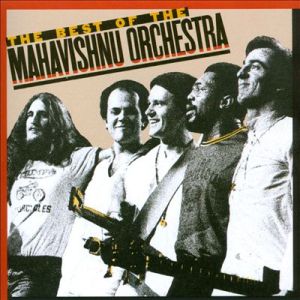
My Mahavishnu Moment

South-West London, 1986: after a short apprenticeship playing pots and pans, I had been given a very cheap kit by my parents and was taking my first steps towards the world of ‘serious’ drumming (yeah, right… Ed).

I was also fast becoming a major jazz/rock fan, buying the new Weather Report, Mike Stern, Billy Cobham, Lyle Mays, John Scofield and Steps Ahead cassettes from HMV on Oxford Street or my local Our Price in Richmond.

mahavishnu

One evening, my dad had my uncle round for one of their regular music-listening sessions. I gatecrashed. They cranked up the Plastic Ono Band, Santana, Monk and Miles while I sat in on a knackered Spanish guitar.

And then this other tune came on. A massively-distorted, strangely exotic riff crawled out of the speakers. All the conversation abruptly stopped. My adolescent, ‘muso’ brain kicked in – was it Hendrix? Miles? Zappa?

The riff moved through various modes, ascending into a wailing, chromatic guitar and violin crescendo, and then dropped dramatically to the main theme again. And then that drum groove…

Already being a huge major Billy Cobham fan, I had heard bits of Mahavishnu, mainly the mid-80s incarnation featuring ex-Miles sax player Bill Evans and bassist Jonas Hellborg. I was also aware of John McLaughlin’s playing due to his guest spot on Stanley Clarke’s incredible Journey To Love album (though didn’t know it was him on ‘Song To John’ until years later).

But this was different; striking, unhinged, dangerous, downright perverse. ‘The Dance Of Maya’ blew my mind and its otherness hits me just as hard today as it did 30 years ago. Cobham’s 6/8-flavoured groove sounds just as hip and surprising as ever.

Anyway, I was in: I came across a Mahavishnu Best-Of on cassette at my local Our Price, and a whole new world of music opened up. It was time to go back and explore the roots.

Book Review: Inside The Songs Of XTC

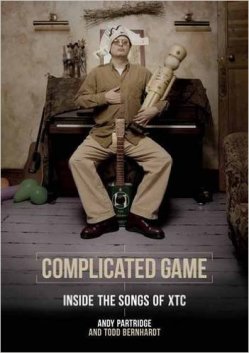
complicated gameBooks about songwriting are a small but fast-growing and fascinating subgenre of music journalism.

Alongside such classic tomes as Paul Zollo’s ‘Songwriters On Songwriting’, Omnibus Press’s ‘Complete Guides’ and Bob Dylan’s ‘Chronicles’, we’ve also recently had Daniel Rachel’s excellent ‘Isle Of Noises’. And now here comes another cracker.

XTC fans, however, may be slightly surprised about the publication of ‘Complicated Game: Inside The Songs Of XTC’, a gripping new book of interviews with mainman Andy Partridge, seeing as they may possibly feel that it would hard to better Neville Farmer’s ‘XTC Song Stories’.

But, while obviously covering similar ground, ‘Complicated Game’ zooms in with forensic detail on a select group of Partridge songs, particularly ones that may well have been overlooked throughout his stellar career (‘Travels In Nihilon’, ‘No Language In Our Lungs’, ‘Beating Of Hearts’, ’25 O’Clock’ etc).

He once said that XTC’s music explores the unexplored nooks and crannies of the guitar neck; this book does the same for their discography.

Essentially, ‘Complicated Game’ is a transcription of over 30 interviews by American rock journalist/musician Todd Bernhardt. Though some of Partridge’s legendary West-Country repartee and clever wordplay occasionally get a bit lost in translation, these conversations are candid, detailed and never less than engaging.

Discussions about a rhyming couplet can suddenly give way to painful memories of Partridge’s divorce, or asides about Swindon or 9/11.

The ‘Dear God’ controversy gets a whole chapter. The thorny subject of record company wrangling is never far from the surface, and Andy’s troubled relationships with producers is also a constant theme, with Steve Nye, Todd Rundgren and Gus Dudgeon taking centre stage (the former being described as ‘possibly the grumpiest guy we’ve ever worked with’!)

There’s just enough musical theory discussed too, and – not surprisingly, given that Bernhardt once interviewed Partridge at length for Modern Drummer magazine – a lot of emphasis on the role of the rhythm section, with much talk about Colin Moulding’s superb bass playing and many hilarious anecdotes about original XTC drummer Terry Chambers and later sticksmen Pete Phipps, Prairie Prince and Dave Mattacks.

But, most importantly, Partridge is able to give detailed and fascinating answers about where he gets his songwriting inspiration, looking in detail at how unusual – and often completely accidental – chords can set off images and themes, and also how much he associates music with colours. There’s also a lot of advice for songwriters about how to develop initial ideas.

Andy_Partridge

Of course, the real measure of a great music book is how quickly one is drawn back to the records, and ‘Complicated Game’ works a treat in that regard – I rushed first to the CD and then to the guitar to try and nail down ‘That’s Really Super, Supergirl’ and ‘Church Of Women’.

The orchestral arrangements and song structures of the truly singular ‘River Of Orchids’ and ‘I Can’t Own Her’ are also discussed in great detail.

There are a few minor quibbles: some of the interviews have a slightly ‘flogging a dead horse’ feel to them, and also there’s a strange reluctance to talk about Partridge’s contemporaries – Sting, Weller, McAloon, Gartside et al go unmentioned, and Elvis Costello is only referred to once in terms of his huge bank balance!

But hey, enough of my nitpicking. ‘Complicated Game’ is another fine book about songwriting, a good holiday read for ’80s music fans and a great companion piece to ‘XTC Song Stories’. I devoured it almost in one sitting and will definitely be reaching for it regularly.

Prince: An Appreciation And Farewell

Prince_logo.svgIt’s never easy describing why a personal hero meant a lot to you – heaven knows I still haven’t been able to set down anything cogent about David Bowie’s life and work.

But I may be coming nearer to working out why Prince Rogers Nelson had such an effect on the way I heard – and still hear – music.

Before the release of  1986’s Parade, I was a confirmed chart-pop fan, but also into the weird rock of Frank Zappa, fusion of Weather Report and straight jazz of Courtney Pine, Miles Davis and Herbie Hancock.

Parade seemed to offer a perfect synthesis of all these forms. And, quite incredibly, one guy was pretty much responsible for all of it – and he was a brilliant singer and dancer too. Put simply, for fans and musicians of my age, Prince was the nearest thing to a Bowie/Ziggy figure.

His extravagantly-flamboyant stage persona also sometimes blinded people to the brilliance of his musicianship. Pre-Parade, that might have put me off initially too. But has there ever been a better keyboard/guitar double threat? (Steve Winwood, Johnny Guitar Watson and Lewis Taylor are decent competition but he surely outstrips all three.)

He obviously had natural talent but he worked extremely hard too – in his teenage years, he was living Malcolm Gladwell’s 10,000-hour rule. Influenced by Sly Stone, Graham Central Station, Funkadelic, Tower Of Power, Carlos Santana and Joni Mitchell, he was busy getting his chops together in his home music room and during various high-school battle-of-the-band competitions in Minneapolis’s North Side.

As he told Rolling Stone magazine in 1990: ‘Anyone who was around back then knew what was happening. I was working. When they were sleeping, I was jamming. When they woke up, I had another groove.’

On the bass, he took care of business. Along with a few other of his contemporaries (he credited future New Power Generation member Sonny Thompson as being a key early influence), he patented the Minneapolis bass sound, a rumbling, busy style, heavily influenced by Sly and the Family Stone’s Larry Graham.

But he also had a much more effervescent, Stanley Clarke-flavoured side as well, a good example being the incredible ‘I’m Yours’ from 1978’s For You.

On guitar, his sweet, creamy, heavily-distorted lead lines, usually injected with a healthy dose of delay, were coming out of the Carlos Santana and Ernie Isley school, but he also had many licks all of his own. For me, his lead guitar peak was 1985-1989; what an incredible tone, beautiful phrasing and a very ‘vocal’, human sound.

But he also had a funky ensemble rhythm guitar style out of Steve Cropper and Jimmy Nolan school. My favourite examples of Prince guitar would have to include ‘Lady Cab Driver’, ‘Bambi’, ‘My Love Is Forever’, ‘Alexa De Paris’, ‘The Question Of U’, ‘Temptation’, ‘Get Some Solo’, ‘One Of Us’, ‘Joy In Repetition’, ‘Batdance’, but there are many more. His playing throughout the ‘Sign O’ The Times’ and  ‘Lovesexy Live’ concert films is sublime.

On keyboards, he was equally proficient. As NPG drummer Michael Bland pointed out, his piano playing had a touch and rhythmic approach similar to Thelonious Monk. He also patented the Minneapolis synth sound (alongside other influential players such as Ricky Peterson and Jimmy Jam), exemplified by his work between 1980 and 1983 on solo albums and releases by The Time, Vanity 6 and Sheila E.

And he loved playing hot, churchy, gospel-flavoured organ too – check out ‘Hot Thing’ from the ‘Sign O’ The Times’ film or his superb Hammond playing on the Parade tour.

On drums, he was, by contrast, a late developer. Before discovering the Linn LM-1 drum machine in 1981, his playing was functional rather than spectacular. Purple Rain engineer Susan Rogers has talked about how much Prince’s drumming improved once Sheila E came into his life around 1983 – he very much wanted to impress her, and she taught him a few licks too.

But he definitely had his own touch on the drums: check out the 12” version of ‘Mountains’, ‘Tambourine’, ‘Lady Cab Driver’ and ‘Sexual Suicide’ for some good examples. He was also very influenced by The Time mainman Morris Day’s playing – ‘Cloreen Bacon Skin’ on Crystal Ball is quite illuminating.

Of course, it’s all very well playing lots of instruments, but it’s a question of arrangement. Good ingredients are important but you’ve got to know how to mix them up. Prince was a master.

A lot of his ‘producing’ decisions (ie. what to put in and what to leave out) came about because he very, very rarely left a song unfinished – he would work very long hours without a break to achieve exactly the sound he had originally heard in his head. This is why his best stuff sounds so fresh today – it has enough melody and groove for the casual listener but also retains a precious, ‘unfinished’ quality.

As a young musician in the ‘70s, Prince was very much a student of funk, soul and rock, but he came to jazz too later in life, inspired by his work with Eddie Minfield, Sheila E, Miles Davis, Eric Leeds and Matt Blistan in the mid-‘80s.

He tried a ‘one-man-band’ approach to jazz/rock/funk with his Madhouse project, and worked successfully with Leeds on his two Paisley Park solo albums, but was more successful when he integrated the jazz influences into his own ‘pop’ albums and gigs.

My ultimate was the Lovesexy tour, when the band could turn on a dime, going from cool Duke Ellington and Charlie Parker licks to blazing hard rock.

For every great single that came out in the mid-to-late-’80s, there was a great B-side. We fans had to hear as much as possible. My friend Marlon Celestine was our source for amazing bootlegs; the brilliant original demos for The Family album, ‘Others Here With Us’, ‘A Place In Heaven’, ‘Movie Star’.

What will happen to all these tracks now? Was Prince planning to let us hear everything? There was talk of opening the vaults and adding the outtakes to the ‘special edition’ re-releases of the Warner Bros studio albums. I wonder who owns these masters now.

Another important aspect of Prince was his sense of humour. Friends, collaborators and lovers have reported how hilarious he could be away from the media glare. He didn’t let it out very often on his own official albums, but you can hear it loud and clear on ‘Cloreen Bacon Skin’, ‘Mutiny’, ‘High Fashion’, ‘Movie Star’, ‘Housequake’, ‘Jerk Out’, ‘Chocolate’ and Sheila E’s Romance 1600 album.

There are apparently many other ‘comedy’ tracks in the vaults. His cheekiness came out often on stage too – check out ‘Blues In C/If I Had A Harem’ from ‘Lovesexy Live’, and there are plenty of other examples.

He was also a true Gemini, and as such it’s important to note how vitally important many women were to his career, and how often he sought their musical and personal company: Susan Rogers, Peggy McCreary, Wendy & Lisa, Susannah Melvoin, Jill Jones, Mavis Staples, Sheena Easton, Ingrid Chavez, Sheila E, Cat Glover, Boni Boyer, Rhonda Smith, Mayte, Rosie Gaines, Candy Dulfer, Marva King, 3rdeyegirl – just a partial list.

Yes, one might question some of his attitudes towards women when he put together the bands Apollonia 6 and Vanity 6 (and there’s some strange stuff in ‘Purple Rain’) but he was a very young man then. His ‘Camille’ songs (‘If I Was Your Girlfriend’, ‘Good Love’, ‘When 2 R In Love’, ‘Rockhard In A Funky Place’ etc.) present a perfect fusion of his male and female sides, and of course the design of his ‘90s Symbol heavily emphasised both genders.

Prince went out of his way to promote musicians who were important to him, figures such as Larry Graham, Joni Mitchell, Mavis Staples, Bonnie Raitt, Miles Davis and Chaka Khan. He came to George Clinton’s rescue in the late 1980s when George had a huge tax bill to pay – Prince signed him to Paisley Park for one album (The Cinderella Theory) and the sizeable advance took care of his debt.

He later enlarged on his feelings about George Clinton and Parliament/Funkadelic during this elegant speech inducting them into the Rock’n’Roll Hall Of Fame. Prince was also a musical philanthropist – he gave away instruments to schools and encouraged real playing in an age of samples and loops. He also played many, many charity shows throughout his career, donating hundreds of thousands of dollars.

Then there was the spiritual element to Prince’s music, increasingly visible as the ‘80s progressed. He was a living embodiment of the sacred/profane dichotomy. The man who wrote ‘Sister’ and ‘Lady Cab Driver’ ended the decade by telling us: ‘Look to the light’. He could write ‘I Love U In Me’ one day but then follow it up the next with ‘God’.

The entire Lovesexy live show (and album) was designed as a battle between good and evil. I wasn’t sure if I liked or understood the spiritual stuff back in 1988, but I loved the way he provoked questions. Still do.

In December 1987, when he had a change of heart and pulled The Black Album from release at the eleventh hour, believing it to be too angry, too dark, and an unrepresentative piece of work, he rush-released Lovesexy instead. Here was an artist of integrity.

(Apparently one frame in the ‘Alphabet Street’ video features the words: “Don’t buy The Black Album. I’m sorry.” Or does it? I could never find it back then… Maybe it was a great bit of Warner Bros PR.)

I never saw Prince play live, to my great regret. I passed up a ticket for the famous London O2 run in 2007. It just didn’t sit right. The nearest I got to seeing him perform was a signing session at HMV in Oxford Street with the NPG in 1995.

Around that time, he was way more visible on British TV than he had ever been before, memorably appearing on ‘The White Room’ and also being interviewed on the BBC’s ‘Sunday Show’. He seemed quite happy subsuming himself into a group ethos – there are shades of Bowie and Tin Machine.

Over the last few weeks, the press has frequently reported that the essential book about Prince is Matt Thorne’s biography. It’s good, but the killer is surely ‘Prince: The First Decade’ by Per Nilsen. There you will read about the recording of every single one of his albums from 1978 to 1988, find out what was happening in his private life throughout that time and also hear from all his key collaborators. Nilsen’s ‘Prince: The Documentary’ is also superb.

Though I struggled with a lot of Prince’s music in the ’90s and beyond, he seemed to live a pretty ‘noble’ life in a period when many musicians of his generation and popularity kind of lost their way.

There was certainly a conscious retreat towards the end of the ’90s, but then look at what was happening in the wider world around that time – the Disneyfication of the music business, the dumbing down of culture generally.

He chose not to play the whole global branding game (he never launched a clothes line or fragrance, for example), he took on his record company, temporarily withdrew the name ‘Prince’, resolutely promoted himself as a musician and spoke up about many of the things that troubled him.

That may explain a lot. We shall see, though I’m not looking for any ‘theories’ or ‘explanations’ concerning his death and trying not to hear news reports.

In 1990, Prince told Rolling Stone magazine, ‘When I pray to God, I say, “It’s your call – when it’s time to go, it’s time to go. But as long as you’re going to leave me here, I’m going to cause much ruckus!”’

He did it. C-ya.

Tony LeMans (1989)

download

This is an intriguing, very promising, almost completely forgotten (currently not on any streaming platforms) debut album by a young American singer and songwriter who sadly died in a motorcycle crash only three years after its release (and reportedly the day before he was due to marry Vanity’s sister).

I came across Tony LeMans completely by chance at Mr CD on Berwick Street, Soho. It had piles and piles of CDs at five quid a pop, quite a steal by 1990s standards.

You just never knew what you would find, in the days when you would take a chance on an album just on the strength of the label, cover, musicians and/or producer. I saw the words ‘Sylvester Stewart’, ‘David Gamson’ and ‘Paisley Park’ on the back and had to have it.

Tony-LeMans-Tony-LeMans-1989-Back-Cover-79406

Gamson plays keyboards and produces beautifully, fresh from Scritti Politti’s Provision. Tony LeMans was released on Prince’s Paisley Park Records – rumours were abound of the Purple One’s involvement, but he doesn’t appear.

But other ’80s funk masters do: Bernard Wright supplies some cracking wah-wah clavinet to a few tunes, though bassist Marcus Miller and guitarist Paul Jackson Jr. are fairly nondescript. Prince cohort Boni Boyer adds occasional back-up vocals alongside Michael Jackson collaborator Siedah Garrett (phenomenal on the opening ‘Higher Than High’).

The sonic clarity and mastering of Tony LeMans are outstanding; it’s a brilliant CD for auditioning a hi-fi. It’s also a real relief from the over-loud, over-compressed music of today. Musically and lyrically, it initially comes on like a ‘standard’ late-’80s pop/soul/funk album, but closer inspection reveals a strong psychedelic flavour. Mainly though, due to Gamson’s total involvement, the album sounds like Provision-era Scritti fronted by Sly Stone.

The opener ‘Highest High’ fuses the synth hook from Prince’s ‘Lovesexy’ with Sly’s ‘The Same Thing’ (though neither get a songwriting credit) to great effect. The single ‘Forever More’ is a winning ballad with a fine falsetto vocal from LeMans and some classic Gamson chord changes, while ‘Good For You’ is an infectious, catchy slice of doo-wop-influenced pop.

There’s a bit too much filler on side two, but the closing ‘Different Kind Of Thing’ is possibly the stand-out and the nearest thing to a Prince song (very much influenced by ‘Erotic City’), though it was only an extra track on the original CD release.

LeMans toured the album in the States, sometimes supporting MC Hammer (!), and was recording his second Paisley Park album at the time of his death. It was due to feature a Prince composition called ‘Fuschia Light’. Sadly, it’s likely that it’ll never get an official release.

Six Great ’80s YouTube ‘Shreds’

SWING IN DEAUVILLE 1992

Chick Corea – look away now…

YouTube ‘shreds’ didn’t take off on social media the way trolling and cat videos did.

OK, they are a bit ‘niche’, probably only of interest to a select few musos. But these musical parodies take on a quality all of their own, producing a surreal, appealingly-amateurish mash-up of cheap synths, terrible guitar sounds and fake drums.

There is some intelligence behind them too – it’s not easy to sound this bad. You need talent. These clips also bring home just how great the targets of their ridicule really are.

But hey – some possibly need taking down a peg or two…

6. a-ha play ‘Take On Me’
I like the badly-played synths, Morten’s off-mic asides and the unexpectedly-early chorus. Also the drummer’s Herculean efforts juxtaposed with the tinny, inconsequential sounds he is producing.

5. The Chick Corea Elektric Band play…something
This band were always one of the more unsavoury fusion units of the late-’80s. Their freakily-flawless musicianship, cheesy synth sounds and ‘zany’ stage performances are ripe for a bit of a pisstake.

4. USA For Africa play ‘We Are The World’
This one gets in for sheer oddness. It sounds like it’s been overdubbed by people whose first language is not English. Chinese? French? Kenny Rogers, Tina Turner and Billy Joel always get me.

3. Miles Davis plays ‘Tutu’
Sorry Miles, but I like the way this classic piece is re-imagined as a kind of remedial reggae/world music/’50s rock jam. Don Alias’s ‘tinging’ ride cymbal gets me every time.

2. Dire Straits play ‘Money For Nothing’
This is ‘Money For Nothing’ played by a bunch of teenagers who have just been given a few cheap synths, a crap guitar and an old bass for Christmas. I particularly dig John Illsley’s backing vocals.

1. Chick Corea duets with Herbie Hancock
Why not some more Chick? There’s something about his smug performance style that lends itself to these clips. And of course the fact that he has made so much tasteless music for someone so near to genius…

Prince Rogers Nelson (7 June 1958 – 21 April 2016)

Prince_at_Coachella‘He’s got it all! As a drummer, he can hold it down, you know what I’m sayin’? As a guitar player, he puts out! Plus he’s a great piano player. Matter of fact, he’s about as good as they get, and I’ve worked with the best, I should know! Do you know who he reminds me of? Duke Ellington. Yeah, he’s the Duke Ellington of the ’80s to my way of thinking.
MILES DAVIS

‘Music is made out of necessity. You’re not even its maker, you’re just there to bring it forth. It’s a fact of life, just like breathing.’

PRINCE

‘I’ve got people to feed. They depend on me to put bread on the table. I can’t just go away.’

PRINCE

‘I crave the experience of writing and sharing with others. It is what I do as an artist; as a human being.’

PRINCE

‘He seems to have his own voice on every instrument, really. What’s funny is that he reminds me of Thelonious Monk on all of them. His feel’s instantly recognisable.’

MICHAEL BLAND

‘I took my Black Album into a nightclub to see what people’s reactions were to it. And this girl said to me, “If you smiled, you’d be a really nice person.” I looked at my Black Album and I saw the reflection in it and I realised that if I released this album and died, that’s what people would remember me for. I could feel this wind and I knew I was doing the wrong thing…’

PRINCE

‘For You’
‘My Love Is Forever’
‘Bambi’
‘Dirty Mind’
‘Annie Christian’
‘All The Critics Love U In New York’
‘Automatic’
‘The Beautiful Ones’
‘Erotic City’
‘Purple Rain’
’17 Days’
‘The Ladder’
‘Pop Life’
‘Condition Of The Heart’
‘Kiss’
‘Alexa De Paris’
‘Crucial’
‘Movie Star’
‘Crystal Ball’
‘Sexual Suicide’
‘Bedtime Story’
‘Susannah’s Pyjamas’
‘Nothing Compares 2 U’
‘The Question Of U’
‘Violet Blue’
‘A Love Bizarre’
‘The Ballad Of Dorothy Parker’
‘Forever In My Life’
‘If I Was Your Girlfriend’
‘Sign O’ The Times’
‘Alphabet Street’
‘When 2 R In Love’
‘Vicki Waiting’
‘Scandalous’
‘Still Would Stand All Time’

Wish U Heaven.

Prince Rogers Nelson, born 7 June 1958, died 21 April 2016