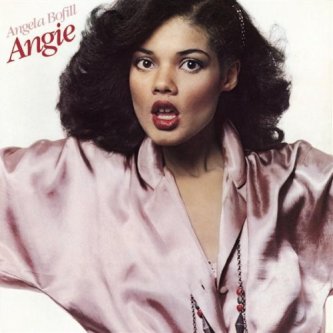
Angela Bofill: Angel Of The ’80s

angelaThe strand of jazzy soul music developed by artists like Minnie Riperton, Phyllis Hyman, Chaka Khan, Jon Lucien, Al Jarreau, Randy Crawford and Carl Anderson probably reached its commercial apex with Anita Baker’s eight-million-selling 1986 album Rapture.

But perhaps the most underrated singer in that style was Angela Bofill, an ever-present on the US R’n’B charts between 1978 and 1984.

Best known for her sultry ballads and Latin-tinged mid-tempo jazz/soul tracks, I stumbled upon an Angie Best-Of sometime in the early ’90s and have been a fan ever since.

Her voice has a lovely, yearning quality, with power, range, great enunciation and a hint of Whitney Houston about it. But you’ll never hear Bofill’s music on the radio, at least here in the UK, and it’s a shame that she didn’t quite manage that breakthrough pop hit.

Born in the Bronx to a Cuban father and Puerto Rican mother, Bofill studied classical singing at the Manhattan School of Music.

After a tip-off from Latin Jazz flautist Dave Valentin, she was initially mentored by producers Dave Grusin and Larry Rosen, recording her successful first two albums Angie and Angel Of The Night for the fledgling GRP label.

Moving to Arista Records under the supervision of legendary impresario Clive Davis, she worked with some big-name producers throughout the ’80s: George Duke, Narada Michael Walden, Norman Connors and The System (David Frank/Mic Murphy).

Narada particularly seemed a good fit for her, co-writing a few killers such as ‘Tropical Love’ and ‘Too Tough’ and teaming up with future ‘American Idol’ judge Randy Jackson on bass to make a phenomenal rhythm section.

Angela also made a wonderful guest appearance on ‘Where Do We Go’, the standout track from Stanley Clarke’s lacklustre Hideaway album of 1986, and there were also interesting duets with Boz Scaggs and Johnny Mathis around the same time.

But her most impressive material was self-penned. ‘You’re A Special Part Of Me’, ‘Gotta Make It Up To You’, ‘Song For A Rainy Day’ (which she also produced), ‘I Try’ (memorably covered by Will Downing in the early ’90s), ‘Accept Me’, ‘Rainbow Inside My Heart’ and ‘Time To Say Goodbye’ are all stand-outs which demonstrate her fine musicianship as well as vocal skills.

It’s a shame her composing, producing and arranging talents were never properly utilised, though she left us with a few classics nevertheless.

Angela made a comeback in the mid-’90s with Love In Slow Motion, a nice album featuring three superb tunes – ‘All She Wants Is Love’, ‘Soul Of Mine’ and the very Janet Jackson/Jam & Lewis-esque ‘Love Changes’ – which matched anything from her ’80s peak.

She also made a notable appearance at the 1998 Montreux Jazz Festival with Billy Cobham and George Duke.

Unfortunately serious illness befell Angela in 2006. Two strokes have limited her recording and live appearances, but she did make a brief return to the stage in 2012: ‘The Angela Bofill Experience’ featured stories from her life and career, with artists such as Maysa Leak, Phil Perry and Melba Moore performing signature songs.

Since then, things have been quiet, but we send good vibes from London. Angie’s certainly not forgotten in these parts.

[Angela Bofill sadly passed away in 2024.)

Neil Young: This Note’s For You

Neil+Young+This+Notes+For+You+507216The general critical consensus maintains that Neil had a rotten ’80s.

He made folk albums, rockabilly albums, synth-rock albums, undercooked Crazy Horse albums and country albums.

But you can’t say he wasn’t prolific, and hey, he’s Neil Young – there’s always something good going on somewhere.

But none of these projects came anywhere near the commercial jackpot, to the extent that his label boss David Geffen sued him for ‘unrepresentative’ product!

But, with the release of 1988’s This Note’s For You, Young was getting back on track. He had returned to the Reprise label of his peak years and was gigging with a hard-hitting ten-piece band The Bluenotes (later changing its name to Ten Men Workin’ after a legal challenge from Harold Melvin) which featured a hot horn section and cracking new drummer Chad Cromwell.

Neil had ten new songs in the can too, veering between two-chord R’n’B stompers and love ballads in the ballpark of his teenage hero Roy Orbison. He was also playing as much if not more lead guitar than he ever had in his solo career, this time in the biting, incisive style of Alberts King and Collins.

Lyrically, the songs were basically about workin’ hard, lookin’ for love, not sellin’ out and havin’ a good time, but with more humour than Bruce or Billy Joel. ‘I’m a married man – respect my happy home!’ he barks on ‘Married Man’.

Neil gave writer Paul Zollo some cool insights into the writing of the song in the book ‘Songwriters On Songwriting’:

‘Oh, I like that song. I think I wrote that in my car. I have a ’54 Caddy limo. I was on my way down from Northern California to play with the Bluenotes. I was on Highway 5. Our driver was listening to tapes and I was playing my guitar…’

Neil’s tremulous voice croons ‘You have changed my life in so many ways’ on ‘Can’t Believe Your Lyin’, and it’s both touching and amusing. ‘Ten Men Workin” and ‘Life In The City’ are driving old-school R’n’B gems while ‘Sunny Inside’ is almost Brian Wilsonesque in its charming naivety.

Then there’s the title track, the standout cut on the album (though it inexplicably fades way too soon). A rum, anti-product-placement protest song which nevertheless manages to mention four big brands (and of course mocks Budweiser’s ‘This Bud’s For You’ campaign), it defiantly has its cake and eats it. It’s also a total blast.

In a delicious irony, the old hippie who had spent most of the ’80s in purgatory made one of the great vids of the decade (winning Video Of The Year at the 1989 Video Music Awards), with notable help from writer Charlie Coffey and legendary director Julien Temple. Temple talked about his motivations for making the video:

‘Beer companies and the like were beginning to take over music. A lot of beer ads were using rock musicians. The line between videos and commercials was blurring. We managed to get banned from MTV and win the Video Of The Year award. That was the peak of my video-making career…’

The clip mostly mocks the series of Michelob beer ads which featured the likes of Genesis, Eric Clapton and Steve Winwood. And it didn’t scrimp on Michael Jackson and Whitney Houston lookalikes.

What’s also notable and totally unprecedented is that Neil decided to use a live take of the song for this video, completely different to the album version. Which major star would have the balls to do that today?

This Note’s For You was not a hit, only reaching #61 in the US album chart. But Neil was laying down a marker for the classic follow-up Freedom. And he had also tapped into something very prescient by focusing on guitar-led soul, blues and R’n’B forms, echoing the resurgence of Clapton, Buddy Guy, John Lee Hooker, Jeff Beck, Albert Collins and Gary Moore, and emergence of hotshots like Jeff Healey and Robert Cray.

Sideways & Steve Jobs: An Invitation To Windham Hill 30 Years On

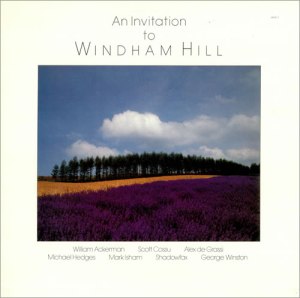
Windham+Hill+An+Invitation+To+Windham+Hill+164800DVD commentaries come and go, but among the best I’ve heard is for ‘Sideways’, Alexander Payne’s classic 2004 movie starring Paul Giamatti and Thomas Haden Church.

One scene, set at at the fictitious Frass Canyon winery, opens on the shot of a pale, very sincere acoustic guitarist playing a ‘tender’ ballad. On the commentary, Haden Church mutters: ‘Very Windham Hill-ish’, eliciting a chuckle from Giamatti.

You get the feeling that the term ‘Windham Hill’ is a code for something not entirely positive…

frass canyon

For a brief period in my teens, a cassette copy of An Invitation To Windham Hill was always near the family hi-fi.

It has since become one of those weird, unclassifiable albums that I can’t shake. Why is that? What is this kind of music really about once you subtract the nostalgia?

The Windham Hill label was founded in 1976 by Californian guitarist William Ackerman, who initially used the imprint to sell his own music out of a Palo Alto garage. Just down the road, Steve Jobs was establishing his Apple empire, and guess what: he was a big fan of Windham Hill, as Ackerman later recounted in an interview:

‘Steve fell in love with the aesthetic. All the Apple computers (played) Windham Hill music when you turned them on. It was such an exciting time. Anything seemed possible. People were making dreams come true, and I did feel part of that.’

Early on, the label emphasised solo acoustic instruments, eliciting a ‘back to nature’ vibe. Later, electronic music, contemporary bluegrass, smooth Latin/jazz and Celtic sounds were eased into the mix.

The stark, ‘natural’ style of their album covers was apparently influenced by ECM, as was some of the musical ethos; Keith Jarrett’s Koln Concert and the acoustic guitar work of Ralph Towner, John Abercrombie and Pat Metheny were certainly important to Windham Hill.

Also, in the same way that Jarrett’s album proved a huge sales breakthrough for ECM, a similar thing happened to Windham Hill – George Winston’s Autumn unexpectedly sold over a million copies and changed the label from a modest, regional imprint to nationally-known entity (and Autumn was the first of his seasonal-themed recordings!).

The whole Windham Hill package, both musically and visually, is very ‘white’, very ‘corporate’, very ‘Thirtysomething’. It contributed massively to the mid-’80s popularity of New Age music (and the eventual backlash against it). It also has a lot in common with the Minimalist movement (including geography).

But Ian MacDonald has written persuasively about the infantilising effects of this stuff in his brilliant ‘The People’s Music’:

‘Something happens to people who listen to too much minimalism. They begin to smile facetiously, display a genially indiscriminate omni-tolerance and put their feet on your furniture. Some start wearing dungarees and playing with frisbees’!

There is definitely that element to An Invitation To Windham Hill, but it does also highlight the work of two genuinely excellent artists: Mark Isham and Michael Hedges. Isham has been a first-call soundtrack composer for 30 years now but his 1983 debut album Vapour Drawings is an ambient/electronic classic (more on that to come).

Hedges, who died in 1997, blew guitarists’ minds with the release of his debut album Aerial Boundaries. The title track manages to be both an amazing technical feat (it’s a solo piece for drastically detuned guitar sometimes featuring up to four intertwining melodies, achieved with a mixture of picking, tapping and hammer-ons) and also a substantial composition in its own right.

The other solo guitar tracks by Alex De Grassi and Ackerman are weirdly memorable, as are the solo piano pieces. In fact, the whole album is, and it might make a nice soundtrack to your wine-tasting evening or campfire gathering. Or it might not…

Track listing:

A1 George Winston ‘Thanksgiving’ (3:07),
A2 Alex De Grassi ‘Western’ (4:04),
A3 Mark Isham ‘Love Theme’ (From ‘Mrs. Soffel’) (4:11),
A4 William Ackerman ‘Visiting’ (6:07),
A5 Mark Isham ‘In The Blue Distance’ (4:07),
B1 Shadowfax ‘Angel’s Flight’ (4:00),
B2 Scott Cossu ‘Ohana’ (5:03),
B3 Michael Hedges ‘Aerial Boundaries’ (4:39),
B4 William Ackerman ‘The Bricklayer’s Beautiful Daughter’ (3:50)
B5 George Winston ‘Longing/Love’ (5:11)

Why I Can’t Throw My Cassettes Away

compact-cassette-157537_960_720‘We’re not in the music space – we’re in the moment space.’
Daniel Ek, CEO/Founder of Spotify, quoted in ‘The Song Factory’ by John Seabrook

Spotify undoubtedly has many things going for it, but its boss’s comment might make many a true music fan take pause. It definitely goes some way to explaining why I’ll be hanging on to my cassettes.

They are anti-moment, demanding patience and time-investment. The famous soliloquy in Nick Hornby’s ‘High Fidelity’ explains the gentle art of compilation construction. Who didn’t try to woo someone with a well-crafted comp?

I’ve still got mutant compilation tapes made 20 years ago which mix up tracks from all kinds of sources: albums hired from the library, albums borrowed from friends, tracks taped from the radio and maybe even a bit of homemade Zappa-style spoken-word weirdness by myself or a few friends.

Then there are the teenage band rehearsals recorded on a brilliant Philips boombox. Wish I still had that. I swear it made better recordings than a lot of digital four-tracks I’ve heard since. And then there’s the cache of gig tapes recorded directly from the sound desk of various London venues. I barely listen to them but there’s no way I’m gonna chuck ’em.

s-l225

Then there are the official album releases. I like the way they sound slightly different on every player. My favourites are probably the grey and black Warner Bros ones of the late-’70s/early-’80s: to this day, Little Feat’s Time Loves A Hero, The Doobie Brothers’ Livin’ On The Fault Line and John Martyn’s Glorious Fool sound so much better on cassette than on CD, with improved dynamics and top-end.

Cassettes were always subtly subversive too – Malcolm McLaren masterminded his band Bow Wow Wow’s (cassette-only, of course) release of 1980 mini-album Your Cassette Pet as a reaction to the ‘Home Taping Is Killing Music’ protest. He also named their debut single ‘C-30 C-60 C-90 Go!’ in tribute to the humble tape.

And the ‘punk’ element of cassettes has also definitely been picked on by Zack Taylor, director of a new documentary called ‘Cassette’, showing later this month at London’s East End Film Festival. It features the likes of Henry Rollins, Thurston Moore and Ian McKaye waxing lyrical about the format which seems to be enjoying a resurgence in the US – cassette sales are on the up and there are reportedly more cassette-only labels than ever before.

This is all great news. Long live the cassette.

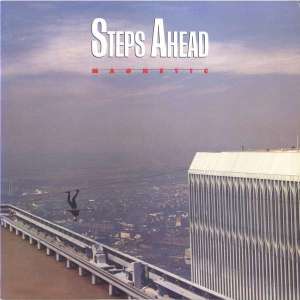
Steps Ahead: Magnetic 30 Years On

steps

Some improvised music hits you at just the right age, to the extent that 30 years later you can still hum along to all the solos.

Baby boomers were lucky enough to have Kind Of Blue, Time Out or Mingus Ah Um but jazz fans brought up on Weather Report and 1980s Miles had albums like Magnetic.

In 1986, recording and instrument technology was moving quickly, maybe too quickly. This development influenced all kinds of music, from rock to fusion, and, in the wrong hands, led to a lot of grossly-overproduced, unmemorable stuff that barely holds up today. As a few people have said, 1986 may be the worst music year of the decade.

But that year also somehow produced some memorable fusion music. Smooth Jazz (AKA The Wave) was just a twinkle in some bored record exec’s eye and the ever-reliable Japanese market was keeping quality electric jazz alive; Lyle Mays, Mike Stern, Wayne Shorter, John Abercrombie, Miles, Bireli Lagrene, John Scofield, Bill Frisell and John McLaughlin were going strong.

Though Steps Ahead’s Magnetic album embraces technology to a full extent, even more so than on ’84’s Modern Times, given the writing and playing talent (Michael Brecker, Peter Erskine, Mike Mainieri) it’s no great surprise that they pull it off with so much aplomb, aided by formidable ex-Weather Report bassist Victor Bailey.

A timeless classic it ain’t, but Magnetic isn’t any old ‘what does this button do?’ mid-’80s studio creation. Though the sound and mastering are superb, emphasised by the presence of Brothers In Arms producer Neil Dorfsman on engineering duties alongside future back-room stars James Farber and Tom Lord-Alge (fresh from Steve Winwood’s Back In The High Life), the compositions very definitely come first and the audio ‘experiments’ second.

Despite all this, Magnetic is definitely the least-heralded Steps Ahead album amongst jazz critics, probably because it’s a real onslaught of styles and sounds, closer to a ‘pop’ album in concept. The melodic themes are strong without ever getting too sugary and each track has a unique flavour.

It’s hard to believe the same band can come up with ‘Something I Said’ (featuring one of Brecker’s great ballad performances) and also the coruscating avant-fusion of ‘Beirut’ (developed from a band jam session).

Hiram Bullock plays one of his many classic solos on ‘Trains’, adding some much-needed grit, while George Duke co-produces the weird but exciting contemporary R’n’B of ‘Magnetic Love’ featuring some outrageous sampled Brecker tenor lines and killer Dianne Reeves lead vocals (and great backups from Jocelyn Brown, Janice Pendarvis and Diva Gray).

A synthesized cover of Ellington’s ‘In A Sentimental Mood’ proves Steps’ link to the past masters and features some astonishing EWI (an electronic instrument with the same fingering as a sax that looks like an elongated metal lollipop) from Brecker. There’s even time for some banjo-playing on ‘Cajun’, powered along by Erskine’s superb ride cymbal work. Yellowjackets were definitely listening to that. Oh, and is that Philippe Petit on the sneakily-doctored album cover?

It’s weird seeing Steps Ahead playing this material live. They had obviously worked a bit on their stage ‘presentation’ between 1984 and 1986, maybe influenced by Chick Corea’s shenanigans. Peter Erskine and Victor Bailey had left to join Joe Zawinul’s Weather Update tour, so ex-Journey drummer Steve Smith, Sting/Miles bassman Darryl Jones and Stern came in, adding some big-name clout and a much tougher sound.

Magnetic was the last major-label action for Steps Ahead. Brecker and Erskine jumped ship but Mike Mainieri would continue with the name over the next few decades fronting a multitude of line-ups. He even fronted a ‘reunion’ tour in 2016 with a formidable band including pianist Eliane Elias and sax player Donny McCaslin.

Marvin Gaye: 1983

marvin

Marvin entered 1983 with mixed emotions.

His comeback album Midnight Love, released in October 1982, was a certified hit, with decent sales, good PR and an attendant single ‘Sexual Healing’ that was building up quite a Grammy buzz.

But there were plenty of other problems brewing: in his rather paranoid state, Marvin believed that pretenders to his throne like Teddy Pendergrass, Frankie Beverly (whom Marvin had mentored early in his career), Lionel Richie and Michael Jackson were cashing in on his style and sound. The latter had even taken to wearing aviator shades and ‘military’ garb.

Elsewhere, Marvin’s relationship with his father had hit a new low. Bitter and resentful, he considered physically ejecting Father from the family home but decided instead to stay away completely.

The other problem was cashflow. Marvin was spending so much money on ‘extras’ that he had been forced to give up his houses in Bel Air and Palm Springs. Despite all this, in the first few months of 1983, Marvin reminded the music world of his luminous genius and, against all the odds, provided a few career high-points.

Broke and entering an introspective period, he found himself spending quite a lot of time at his sister Sweetsie’s pad. It was there, on Saturday 12 February 1983, that he got together with chief musical collaborator Gordon Banks to cook up a version of the national anthem that he would sing the next day before the National Basketball Association’s All-Star Game.

Despite the last-minute planning, there was no margin for error: Marvin’s performance would be broadcast live on national TV. He not only pulled it off – he smashed it out of the park. Only Marvin could have come up something so singular. His huge respect for the athletes ensured that he raised his game accordingly.

Funky, spiritual, heartfelt and yet controversial, it was a triumphant reading of ‘The Star Spangled Banner’, and one of the highlights of his career.

Less than two weeks later, on 23 February, there was another personal milestone for Marvin when he was awarded his first Grammy awards at the Shrine Auditorium in Los Angeles.

That the Best Male Vocal and Best Instrumental Performance awards were ‘only’ in the R’n’B category scarcely mattered. He had moved out from behind his Grammy nemesis Lou Rawls’ shadow and finally gained the acceptance of his peers, something that was extremely important to him. His speeches were heartfelt and touching.

His performance of ‘Sexual Healing’ was not an unqualified success (it was 10 or 15 BPMs too slow and Marvin seemed slightly uncomfortable), but it’s still essential and moving stuff.

Another very happy moment happened a few months later when Marvin appeared with Gladys Knight and the Pips on another TV special. According to David Ritz’s classic book ‘Divided Soul‘, Marvin and Gladys argued backstage about whose version of ‘I Heard It Through The Grapevine’ to do. He finally deferred to her, but still turned in another joyous and brilliant performance.

Then, on 25 March 1983, the Pasadena Civic Auditorium hosted the ‘Motown 25’ anniversary concert, most famous for Michael Jackson’s spellbinding reading of ‘Billie Jean’. Marvin once again defied expectations and provided one of the highlights of the evening.

Though looking somewhat haggard, his blues/gospel piano playing and philosophical pronouncements on the value and history of black music were nothing less than captivating. His subsequent performance of ‘What’s Going On’ was perhaps perfunctory in comparison, but still essential viewing.

Tougher, tragic times were to come over the next year, but for a few months in early 1983, Marvin was seeing a lot of his professional dreams come true. No one could take that away from him.

The Cult Movie Club: The Rachel Papers (1989)

rachel papersHere’s a late, almost completely forgotten contender for the pretty short ‘film better than the book’ list.

Writer/director (and son of Richard) Damian Harris’s ‘The Rachel Papers’, based on Martin Amis’s 1973 debut novel, crept out in May 1989 to mediocre reviews and underwhelming business.

At the time, the post-‘Mission’, pre-‘Four Weddings’ British film industry was in its latest rut, unsure of its place in the global marketplace and reeling from massive government cuts.

But somehow ‘The Rachel Papers’ movie remains true to Amis’s irreverent, adolescent, sweary, very ‘London’ vision, while understandably playing down the overt racism, sexism and druggier aspects of the novel.

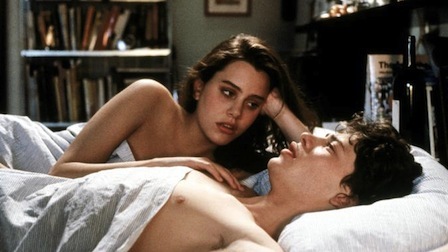
The plot centres around Charles Highway, a precocious, upper-middle-class tyke on the cusp of his 20th birthday. He’s no virgin (the title alludes to the secret ‘research files’ he keeps on all his previous conquests) but is desperate to sleep with an older woman before he hits his twenties.

The lovely, intelligent, well-bred Rachel seems to fit the bill perfectly, but Charles gets a lot more than he bargains for when he pursues her. Falling in love wasn’t part of the plan, etc, etc… He also has to contend with Rachel’s on/off American boyfriend DeForest. Charles does a fair bit of learning and ‘growing’, but with an agreeable lightness of touch. Most importantly, the movie rattles along at a good lick.

rachel papers

Ione Skye and Dexter Fletcher

I came across ‘The Rachel Papers’ completely by chance in the early ’90s when I was almost exactly Charles’s age, and it rang a lot of bells. Watching it again recently, I was pleased how well it stands up whilst obviously being very much of its time. The movie lives or dies by the casting of the Charles character – Dexter Fletcher does his best but wouldn’t seem a natural fit for the role. For a start, he looks barely older than 15. Where was Hugh Grant when Harris needed him?

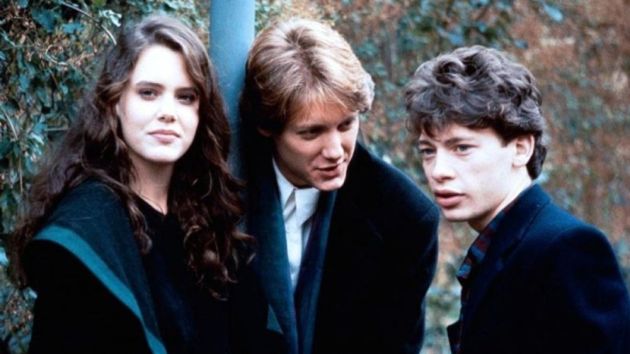
Often breaking the fourth wall and speaking directly to camera, Charles is a fusion of Ferris Bueller and Alfie, basically a cocky, rather spoilt little prick with, as it turns out, a few deep-rooted insecurities. In Amis’s book, Rachel isn’t American – the casting of Ione Skye was apparently a studio-imposed decision, but it doesn’t upset the balance of the film at all. She does a great job in an underwritten role. She’s a fresh, natural, uplifting presence, carrying on from where she left off in the classic ‘Say Anything’. James Spader delivers a typically superb performance as DeForest, mining the same smarmy, condescending schtick he so memorably employed in ‘Pretty In Pink’.

rachel

Skye, Spader, Fletcher

The film is also chock-a-block with other memorable character turns – Jonathan Pryce, Michael Gambon, Lesley Sharp, Aubrey Morris, Gina McKee and Claire Skinner do some great work, particularly Gambon as an amusingly-off-hand university interviewer. Ian Dury’s right-hand-man Chaz Jankel does a decent job with the soundtrack on top of some choice contributions from Shakespears Sister and John Martyn.

pryce

Jonathan Pryce in ‘Rachel’

In the final analysis, ‘The Rachel Papers’ is the only Brit romcom I’ve seen that approaches something like ‘The Sure Thing’.

It’s irreverent and unpretentious but certainly not dumb, a fairly accurate portrait of late-’80s London, bringing an appealing cheerfulness to the city without resorting to picture-postcard clichés (there’s not a shot of Big Ben or Trafalgar Square in sight). The sexual politics and shenanigans are also refreshingly upfront.

It’s surely due a remake – the recent ‘Don John’ seems to touch on similar areas but looks like somewhat of a disaster area if the trailer is anything to go by. Don’t judge ‘The Rachel Papers’ by the trailer either, though, by the way…

Thomas Dolby: Aliens Ate My Buick

aliens-ate-my-buick-52dea191dc659This was Dolby’s ‘Marmite’ album – the one that really tested his fanbase.

A relocation to the States after marrying soap actress Kathleen Beller (Dolby’s companion on the front cover) led to a new home in the Hollywood Hills (apparently a very large, rather creepy movie-star mansion), the recruitment of a great new band The Lost Toy People via an advert in a local paper and a wholesale embracing of American black music.

In many ways, Aliens is Dolby’s reaction to the work of George Clinton and Prince (of course, he’d collaborated rather spiffingly on the former’s Some Of My Best Jokes Are Friends). But it’s also a rather uptight Brit’s view of American culture complete with tacky local detail: smog alerts, Bel Air bimbos, pink leather upholstery, weird license plates.

dolby

A very brave bit of sequencing puts ‘The Key To Her Ferrari’ right at the front of the album.

A fake-jazz/B-Movie swinger with a vaguely ‘50s rock’n’roll feel featuring lots of Zappaesque spoken word stuff from Dolby and some brilliant close-harmony female vocals, it’s all pretty stupid but the band plays fantastically and everyone sounds like they’re having a great time. However, you do wonder how many listeners made it past such an uncompromising track.

The lead-off single ‘Airhead”s delirious mash-up of funk and pop is pretty irresistible.

Mr Clinton contributes the funny and funky ‘Hot Sauce’ which packs in an incredible amount of good stuff into its five minutes including a Spaghetti Western prelude, a reference to Cameo’s ‘Candy’, a touch of salsa and even a killer James Brown-style piano break.

Ditto ‘May The Cube Be With You’, featuring Clinton and Lene Lovich on backing vocals, the Brecker Brothers on horns and a brilliant groove from P-Funk bass/drums team Rodney ‘Skeet’ Curtis and Dennis Chambers.

But, as with most Dolby albums, the treasures are mostly found in the more introspective, less gimmicky moments. ‘My Brain Is Like A Sieve’ easily transcends its title and faux-reggae arrangement to become a superb and quite downbeat pop song in the Prefab style. ‘The Ability To Swing’ is a cracking piece of funk/jazz, with some excellent lyrics, possibly Dolby’s most covered song.

‘Budapest By Blimp’ is very much the centrepiece of Aliens and its stand-out track, an epic ballad harking back to the Flat Earth sound with a great, David Gilmour-esque guitar solo by Larry Treadwell (one of many on the album) and some superb, driving bass from the late Terry Jackson.

The only slight misfire is ‘Pulp Culture’, initially interesting but quickly grating with coarse lyrics and a melody line too similar to Stevie Wonder’s ‘Have A Talk With God’. It’s worth noting, though, that according to Dolby, the entire song (including his vocals) is made up of Fairlight samples.

The album’s very moderate success (#30 in the UK and #70 in the US) was probably not a surprise – it was totally out of sync with anything in British or US pop. Aliens probably rather reflected Dolby’s interest in music video and movie soundtracks (he’d just finished scoring ‘Gothic’ and ‘Howard The Duck’).

I’d put Aliens up there with The Flat Earth as his best album, a perfect companion piece to other classics of summer 1988 such as Prefab’s From Langley Park To Memphis, Scritti Politti’s Provision and Prince’s Lovesexy. It’s strong beer but I love its pungent textures. And let’s not forget Steve Vance and Leslie Burke’s brilliant cover artwork.

Story Of A Song: Prefab Sprout’s ‘Bearpark’ (1988)

prefabThere’s a quality to demo recordings (rough, early versions designed to demonstrate a composition for a potential multi-track studio recording) that really appeals, especially those with ‘delusions of grandeur’ that try to sound much more expensive than they are.

In the 1980s, a demo would typically be very quickly recorded onto a four-track tape machine and then tarted up with a bit of cheap reverb.

But these artefacts can very often take on a quality all their own. ‘Chasing the demo’ syndrome is common among musicians and producers, where they try in vain to replicate the freshness of the original as compared with an endlessly-tinkered-with studio version which quickly loses its zing.

‘Bearpark’ first appeared on the B side of Prefab’s ‘Nightingales’ 12” single as part of a three-song EP called The Demo Tapes (the other two tracks were ‘Life Of Surprises’ and ‘King Of Rock’n’Roll’).

It never made it onto any album but has nevertheless become one of my favourite ever Paddy McAloon compositions. It was also apparently the first time he had ever used a four-track cassette machine, recorded with a Dr Rhythm drum box, cheap synth and electric guitar.

The chords hang in the air, never quite getting resolved. In fact, playing along to the song on bass, virtually any root notes work under each chord. It’s hard to imagine how ‘Bearpark’ could be improved by a big-budget production, hence possibly why it hasn’t appeared on an official album, though Paddy says he ‘felt like Phil Spector’ when he’d finished it. Its charming musical naivety and sparseness perfectly suit the lyrical theme: home.

Home, sweet home
Sweet home, hard as nails

Bearpark, you were mine
I know, I know, I’ve been away but you’re
Not the type for valentines
Bearpark, I get homesick

Langley you are fine
I know, I know, I’m a gypsy
But Bearpark, Bearpark’s on my mind
There’s nowhere else like you

I’m gonna walk this weary body that’s been nowhere far too long
I’m gonna drag it back where it belongs

Home sweet home, Geordies
Hard as nails, Geordies
Well out of my pram,
Hard as nails, Geordies
We am

Bearpark, what a place
I know that this will sound soft but I
Sometimes think you’ve got a face
Both eyes black and blue

A stranger comes to town
I know, I know, the chances are that
Some bright spark will run him down
No honey on your tongue

I’m gonna take this broken spirit
Gonna heal it for all time
When I see your dear name
Upon a sign

Bearpark, you are mine
Hard as nails, Geordies
Well out of my pram…

Maybe it is time the song got a ‘proper’ recording. As Paddy says in the liner notes on the back of the 12” single, ‘You might think you can do better – be my guest. I like cover versions.’ But he also advises: ‘Don’t spend too long on the demo’…

Madness: Five Reasons To Be Cheerful

madnessThese days, brands (and possibly bands) spend thousands – if not millions – of pounds on copywriters who half-inch bargain-basement slogans from popular psychology and self-help books.

You know the kind of thing: ‘Find Your Happy’, ‘Believe In Better’ and all that other absolute twaddle. Anyway, I know a much better way to ‘find my happy’: watching a few Madness videos.

It’s easy to forget how great a lot of their stuff is if you’re an English pop fan. They’re so much part of the furniture. According to the stats, no other band spent more time on the UK singles chart during the 1980s.

One of the keys to their longevity seems to be that they are essentially a songwriters’ collective; at one point or another, all the members have had a hand in penning a hit (they famously shared the publishing royalties seven ways – 50% for the writer/writers, and the remainder divided up equally among everyone else).

There’s definitely method in their madness: intelligent, often socially-conscious lyrics that are actually about something, subtly-effective major/minor chord changes, hooks galore, spooky textures, a superb rhythm section and the ever-reliable Clive Langer/Alan Winstanley producing/engineering team (the former apparently had lots of good songwriting and arranging input too).

And in terms of music videos, surely their body of work is the most consistent of the decade, alongside Talking Heads and maybe a few others. So here, in chronological order, are my favourite Madness vids – and some pretty damn good songs to boot.

5. Baggy Trousers (1980)

The Ian Dury-influenced classic, written by singer Suggs and guitarist Chris Foreman. I can remember first seeing this video on ‘Top Of The Pops’ like it was yesterday.

4. Shut Up (1981)

Written by Suggs and Chris Foreman from the point of view of a very deluded house burglar, this is a worthy entry into that select group of hits whose titles don’t feature in the lyrics. Blur were definitely listening – compare it with their ‘Sunday Sunday’.

3. Driving In My Car (1982)

Written by pianist Mike Barson, the video features the lads driving down Goldhawk Road, Shepherd’s Bush, and there’s even a brief cameo from Fun Boy Three.

2. Our House (1982)

Written by Chris Foreman and saxophonist Cathal Smyth AKA Chas Smash, apparently the one-line chorus was added at the last minute at producer Clive Langer’s insistence.

1. House Of Fun (1982)

Written by Lee Thompson and Mike Barson, this time the chorus was apparently demanded by Stiff Records boss Dave Robinson.