Blitz: The Club That Shaped The 80s @ Design Museum, 27 September 2025

England, 1979: punk is out, sus laws and Thatcher are in. Nightclubs are closing down and youth violence and political unrest are on the rise (as are movements like Rock Against Racism).

But, in a curious echo of punk five years before, something is stirring in the London suburbs. Young Roxy, Bowie and Kraftwerk fans from Bromley, Burnt Oak and Basildon are dressing up in style (Zoot and toy-soldier suits, cummerbunds, bolero hats, geometric haircuts) and flocking to clubs like Covent Garden’s famous Blitz, now the subject of an engaging exhibition running until 29 March 2026 at the Design Museum

It was the apex of a scene which encompassed fashion, graphic design, journalism, electronic dance music, squatting and a New Pop sensibility which would soon sweep the charts. In short, it’s arguably the best of the 1980s, and this fascinating exhibition neatly incorporates most of it.
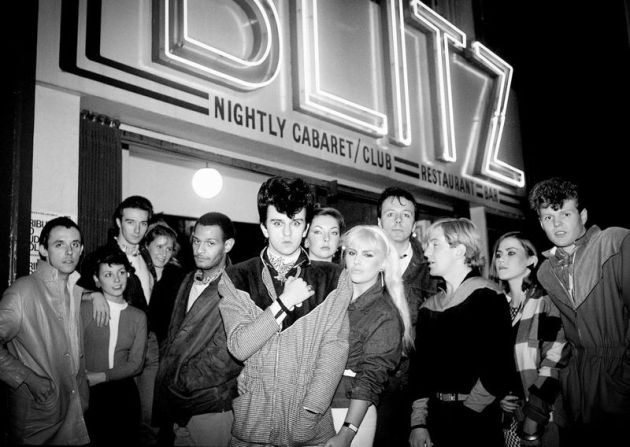
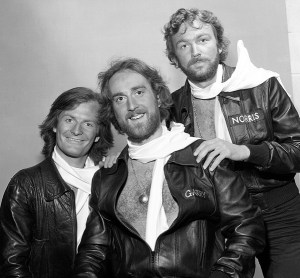
Blitz Kids including Midge Ure, Steve Strange, Billy Currie and Rusty Egan

We see the original flyers and posters which wittily and stylishly trailed the Blitz club nights, and there are many items of vintage clothing. The rarely-seen photos are worth the price of admission alone, many contributed by original scenesters like Boy George, Siobahn Fahey, Robert Elms and Marilyn, including a priceless shot of David Bowie with Toni Basil (we also get the full story of Bowie’s recruitment of Strange et al for the ‘Ashes To Ashes’ video).

But the jewel in the exhibition’s crown is probably the recreation of the Blitz itself, with an AI Rusty Egan on the decks and Spandau Ballet performing ‘To Cut A Long Story Short’ on the ‘live stage’ (elsewhere Elms has donated his embarrassing handwritten poem which he used to announce their debut gig at the club).

Rusty Egan, Gary Kemp, Fiona Dealey and Robert Elms in the exhibition’s recreated Blitz. Photo by PA Media

The exhibition widens out to encompass other fascinating early 1980s artefacts, like the posters advertising Sade’s pre-fame Ronnie Scott’s gigs – well over a year before Diamond Life was released – and evidence of the media’s generally condescending attitude towards The Cult With No Name/New Romantics/Blitz Kids.

Then there are the textiles, hats and magazines galore (the exhibition dovetails slightly with the Portrait Gallery’s recent Face exhibition), and even the first all-electronic drum set, a Simmons SDS-V, as used by Kajagoogoo, Flock Of Seagulls, Ultravox etc.

This is an engaging, fun exhibition curated by people who were there and/or obviously care about this stuff. And there’s just enough social/political context for it to be educational too – it was good to see so many youngsters enjoying it with their parents. Highly recommended.
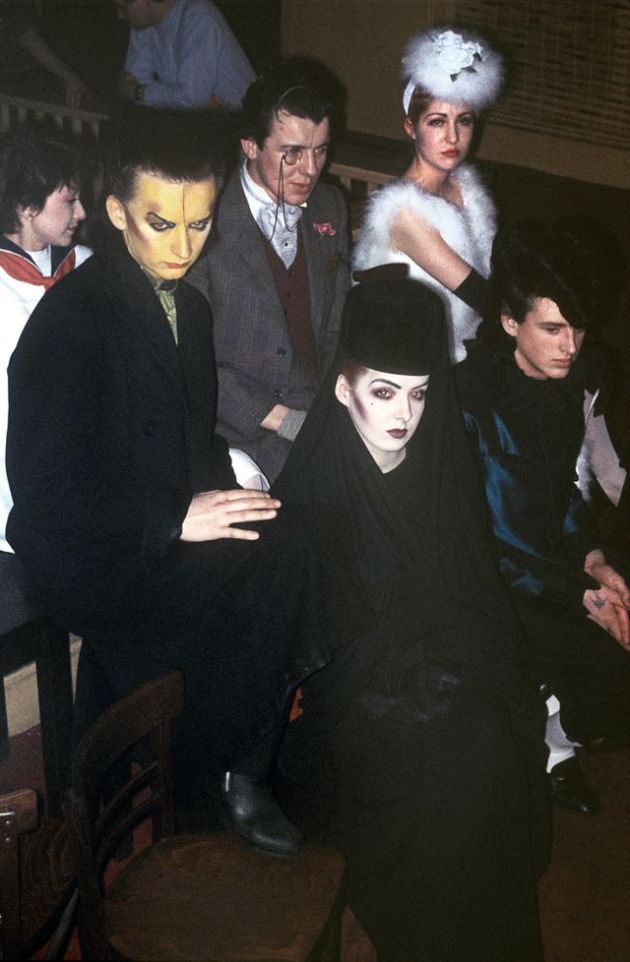
The Blitz in 1980, with Boy George (left)
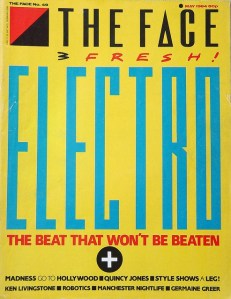
The Face Magazine: Culture Shift @ National Portrait Gallery, London

Any British music fan who came of age during the 1980s must surely have a soft spot for The Face magazine.
Launched by Smash Hits founder/NME editor Nick Logan in May 1980, the monthly rag – so named because of its Mod allegiances – quickly become known as a first-rate style mag (it covered fashion, music, culture, clubbing and cinema too), with its many famous covers reaching the level of high-quality pop art.

Indeed, looking again at issue #1, it’s remarkable how many of its listed writers and photographers would turn out to be key documentors of the decade – Janette Beckman, Julie Burchill, Gary Crowley, Anton Corbijn, Ian Cranna, Jill Furmanovsky, David Hepworth, Tony Parsons, Sheila Rock, Pennie Smith (and that issue alone features iconic photos of Madness, The Specials, The Clash, John Lydon and Paul Weller, amongst others).

It was also unique amongst 1980s music mags in paying as much attention to reggae, hip-hop, electro, house, rare groove and jazz as it did to post-punk, 2-Tone and sophistipop.

But movingtheriver also remembers it most for its superb long-form interviews: I still have issues featuring in-depth pieces on Miles Davis, Trouble Funk, Dennis Hopper, David Sylvian, David Byrne, Robert Smith, Daryl Hall and Ken Russell.

The Face’s iconic imagery is celebrated at the excellent if compact new exhibition at London’s National Portrait Gallery. Predictably it’s photos from those post-punk/New Pop salad days of 1980-1983 which produce the most smiles of recognition/pleasure – Bowie in Japan, Adam Ant, Phil Oakey, John Lydon, Annie Lennox.

But there are great pics/stories from later in the decade too – Bros with their mum at home in Peckham, Shane MacGowan, Sade, Nick Kamen, Felix et al. There’s also a great chronology of 1980s clubbing, from Goth to Acid House, and a focus on long- lost London nightspots.

As the 1980s became the 1990s, The Face arguably reflected a gradual coarsening of the culture with more focus on fashion and lifestyle – but you knew that anyway. But this exhibition is a must-see for any music fan who loved the 1980s, and it was also refreshing to see such a broad range of ages attending.

The Face Magazine: Culture Shift runs at the National Portrait Gallery until 18 May 2025.

Nine Memorable 1980s Pop Parodies

The HeeBee GeeBees

One adjective you couldn’t use about 1980s pop is ‘boring’. The music had way too much character and the artists too much physical presence for that.

But 1980s music culture was easy to lampoon. And there was so much mainstream TV to do the lampooning, from ‘Not The Nine O’Clock News’ and ‘The Goodies’ to ‘The Kenny Everett Video Show’ and ‘Spitting Image’.

And across the pond, of course, there was ‘Saturday Night Live’. Then there were the radio spoofs and specially-constructed ‘bands’ like The Hee Bee Gee Bees. All in all it was a golden era for satire.

So here we round up some classic spoofs of 1980s music, with a few recurring subjects…

9. Not The Nine O’Clock News: ‘Happy Crappy Nappy Song’
Inane pop pretenders or joyous post-punk tunesmiths? If you thought Altered Images were the former, Pamela Stephenson and pals pretty much nailed the Glaswegian band’s shtick right here.

8. Stevie Nicks: ‘What The Hell Is She Saying?’
Who the hell is responsible for this classic?


7. Not The Nine O’Clock News: ‘Nice Video, Shame About The Song’
It’s the naughty gang again, this time brilliantly skewering early ‘80s pop videos, particularly the work of pioneers Russell ‘Vienna’ Mulcahy and David ‘Ashes To Ashes’ Mallet.


6. The Hee Bee Gee Bees: ‘Quite Ahead Of My Time’
Angus Deayton, Phil Pope and Michael Fenton Stevens brilliantly lampoon David Bowie’s 1976-1980 era, with nods to ‘Golden Years’, ‘Ashes To Ashes’, ‘African Night Flight’, ‘Fashion’, ‘It’s No Game’ and even ‘The Secret Life Of Arabia’. There’s also a touch of Eno and Bowie’s ‘point to some chord signs with a baton and get the band to play them’ Berlin-era modus operandi about the music here.


5. Spitting Image: ‘We’re Scared Of Bob’
Lyrically and musically spot-on, and also highlights the use of minor celebs in ‘We Are The World’ and ‘Do They Know It’s Christmas’.


4. The Kenny Everett Video Show: The Bee Gees
Ten years before Clive Anderson’s disastrous TV interview, Kenny nails the inescapable naffness of the Brothers Gibb.


3. The Hee Bee Gee Bees: ‘Too Depressed To Commit Suicide’
The first of two Police pastiches, Messrs. Deayton, Pope and Fenton Stevens (apparently with amusing lyrical input by Richard Curtis too) offer a great distillation of their sound, somewhere between ‘Walking On The Moon’ and ‘Don’t Stand So Close To Me’. Also check out the delicious piss-taking of Stewart Copeland’s penchant for adding ‘delays’ (echoes) to his drums.


2. Weird Al Yankovic: ‘Velvet Elvis’
Not as good as the previous track – his voice is pretty poor – but musically it’s pretty damn sharp.


1. Saturday Night Live: Frank Sinatra and Stevie Wonder
Just a timeless classic…

Any classic ’80s parodies missing here? Leave a comment below.

1984: David Bowie’s Worst Year?

Bowie’s Tonight, the speedy followup to Let’s Dance released 40 years ago, was one of the most divisive albums of his career.

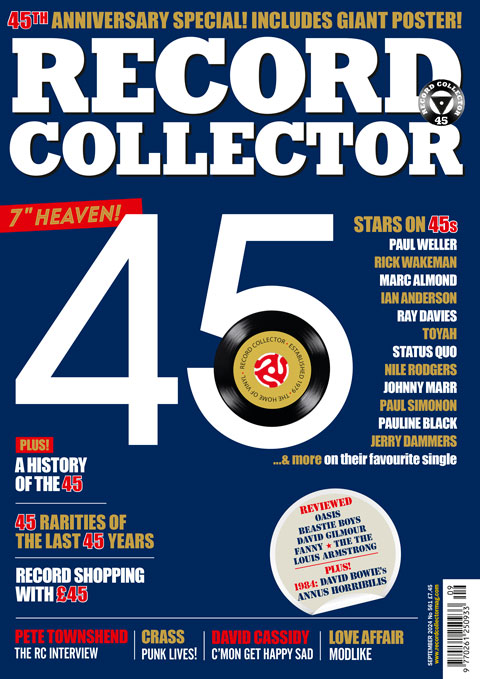
For some, it was over-produced pap. For others, it was a great little pop/rock album. In the September issue of Record Collector magazine, I reassess it, rounding up some of the usual and unusual 1980s suspects in the process.

Still, for many, 1984 remains the worst year of David’s career. In fact, during a period of great personal strain, it was one of his most intriguing, including collaborations with Pat Metheny, Tina Turner, John Schlesinger and Iggy Pop, the ‘Jazzin’ For Blue Jean’ short film with Julien Temple and his (at first) tentative foray into the Band Aid project.

Read all about DB’s 1984 in the new RC. Top breeders recommend it.

Book Review: Absolute Beginner by Kevin Armstrong

Most fans of 1980s pop and rock will have come across the name Kevin Armstrong, guitarist with Iggy Pop, Morrissey, Sinead O’Connor, John Lydon, Propaganda, Tin Machine, Prefab Sprout, Thomas Dolby and Paul McCartney, and famously part of David Bowie’s band at Live Aid.

His enjoyable new memoir ‘Absolute Beginner’ is that rare thing – a book by a British session player who has borne witness to massive egos, occasional artistic triumphs and typical music biz disappointments, all the while trying to get a reasonable guitar sound.

But the book is anything but a polite/completist career overview – Armstrong knows where the bodies are buried and doesn’t hold back on salacious details. He’s also blatantly honest about his own perceived musical shortcomings and mental health issues.

Finally the book comes over as something like a cross between Giles Smith’s ‘Lost In Music’ and Guy Pratt’s ‘My Bass And Other Animals’, with just as many laughs as both.

We learn about his misspent youth in the relatively salubrious environs of Orpington, Kent, nurturing his increasing interest in the guitar and music of David Bowie, Yes, Zappa and Roxy Music (and ponders whether Eno’s squealing synths caused him some hearing loss issues when watching Roxy supporting Alice Cooper). There are superb passages about the power of listening to a great album while studying the sleeve and indulging in ‘mild hallucinogens’.

The punk era sees Armstrong squatting in Brixton, hanging out with The Slits and recording with Local Heroes (on Charlie Gillett’s record label) and The Passions. There’s a whole chapter on collaborating with Thomas Dolby, lots on laying down Steve McQueen with Prefab (fronted by the ‘emotionally fragile’ and ‘shy’ Paddy McAloon) and some hilarious stories about playing in Jonathan Ross’s house band for ‘The Last Resort’.

But the real meat and drink of the book is the fabulous section on Live Aid, particularly illuminating the strange realities of the music industry when he returns alone to his tiny West London flat soon after performing for two billion people. There are also fascinating, funny stories about recording ‘Absolute Beginners’ and ‘Dancing In The Street’.

His dealings with Bowie during the Tin Machine era are also as intriguing as you might expect (as is his story about being ‘let go’ before the release of that band’s debut album, also nixing the rumour that Bowie gave up booze a long time before 1989…), as are those with the mercurial McCartney, the superstitious, over-sensitive Morrissey and bizarre O’Connor.

There are many revelations too around touring with Iggy Pop, as well as some refreshingly honest opinions on some of his bandmates (especially – and surprisingly – drummer Gavin Harrison…) and a fascinating detour into joining a choir led by Eno.

But Armstrong saves most of his bile for his late entrée into the world of TV advertising: ‘Blind optimism and over-confidence drew me inexorably into the seedy and frightening world of production music…a world so steeped in bullshit and doublethink that it beggars belief’!

‘Absolute Beginner’ is one of the most enjoyable music memoirs movingtheriver has read over the last few years. Just when you think you know where it’s going, it delivers yet another zinger. It’s an absolute must for any fans of Bowie, Iggy, Dolby or Prefab, while offering the casual 1980s and 1990s music fan loads of tasty morsels.

John Lennon/Yoko Ono: Milk and Honey @ 40

Milk and Honey – planned as the followup to Double Fantasy long before John Lennon’s death on 8 December 1980 – was finally released 40 years ago this weekend, on 27 January 1984.

I believe it was the second vinyl album owned by movingtheriver – the first was The Beatles’ Magical Mystery Tour soundtrack.

Polydor did John and Yoko proud, with striking front/back photos and a gatefold sleeve complete with Ono’s liner notes, Lennon’s ‘Grow Old With Me’ lyrics and some Robert/Elizabeth Barrett Browning poetry.

But Milk and Honey was somewhat of a commercial disappointment, reaching #3 in the UK and just #11 in the US. And it seems one of the least remembered Lennon-related albums these days. Why? Listening again after a few years this weekend was a pleasurable experience, with a few exceptions, and the breadth of musical styles (reggae, calypso, new-wave, piano balladry, rock’n’roll) is impressive.

Six John solo tracks recorded during and before the Double Fantasy sessions made it onto the album. They’re all pretty good, a few classic, mostly tougher than the previous material. John sounds on great form. His spoken-word moments and count-ins are amusing and he’s frequently heard ‘coaching’ the band (and studio staff) through the songs, Prince-style, with various instructions: ‘Boogie!’, ‘Hold it down’, ‘Groove!’, ‘All right, you can get out now’ etc.

The Lennon tracks also showcase a great band playing pretty much live in the studio. John plays lots of guitar – in that famous Jann Wenner interview, he said ‘I can make a guitar speak’, and you can hear it here. Drummer Andy Newmark lays off the hi-hat most of the time, letting the rhythm guitars fill in the top end.

Three UK singles were released from the album, with diminishing returns: ‘Nobody Told Me’ got to #6, ‘Borrowed Time’ (studio sessions reveal that John used an interesting reference source for the song) #32 and ‘I’m Stepping Out’ #88.

Yoko recorded her tracks during 1982 and 1983, mostly with a very good NYC rhythm section (Neil Jason on bass, Yogi Horton on drums), and they range from the intriguing to extremely corny. ‘Don’t Be Scared’ possibly influenced David Bowie, particularly the title track of Tonight, recorded three months after Milk and Honey was released:

Yoko also enlisted some ‘remix engineers’ who apparently added a lot of post-production effects to John’s vocals, the drums and guitars (she had fallen out with Double Fantasy producer Jack Douglas over unpaid royalties and refused to credit him on the album).

Revisiting Milk and Honey was certainly a bittersweet experience, but it’s an easy album to recommend, and it only makes you miss John all the more. The dunderheaded/ill-informed contemporary critical reactions are explored in this very good video:

Book Launch: John McLaughlin (From Miles and Mahavishnu to The 4th Dimension)

Matt’s new book ‘John McLaughlin: From Miles and Mahavishnu to The 4th Dimension’ is available now and can be ordered via the links below.

‘A must-have in every aspiring musician’s personal library.’ Billy Cobham, Mahavishnu Orchestra drummer

‘A wonderful insight into a true innovator and colossus of the guitar.’ Mark King, Level 42 bassist/vocalist

‘Scrupulously researched… A fluent career overview.’ **** MOJO, December 2023

‘The most comprehensive overview of McLaughlin’s career to make it into print thus far.’ **** Shindig!, January 2024

‘Comprehensive and thoroughly researched, Phillips’ book is a revelation. A must-read for guitar aficionados and McLaughlin devotees.’ Bill Milkowski, author of ‘Jaco’ and ‘Michael Brecker’

‘Riveting… Meticulous storytelling… The book is not just a narrative, it’s a visual feast.’ Jazz In Europe

‘Paints the fullest picture yet of the guitarist’s life.’ Jazzed

‘Thorough and impassioned… The first book to fully illuminate the least-appreciated, least-documented periods in the extraordinary career of this wondrously free-spirited, prolific, perpetually questing artist.’ Booklist

UK orders:

UK Bookshops

Rowman & Littlefield (Enter discount code RLFANDF30 to save 30% off the list price)

World Of Books

Hive

Blackwell’s

Waterstones

Foyles

WHSmith

USA orders:

Rowman & Littlefield (Enter discount code RLFANDF30 to save 30% off the list price)

Barnes & Noble

BooksaMillion

It’s an exhaustive look at John’s catalogue, live career and spiritual life, with an introductory note by Robert Fripp, testimonials from Mark King, Billy Cobham and Bill Milkowski, interviews with key collaborators and lots of exclusive photographs. I cover John’s early sessions with David Bowie and Donovan, his remarkable sideman work with Tony Williams and Miles Davis, the fabled solo career fronting The Mahavishnu Orchestra and Shakti and various projects alongside the likes of Sting, Jeff Beck, Herbie Hancock and Carlos Santana.

If you’ve enjoyed this website in any capacity, please consider buying this book and getting it to the toppermost of the poppermost… Thank you!

Nearly the Greatest Pop Albums of the 1980s (The One-Crap-Track Theory)

It’s been a bit of a movingtheriver obsession over the past few weeks as summer finally kicks in and the album format makes a seasonal comeback.
You’re enjoying the music, hailing a ‘classic’ record and then…damn. It’s the track you always skip, the runt of the collection, the song that tarnishes a perfectly good album.

Maybe the band was ‘letting their hair down’ after a few pints in the pub down the road. Maybe it was the drummer/producer/bass player’s vanity track. Maybe it’s the overplayed hit. Maybe the album sequencing isn’t quite right. To be honest, often it’s just something irrational that you can’t quite put your finger on.

For whatever reason, here are movingtheriver’s almost perfect 1980s ‘pop’ albums, and the tracks that just don’t quite sit right:

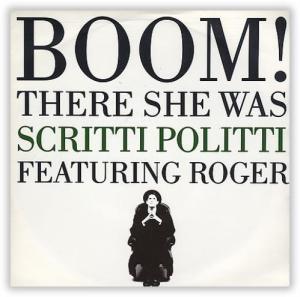
Scritti Politti: Provision (skipped track: ‘Boom! There She Was’)

Prefab Sprout: Steve McQueen (skipped track: ‘Horsin’ Around’)

Prefab Sprout: Protest Songs (skipped track: ‘Tiffany’s’)

Prefab Sprout: From Langley Park To Memphis (skipped track: ‘I Remember That’)

Talking Heads: Remain In Light (skipped track: ‘The Overload’)

Phil Collins: Face Value (skipped track: ‘I’m Not Moving’)

Propaganda: A Secret Wish (skipped track: ‘Jewel’)

Wendy & Lisa: Fruit At The Bottom (skipped track: ‘Tears Of Joy’)

China Crisis: Diary Of A Hollow Horse (skipped track: ‘Age Old Need’)

Danny Wilson: Meet Danny Wilson (skipped track: ‘Nothing Ever Goes To Plan’)

Danny Wilson: Bebop Moptop (skipped track: ‘NYC Shanty’)

Frankie Goes To Hollywood: Liverpool (skipped track: ‘Watching The Wildlife’)

David Bowie: Let’s Dance (skipped track: ‘Cat People’)

Kate Bush: Hounds Of Love (skipped track: ‘Running Up That Hill’)

The Police: Synchronicity (skipped track: ‘Every Breath You Take’, and sometimes ‘Mother’ too…)

Joni Mitchell: Wild Things Run Fast (skipped track: ‘Solid Love’)

Roxy Music: Avalon (skipped track: ‘Take A Chance With Me’, but I love the intro…)

Hue and Cry: Remote (skipped track: the title track)

Prince: Batman (skipped track: ‘Arms Of Orion’)

Swing Out Sister: It’s Better To Travel (skipped track: ‘Breakout’)

Thomas Dolby: The Golden Age Of Wireless (skipped track: ‘Windpower’)

(In the name of balance, I’ve listed my all-thriller/no-filler 1980s albums here. )

Do chime in with the tracks that, for you, muck up otherwise excellent 1980s albums.

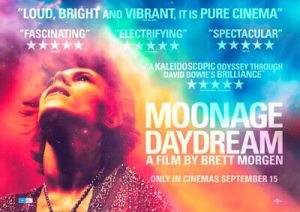
Movie Review: David Bowie in ‘Moonage Daydream’ (2022)

The hype for ‘Moonage Daydream’ is presenting it as a very different kind of David Bowie documentary (and music doc in general), and in some ways that’s true – it’s certainly ‘non-linear’ (which creates a few problems, as we’ll see later) and not yet another retelling of the Bowie story replete with talking heads (David alone ‘narrates’ the movie).

It’s undoubtedly best seen in the cinema, with its striking sound collages, surreal jump cuts and sometimes startling imagery taken from many sources, cult movies (including Canadian curio ‘Universe’, apparently also an influence on Kubrick and Lynch) to Hollywood’s golden age.

Director Brett Morgen is best known for his Kurt Cobain and Rolling Stones documentaries (neither of which your correspondent has seen), and apparently he got complete family approval to sift through countless hours of Bowie’s personal archive – though reportedly David was less than convinced by Morgen’s credentials/pitch when they met in 2007.

But Morgen has certainly got hold of some coups: there’s madly exciting, previously unseen DA Pennebaker footage from the Earls Court and Hammersmith Odeon Ziggy gigs in 1973, including Jeff Beck’s guest spot on ‘Jean Genie/Love Me Do’ – what a thrill to see him trading licks with Mick Ronson.

There’s also some terrific David Hemmings-directed 35mm Earls Court footage from 1978, and you’ll be doing well if you don’t get a lump in the throat during ‘Heroes’ (when is the complete footage finally going to get a proper release?). Then there are tantalising glimpses of Bowie’s many paintings and some intriguing footage from his mid-1970s video experiments. Morgen also borrows large sections of Serious Moonlight tour curio ‘Ricochet’ and ‘The Man Who Fell To Earth’.

But the film really comes into its own with its sound design. Tony Visconti has donated audio stems from Bowie’s studio masters so there are interesting reversions of material like ‘Ashes To Ashes’, ‘DJ’ and ‘Absolute Beginners’. I almost cheered when Dennis Davis’s ‘Sound And Vision’ groove exploded into action and it’s a delight hearing Rob Sabino’s solo’d piano from ‘Modern Love’.

But there are issues with ‘Moonage Daydream’. The frenetic editing sometimes leads to jarring moments. If you were being kind you’d say it was ‘non-linear’, if you weren’t you might say it was completely random. Again, not a problem in itself, given Bowie’s use of cut-up techniques and mistrust of linear narratives by the mid-1990s.

Then there are the obvious omissions/Morgen’s perceived irrelevances. Tin Machine isn’t mentioned by name, nor are there any images of the band. In fact the period of 1989-2005 is scarcely covered, save for some interesting outtakes from Samuel Bayers’ videos from that time, some footage from Bowie’s 50th birthday concert and a section on his marriage to Iman.

There is a fairly lengthy exploration of his family background, suburban upbringing and half-brother Terry Burns, though very little about his early Mod days and art-school contemporaries. And Bowie purists may be troubled (well, I was!) by the use of the Pet Shop Boys remix of ‘Hallo Spaceboy’ rather than the original to kick off the film.

Of course the question is, if you’re a big Bowie fan – and I presume you are if you’ve read this far – do you need to see ‘Moonage Daydream’? I’d say a qualified ‘yes’… But ultimately it’s still like a very expensive-looking YouTube greatest hits, with many bits of familiar interview footage and a lot of previously seen live stuff. But even that is a thrill to see on the big screen with good sound. Is the film pretentious? Of course, but that was never a criticism for Bowie. He even described his collaborations with Brian Eno as ‘the new school of pretension’…

Further reading: ‘Sight & Sound’ October 2022