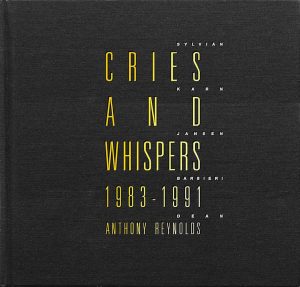
Book Review: Cries And Whispers 1983-1991 (Sylvian, Karn, Jansen, Barbieri) by Anthony Reynolds

Which ‘rock’ artists are the most likely to be subjects of not one but a series of biographies? The Beatles, The Stones, Dylan?

Japan are possibly unlikely recipients of such a legacy, but Anthony Reynolds’ superb new ‘Cries And Whispers’ – carrying on from where ‘A Foreign Place’ left off – holds the attention with ease.

His luxuriously-appointed new book takes an indepth look at all the protagonists’ (Sylvian, Steve Jansen, Mick Karn, Richard Barbieri) careers between 1983 and 1991, a mouth-watering prospect when you realise how scant the serious coverage of these groundbreaking musicians really is, Martin Power’s half-decent 1998 biography of Sylvian aside.

Here you get rigorous research, rare photos and unexpectedly candid interviews from producers, engineers, designers, record company execs, hangers-on and of course the musicians themselves.

There are fascinating glimpses under the ’80s pop bonnet, with details of record company correspondence, press releases, tour itineraries/diaries and testimonies from session players. There’s the odd unqualified muso revelation (did Mark King really get asked to play bass on ‘Pulling Punches’?!) and tasty gossip a-plenty, hardly surprising when you consider that the book covers the troubled Rain Tree Crow project.

In the main, Reynolds wisely keeps musical analysis to a minimum, letting the facts and musicians speak for themselves, and he also – admirably – is as interested in the murkier corners of Sylvian’s ’80s work (the one-off ‘Pop Song’ single, his involvement with Propaganda’s A Secret Wish album) as he is with the better-known stuff. Indeed, all the chapters on Sylvian’s solo work are terrific, particularly the lengthy portrait of his punishing ‘In Praise Of Shamans’ 1988 world tour. The Rain Tree Crow section is also gripping.

There are minor gripes here and there: some quotes from relatively peripheral figures – clearly cut and pasted from email correspondence – could do with trimming, and does anyone really want such a lengthy analysis of Dalis Car or The Dolphin Brothers? But even these longeurs have their fascinating moments.

This writer almost read ‘Cries And Whispers’ in one sitting, passing it from desk to sofa to dinner table to bath to bed, and you may well do the same. It’s another fine achievement by Reynolds and another classic music book to boot. We eagerly await the next instalment.

Gig Review: Level 42 @ Love Supreme Festival, 30 June 2018

Mark King tearing it up

What’s it like seeing ‘your’ band play at a big festival, when only a small proportion of the crowd are fans and most would rather have a chin-wag and quaff cider than listen to the music?  Will your band win them over, or at least give a good account of themselves?

It was an interesting experience watching Level 42 under those circumstances last weekend. The Love Supreme Festival was celebrating its fifth birthday, no mean feat for an outdoor ‘jazz’ festival, thriving in a niche marketplace by focusing on the improvising musicians of tomorrow, established genre names and crossover artists whose presence no doubt raises some eyebrows (the other main-stage headliners this year were Earth Wind & Fire, George Clinton and Elvis Costello).

A big festival gig should, on the face of it, be a doddle for a band with as many hits and as much musical credibility as Mark King and his muckers – you knock off a lean, mean hour and get the crowd saying: ‘I’d forgotten about this one!’.

But they did it the hard way this time, kicking off with nobody’s favourite Level 42 song ‘Heaven In My Hands’ then segueing speedily into ‘Dream Crazy’, ‘To Be With You Again’ and ‘It’s Over’. A superb ‘Children Say’, complete with a reference to Coltrane’s ‘A Love Supreme’, got things back on track musically but also seemed lost on the crowd.

King was unsettled. Had he blown it? No. He soldiered on, making some cracks about the World Cup and the Alan Shearer lookalike on trumpet, before ‘Running In The Family’ prompted an outbreak of interpretative dancing from the Brighton teenagers. Secret weapon Mike Lindup sounded in superb voice during ‘Lessons In Love’, ‘Something About You’ and ‘Hot Water’, but, predictably, it was the classic jazz/funk/fusion-era material that gained most traction: ‘Starchild’, ‘Love Games’ and a never-groovier ‘Sun Goes Down (Living It Up)’.

Suddenly the crowd and gig came to life. There could have been much more in that vein. Where was ‘Almost There’, ‘Micro Kid’, ‘Turn It On’, ‘The Chinese Way’, even ’43’, ‘Mr Pink’ or ‘Heathrow’? But when the material was right, the band sounded superb. King’s voice may be past its best but his bass skills have reached new heights. The slapping sometimes lacked precision but his fingerstyle playing goes from strength to strength. He embellished ‘Children Say’, ‘Starchild’ and ‘Sun Goes Down’ with some outstanding modal moves. There’s life in the Isle Of Wight lad yet.

Great Drumming Albums Of The 1980s (Part Two)

So here’s the second instalment of essential drum albums from the 1980s (check out part one here), a selection of the decade’s movers and shakers who either pushed the boundaries, flew somewhat under the radar or simply made the music sound better.

19. Chuck Brown And The Soul Searchers: Live ’87
Drummer: Ricky Wellman
Alongside Keith LeBlanc, Jonathan Moffett and Dennis Chambers, Wellman played some of the scariest single bass drum of the decade, laying down the go-go template that would influence everyone from Trevor Horn to Miles Davis (who headhunted Wellman in late 1987).

18. Nik Kershaw: The Riddle (1984)
Drummer: Charlie Morgan
Another somewhat underrated Brit sessionman, Morgan does exactly what’s right for the songs with a lot of panache. His ghost-note-inflected grooves on ‘City Of Angels’ and ‘Easy’ are treats for the eardrums.

17. Tackhead: Friendly As A Hand Grenade (1989)
Drummer/programming: Keith LeBlanc
Included because of the sheer variety of grooves, both human and machine-generated. Some beats bring to mind the sounds of electro and early hip-hop, but Keith also provides precise, tight, funky grooves on the kit.

16. XTC: English Settlement (1982)
Drummer: Terry Chambers
He was not subtle but the unreconstructed Swindon powerhouse could mix it with the best of ’em when it came to rock. Strongly aided by the dream Lillywhite/Padgham production/engineering team, his cavernous grooves always hit the spot. Currently residing in the ‘where are they now’ file (Or is he? Check out the comments section below… Ed.).

15. Power Tools: Strange Meeting (1987)
Drummer: Ronald Shannon Jackson
Ex-Ornette/Ayler collaborator and serious Buddhist Shannon Jackson cut a swathe through ’80s drumming with his striking solo albums and occasional projects like this frenetic trio alongside Bill Frisell and future Rollins Band bassist Melvin Gibbs. Free jazz with balls and humour. Play LOUD.

14. Roxy Music: Avalon (1982)
Drummer: Andy Newmark
Hard to bet against this masterpiece of tasteful, empathetic song-accompaniment. Even more impressive is the revelation that Newmark was usually the last musician to overdub, replacing a skeletal drum machine part.

13. Nile Rodgers: B Movie Matinee (1985)
Programming: Jimmy Bralower
Much-in-demand NYC programmer Bralower wasn’t every drummer’s cup of tea but he came up with many memorable, catchy beats on Nile’s forgotten second solo album. Even classy ballad ‘Wavelength’ chugs along to what can only be described as an electro groove.

12. Yes: Big Generator (1987)
Drummer: Alan White
Possessing one of the crispest snare sounds of the decade, White played 4/4 rock with lots of surprises – both listener and band alike have to be on their toes – and conversely also made the most complex arrangements sound completely natural.

11. Grace Jones: Living My Life (1982)
Drummer: Sly Dunbar
Sly came up with not one but two classic, much-imitated beats on this album (‘My Jamaican Guy’, ‘Nipple To The Bottle’) and also proved he could play rock with the best of them. Mark Knopfler and Bob Dylan were definitely listening.

10. Mark King: Influences (1984)
We knew he’d started his musical life as a drummer but finally hearing the results of his misspent youth was well worth the wait. He gives his heroes Billy Cobham and Lenny White a serious run for their money on this varied collection, from Level-style funk to Latin-tinged jazz/rock.

9. King Crimson: Discipline (1981)
Drummer: Bill Bruford
Impossible to leave out. Aided by Robert Fripp’s ‘rules’, the Surrey sticksman redefined rock drumming for the new decade, adding unusual timbres and taking the emphasis off the hi-hat. He also delivered one of the great over-the-top performances on ‘Indiscipline’.

8. Weather Report: Sportin’ Life (1985)
Drummer: Omar Hakim
The fusion supergroup’s penultimate studio album is also one of their best, and Omar is a big reason why. His touch on the hi-hats and ride cymbal is instantly recognisable, and he swings hard on the inspired cover of Marvin Gaye’s ‘What’s Going On’.

7. Stewart Copeland: Rumble Fish (1983)
Not for nothing was the ex-Police man calling himself The Rhythmatist around this time: he hits anything and everything (xylophone, drum kit, marimba, piano, typewriter) to create a colourful, unique soundtrack for Francis Ford Coppola’s black-and-white curio.

6. Sadao Watanabe: Maisha (1985)
Drummers: Harvey Mason, John Robinson
A superior example of big-budget ‘smooth jazz’ before it became a cliché, Mason and Robinson split the drum duties and perfectly compliment each other. The latter particularly lets his hair down a bit more than usual, particularly on ‘Paysages’.

5. Simple Minds: Sparkle In The Rain (1984)
Drummer: Mel Gaynor
Slinky, powerful grooves from South London’s answer to Omar Hakim. He has the walls of Shepherds Bush’s Townhouse studios shaking with his uber-beats on ‘Up On The Catwalk’, ‘Waterfront’ and ‘C Moon Cry Like A Baby’.

4. Level 42: A Physical Presence (1985)
Drummer: Phil Gould
An exciting live performance from one of the great British drummers. His top-of-the-beat feel and crisp sound suggest a mix of Billy Cobham and Bill Bruford, and he could also lay down explosive multi-tom fills to match both of them.

3. Chick Corea Elektric Band: Eye Of The Beholder (1988)
Drummer: Dave Weckl
Love or hate Corea’s Scientology-infused, neo-classical jazz/rock, Weckl’s stellar performance on this album was beyond question. He delivered a gorgeous sound, a total mastery of the drum kit and stunning chops when required.

2. Jeff Beck’s Guitar Shop (1989)
Drummer: Terry Bozzio
One of the loudest drummers this writer has ever heard in concert (Hammersmith Odeon, December 1989), Bozzio delivered some of the fastest double-bass playing on record (‘Sling Shot’) and also unique takes on reggae (‘Behind The Veil’) and funk (‘Day In The House’).

1. The Clash: Sandinista! (1980)
Drummer: Topper Headon
The rebel rockers embraced rockabilly, reggae, dub, calypso, punk and even funk on this ambitious triple album, but they wouldn’t have been able to go there without the versatile London sticksman.

Aces Of Bass in Early-’80s Britpop

mark_king_1988_tel_aviv_israelWatching the superb reruns of ‘Top Of The Pops’ recently, it’s apparent how many great bass players stormed the UK charts during the early/mid-’80s.

Everywhere you looked, there were hip, young four-stringers with good haircuts and some nifty licks (or ‘kids with a riff’, as Robert Palmer called them).

Though very much under the twin influences of Chic’s Bernard Edwards and Jaco Pastorius, a whole host of ’80s players managed to forge some truly original sounds while clearly utilising the feels and techniques of both American bassists.

Here’s a smattering of great British players of the period (more from across the pond soon) with a few of their enduring performances. Make sure your subwoofer is turned on…

9. Mick Karn
By Japan’s 1979 Quiet Life album, the man born Andonis Michaelides had become one of the most original fretless players of all time, effortlessly bypassing the Jaco template. His lines were also absolutely integral to the band’s formula and eventual success. ‘Visions Of China’ demonstrates his melodic approach perfectly (though somehow he was denied a songwriter credit) and his playing on the track reveals new discoveries even 35 years on.

8. Tony Butler
Shepherds Bush-born Butler brought something very unique to ’80s rock and pop with his band Big Country. He also formed a key rhythm section alongside drummer Mark Brzezicki.

7. Derek Forbes
The hyperactive Glaswegian just couldn’t stop coming up with classic early-’80s basslines. After his departure from Simple Minds in 1984, he also added some quality low-end work to Propaganda’s touring band.

6. Guy Pratt
The Artful Dodger of the early ’80s bass scene, Guy cut his teeth with Icehouse before breaking out to play with everyone from Madonna to Pink Floyd.

5. Graham Edwards
According to Pratt’s great ‘My Bass And Other Animals’ book, Edwards was always going up for the same gigs as him back in the mid-’80s. Now an almost forgotten name, he played some excellent stuff in Go West’s live band and also shone on this underrated gem:

4. Pino Palladino
Pino’s highly melodic fretless style had already graced hits by Gary Numan and Paul Young by the mid-’80s. His playing on the latter’s ‘I’m Gonna Tear Your Playhouse Down’ even had more than a hint of Bernie Worrell/Parliament’s ‘Flashlight’ about it.

3. Mark King
Mr King has to be in this list. Though best known now for his formidable slap technique, his crisp, fluid fingerstyle lines were just as distinctive, not least this Eastern-tinged salvo which really sums up the spirit of 1982.

2. Colin Moulding
The XTC man’s flowing, melodic style showed that he was a worthy heir to Paul McCartney. No matter how ‘standard’ the chord changes, you could rely on Moulding to come up with something memorable.

1. John Taylor
Like or loathe Duran Duran (I have to say I was usually of the latter persuasion), Taylor certainly came up with some memorable if somewhat samey grooves (as gleefully parodied by Mr Pratt).

Bigmouth Strikes Twice: More Classic 1980s Music Quotes

Art_Blakey_1973

Art Blakey

Here’s another selection of choice quotes taken from various 1980s magazines, TV shows, biographies and anthologies that have drifted through my transom in the last few months.

Check out the first instalment here if you missed it.


‘Morrissey’s a precious, miserable bastard. He sings the same song every time he opens his mouth. At least I’ve got two songs: “Love Cats” and “Faith”.’

Robert Smith of The Cure, 1985


‘George Clinton told me how much he liked Around The World In A Day. You know how much more his words mean than those from some mamma-jamma wearing glasses and an alligator shirt behind a typewriter?’

Prince, 1985


‘It would be nice to meet Madonna and squeeze her bum.’

Level 42’s Mark King looks forward to his first US tour, 1986


‘I hope nobody bought houses.’

Slash/Warners executive Bob Biggs upon hearing a preview of Faith No More’s Angel Dust album (OK, this quote is from the early 1990s, but wtf…). The band had bought houses…


‘The musician is like a house, and the music is like a friend that’s always out there knocking on the door, wanting nothing more than to come in. But you’ve got to get your house in order for music to come in. That’s where discipline comes in.’

Robert Fripp, 1984


‘Like the first side. The second side is rubbish. Miles don’t play jazz no more but feels kind of funny about it, so instead of just admitting that his chops aren’t what they used to be, he puts jazz down.’

Branford Marsalis on Miles Davis’s Tutu, 1986


‘Remember the hits? “Labour Of Love” was inspired by Antonio Gramsci, a love song called “Violently” and a tale of kitchen-sink realism about wife battery called “Looking For Linda”. We heard those songs on Radio 1 back to back with Yazz and we’d piss ourselves laughing. We pulled off the trick three times and I always think that lyrically I can pull it off again.’

Hue & Cry’s Pat Kane remembers the good old days, 1995


‘I have to be myself, and if being in rock music forces me to pretend I am an idiot or that I have to wear tight trousers or a wig, then I have to get another job.’

Sting, 1988


‘I heard the title song (‘Storms’) on the radio and the drum sound still makes me want to cry. I love Glyn (Johns, producer) but there were times during that album when I went back to the hotel to cry.’

Nancy Griffith on her 1989 album Storms, 1991


‘I would say that my entire life has been one massive failure. Because I don’t have the tools or wherewithal to accomplish what I want to accomplish.’

Frank Zappa, 1986
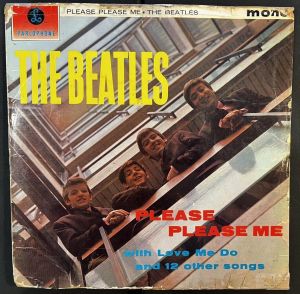
 

‘I went into the old EMI offices many times in the late ’80s and it never occurred to me to look up in reception and see exactly where that iconic photo had been taken. In the ’80s it seemed we had been looking forward.’

David Hepworth on the famous Beatles photo from the cover of Please Please Me


‘I tried the Jesus and Mary Chain but I just couldn’t believe it. It’s awful! It was so sophomoric – like the Velvets without Lou. I just know that they’re kids from Croydon! I just can’t buy it.’

David Bowie, 1987


‘I was surprised how hip it is. There’s a strange thing I don’t understand of people in Boy George outfits dancing to Jimmy McGriff and old Jackie McLean Blue Note records in discos.’

Guitarist John Scofield on the latest English ‘jazz revival’, 1988


‘Songwriting’s a craft, that’s all. I always knew my lyrics were better than anyone else’s anyway. I just edit more than other people, that’s my f***in’ secret. Also I never sleep and that helps too. You’ve got more time that way.’

Shane MacGowan, 1989


‘I hate having my picture taken, I always look like such a dog.’

Kirsty MacColl, 1989


‘I was a patsy. I never made more than $200 a week at the Five Spot.’

Ornette Coleman looks back on his legendary six-month residency during 1959 and 1960, 1985


‘All of us were naive, not just Ornette. We couldn’t even pay our rents. And they were making lots of money off us. That club was jammed every single night we were there.’

Charlie Haden on the same residency, 1985


‘You walk into the record label and they just weren’t as friendly as they used to be. When the record’s not a success, it’s your fault, and so you take on all those feelings. The label doesn’t sit down and talk to you. And they don’t drop you either, because they don’t want to lose you to the competition – just in case you do come up with something good next. And so they just remain sort of not as friendly, no more: “Hey Kevin, how are you?” It’s a head-f*ck, and you just have to work it out yourself.’

Kevin Rowland on the commercial failure of his 1988 solo album The Wanderer


‘Pop stars live the life of Caesar. And we know where the life of Caesar leads: it leads to blankness, it leads to despair. That’s the real message of these rock stars’ lives. To the public, they represent vitality, youth, innocence, joy. But in private life they represent despair and an infatuation with death.’

Albert Goldman, author of ‘The Lives Of John Lennon’ and ‘Elvis’, 1988


‘I remember sitting next to the stage and seeing all those little red lights glowing on the amps while we waited for the guys to come out and give us a real pasting.’

Allan Holdsworth reminisces about early gig-going, 1985


‘I have the best legs in the business. And they’ve got dancing feet at the bottom.’

David Lee Roth, 1982


‘There’s only one woman I have deep respect for in this industry and that’s Chrissie Hynde.’

Annie Lennox, 1986


‘I would have thought that people would be pleased to have a band that could play half decently.’

Francis Dunnery bemoans It Bites’ poor standing with the British music press, 1989


‘Sometimes he would call for Monk out of the clear blue sky. “Thelonious! Come save me from these dumb young motherf*ckers!”‘

Wynton Marsalis on playing with Art Blakey in the early 1980s


‘Prince really wants to be white. I know what that’s like. I tried hard to be white too.’

Daryl Hall, 1985


‘What we do is an alternative to Elton John and Chris Rea and all those old bastards who were there and still are. It’s embarrassing to see these old people like Dire Straits doddering about, they’re hideous.’

Robert Smith, 1989


‘I’ll tell you what I dig. In the Sting movie “Bring On The Night”, Omar Hakim taking off on that tune. Like Tony Williams, Jack DeJohnette. That’s being real free and comfortable. I don’t take my drums seriously, and they do.’

Drummer for the stars Jeff Porcaro, 1989


‘I believe that Bill (Bruford) and Adrian (Belew) thought that Beat was a better album than Discipline. I have no idea how anyone could come to that conclusion.’

Robert Fripp of King Crimson, 2022


‘Thanks for letting me drop by, guys. Hope I didn’t ruin your album.’

Herbie Hancock bids farewell to Simple Minds after playing a synth solo on their 1982 song ‘Hunter And The Hunted’


‘You should have seen us trying to sound like Windham Hill. We’d fall on our butts, man. I learned that you can’t fake it.’

’70s jazz/rock pioneer Larry Coryell on his mid-’80s collaboration with violinist Michal Urbaniak, 1985


‘We weren’t asked but we wouldn’t have done it anyway.’

Robert Smith on Live Aid, 1985


‘The band is getting back together and playing, maybe every six months or every year. If I can do so without it being public knowledge, that would be great. But I can’t do it, obviously. It would be nice to play together just as friends.’

Jimmy Page on Led Zeppelin reunions, 1986


‘I really, really would like to be in Led Zeppelin again. Whether or not time allows that to happen, I don’t know.’

Robert Plant on Led Zeppelin reunions, 1988


‘I’m a Catholic, and I would just ask God to to please help me find my own style. It’s not going to be like Tony or Elvin, so that when you hear me on a record, you know it’s Al Foster on the drums.’

Al Foster on his ‘stomping’ hi-hat technique, 1989


‘I feel I’ve created a field in which other people can discover themselves. I’m disappointed that they don’t create the room for me to discover myself.’

Robert Fripp on his King Crimson bandmates, 1984


‘I find therapy enormously valuable. It’s like car maintenance, send yourself in to be serviced every few thousand miles and, with any luck, it stops major problems developing.’

Peter Gabriel, 1989


‘I went to see this band INXS from Australia. They were on OK band, very much like a version of the Rolling Stones, but not as good. The singer is good and he looks great, but he doesn’t really move. He can’t be expending much energy.’

Mick Jagger, 1988


‘The band was like a fake democracy. Henley and I were making the decisions while at the same time trying to pacify and cajole the others.’

Glenn Frey looks back on The Eagles, 1988


‘(Jeff) Beck’s was a miserable f***ing band, horrible. Beck is a miserable old sod, but I do love him as a guitar player.’

Rod Stewart, 1988


‘I’ve always found it easier to write for other people. I feel terrible inhibited about writing for me. It’s only in the last few years that I’ve resigned myself into believing that I’m a moderately good singer.’

David Bowie, 1988


‘Of my writing partners since John (Lennon), Denny Laine was obviously nowhere near as good. Stevie Wonder is very good, but he’s not a lyricist. Michael Jackson is not as good of a writer as he is a performer. And Eric Stewart was good, but again, not as good as John.’

Paul McCartney, 1988


‘This new Clash compilation, which is meant to have sold a million copies, should be making me a rich man, but someone told me you only get quarter royalties for compilations. The CD wasn’t invented then so that wasn’t in the contract either. So I think I don’t get them royalties either. To tell the truth, I think we’re all a bit skint really.’

Joe Strummer on the legacy of The Clash, 1988


‘Those weird people on the street – every hundreth weirdest one has a Steely Dan record at home. That guy who hijacked a bus today probably has 47 copies of The Royal Scam.’

Walter Becker on Steely Dan’s audience, 1981


‘In 1981, something happened which changed my way of working with music. I woke up on a friend’s sofa in New York and simply understood something I’d known for a while: music was always present, completely with a life of its own, as a friend.’

Robert Fripp, 1984


‘The price of a ticket goes from two dollars to 20 dollars, the act doesn’t do an encore, someone has to stand in a long line, and it’s all my fault.’

Bill Graham on stadium rock, 1988


‘There are a lot of people who didn’t make a commitment and now they’re no longer with us. We lost Otis Redding, Sam Cooke, Jackie Wilson, Jimi Hendrix. I think maybe some of them didn’t know where or when to get off. The important thing is to be here.’

Al Green, 1988


‘Hell, we steal. We’re the robber barons of rock’n’roll.’

Donald Fagen of Steely Dan, 1981


‘After recording it, I flew off to see my manager and I said to him, “You’d better watch who you’re talking to. I’m the guy who wrote “Addicted To Love!”‘

Robert Palmer, 1988


‘I get the fans who write poetry. I have a slight David Sylvian audience, whereas Chris (Lowe) gets the sex audience, the ones who write obscene letters! It’s quite thrilling, actually!’

Neil Tennant of The Pet Shop Boys, 1988


‘It was the Enniskillen bombing that did it. The man whose daughter died beside him under the rubble; he was burning inside but he was so forgiving, so gracious. I thought, Christ, this is what courage is all about – Elton, just shut up and get back to work. After all, once you’ve been exposed naked on the cover of The Sun you ought to be able to face anything…’

Elton John on his 1988 comeback


‘It’s a better product than some others I could mention.’

David Bowie defends the Glass Spider Tour, 1987


‘Back then I thought I’d lost it and I did a bunch of things I was really unhappy with – all in public and on record. But it turned out not to be true. My ability hadn’t deserted me. And it won’t go away. Ever.’

Lou Reed, 1988


‘Michael Jackson’s just trying to cop my sh*t. I was insane years ago…’

Neil Young, 1988


‘I’ve said a lot of things in my time and 90 percent of them are bollocks.’

Paul Weller, 1988


‘We were excellent. Some of the best records of the ’80s are there. For the last six months of Wham!, it was OK to like us, we got a little hip. I cannot think of another band who got it together so much between the first and second albums. On Fantastic, you can tell I don’t think I’m a singer but some vocals on Make It Big are the best I’ve done. Even if we were wankers, you still had to listen.’

George Michael reassesses Wham!, 1998


‘The gig I have as the drummer in King Crimson is one of the few gigs in rock’n’roll where it’s even remotely possible to play anything in 17/16 and stay in a decent hotel.’

Bill Bruford, 1983


‘When I toured with The Rolling Stones, the audience would come up to me after the show and say, “Man, you’re really good, you ought to record.” How do you think that makes me feel after 25 years in the business?’

Bobby Womack, 1984


‘I find politics ruins everything. Music, films, it gets into everything and f*cks it all up. People need more sense of humour. If I ran for President, I’d give everybody Ecstasy.’

Grace Jones, 1985


‘I’m not the most gifted person in the world. When God handed out throats, I got locked out of the room.’

Joe Elliott of Def Leppard, 1988


‘I’m lazy and I don’t practice guitar and piano because I’ve gotten involved with so many other things in my life and I just had to make a sacrifice. Stephen Sondheim encourages me to start playing the piano again. Maybe I will.’

Madonna, 1989


‘Nile (Rodgers) couldn’t afford to spend much time with me. I was slotted in between two Madonna singles! She kept coming in, saying “How’s it going with Nile? When’s he gonna be free?” I said, “He ain’t gonna be free until I’m finished! Piss off!”’

Jeff Beck, 1989


‘I’ve never really understood Madonna’s popularity. But I’ve talked to my brothers and they all want to sleep with her, so she must have something.’

Nick Kamen, 1987


‘They ask you about being a Woman In Rock. The more you think about, the more you have to prove that you’re a Woman In Rock. But if you’re honest, it doesn’t matter whether you’re male or female. That’s the way we work.’

Wendy Melvoin, 1989


‘In Japan, someone told me I was playing punk saxophone. I said, “Call me what you want, just pay me”.’

George Adams, 1985


‘In the past, we’d bump into other musicians and it would be, “Oh, yes, haven’t I heard of you lot? Aren’t you the bass player that does that stuff with your thumb?” But once you’ve knocked them off the number 1 spot in Germany, they’re ringing you up in your hotel and saying, “Hey, howyadoin’? We must get together…”‘

Mark King of Level 42, 1987


‘We played London, we played Ronnie Scott’s, and I noticed that there were a lot punk-rock kids in the audience. After we finished playing, we had to go to the disco and sign autographs, because “Ping Pong”, the thing we made about 30 years ago, is a big hit over there.’

Art Blakey, 1985


‘I believe music – just about everything – sounds better these days. Even a car crash sounds better!’

Miles Davis, 1986


‘It’s a dangerous time for songwriters in that a monkey can make a thing sound good now.’

Randy Newman, 1988
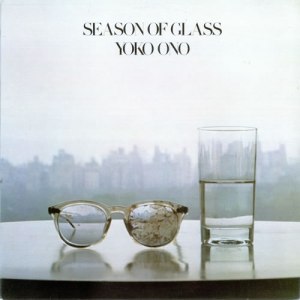
Yoko+Ono+Season+Of+Glass+522787


‘To have those glasses on the cover was important because it was a statement and you have to understand that it was like John wanted you guys to see those glasses.’

Yoko Ono, 1989


‘I’ll f*cking… I’ll go and take on anyone, any white singer who wants to give me a go.’

Matt Goss of Bros, 1989


‘I’ve never said this before but my drums is so professional, man, know what I mean?’

Luke Goss of Bros, 1989


‘I hate parts of my own albums because I know I’m hearing something that doesn’t translate to piano. In fact, I’m being dishonest by playing piano at all.’

Keith Jarrett, 1987


‘When I began to see how Elvis lived, I got such a strong take off of it. It was all so revolting!’

Albert Goldman, 1988


‘The best way to make great art is to have it trivialised by other people as much as possible. That way, you fight and fight and fight.’

Julian Cope, 1989


‘Whatever you’re tops in, people is trying to bring you down, and that’s my philosophy.’

Samantha Fox, 1987


‘Call me fat and I’ll rip your spine out.’

Ian Gillan, 1983


‘Sure I care about my fans. Because fans is money, hahaha. Muh-neee! And who does not care about money? Me, I like muh-neee, haha.’

Chuck Berry, 1988


‘I have this long chain with a ball of middle-classness at the end of it which keeps holding me back and that I keep sort of trying to fight through. I keep trying to find the Duchamp in me.’

David Bowie, 1980


‘People who say, Oh, I don’t know anything about music – they’re the people who really do know about music because it’s only really what it does to you.’

Steve Winwood, 1988


‘I notice that critics and others don’t credit black people with the ability to write ingenious, creative lyrics.’

Nile Rodgers, 1981


‘I’m below the poverty line – I’m on £16 a week. We needed some clothes and our manager said, “I don’t know what you do with your money. I mean, 16 quid!”’

Gary Daly of China Crisis, 1984


‘You take four or five of those rattlesnakes, dry ’em out and put them inside your hollow-box guitar. Lightnin’ Hopkins taught me that trick.’

Albert Collins on his guitar tone, 1988


‘People are bored with Lionel Richie going “I love everybody, peace on earth, we are the world…” F*ck that! People love bastards.’

Terence Trent D’Arby, 1987


‘Epstein dressed The Beatles up as much as he could but you couldn’t take away the fact that they were working-class guys. And they were smart-arses. You took one look at Lennon and you knew he thought the whole thing was a joke.’

Billy Joel, 1987


‘I remember when the guy from Echo & The Bunnymen said I should be given National Service. F*** him...’

Boy George, 1987


‘No-one should care if the Rolling Stones have broken up, should they? People seem to demand that I keep their youthful memories intact in a glass case specifically for them and damn the sacrifices I have to make. Why should I live in the past just for their petty satisfaction?’

Mick Jagger, 1987


‘The industry is just rife with with jealousy and hatred. Everybody in it is a failed bassist.’

Morrissey, 1985


‘I couldn’t stand it – all that exploitation and posturing, the gasping at the mention of your name, the pursuit by photographers and phenomenon-seekers. You get that shot of adrenalin and it’s fight or flight. I chose flight many a time.’

Joni Mitchell, 1988


‘I’m strongly anti-war but defence of hearth and home? Sure, I’ll stick up for that… I’m not a total pacifist, you know? I’ve shot at people. I missed, but I shot at them. I’m sort of glad I missed…’

David Crosby, 1989

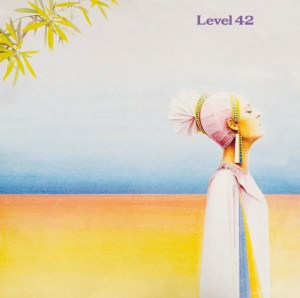
‘Level 42’: 35 Years Old Today

levelHere’s another key exhibit to support the motion ‘1981: The Greatest Ever Pop Year’.

When three caulkheads – bassist/vocalist Mark King and brothers Phil (drums) and Boon Gould (guitar) – hooked up with keyboardist/vocalist Mike Lindup in London, they were fairly speedily signed to indie label Elite Records.

After adding their ‘fifth member’ Wally Badarou – who had just begun his epochal keyboard work with Grace Jones – they released the ‘Love Meeting Love’ 12” single in the summer of 1980.

It got the attention of Polydor, who speedily re-released it and then the follow-up ‘Flying On The Wings Of Love’. Both stalled outside the UK top 40 but there was suddenly a massive industry buzz about this band.

At this stage in their career, Level 42 were very much lumped in with the new wave of Brit-funk and jazz/funk bands, leading to an instant following, lots of noisy club gigs and many a provincial Soul Weekender alongside ‘Funk Mafia’ DJs with nicknames like Froggie and Wolfie.

None of this harmed Level’s popularity, though in truth they had little in common with the dancefloor scene – their sound was a much edgier proposition, with more guitar, a distinct jazz/rock influence and a punky energy.

As one fan apparently commented to Boon after a November 1980 all-dayer supporting Shakatak: ‘We didn’t expect Status Quo’. No matter – Polydor signed them to a five-year deal soon after that gig.

Legendary Bluesbreakers/Fleetwood Mac producer Mike Vernon was chosen to helm their debut album – Mark King was apparently most impressed that he had worked on Focus’s Moving Waves. Vernon turned out to be a superb choice.

They all convened first at the very haunted Vineyard Studios in South-East London (later owned by Stock, Aitken and Waterman) to record ‘Love Games’. It gave them their first hit in March 1981, scraping into the UK singles chart at number 39, and leading to their first appearance on ‘Top Of The Pops’.

But these guys lived and breathed music. Though songwriting didn’t come particularly easy early on in their career, there was an infectious, thrilling, percussive propulsion to their sound. It helped that they were all drummers (with the exception of Boon Gould).

Obvious influences such as Return To Forever, Herbie Hancock, John McLaughlin and Stanley Clarke merged with less obvious ones like Yes and Fairport Convention (mainly Phil Gould’s passions) to produce a very tasty brew, naturally easy on the ear. And after barely a year of singing, Mark King’s vocals were even starting to match his prodigious talent on the bass.

Level 42 presents a great variety of material littered with intricate, memorable arrangements. Wally Badarou’s mastery shines through throughout the album but especially on ’43’ – on the right channel, he sprinkles in shards of Prophet 5 synth, almost taking on the role of rhythm guitarist.

‘Why Are You Leaving’ is a superb quiet-storm ballad, not unlike something George Benson might have come up with in the Breezin’ era. Stanley Clarke is a towering influence – ‘Heathrow’ nicks the ‘Lopsy Lu’ shuffle (and also features a fantastic Gary Barnacle electric sax solo) while ‘Dune Tune’ paraphrases ‘Desert Song’ from Clarke’s classic School Days album. Phil Gould’s sparkling glockenspiel solo on ‘Starchild’ emphasises how versatile the band really were.

slipstream

Level 42 is also a decidedly more lush and expensive-sounding album than any other ‘Brit-funk’ band managed to produce.

The evidence is Slipstream, a compilation which featured the band’s ‘Turn It On’ alongside other contemporary bands such as Light Of The World, Freeez, Morrissey Mullen and Incognito. The Level track sticks out a mile.

Level 42 reached #20 in the UK album chart, apparently a pleasant surprise to Polydor. Two UK tours followed in quick succession before they embarked on a seven-date German trip supporting The Police, which, by all accounts, didn’t go particularly well.

During one gig, a firecracker was hurled in the general direction of Mark King, lodging itself between his bass and elbow. Looking down, he recoiled from the mic in horror, believing he had been shot.

Despite Level 42‘s solid chart placing, there was still uncertainty about the future of the band – King was headhunted by Jeff Beck for a possible power trio with Simon Phillips on drums, and a few jam sessions ensued. Also, Barnacle’s band Leisure Process had recruited Mark and Phil for their upcoming album and there was talk of the them making the permanent switch.

Thankfully, neither project materialised – one of the great bands of the 1980s were back in business.

Stewart Copeland, Mark King & Adrian Belew Hook Up

copeland bandKing Crimson, The Police, Level 42: three of the greatest bands of the 1980s, loved by musicians and non-musicians alike.
But, on the face of it, you might be hard-pressed to come up with too many common musical traits between them (barring the fact that both Sting and Level 42’s Mark King are bass/vocal double threats).


That’s what makes the news of an Adrian Belew (Crimson vocalist/guitarist), Stewart Copeland (Police drummer) and King collaboration so exciting.

What’s also exciting is that in these days of ‘distance’ recording, where musicians regularly email each other sound files for embellishment, never needing to be in the same room, the guys are actually in a studio together.

Copeland of course has had a long, fruitful relationship with bassist Stanley Clarke, who happens to be Mark King’s musical hero, so that makes some sense. But Belew is the real curveball (as he usually is – in the best possible way, of course!).

Adrian has kept followers up to date with the project’s conception and recording progress over on his Facebook page:

‘A bit of information about what we’re doing here in Milan. Gizmo is a recording project created by Stewart Copeland and Vittorio Cosma, keyboard player of Elio e le Storie Tese. (You may remember Elio is the band I played a Bowie tribute with on Italian television back in February).

It is their songs and music. They asked me a while back to contribute guitar and maybe some vocals. recently they asked Mark King to join in on bass and vocals as well. It is not a “supergroup” and there are no plans beyond making this record.

I’m enjoying it very much. Great music and great people making music in beautiful Italy. What’s not to like? We have done three of Stewart’s songs so far and they sound awesome. I must admit Stewart’s songs are custom-made for my guitar playing in the same way as Talking Heads songs were.

Full of nooks and crannies ready to be filled with tasty sonic treats, and always a reserved parking spot for a blistering guitar solo from outer space. And it certainly is gratifying when you finish said solos to have everyone in the control room stand up in a rush of applause!’

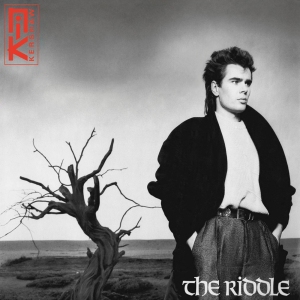
Nik Kershaw: The Riddle

the-riddle-54d854ab5fe83After several years playing guitar in cover bands and fronting East Anglia blue-eyed-soulsters Fusion, Nik Kershaw wrote a few poppy-sounding tracks and suddenly found himself thrust into the solo spotlight.

But he didn’t fool anyone with the snood, fingerless gloves and mullet – it was obvious from the get-go that Nik was a superb musician and songwriter. He had a voice a bit like Stevie Wonder (though my dad rightly identified something Numanoid too), played guitar a bit like Allan Holdsworth and wrote clever, catchy pop songs with prog, metal and funk undercurrents.

He also had some very famous fans in the US including Miles Davis and Herbie Hancock. But his image, dreamed up by some wags in MCA’s marketing department, probably didn’t do him any favours – Smash Hits summed it up perfectly, calling him ‘the thinking man’s Limahl’!

The Riddle is probably his best album. It was recorded pretty quickly to cash in on the unexpected success of his debut Human Racing, though featured a fair amount of post-production courtesy of the excellent Peter Collins who later produced Rush’s Power Windows and had previously worked on Musical Youth’s ‘Pass The Duchie’.

It features a very solid but expressive rhythm section (Elton John sticksman Charlie Morgan and ex-Secret Affair bassist Dennis Smith plus a great guest appearance from Level 42’s Mark King on ‘Easy’). Kershaw’s use of synths was kind of revolutionary, with intriguing sequencer patterns and subtle, almost subliminal pads. He also had invaluable input and some ZTT flash from keyboardist Andy ‘Relax’/’Two Tribes’ Richards throughout the album.

Yes, The Riddle screams the mid-1980s, but every song on it is memorable and has a very distinct flavour. On a songwriting level, Kershaw always knows how to keep things interesting for the listener. ‘Know How’ is a case in point – initially coming across somewhere between Level 42 and Talking Heads, it veers into prog territory with its superb pair of instrumental breakdowns.

Miles apparently recorded a cover of the very pretty ‘Wild Horses’ which has never seen the light of day. Hollywood-baiting ‘City Of Angels’ and eco-themed ‘Roses’ have more than a hint of Steely Dan about them, partly due to the use of the famous Purdie Shuffle, nicely reformatted by Morgan.

‘Wide Boy’ and ‘Don Quixote’ have lots of interesting melodic modulations under their pop sheen. ‘Easy’ is a brilliant band performance and crafty composition with a nutty middle eight, while the closing ballad ‘Save The Whale’ is also musically rich. And though the title track divides opinion, to say the least, check out its two-chords-per-bar middle-eight for a great example of Kershaw’s craft.

The cover photo was taken at Chesil Beach in Dorset. The Riddle peaked at #8 in the UK and went multi-platinum. The lead single was the title track which reached #3 in the UK. ‘Wide Boy’ peaked at #9, ‘Don Quixote’ #10. Three top 10 hits from a sophomore album – pretty damn good.

Nik was massive for approximately 18 months. He played Live Aid in July 1985 but then waited until autumn 1986 to follow up The Riddle – probably a mistake. The screaming girls were growing up fast or moving on to a-ha. He was developing as a musician and songwriter but gaining a much more ‘selective’ appeal, in the words of Spinal Tap’s manager Ian Faith.

Gig Review: Phil Gould/Mike Lindup/Wally Badarou @ 606 Club, 11th January 2016

Level42-phil_gould

Phil Gould in 1987

‘Pocket’ is hard to define but you know it when you hear it.

Drummers often say that you’re either in the pocket or you ain’t, and as such the expression is mostly used in association with great US groovemasters like Richie Hayward, James Gadson, Bernard Purdie and Andy Newmark.

But ex-Level 42 drummer Phil Gould has been busy over the last 35 years (and a personal musical hero for about 30 of those) laying claim to be the UK’s premier proponent of ‘pocket’, but he has a lot of other weapons in his arsenal too.

Though relatively quiet since leaving Level 42 in 1987 (making a brief return in 1994), Gould pops up on the London live music scene now and again. He also released his first solo album Watertight in 2009.

This 606 gig was very much a Level 42 reunion of sorts featuring keyboards and vocals from Mike Lindup and honorary ‘fifth member’ Wally Badarou, though, in an unexpected but typically generous move from the modest drummer/leader, the focus was very much on excellent vocalists Diana Winter and Sumudu with added support from the superb Yolanda Charles on bass, guitarist Fabio Balestrieri and Alex (son of Phil) Gould on piano and occasional drums.

The opening ‘Madness’ was a reliable portent of things to come, with Gould’s tasty, behind-the-beat groove underpinning some gentle Latin percussion and Mike Lindup’s strong vocals and electric piano. Winter and Sumudu took centrestage for most of the rest of the first set, their voices combining exceptionally well especially on the catchy ‘Supergirl’.

Badarou dusted off a funky, rough-and-ready version of the mid-’80s dancefloor classic ‘Chief Inspector’, adding some piquant synth flavours, while Lindup aired an excellent songwriting collaboration with Billy Cobham and Dominic Miller.

Perhaps predictably though, the highlight of the evening was a nifty run-through of the classic Level 42 instrumental ‘Heathrow’, with Charles powering the band superbly and even supplying a note-for-note rendition of Mark King’s original bass part.

On a difficult day for music, with the earlier announcement of David Bowie’s death, Gould provided an uplifting – if very light – evening with lots of healing sounds, fine vocals, lean grooves and good vibes.

It’s always a pleasure to hear him at the kit, and it’s also always a pleasure to get down to the 606, one of the great hidden gems of the London music scene.

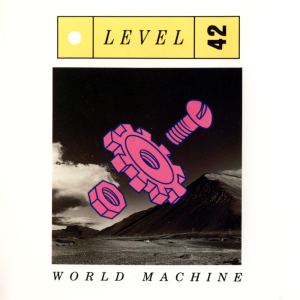
Level 42: World Machine 30 Years Old Today

level-42-world-machineAs a young band starting out in the ’80s, your ideal career trajectory would probably go something like this: Get together with a few mates, start rehearsing, get the gear in a van, tour the nation’s toilets, slowly build your audience, get a manager, get the record deal, release your debut, get on ‘Top Of The Pops’ and then hope you’ve got a career.

But it’s one of the rules of pop that some folks can’t handle fame when it hits. To paraphrase Bill Bruford: first you cope with failure, then you cope with success.

From Syd Barrett through Ian Curtis to Billy Mackenzie (is it mainly a British thing?), there are always artists who have bailed out when the constant routine of promotion and miming to the hit single becomes too much like a regular job.

The syndrome even affected pop/jazz/funk heroes Level 42, who in 1985 produced arguably their finest album in World Machine, though lost half their original line-up in the process including one of the finest-ever British drummers.

The band’s popularity had been steadily building throughout the ’80s. Though their live following had always been strong and they always had hits, the singles usually seemed like happy accidents – ‘Sun Goes Down (Living It Up)’, ‘Chinese Way’ and ‘Hot Water’ were all last-minute album additions based on studio jams.

Now their record label Polydor wanted a more concerted assault on the singles charts and a more current sound, and to that end outstanding bassist/vocalist Mark King took much more of a lead than before.

Alongside co-producer/keys man Wally Badarou, the band laid down the most cohesive, streamlined collection of songs in their career thus far with two or three obvious singles at demo stage (though not a view apparently shared by then manager John Gould whose negative reaction to the new songs contributed to him being given the push in a heated band meeting).

Not everyone in the band was happy with this brave new musical direction either. Main lyricist and drummer Phil Gould (brother of ex-manager John and guitarist Boon) had always peppered Level 42’s songs with allusions to psychology, science fiction and esoteric spirituality, drawing on writers like Arthur Koestler, Hermann Hesse and EM Forster, but by early 1985 the pressure was on to deliver boy/girl songs with universal themes.

In an excellent recent interview, Phil has talked about Polydor wanting the band to do party anthems like ‘Let’s Groove’ and suggesting they do a cover version of ‘Nature Boy’. He struggled against this direction, rightly surmising that they would quickly become typecast as a clichéd Brit-funk band.

Though he did eventually tone down the lyrical imagery a bit on World Machine, he still smuggled in some depth and despair to songs such as the title track, ‘Physical Presence’, ‘Leaving Me Now’ and ‘Coup D’Etat’.

Oh yes – the music. One of the great pleasures of World Machine is its consistency of tone; you can drop the needle anywhere and hear the quality. Engineer Julian Mendelsohn is a big contributor to that.

The band had mastered the kind of half-time funk groove which had frequently littered their earlier work, and the style reached its apogee here with bassists and drummers rushing off to play along to ‘Good Man In A Storm’ (why has it never been played live?), ‘A Physical Presence’, ‘Leaving Me Now’, ‘Dream Crazy’ and ‘It’s Not The Same For Us’ (which was initially going to be a Mark King lead vocal as revealed on this amusing demo).

But the sequence-heavy nature of some other tracks (particularly the title track, ‘Something About You’ and ‘I Sleep On My Heart’) also aroused some musical differences in the band. It’s intriguing to imagine what these songs would have sounded like shorn of their ‘hi-tech’ elements.

Level 42 had secured several hits before, but ‘Something About You’ was the real breakthrough. Incredibly, it reached #7 in the US singles chart, perhaps inspired by a really good accompanying video.

World Machine delivered, both commercially and artistically. It reached #3 in the UK album chart, staying in the top 100 for 72 weeks. I saw the band at the Hammersmith Odeon on the – as usual – completely sold-out UK tour. They later went off to the US to tour with Madonna and Steve Winwood. The brothers Phil and Boon Gould left the band soon after recording the follow-up Running In The Family and the classic line-up was no more.

Great memories, great sounds, great band.