Continuing our look at some of the finest jazz/rock albums of the 1980s. You can find part 1 here.
Jaco Pastorius: Twins (1982)
A classic double album (an edited version was released as Invitation) recorded live in Japan just after the bass pioneer left Weather Report. Jaco’s brand of fusion took in jazz, Cuban, soul and R’n’B – no guitars here, but brilliant bass playing and powerful solos from Toots Thielemans, Lew Soloff, Jon Faddis and Bob Mintzer.
Frank Gambale: Live!(1989)
The Australian guitarist’s outrageous live debut was recorded at the Baked Potato in LA, and it finally showed just what he’s capable of – electrifying, original solos. His compositions are memorable too and there’s fantastic Latin/fusion drumming from Joey Heredia.
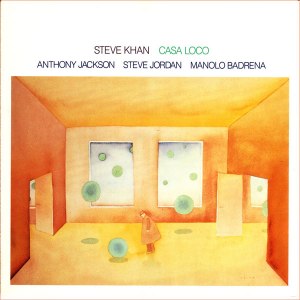
Steve Khan: Casa Loco (1983)
An album which still amazes musicians the world over. Arguably guitarist Khan, bassist Anthony Jackson, drummer Steve Jordan and percussionist Manolo Badrena have never done better work – that’s saying something considering who they’ve all played with.
Bill Bruford’s Earthworks: Dig? (1989)
Both of Bruford’s 1980s Earthworks albums were really good but this gets the nod due to Django Bates being given free reign, contributing superb keyboard solos, a cool reimagining of Petula Clark’s ‘Downtown’ and classic composition ‘Dancing On Frith Street’.
Paquito D’Rivera: Why Not! (1984)
An underrated album from the Cuban alto sax and clarinet star, also featuring Claudio Roditi on trumpet, Michel Camilo on keys and a wonderful performance from drummer Dave Weckl on the opening ‘Gdansk’.
Lyle Mays: Street Dreams(1988)
The Metheny Group keyboard player chucks in everything he knows on this big-budget project – ambient post-jazz, widescreen fuzak, big-band swing and Fagen-style fusion, and it’s all good. Some, like this writer, may also prefer the more red-blooded guitar playing of Bill Frisell to Metheny.
Pat Metheny Group: American Garage(1980)
No one is too sure if this came out in late 1979 or early 1980 but it’s this writer’s favourite Metheny album, though the guitarist himself seems to have almost disowned it. He loosens up and allows some rock and Steely Dan influences, driven along by Danny Gottlieb’s superb drums.
Level 42: A Physical Presence (1985)
A lot of it’s not strictly ‘fusion’, of course, but any album featuring such brilliant live versions of ‘Mr Pink’, ‘Foundation And Empire’ and ‘88’ has to make this list.
Mark King: Influences (1984)
The Level 42 mainman amazes with his 18-minute fusion classic ‘The Essential’, plus an eerily assured tribute to early Return To Forever called ‘There Is A Dog’. Plus he played almost everything on it.
John Patitucci: On The Corner (1989)
Both of the bassist’s 1980s solo albums were good but this gets the nod courtesy of the sheer variety of grooves from drummers Vinnie Colaiuta, Dave Weckl and Alex Acuna, and the leader’s exciting solos and excellent compositions, all memorable.
John Abercrombie: Getting There (1988)
A rare excursion into jazz/rock for ECM Records, the guitarist’s most dynamic ‘80s album featured Michael Brecker on sax, a hefty ‘rock’ mix courtesy of James Farber and arguably drummer Peter Erskine’s heaviest recorded performance to date.
Joni Mitchell: Wild Things Run Fast (1983)
She littered the album with influences from the Police but the main driver was the brilliant jazz/rock musicianship of bassist Larry Klein, drummers Colaiuta and John Guerin, saxist Wayne Shorter and keys player Russell Ferrante. ‘Moon At The Window’, ‘Be Cool’, ‘Ladies Man’ and ‘You’re So Square’ smuggled fusion into the album charts.
Miles Davis: Star People (1983)
Blues, blazing jazz/rock, chromatic funk and general weirdness combine for arguably Miles’s most exciting album of the decade, featuring all-time great guitar from Mike Stern and John Scofield.
John Martyn: Glorious Fool (1981)
John’s music was now bringing in influences from Weather Report, Latin and spiritual jazz, and Phil Collins, keyboard player Max Middleton, percussionist Danny Cummings and bassist Alan Thompson made for a fantastic rhythm section.
Bruford: Gradually Going Tornado (1980)
Any album featuring ‘Gothic 17’, ‘Land’s End’, ‘Joe Frazier’ and ‘Palewell Park’ has to be on this list. Epochal work from bassist Jeff Berlin, keys man Dave Stewart and the drummer himself.
Bubbling under:
Terje Rypdal: The Singles Collection (1988)
Power Tools: Strange Meeting (1987)
Stanley Clarke: If This Bass Could Only Talk (1988)
Terri Lyne Carrington: Real Life Story (1989)
Chick Corea Elektric Band: Eye Of The Beholder (1988)
Bill Frisell: Before We Were Born (1989) Loose Tubes (1984) Players (Jeff Berlin, Scott Henderson, Steve Smith, T Lavitz) (1986)
(PS. If you like the sound of any of these albums, please consider buying them on physical formats to best support the artists and their families.)
At the end of 1984, Sting seemed hellbent on erasing (albeit temporarily) any traces of The Police.
Buoyed by his happy relationship with Trudie Styler, he was falling back in love with music (but not, apparently, the bass guitar) and studying Brecht and Weill.
‘I cry a lot. I’m moved easily by a chord progression,’ he told Musician mag at the time.
He was also developing some solo material. But there was no band.
He moved FAST. In late 1984, he asked his friend, musician and writer Vic Garbarini, to put some feelers out in New York City.
By January 1985, saxophonist Branford Marsalis had been recruited (helped by the fact that Sting had heard that The Police were his favourite band) and some audition workshops were set up, attended by some of the hottest young fusion and funk musicians in the city.
Then, during a dinner break near AIR Studios in Montserrat while working on Dire Straits’ ‘Money For Nothing’, Sting met drummer Omar Hakim for the first time, who was another quick shoo-in (Omar apparently jokingly auditioned with knife and fork at the table).
At New York’s SIR rehearsal studios in January 1985, Sting, sitting in front of his Synclavier, with a Fender Tele at his side, bassist Darryl Jones (who was still playing with Miles Davis), Hakim and keyboardist Kenny Kirkland jammed on Police songs ‘One World’, ‘Demolition Man’ and ‘Driven To Tears’.
Sting then set them to work on a new song, ‘Children’s Crusade’, playing the demo over the studio speakers. He had found his band (Sting also found time to guest on Miles’s ‘One Phone Call’ during this time).
Sting, Marsalis, Hakim, Kirkland and Jones did a few surprise gigs at The Ritz club in New York City in late February. By early March 1985, after an aborted try at Compass Point Studios in Nassau, they were recording Turtles at Eddy Grant’s Blue Wave Studios in Barbados.
Pete Smith was engineering and co-producing, who had impressed Sting while helping record his Synchronicity demos.
But Sting was panicking about his voice, and the fact that he was going right outside his comfort zone. With good reason. This new music, light and drawing on jazz, funk and folk forms, was nothing like The Police. A&M Records were depending on a hit.
There wouldn’t be one note of distorted guitar on the album. It was more in line with Sade or Simply Red (but of course the musicianship was on a different planet to those artists). And the production and arrangements were very minimalist by mid-‘80s standards.
Next time: the album, track by track – and has it stood the test of time?
You could put forward a pretty good case that John Scofield was THE guitarist of the 1980s.
Probably best known for his incendiary playing in Miles Davis’s band between 1982 and 1985, he also enjoyed a distinguished solo career.
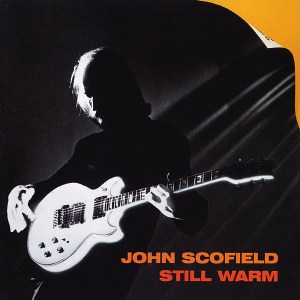
Whilst focusing on straightahead jazz during the early part of the decade, his stellar ‘fusion’ period between 1984 and 1988 – encompassing classic albums Electric Outlet, Still Warm, Blue Matter, Pick Hits Live and Loud Jazz – featured excellent original compositions and formidable players such as David Sanborn, Don Grolnick, Omar Hakim, Darryl Jones, Dennis Chambers, Hiram Bullock and George Duke.
In the meantime Sco was much in demand as a sideman, playing with everyone from Terri Lyne Carrington to Tommy Smith (this playlist gathers some of his greatest music of the 1980s) whilst also teaming up with fellow guitarist Bill Frisell, drummer Peter Erskine and bassist Marc Johnson in the latter’s Bass Desires project that produced two classic albums on ECM Records: Bass Desires and Second Sight.
Immediately recognisable with his chorus/overdrive sound and molten, legato style – always informed by the blues – Scofield’s solo career has since gone from strength, and we now find him ensconced in a highly productive spell on ECM, his latest album being Uncle John’s Band.
movingtheriver caught up with John to talk about his wonderful 1980s as he prepared for a European tour with keyboardist John Medeski – he’s ever the road warrior and seems full of energy and good humour.
MTR: I’d love to know a little about how/when you signed with Gramavision Records, and did you consider other options for your mid-‘80s solo career such as ECM?
JS: I signed with Gramavision shortly before I recorded Electric Outlet. They were very interested and made us a good deal when no one else had contacted me. After I met (ECM founder/producer) Manfred Eicher at the Bass Desires recording session he expressed interest but I had already signed a multi-record contract with Gramavision. After that I stayed with other New York-based companies (Blue Note and Verve) because I met those people here at home and they were major international labels. I’m quite happy now that I’ve found a home at ECM that is aligned with my current musical direction.
Drummer Steve Jordan plays some wonderful stuff on Electric Outlet – was he overdubbed at the end after you’d tracked everything with a drum machine?
Yes, exactly. I had bought a Roland drum machine and used it to make a four-track demo at home with me playing guitars and bass. I recreated that in the studio and had Steve overdub on all the tunes. He was incredible and nailed them so quickly. We’d played together a bit before – he was on my Who’s Who album in 1978.
I’m fascinated by the work you did with saxophonist George Adams during the 1980s, especially More Sightings (1984) – can you tell me how that came about?
I had played with George in New York on gigs with the Gil Evans Orchestra and then did a tour and album as a guest with the George Adams/Don Pullen band. Then George wanted to do the tour with Hannibal Marvin Peterson. They invited me and we ended up recording a live show in Zürich. I loved George’s playing and we were friendly. I even got him to come in to record with Miles for Columbia in 1983, but it seems that that recording session was lost somehow. I believe it was at The Hit Factory on Broadway. When they were putting together some CBS tapes for reissue, I was told by Michael Cuscuna that they didn’t find anything from that session… That’s all I know. It was Miles‘s band but with George on saxophone. (Adams is understood to have guested with Miles’s band in the studio on 16 June 1983 and also in concert at the Avery Fisher Hall in NYC on 26 June 1983, and was also part of the big band which played with Miles at Montreux in 1991 – Ed.)
Is it true that Kenny Kirkland was supposed to play keyboards on Still Warm but didn’t show at the last minute? And please tell me how the fabulous Omar Hakim came to play on the album.
Yes, Kenny was a friend and I was lucky enough to get to play with him a bunch, but somehow he didn’t show up at rehearsal so I asked Don Grolnick. I think Kenny just had his dates mixed up maybe? I’m not sure. It was a real loss that he died so young. Omar and Darryl Jones were playing with Sting at that time and I knew Omar although I had never played with him but I thought that he and Darryl could really lock it in. They sounded fantastic together.
So was Still Warm recorded just after you left Miles?
I think it was before the last tour. The last stuff I did with Miles was later in the summer in Europe and then Japan.
How much rehearsal time did you get with the bands in general for Still/Blue/Loud? Or did you give the band demos to learn in advance? Because a few of these compositions are treacherous, I’m thinking of stuff like ‘Trim’ and ‘Loud Jazz’ – how did Dennis learn them (he famously doesn’t read music – Ed.)?
For Still Warm, I think we probably had one rehearsal, then one in the studio. I think I made demos of the tunes to give everybody, but I can’t remember. By Blue Matter and Loud Jazzwe were a working band. I had been playing some of the Blue Matter songs with a different keyboardist and drummer along with Gary Grainger. Gary recommended Dennis and I guess he learned the songs at rehearsal. Maybe I made demos… I just remember Dennis trying a go-go beat on ‘Blue Matter’ which I hadn’t tried before. I think I wrote that song just before the session and had never played it live. Then we played a week at Fat Tuesday before going into the studio with Dennis and Mitch Forman. For Loud Jazz, we rehearsed but also played the tunes live on tour before the recording.
Regarding producer Steve Swallow’s role, did he select material? The albums have stood the test of time so well because they’re generally free of 1980s production clichés.
Steve has been a friend and mentor to me since the ‘70s. He was interested in production and multi-track recording and I knew he would be great at it. Although he didn’t select the material, he probably helped me with selecting my own tunes. He was really involved in mixing and had suggestions for the arrangements. Because Gramavision had their own studios, we were allowed to mix for many hours and treated mixing more like we would for a pop record. We were really lucky to have the great engineer Joe Ferla, to whom we deferred for many of the mix ideas. Along with Steve, he was responsible for the sound.
Can you tell me a bit more about the tune ‘Gil B643’ – presumably it’s a tribute to Gil Evans? And was the title at all influenced by the movie ‘THX 1138’?
B643 was Gil‘s apartment number! We lived at the same building in Manhattan.
I’d love to know a bit more about ‘Picks And Pans’ and its 6/8 feel, it strikes me that it’s a very influential tune in ‘fusion’ but was it influenced by Joe Zawinul’s ‘The Juggler’ (from Weather Report’s Heavy Weather)?
I liked Joe’s tune but I don’t think I got the beat especially from that…but there were other examples of that kind of beat. Probably lots of them. Maybe it first came from Afro-Cuban music like Mongo Santamaria’s ‘Afro Blue’. Or you can take a jazz waltz and just put a backbeat in there!
Which is your favourite of the two terrific Bass Desires albums and why?
I can’t say that I really have a favourite, but I just remember the chemistry for the first record was really exciting and it was great when we realized we could play together and that the group had a different sound, largely because of Bill Frisell and his unique approach. Also the sound with the two of our styles working together. That’s not to take anything from Marc and Peter, who really contributed so much and brought in material and if it weren’t for Marc having the idea of putting us all together, it would never have happened. I remember we played some gigs together before we went in the studio as well as rehearsing. I think we played a strange cabaret club in New York City. I can’t remember the name of the place and we probably also played a gig in Boston as well before we went into the studio with Manfred Eicher.
How did Dennis Chambers and Gary Grainger come onboard for the Blue Matter band – did you headhunt them, did they audition, or a bit of both?
I was looking for an electric bass player and my friend, the keyboard player Marc Copland, recommended Gary who he had played with in Washington DC. He said Gary could play anything on electric bass and it turned out he was absolutely correct. I then played with Gary in another configuration and he recommended Dennis. Gary and Dennis grew up together in Baltimore and were old friends. I had heard about Dennis with The P-Funk All Stars and was so surprised to learn that he was looking to play more jazz/fusion. Actually, Darryl Jones had played me a great board tape and said, ‘Isn’t this drummer fantastic?’ But we didn’t know who it was. I found out later that it was Dennis so I was a fan already even though I didn’t know it!
Hiram Bullock is an inspired rhythm-guitar choice on Blue Matter – was he a Steve Swallow recommendation?
No, I knew Hiram was great. I knew him from the New York scene and we were friends. I wanted rhythm guitar on that one track and I thought he would do a better job than I did – I think he did.
Was ‘Blue Matter’ influenced by Miles’s ‘Tutu’ (composed by Marcus Miller)?
I just had a generic triplet-ish backbeat in mind. It had no relation to ‘Tutu’ – not at all. ‘Tutu’ sounds a bit like (Burt Bacharach tune) ‘The Look Of Love’, right?!
How did you achieve the final minute of ‘Time Marches On’ where you solo over that ‘drone’ – was it a slowed down tape loop?
No, we just did it in real time.
I’d love to know your favourite guitarists of the 1980s, any genre…
Mainly I liked the jazz guys Wes Montgomery, Jim Hall, George Benson, Pat Martino. But I always loved the blues guys starting with Hendrix and Clapton back in the ’60s, plus Otis Rush, Albert King and BB King. I always admired my contemporaries Metheny, Stern, Frisell, Abercrombie, Mick Goodrick… I went in the fusion direction because of my experience with Miles. If it wasn’t for him, I probably would’ve been just playing bebop and giving guitar lessons!
The only time I saw the Blue Matter band in London was a really weird but brilliant gig in the East End in summer 1987 I think, maybe it was called the Mile End Theatre? Do you remember that? And in general do you have good memories of touring the UK and Europe?
Was that the Half Moon Theatre? I’ll never forget the gig. The late John Cumming brought us to London and I played many gigs subsequently for him. Maybe it was my first one in London as a leader? Not sure? That band was so strong. We really had some success in UK/Europe in those days.
Did Miles ever give you feedback on your 1980s solo career, or did you ever seek it out?!
I know he liked my tunes because I wrote ‘You’re Under Arrest’ for him and gave him a demo of a bunch of other stuff, some of which ended up on my records. He said he was gonna record everything but then when I quit the band in order to go out on tour with Blue Matter, I didn’t get a chance to do any of that with Miles. He had moved on to Tutu. I remember I played him some of Blue Matter for him once and he was really blown away by Dennis’s playing…
Finally, how do you look back on your 1980s career in general? Was it a great era for guitar-based music?
It was an incredible time. It was great because of getting to play with Miles and all the exposure it got me, and then starting my own career, playing funk/jazz with those guys. I was so influenced by Miles and his direction in the ‘80s. But, for me, Weather Report and Herbie’s Head Hunters were the greatest. I think it was a really good era for guitar when you think of Holdsworth, Stern, Metheny, Robben Ford and so many more. And of course the classic rockers like Clapton and Beck were around. Pop music in general had some pretty hot-shot guitar stuff in there, and funk was really everywhere. Thanks to Sly…
Thanks John and good luck on the European tour…
John Scofield at the Cape Town Jazz Festival, 2003. Photo by William Ellis
It was ten years to the day that I published my inaugural articles for movingtheriver, pieces on Prefab Sprout, Marcus Miller/Miles Davis, Peter Gabriel , Keith LeBlanc, Prince and Level 42.
The site was a few years in the planning but really only became a reality during an enforced period of reclusion via illness.
Anyone who sets up a project as a labour of love knows how quickly it becomes both a lifeline and passion. Over the past ten years, it’s also been great fun sharing stories and opinions with readers, writers, musicians and bloggers alike.
I’m not sure what the future holds for the site. Substack and YouTube beckon and WordPress has its issues (some of you may have mistakenly been sent a test post by the WP backroom bods recently…).
But the keyword is enjoyment. So hope to see you in ten years…
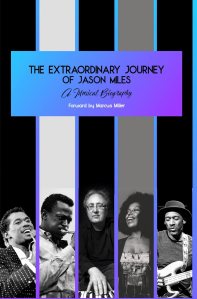
Surprisingly few musical memoirs take the reader right into the recording studios of the 1980s and 1990s, documenting what actually went down during the making of some classic albums.
In his enjoyable new book, Jason Miles – synth player/programmer for Miles Davis, Whitney Houston, Luther Vandross, Roberta Flack, David Sanborn, Diana Ross, George Benson, Will Downing, Marcus Miller, Chaka Khan, Scritti Politti and The Brecker Brothers – does just that, in the process outlining the joys and sorrows of the American music business in its money-drenched pomp.
‘The Extraordinary Journey Of Jason Miles’ traces the author’s young life as a teenage Brooklyn jazz fanatic to becoming a first-call studio sessionman for some of the biggest artists on the planet. The book is also notable for outlining the considerable pressures – and potential threats to one’s mental health – of coming up with the goods and harnessing the ever-evolving music technology when time is money.
There’s a memorably tense episode when things go very wrong on a Vandross session and an unsparingly honest view of putting together his Miles Davis-celebrating Kind Of New project with trumpeter Ingrid Jensen. Jason also outlines his struggles bringing award-winning tributes to the music of Grover Washington Jr., Ivan Lins, Weather Report and Marvin Gaye to life.
Printing problems bring about a few curious errors/typos but the book is an absolutely key text for Miles Davis fans, a fast-paced, brave, uncompromising read also featuring some superb photographs. There are also intriguing, fond portraits of musicians such as Bernie Worrell, Lenny White, Marcus Miller and Joe Sample.
Also it strikes movingtheriver that we don’t have much first-person documentation of great 1980s and 1990s Black music – ‘The Extraordinary Journey Of Jason Miles’ corrects that, and sheds more light on who actually played what on Tutu and Amandla, though sadly my favourite ‘80s Davis (and Miller) album Siesta barely gets a mention (Jason tells movingtheriver he will write about it in his second book, coming soon).
(Postscript – One of Jason’s gripes is the lack of credit he has received through his career – sure enough, my remastered CD copy of Davis’s Amandla only gives him a sole credit, on the classic track ‘Mr Pastorius’… But Jason assures movingtheriver that Warners has made corrections to more recent versions of the album).
Matt’s new book ‘John McLaughlin: From Miles and Mahavishnu to The 4th Dimension’ is available now and can be ordered via the links below.
‘A must-have in every aspiring musician’s personal library.’ Billy Cobham, Mahavishnu Orchestra drummer
‘A wonderful insight into a true innovator and colossus of the guitar.’ Mark King, Level 42 bassist/vocalist
‘Scrupulously researched… A fluent career overview.’ **** MOJO, December 2023
‘The most comprehensive overview of McLaughlin’s career to make it into print thus far.’ **** Shindig!, January 2024
‘Comprehensive and thoroughly researched, Phillips’ book is a revelation. A must-read for guitar aficionados and McLaughlin devotees.’ Bill Milkowski, author of ‘Jaco’ and ‘Michael Brecker’
‘Riveting… Meticulous storytelling… The book is not just a narrative, it’s a visual feast.’ Jazz In Europe
‘Paints the fullest picture yet of the guitarist’s life.’ Jazzed
‘Thorough and impassioned… The first book to fully illuminate the least-appreciated, least-documented periods in the extraordinary career of this wondrously free-spirited, prolific, perpetually questing artist.’ Booklist
It’s an exhaustive look at John’s catalogue, live career and spiritual life, with an introductory note by Robert Fripp, testimonials from Mark King, Billy Cobham and Bill Milkowski, interviews with key collaborators and lots of exclusive photographs. I cover John’s early sessions with David Bowie and Donovan, his remarkable sideman work with Tony Williams and Miles Davis, the fabled solo career fronting The Mahavishnu Orchestra and Shakti and various projects alongside the likes of Sting, Jeff Beck, Herbie Hancock and Carlos Santana.
If you’ve enjoyed this website in any capacity, please consider buying this book and getting it to the toppermost of the poppermost… Thank you!
The heart always beats a little faster when there’s news of a ‘previously unreleased’ Miles project. And if it’s from the 1980s, even better.
The era is still one the least understood/lauded periods of Miles’s work, despite the stellar efforts of George Cole.
It also has not been served well posthumously, particularly by his final label Warners; in recent years there has been the weirdly undercooked/incomplete Rubberband project, and the appallingly-mastered/incomplete Warners Years box set.
So hopes were high for Sony’s new Bootleg Series 7, which takes in the years 1982 to 1985 and looks at the sessions that made up the (classic) albums Star People, Decoy and You’re Under Arrest. The packaging looks OK:
But what about the music? Before his death, Teo Macero, producer of many epochal Davis albums and also Star People, was very critical of the ‘complete sessions’ boxes that appeared after Miles’s demise. It’s safe to say he would not like this either.
We essentially get a collection of long studio jams, featuring the occasional familiar section – generally the best bit of the jam, expertly filleted by Teo. He really earned his money during this era of Miles music. There are also some alternative versions of You’re Under Arrest material, a few full-length, unedited versions of released tracks and one or two outtakes such as ‘What’s Love Got To Do With It’.
The full, unedited versions of ‘Freaky Deaky’ (Darryl Jones’ first recording with Miles) and ‘Katia’ (before Miles took his razor blade to John McLaughlin’s remarkable solo) are well worth hearing. Marcus Miller plays a brilliant bass solo on ‘Remake Of OBX Ballad’. There’s also a really strange duet featuring trombonist JJ Johnson and Miles on keyboards.
Unlike some of the previous Bootleg Series albums, there’s a lack of interesting studio chatter, which would have enlivened things (though there is the occasional brief Miles interjection). And there are still tracks that refuse to leave the vaults, such as the version of Nik Kershaw’s ‘Wild Horses’.
Disc one just contains too many formless jams, with Mike Stern, Miles and Bill Evans struggling to put together cogent solos (despite Al Foster’s beautiful drumming), and basically the band is crying out for John Scofield’s arrival in autumn 1982. He brings immediate relief, from both a soloing and compositional perspective. The live disc is serviceable and quite well recorded, but certainly not one of the best nights from the 1983 tour.
Essentially, we learn three things from the very uneven Bootleg Series 7: Scofield was a vital addition to Miles’s band and prolonged his career, Miller was Miles’s best bass player of the 1980s and Macero did a great job on Star People. But we probably knew all of that already.
So, basically, it’s another opportunity missed. I’ll stick to the original albums, with one or two exceptions. But you gotta check it out if you’re a fan of Miles’s 1980s music. George Cole covers the box in a lot more detail here.
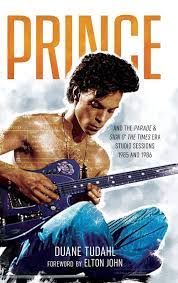
Could Prince have thrived in this current age of the ‘bedroom’ musician?
On the evidence of Duane Tudahl’s superb new book – documenting every single studio session that produced the classic albums Parade and Sign ‘O’ The Times, plus countless others too – the answer would be a resounding ‘no’.
As Tudahl points out in his wonderful follow-up to ‘The Purple Rain Studio Sessions’, Prince’s genius very much depended on a coterie of talented, fiercely committed back-room staff, particularly Susan Rogers, Peggy ‘Mac’ Leonard, Coke Johnson and David Rivkin (brother of Revolution drummer Bobby), not to mention the constantly-on-call band mainstays Eric Leeds, Matt Blistan, Wendy Melvoin and Lisa Coleman, all of whom are interviewed at great length.
But there’s absolutely no doubt who’s the boss and the book doesn’t shy away from uncomfortable truths about Prince’s methods and manners. However, it’s an embarrassment of riches for the fan and valuable historical document, not to mention a great, gossipy read.
We join the book at the beginning of 1985, smack bang in the middle of the Purple Rain tour. We learn how he quickly tired of its routine and looked ever forward, taking particular inspiration from Sheila E and other collaborators, ducking into studios around the country often straight after a gig, usually recording between 2am and 6am (Sheila’s album Romance 1600 was almost exclusively put together in this fashion).
We also learn that there were three huge equipment trucks on the tour – one that contained reels of tape, one with the stage gear and one that contained only Prince’s instruments, so that he could record anywhere, anytime.
Tudahl tells the whole story of the fascinating Los Angeles night of 28 January 1985, when Prince won three awards at the American Music Awards but then failed to repair to A&M Studios for the ‘We Are The World’ session (he offered a guitar solo to Quincy Jones but was turned down!), instead going out to party at Carlos ‘N Charlie’s Mexican restaurant.
The evening had huge repercussions and began a period of press barracking – he was even lampooned on ‘Saturday Night Live’, with Billy Crystal blacking up and singing ‘I Am The World’. Tudahl has access to a huge number of candid interviewees who provide a kind of making-of guide to other key side projects from the period: St Paul Peterson talks in detail about the recording of The Family and his subsequent fall-out with Prince; Jill Jones describes the painful, hugely drawn-out period working on her underrated 1987 solo record; Eric Leeds describes how the Madhouse albums came about.
Then there are the fascinating details: we learn the full story of how ‘Kiss’ came together, with Prince getting inspiration while playing basketball on the Sunset Sound court; how the expansion of The Revolution in February 1986 was somewhat of a result of Prince’s fascination with ‘twins’, probably inspired by his fiancée Susannah Melvoin’s relationship with her sister Wendy.
We get a real sense of Prince’s incredible progression as a musician, especially through the early days of 1986, and learn all of the relevant details about his collaboration with Miles Davis. We read how the US bombing of Libya on 14 April 1986 affected Prince, inspiring a talk with Jill Jones, the viewing of a film about Nostradamus called ‘The Man Who Saw Tomorrow’ and subsequent removal of some of the more frivolous material on Jill’s album. We also learn how the LA earthquake of 12 July 1986 inspired the classic song ‘The Cross’.
And there are fascinating nuggets about how he saw his own work – he reportedly told Eric Leeds and Susan Rogers on 29 July 1986 that he thought his lyrics to ‘Adonis And Bathsheba’ were possibly his best, though Leeds and Rogers certainly didn’t agree… Both reasoned that Prince protested too much only when he was unsure of himself.
There are also the fascinating machinations of how the Sign ‘O’ The Times album finally came together, after numerous false starts, tracklist changes and the Warner Bros. top brass – led by Lenny Waronker – refusing him a triple album. No detail is spared in the section on the ‘sacking’ of Wendy and Lisa, subsequent hiring of Cat Glover and reformatting of Prince’s live unit.
The period is an absolute whirlwind, and the mind boggles how much all of this studio time cost Prince and Warners. But finally the impression we are left with is that this book gets as close to the ‘real’ Prince as we are ever going to get – it’s not for the faint-hearted fan, but a fascinating, rewarding journey if you can take it.
As someone who regularly worked on a completely one-to-one basis with him, Susan Rogers often had the best seat in the house, and she offers rich insights into his family background and psychology. The section on Prince’s lonely recording session of Christmas Day 1985 will linger long in the memory.
But all of this is only scratching the surface. We haven’t even mentioned the making of ‘Under The Cherry Moon’. It’s another wonderful book and enormous achievement by Tudahl. We await ‘The Lovesexy/Batman Studio Sessions’ with baited breath.
They say that if you want to understand why an instrumentalist plays the way he or she plays, listen to them speak.
That makes total sense when hearing Wayne Shorter or Ornette Coleman being interviewed. And now, courtesy of Ben Sidran, there’s never been a better chance to hear other examples of this.
Sidran is a renowned pianist/composer and author of three excellent music books: ‘Black Talk’, ‘The Ballad Of Tommy LiPuma’ and ‘Talking Jazz’. The latter was based on a series of interviews broadcast on USA’s National Public Radio between 1984 and 1990. And now we can hear them in their entirety.
What a fascinating collection it is. Many interviewees go against type: those with a reputation for being somewhat ‘taciturn’ (Paul Motian, Donald Fagen, Tony Williams, Miles) are open, light-hearted and often giggly.
Some have their axes with them – we hear modern masters Chick Corea, McCoy Tyner, John Scofield, John Patitucci, David Sanborn and Steve Khan demonstrate their harmonic hallmarks. I asked the latter for his recollections of the ‘Talking Jazz’ interview:
It was done on23 October 1984 at Roxy Recording, located at 648 Broadway, NYC – which was downtown, near Soho. It was conducted from 1-3pm! How about THAT?!
Elsewhere, Art Blakey talks touchingly about his appeal to a young, eager London crowd, Carla Bley is amusingly honest and Kevin Eubanks sounds 30 years ahead of his time, discussing global warming and environmental disasters.
It’s also fascinating to hear lost masters’ voices on tape, speaking with such candour: Gil Evans, Johnny Griffin, Chick Corea, Dizzy Gillespie, Freddie Hubbard, and many more. Sidran is a great host/interviewer, friendly and hip to the artists’ work but not scared to ask the tough questions.
When people say ‘I hate jazz’, I sometimes wonder if they’re really saying they know a crap composition when they hear one.
Legions of talented jazz sidepeople have been given solo record contracts only to deliver music that proves they can’t write decent tunes.
A case in point is saxophonist and William Hurt-lookalike Bill Evans. He’s had a very solid career but his solo work is distinctly underwhelming.
(And then there’s the name. If you play jazz, you probably need a stage name if you have exactly the same moniker as a bona fide legend from decades gone by – the pianist Bill Evans died in 1980.)
But give Sax Bill some credit – he was an absolutely vital figure in Miles Davis’s 1980s comeback, a good friend and carer of the trumpeter and player of several gritty solos on record (Star People is a good place to start). But by 1983 Bill found himself inexplicably frozen out, barely getting any solo space from Miles.
He got the message and jumped ship to join John McLaughlin in the new Mahavishnu Orchestra and also embark on a solo career which kicked off with 1984’s Living In The Crest Of A Wave, a pretty anodyne collection of new-agey fusion. Let’s call it The Metheny Effect. Many tried and failed to ape that guitarist’s mixture of Ornette Coleman-inspired melodicism, Latin flavours and down-home, Midwestern, open-sky simplicity.
With its folky themes, puny production, emphasis on soprano sax, fretless bass, ride cymbals and an ‘environmental’ bent, LITCOAW could almost have come out on Windham Hill. Only the closing title track works up any kind of energy or interest, when Evans finally busts out the tenor and blows up a storm over Adam Nussbaum’s frenetic jazz/rock groove.
Evans’ followup, 1985’s The Alternative Man, was his first record for the illustrious Blue Note Records and as such should have been a celebration. Unfortunately it was an object lesson in how not to use technology, and just the kind of ‘80s ‘jazz’ album that illustrates what a brilliant job Marcus Miller did on Miles’s Tutu.
Evans in the main stumbles around with ugly Linn Drum patterns, electric drums, blaring synth pads and raucous hair-metal guitar solos, all topped off with some fairly insipid soprano playing. A few tracks and you’ll be wanting to break out the Albert Ayler or David Murray albums, and fast.
The only interest predictably comes with two more open, organic offerings, the excellent ‘Miles Away’ which reunites Evans with his Miles colleagues Al Foster on drums and Miller on bass. And ’Let The Juice Loose’ is fun, a cool bebop head featuring some enjoyably un-PC Strat-mangling from the late great Hiram Bullock.
But hey – some of this music brings back good memories, when I was digging around the Record And Tape Exchange and Our Price for bargains and closely monitoring the personnel on the back of my favourite Miles and McLaughlin albums.
These albums also definitely represent a weird time for ’80s jazz, when established labels were signing all and sundry, fishing around for the next Young Lion or Metheny.
And thankfully a few dodgy early solo records didn’t hurt Evans’ career much, as he’s gone on to be one of the most respected players on the scene.

 Continuing our look at some of the finest jazz/rock albums of the 1980s. You can find part 1 here.





 movingtheriver.com