12 Angry Men: The 1980s Midlife Crisis Collection (Part One)

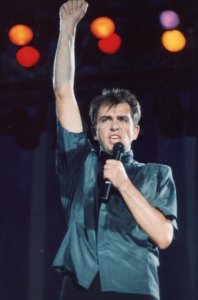
Here they come, these days about as welcome as turds in a jacuzzi, a collection of white, male, middle-aged ‘rockers’.

Then again, by the time of Live Aid, anyone over 30 was deemed a ‘veteran’, one of the funnier legacies of punk and New Pop.

Let’s survey the ages of some of the ‘ancient’ rock legends who appeared at Wembley Stadium and in Philadelphia on 13 July 1985: Pete Townshend (40), Paul McCartney (43), Freddie Mercury (39), David Bowie (38), Bob Dylan (44), Keith Richards (41), Bryan Ferry (39), Mick Jagger (41), Elton John (37), Brian Wilson (43).

Looking at the output of rock’s ageing alpha males during the ‘80s, angst, anger and lust were apparently the main drivers, alongside an interest in psychoanalysis and politics. Let’s take a look at some of their most coruscating work. For our purposes, we’ll define ‘mid life’ as 30 and above…

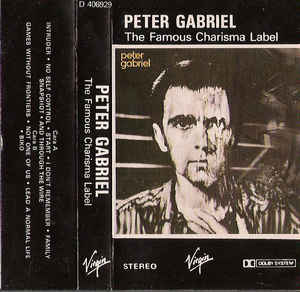
Peter Gabriel: ‘And Through The Wire’ (1980)
Upon hearing the early mixes of Peter Gabriel III, the US arm of his record company reportedly wondered if 30-year-old Pete had recently spent time in a mental asylum. But no, he was just letting off some steam, inviting Paul Weller along to supply raucous guitar, and unleashing a newfound, barely-concealed sexual energy: ‘Prowling the water hole/I wait for the kill/Pressure’s building/Overspill/I want you’. Ding-dong!

Richard Thompson: ‘Don’t Tempt Me’ (1988)
The folk/rock guitar/songwriting hero (38 at the time of recording) employed a killer US drums and bass team (Mickey Curry/Tony Levin) to carry off this pile-driving, piss-taking portrait of male jealousy and ‘little man’ syndrome. Note that he’s only ‘halfway’ out of his seat… Superb.

The Police: ‘Mother’ (1983)
Andy Summers (40 at the time of recording) takes some inspiration from Hitchcock’s ‘Psycho’ for this monstrosity, a hysterical, Oedipal blues in 7/4 time, very much inspired by his pal/guitar partner Robert Fripp. It’s quite funny to think that it was a contractually-obliged inclusion on the enormous-selling Synchronicity album, listened to by millions of unsuspecting teenagers before the emergence of the ‘skip’ button.

The Police: ‘Synchronicity II’ (1983)
Sting (31 at the time of recording) filters a Carl Jung concept through the story of family discord, a father’s paranoia and disquiet literally spawning a monster (in a Scottish loch!). Along the way, there’s also a barely concealed hatred for the common sprawl, ‘packed like lemmings into shiny metal boxes’ during the morning commute, and the protagonist’s secretaries who ‘pout and preen like cheap tarts in a red-light street’, while Sting, Summers and Stewart Copeland lay down one of the most aggressive grooves in the band’s history. Scary, strange, midlife stuff.

David Bowie: ‘It’s No Game (Part One)’ (1980)
33-year-old Bowie is jolly well peed off about…everything. There was certainly a lot to be angry about in 1980, and accordingly his Scary Monsters album dealt with some of the fears he felt for his son, from the increasingly bold tabloid press to the ever-present right-wing bully boys. In surely the most histrionic vocal performance of his career, he sounds terrified of the ‘fascists’ and violent revolutions on his TV screen.

Robbie Robertson: ‘Hell’s Half Acre’ (1987)
From the classic self-titled album, Robertson (43) sounds seriously teed off about the legacy of the Vietnam War, and more specifically, The Battle For Cu Chi of 1965/1966 (‘Down on Hell’s half acre/Shakin’ with fever/Rumble in the jungle’). Tony Levin and Manu Katche make for an appropriately barnstorming rhythm section and Robbie’s guitar is almost Clash-like in its viciousness.

21 Great 12″ Singles Of The 1980s

To some, the advent of the 12” single in the early ’80s was musical sacrilege; to others it was a new dawn, a chance to hear your favourite song in widescreen format, expanded into an epic and not bound by radio conventions.

The 12” came about at an exciting time in music when a few things were colliding: the cult of the ‘star’ producer, club culture, sampling, dub techniques, electronic music moving into the mainstream and an ‘anything goes’ post-punk ethos.

Talented sound designers such as Trevor Horn, Gary Langan, Shep Pettibone, John Potoker, Francois Kevorkian, Alex Sadkin and Steven Stanley were in the right place at the right time. And it probably helped that sales of 12” singles contributed to weekly chart positions, so the stakes were high.

So let’s have a look at some key artefacts of the 12” revolution, a great time in music when anything – well, almost anything – went. A few of these I now prefer to the originals.

21. Paul Young: ‘I’m Gonna Tear Your Playhouse Down’ (1985)
Laurie Latham’s completely mad mix seems entirely designed to annoy the neighbours. A cacophony of metal guitars, Pino Palladino’s floor-shaking, P-funk-influenced bass and bizarre samples. And is that a jazzy riveted cymbal slinking into the mix from time to time?

20. A Guy Called Gerald: ‘Voodoo Ray’ (1989)
A timeless collection of house music tropes which doesn’t ever seem to date. Simplicity is the key, with subtly-shifting riffs.

19. Freeez: ‘Southern Freeez’ (Slipstream mix) (1982)
This one seems impossible to find on the internet or any other compilation album apart from the marvellous Slipstream 2-LP set which came out on Beggars Banquet in 1982. It’s a feast for the eardrums with gorgeous, spacey delays and twinkling Moog lines sprinkled into the mix.

18. Yes: ‘Owner Of A Lonely Heart’ (1983)
Remixer Gary Langan skillfully juggles of all this classic track’s trademark features: Trevor Rabin’s chiming guitar figure, the ethereal backing vocals and those crazy samples. Plus you can really hear Alan White’s drums here – never a chore.

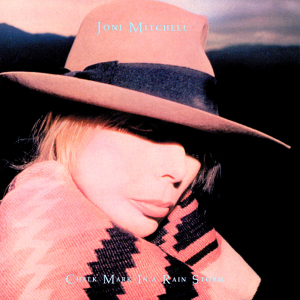
17. Joni Mitchell: ‘Shiny Toys’ (1985)
Joni’s a name you probably wouldn’t expect to see here but remixer Francois Kevorkian had great raw materials to play with – Thomas Dolby’s dub-style treatments, Mike Landau’s lush rhythm guitar, Vinnie Colaiuta’s killer drums and all the silly vocal overdubs.

16. ABC: ‘Poison Arrow’ (1982)
Trevor Horn ups the ante with a cool, extended lounge-jazz intro and lots of little musical motifs, a new bass part and some new guitar solos.

15. Michael Jackson: ‘PYT’ (2017)
I can’t resist including this recent discovery – someone has somehow got hold of the Thriller masters and put together a real classic. It’s even funkier than the original, if that’s possible.

14. Madonna: ‘Open Your Heart (Maxi Extended Version)’ (1986)
Steve Thompson And Michael Barbiero’s exciting mash-up of Motorik sequencers, Jonathan Moffett’s sick drums and Madonna’s strident vocals, all adding up to an ‘I Feel Love’ for the 1980s.

13. Phil Collins/Philip Bailey: ‘Easy Lover’ (1985)
Mixing engineer John Potoker cut his teeth working with Miles Davis and Steely Dan, and his sonic mastery shows through with this stunning reimagining of a somewhat corny single, bringing the originally-submerged drum machine right to the fore and adding loads of top-end. His nickname wasn’t ‘Tokes’ for nothing…

12. Scritti Politti: ‘Hypnotize’ (1985)
Gary Langan was at the controls again for this stunning collision of ’50s B-Movie voices, swooning synths, rhythm guitars and bangin’ machine beats. The only thing missing is some serious low-end.

11. Grandmaster Flash/Melle Mel: ‘White Lines (Don’t Do It)’ (1984)
Sylvia Robinson arguably laid down the groundwork for all future 12” singles with this 1984 classic.

10. Prince & The Revolution: ‘Mountains’ (1986)
If you – like me – are always frustrated when this track fades out on the album/single version, have no fear because this remix carries on for another six minutes in the same vein, and turns into one of the sickest grooves Prince ever committed to vinyl.

9. Peter Gabriel: ‘Sledgehammer’ (1986)
Another entry helmed by John ‘Tokes’ Potoker, this one boosts the top-end again, adds some scary reverbs and focuses on David Rhodes’ guitar, Gabriel’s piano/vocal ad-libs and Manu Katche’s drums to superb effect. I now prefer this version…

8. Eric B & Rakim: ‘Paid In Full (Seven Minutes Of Madness Mix)’ (1988)
Coldcut put together this sonic feast, one of the most sampled 12”s of all time. You’ve probably heard almost everything on this remix 100 times on other tracks.

7. Thompson Twins: ‘Lies’ (1983)
Alex Sadkin brings his Compass Point mastery to this remix, adding a real drummer (Sly Dunbar?) and bass player, and pushing the sequencers and percussion right to the fore.

6. Grace Jones: ‘Slave To The Rhythm’ (1985)
‘Pull Up To The Bumper’ is possibly the more artful Grace remix, but this is included for its irresistible groove, and the fact that I always want the original single to go on for twice as long as it does. Also I love the ‘false’ ending and off-stage shout (Horn?) at 3:40.

5. Donna Summer: ‘Love Is In Control (Dance Version)’ (1982)
You could hardly go wrong with Quincy Jones and Bruce Swedien at the controls, but this remix just brings out the sheer luxurious beauty of this single, and various sections are repeated and amplified to superb effect.

4. Will Powers: ‘Adventures In Success (Dub)’ (1983)
Chris Blackwell’s protegé Steven Stanley was in charge of this fascinating dub, completely dispensing with Lynn Goldsmith’s vocals and delaying the reveal of Sting’s bass for as long as possible.

3. Propaganda: ‘Duel’ (1985)
Included mainly for Steve Lipson’s beatific long guitar solo during the outro, and the fact that it sounds like it could go on forever…

2. Paul Hardcastle: ’19 (Destruction Mix)’ (1985)
A chilling remix which brings out a little more detail of the single version, adding more spoken-word excerpts from the ‘Vietnam Requiem’ documentary and lengthening the funky drum breakdowns.

1. Frankie Goes To Hollywood: ‘Rage Hard’ (1986)
Stephen Lipson and Paul Morley created this insane confection, a kind of Young Person’s Guide To The 12”, featuring Pamela Stephenson introducing all the clichés of the genre, Viv Stanshall-style. Only ZTT can do this. (It seems sacrilege to leave Frankie’s ‘Two Tribes (Annihilation)’ out, but this gets the nod for sheer balls).

Whistle Test: Best Of The 1980s

What a treat to watch a special live edition of ‘The Old Grey Whistle Test’ on BBC Four the other night.

The excellent Bob Harris returned to present – but where was Annie Nightingale? We saw a bit of her in her ’80s presenting pomp, but sadly she wasn’t in the studio.

The special reminisced unashamedly about a time when the musicians ran the music biz, and also documented the fascinating history of music TV with an interesting mix of guests (Joan Armatrading, Toyah, Chris Difford, Ian Anderson, Dave Stewart, Danny Baker) and live performances (Kiki Dee, Gary Numan, Albert Lee, Peter Frampton, Richard Thompson). Not exactly a cutting-edge, youthful lineup, but the musicianship was at an exceptionally high level.

Alongside ‘The Tube’, ‘Whistle Test’ was THE music show to watch in the mid-’80s, aided by some very agreeable presenters such as Nightingale, Andy Kershaw, Richard Skinner, David Hepworth, Ro Newton and Mark Ellen.

The only real caveat was that – as Richard Williams pointed out during the special – the show possibly didn’t feature enough black artists. But it provided me with some formative musical memories – here are some bits from the ’80s incarnation that lodged in my brain (most unfortunately with dodgy sound/picture quality):

8. The Eurythmics: ‘Never Gonna Cry Again’ (1981)
Maybe a less than brilliant song but Annie’s vocals and stage presence are spellbinding. And I like the flute interlude. Also look out for an amusing cameo from Holger Czukay, who creeps onstage (to Annie’s annoyance?) like Banquo’s ghost.

7. Prefab Sprout: ‘When Love Breaks Down’ (1985)
One of the first things I saw on the show. A tender reading of a classic song.

6. Joni Mitchell Special (1985)
Fascinating mini feature about Joni’s painting, ostensibly to promote her album Dog Eat Dog.

5. It Bites: ‘Calling All The Heroes’ (1986)
One that has only come to light recently, but I would have been blown away by it had I seen it at the time. A special mention for man-of-the-match John Beck on keys.

4. Propaganda: ‘The Murder Of Love’ (1985)
The ex-Simple Minds rhythm section (Derek Forbes and Brian McGee) are cooking on this ZTT classic, as is Bowie/Iggy/Prefab guitarist Kevin Armstrong.

3. PiL: Home/Round (1986)
Chiefly remembered for a great two-guitar frontline (John McGeoch and Lu Edmonds) but I was also fascinated by John Lydon’s red headphones and suit.

2. Peter Gabriel So Special (1986)
One of the more illuminating interviews about So plus an interesting solo version of ‘Red Rain’.

1. King Crimson: ‘Indiscipline’ (1981)
Another corker that’s come to light recently, unfortunately shorn of its witty Annie Nightingale intro here. Pity poor Adrian Belew – Fripp’s gaze hardly moves from him throughout.

Francis Dunnery Meets…Killing Joke?

You wait all day for a prog/pop legend and then three turn up at once.

David Sancious, Francis Dunnery and Peter Gabriel gathered at London’s Abbey Road Studios on 7th February for a Steinway Pianos event:

Ex-It Bites frontman Francis posted on his always-entertaining Facebook page:

It was great to see David and Peter again. I’m havin’ fun here at Abbey Road. I’m hanging with Youth who I found out is a Capricorn. Killing Joke were an amazing band. It’s all good. Performance tonight for loads of Germans for Steinway Hamburg…

Now that I wanna hear: the Francis D/Killing Joke collaboration. I always suspected It Bites’ classic near-hit ‘Midnight’ was a teeny bit influenced by the Joke’s ‘Love Like Blood’.

It’s a very busy time in the Dunnery camp – he’s just finished the sold-out ‘Eat Me In St Louis’ UK tour (named after It Bites’ 1989 album), played a solo gig at Iridium in New York, has a live album out and is recording a new studio record.

He also has some UK house concerts booked in March and will return next year for ‘The Big Lad In The Windmill’ tour. Looking forward to that.

In the meantime, check out my review of Francis’s recent London gig in issue 38 of Classic Pop magazine.

Bigmouth Strikes Twice: More Classic 1980s Music Quotes

Art_Blakey_1973

Art Blakey

Here’s another selection of choice quotes taken from various 1980s magazines, TV shows, biographies and anthologies that have drifted through my transom in the last few months.

Check out the first instalment here if you missed it.


‘Morrissey’s a precious, miserable bastard. He sings the same song every time he opens his mouth. At least I’ve got two songs: “Love Cats” and “Faith”.’

Robert Smith of The Cure, 1985


‘George Clinton told me how much he liked Around The World In A Day. You know how much more his words mean than those from some mamma-jamma wearing glasses and an alligator shirt behind a typewriter?’

Prince, 1985


‘It would be nice to meet Madonna and squeeze her bum.’

Level 42’s Mark King looks forward to his first US tour, 1986


‘I hope nobody bought houses.’

Slash/Warners executive Bob Biggs upon hearing a preview of Faith No More’s Angel Dust album (OK, this quote is from the early 1990s, but wtf…). The band had bought houses…


‘The musician is like a house, and the music is like a friend that’s always out there knocking on the door, wanting nothing more than to come in. But you’ve got to get your house in order for music to come in. That’s where discipline comes in.’

Robert Fripp, 1984


‘Like the first side. The second side is rubbish. Miles don’t play jazz no more but feels kind of funny about it, so instead of just admitting that his chops aren’t what they used to be, he puts jazz down.’

Branford Marsalis on Miles Davis’s Tutu, 1986


‘Remember the hits? “Labour Of Love” was inspired by Antonio Gramsci, a love song called “Violently” and a tale of kitchen-sink realism about wife battery called “Looking For Linda”. We heard those songs on Radio 1 back to back with Yazz and we’d piss ourselves laughing. We pulled off the trick three times and I always think that lyrically I can pull it off again.’

Hue & Cry’s Pat Kane remembers the good old days, 1995


‘I have to be myself, and if being in rock music forces me to pretend I am an idiot or that I have to wear tight trousers or a wig, then I have to get another job.’

Sting, 1988


‘I heard the title song (‘Storms’) on the radio and the drum sound still makes me want to cry. I love Glyn (Johns, producer) but there were times during that album when I went back to the hotel to cry.’

Nancy Griffith on her 1989 album Storms, 1991


‘I would say that my entire life has been one massive failure. Because I don’t have the tools or wherewithal to accomplish what I want to accomplish.’

Frank Zappa, 1986
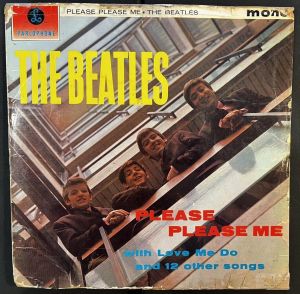
 

‘I went into the old EMI offices many times in the late ’80s and it never occurred to me to look up in reception and see exactly where that iconic photo had been taken. In the ’80s it seemed we had been looking forward.’

David Hepworth on the famous Beatles photo from the cover of Please Please Me


‘I tried the Jesus and Mary Chain but I just couldn’t believe it. It’s awful! It was so sophomoric – like the Velvets without Lou. I just know that they’re kids from Croydon! I just can’t buy it.’

David Bowie, 1987


‘I was surprised how hip it is. There’s a strange thing I don’t understand of people in Boy George outfits dancing to Jimmy McGriff and old Jackie McLean Blue Note records in discos.’

Guitarist John Scofield on the latest English ‘jazz revival’, 1988


‘Songwriting’s a craft, that’s all. I always knew my lyrics were better than anyone else’s anyway. I just edit more than other people, that’s my f***in’ secret. Also I never sleep and that helps too. You’ve got more time that way.’

Shane MacGowan, 1989


‘I hate having my picture taken, I always look like such a dog.’

Kirsty MacColl, 1989


‘I was a patsy. I never made more than $200 a week at the Five Spot.’

Ornette Coleman looks back on his legendary six-month residency during 1959 and 1960, 1985


‘All of us were naive, not just Ornette. We couldn’t even pay our rents. And they were making lots of money off us. That club was jammed every single night we were there.’

Charlie Haden on the same residency, 1985


‘You walk into the record label and they just weren’t as friendly as they used to be. When the record’s not a success, it’s your fault, and so you take on all those feelings. The label doesn’t sit down and talk to you. And they don’t drop you either, because they don’t want to lose you to the competition – just in case you do come up with something good next. And so they just remain sort of not as friendly, no more: “Hey Kevin, how are you?” It’s a head-f*ck, and you just have to work it out yourself.’

Kevin Rowland on the commercial failure of his 1988 solo album The Wanderer


‘Pop stars live the life of Caesar. And we know where the life of Caesar leads: it leads to blankness, it leads to despair. That’s the real message of these rock stars’ lives. To the public, they represent vitality, youth, innocence, joy. But in private life they represent despair and an infatuation with death.’

Albert Goldman, author of ‘The Lives Of John Lennon’ and ‘Elvis’, 1988


‘I remember sitting next to the stage and seeing all those little red lights glowing on the amps while we waited for the guys to come out and give us a real pasting.’

Allan Holdsworth reminisces about early gig-going, 1985


‘I have the best legs in the business. And they’ve got dancing feet at the bottom.’

David Lee Roth, 1982


‘There’s only one woman I have deep respect for in this industry and that’s Chrissie Hynde.’

Annie Lennox, 1986


‘I would have thought that people would be pleased to have a band that could play half decently.’

Francis Dunnery bemoans It Bites’ poor standing with the British music press, 1989


‘Sometimes he would call for Monk out of the clear blue sky. “Thelonious! Come save me from these dumb young motherf*ckers!”‘

Wynton Marsalis on playing with Art Blakey in the early 1980s


‘Prince really wants to be white. I know what that’s like. I tried hard to be white too.’

Daryl Hall, 1985


‘What we do is an alternative to Elton John and Chris Rea and all those old bastards who were there and still are. It’s embarrassing to see these old people like Dire Straits doddering about, they’re hideous.’

Robert Smith, 1989


‘I’ll tell you what I dig. In the Sting movie “Bring On The Night”, Omar Hakim taking off on that tune. Like Tony Williams, Jack DeJohnette. That’s being real free and comfortable. I don’t take my drums seriously, and they do.’

Drummer for the stars Jeff Porcaro, 1989


‘I believe that Bill (Bruford) and Adrian (Belew) thought that Beat was a better album than Discipline. I have no idea how anyone could come to that conclusion.’

Robert Fripp of King Crimson, 2022


‘Thanks for letting me drop by, guys. Hope I didn’t ruin your album.’

Herbie Hancock bids farewell to Simple Minds after playing a synth solo on their 1982 song ‘Hunter And The Hunted’


‘You should have seen us trying to sound like Windham Hill. We’d fall on our butts, man. I learned that you can’t fake it.’

’70s jazz/rock pioneer Larry Coryell on his mid-’80s collaboration with violinist Michal Urbaniak, 1985


‘We weren’t asked but we wouldn’t have done it anyway.’

Robert Smith on Live Aid, 1985


‘The band is getting back together and playing, maybe every six months or every year. If I can do so without it being public knowledge, that would be great. But I can’t do it, obviously. It would be nice to play together just as friends.’

Jimmy Page on Led Zeppelin reunions, 1986


‘I really, really would like to be in Led Zeppelin again. Whether or not time allows that to happen, I don’t know.’

Robert Plant on Led Zeppelin reunions, 1988


‘I’m a Catholic, and I would just ask God to to please help me find my own style. It’s not going to be like Tony or Elvin, so that when you hear me on a record, you know it’s Al Foster on the drums.’

Al Foster on his ‘stomping’ hi-hat technique, 1989


‘I feel I’ve created a field in which other people can discover themselves. I’m disappointed that they don’t create the room for me to discover myself.’

Robert Fripp on his King Crimson bandmates, 1984


‘I find therapy enormously valuable. It’s like car maintenance, send yourself in to be serviced every few thousand miles and, with any luck, it stops major problems developing.’

Peter Gabriel, 1989


‘I went to see this band INXS from Australia. They were on OK band, very much like a version of the Rolling Stones, but not as good. The singer is good and he looks great, but he doesn’t really move. He can’t be expending much energy.’

Mick Jagger, 1988


‘The band was like a fake democracy. Henley and I were making the decisions while at the same time trying to pacify and cajole the others.’

Glenn Frey looks back on The Eagles, 1988


‘(Jeff) Beck’s was a miserable f***ing band, horrible. Beck is a miserable old sod, but I do love him as a guitar player.’

Rod Stewart, 1988


‘I’ve always found it easier to write for other people. I feel terrible inhibited about writing for me. It’s only in the last few years that I’ve resigned myself into believing that I’m a moderately good singer.’

David Bowie, 1988


‘Of my writing partners since John (Lennon), Denny Laine was obviously nowhere near as good. Stevie Wonder is very good, but he’s not a lyricist. Michael Jackson is not as good of a writer as he is a performer. And Eric Stewart was good, but again, not as good as John.’

Paul McCartney, 1988


‘This new Clash compilation, which is meant to have sold a million copies, should be making me a rich man, but someone told me you only get quarter royalties for compilations. The CD wasn’t invented then so that wasn’t in the contract either. So I think I don’t get them royalties either. To tell the truth, I think we’re all a bit skint really.’

Joe Strummer on the legacy of The Clash, 1988


‘Those weird people on the street – every hundreth weirdest one has a Steely Dan record at home. That guy who hijacked a bus today probably has 47 copies of The Royal Scam.’

Walter Becker on Steely Dan’s audience, 1981


‘In 1981, something happened which changed my way of working with music. I woke up on a friend’s sofa in New York and simply understood something I’d known for a while: music was always present, completely with a life of its own, as a friend.’

Robert Fripp, 1984


‘The price of a ticket goes from two dollars to 20 dollars, the act doesn’t do an encore, someone has to stand in a long line, and it’s all my fault.’

Bill Graham on stadium rock, 1988


‘There are a lot of people who didn’t make a commitment and now they’re no longer with us. We lost Otis Redding, Sam Cooke, Jackie Wilson, Jimi Hendrix. I think maybe some of them didn’t know where or when to get off. The important thing is to be here.’

Al Green, 1988


‘Hell, we steal. We’re the robber barons of rock’n’roll.’

Donald Fagen of Steely Dan, 1981


‘After recording it, I flew off to see my manager and I said to him, “You’d better watch who you’re talking to. I’m the guy who wrote “Addicted To Love!”‘

Robert Palmer, 1988


‘I get the fans who write poetry. I have a slight David Sylvian audience, whereas Chris (Lowe) gets the sex audience, the ones who write obscene letters! It’s quite thrilling, actually!’

Neil Tennant of The Pet Shop Boys, 1988


‘It was the Enniskillen bombing that did it. The man whose daughter died beside him under the rubble; he was burning inside but he was so forgiving, so gracious. I thought, Christ, this is what courage is all about – Elton, just shut up and get back to work. After all, once you’ve been exposed naked on the cover of The Sun you ought to be able to face anything…’

Elton John on his 1988 comeback


‘It’s a better product than some others I could mention.’

David Bowie defends the Glass Spider Tour, 1987


‘Back then I thought I’d lost it and I did a bunch of things I was really unhappy with – all in public and on record. But it turned out not to be true. My ability hadn’t deserted me. And it won’t go away. Ever.’

Lou Reed, 1988


‘Michael Jackson’s just trying to cop my sh*t. I was insane years ago…’

Neil Young, 1988


‘I’ve said a lot of things in my time and 90 percent of them are bollocks.’

Paul Weller, 1988


‘We were excellent. Some of the best records of the ’80s are there. For the last six months of Wham!, it was OK to like us, we got a little hip. I cannot think of another band who got it together so much between the first and second albums. On Fantastic, you can tell I don’t think I’m a singer but some vocals on Make It Big are the best I’ve done. Even if we were wankers, you still had to listen.’

George Michael reassesses Wham!, 1998


‘The gig I have as the drummer in King Crimson is one of the few gigs in rock’n’roll where it’s even remotely possible to play anything in 17/16 and stay in a decent hotel.’

Bill Bruford, 1983


‘When I toured with The Rolling Stones, the audience would come up to me after the show and say, “Man, you’re really good, you ought to record.” How do you think that makes me feel after 25 years in the business?’

Bobby Womack, 1984


‘I find politics ruins everything. Music, films, it gets into everything and f*cks it all up. People need more sense of humour. If I ran for President, I’d give everybody Ecstasy.’

Grace Jones, 1985


‘I’m not the most gifted person in the world. When God handed out throats, I got locked out of the room.’

Joe Elliott of Def Leppard, 1988


‘I’m lazy and I don’t practice guitar and piano because I’ve gotten involved with so many other things in my life and I just had to make a sacrifice. Stephen Sondheim encourages me to start playing the piano again. Maybe I will.’

Madonna, 1989


‘Nile (Rodgers) couldn’t afford to spend much time with me. I was slotted in between two Madonna singles! She kept coming in, saying “How’s it going with Nile? When’s he gonna be free?” I said, “He ain’t gonna be free until I’m finished! Piss off!”’

Jeff Beck, 1989


‘I’ve never really understood Madonna’s popularity. But I’ve talked to my brothers and they all want to sleep with her, so she must have something.’

Nick Kamen, 1987


‘They ask you about being a Woman In Rock. The more you think about, the more you have to prove that you’re a Woman In Rock. But if you’re honest, it doesn’t matter whether you’re male or female. That’s the way we work.’

Wendy Melvoin, 1989


‘In Japan, someone told me I was playing punk saxophone. I said, “Call me what you want, just pay me”.’

George Adams, 1985


‘In the past, we’d bump into other musicians and it would be, “Oh, yes, haven’t I heard of you lot? Aren’t you the bass player that does that stuff with your thumb?” But once you’ve knocked them off the number 1 spot in Germany, they’re ringing you up in your hotel and saying, “Hey, howyadoin’? We must get together…”‘

Mark King of Level 42, 1987


‘We played London, we played Ronnie Scott’s, and I noticed that there were a lot punk-rock kids in the audience. After we finished playing, we had to go to the disco and sign autographs, because “Ping Pong”, the thing we made about 30 years ago, is a big hit over there.’

Art Blakey, 1985


‘I believe music – just about everything – sounds better these days. Even a car crash sounds better!’

Miles Davis, 1986


‘It’s a dangerous time for songwriters in that a monkey can make a thing sound good now.’

Randy Newman, 1988

Yoko+Ono+Season+Of+Glass+522787


‘To have those glasses on the cover was important because it was a statement and you have to understand that it was like John wanted you guys to see those glasses.’

Yoko Ono, 1989


‘I’ll f*cking… I’ll go and take on anyone, any white singer who wants to give me a go.’

Matt Goss of Bros, 1989


‘I’ve never said this before but my drums is so professional, man, know what I mean?’

Luke Goss of Bros, 1989


‘I hate parts of my own albums because I know I’m hearing something that doesn’t translate to piano. In fact, I’m being dishonest by playing piano at all.’

Keith Jarrett, 1987


‘When I began to see how Elvis lived, I got such a strong take off of it. It was all so revolting!’

Albert Goldman, 1988


‘The best way to make great art is to have it trivialised by other people as much as possible. That way, you fight and fight and fight.’

Julian Cope, 1989


‘Whatever you’re tops in, people is trying to bring you down, and that’s my philosophy.’

Samantha Fox, 1987


‘Call me fat and I’ll rip your spine out.’

Ian Gillan, 1983


‘Sure I care about my fans. Because fans is money, hahaha. Muh-neee! And who does not care about money? Me, I like muh-neee, haha.’

Chuck Berry, 1988


‘I have this long chain with a ball of middle-classness at the end of it which keeps holding me back and that I keep sort of trying to fight through. I keep trying to find the Duchamp in me.’

David Bowie, 1980


‘People who say, Oh, I don’t know anything about music – they’re the people who really do know about music because it’s only really what it does to you.’

Steve Winwood, 1988


‘I notice that critics and others don’t credit black people with the ability to write ingenious, creative lyrics.’

Nile Rodgers, 1981


‘I’m below the poverty line – I’m on £16 a week. We needed some clothes and our manager said, “I don’t know what you do with your money. I mean, 16 quid!”’

Gary Daly of China Crisis, 1984


‘You take four or five of those rattlesnakes, dry ’em out and put them inside your hollow-box guitar. Lightnin’ Hopkins taught me that trick.’

Albert Collins on his guitar tone, 1988


‘People are bored with Lionel Richie going “I love everybody, peace on earth, we are the world…” F*ck that! People love bastards.’

Terence Trent D’Arby, 1987


‘Epstein dressed The Beatles up as much as he could but you couldn’t take away the fact that they were working-class guys. And they were smart-arses. You took one look at Lennon and you knew he thought the whole thing was a joke.’

Billy Joel, 1987


‘I remember when the guy from Echo & The Bunnymen said I should be given National Service. F*** him...’

Boy George, 1987


‘No-one should care if the Rolling Stones have broken up, should they? People seem to demand that I keep their youthful memories intact in a glass case specifically for them and damn the sacrifices I have to make. Why should I live in the past just for their petty satisfaction?’

Mick Jagger, 1987


‘The industry is just rife with with jealousy and hatred. Everybody in it is a failed bassist.’

Morrissey, 1985


‘I couldn’t stand it – all that exploitation and posturing, the gasping at the mention of your name, the pursuit by photographers and phenomenon-seekers. You get that shot of adrenalin and it’s fight or flight. I chose flight many a time.’

Joni Mitchell, 1988


‘I’m strongly anti-war but defence of hearth and home? Sure, I’ll stick up for that… I’m not a total pacifist, you know? I’ve shot at people. I missed, but I shot at them. I’m sort of glad I missed…’

David Crosby, 1989

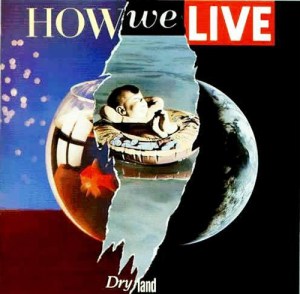
How We Live: Dry Land 30 Years On

How+We+Live+Dry+Land+554632Madchester aside, the late-’80s may be the least-heralded period of British pop, but the era also produced a surprising amount of intelligent, original bands that arguably never got their commercial due: Love And Money, Danny Wilson, The Bible, The Lilac Time, It Bites, Stump…

The list of ‘under-achievers’ is long and varied. But one name often forgotten is How We Live.

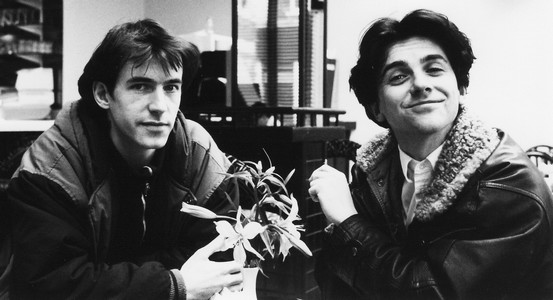
Most famous for featuring a pre-Marillion Steve Hogarth on vocals and keyboards, the band emerged from the ashes of new-wave popsters The Europeans to release their one and only album Dry Land in 1987.

Originally appearing on CBS offshoot Portrait Records but now given a shiny new remaster by Esoteric/Cherry Red, the album certainly ticks lots of ‘quality 1980s pop’ boxes: it was recorded at Crescent Studios in Bath with XTC/Peter Gabriel producer David Lord and The The/Deacon Blue engineer Warne Livesey, and features Tears For Fears’ drummer Manny Elias on a few tracks. Peter Gabriel and XTC get a thank-you on the inside cover.

Colin Woore and Steve Hogarth

Colin Woore and Steve Hogarth

Malcolm Dome’s incisive liner notes for this re-release outline the record-company shenanigans which dramatically shortened How We Live’s lifespan, whilst also acknowledging how Hogarth and fellow ex-European Colin Woore’s songwriting was very much informed by the other quality British pop of the time – Talk Talk, David Sylvian, Gabriel, Hue & Cry (Hogarth apparently being a big fan of Pat Kane’s vocals), Kate Bush.

And while it’s tempting to view Dry Land as the prelude to Marillion’s second phase, it’s pretty clear that Hogarth already had an extremely strong presence as a singer, songwriter and keyboard player long before he joined the Brit-prog behemoths.

Dry Land‘s opening 1-2-3 of ‘Working Girl’, ‘All The Time In The World’ and the title track (latter taken into the top 40 by Marillion) is pure dream-pop bliss. The latter benefits from a dramatic string arrangement, missing from the Marillion version, though connoisseurs might rue the big snare-drum sound.

‘Working Girl’ is simply a classic, with a haunting verse and swooning, truly uplifting chorus. How that and ‘All The Time’ didn’t crack the top 40 is still a mystery, though, according to manager Mark Thompson, CBS were spending most of their time and money trying to break Deacon Blue during this period.

Whilst the rest of Dry Land can’t quite maintain the quality of the first three tracks, there are plenty of other pleasures: ‘Games In Germany’ is a fine fusion of late-’80s PiL and Season’s End-era Marillion, a crashing new-wave groove with a fabulous, wrong-footing chorus.

Classy ballad ‘Lost At Sea’ is somewhat reminiscent of David Sylvian’s work of the same period, while ‘In The City’ takes a left turn into jazzy pop with great aplomb; its shimmering synths, swinging groove and catchy trumpet melody bring to mind such late-’80s movie soundtracks as ‘The Big Blue’ and ‘Betty Blue’.

‘India’ is unfortunately a bit more Chris De Burgh than It Bites, though Dave ‘Taif’ Ball’s elegant fretless bass impresses, as it does throughout Dry Land. ‘The Rainbow Room’ is perhaps the most ‘prog’ track on the album, powered along by an intricate keyboard sequence and guitar motif.

Unfortunately Dry Land was a dead end for How We Live – it stalled outside the top 40, and, although there were some big gigs including a Munich show on the same bill as Eurythmics and Tina Turner in front of 100,000 people, they called it a day in late 1987.

Hogarth was enquiring about becoming a milkman when he heard from his publisher that Marillion had been in touch. He was back in business, and remains so to this day. But Dry Land is a fascinating and worthwhile precursor.

Dry Land is out now on Esoteric/Cherry Red.

13 Memorable B-Sides Of The 1980s

princeThere was definitely a thing about B-sides in the 1980s.

You never quite knew what you would find on the reverse of your favourite 7” or 12″ – maybe a new direction, bold experiment, engaging curio, self-produced shocker or even the drummer’s long-awaited-by-nobody songwriting debut.

Sometimes a single track encapsulated all of the above…

This writer was never the biggest singles collector in the world, but had to try and hear everything by Prince, Level 42 and It Bites during their peak years. Some B-sides took on a kind of mythic stature and weren’t easy to access: you’d have to cadge from your mates, record things from the radio or trawl the Record & Tape Exchange.

Here’s a motley parade of ’80s backsides, some long-sought-after, some intriguing, some exciting, some fairly random but all inexplicably etched upon my memory.

13. David Bowie: ‘Crystal Japan’ (1981)

Though originally released as an A-side for the Japanese market, this charming instrumental later turned up as the B-side to the ‘Up The Hill Backwards’ single of March 1981.

12. Peter Gabriel: ‘Curtains’ (1987)

Almost every time this ‘Big Time’ B-side rolls around, it produces a slight chill and sense of wonder. One of PG’s most disquieting pieces but with a lovely melody and ambience.

11. Danny Wilson: ‘Monkey’s Shiny Day’ (1987)

The Dundonians are at their most sublimely Steely-ish on this ‘Mary’s Prayer’ B-side. The track’s lo-fi production and slightly low-budget horn section/backing vocals hinder it not one jot.

10. Prince: ‘Alexa De Paris’ (1986)

Prince had always threatened a full-on guitar instrumental and this ‘Mountains’ B-side delivered it. And boy was it worth the wait. Sheila E plays some fantastically unhinged drums (check out how she reacts to Prince’s guitar throughout) and Clare Fischer weighs in with a widescreen orchestral arrangement. The composition is reimagined as a solo piano piece in the movie ‘Under The Cherry Moon’.

9. It Bites: ‘Vampires’ (1989)

The B-side of ‘Still Too Young To Remember’, this glam-prog classic is notable for its crunching riff, catchiness and Francis Dunnery’s most extreme It Bites guitar solo (stitched together from multiple takes?). Pet Shop Boys were definitely listening – this is even in the same key.

8. David Sylvian: ‘A Brief Conversation Ending In Divorce’ (1989)

The accompanying track to one-off 12” single ‘Pop Song’, you get the feeling this microtonal, improvised miniature featuring late great pianist John Taylor was far more up Sylvian’s street than the hits requested by Virgin Records.

7. Donna Summer: ‘Sometimes Like Butterflies’ (1982)

This B-side to ‘Love Is In Control (Finger On The Trigger)’ is a bit of a guilty pleasure. But Summer’s exceptional performance transcends the schmaltz, as does a superb drum performance by…someone (Steve Gadd? Rick Marotta? Ed). Intriguingly, Dusty Springfield covered it in 1985.

6. Level 42: ‘The Return Of The Handsome Rugged Man’ (1982)

This irresistible B-side from the ‘Are You Hearing What I’m Hear’ 12” shows the lads in full-on Weather-Report-meets-Jeff-Beck mode. Drummer Phil Gould even gives Harvey Mason and Billy Cobham a run for their money.

5. Roxy Music: ‘Always Unknowing’ (1982)

This shimmering, beguiling Avalon outtake from the US single version of ‘More Than This’ was surely in competition with ‘While My Heart Is Still Beating’ and ‘Tara’ for an album spot. Beautiful playing from guitarist Neil Hubbard.

4. Donald Fagen: ‘Shanghai Confidential’ (1988)

This ‘Century’s End’ B-side is an intriguing slice of fuzak with lovely chord changes, some tasty Marcus Miller bass and a fine Steve Khan guitar solo. You can even feel Donald smirking slightly when he plays his synth motif.

3. Scritti Politti: ‘World Come Back To Life’ (1988)

The B-side of the ‘Boom There She Was’ 12-inch showcases all the charms of the Provision sound: intricate arrangements, pristine production, bittersweet lyrics and punchy vocals. For many fans, it’s better than a lot of stuff on the album.

2. China Crisis: ‘Animalistic’ (1985)

The Liverpudlians detour into minimalist jazz/funk with some success on this ‘Black Man Ray’ B-side. Gary Daly’s vocals have never been so wryly Lloyd Cole-esque and drummer Kevin Wilkinson is in his element.

1. Willy Finlayson: ‘After The Fall’ (1984)

The A-side, ‘On The Air Tonight’, was recently covered by The Zombies’ Colin Blunstone, but I’ve always had a soft spot for this B-side. Both tracks were written and produced by ex-Camel keyboardist Pete Bardens.

13 Great Album Covers Of The 1980s

One of the many positives of the recent vinyl resurgence is the potential for some decent album covers again.

For a while, it seemed as if the art was being lost.

Back in the ’80s, as the cliché goes, you would generally buy an album, stick it on and then peruse the cover at some length while you listened. The best covers seemed to take on a life of their own.

Budgets were healthy, the musicians cared and you could see the time and effort that went into the work. I particularly liked those covers with a ‘psychological’ aspect, some kind of story or scene, an image that maybe enhanced the lyrical themes of the album. 

Here are eleven album covers of the ’80s that still beguile, from the spooky to the decidedly Spielbergian.

13. Donna Summer: She Works Hard For Her Money (1983)

Design: Chris Wharf/Photo by Harry Langdon

12. Scritti Politti: Cupid & Psyche 85 (above)

Design by Keith Breeden/Artwork by Art-O-Matic

11. Pat Metheny/Lyle Mays: As Falls Wichita, So Falls Wichita Falls (1981)

Design by Barbara Wojirsch
Photo by Klaus Frahm

10. Weather Report: Procession (1983)

Artwork by John Lykes

weather report

9. It Bites: The Big Lad In The Windmill (1986)

Cover artwork by David O’Connor

It+Bites+The+Big+Lad+In+The+Windmill+452664

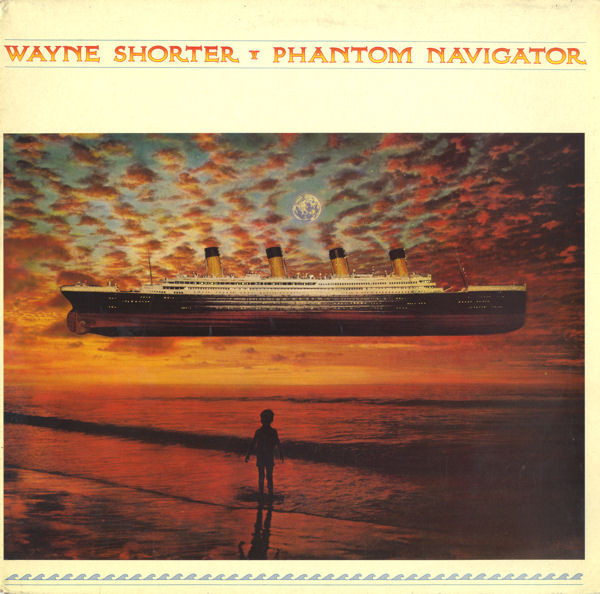
8. Wayne Shorter: Phantom Navigator (1988)

Cover artwork by Jean-Francois Podevin

wayne sh

7. Level 42: Level 42 (1981)

Cover artwork by Joy Barling Loyla

level

6. Japan: Oil On Canvas (1983)

Cover artwork by Frank Auerbach

japan

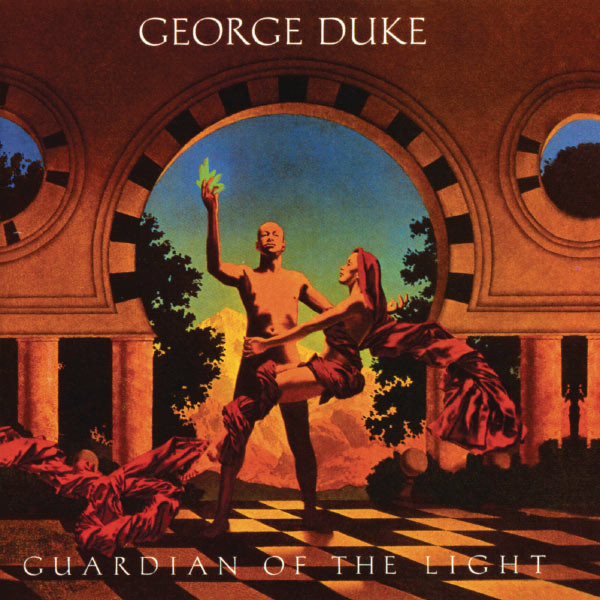
5. George Duke: Guardian Of The Light (1983)

Cover artwork: unidentified (anyone know?)

george

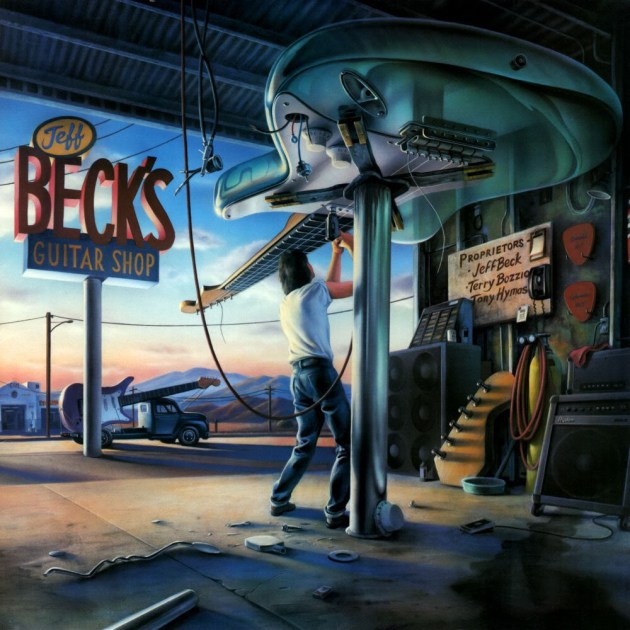
4. Jeff Beck’s Guitar Shop (1989)

Cover artwork by Mark Ryden

jeff-becks-guitar-shop-55b528bc7fc87

3. Peter Gabriel: 3 (1980)

Cover artwork/photography by Hipgnosis (Storm Thorgerson/Audrey Powell)

hs_PG3_UMGI_Vinyl-12_Gatefold_6mmSpine_OUT_RI_AUG10.indd

2. Talk Talk: The Colour Of Spring (1986)

Cover artwork by James Marsh

talk talk

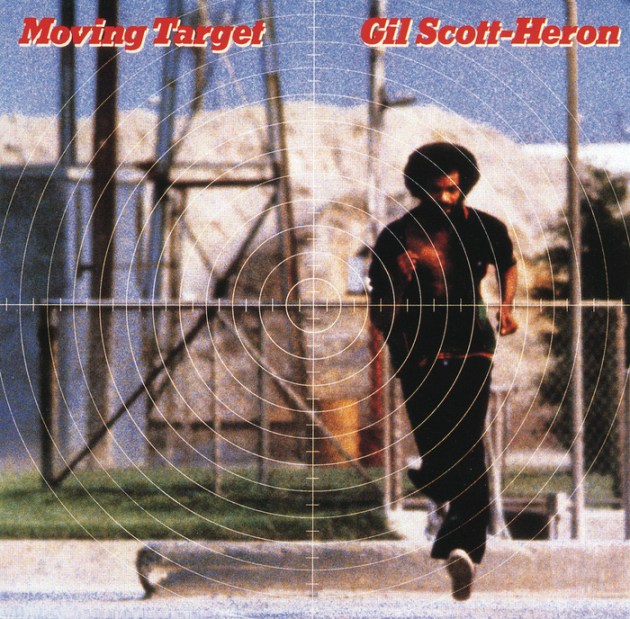
1. Gil Scott-Heron: Moving Target (1982)

Photography by John Ford, artwork by Donn Davenport

gil scott heron

Peter Gabriel: So 30 Years Old Today

gabriel

‘At the time of coming back, he had tremendous determination. He said do want to make it! I do want to succeed!” Instead of going along with the idea that he is different, special, unique, precious, So was about him saying, “F**k that! I’m going to allow myself to succeed.”’ Jill Gabriel, quoted in ‘Peter Gabriel’ by Spencer Bright

So was the Peter Gabriel album that put him – albeit very briefly – into The Big League, alongside the likes of Madonna, Michael Jackson, Phil Collins, Prince, Hall and Oates and Springsteen, leaving his ‘art-rock’ contemporaries (Laurie Anderson, Brian Eno, Peter Hammill, Robert Fripp) in the dust.

He opened himself up to mainstream success via more direct lyrics and music. And it worked a treat. So still sounds fantastic today; a near-perfect mix of art and commerce.

photo by Steven Toole

photo by Steven Toole

In interviews, Gabriel has described the ’83/’84’ period as a dark time in his life. He mixed and released an excellent live album and looked for solace in film soundtrack work, producing two fairly inconsequential tracks: ‘Walk Through The Fire’ from ‘Against All Odds’ and ‘Out Out’ from ‘Gremlins’.

Far more substantial was his soundtrack for Alan Parker’s ‘Birdy’, but, most importantly, it was the project that introduced him to So co-producer Daniel Lanois.

Gabriel later credited Lanois and his then wife Jill for steering him back towards more positive thoughts, and much more ‘up’ music and lyrics.

Gabriel came up with 20 new songs by early 1985. Lanois helped him whittle them down to 12, and then six months of pre-production began, focusing on song structures and arrangements. So was mainly recorded at Gabriel’s home studio, Ashcombe House near Bath.

Working at home was intended to save money on big studio fees and also speed up the creative process, but lyric-writing was still a big problem and a lack of words necessitated two missed release deadlines for So: 31st July 1985 and 14th December 1985.

Virgin were patient. Lanois once even nailed him into a back room to force him to come up with some lyrics – Gabriel was not amused, at least not for a few hours. ‘It is the most upset I’ve seen him at the studio,’ guitarist David Rhodes remarked. Lanois had made his point.

Musically, Gabriel very much leaned on tried-and-tested collaborators such as Rhodes and Tony Levin – it’s hard to imagine anyone else playing bass on So. He’s so much part of the music. Check out his ‘drumstick bass’ (later marketed as Funk Fingers!) on ‘Big Time’.

Joni Mitchell’s then husband Larry Klein also plays some lovely fretless on ‘Mercy Street’. French-African newcomer Manu Katche amazed everyone with his drumming, particularly on ‘That Voice Again’ and ‘In Your Eyes’. He had a new twist on Stewart Copeland’s style and also somehow found the time to fit occasional tom-tom flurries into his grooves too.

Migrant Mother by Dorothea Lange

Migrant Mother by Dorothea Lange

‘Red Rain’ opens with some resplendent Copeland hi-hat work, and ends with the kind of piano/vocal coda that Simple Minds excelled at – the influences were now flowing both ways.

‘Don’t Give Up’ was inspired by a BBC TV documentary about the effect of unemployment on British family life, and also the photography of Dorothea Lange, portraying dust-bowl conditions during the Great Depression.

‘Mercy Street’, dedicated to poet Anne Sexton, shows evidence of Lanois’ influence; its opening ambient textures resemble Brian Eno’s ‘Under Stars’ which Lanois co-produced.

Gabriel’s low-octave vocals apparently had to be recorded first thing in the morning for maximum deepness. The song’s Brazilian/African groove predates Paul Simon’s Graceland by six months or so.

‘We Do What We’re Told (Milgram’s 37)’, concerning social psychologist Stanley Milgram’s infamous experiments, was originally recorded for Melt in 1980. While musically very rich and dark (I always think of Kate Bush’s ‘Running Up That Hill’ when I hear that opening minor chord), lyrically it is possibly a little half-baked.

‘Big Time’ is Gabriel’s amusing, self-mocking, Randy Newmanesque satire on success and celebrity – ‘This drive for success is a basic part of human nature and my nature’, he later said.

Musically, it’s a potent mixture of driving Copeland drums, treated rhythm guitar, synth bass, quasi-industrial samples and some great Hammond organ by Simon Clark.

Another much rockier version – featuring Jerry Marotta on drums – was also recorded but scrapped just before the mastering stage.

‘Sledgehammer’ was the last song written and recorded for So. Ironically, it dislodged Genesis’s ‘Invisible Touch’ to become a US number one single in July 1986.

A catalogue of sexual innuendos, it’s one of the weirder hits of the 1980s. Its odd cheerfulness may come from the fact that it’s mainly in a major key, a rarity for an R’n’B-influenced track. David Rhodes’ rhythm guitar part is eccentric and the Farfisa organ bizarre.

The opening sampled bamboo flute was copied by hundreds of keyboard players across the UK (or at least a few in my school). The groundbreaking video for the song, directed by Stephen Johnson (who had used similar techniques for Talking Heads’ ‘Road To Nowhere’ clip), required 100 hours of Gabriel’s time.

Apparently Gabriel was obsessed with the album’s sequencing: he made up endless cassettes featuring just song endings/beginnings, testing all the different permutations.

He always wanted ‘In Your Eyes’ to close So, but was persuaded otherwise when told that its drums and bass wouldn’t hold up very well at the end of a long side of vinyl (though it’s hard to ‘hear’ it anywhere else but at the beginning of side two…). He finally got it where he wanted it on the definitive remastered version.

Gabriel’s only concession to the record company was to name the album something apart from ‘Peter Gabriel’. So seemed suitably off-the-cuff – ‘It had a nice shape but very little meaning’, he later said.

He also decided that a simple cover shot would better suit the directness of the music and lyrics than some of the more disturbing covers of albums past. So‘s design and packaging still look fantastic today.

The album topped the charts on both sides of the Atlantic and by summer 1987 had sold over 5 million copies worldwide. Gabriel promoted the album extensively before embarking on Amnesty’s Human Rights Now! with Sting, Tracy Chapman and Bruce Springsteen in 1988.

He had a lot more than music on his mind – he waited a full six years before releasing the official follow-up to So. The commercial assault had paid off but at what cost to his long-term creativity?

Good Lyrics Of The 1980s

Joni_Mitchell_2004It has to be said, it was a bit easier coming up with good ’80s lyrics than it was to come up with crap ones.

I could probably have chosen three or four crackers from many of the artists featured below, but space permits only one. Maybe it’s not surprising that it was a great decade for lyricists when it was surely one of the most ‘literary’ musical decades to date – it would have to be with people like Bob Dylan, Morrissey, Paddy McAloon, Andy Partridge, Green Gartside, Tracey Thorn, Lloyd Cole, Joni Mitchell, Peter Gabriel and Springsteen around.

So here’s just a sprinkling of my favourites from the ’80s. Let me know yours.

I love you/You pay my rent

PET SHOP BOYS: ‘Rent’


Brother in the codpiece/I’ve seen him on the TV/I think he likes his ladies all sweet and sugary/I’m partial to a pudding/But that’s for second course/The main meal and the hors d’oeuvres must be smothered in hot sauce’

THOMAS DOLBY: ‘Hot Sauce’ (lyrics by George Clinton)


I believe in love/I’ll believe in anything/That’s gonna get me what I want/And get me off my knees’

LLOYD COLE AND THE COMMOTIONS: ‘Forest Fire’


I want you/It’s the stupid details that my heart is breaking for/It’s the way your shoulders shake and what they’re shaking for’

ELVIS COSTELLO: ‘I Want You’


Hey Mikey/Whatever happened to the f***in’ “Duke Of Earl”?’

RANDY NEWMAN: ‘Mikey’s’


If you had that house, car, bottle, jar/Your lovers would look like movie stars’

JONI MITCHELL: ‘The Reoccurring Dream’


‘Lost my shape/Trying to act casual/Can’t stop/I might end up in the hospital’

TALKING HEADS: ‘Crosseyed And Painless’


‘Once there was an angel/An angel and some friends/Who flew around from song to song/Making up the ends’

DANNY WILSON: ‘Never Gonna Be The Same’


Burn down the disco/Hang the blessed DJ’

THE SMITHS: ‘Panic’


‘Now the moon’s gone to hell/And the sun’s riding high/I must bid you farewell/Every man has to die/But it’s written in the starlight/And every line in your palm/We are fools to make war/On our brothers in arms’

DIRE STRAITS: ‘Brothers In Arms’


Out on the road today/I saw a Deadhead sticker on a Cadillac/A little voice inside my head said/Don’t look back, you can never look back…’

DON HENLEY: ‘Boys Of Summer’


‘Hello Johnson/Your mother once gave me a lift back from school/There’s no reason to get so excited/
I’d been playing football with the youngsters/Johnson says don’t dramatise/And you can’t even spell salacious’

PREFAB SPROUT: ‘Horsechimes’


‘I repeat myself when under stress/I repeat myself when under stress/I repeat…’

KING CRIMSON: ‘Indiscipline’


‘Come back Mum and Dad/You’re growing apart/You know that I’m growing up sad/I need some attention/I shoot into the light’

PETER GABRIEL: ‘Family Snapshot’


‘People say that I’m no good/Painting pictures and carving wood/Be a rich man if I could/But the only job I do well is here on the farm/And it’s breaking my back’

XTC: ‘Love On A Farmboy’s Wages’


So long, child/It’s awful dark’

DAVID BOWIE: ‘When The Wind Blows’


I could have been someone/Well so could anyone’

THE POGUES/KIRSTY MACCOLL: ‘Fairytale Of New York’


‘It’s an 18 carat love affair/I don’t know which side I’m on/But my best friend John said not to care’

ASSOCIATES: ’18 CARAT LOVE AFFAIR’