Most fans of 1980s pop and rock will have come across the name Kevin Armstrong, guitarist with Iggy Pop, Morrissey, Sinead O’Connor, John Lydon, Propaganda, Tin Machine, Prefab Sprout, Thomas Dolby and Paul McCartney, and famously part of David Bowie’s band at Live Aid.
His enjoyable new memoir ‘Absolute Beginner’ is that rare thing – a book by a British session player who has borne witness to massive egos, occasional artistic triumphs and typical music biz disappointments, all the while trying to get a reasonable guitar sound.
But the book is anything but a polite/completist career overview – Armstrong knows where the bodies are buried and doesn’t hold back on salacious details. He’s also blatantly honest about his own perceived musical shortcomings and mental health issues.
Finally the book comes over as something like a cross between Giles Smith’s ‘Lost In Music’ and Guy Pratt’s ‘My Bass And Other Animals’, with just as many laughs as both.
We learn about his misspent youth in the relatively salubrious environs of Orpington, Kent, nurturing his increasing interest in the guitar and music of David Bowie, Yes, Zappa and Roxy Music (and ponders whether Eno’s squealing synths caused him some hearing loss issues when watching Roxy supporting Alice Cooper). There are superb passages about the power of listening to a great album while studying the sleeve and indulging in ‘mild hallucinogens’.
The punk era sees Armstrong squatting in Brixton, hanging out with The Slits and recording with Local Heroes (on Charlie Gillett’s record label) and The Passions. There’s a whole chapter on collaborating with Thomas Dolby, lots on laying down Steve McQueen with Prefab (fronted by the ‘emotionally fragile’ and ‘shy’ Paddy McAloon) and some hilarious stories about playing in Jonathan Ross’s house band for ‘The Last Resort’.
But the real meat and drink of the book is the fabulous section on Live Aid, particularly illuminating the strange realities of the music industry when he returns alone to his tiny West London flat soon after performing for two billion people. There are also fascinating, funny stories about recording ‘Absolute Beginners’ and ‘Dancing In The Street’.
His dealings with Bowie during the Tin Machine era are also as intriguing as you might expect (as is his story about being ‘let go’ before the release of that band’s debut album, also nixing the rumour that Bowie gave up booze a long time before 1989…), as are those with the mercurial McCartney, the superstitious, over-sensitive Morrissey and bizarre O’Connor.
There are many revelations too around touring with Iggy Pop, as well as some refreshingly honest opinions on some of his bandmates (especially – and surprisingly – drummer Gavin Harrison…) and a fascinating detour into joining a choir led by Eno.
But Armstrong saves most of his bile for his late entrée into the world of TV advertising: ‘Blind optimism and over-confidence drew me inexorably into the seedy and frightening world of production music…a world so steeped in bullshit and doublethink that it beggars belief’!
‘Absolute Beginner’ is one of the most enjoyable music memoirs movingtheriver has read over the last few years. Just when you think you know where it’s going, it delivers yet another zinger. It’s an absolute must for any fans of Bowie, Iggy, Dolby or Prefab, while offering the casual 1980s and 1990s music fan loads of tasty morsels.
It’s been a bit of a movingtheriver obsession over the past few weeks as summer finally kicks in and the album format makes a seasonal comeback.
You’re enjoying the music, hailing a ‘classic’ record and then…damn. It’s the track you always skip, the runt of the collection, the song that tarnishes a perfectly good album.
Maybe the band was ‘letting their hair down’ after a few pints in the pub down the road. Maybe it was the drummer/producer/bass player’s vanity track. Maybe it’s the overplayed hit. Maybe the album sequencing isn’t quite right. To be honest, often it’s just something irrational that you can’t quite put your finger on.
For whatever reason, here are movingtheriver’s almost perfect 1980s ‘pop’ albums, and the tracks that just don’t quite sit right:
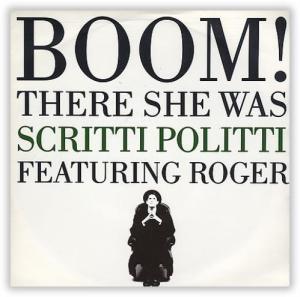
Scritti Politti: Provision (skipped track: ‘Boom! There She Was’)
Prefab Sprout: Steve McQueen (skipped track: ‘Horsin’ Around’)
It’s a question that has been obsessing your correspondent over the last few days – which music epitomises the 1980s?
If, in 500 years, someone demanded to hear a song that represented the decade, which piece would best encapsulate it? And is ‘1980s Music’ a genre?
A website called movingtheriver.com should be able to pin down what makes a quintessentially 1980s track, but it’s not easy. So let’s begin with a process of elimination.
A lot of 1980s music was influenced by previous genres – Motown, punk, glam, psych, prog, metal, disco, jazz/funk, singer/songwriter, folk, reggae, ’70s electronica, minimalism, funk, blues. So we need tracks that jettison those tropes.
Many bands used synths in a way that was influenced by 1970s pioneers Kraftwerk, Tangerine Dream and Giorgio Moroder (Japan, OMD, Pet Shop Boys, The Art Of Noise etc.), so wouldn’t qualify as uniquely 1980s. We’re after artists that used sequencers and synths in a more ‘progressive’/melodic way, mainly to aid songwriting.
Huge 1980s acts like Wham!, ABC, Madonna, Simply Red and Culture Club obviously tapped into Motown, R’n’B and Chic-style disco/funk. Eurythmics were inspired by everything from the Stones to Kraftwerk. So they won’t do.
Tina Turner, MJ, Genesis, Peter Gabriel, Bruce, Prince and Hall & Oates all blossomed in the 1970s, while Cyndi Lauper’s songs and style had elements of that decade too, as did many Goth acts. Production styles came and went, and of course there were common tropes like the gated snare drum and synth bass, but again they don’t particularly define the decade.
The sweet spot seems to be around 1984/1985. Musicians and songwriters were leaving behind post-punk, classic soul, blues and ‘rock’ (though of course all would return with a vengeance by the end of the decade) and forging a quintessentially 1980s sound.
I’d put forward the following as completely 1980s, born and bred in that decade, with no apparent antecedents from any well-worn styles (‘bluesy’ chord progressions, ‘folky’ singing) or particular era, with the possible exceptions of Sting and Associates (and of course one could have chosen some other tracks by these artists). In short, for better or worse, it’s pretty hard to work out their influences:
Though not a big hit on its original release, Propaganda’s 1985 album A Secret Wish only seems to grow in stature as the years pass.
It was arguably the last meaningful release on the ZTT label, spawning two UK top 40 singles. More importantly it was a sonic treat, full of grandeur and drama, one of the great pop albums of the 1980s.
The Dusseldorf-formed band made a couple of botched attempts to reunite – the 1234 album in 1990, a Martin Gore/Tim Simenon-assisted try in 1998, then a partial gathering at Trevor Horn’s charity gig at Wembley Arena in 2004.
But now they’re back as xPropaganda (who knows the legal machinations behind that moniker). Founding members Michael Mertens and Ralf Dorper are not around this time but vocalists/songwriters Claudia Brucken and Susanne Freytag are, alongside Secret Wish producer/guitarist Steve Lipson.
Excitingly their album The Heart Is Strange is also on the newly reignited ZTT (Horn is credited as ‘Advisor’), via Universal Music Catalogue.
My expectations were high but then were slightly dashed with the choice of ‘Don’t You Mess With Me’ as lead-off single/trailer. It’s easily the least interesting track on the album.
Lush, cinematic opener ‘The Night’ definitely evokes memory of A Secret Wish’s epic track one ‘Dream Within A Dream’, even if Terry Edwards’ muted trumpet is incongruously ‘jazzy’ as opposed to the resplendent playing (by whom? Guy Barker? Steve Sidwell?) on the 1985 track. And there are too many vocal melodies to choose from, none particularly intriguing.
Elsewhere there are better tunes and the odd appealing lyrical zinger. And if synths are your bag, these sounds – mostly courtesy of Pete Murray – are fantastic, sometimes lush and ominous, sometimes intricate and ingenious. It’s great headphone music.
But there’s not enough memorable Lipson lead guitar on The Heart Is Strange and the drum programming is a bit flat. Paging Steve Jansen. Best track? The enigmatic closer ‘Ribbons Of Steel’, a nearly ten-minute spoken-word rumination on the end of a relationship with hints of the Pet Shop Boys and Prefab’s I Trawl The Megahertz.
The Heart Is Strange is a solid B+. Good in places but must try harder. Too many mid-tempo songs. Certainly not in the league of the freaky A Secret Wish (a lack of Mertens may have a lot to do with that?) and without that album’s pristine mastering, depth of sound, harmonic intrigue and wacky guest appearances, but some decent new material to play live. Maybe next time they’ll let their hair down a bit – and hopefully get Mertens involved again.
Brucken and Freytag speak about The Heart Is Strange in this podcast.
And Stephen Lipson deconstructs A Secret Wish and xPropaganda here.
37. Bireli Lagrene: ‘Rue De Pierre Part 3’
A triumph of solo guitar, and the only acoustic solo in this list, Bireli stunned the cognoscenti with this track from his 1988 Steve Khan-produced album Foreign Affairs.
36. Bros: ‘Chocolate Box’ (Guitarist: Paul Gendler)
Yes, Bros… Gendler had been a fully-paid-up member of New Romantic nearly-men Modern Romance before becoming an in-demand player on the UK scene, and he enlivened this hit with a raunchy, nimble classic.
35. REO Speedwagon: ‘Keep On Loving You’ (Guitarist: Garry Richrath)
Unreconstructed, huge-toned, double-tracked solo which revels in being almost out-of-tune throughout. Its sheer, brilliant in-your-faceness always comes as somewhat of a shock.
34. George Benson: ‘Off Broadway’
Slick, tasty solo from a truly great player. The tune is a Rod Temperton-penned, post-disco beauty from Give Me The Night.
33. Killing Joke: ‘Love Like Blood’ (Guitarist: Geordie)
This is ‘just’ a melody, but it’s a great melody, escalating in volume and intensity.
32. Phil Upchurch: ‘Song For Lenny’ (Guitarists: Phil Upchurch/Lenny Breau)
A couple of superb solos from a great, totally forgotten 1984 Upchurch solo album Companions. Breau stuns with his array of false harmonics and jazzy runs, while Upchurch brings the blues feeling.
31. Frank Zappa: ‘Alien Orifice’
It’s nice to hear Frank blowing over a few changes rather than his usual one or two-chord vamps. And he really gets a nice ‘flowing’ thing going here, right in the middle of one of his densest compositions. Starts at around 1:32:
30. Cameo: ‘A Goodbye’ (Guitarist: Fred Wells)
From the classic album Single Life, this solo goes way over and beyond the call of duty for an ’80s soul ballad. But it’s mainly included for its brilliant final flourish, spitting notes out like John McLaughlin. Who is Fred Wells and where is he now?
29. Rush: ‘YYZ’ (Guitarist: Alex Lifeson)
Hard to do without this flowing, creamy, Strat-toned classic on one of the great rock instrumentals of all time (though inexplicably it lost out to The Police’s ‘Behind My Camel’ at the Grammies…).
28. Kevin Eubanks: ‘That’s What Friends Are For’
A real hidden gem from the almost impossible-to-find Face To Face album, Eubanks lays down a short but beautifully-structured solo on a cool cover version.
27. Steve Miller Band: ‘Abracadabra’
Good fun and totally unpredictable. Also notable for its lovely Spanish-style flurry of triplets in its last two bars.
26. Starship: ‘Nothing’s Gonna Stop Us Now’ (Guitarist: Corrado Rustici)
Cheesy? Maybe a bit, but who cares when it’s this well-structured and performed. Add a great tone, nice string-bending and a lovely phrase at the end and you’ve got a classic.
25. Queen: The Invisible Man (Brian May)
May played a lot of great solos in the late 1980s, mostly on other people’s records (Holly Johnson, Fuzzbox, Living In A Box etc) but this one was just a kind of ‘play as many notes as possible in eight bars’ solo, and it’s a killer.
24. Lee Ritenour: ‘Mr Briefcase’
Rit found the sweet spot on his Ibanez many times in the early ’80s, no more so than on this single that kicked off the classic Rit album. The solo also sounds double-tracked too, no mean feat considering the crazy bunch of 32nd notes at the end of bar 10.
23. Michael Jackson: ‘Wanna Be Startin’ Something’ (Guitarist: David Williams)
Not so much a solo as a suddenly-foregrounded riff, Williams became one of the most in-demand US session players after laying down this classic.
22. Pat Metheny: ‘Yolanda You Learn’
A marvellous, ‘singing’ guitar-synth solo from the First Circle album, rhythmically interesting and reflecting a strong Sonny Rollins influence, also closing with a cool quote from the standard ‘My One And Only Love’.
21. Frank Zappa: ‘Sharleena’ (Guitarist: Dweezil Zappa)
Frank’s son was apparently just 14 years old when he laid down this absurdly fluid cameo.
20. Eric Clapton: ‘Bad Love’
Nice to hear Eric pushing himself for once, delivering a striking solo played right at the top of the neck, demonstrating a mastery of string-bending and precise fingering.
19. Sadao Watanabe: ‘Road Song’ (Guitarist: Carlos Rios)
A classic rock/fusion solo, all the more impressive because it’s apparently double-tracked, from the album Maisha. Rios is still one of the most in-demand session players in Los Angeles (and one of the few leftie fusion players…), probably best known for his work with Gino Vannelli, Chick Corea and Lionel Richie.
18. Prince: ‘Batdance’
It’s the unapologetic volume and raucous tone, almost distorting it’s so hot in the mix.
17. David Sanborn: ‘Let’s Just Say Goodbye’ (Guitarist: Buzz Feiten)
Feiten seems a weirdly unrecognised figure in the guitar fraternity, but he contributed some great stuff to Sanborn’s seminal Voyeur album including this tasty break over a killer Marcus Miller/Steve Gadd groove. There are some lovely moments when Sanborn’s sax cuts in to augment his solo.
16. Paul Simon: ‘Allergies’ (Guitarist: Al Di Meola)
I love hearing ‘jazz’ musicians turning up on ‘pop’ records, and this is a classic of its kind featuring all of Al’s trademark licks in one short, tasty burst. It’s a lot more fun than listening to his solo albums, anyway…
15. Manhattan Transfer: ‘Twilight Zone’ (Guitarist: Jay Graydon)
At a time when he was getting much more into the production game, Graydon still found time to toss off a double-tracked showstopper on this hit single. All in a day’s work for the session genius who of course unleashed the famous solo on Steely Dan’s ‘Peg’. Speaking of which…
14. Steely Dan: ‘Glamour Profession’ (Guitarist: Steve Khan)
A mini masterpiece of precision and invention. Khan is given his head and takes the classic tune OUT in the last three minutes. When the chord changes, he changes.
13. King Crimson: ‘Elephant Talk’ (Guitarists: Adrian Belew/Robert Fripp)
Two great solos for the price of one on this Discipline opener. Fripp supplies the opening horn-like curio, then Belew adds some fire and a bit of famous elephantosity for good measure.
12. Living Colour: ‘Funny Vibe’ (Guitarist: Vernon Reid)
A classic modern blues solo from a modern master, adding excitement and elan to an already burning piece, helped along by Will Calhoun’s cajoling kit work.
11. Steely Dan: ‘Third World Man’ (Guitarist: Larry Carlton)
Another day, another classic Steely guitar solo, this one recorded in 1977 during the Aja sessions but not unleashed for another three years. Again, double-tracked for lasting power, featuring a superb mastery of tone and melody.
10. Wendy & Lisa: ‘Waterfall’ (Guitarist: Wendy Melvoin)
Sadly this is my only female entry in the list (more suggestions please), but it’s a fuzz-toned, anthemic treat, with shades of Santana and McLaughlin.
9. The Police: ‘Driven To Tears’ (Guitarist: Andy Summers)
It’s the random, off-the-cuffness that appeals on this one. Summers sounds a lot more p*ssed off than usual, possibly reeling from yet another Sting jibe.
8. Steve Vai: ‘Call It Sleep’
Just a superb guitar composition from top to tail, but the moment at 1:22 when he stomps on the distortion pedal and rips it up is a great moment of ’80s music.
7. Propaganda: ‘Dream Within A Dream’ (Guitarist: Stephen Lipson)
Lipson modestly provided three or four extremely memorable guitar features during his golden ZTT period (not least Frankie’s ‘Two Tribes’), but this one gets extra points for its infinite reverb and a dynamite fuzztone.
6. Orange Juice: ‘Rip It Up’ (Guitarist: Edwyn Collins)
Just a funny two-fingers-up to the well-made solo, and also a fond homage to Pete Shelley’s famous break on Buzzcock’s ‘Boredom’.
5. Frank Gambale: ‘Credit Reference Blues’
Just wind him and watch him go. It starts slowly, almost wistfully, but then becomes a fire-breathing classic. Still scary after all these years.
4. Dire Straits: ‘Romeo And Juliet’ (Guitarist: Mark Knopfler)
The closing solo is just an oasis of choice phrases and unique tones.
3. Van Halen: ‘One Foot Out The Door’ (Guitarist: Eddie Van Halen)
Of course ‘Beat It’ is the industry standard, and possibly the greatest guitar solo of all time, but I’m going for this curio which closes out the oft-forgotten Fair Warning album. He just blows brilliantly over the changes with a gorgeous tone.
2. Jeff Beck: People Get Ready
The second and last solo is the one, a feast of Jeff-isms. A rare good bit from the rather poor Flash album.
1. Stanley Clarke: ‘Stories To Tell’ (Guitarist: Allan Holdsworth)
No chucking out any old solo for our Allan – this is a brief but fully-formed, perfectly structured, wide-interval classic that is easily the best thing about the tune. He seems to get a bit ‘lost’ in the middle, but then regroups for a stunning closing section over the rapid chord changes.
To some, the advent of the 12” single in the early ’80s was musical sacrilege; to others it was a new dawn, a chance to hear your favourite song in widescreen format, expanded into an epic and not bound by radio conventions.
The 12” came about at an exciting time in music when a few things were colliding: the cult of the ‘star’ producer, club culture, sampling, dub techniques, electronic music moving into the mainstream and an ‘anything goes’ post-punk ethos.
Talented sound designers such as Trevor Horn, Gary Langan, Shep Pettibone, John Potoker, Francois Kevorkian, Alex Sadkin and Steven Stanley were in the right place at the right time. And it probably helped that sales of 12” singles contributed to weekly chart positions, so the stakes were high.
So let’s have a look at some key artefacts of the 12” revolution, a great time in music when anything – well, almost anything – went. A few of these I now prefer to the originals.
21. Paul Young: ‘I’m Gonna Tear Your Playhouse Down’ (1985)
Laurie Latham’s completely mad mix seems entirely designed to annoy the neighbours. A cacophony of metal guitars, Pino Palladino’s floor-shaking, P-funk-influenced bass and bizarre samples. And is that a jazzy riveted cymbal slinking into the mix from time to time?
20. A Guy Called Gerald: ‘Voodoo Ray’ (1989)
A timeless collection of house music tropes which doesn’t ever seem to date. Simplicity is the key, with subtly-shifting riffs.
19. Freeez: ‘Southern Freeez’ (Slipstream mix) (1982)
This one seems impossible to find on the internet or any other compilation album apart from the marvellous Slipstream 2-LP set which came out on Beggars Banquet in 1982. It’s a feast for the eardrums with gorgeous, spacey delays and twinkling Moog lines sprinkled into the mix.
18. Yes: ‘Owner Of A Lonely Heart’ (1983)
Remixer Gary Langan skillfully juggles of all this classic track’s trademark features: Trevor Rabin’s chiming guitar figure, the ethereal backing vocals and those crazy samples. Plus you can really hear Alan White’s drums here – never a chore.
17. Joni Mitchell: ‘Shiny Toys’ (1985)
Joni’s a name you probably wouldn’t expect to see here but remixer Francois Kevorkian had great raw materials to play with – Thomas Dolby’s dub-style treatments, Mike Landau’s lush rhythm guitar, Vinnie Colaiuta’s killer drums and all the silly vocal overdubs.
16. ABC: ‘Poison Arrow’ (1982)
Trevor Horn ups the ante with a cool, extended lounge-jazz intro and lots of little musical motifs, a new bass part and some new guitar solos.
15. Michael Jackson: ‘PYT’ (2017)
I can’t resist including this recent discovery – someone has somehow got hold of the Thriller masters and put together a real classic. It’s even funkier than the original, if that’s possible.
14. Madonna: ‘Open Your Heart (Maxi Extended Version)’ (1986)
Steve Thompson And Michael Barbiero’s exciting mash-up of Motorik sequencers, Jonathan Moffett’s sick drums and Madonna’s strident vocals, all adding up to an ‘I Feel Love’ for the 1980s.
13. Phil Collins/Philip Bailey: ‘Easy Lover’ (1985)
Mixing engineer John Potoker cut his teeth working with Miles Davis and Steely Dan, and his sonic mastery shows through with this stunning reimagining of a somewhat corny single, bringing the originally-submerged drum machine right to the fore and adding loads of top-end. His nickname wasn’t ‘Tokes’ for nothing…
12. Scritti Politti: ‘Hypnotize’ (1985)
Gary Langan was at the controls again for this stunning collision of ’50s B-Movie voices, swooning synths, rhythm guitars and bangin’ machine beats. The only thing missing is some serious low-end.
11. Grandmaster Flash/Melle Mel: ‘White Lines (Don’t Do It)’ (1984)
Sylvia Robinson arguably laid down the groundwork for all future 12” singles with this 1984 classic.
10. Prince & The Revolution: ‘Mountains’ (1986)
If you – like me – are always frustrated when this track fades out on the album/single version, have no fear because this remix carries on for another six minutes in the same vein, and turns into one of the sickest grooves Prince ever committed to vinyl.
9. Peter Gabriel: ‘Sledgehammer’ (1986)
Another entry helmed by John ‘Tokes’ Potoker, this one boosts the top-end again, adds some scary reverbs and focuses on David Rhodes’ guitar, Gabriel’s piano/vocal ad-libs and Manu Katche’s drums to superb effect. I now prefer this version…
8. Eric B & Rakim: ‘Paid In Full (Seven Minutes Of Madness Mix)’ (1988)
Coldcut put together this sonic feast, one of the most sampled 12”s of all time. You’ve probably heard almost everything on this remix 100 times on other tracks.
7. Thompson Twins: ‘Lies’ (1983)
Alex Sadkin brings his Compass Point mastery to this remix, adding a real drummer (Sly Dunbar?) and bass player, and pushing the sequencers and percussion right to the fore.
6. Grace Jones: ‘Slave To The Rhythm’ (1985)
‘Pull Up To The Bumper’ is possibly the more artful Grace remix, but this is included for its irresistible groove, and the fact that I always want the original single to go on for twice as long as it does. Also I love the ‘false’ ending and off-stage shout (Horn?) at 3:40.
5. Donna Summer: ‘Love Is In Control (Dance Version)’ (1982)
You could hardly go wrong with Quincy Jones and Bruce Swedien at the controls, but this remix just brings out the sheer luxurious beauty of this single, and various sections are repeated and amplified to superb effect.
4. Will Powers: ‘Adventures In Success (Dub)’ (1983)
Chris Blackwell’s protegé Steven Stanley was in charge of this fascinating dub, completely dispensing with Lynn Goldsmith’s vocals and delaying the reveal of Sting’s bass for as long as possible.
3. Propaganda: ‘Duel’ (1985)
Included mainly for Steve Lipson’s beatific long guitar solo during the outro, and the fact that it sounds like it could go on forever…
2. Paul Hardcastle: ’19 (Destruction Mix)’ (1985)
A chilling remix which brings out a little more detail of the single version, adding more spoken-word excerpts from the ‘Vietnam Requiem’ documentary and lengthening the funky drum breakdowns.
1. Frankie Goes To Hollywood: ‘Rage Hard’ (1986)
Stephen Lipson and Paul Morley created this insane confection, a kind of Young Person’s Guide To The 12”, featuring Pamela Stephenson introducing all the clichés of the genre, Viv Stanshall-style. Only ZTT can do this. (It seems sacrilege to leave Frankie’s ‘Two Tribes (Annihilation)’ out, but this gets the nod for sheer balls).
ZTT Records – under the auspices of Trevor Horn – really used the remix format.
No throwaway, rush-released projects for them. Their remixes were petri dishes for sonic experiments and situationist pranks, many worthwhile and innovative.
And of course several remix albums were released on ZTT – Grace Jones’ Slave To The Rhythm was essentially one song done eight different ways, and there was also a whole Frankie Goes To Hollywood LP dedicated to ‘Two Tribes’ remixes.
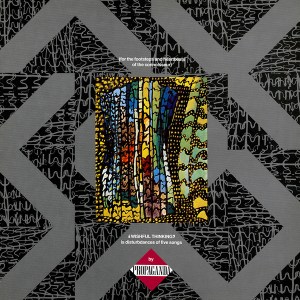
But maybe a lesser-known example is Propaganda’s Wishful Thinking, a reworking of the Düsseldorf unit’s seminal 1985 album A Secret Wish, originally produced by Stephen Lipson (with one track – ‘Dr Mabuse’ – helmed by Horn). A Secret Wish’s stock seems to keep rising year after year, gaining more fans and sounding better than ever. But Wishful Thinking is a weird project, to say the least.
Co-remixer (alongside former tape op Bob Kraushaar) Paul Morley’s absurd liner notes quote Goethe and boast that the album is the result of ’39 studio hours’, which, by ZTT’s painstaking standards, doesn’t actually sound like much.
But it’s a thrilling, epic collection just the same, regurgitating many of the original album’s sonic motifs but in a different order and a different place on the stereo spectrum. ‘Machined’ reimagines ‘P-Machinery’ as a mid-tempo minimalist piece, featuring mainly Claudia Brucken’s vocals and gentle drums.
‘Jewelled’ fuses the two versions of ‘Duel’ from the original album, mixing her ‘angry’ vocals with the backing from the ‘pop’ version. It’s pretty funny and genuinely surreal. Hidden elements embedded in the original mix are subtly revealed, like Lipson’s chiming guitars on ‘Laughing’. ‘Loving’ exposes and amplifies Andy Richards’ gorgeous piano and synth from ‘The Murder Of Love’, finally revealing it as the fantastic pop song it is.
The two versions of ‘Dr Mabuse’ bring out Horn’s genius and natural flair for the dynamic, showcasing not one but two brilliant bass vamps and a whole host of other sonic delights (thrillingly, one version is used in the absurd opening credits of John Hughes’s 1987 movie ‘Some Kind Of Wonderful’).
But possibly the best track on Wishful Thinking is the closing ‘Thought’, an excerpt of the band’s version of Throbbing Gristle’s ‘Discipline’. All in all, it’s an epic, exciting hour of music, and a real one-off. For anyone still fascinated by A Secret Wish, as this writer is, it’s required listening. The band probably hated it, though Brucken did donate one of her paintings for use on the cover (but then she was married to Morley at the time…).
Which ‘rock’ artists are the most likely to be subjects of not one but a series of biographies? The Beatles, The Stones, Dylan?
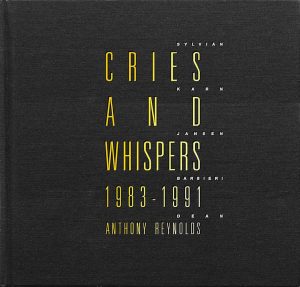
Japan are possibly unlikely recipients of such a legacy, but Anthony Reynolds’ superb new ‘Cries And Whispers’ – carrying on from where ‘A Foreign Place’ left off – holds the attention with ease.
His luxuriously-appointed new book takes an indepth look at all the protagonists’ (Sylvian, Steve Jansen, Mick Karn, Richard Barbieri) careers between 1983 and 1991, a mouth-watering prospect when you realise how scant the serious coverage of these groundbreaking musicians really is, Martin Power’s half-decent 1998 biography of Sylvian aside.
Here you get rigorous research, rare photos and unexpectedly candid interviews from producers, engineers, designers, record company execs, hangers-on and of course the musicians themselves.
There are fascinating glimpses under the ’80s pop bonnet, with details of record company correspondence, press releases, tour itineraries/diaries and testimonies from session players. There’s the odd unqualified muso revelation (did Mark King really get asked to play bass on ‘Pulling Punches’?!) and tasty gossip a-plenty, hardly surprising when you consider that the book covers the troubled Rain Tree Crow project.
In the main, Reynolds wisely keeps musical analysis to a minimum, letting the facts and musicians speak for themselves, and he also – admirably – is as interested in the murkier corners of Sylvian’s ’80s work (the one-off ‘Pop Song’ single, his involvement with Propaganda’s A Secret Wish album) as he is with the better-known stuff. Indeed, all the chapters on Sylvian’s solo work are terrific, particularly the lengthy portrait of his punishing ‘In Praise Of Shamans’ 1988 world tour. The Rain Tree Crow section is also gripping.
There are minor gripes here and there: some quotes from relatively peripheral figures – clearly cut and pasted from email correspondence – could do with trimming, and does anyone really want such a lengthy analysis of Dalis Car or The Dolphin Brothers? But even these longeurs have their fascinating moments.
This writer almost read ‘Cries And Whispers’ in one sitting, passing it from desk to sofa to dinner table to bath to bed, and you may well do the same. It’s another fine achievement by Reynolds and another classic music book to boot. We eagerly await the next instalment.
We’ve briefly looked at crap cover versions before (though doubtless there’ll be more to come), but how about good ones from the 1980s?
It was quite easy coming up with a fairly long list. I guess the ultimate test is that at the time most people (including me) didn’t know – or didn’t care – that they were cover versions.
There wasn’t a great deal of looking back in this golden period for pop.
But it did seem as if a lot of ’80s acts had the magic touch, or at least a total lack of fear, making almost everything sound like their own. Punk probably had quite a lot to do with that.
Some of the following choices get in for sheer weirdness but most are genuine artistic achievements. Recurring themes? The Beatles, Motown, Otis Redding. Probably not too much of a surprise there. And 1981 seems a particularly good year for covers.
Anyway, enough of my yakkin’. Let the countdown commence…
33. Bow Wow Wow: ‘I Want Candy’ (1982)
32. David Bowie: ‘Criminal World’ (1983)
31. Ry Cooder: ’13 Question Method’ (1987)
Ry’s brilliant solo take on Chuck Berry from the Get Rhythm album.
30. Propaganda: ‘Sorry For Laughing’ (1985)
The Dusseldorf pop mavericks take on Josef K’s post-punk curio (apparently at Paul Morley’s urging) to produce a sweeping, majestic synth-pop classic.
29. Joan Jett & The Blackhearts: ‘Little Drummer Boy’ (1981)
28. Living Colour: ‘Memories Can’t Wait’ (1988)
27. Sting: ‘Little Wing’ (1987)
26. Randy Crawford/Yellowjackets: ‘Imagine’ (1981)
Who knew this would work? Sensitive and imaginative reading of the Lennon classic, with a classic Robben Ford guitar solo.
25. Lee Ritenour: ‘(You Caught Me) Smilin” (1981)
Gorgeous West-Coast version of Sly Stone’s pop/funk opus. Surely one of the most unlikely covers of the decade, but it works a treat.
24. Luther Vandross: ‘A House Is Not A Home’ (1982)
23. John Martyn: ‘Johnny Too Bad’ (1980)
Originally a reggae track by The Slickers and first released on ‘The Harder They Come’ soundtrack in 1972, Martyn and drummer Phil Collins rearranged it and added some lyrics. It featured on John’s fantastic Grace And Danger album.
22. Soft Cell: ‘Tainted Love’ (1981)
Cracking version of Gloria Jones’ ’60s Northern Soul classic (written by Ed Cobb). A hit all over the world, with pleasingly remedial synth arrangement, instantly recognisable soundworld and classic intro.
21. Grace Jones: ‘Use Me’ (1981)
The Nightclubbing album featured a veritable smorgasbord of good cover versions, but this take on Bill Withers scores particularly highly for originality.
20. The Flying Lizards: ‘Sex Machine’ (1981)
19. The Replacements: ‘Cruela De Vil’ (1988)
From the brilliant Hal Willner-helmed Disney tribute album Stay Awake, you’d have been a brave punter to bet a dime on this one working, but work it does.
18. Quincy Jones: ‘Ai No Corrida’ (1981)
17. Donald Fagen: ‘Ruby Baby’ (1982)
16. Stanley Clarke: ‘Born In The USA’ (1985)
Who knows, maybe this could have provided Stanley with a novelty hit if CBS had been quicker off the mark. He references John Coltrane’s ‘A Love Supreme’ in the intro while Rayford Griffin lays down seismic grooves and a funny old-school rap.
15. The Power Station: ‘Get It On’ (1985)
‘If cocaine was a sound…’, as a YouTube wag described it. This near-hysterical rave-up is mainly the sound of a fun late-night jam (Tony Thompson’s drumming being particularly notable). Also check out guitarist Andy Taylor’s little ode to Talking Heads’ ‘Burning Down The House’ throughout.
14. Deborah And The Puerto Ricans: ‘Respect’ (1981)
A one-off solo single from The Flying Lizards’ singer, this Dennis Bovell-produced curio missed the charts but remains a fascinating post-punk artefact.
13. Roxy Music: ‘In The Midnight Hour’ (1980)
Roxy’s first cover version presumably raised some eyebrows but the lads pull it off with some aplomb, aided by Allan Schwartzberg’s tough NYC drum groove – and the fact that Bryan Ferry can’t resist adding some typical weirdness in the first 20 seconds.
12. Ringo Starr & Herb Alpert: ‘When You Wish Upon A Star’ (1988)
Another once-heard-never-forgotten cracker from the aforementioned Stay Awake collection, the album version is preceded by a very menacing Ken Nordine spoken-word intro.
11. Japan: ‘Ain’t That Peculiar’ (1980)
David Sylvian probably hates this but no matter. It’s hard to think of another band pulling it off. Ominous synthscapes from Richard Barbieri, a nice recorder solo by Mick Karn and brilliant ‘where’s-one?’ beat from Steve Jansen.
10. Everything But The Girl: ‘I Don’t Want To Talk About It’ (1988)
It definitely divides opinion, but certainly fits the ‘sounds like they wrote it’ criterion.
9. Bananarama & Fun Boy Three: ‘Really Saying Something’ (1982)
Penned by Motown songsmiths Norman Whitfield, Micky Stevenson and Edward Holland Jr and first performed by The Velvelettes in 1964, it’s hard not to smile when this comes on the radio. I love the way the ladies pronounce ‘strutting’.
8. David Bowie: ‘Kingdom Come’ (1980)
The Dame’s magnificent take on a little-known track from Tom Verlaine’s 1978 debut album.
7. UB40: ‘Red Red Wine’ (1983)
No apologies for including this Neil Diamond-penned perennial. Great bassline, nice groove, lovely Ali Campbell vocal performance.
6. Phil Collins: ‘Tomorrow Never Knows’ (1981)
Phil closed his Face Value album with this oft-forgotten corker, featuring a classic John Giblin bassline (later cribbed by Pearl Jam for the opening of their ‘Once’) and cool Shankar violin.
5. Robert Palmer: ‘Not A Second Time’ (1980)
Robert adds some New Wave grit to this Lennon-penned rocker, and his singing has rarely been better.
4. Siouxsie And The Banshees: ‘Dear Prudence’ (1983)
3. Joan Jett & The Blackhearts: ‘I Love Rock And Roll’ (1982)
First recorded by The Arrows in 1975, this is simply one of the great singles of the 1980s and a huge hit to boot.
2. Hue & Cry: ‘The Man With The Child In His Eyes’ (1988)
It shouldn’t work but it does, courtesy of singer Pat Kane’s excellent tone and phrasing. His trademark ‘na-na-na-na’s help too. I wonder what Kate thought of it.
1. Blondie: ‘The Tide Is High’ (1980)
Written by reggae legend John Holt and first performed by The Paragons in 1966, this was an inspired – if somewhat cheesy – choice for the band. It’s mainly included here for Debbie Harry’s delightfully off-the-cuff vocal, sounding like her first crack at the song.
What a treat to watch a special live edition of ‘The Old Grey Whistle Test’ on BBC Four the other night.
The excellent Bob Harris returned to present – but where was Annie Nightingale? We saw a bit of her in her ’80s presenting pomp, but sadly she wasn’t in the studio.
The special reminisced unashamedly about a time when the musicians ran the music biz, and also documented the fascinating history of music TV with an interesting mix of guests (Joan Armatrading, Toyah, Chris Difford, Ian Anderson, Dave Stewart, Danny Baker) and live performances (Kiki Dee, Gary Numan, Albert Lee, Peter Frampton, Richard Thompson). Not exactly a cutting-edge, youthful lineup, but the musicianship was at an exceptionally high level.
Alongside ‘The Tube’, ‘Whistle Test’ was THE music show to watch in the mid-’80s, aided by some very agreeable presenters such as Nightingale, Andy Kershaw, Richard Skinner, David Hepworth, Ro Newton and Mark Ellen.
The only real caveat was that – as Richard Williams pointed out during the special – the show possibly didn’t feature enough black artists. But it provided me with some formative musical memories – here are some bits from the ’80s incarnation that lodged in my brain (most unfortunately with dodgy sound/picture quality):
8. The Eurythmics: ‘Never Gonna Cry Again’ (1981)
Maybe a less than brilliant song but Annie’s vocals and stage presence are spellbinding. And I like the flute interlude. Also look out for an amusing cameo from Holger Czukay, who creeps onstage (to Annie’s annoyance?) like Banquo’s ghost.
7. Prefab Sprout: ‘When Love Breaks Down’ (1985)
One of the first things I saw on the show. A tender reading of a classic song.
6. Joni Mitchell Special (1985)
Fascinating mini feature about Joni’s painting, ostensibly to promote her album Dog Eat Dog.
5. It Bites: ‘Calling All The Heroes’ (1986)
One that has only come to light recently, but I would have been blown away by it had I seen it at the time. A special mention for man-of-the-match John Beck on keys.
4. Propaganda: ‘The Murder Of Love’ (1985)
The ex-Simple Minds rhythm section (Derek Forbes and Brian McGee) are cooking on this ZTT classic, as is Bowie/Iggy/Prefab guitarist Kevin Armstrong.
3. PiL: Home/Round (1986)
Chiefly remembered for a great two-guitar frontline (John McGeoch and Lu Edmonds) but I was also fascinated by John Lydon’s red headphones and suit.
2. Peter Gabriel So Special (1986)
One of the more illuminating interviews about So plus an interesting solo version of ‘Red Rain’.
1. King Crimson: ‘Indiscipline’ (1981)
Another corker that’s come to light recently, unfortunately shorn of its witty Annie Nightingale intro here. Pity poor Adrian Belew – Fripp’s gaze hardly moves from him throughout.

 Most fans of 1980s pop and rock will have come across the name Kevin Armstrong, guitarist with Iggy Pop, Morrissey, Sinead O’Connor, John Lydon, Propaganda, Tin Machine, Prefab Sprout, Thomas Dolby and Paul McCartney, and famously part of David Bowie’s band at Live Aid.
 It’s been a bit of a movingtheriver obsession over the past few weeks as summer finally kicks in and the album format makes a seasonal comeback.
 It’s a question that has been obsessing your correspondent over the last few days – which music epitomises the 1980s?

 Which ‘rock’ artists are the most likely to be subjects of not one but a series of biographies? The Beatles, The Stones, Dylan?
  We’ve briefly looked at crap cover versions
  What a treat to watch a special live edition of ‘The Old Grey Whistle Test’ on BBC Four the other night.
  movingtheriver.com