Essential 1980s Jazz/Rock Albums (Part 1)

1980s jazz/rock generally gets the side-eye these days.

But it wasn’t all the Chick Corea Elektric Band prancing around the stage in tracksuits or pitiful WAVE-style smooth jazz.

The 1970s jazz/rock pioneers were mostly going strong and if some were too tempted by synths and drum machines, the best music was made by sticking pretty rigorously to the tried-and-tested real drums/bass/guitar/keys lineup favoured by Miles, Weather Report, Return To Forever et al.

So here’s a selection of 1980s jazz/rock albums that have consistently gripped movingtheriver, most of which he queued up to buy at the HMV or Virgin Megastore, or found in an Our Price bargain bin. (These are not proggy or funky. So no Herbie, Brecker Brothers, David Sanborn or David Torn, but there are elements of R’n’B/Latin/soul/whatever mixed in with the jazz).

Bireli Lagrene: Foreign Affairs (1988)
Just 21 years old when he recorded it with producer Steve Khan, the French guitarist’s second Blue Note album is a cohesive gem and massive improvement on the debut, with terrific contributions from keyboardist Koono and drummer Dennis Chambers.

Ornette Coleman: Virgin Beauty (1988)
One of the most ‘accessible’ albums of the master’s career, with memorable melodies, a brilliantly expressive bassist (Al McDowell) and some decidedly odd guest appearances from Jerry Garcia.

Tribal Tech (Scott Henderson/Gary Willis): Nomad (1988)
Recorded in April 1988 but not released until early 1990, guitarists were rightly wowed by Henderson’s brilliance, a mixture of Michael Brecker, Allan Holdsworth and Stevie Ray Vaughan, while the rhythm section is groovy and propulsive and both Henderson and Willis’s compositions are excellent. And ‘Tunnel Vision’ may feature the perfect guitar solo…

John McLaughlin: Mahavishnu (1984)
OK there are some question marks in the keyboard and sax departments, and a few mediocre tracks, but Billy Cobham has rarely sounded better and John contributes three or four classic compositions and a few brilliant solos to this reunion album of sorts.

Marc Johnson’s Bass Desires: Second Sight (1987)
Wonderful interplay between guitarists John Scofield and Bill Frisell, plus some classic compositions including Scofield’s surf-rock-meets-jazz ‘Twister’, Frisell’s Monk-like ‘1951’ and Johnson’s moving ‘Hymn For Her’.

Larry Carlton: Last Nite (1987)
Guitarists of all stripes were blown away by Carlton’s playing in the 1980s, and here’s the best evidence, captured live at LA’s Baked Potato club with Alex Acuna, Abe Laboriel and JR Robinson.

Human Chain: Cashin’ In (1988)
This Brit jazz/rock classic, released on EG Records, had elements of the Canterbury sound, West Coast cool jazz and 1980s Weather Report, featuring Django Bates’ fantastic keys and French horn and some weirdly impressive guitar and fretless bass from Stuart Hall (who he?).

Hiram Bullock: Give It What U Got (1988)
All the fun of the fair from this gifted but troubled guitarist: raunchy funk/rock, instrumental Steely Dan, Brecker Brothers horns, classic fusion and an Al Jarreau guest appearance on a Sam Cooke tune, but all shot through with jazz chords and Hiram’s lyrical playing.

Ronald Shannon Jackson: Mandance (1982)
Ornette-style harmolodics and Mingus-like ensemble work meet NYC punk-jazz on the drummer’s intriguing and powerful album, recorded live in the studio, featuring future Living Colour axeman Vernon Reid.

Weather Report: Sportin’ Life (1985)
It was a toss-up between this and Night Passage, both classics, but this gets the nod courtesy of the newly-minted rhythm section of Omar Hakim and Victor Bailey, plus a few classic Wayne Shorter tunes including ‘Face On The Barroom Floor’ which reportedly Joni Mitchell was particularly smitten by.

Wayne Shorter: Atlantis (1985)
Wayne again, fronting this fascinating, complex song-cycle featuring Alex Acuna on drums and Joni’s husband Larry Klein on bass. Takes some time to digest, but like a good wine gets better every year.

Allan Holdsworth: Secrets (1989)
A toss-up between this and Metal Fatigue, this gets in because of his delicious guitar tone and the inspired contributions of drummer Vinnie Colaiuta – ‘City Nights’, ‘Spokes’, ‘Peril Premonition’ and ‘Joshua’ are musical landmarks. Fiery, exciting, unmissable.

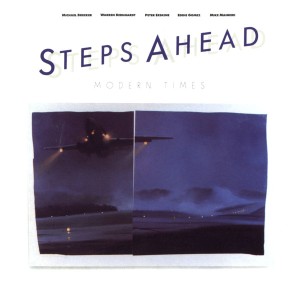
Steps Ahead: Modern Times (1984)
Messrs Brecker, Erskine, Mainieri, Gomez and Bernhardt were embracing some new technology but they never let it overshadow the mostly excellent compositions with telling solos, particularly from Brecker.

John Scofield: Still Warm (1985)
Take your pick between this, Blue Matter and Loud Jazz, all fantastic pieces of work, but Still Warm gets the nod courtesy of its dynamite rhythm section (Darryl Jones and Omar Hakim) and arguably John’s best writing of the ’80s.

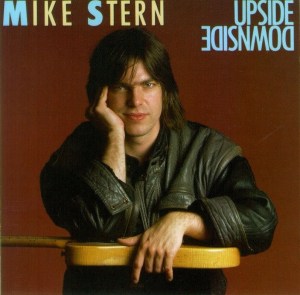
Mike Stern: Upside Downside (1986)
Produced by Hiram Bullock and featuring a crack band including Dave Weckl on drums, it showcases Stern’s finest/fieriest playing on record to date and also one of Jaco Pastorius’s last notable appearances. Still the best Stern solo album and quite extreme in its own way.

(If you’re new to any of these albums and they float your boat, please consider buying physical copies to support the artists.)

The Curse Of 1986?

The critical consensus: 1986 was the worst music year of the decade, perhaps of any decade. But is that true?

There was certainly a vacuum between the end of New Pop/New Romanticism and the Rock Revival of ’87.

Add in the one-hit-wonder merchants, TV soap actors, Europop poseurs, musical-theatre prima donnas, jazz puritans and Stock Aitken & Waterman puppets who hit paydirt towards the end of the decade.

Also most pop records just didn’t sound good. The drums were too loud, the synths were garish, ‘slickness’ was the order of the day. Perhaps nothing emphasised these factors as much as The Police’s disastrous comeback version of ‘Don’t Stand So Close To Me’.

But listen a little harder and 1986 seems like a watershed year for soul, house, go-go, art-metal, John Peel-endorsed indie and hip-hop. Synth-pop duos were back on the map, the NME C86 compilation was a lo-fi classic and there were a handful of groundbreaking jazz/rock albums too.

So here’s a case for the opposition: a selection of classic singles and albums from 1986. Not a bad year after all…

Paul Simon: Graceland

Stump: Quirk Out

David Bowie: ‘Absolute Beginners’

Mantronix: Music Madness

PiL: Album

Rosie Vela: ‘Magic Smile’

George Michael: ‘A Different Corner’

Eurythmics: ‘Thorn In My Side’

Al Jarreau: L Is For Lover

XTC: Skylarking

Duran Duran: ‘Skin Trade’

George Benson: ‘Shiver’

Erasure: ‘Sometimes’

Cameo: ‘Candy’

Chris Rea: On The Beach

Europe: ‘The Final Countdown’

David Sylvian: Gone To Earth

OMD: ‘Forever Live And Die’

The Real Roxanne: ‘Bang Zoom’

The The: Infected

Half Man Half Biscuit: ‘Dickie Davies Eyes’

Anita Baker: Rapture

Michael McDonald: ‘Sweet Freedom’

Prince: Parade

Talk Talk: The Colour Of Spring

Luther Vandross: Give Me The Reason

Pet Shop Boys: ‘Suburbia’

Chaka Khan: ‘Love Of A Lifetime’

Gabriel Yared: Betty Blue Original Soundtrack

The Pretenders: ‘Don’t Get Me Wrong’

Janet Jackson: Control

Run DMC: Raising Hell

Beastie Boys: Licensed To Ill

Miles Davis: Tutu

Iggy Pop: Blah Blah Blah

Courtney Pine: Journey To The Urge Within

George Clinton: ‘Do Fries Go With That Shake’

Talking Heads: ‘Wild Wild Life’

Kurtis Blow/Trouble Funk: ‘I’m Chillin”

The Source ft. Candi Staton: ‘You Got The Love’

Gwen Guthrie: ‘Ain’t Nothing Going On But The Rent’

The Housemartins: ‘Happy Hour’

Peter Gabriel: So

Mike Stern: Upside Downside

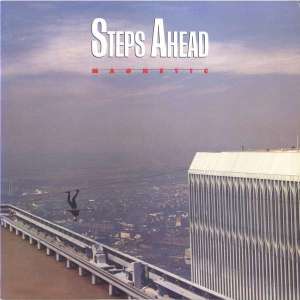
Steps Ahead: Magnetic

It Bites: The Big Lad In The Windmill

Victor Bailey (1960-2016)

800px-victor_bailey

Victor in 2008

I was really sad to hear of Victor Bailey’s passing today.

Born in 1960, he was part of the illustrious Philly bass fraternity alongside such luminaries as Christian McBride, Alphonso Johnson and Stanley Clarke.

He replaced Jaco in Weather Report at the age of just 21, teaming up with Omar Hakim to make one of THE great bass/drums team in music history. They featured on the albums Procession, Domino Theory, Sporting Life and This Is This, and appeared regularly on each other’s solo projects. They also toured with Madonna together in the mid-1990s.

I’m pretty sure I saw Victor five times in concert – first in an outrageous Weather Report gig at the Dominion Theatre (26 June 1984), then in a very cool jazz/funk/groove unit with drummer Lenny White at the Subterania, twice at Ronnie Scott’s with an electrifying Zawinul Syndicate, and finally about ten years ago in a trio with Larry Coryell and White at the Jazz Cafe. At all times, Victor’s playing was tasty, expressive, exciting.

I was pleased when he was recently the subject of a long, excellent feature in JazzTimes magazine in which he talked frankly about music, his bass playing and illness. I hoped the piece might be the start of a healthy, fruitful period for Victor. Sadly it wasn’t to be.

Victor Bailey (27 March 1960 – 11 November 2016)

Steps Ahead: Magnetic 30 Years On

steps

Some improvised music hits you at just the right age, to the extent that 30 years later you can still hum along to all the solos.

Baby boomers were lucky enough to have Kind Of Blue, Time Out or Mingus Ah Um but jazz fans brought up on Weather Report and 1980s Miles had albums like Magnetic.

In 1986, recording and instrument technology was moving quickly, maybe too quickly. This development influenced all kinds of music, from rock to fusion, and, in the wrong hands, led to a lot of grossly-overproduced, unmemorable stuff that barely holds up today. As a few people have said, 1986 may be the worst music year of the decade.

But that year also somehow produced some memorable fusion music. Smooth Jazz (AKA The Wave) was just a twinkle in some bored record exec’s eye and the ever-reliable Japanese market was keeping quality electric jazz alive; Lyle Mays, Mike Stern, Wayne Shorter, John Abercrombie, Miles, Bireli Lagrene, John Scofield, Bill Frisell and John McLaughlin were going strong.

Though Steps Ahead’s Magnetic album embraces technology to a full extent, even more so than on ’84’s Modern Times, given the writing and playing talent (Michael Brecker, Peter Erskine, Mike Mainieri) it’s no great surprise that they pull it off with so much aplomb, aided by formidable ex-Weather Report bassist Victor Bailey.

A timeless classic it ain’t, but Magnetic isn’t any old ‘what does this button do?’ mid-’80s studio creation. Though the sound and mastering are superb, emphasised by the presence of Brothers In Arms producer Neil Dorfsman on engineering duties alongside future back-room stars James Farber and Tom Lord-Alge (fresh from Steve Winwood’s Back In The High Life), the compositions very definitely come first and the audio ‘experiments’ second.

Despite all this, Magnetic is definitely the least-heralded Steps Ahead album amongst jazz critics, probably because it’s a real onslaught of styles and sounds, closer to a ‘pop’ album in concept. The melodic themes are strong without ever getting too sugary and each track has a unique flavour.

It’s hard to believe the same band can come up with ‘Something I Said’ (featuring one of Brecker’s great ballad performances) and also the coruscating avant-fusion of ‘Beirut’ (developed from a band jam session).

Hiram Bullock plays one of his many classic solos on ‘Trains’, adding some much-needed grit, while George Duke co-produces the weird but exciting contemporary R’n’B of ‘Magnetic Love’ featuring some outrageous sampled Brecker tenor lines and killer Dianne Reeves lead vocals (and great backups from Jocelyn Brown, Janice Pendarvis and Diva Gray).

A synthesized cover of Ellington’s ‘In A Sentimental Mood’ proves Steps’ link to the past masters and features some astonishing EWI (an electronic instrument with the same fingering as a sax that looks like an elongated metal lollipop) from Brecker. There’s even time for some banjo-playing on ‘Cajun’, powered along by Erskine’s superb ride cymbal work. Yellowjackets were definitely listening to that. Oh, and is that Philippe Petit on the sneakily-doctored album cover?

It’s weird seeing Steps Ahead playing this material live. They had obviously worked a bit on their stage ‘presentation’ between 1984 and 1986, maybe influenced by Chick Corea’s shenanigans. Peter Erskine and Victor Bailey had left to join Joe Zawinul’s Weather Update tour, so ex-Journey drummer Steve Smith, Sting/Miles bassman Darryl Jones and Stern came in, adding some big-name clout and a much tougher sound.

Magnetic was the last major-label action for Steps Ahead. Brecker and Erskine jumped ship but Mike Mainieri would continue with the name over the next few decades fronting a multitude of line-ups. He even fronted a ‘reunion’ tour in 2016 with a formidable band including pianist Eliane Elias and sax player Donny McCaslin.

Steps Ahead: Modern Times

Steps-Ahead-Modern-Times

Any budding sax player of the ’80s had to have been checking out Michael Brecker, devouring his post-Coltrane superchops and forensic exploration of every chord.

Funk and pop fans loved him because he could play absurdly-tight horn arrangements with his trumpet-playing brother Randy and also solo superbly over vamps, finding endless melodic ideas in the simplest two-chord changes.

He was surely the only sax player who could play comfortably with Kenny Wheeler, Parliament and Everything But The Girl. It has to be said that most hardcore jazz purists were intrinsically suspicious of this, but who cares what they think…

Brecker formed Steps Ahead (originally Steps) with fellow New York masters vibraphonist Mike Mainieri and bassist Eddie Gomez, put together initially for the Japanese market. Steve Gadd was their original drummer, replaced in the early ’80s by Weather Report man Peter Erskine.

Steps Ahead’s self-titled debut album showcased a mostly-acoustic fusion sound, but the 1984 follow-up Modern Times embraced all sorts of ’80s technology to intriguing effect.

Of course such tinkering opens it up to sounding somewhat dated these days, but at least the album has ambition, quality compositions and the kind of attention to detail that makes it an interesting companion piece to key mid-’80s works like The Flat Earth, Hounds Of Love, Boys And Girls and So.

Opener ‘Safari’ kicks off with a vaguely Caribbean/reggae groove featuring a multitude of synths and sequencers and a tribal, almost Zawinulesque melody. With repeated listens there are many pleasures to be found; Brecker’s typically incisive tenor solo, Erskine’s subtly-building groove work, the slinky bass line which rumbles on throughout.

Equally arresting is pianist Warren Bernhardt’s title track, a modal piece built over another serpentine, sequenced line, developing into a series of lovely vignettes featuring Brecker’s solos and some very Steely Dan-ish chord progressions.

Mainieri’s composition ‘Old Town’ features King Crimson/Peter Gabriel sideman Tony Levin playing some menacing Stick over the sort of exotic, ambient groove Bryan Ferry would utilise on Boys And Girls a year later. And ‘Radio-Active’ taps into some of the World vibes Peter Gabriel investigated throughout the ’80s.

Unfortunately a few tunes let the side down, drifting uncomfortably into smooth jazz territory. Mainieri’s composition ‘Self Portrait’ is almost saved by a lyrical Brecker solo but far too saccharine for my tastes, while Erskine’s ‘Now You Know’ features a melody line (Brecker on soprano) which, though memorable, veers scarily towards Kenny G.

And it has to be said that Eddie Gomez’s role in the band was diminishing very fast, so anonymous is his contribution. He would be gone by the next album Magnetic, replaced by ex-Weather Report man Victor Bailey.

In Modern Times‘ liner notes, Peter Erskine thanks someone for their help with click tracks, and that concept in itself would probably turn off a big section of the ‘jazz’ audience.

But some arresting compositions, tribal grooves and typically tasty Brecker solos ensure that one’s attention never strays for long. Modern Times is a key jazz album of the ’80s, albeit one that would probably have given most of the Young Lions nightmares…