The Best Album Titles Of The 1980s

We’ve looked at some of the worst album titles of the 1980s – now it’s time for the best.
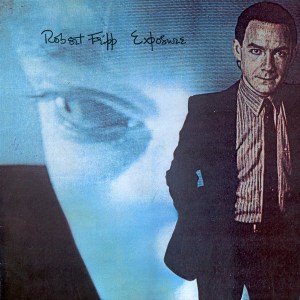
But what made a memorable/interesting title? Certainly a few themes emerge from the list below.

Some issue instructions to the listener, some pose questions. Most feature common words uncommonly used. A pun can help. A couple are named after books. And a concept doesn’t hurt, especially if accompanied by good album artwork/design. Release the bats…

Adventures In the Land Of The Good Groove (Nile Rodgers)

What’s Bootsy Doin’? (Bootsy Collins)

No Sleep ‘Til Hammersmith (Motorhead)

Climate Of Hunter (Scott Walker)

Rum, Sodomy & The Lash (The Pogues)

Bostin’ Steve Austin (We’ve Got A Fuzzbox And We’re Gonna Use It)

From Langley Park To Memphis (Prefab Sprout)

Are You Glad To Be In America? (James Blood Ulmer)

America – Do You Remember The Love? (James Blood Ulmer)

Metal Fatigue (Allan Holdsworth)

Shockadelica (Jesse Johnson)

Back In The DHSS (Half Man Half Biscuit)

The Slide Area (Ry Cooder)

As The Veneer Of Democracy Starts To Fade (Mark Stewart)

Be Yourself Tonight (Eurythmics)

Sulk (Associates)

Love Stinks (J Geils Band)

Jazz From Hell (Frank Zappa)

Shut Up And Play Yer Guitar (Frank Zappa)

Broadway The Hard Way (Frank Zappa)

Aliens Ate My Buick (Thomas Dolby)

The Golden Age Of Wireless (Thomas Dolby)

Exit Stage Left (Rush)

Some Of My Best Jokes Are Friends (George Clinton)

R’n’B Skeletons In The Closet (George Clinton)

There Goes The Neighbourhood (Joe Walsh)

You Bought It – You Name It (Joe Walsh)

Friendly As A Hand Grenade (Tackhead)

Stop Making Sense (Talking Heads)

Non-Stop Erotic Cabaret (Soft Cell)

Frankenchrist (Dead Kennedys)

This Is What You Want…This Is What You Get (PiL)

Album (PiL)

Twang Bar King (Adrian Belew)

Big Science (Laurie Anderson)

Building The Perfect Beast (Don Henley)

Freaky Styley (Red Hot Chili Peppers)

The Pursuit Of Accidents (Level 42)

The Big Lad In The Windmill (It Bites)

Searching For The Young Soul Rebels (Dexys Midnight Runners)

The Affectionate Punch (Associates)

Empires And Dance (Simple Minds)

For How Much Longer Will We Tolerate Mass Murder (The Pop Group)

Return Of The Giant Slits (Slits)

Your Cassette Pet (Bow Wow Wow)

See Jungle! See Jungle! Go Join Your Gang Yeah, City All Over! Go Ape Crazy! (Bow Wow Wow)

Cupid & Psyche ‘85 (Scritti Politti)

My Life In The Bush Of Ghosts (David Byrne/Brian Eno)

Eat ‘Em And Smile (David Lee Roth)

Other good ‘uns? Let us know below…

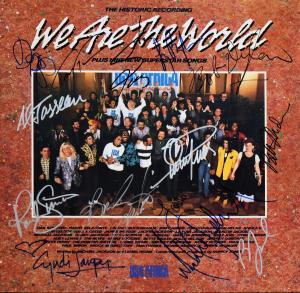
USA For Africa: We Are The World @ 40

Released 40 years ago this month and officially the fastest-selling single in American music history, USA For Africa’s ‘We Are The World’ shifted over 20 million copies and raised a huge amount of money for African famine relief.
Co-written by Michael Jackson and Lionel Richie during a few sessions at the former’s house in Encino, the song divides opinion but only the hardest heart could fail to be moved by its recording (even if one can definitely feel the vibe of some major agent/star power – no arriving in the manager’s battered old car for this lot…).

It brought together a fairly astonishing cast list of the great and good. And, inadvertently, it also arguably represented a last gasp for classic 1980s R’n’B and yacht rock.

The basic track was recorded at Kenny Rogers’ Lion Share Studios on 22 January 1985 with king-of-the-cross-stick John ‘JR’ Robinson on drums, bassist Louis Johnson and pianist Greg Phillinganes, closely monitored by a huge press corps, co-producers Quincy Jones and Michael Omartian and engineer Humberto Gatica. According to Robinson, all the musicians were sight-reading a chart and a click track was used, and they didn’t do more than two takes.

A few days later, Lionel sat down with Quincy and vocal arranger Tom Bahler to prep who would sing which lines (the decision was also made to mainly record vocals live and ‘in the round’ with no or at least very few ‘punch-ins’, unlike ‘Do They Know It’s Christmas’). All the major vocalists were then sent a copy of the basic track featuring Jackson’s guide vocal and with an enclosed letter from Lionel.

The featured singers then assembled at A&M Studios at around 9pm on Monday 28 January, most arriving after the American Music Awards (which Richie hosted). Notable absentees: Madonna (who was apparently bumped in favour of Cyndi Lauper), Prince (check out Duane Tudahl’s superb book for the details), George Benson, Dolly Parton, Donna Summer, Michael McDonald, Pat Benatar, Rod Temperton, Stevie Nicks, Joni Mitchell, Billy Idol? And is it odd that Smokey Robinson didn’t sing a solo line?

The complete footage of the recording session is still fascinating. We see how some of the biggest names in music history found different ways of preparing. Steve Perry waits for his line with eyes shut, looking down, listening intently. Diana Ross does just the opposite.

Bob Geldof gives a stirring pep talk and Stevie Wonder brings in two Ethiopian women to address the singers, moving many to tears. It’s hard not to be touched by Stevie, Kenny Rogers, Dionne Warwick, Diana, Steve Perry, Ray Charles and Cyndi Lauper’s vocals. But Harry Belafonte, Ray Charles, Bob Dylan and Bruce Springsteen seem to get the most respect from the assembled stars.

Other observations: Brucie – who had finished the latest leg of the Born In The USA tour the night before – looking like Judd Nelson in ‘The Breakfast Club’. Al Jarreau struggling throughout. Lionel the team player. Stevie giggling like a naughty schoolkid when Quincy gets annoyed. James Ingram hiding behind Kenny Rogers after a boo-boo.

Paul Simon twice saying to Rogers: ‘Can I help?’ Lauper sharing vocal tips with Kim Carnes. MJ holding hands with Diana and Stevie. Quincy and Stevie rehearsing with Bob Dylan. Stevie and Ray Charles using their braille machine. Quincy reading the score as he conducts the soloists, and his witty asides: ‘Who you gonna call?’ etc.

It looks like they recorded the first half of the song first (up to and including Daryl Hall) and then spent some time on the middle eight with Huey Lewis, Lauper and Carnes.

How does it sound now? Phillinganes’ piano playing is a pleasure to hear, typically tasty and gospel-inflected. But the track is inundated with synths – no less than four players are credited, including David Paich and Steve Porcaro from Toto – and probably why it reminded many of a Pepsi ad.

And it’s odd that the song features no guitar, though Prince offered to play a solo – Quincy reportedly told Prince’s manager Bob Cavallo: ‘I don’t need him to play guitar, we got f*ckin’ guitars’!

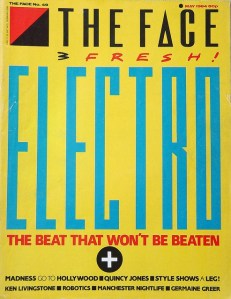
The Face Magazine: Culture Shift @ National Portrait Gallery, London

Any British music fan who came of age during the 1980s must surely have a soft spot for The Face magazine.

Launched by Smash Hits founder/NME editor Nick Logan in May 1980, the monthly rag – so named because of its Mod allegiances – quickly become known as a first-rate style mag (it covered fashion, music, culture, clubbing and cinema too), with its many famous covers reaching the level of high-quality pop art.

Indeed, looking again at issue #1, it’s remarkable how many of its listed writers and photographers would turn out to be key documentors of the decade – Janette Beckman, Julie Burchill, Gary Crowley, Anton Corbijn, Ian Cranna, Jill Furmanovsky, David Hepworth, Tony Parsons, Sheila Rock, Pennie Smith (and that issue alone features iconic photos of Madness, The Specials, The Clash, John Lydon and Paul Weller, amongst others).

It was also unique amongst 1980s music mags in paying as much attention to reggae, hip-hop, electro, house, rare groove and jazz as it did to post-punk, 2-Tone and sophistipop.

But movingtheriver also remembers it most for its superb long-form interviews: I still have issues featuring in-depth pieces on Miles Davis, Trouble Funk, Dennis Hopper, David Sylvian, David Byrne, Robert Smith, Daryl Hall and Ken Russell.

The Face’s iconic imagery is celebrated at the excellent if compact new exhibition at London’s National Portrait Gallery. Predictably it’s photos from those post-punk/New Pop salad days of 1980-1983 which produce the most smiles of recognition/pleasure – Bowie in Japan, Adam Ant, Phil Oakey, John Lydon, Annie Lennox.

But there are great pics/stories from later in the decade too – Bros with their mum at home in Peckham, Shane MacGowan, Sade, Nick Kamen, Felix et al. There’s also a great chronology of 1980s clubbing, from Goth to Acid House, and a focus on long- lost London nightspots.

As the 1980s became the 1990s, The Face arguably reflected a gradual coarsening of the culture with more focus on fashion and lifestyle – but you knew that anyway. But this exhibition is a must-see for any music fan who loved the 1980s, and it was also refreshing to see such a broad range of ages attending.

The Face Magazine: Culture Shift runs at the National Portrait Gallery until 18 May 2025.

The Worst Album Titles Of The 1980s

It was one of the many issues that probably had managers and marketing people tearing their hair out during the 1980s.
What to name your album? It might be a low-risk strategy to name it after the first single – even better if that song is a big hit – or, if you were feeling clever, after a ‘pivotal’ album track.

But oftentimes 1980s acts went out on a limb, looking for a ‘poetic’ title, something ‘novel’, something… You get the picture.

Here’s a selection (to be regularly updated) of 1980s album titles that went off-piste. Some are pretentious, some weird, some have needless word repetition (hello Sting), some fudge punctuation or foreign words in an infuriating way, some are rubbish puns, some are desperate to shock, some are way too high-falutin’, some throw concepts together in a seemingly random way. But the reaction to most is: eh?

Of course a bad title didn’t stop some of these being great albums, though, tellingly, very few were big hits…

Talking With The Taxman About Poetry (Billy Bragg)

Three Hearts In The Happy Ending Machine (Daryl Hall)

The Secret Value Of Daydreaming (Julian Lennon)

Steve McQueen (Prefab Sprout)

Shooting Rubberbands At The Stars (Edie Brickell & The New Bohemians)

The Uplift Mofo Party Plan (Red Hot Chili Peppers)

Mother’s Milk (Red Hot Chili Peppers)

As Falls Wichita, So Falls Wichita Falls (Pat Metheny/Lyle Mays)

Into The Dragon (Bomb The Bass)

Angst In My Pants (Sparks)

Tennis (Chris Rea)

Love Over Gold (Dire Straits)

North Of A Miracle (Nick Heyward)

Misplaced Childhood (Marillion)

Script For A Jester’s Tear (Marillion)

Boys & Girls (Bryan Ferry)

Journeys To Glory (Spandau Ballet)

Through The Barricades (Spandau Ballet)

Seven And The Ragged Tiger (Duran Duran)

Big Thing (Duran Duran)

Modern Romans (The Call)

The Secret Of Association (Paul Young)

Shabooh Shoobah (INXS)

Remain In Light (Talking Heads)

If This Bass Could Only Talk (Stanley Clarke)

Blood & Chocolate (Elvis Costello)

A Salt With A Deadly Pepa (Salt’n’Pepa)

Splendido Hotel (Al Di Meola)

Within The Realm Of A Dying Sun (Dead Can Dance)

The Moon Looked Down And Laughed (Virgin Prunes)

Architecture & Morality (OMD)

The Dream Of The Blue Turtles (Sting)

In-No-Sense? Nonsense! (Art Of Noise)

In Square Circle (Stevie Wonder)

Lawyers In Love (Jackson Browne)

The Story Of A Young Heart (A Flock Of Seagulls)

The One Giveth, The Count Taketh Away (Bootsy Collins)

You Shouldn’t-Nuf Bit Fish (George Clinton)

All The Best Cowboys Have Chinese Eyes (Pete Townshend)

Difficult Shapes And Passive Rhythms Some People Think It’s Fun To Entertain (China Crisis)

Working With Fire And Steel (China Crisis)

Franks Wild Years (Tom Waits)

So Red The Rose (Arcadia)

Café Bleu (The Style Council)

The F**king C*nts Treat Us Like Pricks (Flux Of Pink)

Chalk Mark In A Rainstorm (Joni Mitchell)

I, Assassin (Gary Numan)

Civilised Evil (Jean-Luc Ponty)

Introducing The Hardline According To Terence Trent D’Arby

Children (The Mission)

Casa Loco (Steve Khan)

The First Of A Million Kisses (Fairground Attraction)

Bebop Moptop (Danny Wilson)


More crap 1980s album titles? Of course. Let us know in the comments below (particularly looking for more in the metal, Goth and prog genres).

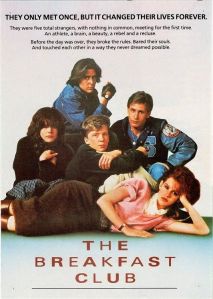
The Breakfast Club @ 40: 17 Things You Didn’t Know About The Classic Teen Movie

Despite a few bum notes, ‘The Breakfast Club’ – which premiered 40 years ago this month – remains one of the essential 1980s movies, a must-see for generation after generation of teenagers.

Like or loathe it (some contemporary critics such as Pauline Kael lamented its whinier aspects, while others such as Roger Ebert were surprisingly sympathetic), its superb cast act as if their lives depended on it, and writer/director John Hughes’s attention to detail and comic timing are as spot-on today as they must have seemed in 1985.

But what was going on behind the scenes? Where was the film shot? Which famous actors nearly got cast? Which actors didn’t get along? Movingtheriver has done some digging (with spoilers)…

17. The film was edited by Hollywood royalty Dede Allen, who had worked on ‘The Hustler’, ‘Bonnie & Clyde’, ‘Serpico’, ‘Dog Day Afternoon’ and ‘Reds’ (apparently she was put to work on John Hughes’ original three-hour cut…).

16. Theme song ‘Don’t You Forget About Me’ was written by Keith Forsey after witnessing the scene where Brian (Anthony Michael Hall) asks his fellow detention attendees if they’ll still be friends the next day. Simple Minds turned it into a US #1 but Bryan Ferry was Forsey and Hughes’ first choice – he turned it down, busy mixing Boys & Girls.

15. Hughes wrote the first draft of the film over one weekend.

14. Universal weren’t behind the film, wanting more teenage hi-jinks and nudity a la ‘Porky’s’. They weren’t even sure Hughes should direct.

13. Anthony Michael Hall and Molly Ringwald were just 16 years old during filming – all the other ‘schoolkids’ were well into their 20s.

12. Jodie Foster, Laura Dern and Robin Wright all auditioned for the part of Claire, the prom queen. Molly Ringwald got the role despite initially being cast as Alison, the misfit. Emilio Estevez was initially cast as the ‘bully’ John Bender until Judd Nelson came in at the last minute (Nicolas Cage, John Cusack and Jim Carrey all almost played Bender too). Rick Moranis was due to play Carl the janitor but left the film just before shooting.

11. It was shot between March-May 1984 at Maine North High School in Des Plaines, Illinois, the same abandoned school used for ‘Ferris Bueller’s Day Off’. Most of the film takes place in a library – this was actually a set built in the school gymnasium.

10. The cast rehearsed for three weeks before the cameras rolled. They were running lines and bonding even as sets were being built around them. The film was also shot in sequence, a rarity.

9. Researching his role as Bender, Judd Nelson went ‘undercover’ at a nearby high school with fake ID and formed a real clique of naughty teens.

8. The cast didn’t smoke real pot in the famous ‘truth-telling’ scene – it was oregano.

7. Anthony Michael Hall’s real life mother and sister talk to him in the car at the beginning (and Hughes has a cameo as his dad).

6. Ringwald tried to get Hughes to remove the scene where Bender hides under the desk and looks between her legs, but he refused.

5. Bender’s famous, defiant/celebratory fist-raise at the end was improvised by Judd Nelson.

4. The scene where the characters sit around and explain why they are in detention was all improvised.

3. The original cut was 150 minutes long – they had to lose 53 minutes, including a long dream sequence and a whole character (a sexy gym teacher). Some deleted scenes have appeared on DVDs and on YouTube but many outtakes have never been seen.

2. The iconic poster photo was taken by Annie Leibovitz and later satirised by ‘Texas Chainsaw Massacre 2’.

1. The budget was just under $1 million! The film made over $51 million during its initial run…

Killing Joke: Love Like Blood @ 40

Look up ‘intense’ in the dictionary and you might just see a photo of Jaz Coleman.

One of the best bits of post-Lockdown ‘normality’ was walking into Fopp in Covent Garden and quite by chance seeing the erstwhile Killing Joke frontman/keyboardist doing a signing session in full make-up.

His band’s ‘Love Like Blood’ hit its peak position of #16 in the singles chart 40 years ago this month. It was their sole top 40 single of the 1980s and biggest hit to date, a brilliant highlight of that Goth/ post-punk sound/attitude.

But, in a decade full of literary pop music, the song has an interesting and surprising genesis. Recently, Coleman told Songfacts:

That was inspired by the author Yukio Mishima… It was his views on writing with your blood as an artist that really inspired me. It’s a metaphor for the commitment an artist must take to his art form. When I was reading ‘Spring Snow’, one of Mishima’s novels, I really couldn’t speak for 24 hours after reading that book – it hit me so hard. The song itself was a distillation of everything that we hold dear, and one must aspire to walk and talk what you write about in your songs – actually live it. That’s the other part of art, isn’t it? You can’t just be conceptual, writing songs. It’s the way you live your life as well. It’s as important as the way you play your instruments or the music you create…

Musically, it’s fascinating too, the late great Kevin ‘Geordie’ Walker’s doom-laden guitar (with a very odd tuning), scary keyboards (played by Coleman) and a powerful, influential groove – apparently no click track here. Attendant album Night Time was a hit too, featuring the single ‘Eighties’ which Nirvana ripped off for ‘Come As You Are’.

The real corker though was this live performance of ‘Love Like Blood’ from ‘The Tube’. Makes you hanker for a time when bands really meant it… No mucking about. Audiences too. Like to have been there.


Book Review: Whatever Happened To The C86 Kids? by Nige Tassell

In 1986, legendary mag NME issued a famous cassette compilation called C86.

Arguably it defined a musical generation, bringing together figureheads of the burgeoning British indie scene from Primal Scream to Bogshed, Stump to The Pastels.

The NME’s timing could hardly have been better – in 1986, ‘indie’ music was beginning to get a sound of its own, John Peel was entering his imperial phase as a Radio 1 presenter, the music press was right on board and independent labels were springing up all over the shop.

The cassette had a huge impact, but did it have an impact on the bands? And what are they up to these days? Nigel Tassell’s hugely enjoyable book tracks them all down and hears their stories.

Some, like Half Man Half Biscuit, The Wedding Present, Primal Scream and Fuzzbox are still going strong, others, like The Soup Dragons and The Bodines burnt brightly for a few years. Other band members ended up as social workers, bike shop owners, solicitors, driving instructors.

The result is a friendly, mostly uplifting tome, a bit like one of those old VH1 ‘Bands Reunited’ shows in book form. A few themes emerge: the major labels sniffing around; Peel Sessions; the ‘name’ producer enlisted for that unsuccessful second album; Alan McGee/Creation Records.

But this is not a tale of rampant egos and prima donnas – it’s all refreshingly low-key (with the possible exception of the chapter on Primal Scream) with a side order of provincial British history too.

Like or loathe the music on C86, this book also perfectly captures the never-to-be-repeated thrill of first getting together in the teenage bedroom and trying to write and rehearse songs. Inadvertently, it’s also a sad comment on the loss of music in pubs and clubs across this isle of noises.

Tassell’s brisk, chatty style may divide opinion, but it’s entirely appropriate for a mostly heartwarming companion piece to Giles Smith’s ‘Lost In Music’ and Nick Duerden’s ‘Exit Stage Left’, outlining the pros and cons of youthful musical obsession. Highly recommended.

Tassell discusses ‘Whatever Happened To The C86 Kids’ in this interview.

Phil Upchurch: Companions @ 40

There’s a good case that 1984 was Last Call for classic jazz/funk (soon to morph into the dreaded smooth jazz) just before the machines took over and albums like David Sanborn’s A Change Of Heart became de rigeur (but only for a few years – there was an ‘acoustic’ revival in the late 1980s…).

Phil Upchurch’s Companions got in just under the wire. The legendary Chess Records/George Benson sideman (he wrote classic ‘Six To Four’ from Breezin’) had recorded over ten solo albums before 1984, all showing off his significant guitar chops and arrangement smarts.

But Companions (currently not on any streaming platforms – c’mon Universal Music) appeared 40 years ago this month on Paladin, the short-lived British jazz/dance label founded by DJ Paul Murphy and distributed by Virgin. Labelmates included Working Week, Robert Wyatt and Annie Whitehead.

It’s a classic West Coast album and a classic guitar album too, in large part due to the appearance of Lenny Breau (who died in mysterious circumstances on 12 August 1984, just a few days after the recording), famous for his fluid lines and cascading false harmonics, who appears on three tracks and to whom the album is dedicated.

Percussion fans – this album’s for you. Every track features a cornucopia of shakers, cowbells, woodblocks and congas played by Michael Fisher and Steve Forman. Gerald Albright blows a storm on the brilliant ‘Mr T (BA’s Song)’, probably heard by yours truly on Robbie Vincent’s BBC London show back in the day, while Russell Ferrante and Rodney Franklin provide tasty Fender Rhodes and Nathan East some excellent bass.

But, as is normal for mid-1980s fusion albums, there are some dodgy tracks on Companions too – two poor ‘pop’ cover versions (‘Rosanna’ sounds out-of-tune throughout) and an undercooked Jimmy Witherspoon cameo on ‘CC Rider’. Elsewhere there are not-so-great vocals on two tracks by Mike Baker (future drummer/vocalist for Zawinul Syndicate/Whitney Houston?).

But in general Companions is pure comfort music and well worth seeking out, rich with interesting harmony, good grooves and superb guitar playing.

John Sessions (1953-2020)

It’s one of the great mysteries of pop culture, up there with who buys The Wire magazine and who goes to Snow Patrol gigs – why wasn’t comedian/actor John Sessions a bigger star (born John Marshall, he sadly died in 2020)?

Only very occasionally these days do you see something on TV that stops time. It happened to movingtheriver recently watching Sessions performing a monologue in the style of James Joyce on classic late-‘80s improv show ‘Whose Line Is It Anyway’ (RIP the brilliant Tony Slattery, by the way).

He also did a note-perfect impression of theatre director Peter Brook in the programme around the same time. No wonder he was one of David Brent’s comedy heroes.

It was a reminder of that period when comedy could be intelligent, educated, even ‘literary’, dammit. You weren’t terminally terrified of talking down to your audience. Performers like Sessions, Stephen Fry, Hugh Laurie, Steve Martin and Robin Williams raised you up, made you want to learn more about their references, generally punched up rather than punched down.

He was born in 1953 to Scottish parents, and studied English Lit at university, then attended RADA and had early TV successes with ‘Porterhouse Blue’, ‘Spitting Image’ and Simon Gray’s ‘Common Pursuit’ play alongside Fry and Rik Mayall. Then, from my perspective as a casual fan, he seemed (a bit like Slattery) to slightly disappear.

He went to the States to co-star in a few dodgy American rom-coms such as ‘Sweet Revenge’ with Rosanna Arquette and Carrie Fisher, as well as a few movies directed by his RADA schoolmate Kenneth Branagh, but you wonder if he could have broken through to a much bigger audience – could he have played Chaplin in Richard Attenborough’s 1993 biopic? Could he have come to Woody Allen’s attention?

There were also some one-man shows on TV, ‘Stella Street’ in the mid-1990s (surely he does the best-ever impression of Al Pacino), and a whole host of guest appearances including ‘Outnumbered’. It’s always a pleasure to dip into Sessionsland.

Sun Ra Arkestra: Lights On A Satellite

One of the unexpected treats of last year was a new – and excellent – album from the Sun Ra Arkestra: Lights On A Satellite.

If you’re looking for an antidote to musical torpor, this could well be it. It draws on free jazz, classic big-band swing, spiritual jazz, gospel and light funk to create one of the most enjoyable collections of 2024.

Led by 100-year-old sax titan Marshall Allen, the Arkestra – celebrating the compositions of late, avant-garde legend Sun Ra, with a few other surprises thrown in – gathered at New York’s Power Station on 16 June 2024 under the jurisdiction of legendary engineer James Farber.

Notice is served by spellbinding opening title track which takes a simple chord sequence and then blows it to bits with a series of coruscating solos. One is then wrongfooted by the superbly played ‘traditional’ big-band melodies of ‘Dorothy’s Dance’ and ‘Big John’s Special’.

Vocals appear from time to time, most notably on the seriously strange cover of ‘Holiday For Strings’. Instrumentation frequently surprises, with snatches of harp, synth, violin and electric guitar sliding into the mix on occasion, such as on the wonderful ‘Tapestry From An Android’.

It is possible to stream the album but it’s worth forking out for the sumptuous gatefold CD or vinyl versions which come with a long essay and some excellent photos. And hey, while you’re at it, check out this excellent Don Letts-directed BBC doc about the remarkable Sun Ra. The first few minutes are worth the price of admission alone.