His comeback album Midnight Love, released in October 1982, was a certified hit, with decent sales, good PR and an attendant single ‘Sexual Healing’ that was building up quite a Grammy buzz.
But there were plenty of other problems brewing: in his rather paranoid state, Marvin believed that pretenders to his throne like Teddy Pendergrass, Frankie Beverly (whom Marvin had mentored early in his career), Lionel Richie and Michael Jackson were cashing in on his style and sound. The latter had even taken to wearing aviator shades and ‘military’ garb.
Elsewhere, Marvin’s relationship with his father had hit a new low. Bitter and resentful, he considered physically ejecting Father from the family home but decided instead to stay away completely.
The other problem was cashflow. Marvin was spending so much money on ‘extras’ that he had been forced to give up his houses in Bel Air and Palm Springs. Despite all this, in the first few months of 1983, Marvin reminded the music world of his luminous genius and, against all the odds, provided a few career high-points.
Broke and entering an introspective period, he found himself spending quite a lot of time at his sister Sweetsie’s pad. It was there, on Saturday 12 February 1983, that he got together with chief musical collaborator Gordon Banks to cook up a version of the national anthem that he would sing the next day before the National Basketball Association’s All-Star Game.
Despite the last-minute planning, there was no margin for error: Marvin’s performance would be broadcast live on national TV. He not only pulled it off – he smashed it out of the park. Only Marvin could have come up something so singular. His huge respect for the athletes ensured that he raised his game accordingly.
Funky, spiritual, heartfelt and yet controversial, it was a triumphant reading of ‘The Star Spangled Banner’, and one of the highlights of his career.
Less than two weeks later, on 23 February, there was another personal milestone for Marvin when he was awarded his first Grammy awards at the Shrine Auditorium in Los Angeles.
That the Best Male Vocal and Best Instrumental Performance awards were ‘only’ in the R’n’B category scarcely mattered. He had moved out from behind his Grammy nemesis Lou Rawls’ shadow and finally gained the acceptance of his peers, something that was extremely important to him. His speeches were heartfelt and touching.
His performance of ‘Sexual Healing’ was not an unqualified success (it was 10 or 15 BPMs too slow and Marvin seemed slightly uncomfortable), but it’s still essential and moving stuff.
Another very happy moment happened a few months later when Marvin appeared with Gladys Knight and the Pips on another TV special. According to David Ritz’s classic book ‘Divided Soul‘, Marvin and Gladys argued backstage about whose version of ‘I Heard It Through The Grapevine’ to do. He finally deferred to her, but still turned in another joyous and brilliant performance.
Then, on 25 March 1983, the Pasadena Civic Auditorium hosted the ‘Motown 25’ anniversary concert, most famous for Michael Jackson’s spellbinding reading of ‘Billie Jean’. Marvin once again defied expectations and provided one of the highlights of the evening.
Though looking somewhat haggard, his blues/gospel piano playing and philosophical pronouncements on the value and history of black music were nothing less than captivating. His subsequent performance of ‘What’s Going On’ was perhaps perfunctory in comparison, but still essential viewing.
Tougher, tragic times were to come over the next year, but for a few months in early 1983, Marvin was seeing a lot of his professional dreams come true. No one could take that away from him.
He has always pretty much stuck to a tried and tested guitar sound: a Strat plugged straight into the amp, no effects apart from a very occasional tremolo pedal, and very, very hard picking.
But, in the process, on Bad Influence (inexplicably missing from streaming platforms at the time of writing…) he plays three or four of the most electrifying guitar solos of the ’80s, proving himself a worthy heir to Albert King and Albert Collins.
And his tough guitar style is a contrast to a fairly sweet, soulful vocals and songwriting which reflect the influence of Al Green and BB King more than Muddy Waters or John Lee Hooker.
Bad Influence was Cray’s second official release, and it was pretty much the one that alerted the wider world outside of blues aficionados to his potential. The Robert Cray Band had built up a formidable live following in the early ’80s, touring relentlessly on the West Coast and in Europe.
With the help of producers Bruce Bromberg and Dennis Walker, they were ready to take that consistency into the studio. And it certainly helps that there are no trinkets of ’80s production present on the album, no synths or dated drum sounds – Bad Influence mostly just sounds like a great band playing live in the studio, with the occasional addition of horns and Hammond organ.
Bad Influence is mainly known for its superb cover versions: Johnny Guitar Watson’s ‘Don’t Touch Me’ and Eddie Floyd’s ‘Got To Make A Comeback’, both slow 6/8 jams, the former angry and biting, the latter sweet and soulful. ‘The Grinder’ is another slowish 6/8 with a killer Cray solo. The CD version also comes with a great cover of the New Orleans R’n’B classic ‘I Got Loaded’.
Then there are the minor-key blues/funk standard ‘Phone Booth’ (featuring not one but two classic guitar solos), later covered by Albert King, and the title track which was subsequently covered by Eric Clapton on August (the two have collaborated many times since).
Also essential are the super-funky ‘So Many Women So Little Time’ and Bo Diddley-esque ‘No Big Deal’. Lyrically, my personal favourite is probably ‘Waiting For The Tide To Turn’, a kind of ‘ironic’ blues about procrastination.
To date, Bad Influence has reportedly shifted over a million copies. Cray’s two follow-ups False Accusations and Strong Persuader sold even more. And he’s very much still going strong at the time of writing.
One of the recurring themes of Randy Newman’s interviews seems to be the question of how long songwriters can maintain high-quality work.
He frequently compares himself to Dylan, Joni Mitchell, Neil Young, Robbie Robertson, Don Henley and Paul Simon, wondering if he’s keeping pace. 1983’s Trouble In Paradise proved that he was certainly keeping up, if not outstripping all of them.
After somewhat of a commercial breakthrough with 1977’s Little Criminals, Randy came seriously unstuck with the 1979 follow-up, Born Again. So a lot was riding on Trouble and it certainly delivered; song for song, it arguably equals Sail Away or Little Criminals.
Randy unleashes a parade of shucksters, hucksters, bigots, junkies and unreliable narrators that would be right at home in a David Mamet play or Coen Brothers movie.
In a neat irony, he also used the cream of the LA session elite (Jeff Porcaro, Jerry Hey, Nathan East, Steve Lukather, various Eagles and Fleetwood Macs) to sugarcoat his short stories; Trouble is one of the best-sounding bad-vibes albums in rock history, alongside Frank Zappa’s Sheik Yerbouti and Steely Dan’s Gaucho.
Randy almost had a second hit single with the deceptively cheery ‘I Love LA’, the Cole Porter-style intro leading into an ironic, ambivalent comment on the American Dream and some of its discontents. ‘Christmas In Cape Town’ is a disturbing portrait of Apartheid-era South Africa apparently written under the influence of Nadine Gordimer’s books.
‘The Blues’ is an amusing duet with Paul Simon poking fun at the plight of the oversensitive singer-songwriter, though Newman has claimed that he regrets writing the song. ‘Mikey’s’ is another amusing portrait of a racist, reactionary douchebag, with our narrator sounding off over a robotic synth-rock backing which seems to be Randy’s pastiche of new-wave rock.
I love the way the narrator comments on the music, bellowing: ‘Didn’t used to be all this ugly music playing all time… Where are we, on the moon? Whatever happened to the old songs? Mikey, whatever happened to the fucking “Duke Of Earl”?’!
The hectoring continues on the hilarious ‘My Life Is Good’, a self-mocking vignette which eavesdrops on the life of an arrogant, rich and famous rock star. Springsteen gets a namecheck and Ernie Watts’ booming impersonation of Clarence Clemons is accompanied by Randy screaming, ‘Blow, big man, blow!’ Pretty weird and pretty funny.
Newman then proves that he’s a master of the gear shift with the inclusion of two devastating ballads, ‘Same Girl’ and ‘Real Emotional Girl’. The former, described by its author as a song about ‘two junkies in love’, is a heartbreaking portrait of lost innocence with a sumptuous string arrangement, indelible melody and sometimes dissonant harmonies. He’s just way ahead of his contemporaries here.
The latter is an uncharacteristically tender portrait of a sensitive, gentle young woman who can’t help but get her heart broken. The middle eight is just sublime. Linda Ronstadt has performed this song from time to time.
‘Miami’, which kicks off side two, is the most musically expansive track on Trouble, featuring a delicious performance from Randy’s favourite drummer Jeff Porcaro, intricate stop-start arrangements and eerie mandolins by Dean Parks.
The two filler tracks on Trouble, ‘Take Me Back’ and ‘There’s A Party At My House’, are buried in the middle of side two, while ‘I’m Different’ is a self-mocking swinger with some lovely close-harmony backing vocals by Jennifer Warnes and Ronstadt.
The closing ‘Song For The Dead’ is a devastating Vietnam War allegory features a mythological (dead?) colonel who has been left behind to say a prayer for his fallen comrades. The song bravely dares to send up a certain kind of American heroism, but still carries a hefty emotional punch.
Trouble In Paradise was not a commercial success, reaching only number 69 on the US album chart. That is a pretty shocking showing from such a major artist and one of the great songwriters.
The failure seemed to chasten Newman – he jumped back into the world of movies, scoring 1984’s ‘The Natural’ and co-writing the screenplay for the Steve Martin/Chevy Chase vehicle ‘The Three Amigos’. Like his friend and frequent collaborator Ry Cooder, it seemed that film work was now funding an increasingly unpopular solo career.
Randy returned as a solo artist in 1987 to make Land Of Dreams, perhaps the only album of his that hasn’t dated well (though he told Paul Zollo in the brilliant book ‘Songwriters On Songwriting‘ that it’s his personal favourite). Then, over a decade later and against all the odds, he released one more near-classic, 1999’s Bad Love, crowning 30 years of songwriting consistency.
He once told the writer Jon Ronson, tongue placed firmly in cheek: ‘My career has been a disappointment to me. I always hoped I’d sell millions of records. There are 40,000 people out there who just love me. But they may be surprised to hear I’ve been aiming beyond them…’
It all came back to me recently when I heard some church bells in Totnes ringing out the opening bass melody from ‘We Could Send Letters’.
Although always one of my AC favourites, I hadn’t heard the song in years. Cue a period of rediscovery and a realisation that Roddy Frame penned four or five stand-out songs of the ’80s.
The guy had it all – intelligent lyrics, guitar chops, classic songcraft, good looks. Arguably the only thing missing was the classic album that his talent warranted.
But no matter: there were plenty of treats anyway. Here are a few:
4. We Could Send Letters (1983)
The low-key beginning builds into an epic, love-lorn pop gem, oddly never released as a single. Though dated by its Syndrum fills and airy production, the song however is water-tight with that lovely hike up into the chorus. An ’80s break-up classic.
3. Oblivious (1983)
Summery, Flamenco-tinged pop gem that reached #18 in the UK singles chart. Frame works the minor/major thing beautifully (minor-key verse, major chorus), nails a very tricky acoustic guitar part and also pulls off the seldom-achieved trick of writing something catchy but not annoying.
2. Deep And Wide And Tall (1987)
Openly states the pressing question perhaps underlying all great pop music: are we going to live together? Roddy and producer Russ Titleman achieve the Scritti groove sought throughout the Love album. A mixture of spine-tingling backing vocals and major-seventh chords fuse to gorgeous effect. Inexplicably reached a lowly #87 in the UK.
1. Working In A Goldmine (1987)
Roddy’s ‘blue-eyed-soul’ period wasn’t an outright success but this shimmering ballad with its fine Rob Mounsey arrangement is a standout. Seemingly about the unknowability of a lover (‘We love/What shines/Before our eyes/Why can’t we learn/What hides?’), it features one of the most sublime middle-eights (or, more accurately, middle-sixes) of late-’80s pop.
Years before his huge hit ‘Ghostbusters’, Ray had played guitar on some great albums of the ’70s (Stevie’s Talking Book and Innervisions, Rufus/Chaka Khan’s Rags To Rufus, Harvey Mason’s Funk In A Mason Jar, Marvin’s I Want You, Leon Ware’s Musical Massage), not to mention sessions with the likes of Boz Scaggs, Barry White, Tina Turner, Herbie Hancock and Bill Withers.
He also enjoyed a few big hits as part of Raydio before going solo in ’82. Either side of ‘Ghostbusters’, he put out two interesting albums which are now released as a good-value two-fer by Cherry Red/Soulmusic.com.
’83’s Woman Out Of Control unleashes a kind of feminist funk with various tracks unashamedly taking the laydeez’ side in the battle of the sexes, creating something pretty original. ‘Electronic Lover’ and ‘Invasion’ also rock the kind of psych-synth-funk sound that Prince and his contemporaries were tapping into at the time.
‘85’s Sex And The Single Man, the post-‘Ghostbusters’ album, ups the stakes with a lot more fuzz-toned lead guitar and also some weird synth-pop fun on ‘Girls Are More Fun’ and ‘I’m A Dog’. ‘One Sided Love Affair’ is an amusingly-shameless ‘Hello’ rewrite and there’s some cracking Cameo-style funk/rock on the title track.
‘Men Have Feelings Too’ demonstrates more of his rhythm-guitar mastery. I was going to say that his playing sounds very Prince-influenced but it’s the other way round; check out this masterclass for the evidence. The albums were only minor hits – apparently Arista boss Clive Davis wasn’t blown away by their modest chart placings and was slow to return Parker Jr.’s call when contract-renewal time came around.
While it’s true that there’s nothing as immediate or hook-laden as ‘Ghostbusters’ on these two records, they’re definitely worth reappraising and make nice companion pieces to Miles Davis’s You’re Under Arrest, Cameo’s She’s Strange, Prince’s Purple Rain and The Time’s Ice Cream Castle. Ray’s still going strong too, playing festivals and turning up on the occasional session.
N.B. Parker Jr. has recently been subject to an out-of-court settlement regarding the similarity of ‘Ghostbusters’ to Huey Lewis And The News’ ‘I Need A New Drug’. Judge for yourself…
First of all: the cover. As a teenager, I was instantly intrigued by Frank Auerbach’s artwork, and then the music very definitely lived up to the packaging.
But, though billed as such, it could hardly be called a ‘live’ album. In the recent band biography ‘A Foreign Place’, Jansen reports that the only ‘live’ elements on the album are his drums – everything else was replayed in the studio. Three excellent new all-studio tracks were added too. But Oil On Canvas was released six months after the band’s break-up and proved a near-perfect farewell from one of the key groups of the early ’80s.
The fact that it ended up as Japan’s highest-selling album (shifting over 100,000 in the UK and hitting #5) must have really irked manager Simon Napier-Bell – after year of toil, the band were calling it a day just as they were getting some commercial success (read ‘A Foreign Place’ for a full explanation of the split).
Tin Drum was great but who knows what they might have come up with as a follow-up given the giant strides they had made as musicians, songwriters and arrangers since ’81. Sure enough, within a few months of their split, Duran Duran were taking their sound and image to the bank.
The Oil On Canvas line-up, December 1982: Masami Tsuchiya, Richard Barbieri, David Sylvian, Steve Jansen, Mick Karn. (Photo by Fin Costello/Redferns)
There is so much to enjoy on Oil On Canvas. The Tin Drum tracks have added heft and a bit more air. David Sylvian’s vocals are warmer and more expressive than on the studio albums (though he has since virtually disowned this early singing style), and his Satie-esque title track prefigures the triumphs of his solo career.
‘Ghosts’ is extended with a superb Stockhausen-meets-serialism intro/interlude thrown in while ‘Canton’ becomes a mighty parade of musical colours, with clanging synths, whip-lashing china cymbals and the late great Mick Karn’s increasingly insane bass embellishments.
There has never been a rhythm section quite like Karn and Steve Jansen (drums) and probably never will be again. They revel in open spaces and ‘non-rock’ textures, typified by the deceptively simple and downright spooky ‘Sons Of Pioneers’.
Karn sounded like no one else on fretless bass, exploring Middle Eastern concepts and weird intervals to produce a sound both complex and hilarious. Jansen came up with several of the most ingenious backbeats in pop history while always making them danceable.
Together, they produced classic grooves like ‘Visions Of China’, ‘Cantonese Boy’ and ‘Still Life In Mobile Homes’, and Richard Barbieri’s creative keys playing always emphasises texture and mood over technique. His closing instrumental ‘Temple Of Dawn’ bids a fantastic album farewell first with a chill and then with a brief shot at redemption.
Sylvian escaped to a successful, innovative solo career, Karn also went solo and hooked up with collaborators including Midge Ure, Peter Murphy and, most memorably, Kate Bush. Barbieri and Jansen teamed up regularly in various projects and recorded together as The Dolphin Brothers in 1987 but didn’t enjoy much commercial success. Against all odds, they all got together again at the end of the ’80s for the intriguing Rain Tree Crow project.
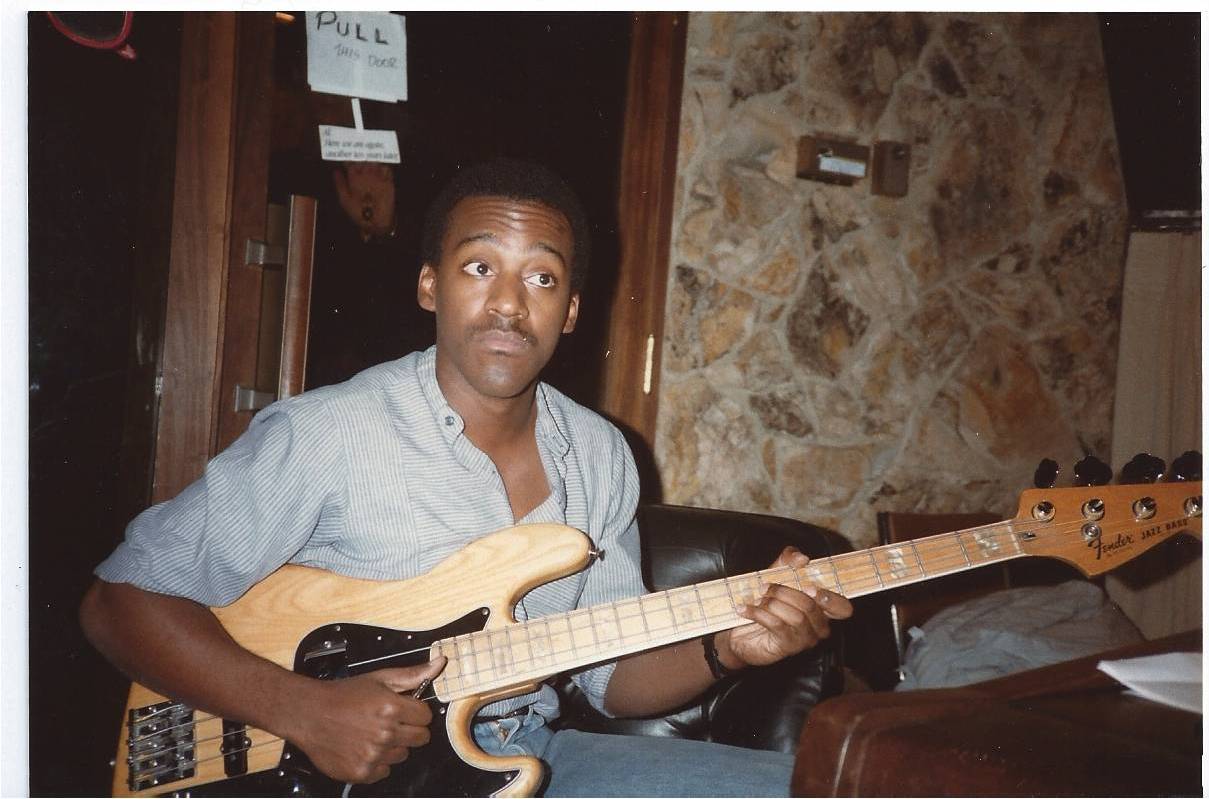
I first became aware of Marcus when I saw him playing bass with Miles Davis at the trumpeter’s Hammersmith Odeon ‘comeback’ gig in ’82.
He quickly became one of my bass heroes a few years later when I was bowled over by his contribution to Miles’ Star People album.
Marcus’s name came up again recently when I was talking to someone about great multi-instrumentalists. In the soul/funk/R’n’B world, obviously there’s Stevie, Prince, Lewis Taylor and Sly.
Marcus’s 1983 debut Suddenly almost puts him up there with that esteemed company too, though in the final analysis it suffers from a lack of top-quality material.
Marcus has put it on record that he was first inspired to play music by Michael Jackson and Stevie, and Suddenly was his first attempt to enter their world of quality soul/funk/R’n’B songwriting.
He’d certainly paid his dues for Warner Bros Records by 1983, producing, composing and/or playing bass with David Sanborn, Donald Fagen, Joe Sample, Roberta Flack, Grover Washington Jr. and Claus Ogerman, so a Warners solo debut was always on the cards.
You can hear elements of ZAPP, Gap Band, The Time and Cameo on Suddenly, and if Marcus doesn’t quite establish himself as a genuine ’80s funk contender, there are a myriad of great grooves and musical touches to enjoy.
He pretty much plays all instruments, getting in selected guests (drummers Harvey Mason and Yogi Horton, Vandross, Sanborn, Mike Mainieri) to add spice here and there.
By his own admission, Marcus is not a great singer, his voice rather light and uncertain, but his bass and keyboard playing, songwriting and arranging really save the day.
‘Lovin’ You’ is uplifting pop/funk with a classic bassline, while ‘Just What I Needed’ features some great Richard Tee-like, gospel-tinged piano from Marcus. And his piccolo bass solo on ‘Much Too Much’ had me checking the sleevenotes in vain for the presence of late great guitarist Eric Gale.
‘Just For You’ was previously recorded by David Sanborn on the classic Voyeur album, but here it gets a nice new vocal treatment.
It’s telling though that the closing instrumental ‘Could It Be You’ is by far the most successful track, featuring Miller’s fabulous fretless bass solo. It was later covered excellently by Dizzy Gillespie on his 1984 Closer To The Source album.
Singles Released:
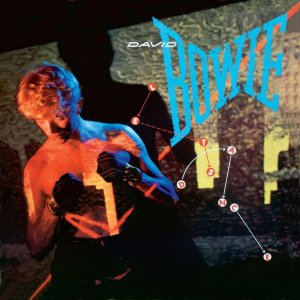
‘Let’s Dance’ (#1)
‘China Girl’ (#2)
‘Modern Love’ (#2)
‘Cat People (Putting Out Fire)’ (#26)
Bowie on Let’s Dance: ‘At the time, it was not mainstream. It was virtually a new kind of hybrid, using blues-rock guitar against a dance format. There wasn’t anything else that really quite sounded like that at the time. So it only seems commercial in hindsight because it sold so many. It was great in its way, but it put me in a real corner in that it fucked with my integrity! It was a good record, but it was only meant as a one-off project. I had every intention of continuing to do some unusual material after that. But the success of that record really forced me, in a way, to continue the beast. It was my own doing, of course, but I felt, after a few years, that I had gotten stuck…’
The ’80s were positively dripping with fine debut albums but equally cursed with a lot of substandard sophomore efforts.
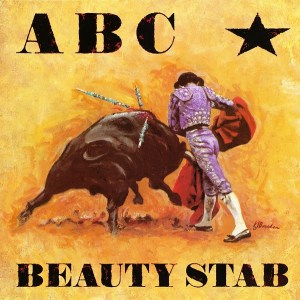
As the music biz cliché goes, you have your whole life to come up with your first album but only six months to make the followup. ABC could hardly have got it more right with their 1982 debut Lexicon Of Love, a ravishing collection of string-drenched, post-disco torch songs, but they came seriously unstuck with Beauty Stab a year later.
Seen as ‘ABC go heavy metal’ by much of the music press at the time of release, these days Beauty Stab just sounds like a pretty tuneless but beautifully-produced rock/pop album with the odd ‘political’ lyric and barmy moment thrown in (the jazz-waltz interludes in ‘Love’s A Dangerous Language’, cacophonous finale to ‘That Was Then’, atonal strings that kidnap ‘Bite The Hand’, Martin Fry’s rhyming couplets throughout…).
Though not exactly heavy metal, the guitar playing is pretty unreconstructed throughout and seems to be searching in vain for some Fripp-style insanity. And the album is thankfully graced with Roxy/Lennon/Sly drummer Andy Newmark, whose playing is lovely, especially on the very Avalonesque ‘If I Ever Thought You’d Be Lonely’. Co-producer and future Art Of Noise member Gary Langan does a great job too, in the main eschewing ‘80s production values in favour of a dry, ballsy mix and some strikingly original touches.
The problem is, for all its undoubted craftsmanship, amusing lyrics and faux grittiness, the album is short on memorable choruses. ‘Hey Citizen’, ‘King Money’ and ‘Power Of Persuasion’ have classic ABC hooks but fail to deliver catchy B-sections.
A quick survey of the track titles and it’s almost impossible to remember a chorus, save the opening ‘That Was Then…’, and that spells trouble. Unsurprisingly the album works best when the guitars simmer down a bit and Fry’s vocals take centre stage, as on ‘By Default By Design’ and fine state-of-the-nation closer ‘United Kingdom’.
Commercially, Beauty Stab was not an outright disaster, reaching #12 in the UK album chart and selling over 100,000 copies, but it was a big disappointment after such a successful debut. Acclaimed music writer Simon Reynolds even went as far as to call it ‘one of the great career-sabotage LPs in pop history’.
In late-1983, Britain was turning its back on back on guitars and kitchen-sink lyrics; glamour and fun were back in, typified by Wham!, Howard Jones, Culture Club, Spandau Ballet, Duran Duran, even Bowie – all of whom cashed in on the vibe and musical exuberance of Lexicon Of Love. At the end of the year, Fry famously burnt his gold suit in protest.
Drummers and bassists: this album’s for you. And it’s for guitarists, percussionists and fans of great music too.
Put simply, Steve Khan’s hard-to-track-down Casa Loco has enthralled me and a whole generation of jazz and jazz/rock aficionados for over 30 years.
The compositions and performances of guitarist/leader Khan, bassist Anthony Jackson, drummer Steve Jordan and ex-Weather Report percussionist/vocalist Manolo Badrena are unique and unforgettable.
The album is also totally unclassifiable – a ‘fusion’ band playing a blazing surf-rock cover tune (‘Penetration’)? An unhinged Puerto Rican percussionist singing in quasi-Spanish but sounding remarkably like Sting?
Casa Loco is full of such beautiful and unpredictable juxtapositions. And it’s also blessed with Jean-Michel Folon’s eye-catching cover art.
I had previously bought Steve’s 1981 album Eyewitness just on the strength of the Folon cover but was immediately blown away by the all-time-great Jordan/Jackson rhythm section, Khan’s enigmatic, inimitable voicings and Badrena’s inspired percussives. But Casa Loco, the 1983 follow-up, cranked everything up a notch.
Steve Khan, the son of Sinatra/Dean Martin/Doris Day lyricist Sammy Cahn, is one of the most respected guitarists of the ‘fusion’ era. He played on not one but four of the great Steely Dan tunes (‘Peg’, ‘Babylon Sisters’, ‘Gaucho’, ‘Glamour Profession’), contributing to the latter one of the finest guitar solos in the band’s oeuvre, though he has mixed views on the painstaking recording process that led to those landmark pieces.
Check out his great interview with Leo Sidran for more on this and also a good overview of his career in general. But Steve is also one of jazz and fusion’s most erudite and honest figures, revealing (almost) all on his excellent website. He knows where the bodies are buried…
Steve, who recently released a well-received solo album Subtext, spoke with great candour and humour to movingtheriver.com from his New York City base.
Doug Epstein
MP: Casa Loco still sounds fantastic over 30 years on – how important was engineer Doug Epstein in the recording process?
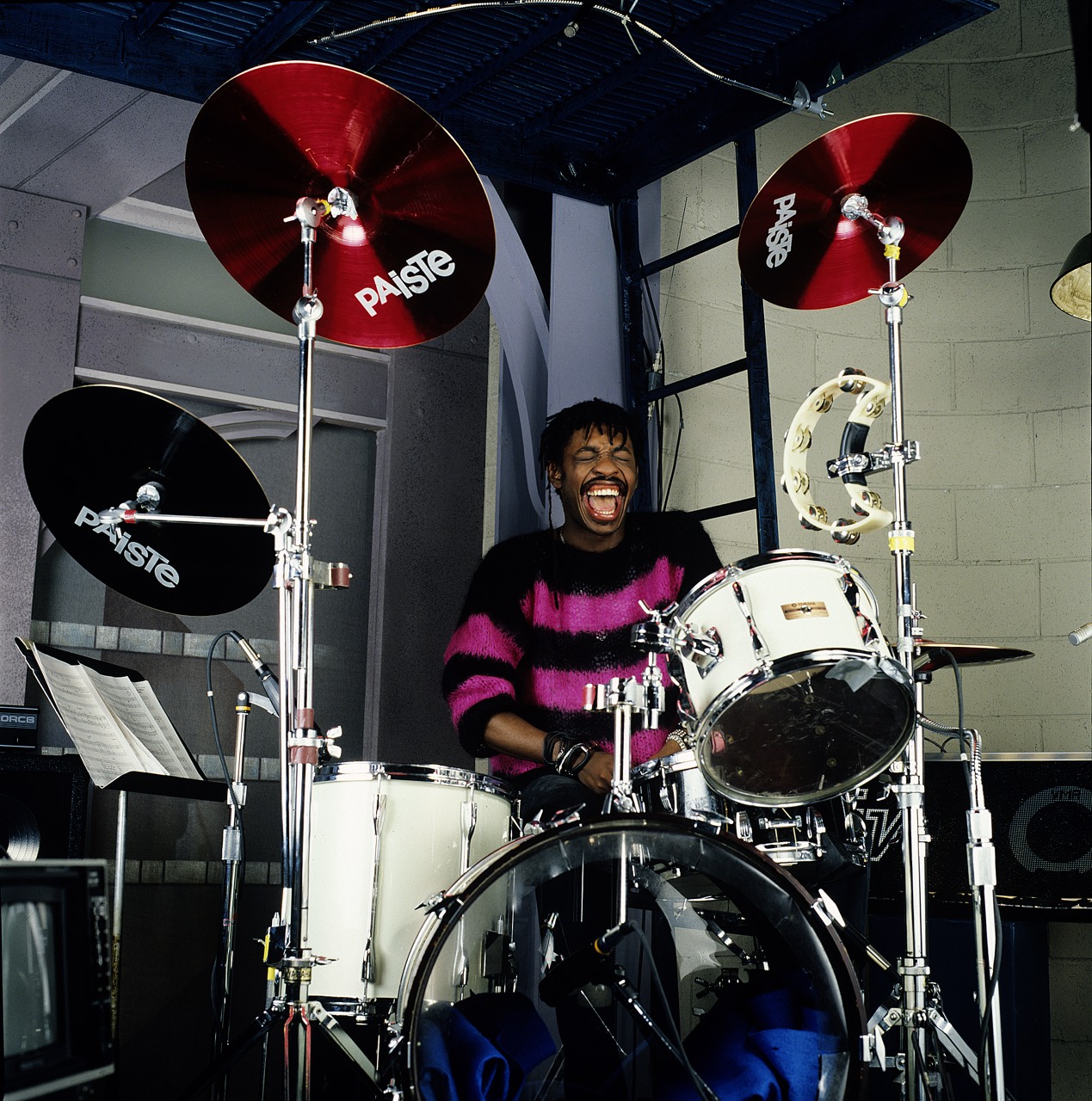
SK: On countless levels, Doug Epstein was huge in all of this. At that time, he was the only person, on the technical side of things, who had participated in every single recording of mine. I owe him so much. He was always full of enthusiasm and energy for whatever it might have been that I was doing, and he encouraged me to do more. Knowing the financial difficulties we were having, he was the first one to offer to try to get the executives at Mediasound Studios to give us a break on the recording costs, and everyone there was wonderful to us. Nothing, of course, was ever free, but they tried their best to help. At the recording end of things, Doug was absolutely fearless. I think that most of the problematic issues came from Steve Jordan’s constantly changing, per tune, hybrid kit of drums: a combination of natural drums and Simmons electronic drums. Then there was Manolo’s amazing percussion set-up which included all his natural and supernatural sounds, plus the electronics emanating from the Syn-cussion that he was using back then. To accommodate all of that on 24-tracks, with one track taken for SMPTE code and another one blank just because of the risk, there were really only 22 tracks available. In the end, Doug had to know where each tune was headed in terms of possible overdubs, vocals, etc. He did all of that. But, it has to be noted, that Steve Jordan – where our mixing process was concerned – was hovering over Doug’s shoulder the entire time, and in many ways Steve is totally responsible for being the protector of Anthony’s bass sound and playing, and for his own drums, of course. Steve’s contributions in this regard were indispensable to the overall sound that you have come to know. Steve was present for the mixes on all three of our recordings together. He had a vision and a sound in mind, and he pushed hard for that. In great part, that’s why he has become an excellent producer himself – he has a great ear for these things.
Steve Jordan Photo by Deborah Feingold
There’s a big Police influence on Casa Loco. Who brought that into the band?
I would say that Steve Jordan brought that into the band. I don’t think Anthony had ever heard anything by The Police. The fact that Manolo sounds a bit like Sting at times is just a cosmic accident. It’s not intentional at all. And, of course, 90% of the time Manolo is either singing in Spanish or vocalese, or his own form of gibberish! Recently, the great French jazz journalist Frêdèric Goaty wrote a piece for MUZIQ Magazine about his perceptions of the influence of The Police in contemporary music, and he cited all three of our albums as examples.
Regarding Steve Jordan’s famous drum solo on the title track – how the hell did you and Anthony stay in time when he really starts going out?!
Speaking for myself, it wasn’t easy. Anthony and Steve had a way of stretching the rhythmic boundaries in ways that would often confuse me, and I would get turned around. It was always an exercise in feel and concentration. That day, in the studio, my concentration was at its highest level, because there was no way that I was going to screw something up and ruin Steve Jordan’s incredible drum solo! No f***ing way! It remains one of the great moments on any recording of mine. I think that the complexities of that solo section, which is really a simple Latin tumbao, are demonstrated by the fact that Modern Drummer magazine published a transcription of the drum solo, but with the tumbao completely turned around and written out incorrectly! So, even an educated musician can get screwed-up with that one. I remember once when we were playing at Seventh Avenue South here in New York City, Bob Mintzer, one of the greatest musicians that I’ve ever known, came up to me and said, ‘What the f*** are you guys doing? I can’t ever find one!’ If Bob Mintzer felt that way, I guess there isn’t a much higher compliment. But it was never our intention to play anything that was purposely confusing to anyone.
The structure of ‘Some Sharks’ is incredibly intricate with many repeat signs and tags – were all the guys reading charts while recording this?
At that time, I don’t believe there were any formal charts to any of the tunes. We rehearsed hard and long, and we were prepared. The first lead sheets were done afterwards, I believe. I did them for copyright purposes, nothing more. I remember, when doing that, how astonishing it was to see, on paper, the intricacy of the music that we had created by improvising, and just jamming together pieces of music. It’s possible that I had written out ‘Uncle Roy’ beforehand, but maybe not. It’s hard to remember now. My facualties are not what they once were! But, when I listen to what Steve Jordan contributed to that tune with his unique concepts of beat displacement, it’s remarkable, and when you add in Anthony’s perspective, it makes perfect sense as to why the recordings that we made together between 1981-1983 have influenced bassists and drummers all over the world. Anthony and Steve deserve all of that adoration and more.
‘The Suitcase’ hints at a Discipline-era King Crimson influence – is that accurate?
I have never paid any attention to King Crimson’s music at any time. However, thanks to MTV, I did get to hear ‘Elephant Talk’ and I absolutely loved that tune. I love Adrian Belew and only wish that I could create 5% of the sonic textures that he creates. He is totally unique and brilliant. I admire him a lot.
Why is (great British drummer) Steve Ferrone thanked in the album credits?
To tell you the truth, I have no idea! In those days, we thanked people who stopped by the studio while we were recording, just for their good vibes. It’s also possible that Steve Ferrone lent something, a piece of gear, to Steve Jordan. I just can’t remember. We thanked people who didn’t even exist. For example, at one of our sleep-deprived rehearsals, Steve Jordan was trying to say the name Gore Vidal, and somehow it came out as Gordie Voll, and once he said that, I was rolling on the floor laughing – it was just so silly and funny. So Gordie ended up in the ‘special thanks’ section. I thanked a CNN newswoman, Marcia Ladendorff, who I had a crush on. I thanked an actress that I had a crush on too, Roberta Leighton. I thanked Flippy Hussein, who is not a real person – just a goofy name that the great vibraphonist David Friedman made up one day years before. But most of the names mentioned were people who in some way, shape or form contributed something positive, even if only via their encouragement to the music and the effort to keep going forward.
Jaco
Is there anything else printable you can tell us about Steve Jordan’s crazy house of music (the Casa Loco or ‘crazy house’ of the album title – Ed.) ?
In all honesty, no! Unless someone wants to burn all their bridges behind them, there is a sacred trust that exists between musicians, especially those who are bandmates, or even just work on a special project together. You don’t talk ‘out of school’ about things that you see and hear, sometimes not even after a person has passed away. Those kinds of stories can be hurtful, and even end-up hurting relatives or loved ones. In those days, each of us was going through something difficult in our personal lives, and our behaviour reflected that. Trying to just get together to rehearse for a few hours a couple of days per week was never easy, but we managed. And Steve Jordan’s loft, his home, was a huge part of that. I can only say that all kinds of hysterical shit used to happen there, including people trying to stop by to hang out with us while we were trying to work. Jaco Pastorius was one of them. He used to phone Jordan all the time and beg us to let him come by. We reached a point where we would never answer the phone and never allow anyone in except for the delivery guy who was bringing by Steve Jordan’s breakfast – at 2pm in the afternoon! Does that give you an idea?! No matter what transpired those days were some of the most fun and productive days of my creative life. I have rehearsal cassettes from those times – I used to listen to them every so often – and the constant laughter on those tapes about absolutely nothing is priceless. It was just so damn funny most of the time and exasperating too, at least for me!
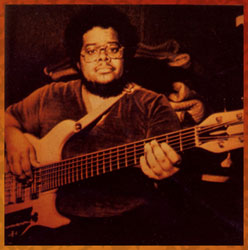
Anthony Jackson photo by David Tan
I was astonished to read that the whole album was recorded in just TWO days, quite amazing when you consider the time spent on other albums of the era (Hello Donald and Walter…). How do you explain that? Was it just a case of getting the goods in the shortest possible time with the meter running?
Well, though it is true that the serious content of Casa Loco was recorded during May 21/22 1983 at Mediasound, I didn’t realize that we were going to need a third day just for Manolo Badrena! I actually thought that we could finish a performance of a piece and then he would simply, right then and there, overdub his vocals. I’m speaking about tunes like the title track, ‘Some Sharks’ and ‘The Suitcase’. But what happened really threw me for a loop, because I did not want to spend the money, other than for mixing, to return to the studio just for Manolo. Thinking this way demonstrated my lack of experience and understanding that recording vocals, by anyone, requires a different kind of care and patience. It is something that you have to plan for. I was too worried about spending money for an extra day in the studio! The great lesson in this is always the same: if you begin by being cheap, you will pay for it later! There is, of course, a most wonderful expression for this very thought in Spanish: ‘Lo barato sale caro!’ If you are unwilling to spend money, you will end-up with a lousy or sub-standard sounding recording, and this is something that I never want to be a part of, because you have to live with the results forever. So as the recording unfolded, during ‘Casa Loco’, ‘Penetration’ and ‘Some Sharks’, Manolo actually just sat there and didn’t play a damn thing while Anthony, Steve and I were performing those tunes. At the time, he just motioned wildly to me that he could not hear himself in the headphones. Mediasound had one of the early systems whereby each musician could make his own headphone mix. Each time this happened, we all tried to work harder with Doug to help Manolo get what he wanted and needed. It was so frustrating to have him there and not have him with us making that music. So, in the end, I had to spend the time and money overdubbing him on those tunes. I was furious about this! In sharp contrast to that, if you just listen to what Manolo contributes to ‘Uncle Roy’ – there is not a sound there that was not performed completely live. It is simply brilliant – no one else could have created textures like that. He’s one of the most unique musicians on this earth but not easy to work with. Years later, I learned that it really wasn’t the damn headphones at all; he had been upset that he wasn’t getting paid for the sessions, as if I was pulling a ‘fast one’ on him and secretly hoarding money somewhere. This is, of course, the furthest thing from the truth. We had a number of band meetings during our rehearsals and I clearly explained to everyone that I was paying for the album out of my own pocket, and that after I had recouped my investment in full, if that ever happened, whatever money there was to be had, we would all split it equally four ways. Period! In other words, we were all going to get rich together, or stay exactly as we were, but together. It was certainly my impression that Manolo understood that. Anthony and Steve were on board, as they always were, and I will never ever forget their selflessness when it came to this music. I love them both and I’m deeply indebted to them, forever, no matter what else has happened.
According to your website, you paid for recording costs entirely out of your own pocket – have you managed to recoup some of this over the years? I hope so…
We’ve addressed a portion of this during my answers to some of the other questions. But, the answer is: No! Absolutely not! I believe that, back then, my total investment in making Casa Loco was $17,500. That might not sound like much in 2015, but it felt like a fortune to me, having to go into my personal savings to do this. But that’s how much it meant to me. It was the second time that I had done that, Evidence (1980) being the first. And, it would not be the last; I have done this seven more times since! In the end, I was given advances from Trio Records (Japan) and eventually from Antilles Records (USA) that totalled $11,000, and that’s all that I have ever seen come back to me from this recording. In short, as it has been with all of my self-financed recordings, I will never ever again see that money come back to me. Do I regret it? Of course not. I am, and will always be, exceptionally proud of those recordings because everyone who participated gave something of themselves to do it. I don’t forget those people, those players! Never!


 Just one note, and you know it’s Robert Cray.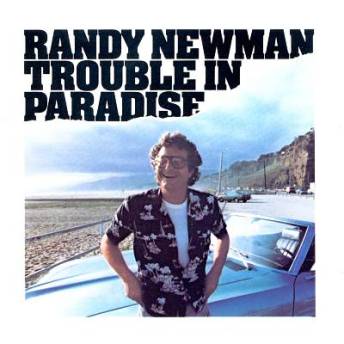
 It all came back to me recently when I heard some church bells in Totnes ringing out the opening bass melody from ‘We Could Send Letters’.
  Years before his huge hit ‘Ghostbusters’, Ray had played guitar on some great albums of the ’70s (Stevie’s Talking Book and Innervisions, Rufus/Chaka Khan’s Rags To Rufus, Harvey Mason’s Funk In A Mason Jar, Marvin’s I Want You, Leon Ware’s Musical Massage), not to mention sessions with the likes of Boz Scaggs, Barry White, Tina Turner, Herbie Hancock and Bill Withers.


 EMI America, released 14 April 1983



 movingtheriver.com