I’m certainly not alone in finding the seaside very evocative of childhood memories and, in turn, musical revelations gone by.
Walking on Devon’s Slapton Sands recently, I was taken back to family holidays at St Margaret’s Bay, a little village atop the famous White Cliffs of Dover on the English Channel.
Armed with my Walkman, I’d take off towards the creepy, deserted air-raid shelters, then scramble up the steep chalk track to enjoy the huge expanse of sea in all directions and the French coast in the distance.
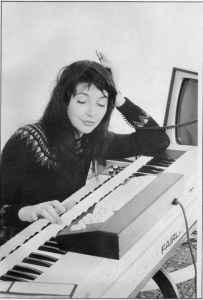
The two tracks most redolent of that time – and two which somehow seem to capture something about the English fascination with all things nautical – are Kate Bush’s ‘And Dream Of Sheep’ and Peter Gabriel/Robert Fripp’s ‘Here Comes The Flood’. They are almost indistinguishable to me and will forever be connected to that coastline and the seaside in general.
Gabriel’s sea song was originally recorded for his 1976 debut album in a bombastic style. But in 1978, he laid down a much gentler, far superior piano/vocal version, to which Fripp later added Frippertronics and a spoken-word segment from his spiritual guide/Gurdjieff-protegee JG Bennett (who also turned up on David Sylvian’s Gone To Earth).
Gabriel’s lyric seems to point towards the inhabitants of an island (England?) joining forces (telepathically?) to save themselves from a pending (apocalyptic?) tsunami. In doing so, the islanders taken on mystical, extra-sensory powers.
There are shades of the Genesis track ‘Supper’s Ready’, with its epic tale of good versus evil, and also elements of the research into ESP that Gabriel was apparently doing at the time.
Bush’s sea song kicks off the extraordinary Ninth Wave suite (and uses very similar chords to ‘Here Comes The Flood’: C#min, A and B) taking up the entire second side of her classic 1985 album Hounds Of Love. We are thrust unceremoniously into a psychic association with a female protagonist who finds herself in the middle of the sea after a shipwreck. Echoes of past/present obsessions, loves and losses float to the surface of her mind (including the Radio 4 Shipping Forecast), ostensibly to keep her awake so that she doesn’t drown.
The conclusion of the song cycle suggests that she’s now at peace and in a far more positive state of mind, either in death or safe at shore.
Years before his huge hit ‘Ghostbusters’, Ray had played guitar on some great albums of the ’70s (Stevie’s Talking Book and Innervisions, Rufus/Chaka Khan’s Rags To Rufus, Harvey Mason’s Funk In A Mason Jar, Marvin’s I Want You, Leon Ware’s Musical Massage), not to mention sessions with the likes of Boz Scaggs, Barry White, Tina Turner, Herbie Hancock and Bill Withers.
He also enjoyed a few big hits as part of Raydio before going solo in ’82. Either side of ‘Ghostbusters’, he put out two interesting albums which are now released as a good-value two-fer by Cherry Red/Soulmusic.com.
’83’s Woman Out Of Control unleashes a kind of feminist funk with various tracks unashamedly taking the laydeez’ side in the battle of the sexes, creating something pretty original. ‘Electronic Lover’ and ‘Invasion’ also rock the kind of psych-synth-funk sound that Prince and his contemporaries were tapping into at the time.
‘85’s Sex And The Single Man, the post-‘Ghostbusters’ album, ups the stakes with a lot more fuzz-toned lead guitar and also some weird synth-pop fun on ‘Girls Are More Fun’ and ‘I’m A Dog’. ‘One Sided Love Affair’ is an amusingly-shameless ‘Hello’ rewrite and there’s some cracking Cameo-style funk/rock on the title track.
‘Men Have Feelings Too’ demonstrates more of his rhythm-guitar mastery. I was going to say that his playing sounds very Prince-influenced but it’s the other way round; check out this masterclass for the evidence. The albums were only minor hits – apparently Arista boss Clive Davis wasn’t blown away by their modest chart placings and was slow to return Parker Jr.’s call when contract-renewal time came around.
While it’s true that there’s nothing as immediate or hook-laden as ‘Ghostbusters’ on these two records, they’re definitely worth reappraising and make nice companion pieces to Miles Davis’s You’re Under Arrest, Cameo’s She’s Strange, Prince’s Purple Rain and The Time’s Ice Cream Castle. Ray’s still going strong too, playing festivals and turning up on the occasional session.
N.B. Parker Jr. has recently been subject to an out-of-court settlement regarding the similarity of ‘Ghostbusters’ to Huey Lewis And The News’ ‘I Need A New Drug’. Judge for yourself…
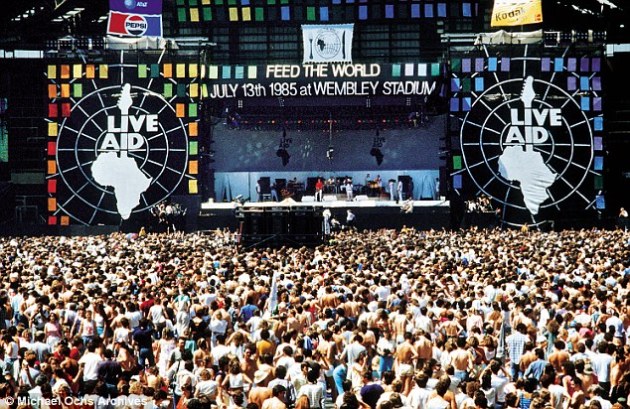
With barely a mention in the media or press, Live Aid turns 30 today.
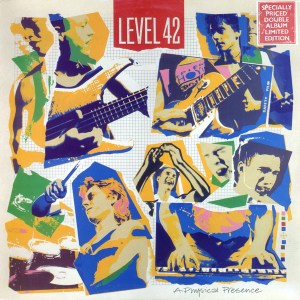
I was a very excited 12-year-old pop fan on Saturday 13th July, 1985. The weather was hot and sunny and the whole nation seemed united. On the morning of Live Aid, my dad drove us up to the Virgin Megastore on Oxford Street where I bought cassettes of Level 42’s A Physical Presence and Scritti Politti’s Cupid And Psyche ’85 in preparation for the day. The streets were almost deserted. We got home around midday, turned the telly on and settled in for the afternoon.
That was then but this is now, as ABC sang. But how does the music from that day stand up in 2015?
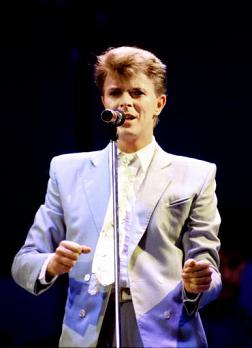
Though many of New Pop’s architects got in on the act, it was the older artists who – for better or worse – made the biggest impact on the day (Queen, Tina Turner, Phil Collins, Status Quo, Dylan, Led Zep, Dire Straits, The Who, Bowie, Jagger). Apart from Led Zep and Dylan’s hilariously dodgy turns, Live Aid reminded people that the oldies were still hungry and could still cut it live, and the event arguably ushered in the mainstream success of Peter Gabriel, Steve Winwood, Eric Clapton and Robbie Robertson.
Many of the youngsters fudged it: Spandau were shown up by their lack of musicianship and quality material, Adam Ant chose the wrong songs, Sade were dull, Style Council were shrill and under-rehearsed, Duran were hamstrung by LeBon’s famous vocal boo-boo, Paul Young and Alison Moyet cornily rehashed some very old soul-revue moves and The Thompson Twins sounded out of their depth despite backing from Madonna and Nile Rodgers.
Perhaps surprisingly, U2, Madonna, Howard Jones, George Michael and Nik Kershaw might just have been the best ambassadors of Pure Pop on the day with engaging performances and solid musicianship. Post-punkers such as Sting, Elvis Costello and The Cars were merely functional.
But maybe the biggest disappointment of the day was the lack of black superstars (Prince, Michael Jackson, Stevie, Miles?), female solo artists and Second British Invasion popsters (Culture Club, Eurythmics, Tears For Fears, Frankie Goes To Hollywood).
Naysayers claim that most of the acts appeared simply to further their careers. Well, yes, surely that was a factor for the younger artists but it’s a crushingly cynical view. Anyway, did you buy ANY music as a direct result of seeing Live Aid on the box (Queen’s Greatest Hits doesn’t count)?
I just enjoyed it for what it was. Anyway, most of my favourite pop acts didn’t get anywhere near Live Aid (Scritti, Jacko, Propaganda, Level 42, Prefab). It’s hard to really complain when the event has raised over £150 million.
So three cheers to Bob Gandalf, as Joss Stone memorably called Geldof.
What are the greatest live albums in music history?
James Brown’s Live At The Apollo. Donny Hathaway’s Live and Bill Withers’ Live At Carnegie Hall might get a mention, but I would make a case for Level’s A Physical Presence too.
Quite simply, this album is the nearest a British band has ever come to the kind of effortless fusion of black music styles achieved by US supergroups such as Weather Report and Earth Wind & Fire. But Level 42 were always a far edgier proposition than those bands, mixing up the funk, world-class musicianship and jazz/rock with an almost punky intensity.
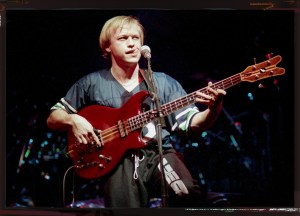
Mark King in 1985
Recorded in March 1985 at such suburban funk meccas as Golddiggers in Chippenham, The Coronet in Woolwich and The Hexagon in Reading, A Physical Presence showed off Level on the cusp of their mainstream pop breakthrough.
But you’d never know it. It’s hard to imagine any other British band before or since attempting the audacious fusion instrumentals ‘Foundation And Empire’ or ’88’.
Police-esque ‘Follow Me’ and driving ‘Chant Has Begun’ hinted at a new rockier direction which was quickly jettisoned when they got back into the studio for World Machine. Mark King’s vocals are punchy, distinct and soulful throughout.
Has there ever been a better British funk/R’n’B rhythm section than Mark King (bass) and Phil Gould (drums)? Bass players beware – this album features a succession of some of the most memorable and inventive B-lines in funk history. Try ‘Eyes Waterfalling’, ‘Kansas City Milkman’ and ‘Turn It On’ for starters.
Phil Gould’s drumming is a perfect combo of groove and chops, whilst somehow also retaining a ‘British’ sound, kind of a mixture of Bill Bruford and Billy Cobham. And keyboardist Mike Lindup gets through so much work that he sometimes sounds like he’s got four hands (with a real Lonnie Liston Smith influence on the Fender Rhodes), and 90% percent of his intricate playing is without the aid of a sequencer.
It’s hard to believe that only 18 months later, after recording commercial breakthroughs World Machine and Running In The Family, the classic Level line-up would splinter for good amidst touring pressures, musical differences and personal issues. But APP is a glorious snapshot of a golden summer and the pinnacle of surely the UK’s greatest ever jazz/funk/pop band.
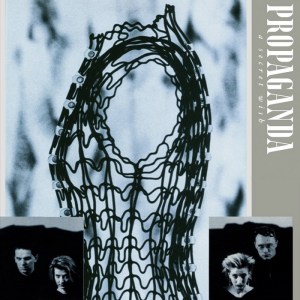
To many fans, A Secret Wish represents the peak of ’80s pop.
The glamorous though mysterious project was a flawed masterpiece but also the beginning of the end for big-budget, endlessly-fussed-over ‘concept’ albums.
It doesn’t really sound much like much else around in mid-’85 (though Pet Shop Boys and a-Ha were definitely listening), nor is it particularly similar to other ZTT releases or Propaganda’s subsequent albums.
A large part of the mystique is provided by Stephen Lipson’s pristine, widescreen production (Trevor Horn only produced ‘Dr Mabuse’), as well as his formidable mixing and guitar work (check out the extended mix of ‘Duel’). Claudia Brucken’s lead vocals are original and Suzanne Freytag’s spoken-word interludes carry unmistakable echoes of Nico (emphasised by their seriously weird ‘Femme Fatale‘ cover from the album sessions).
Yes guitarist Steve Howe contributes a nifty solo to ‘The Murder Of Love’ and David Sylvian has a hand in writing the gripping ‘p:Machinery’. But man of the match is ZTT house keyboardist Peter-John Vettese, purveyor of doomy soundscapes and intriguing chord voicings. Josef K’s post-punk classic ‘Sorry For Laughing’ is reinvented as a Wagnerian synth-pop anthem and there aren’t many more epic album openers than the majestic ‘Dream Within A Dream’.
Paul Morley, ZTT marketing/content man and former husband of Claudia Brucken, has talked about Trevor Horn and David Sylvian’s involvement in A Secret Wish:
‘When Trevor pulled out of producing them, I actually asked David Sylvian. While he was thinking about it, he came up with the ghostly top line of ‘P:Machinery’ – the music, if you like – and a gorgeous watery slowed down version of ‘Duel’, but he decided against producing them, and it stayed within the Sarm (London recording studio owned by ZTT label owners Trevor Horn and Jill Sinclair) pop factory. Actually, another sign of the split between sensibilities at the label: I asked David Sylvian to produce Propaganda and Jill approached Stock Aitken and Waterman!’
A Secret Wish wasn’t a huge hit and surely didn’t make back its sizeable recording costs, reaching just 16 in the UK album chart, but the singles ‘Duel’ and ‘p:Machinery’ both made the top 30.
The band picked up the first-class rhythm section of ex-Simple Minds pair Derek Forbes on bass and Brian McGee on drums (as well as Bowie/Dolby guitarist Kevin Armstrong) and toured the album extensively. I very clearly remember this performance on the BBC music show ‘Whistle Test’ in late 1985. Happy days:
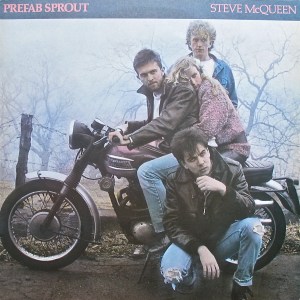
Steve McQueen producer Thomas Dolby had taken part in a Radio One ‘Round Table’ singles review programme in early 1984, waxing lyrical about Prefab’s ‘Don’t Sing’.
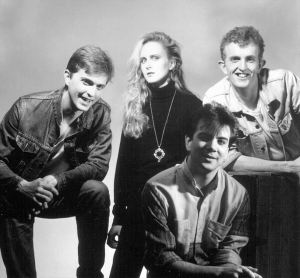
The Sprouts happened to be listening in and asked their manager Keith Armstrong to ring Dolby the next day. Dolby takes up the story:
‘Keith said, “It so happens we’re actually looking for a producer right now. Are you interested?” I said, “Absolutely.” So they said, “Well, we don’t have many songs on tape to play you, but we’d like to invite you up to Paddy’s (McAloon, Prefab singer/songwriter) house.” I took the train up, spent the day there. He lived on the top of a hill in an old Catholic rectory where his mum had looked after the church. There were crucifixes on the walls. His dad, who’d had a stroke, was ill in bed upstairs. Paddy took me to his room and pulled out this stack of songs. He’d squint at them and strum his way through them. He would write notes for chords and melodies over the top of the lyrics but primarily it was about the poems.’
The songs for Steve McQueen were worked up in rehearsals with Dolby at Nomis Studios in West London in the autumn of 1984, before the recording sessions proper started at Marcus Studios.
The Sprouts apparently found the Big Smoke in turns beguiling and baffling. Taken out for dinner by CBS execs, they were introduced to the dubious pleasures of haute cuisine. According to Dolby, upon being delivered a tiny plate of food, bassist Martin McAloon was once heard to utter, ‘That was for me neck – now what’s for me stomach?’!
Dolby brought out the best in singer Wendy Smith, often using her unique soprano almost as a musical instrument, especially on ‘Moving The River’ and ‘Blueberry Pies’.
Dolby realised that part of his role as producer was to ‘smooth out’ some of the rough edges of Paddy’s remarkable songs:
‘What happened when the band started to arrange those was that there were lots of extra beats here and there, strange chord changes or rhythm changes, or odd lengths of phrases. The musicians tried to sort of accommodate those, but in fact what needed to happen was a few of the rough edges needed to be trimmed off. But at the same time, I didn’t want to throw out the baby with the bath water. I mean, what made them so unique is that they defied logic. So the task, really, at hand, for me, was how to elevate them to a more accessible level, commercially, without homogenizing the essence of the music.That was the first meeting with Paddy. He’s a very interesting guy, very well read but humble.’
The album was mixed at Farmyard Studios in Buckinghamshire. That was where Paddy really became aware of what Dolby had cooked up:
‘It’s taken me decades to try to absorb what it was that Thomas did. I mean, he had a great ear for individual sounds, he wasn’t swayed so much by the things of the day. He had a Fairlight and a PPG Wave and he would use them sparingly, and he had no time for the Yamaha DX7 and the things that everyone else rushed out and bought. He was into synthesis really. He didn’t make a big thing of it… it was just what he did, in addition to having a good sense of structure.’
Dolby talks about Paddy’s vocal style on the album:
‘He can be coaxed into letting rip every now and then. So one of my favourite things about the album is that you get these occasional primal screams. The way he sings “Antiques!”, the opening line. And then later on in “Goodbye Lucille” which is this very sort of lush, soft song, in the chorus he just lets rip at the end with this scream. And I always liked that he did that on that album. In later years he tended to be this sort of breathy crooner, and you hear less of that raw side.’
Drummer Neil Conti on recording Steve McQueen:
‘When we went in to record the album, there was a very relaxed vibe which I think you can hear in the music. After a rather tense start, when Thomas Dolby, who was used to drum machines, basically tried to get me to play like a machine, things loosened up and we had some hilarious late night jams after coming back from the pub. The track “Horsin’ Around” was recorded after one such rather inebriated sojourn to the boozer and you can hear Martin laughing while I’m counting it off. That track is all over the place, but it was just what the song needed. We couldn’t get it at all before we went to the pub to horse around a bit. I think the relaxed vibe really is one of the keys to why that album sounds good. No clicks, three takes max of each song, very loose and natural.’
Steve McQueen reached #21 on the UK album chart, perhaps a slight disappointment, but the critics generally loved it. It made #4 in NME’s Albums of 1985 poll and was well-received in Europe and the US. Rumours even appeared in the press (some good CBS PR) that Prefab might play at Live Aid. That was never going to happen but half the band did back David Bowie (producer Thomas Dolby, drummer Conti and occasional guitarist Kevin Armstrong).
An extensive UK and European tour followed the album release after which the band quickly recorded Protest Songs in late 1985, though it wouldn’t released for another four years. There was so much more to come from arguably the British band of the decade.
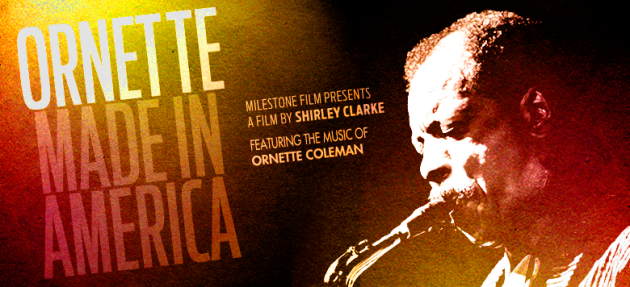
Ornette Coleman’s sad recent passing reminded me of a superb, almost totally forgotten ‘documentary’ that is begging for a DVD re-release (though it may be available in the US).
Shirley Clarke’s 1985 film ‘Ornette: Made In America’ centres around Coleman’s 1983 return to his hometown of Fort Worth, Texas, to receive the keys to the city from the mayor, open his Caravan Of Dreams venue and also perform astonishing orchestral work The Skies Of America (29 September 1983 was officially named Ornette Coleman Day).
The film weaves in re-imaginings of Coleman’s childhood in segregated Texas, surreal music-video images and talking-head tributes from scientists, writers, musicians, philosophers and William Burroughs about the impact and importance of Ornette’s music. Ornette himself is interviewed at length and we see him in conversation with family and friends.
It really is a trip (in the best sense of the word), and one of the great jazz films. I taped it off air from Channel Four in the UK when it got a one-off showing in the late-’80s. I’ll be watching it again in the next week or so – can’t wait.
Listening again to the brilliant Cupid 30 years after its release, I wonder if it sounds very dated to modern ears.
Whilst it unabashedly utilised all manner of mid-’80s technology (Fairlight, drum machines, sequencers), I don’t really ‘hear’ those elements any more. All I hear is top-notch songwriting, intriguing and intelligent lyrics, great grooves and Green’s unique vocals.
Cupid hit me at exactly the right age; it was the soundtrack to endless summer evenings, teenage crushes, adolescent musings.
Though Scritti leader/vocalist/co-songwriter Green Gartside left behind his post-punk roots and the ‘indie’ sound of his Rough Trade debut album Songs To Remember to create this major-label debut, Cupid certainly had antecedents: Green and keyboardist/co-composer David Gamson revered the highly-syncopated R’n’B/electro of The System, Chaka Khan, ZAPP and Michael Jackson, but they added some classic pop songcraft and intricate harmony.
Rough Trade boss Geoff Travis gave Green his blessing and, coupled with manager Bob Last (who also managed Human League and ABC), Green pitched the Americans his fusion of pop and funk. As he told WORD magazine in 2006, ‘The American labels were all tickled pink by these big NME interviews we did and that loosened their wallets. Bob and I were terribly persuasive as to why they should part with vast sums so we could make a record.’
Legendary Aretha/Chaka producer Arif Mardin came on board as did a raft of quality players such as Marcus Miller, Steve Ferrone, David (The System) Frank, Robbie Buchanan, Robert Quine and Paul Jackson Jr. But Green apparently turned out to be more of a perfectionist than any of them: ‘It took us a great deal of time to get our bits right and my anxiety about singing was pretty acute. I would demand to sing things over and over again and I’m not sure I ever got it better than the first time.’
Cupid featured three classic singles – ‘The Word Girl’, ‘Absolute’ and ‘Wood Beez (Pray Like Aretha Franklin)’, though eventually a total of five tracks were released as A-sides.
The John Potoker remix of ‘Perfect Way’ (far superior to the album version) even became a massive hit in the States, reaching 11 on the Billboard Hot 100 and pushing worldwide sales of the album over the million mark.
While ‘Don’t Work That Hard’ and ‘Lover To Fall’ might be deemed ‘filler’, they easily transcend that label by dint of their sprightly grooves and sheer catchiness. The beautiful ‘A Little Knowledge’ showed that Green and Gamson were on the same page as Prefab’s Paddy McAloon when it came to sumptuous, intelligent romantic ballads in the mid-’80s, and the track is a great companion piece to ‘When Love Breaks Down’.
Post-Cupid, Green and Gamson booked and then cancelled a world tour (they were apparently visited in the studio by MTV executives who told them, ‘Just think, you’ll never have to tour again!’), wrote songs for Al Jarreau and Chaka Khan, made friends with Miles (who covered ‘Perfect Way’ on Tutu), hung out with George Michael at various London nightspots, embarked on a year of press in America to cash in on the success of ‘Perfect Way’ and then reluctantly hit the studios of New York and London to record the follow-up Provision.
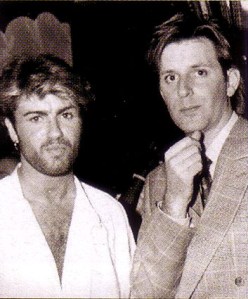
George and Green, London, 1986
A cursory listen to a radio station like Absolute 80s reveals the wide-reaching influence of Cupid on countless late-’80s bands: a-ha, Go West, Climie Fisher, Living In A Box, Pet Shop Boys, Bros and Aztec Camera all tried for those clinical, Swiss-watch-precision arrangements and uplifting pure pop sound, but generally lacked Gamson’s ingenious chord changes and Green’s gift for melody.
It’s not easy to write about an album that’s so much part of your musical DNA that it haunts you in the middle of the night and yet reveals fresh nuances every time you listen to it.
But first of all, I have to declare an interest – Wayne is one of my all-time musical heroes and has been since I was a teenager when his sax playing and compositions with Weather Report and Miles Davis totally bewitched me.
It wouldn’t be an overstatement to say that it took me 20 years to really appreciate Atlantis, and also to realise that it had to be listened to on CD and listened to loud. The recent remaster, as part of Wayne’s Complete Albums Collection, is the best I’ve ever heard it.
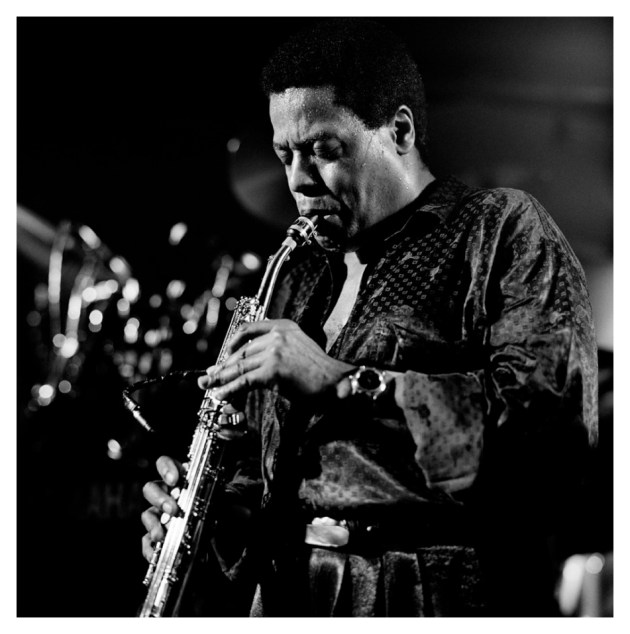
Wayne at The International, Manchester, 1987. Photo by William Ellis
How to describe the magical though totally uncompromising music on Atlantis? Itwas Wayne’s first solo release after the official split of Weather Report and it’s fair to say it wasn’t the album many fans and critics were expecting.
Itsurely remains Wayne’s least understood work. It’s ostensibly an album of through-composed, acoustic ‘fusion’, but that barely covers it. Someone once described it as the soundtrack to an animated children’s book.
Wayne seems to be weaning listeners away from a more bombastic form of jazz/rock towards a new combination of jazz, R’n’B and Third Stream which utilises sophisticated counterpoint and pure composition.
Shorter is the only player who gets any significant solo time. Acoustic piano, flute, vocals and multiple saxes supply the dense, challenging, sometimes dissonant harmonies.
Atlantis could hardly be described as a ‘jazz’ album at all; ensemble work and composition generally override individual expression, and none of the tracks ‘swing’ in a conventional sense. And yet it’s still an utterly melodic set, full of memorable, criss-crossing themes which jostle for your attention. It takes time to work its magic, but work its magic it does.
The phenomenal opener ‘Endangered Species’ (recently massacred by Esperanza Spalding) is somewhat of a ‘sweetener’ at the top of the album, like Sirens luring sailors to their deaths, as Shorter biographer Michelle Mercer noted.
Many people, me included, struggled to get very far past it since the remainder of Atlantis sounded somewhat prim and precious in comparison. I wanted to hear Zawinul and Jaco’s blistering lines, Omar Hakim’s colourful drumming, some virtuosity.
But when I studied Atlantis more closely, there are many subtle displays of instrumental mastery. Ex-Weather Report drummer Alex Acuna plays a blinder throughout, blazing through the outro of ‘Who Goes There’, Larry Klein’s bass playing is nimble and impressive (try playing along to Wayne’s intricate written lines), Michiko Hill’s piano comping is inventive and Wayne plays some fantastic solos, particularly his Rollins-style tenor on calypso-flavoured ‘Criancas’.
I remember seeing Wayne playing much of this music live to a barely-half-full London Shaw Theatre in late 1985 – it seems that audiences, booking agents and press officers alike were finding his post-Weather Report music a hard sell at this point.
Critics were generally puzzled too, although Robert Palmer noted in the New York Times that ‘it’s not an album one should listen to a few times and then knowledgeably evaluate… It is an album to learn from and live with.’
But if Atlantis was misunderstood and less than commercially successful on its original release, it seems to be gaining fans in the 30 years since.
A good yardstick is that several compositions from the album are still regularly played by Shorter’s esteemed current quartet, particularly the title track, an eerie, labyrinthine tango.
‘The Three Marias’, a treacherous tune in 6/4 inspired by press reports of three Portuguese woman being arrested for writing obscene literature, has even been the unlikely recipient of a few cover versions, perhaps most notably (though not wholly effectively) by ex-Police guitarist Andy Summers.
(P.S. I’m taking one mark off for ‘Shere Khan The Tiger’ which was far better rendered on Carlos Santana’s 1980 album The Swing Of Delight, a version whichfeatured Herbie Hancock on piano, Ron Carter on bass and Harvey Mason on drums.)
Walk Of Life (2)
Money For Nothing (4)
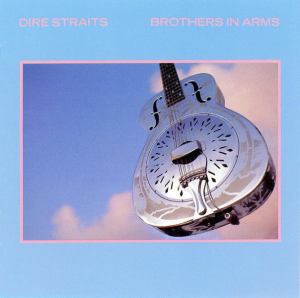
Brothers In Arms (16)
So Far Away (20)
Your Latest Trick (26)
Whilst enjoying Mark Knopfler’s considerable guitar skills and knack for writing cinematic ballads (‘Romeo And Juliet’ and ‘Private Investigations’ would probably make my top 20 songs of the ’80s), Dire Straits’ mega success has generally puzzled me.
Knopfler always seemed a Bob Dylan/Randy Newman/Donald Fagen kind of guy – subtle, intelligent and wry/wary – but Straits’ mostly meat-and-potatoes rock music told another story.
But Brothers In Arms hit at exactly the right time on its release in 1985; its digital sheen, beautifully-crafted songs, tasty drumming (Omar Hakim, except on ‘Walk Of Life’ and ‘Money For Nothing’) and mastery of various styles (ZZ Top-style boogie, roots rock, jazzy pop) created an ’80s perfect storm. It’s so much part of the furniture that it’s almost beyond criticism.
Mark Knopfler at Live Aid, 13 July 1985
Knopfler’s laidback, post-Dylan vocals are a great antidote to all those oversingers of the ’80s (and right up to the present day).
On ‘So Far Away’ and ‘Walk Of Life’, his pitching is not perfect and his phrasing throwaway, but the overall effect is pleasing possibly because it’s such a contrast to the super-slick production and playing.
And he shows himself again to be a brilliant ballad writer – ‘Your Latest Trick’ carries on from where ‘Private Dancer’ and ‘Private Investigations’ left off, a noirish classic featuring a famous sax break by Michael Brecker just as memorable as ‘Careless Whisper’ (for better or worse!).
‘Why Worry’ and the title track (apparently Knopfler’s response to the Falklands War) are timeless epics. I found myself unexpectedly very moved listening again to the latter the other day. In fact, I was surprised how generally downbeat the album was, not having heard it for a good few years.
Brothers In Arms outsold both Michael Jackson releases (Bad and Thriller) to be the UK’s best-selling non-greatest hits album of the ’80s, spending 14 weeks at number one. Surely a big reason for its success was that it was heavily promoted as a digital recording and as such was perfectly suited to the new CD format.
The fact that it was the ‘test CD of choice’ for yuppies on the lookout for new hi-fi equipment must have been a delicious irony for Knopfler and Straits manager Ed Bicknell, given the lyrics to ‘Money For Nothing’. There were even rumours that at the time other artists were struggling to get their albums pressed onto CD due to the overwhelming demand for Brothers In Arms.

 I’m certainly not alone in finding the seaside very evocative of childhood memories and, in turn, musical revelations gone by.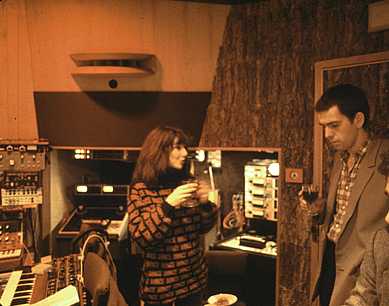
 Years before his huge hit ‘Ghostbusters’, Ray had played guitar on some great albums of the ’70s (Stevie’s Talking Book and Innervisions, Rufus/Chaka Khan’s Rags To Rufus, Harvey Mason’s Funk In A Mason Jar, Marvin’s I Want You, Leon Ware’s Musical Massage), not to mention sessions with the likes of Boz Scaggs, Barry White, Tina Turner, Herbie Hancock and Bill Withers.
 With barely a mention in the media or press, Live Aid turns 30 today.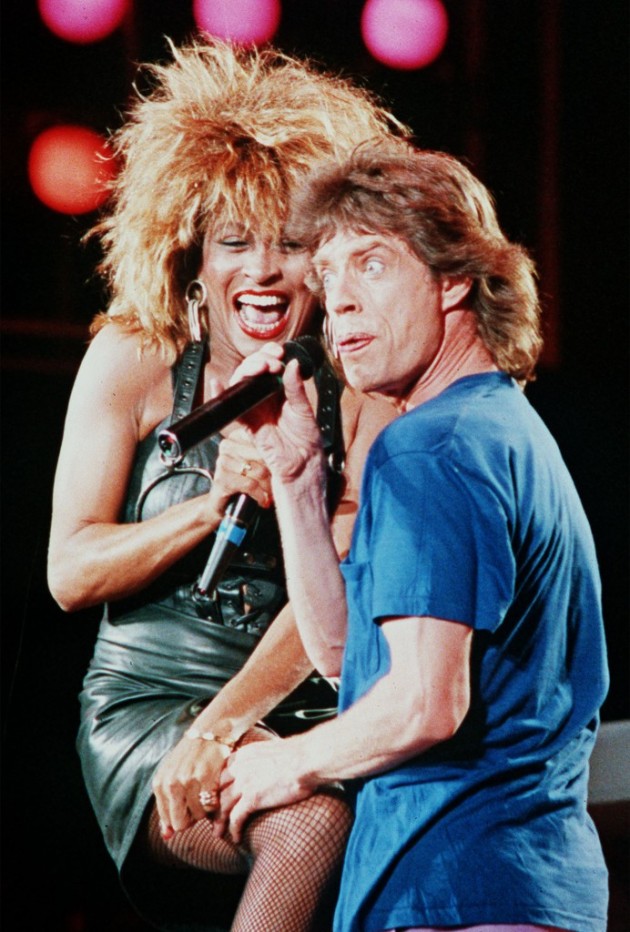

 Ornette Coleman’s sad recent passing reminded me of a superb, almost totally forgotten ‘documentary’ that is begging for a DVD re-release (though it may be available in the US).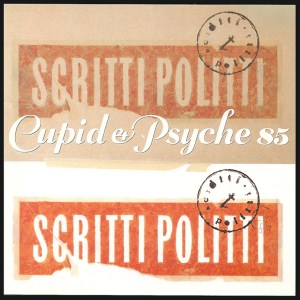


 Vertigo/Warner Bros Records, released 13 May 1985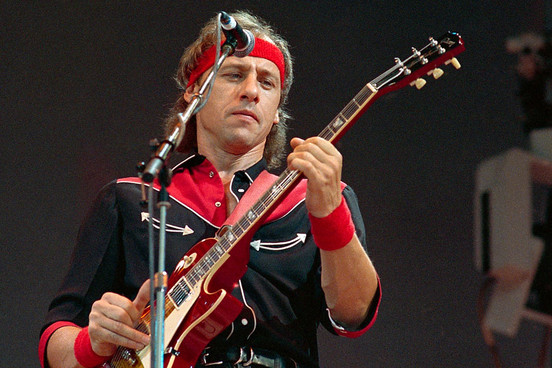
 movingtheriver.com