This album was a substantial breath of fresh air when it came out in 1988.
I remember walking into Our Price and hearing Wayne Shorter’s majestic soprano sax over some swooning chord changes and thinking: ‘What the hell is this?!’
It was a relief and total surprise when it turned out to be Stanley’s cover of Mingus’s ‘Goodbye Pork Pie Hat’ (and what a brave choice of track to play in the shop…).
It wasn’t just the Baby Boom rockers who struggled a bit during the 1980s. Stanley started the decade very well with Rocks Pebbles & Sand but then there were a few middling collaborations with George Duke and a very patchy run of albums: Let Me Know You, Time Exposure and Hideaway. 1985’s Find Out had some brilliant momentsthough.
But ITBCOT put Stanley back on the jazz map. Its full-on playing – with admittedly a few late-’80s production values in tow – brought to mind classic ’70s albums Journey To Love and School Days. Drum machines were out: drummers were back in (Ndugu Chancler, John Robinson, Gerry Brown and Stewart Copeland, all of whom play beautifully).
The album also emphasised how much of a singular voice Clarke had now developed on piccolo bass, as distinctive on his instrument as Parker, Miles, Monk or Rollins were on theirs.
‘Working Man’ is an update of ‘Lopsu Lu’ from Stanley’s classic first album and features some ridiculously brilliant soloing leaning very heavily towards John Coltrane’s ‘sheets of sound’ approach.
Gerry Brown stays toe-to-toe with Stanley, providing some spectacularly-unhinged drums, though maybe with a bit too much ’80s ‘gated’ snare for some ears.
My cassette copy of ITBCOT didn’t have any personnel listed on it, so when I first heard ‘Stories To Tell’ I didn’t realise I was getting my first exposure to the extraordinary guitar playing of Allan Holdsworth.
I’m very thankful that Stanley unleashed Holdsworth onto my sensibilities. He delivers some remarkably-fluid playing with a shrill, almost reedy tone. The first and last four bars of his solo are really special. Copeland plays superbly too, with more restraint than usual.
Freddie Hubbard shines on a fine cover of Janet Jackson/Jam and Lewis’s ‘Funny How Time Flies (When You’re Having Fun)’ while Stanley brings the funk with a great take-off of Zapp’s Roger Troutman on ‘I Want To Play For You’.
Elsewhere there are two fun but rather dispensable duets with tapdancer Gregory Hines but they don’t outstay their welcome. Finally, ‘Tradition’ may feature Stanley’s finest recorded playing bar none and highlights a strong John McLaughlin influence (via Coltrane, of course).
In a much-maligned genre of music, ’80s fusion, ITBCOT is a minor classic that deserves critical reappraisal. It also led to a really good period for Stanley – he joined Shorter in Lenny White’s short-lived but intriguing Manhattan Project, and also toured as part of a supergroup with Herbie Hancock, Shorter and Omar Hakim.
The general critical consensus maintains that Neil had a rotten ’80s.
He made folk albums, rockabilly albums, synth-rock albums, undercooked Crazy Horse albums and country albums.
But you can’t say he wasn’t prolific, and hey, he’s Neil Young – there’s always something good going on somewhere.
But none of these projects came anywhere near the commercial jackpot, to the extent that his label boss David Geffen sued him for ‘unrepresentative’ product!
But, with the release of 1988’s This Note’s For You, Young was getting back on track. He had returned to the Reprise label of his peak years and was gigging with a hard-hitting ten-piece band The Bluenotes (later changing its name to Ten Men Workin’ after a legal challenge from Harold Melvin) which featured a hot horn section and cracking new drummer Chad Cromwell.
Neil had ten new songs in the can too, veering between two-chord R’n’B stompers and love ballads in the ballpark of his teenage hero Roy Orbison. He was also playing as much if not more lead guitar than he ever had in his solo career, this time in the biting, incisive style of Alberts King and Collins.
Lyrically, the songs were basically about workin’ hard, lookin’ for love, not sellin’ out and havin’ a good time, but with more humour than Bruce or Billy Joel. ‘I’m a married man – respect my happy home!’ he barks on ‘Married Man’.
Neil gave writer Paul Zollo some cool insights into the writing of the song in the book ‘Songwriters On Songwriting’:
‘Oh, I like that song. I think I wrote that in my car. I have a ’54 Caddy limo. I was on my way down from Northern California to play with the Bluenotes. I was on Highway 5. Our driver was listening to tapes and I was playing my guitar…’
Neil’s tremulous voice croons ‘You have changed my life in so many ways’ on ‘Can’t Believe Your Lyin’, and it’s both touching and amusing. ‘Ten Men Workin” and ‘Life In The City’ are driving old-school R’n’B gems while ‘Sunny Inside’ is almost Brian Wilsonesque in its charming naivety.
Then there’s the title track, the standout cut on the album (though it inexplicably fades way too soon). A rum, anti-product-placement protest song which nevertheless manages to mention four big brands (and of course mocks Budweiser’s ‘This Bud’s For You’ campaign), it defiantly has its cake and eats it. It’s also a total blast.
In a delicious irony, the old hippie who had spent most of the ’80s in purgatory made one of the great vids of the decade (winning Video Of The Year at the 1989 Video Music Awards), with notable help from writer Charlie Coffey and legendary director Julien Temple. Temple talked about his motivations for making the video:
‘Beer companies and the like were beginning to take over music. A lot of beer ads were using rock musicians. The line between videos and commercials was blurring. We managed to get banned from MTV and win the Video Of The Year award. That was the peak of my video-making career…’
The clip mostly mocks the series of Michelob beer ads which featured the likes of Genesis, Eric Clapton and Steve Winwood. And it didn’t scrimp on Michael Jackson and Whitney Houston lookalikes.
What’s also notable and totally unprecedented is that Neil decided to use a live take of the song for this video, completely different to the album version. Which major star would have the balls to do that today?
This Note’s For You was not a hit, only reaching #61 in the US album chart. But Neil was laying down a marker for the classic follow-up Freedom. And he had also tapped into something very prescient by focusing on guitar-led soul, blues and R’n’B forms, echoing the resurgence of Clapton, Buddy Guy, John Lee Hooker, Jeff Beck, Albert Collins and Gary Moore, and emergence of hotshots like Jeff Healey and Robert Cray.
This was Dolby’s ‘Marmite’ album – the one that really tested his fanbase.
A relocation to the States after marrying soap actress Kathleen Beller (Dolby’s companion on the front cover) led to a new home in the Hollywood Hills (apparently a very large, rather creepy movie-star mansion), the recruitment of a great new band The Lost Toy People via an advert in a local paper and a wholesale embracing of American black music.
In many ways, Aliens is Dolby’s reaction to the work of George Clinton and Prince (of course, he’d collaborated rather spiffingly on the former’s Some Of My Best Jokes Are Friends). But it’s also a rather uptight Brit’s view of American culture complete with tacky local detail: smog alerts, Bel Air bimbos, pink leather upholstery, weird license plates.
A very brave bit of sequencing puts ‘The Key To Her Ferrari’ right at the front of the album.
A fake-jazz/B-Movie swinger with a vaguely ‘50s rock’n’roll feel featuring lots of Zappaesque spoken word stuff from Dolby and some brilliant close-harmony female vocals, it’s all pretty stupid but the band plays fantastically and everyone sounds like they’re having a great time. However, you do wonder how many listeners made it past such an uncompromising track.
The lead-off single ‘Airhead”s delirious mash-up of funk and pop is pretty irresistible.
Mr Clinton contributes the funny and funky ‘Hot Sauce’ which packs in an incredible amount of good stuff into its five minutes including a Spaghetti Western prelude, a reference to Cameo’s ‘Candy’, a touch of salsa and even a killer James Brown-style piano break.
Ditto ‘May The Cube Be With You’, featuring Clinton and Lene Lovich on backing vocals, the Brecker Brothers on horns and a brilliant groove from P-Funk bass/drums team Rodney ‘Skeet’ Curtis and Dennis Chambers.
But, as with most Dolby albums, the treasures are mostly found in the more introspective, less gimmicky moments. ‘My Brain Is Like A Sieve’ easily transcends its title and faux-reggae arrangement to become a superb and quite downbeat pop song in the Prefab style. ‘The Ability To Swing’ is a cracking piece of funk/jazz, with some excellent lyrics, possibly Dolby’s most covered song.
‘Budapest By Blimp’ is very much the centrepiece of Aliens and its stand-out track, an epic ballad harking back to the Flat Earth sound with a great, David Gilmour-esque guitar solo by Larry Treadwell (one of many on the album) and some superb, driving bass from the late Terry Jackson.
The only slight misfire is ‘Pulp Culture’, initially interesting but quickly grating with coarse lyrics and a melody line too similar to Stevie Wonder’s ‘Have A Talk With God’. It’s worth noting, though, that according to Dolby, the entire song (including his vocals) is made up of Fairlight samples.
The album’s very moderate success (#30 in the UK and #70 in the US) was probably not a surprise – it was totally out of sync with anything in British or US pop. Aliens probably rather reflected Dolby’s interest in music video and movie soundtracks (he’d just finished scoring ‘Gothic’ and ‘Howard The Duck’).
I’d put Aliens up there with The Flat Earth as his best album, a perfect companion piece to other classics of summer 1988 such as Prefab’s From Langley Park To Memphis, Scritti Politti’s Provision and Prince’s Lovesexy. It’s strong beer but I love its pungent textures. And let’s not forget Steve Vance and Leslie Burke’s brilliant cover artwork.
There’s a quality to demo recordings (rough, early versions designed to demonstrate a composition for a potential multi-track studio recording) that really appeals, especially those with ‘delusions of grandeur’ that try to sound much more expensive than they are.
In the 1980s, a demo would typically be very quickly recorded onto a four-track tape machine and then tarted up with a bit of cheap reverb.
But these artefacts can very often take on a quality all their own. ‘Chasing the demo’ syndrome is common among musicians and producers, where they try in vain to replicate the freshness of the original as compared with an endlessly-tinkered-with studio version which quickly loses its zing.
‘Bearpark’ first appeared on the B side of Prefab’s ‘Nightingales’ 12” single as part of a three-song EP called The Demo Tapes (the other two tracks were ‘Life Of Surprises’ and ‘King Of Rock’n’Roll’).
It never made it onto any album but has nevertheless become one of my favourite ever Paddy McAloon compositions. It was also apparently the first time he had ever used a four-track cassette machine, recorded with a Dr Rhythm drum box, cheap synth and electric guitar.
The chords hang in the air, never quite getting resolved. In fact, playing along to the song on bass, virtually any root notes work under each chord. It’s hard to imagine how ‘Bearpark’ could be improved by a big-budget production, hence possibly why it hasn’t appeared on an official album, though Paddy says he ‘felt like Phil Spector’ when he’d finished it. Its charming musical naivety and sparseness perfectly suit the lyrical theme: home.
Home, sweet home Sweet home, hard as nails
Bearpark, you were mine I know, I know, I’ve been away but you’re Not the type for valentines Bearpark, I get homesick
Langley you are fine I know, I know, I’m a gypsy But Bearpark, Bearpark’s on my mind There’s nowhere else like you
I’m gonna walk this weary body that’s been nowhere far too long I’m gonna drag it back where it belongs
Home sweet home, Geordies Hard as nails, Geordies Well out of my pram, Hard as nails, Geordies We am
Bearpark, what a place I know that this will sound soft but I Sometimes think you’ve got a face Both eyes black and blue
A stranger comes to town I know, I know, the chances are that Some bright spark will run him down No honey on your tongue
I’m gonna take this broken spirit Gonna heal it for all time When I see your dear name Upon a sign
Bearpark, you are mine Hard as nails, Geordies Well out of my pram…
Maybe it is time the song got a ‘proper’ recording. As Paddy says in the liner notes on the back of the 12” single, ‘You might think you can do better – be my guest. I like cover versions.’ But he also advises: ‘Don’t spend too long on the demo’…
Prefab go Pop. There are big-name guest spots (Stevie Wonder, Pete Townshend), gospel choirs, an orchestra and Deacon Blue’s producer.
The lengthy recording period and increased budget certainly paid off; synths and strings glisten, Paddy McAloon and Wendy Smith sound like they’re singing in the room with you and one can hear every nuance of Neil Conti’s tasty drumming.
Steve McQueen producer Thomas Dolby could only find the time to oversee four out of the ten tracks; of these, only ‘Knock On Wood’ sounds like trademark TD. Apparently, once McAloon learned that Dolby would be unavailable for much of the recording, he flirted with the idea of using a different producer for each song. The notion was quickly abandoned but it reinforced the idea that this would be Paddy’s most collaborative project so far.
At the time of its release, Paddy publicly declared that he hated the sound of records being made in the late ’80s and in response seems to have looked for songwriting inspiration from pre-rock’n’roll forms – Gershwin, Berlin, Cole Porter, Broadway musicals (he also later said that he was slightly obsessed by Barbra Streisand’s The Broadway Album around this time).
Paddy had also by now made big strides in his keyboard playing, writing all but two FromLangley Park tracks on piano. Consequently, his melodies are daring and original, but there’s arguably a fair degree of musical ‘schmaltz’ in the arrangements too, particularly on ‘Hey Manhattan’, ‘Nightingales’, ‘Nancy’ and ‘The Venus of the Soup Kitchen’, but it’s Stephen Sondheim schmaltz rather than Disney schmaltz. The wonderful ‘Nightingales’ sounds like the score from some kind of futuristic Broadway musical.
CBS obviously had high hopes for the album and their faith was paid off in the shape of a hit single, ‘King of Rock & Roll’, and one near-hit, ‘Cars And Girls’, though one wonders how McAloon views those now – I’ll wager with a degree of sheepishness. But I remember being extremely excited to see the video for ‘Cars And Girls’ popping up on ‘The Chart Show’.
Listening back after all this time, it’s From Langley‘s minor, more understated tracks that really stand the test of time. ‘Knock On Wood’ and ‘Enchanted’ could have come from Steve McQueen.
The former features a simple, unusually direct lyric from Paddy over a surreal, subtle pot-pourri of percussion and synth effects from Dolby. One wonders what McAloon’s demo sounded like. It’s slight and simple but no worse for that.
‘Nancy’ is gorgeous, a ‘Brief Encounter’esque tale of unrequited romance in the workplace, possibly inspired by McAloon’s relationship with his fellow Sprout (it doesn’t take a huge effort to imagine the word ‘Wendy’ in place of ‘Nancy’).
‘I Remember That’ sees McAloon in full-on crooner mode, emoting over MOR strings and weirdly-stilted gospel backing vocals. Paddy pokes fun at Springsteen’s obsessions on ‘Cars And Girls’, but then hilariously attempts a four-on-the-floor, Springsteenish rocker ‘The Golden Calf’ which doesn’t quite come off.
It’s hard to overstate the weirdness of the closing ‘Venus Of The Soup Kitchen’, a collision of slick Steely Dan drums, wonky Farfisa organ, distinctly-unfunky vocals from the Andrae Crouch singers and some amusing cocktail guitar from McAloon, coming over like a Ken Loach tale told in Broadway-musical style. For better or worse, there’s nothing else remotely like it in the Prefab output.
So, an important, big-selling album for Prefab (reaching #5 in the UK album charts) and another hugely impressive chunk of songwriting from McAloon. He was in a bullish mood, talking to the media about chart placings and competing with Michael Jackson and Prince, and his purple patch led to an even more cogent and powerful piece of work in the extraordinary Jordan The Comeback.
Robben is surely guaranteed a place in the pantheon of modern blues guitar greats, and, like his contemporary and good buddy Larry Carlton, he makes guitar playing sound ridiculously easy however complicated the chord changes.
Fagen and Becker had been told about Robben’s prodigious soloing ability over changes, hiring him to play the break on Steely Dan’s altered blues ‘Peg’ in 1977, but he ended up on the cutting room floor (they famously went through six other guitarists before Jay Graydon smashed it at the eleventh hour).
But sometimes Ford’s good looks, cheerful stage persona and sweet sound can obscure his more extreme guitar statements; fusion drum monster Kirk Covington somewhat disparagingly called Robben’s style of music ‘happy blues’ in a recent interview with Drumhead magazine (admittedly after a failed audition for Robben’s band!).
Robben cut his teeth with the likes of George Harrison, Joni Mitchell and Jimmy Witherspoon, but started off the 1980s playing beautifully at the Montreux Jazz Festival with David Sanborn, Randy Crawford, Al Jarreau et al, contributing three of my favourite ever guitar solos to the Casino Lights live document of that gig.
Then, in 1986, the dream sideman gig materialised: he replaced Mike Stern in Miles Davis’s band, gaining a new confidence in his abilities and a renewed love for the blues.
Apparently Miles believed he’d found his perfect guitar player. But Robben didn’t stay long – he left Miles to make his second solo album Talk To Your Daughter for Warner Bros in 1987.
It’s funny to think of Robben playing guitar with Miles just before this recording because sometimes his music could use a bit of Miles’s obliqueness and use of space.
Robben’s voice might not be to everyone’s tastes either, firmly in the Jackson Browne/Michael Franks school, but his guitar solos are always engaging and risk-taking, and a stellar band featuring monster drummer Vinnie Colaiuta, bassist Roscoe Beck and Yellowjackets keyboardist Russell Ferrante makes the music breathe. The album sounds like it was recorded live in the studio too, a big plus especially in the over-produced late-’80s.
The gospel-tinged ‘Revelation’ is worth the price of the album alone, possibly Robben’s finest recorded work to date and the only instrumental here. Robben’s take on ‘Ain’t Got Nothing But The Blues’, co-written by Duke Ellington and best-known as a Mose Allison number, is also superb, a feast of jazz chords and tasteful band accompaniment.
Down-and-dirty blues it ain’t, but Talk To Your Daughter definitely brought something fresh to the party. Other modern guitar greats Scott Henderson, Gary Moore, Frank Gambale and Larry Carlton were listening; within a few years, they’d all reacquaint themselves with the blues in a big way too.
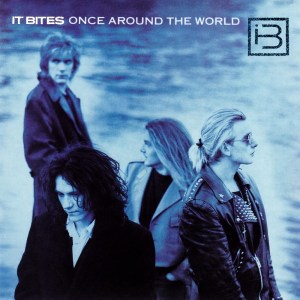
Everyone has their favourite summer music and the brilliant Once Around The World is an album I always turn to at this time of year.
It’s a feast of resplendent chord changes, audacious song structures, good grooves, blistering lead guitar lines and uplifting, unusual melodies.
As a music-mad 15-year-old, this was the album I was really waiting for. I had recently become slightly obsessed by their debut The Big Lad In The Windmill and couldn’t wait to hear what the talented Cumbrian four-piece would come up with next.
For some reason, I didn’t buy OATW on its first week of release, but my schoolmate Jem Godfrey did. I would badger him for details in the playground. Me: ‘Are there any instrumentals on it?’ Jem: ‘No.’ Me: ‘What’s it like then?’ Jem: ‘It’s bloody brilliant, just get it!’
In 1988, the world didn’t need a dose of beautifully-recorded, full-on prog lunacy, but they got it anyway and the UK music scene was all the better for it. There were murmurs of a ‘prog revival’ at the time but It Bites (and to a certain extent Marillion) were streets ahead of the pack because they blended superb musicianship with great hooks and catchy songs.
Hats off to Richard Branson and Virgin for throwing some money at this album because it turned out to be classic prog’s last hurrah. Mainly recorded at The Manor in Oxfordshire (where rumour has it singer/guitarist Francis Dunnery gained access to Richard Branson’s bountiful wine cellar on the band’s first night of recording with disastrous consequences…), OATW is essentially one side of beautifully-produced pop/rock songs (mainly helmed by Virgin prog survivor Steve Hillage), and another of completely brilliant, barmy prog/pop pieces.
The Manor
‘Midnight’ and ‘Kiss Like Judas’ are lean, mean, well-crafted pop/rock songs with good hooks and meaty grooves, but both just missed the UK Top 40.
‘Plastic Dreamer’ fits an unbelievable amount of material into its four minutes, including a vocal harmony section that would make Roy Thomas Baker drool, a stunning guitar solo from Dunnery, some spooky Alice In Wonderland atmospherics and preposterous lyrics (very much inspired by Peter Gabriel’s Genesis output).
They repeat the trick on ‘Hunting The Whale’ and make good use of the Manor swimming pool in the process. The 14-minute title track, whilst owing a few licks and lyric ideas to Genesis’s ‘Supper’s Ready’, is nevertheless astoundingly ambitious and brilliantly realised considering it was recorded in the same year as Kylie’s ‘I Should Be So Lucky’.
(There are other nods to early Genesis throughout the album: the last few minutes of ‘Old Man And The Angel’ brilliantly revisits the rhythm games of ‘The Battle Of Epping Forest’; the main hook of ‘Hunting The Whale’ is very similar to Steve Hackett’s ‘Dancing With The Moonlit Knight’ central riff; the middle-eight of ‘Midnight’ uses Tony Banks’ opening chords to ‘Watcher Of The Skies’.)
They could play all this stuff live too, and with great elan (they played the whole of OATW at the much-missed London Astoria circa May 1988, and I also caught them a few months before that at Brunel University). Their range and ability was simply stunning.
John Beck’s keyboard textures have possibly dated a bit in comparison with what, say, Trevor Horn and David Sylvian were doing with synths at the time (though his voicings and arrangement ideas are always inventive), but people often forget what an amazing rhythm section (Dick Nolan on bass, Bob Dalton on drums) It Bites had.
There’s a ‘swing’ there that suggests that they were always influenced by much more than just progressive rock, and Dunnery’s guitar playing and vocals have incredible bite. Here’s some great footage of them recording the title track:
Though It Bites were turning into a very popular live draw throughout Europe, the album stalled at #43 in the UK – a big surprise and disappointment to the band. The lads’ music subsequently took a heavier direction, but OATW is the standout in their short but excellent career, showing off a brilliant band at its peak.
In the miasma of soap-opera tie-ins, boy-band debuts, one-hit wonders and Stock, Aitken and Waterman productions that constituted late-’80s pop, Love and Money’s second album Strange Kind Of Love was a breath of fresh air.
Released in December 1988 and produced by legendary Steely Dan helmer Gary Katz, the record was a triumph. James Grant’s literate, dramatic songs of romantic anguish and corporate avarice were built to last.
Musicians had a field day with Grant’s intricate guitar work and the rock-solid grooves courtesy of drum legend Jeff Porcaro and underrated bassist Bobby Paterson. Critics of the time were generally confused but I was sold from the first bar of ‘Hallejulah Man’.
Funkier than the likes of Curiosity Killed The Cat or Hipsway but lyrically just as piquant as The Smiths or The The, Love And Money joined Prefab Sprout, Prince, The Blue Nile, Danny Wilson, David Sylvian, De La Soul, Scritti Politti and Cocteau Twins in my list of late-’80s pop saviours.
I caught up with singer/songwriter/guitarist James Grant to talk Strange Kind Of Love, Jeff Porcaro, Tom Waits, touring with Tina Turner, ‘Top of the Pops’ and ’80s marketing meltdowns.
Love And Money 1988
MP: Could you just give us a quick bit of background to Strange Kind Of Love – what were the expectations for album number two and how did you come to work with Gary Katz?
JG: I always felt the first album was disparate and didn’t marry the different influences well. We sounded too desperate to impress. I was also anxious to prove that I was more than just a haircut. For Strange Kind Of Love, I had written the album and we had lived with the songs for a while. The mantra was: the song is king. Meaning that the song would dictate how it was meant to be, what was appropriate and what was not. The desire was to create something timeless and the man to facilitate that was Gary Katz. He had a track record that spoke for itself. He just seemed perfect. We set up a meeting – I flew to New York – and we just hit it off right away. There was a symbiosis, a shared desire to make great records, and we liked each other. We’re still pals to this day.
Lyrically, SKOL focuses mainly on the anguish, pain but also joy of romantic infatuation. Was there a particular relationship that precipitated this or had these songs built up over time?
Yes, there was someone in particular, but obviously there’s poetic license. Songwriters deify those we love. I just happened to think – and still do – that besides knowing you are going to die, being in love is the utmost existential experience there is. I was young, heartbroken and hungry; the right ingredients to make great music! I also had the distinct feeling that great songs contain a truth, perhaps not the literal truth but a truth. I wrote about myself; this tended to get uncomfortably forensic at times for those close to me.
Jeff Porcaro 1988
How much of a contribution did the great Jeff Porcaro make to SKOL‘s arrangements and why is his surname misspelt in the credits? Was there enough budget to get him for rehearsals? His playing seems so integral to the material.
Jeff didn’t make any contribution to the arrangements – that was all planned months before we even met. I have no idea why his name is misspelt. We did the drums over a month in LA. Sometimes we just jammed the thing till we got the right vibe. On other tracks, I had a more concrete idea of what I wanted. For example, on ‘Razorsedge’, I wanted a go-go beat. I just went in with my guitar and told him what I was hearing. He just started playing this incredible, jaw-dropping stuff. Yes, we had the budget. Jeff was a brilliant, phenomenal musician. I felt like I had f***ing boxing gloves on sometimes when we were jamming but he never ever made me feel like that. He was a beautiful guy, great fun to be with and genuinely humble about his achievements and ability.
The four sublime singles from the album just missed out on the UK Top 40 – was that a disappointment? Was there pressure from Phonogram to get that first UK or US hit?
Yes – it was always a disappointment. You try and be stoic and say, ‘That’s not what it was about’, but we were gutted. We so nearly made it with Strange Kind Of Love. I always wanted to do ‘Top of the Pops’. If that’s shallow, then so be it. I grew up watching Slade and Bowie and prancing around in front of my bedroom mirror imitating them – it was my dream to be part of that, just like any kid. There wasn’t pressure from Phonogram as such; they were trying their best with us. It just wasn’t to be. I do believe that if we had had the success, Dogs In the Traffic may not have happened. That’s the Love And Money record I’m most proud of and it’s most representative of who I am. Perhaps that’s why I find it so hard to listen to…
Why is Tom Waits thanked in the album credits? And presumably (Steely Dan singer/co-leader) Donald Fagen is thanked because of the Katz connection?
Because I’m a fan and he was and still is a massive inspiration. It wouldn’t be easy to tell if you were judging this from the record. Donald Fagen played a little something. I’ve always kept that a secret. We didn’t want to make an issue of it or make it something marketable.
Gary Katz
You play some fantastic lead guitar on the album and also some really inventive acoustic/electric textural stuff – did Gary Katz’s experience with the likes of Larry Carlton and Jeff ‘Skunk’ Baxter have any bearing on your playing?
Not really – Gary would have me playing for weeks on end though. I reckon I came on a bit during my time with him. And thank you.
SKOL doesn’t really sound like anyone else from the era and stands up exceptionally well today. At the time of release, some critics rather snootily compared it to Dire Straits and Deacon Blue but were there contemporary artists the band admired or were influenced by?
No, not especially – my tastes have always been very eclectic. In terms of marketing, this always led to problems; ‘Are you guys rock, pop, funk or country?’ ‘Yes…’ I did love Bowie, Talking Heads, Chic, Led Zeppelin and Prince – I can hear certain little things from all of them here and there.
Who is Beatrice Colin? Her voice compliments yours beautifully, especially on ‘Walk The Last Mile’.
She was my girlfriend. She’s an author now.
Who came up with the album cover concept? Studying it again, it’s one of the weirder covers of the ’80s…
Someone in the marketing department at Phonogram saw a photograph like the one on the cover and we decided to recreate it. Though I’ve always believed it to be extremely important, the amount of time and money invested in things like artwork was, by today’s standards, science fiction. We would have months of meetings discussing details. People would have nervous breakdowns!
You toured with and supported various US acts such as BB King and Tina Turner in the late-’80s – any memories that stand out? I loved your playing with Tom Verlaine on The Tube.
The one anecdote that would perhaps stand out is that when we supported Tina Turner, when I introduced the band, I said, ‘Hi, we’re not Tina Turner, she’ll be on a bit later.’ I thought this was amusing. Tina’s management did not. We were kicked off the tour. You’d think we would have been disappointed by such a thing, but – and I’m really proud of this – we did not give a f*ck.
I saw you revisiting SKOL on a memorable night at the Shepherds Bush Empire a few years ago – how do you feel about the album and its place in ’80s music now?
I’m really proud of it. It’s of its time, certainly, but a bit more than that. I think sonically it’s absolutely spot-on – it still sounds fantastic. I always think of the band’s place in the greater scheme of things as awkward. I think, as I said previously, we were difficult to categorise. This seemed to be a huge problem for some people. I never tried to make ‘difficult’ music. I still don’t. I think my tastes are fairly mainstream. Perhaps lyrically things are a bit more challenging at times, but even so, I don’t think they are wilfully arcane or esoteric.
I was a fan of most things jazz/rock as a teenager, scuttling off to HMV or Virgin in central London to buy the latest John McLaughlin, Mike Stern, Steps Ahead, John Scofield, Bireli Lagrene or Miles.
Whilst Pat Metheny was never a favourite, I dug American Garage and 80/81, and always had a soft spot for Lyle Mays’ keyboard playing. His 1987 debut album featured a fantastic band (Bill Frisell, Marc Johnson, Billy Drewes, Alex Acuna and Nana Vasconcelos) and promised a lot for the future.
1988’s Street Dreams didn’t disappoint. It is to some extent a big-budget ‘vanity project’, full of guest appearances and experiments, but it’s all the better for that and virtually impossible to categorise. Recorded exclusively at the Power Station in New York, Street Dreams has the range and ambition of some key pop albums of the era. It also for the most part avoids the new-age sentimentality that Metheny is sometimes prone to.
Street Dreams was a real Walkman album, creating a movie in one’s mind. To this day, I seldom listen to a tune in separation; I have to check out the whole thing in one sitting. ‘Feet First’ sounds like an outtake from Donald Fagen’s Nightfly with the vocals taken off (and features some classic Steve Gadd); ‘August’ and ‘Hangtime’ are superb tone poems featuring tasteful work from Frisell, Johnson and Peter Erskine.
‘Before You Go’ is space-age muzak with sprawling orchestrations out of the Claus Ogerman book, and ‘Possible Straight’ is cracking big-band jazz with some great drumming by Steve Jordan.
The title track is just bonkers and has to be heard to be believed. It takes in elements of prog rock, minimalism (with its Reich-influenced marimba), New Age textures and a playful, Hermeto Pascoal-style Latin workout with Mays’ piano at its most Keith Jarrett-like.
Compared to the sterility of most major-label jazz releases these days, Street Dreams still sounds pretty fresh, even if it is a touch lighter than what passes for jazz/rock in 2015.
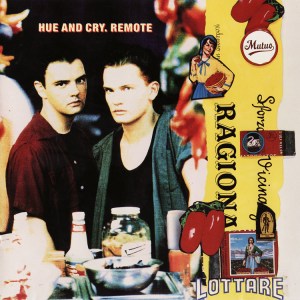
Just for a few years at the end of the ‘80s, Hue and Cry bothered the charts with a classy fusion of pop, jazz and Latin.
Singer/co-composer Pat Kane said at the time that they wanted to create a musical mix of Scritti and Sinatra; they almost pulled it off with the excellent Remote, released in December 1988.
They also pulled off the Steely Dan-ish trick of singing about subjects which might seem unsuitable in a pop context (domestic violence on ‘Looking For Linda’, corporate sexism on ‘Dollar William’, Latin-American poverty on ‘Three Foot Blasts Of Fire’, the dawning of the Web on ‘The Only Thing More Powerful Than The Boss’).
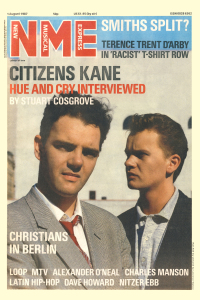
And yet something about Hue and Cry seriously wound people up. When they emerged on the scene in 1987, they rode a wave of goodwill thanks to their clean-cut looks, anti-Thatcher politics and dynamic ‘Labour of Love’ single.
But by the time of Remote, the tide was turning. Hue and Cry’s relatively soft, ‘aspirational’ sound was anathema in the bombastic late-’80s. It was too jazz for the yuppies and too pop for the jazz revivalists.
Maybe the fact that they’re brothers never helped too – The Proclaimers were the more acceptable face of Celtic brotherhood, more meat-and-potatoes, more reliably blue-collar.
In 1995, Q Magazine wrote a cruel but witty hatchet piece about them entitled Britain’s Most Hated Band, offering them ‘a crisp tenner’ to split up (it didn’t do the trick…). Whatever. I love this album. Recording Remote in New York gave the Kanes access to some amazing guest musicians – Ron Carter and Michael Brecker play beautifully on the very pretty ‘Where We Wish To Remain’, and Pat’s excellent vocals demonstrate a big Mel Torme influence.
The prime NYC rhythm section of Wayne Braithwate and Dennis Chambers supplies a 24-carat groove on ‘Three Foot Blasts’. ‘Sweet Invisibility’ puts a fantastically exciting Latin horn arrangement right upfront in the mix, beating David Byrne at his own game.
‘Guy On The Wall’ is a witty portrait of a perpetual party wallflower set against a ‘Word Up’ groove and brilliant Salsa horn arrangement. Bassist Will Lee delivers beautifully measured performances on ‘Ordinary Angel’, ‘Dollar William’ and ‘Looking For Linda’, offering a subtle commentary on the songs back in the days when a musical performance was supposed to have some narrative development and couldn’t just be ‘cut and pasted’ together.
It’s quite funny to hear legendary jazz trumpeter Jon Faddis play a stratospheric solo on the otherwise very soppy ‘Violently’ (though Michael Brecker very controversially ‘fixed’ his solo – see below…) Pat Kane sings well throughout the album, with great phrasing, inventive ad-libs and excellent melodies.
But YouTube live footage from the Remote era hasn’t aged well and demonstrates why they were such a Marmite band, all cheap suits and wacky horn sections. I saw them at the Hammersmith Odeon in 1989 and struggle to remember anything about the gig.
Even they seemed to sense which way the wind was blowing; they disappeared for far too long after Remote, issuing the stripped-down Bitter Suite live EP and disappointingly brittle Stars Crash Down in 1991. The momentum and recording budget had gone.
But because in the main they lent towards jazz and Latin rather than funk and soul, they avoided the all-too-audible mistakes of contemporaries like The Blow Monkeys, Style Council, Climie Fisher and Johnny Hates Jazz. A great video has emerged of the boys discussing the making of the album:


 There’s a quality to demo recordings (rough, early versions designed to demonstrate a composition for a potential multi-track studio recording) that really appeals, especially those with ‘delusions of grandeur’ that try to sound much more expensive than they are.





 movingtheriver.com