John Abercrombie: Getting There 30 Years On

Maybe John Abercrombie was the Andy Murray of jazz guitarists.

People say Murray was ‘unlucky’ to be playing tennis at the same time as Federer, Djokovic and Nadal; Abercrombie was arguably ‘unfortunate’ to have been forging a career at the same time as Pat Metheny, Mike Stern, John Scofield and Bill Frisell.

But a superb career he forged all the same. Starting out as somewhat of a John McLaughlin imitator playing unhinged jazz/rock with Billy Cobham and Dreams on ‘some of the worst fusion albums ever made’ (his words), by 1974 Abercrombie had settled into a long, intriguing career on ECM Records, where he could pursue all his interests, from acoustic guitar duos with Ralph Towner to organ trios with Jan Hammer and Jack DeJohnette.

But one of his best bands was this mid-1980s outfit with ex-Bill Evans/Lyle Mays sideman Marc Johnson on bass and legendary Peter Erskine on drums, often augmented by Michael Brecker on sax too.

Abercrombie was getting heavily into the guitar synth around this time, while also using loops and ethereal keyboard patches to beef up the studio sound.

’86’s Current Events was a fine ‘blowing’ record but followup Getting There – released 30 years ago this month – was arguably Abercrombie’s most commercial album. It’s big and bold but definitely no ‘fusion’ sell-out, and it distills its ideas into relatively short, concise statements.

It’s also somewhat of a rarity for the ECM label in that it’s not produced by Manfred Eicher – Lee Townsend is in charge here, assisted by James Farber.

The epic title track is loud and proud, almost approaching avant-rock with Erskine absolutely lamping his drums and a hysterical, exciting set of screaming guitar-synth solos. It gets near the approach of David Torn’s sometimes raucous Cloud About Mercury album.

Ethereal, gentle and gorgeous ‘Thalia’ (composed by Vince Mendoza) and ‘Chance’ are ambient/jazz masterpieces with shades of Mark Isham’s work.

Classic ballad ‘Remember Hymn’ initially sounds like a re-harmonisation of Sibelius’s ‘Valse Triste’ but slowly becomes a vehicle for Brecker’s haunting tenor. The latter also cleans up on the raucous two-chord blowout ‘Furs On Ice’, reminiscent of Johnson’s Bass Desires band, with Erskine at his most Elvin Jones-like.

Getting There predictably received a somewhat muted critical reaction (but did get a three-star review in Q Magazine). I wasn’t bothered about that – having been recommended Abercrombie by a guitar player friend, I bought it sight unseen from HMV Oxford Street on vinyl a few weeks after it came out. It’s still my favourite album by the guitarist.

But it would be the last time Abercrombie dipped his toe into ‘rockist’ waters – he quickly regrouped to continue his ever-eclectic, increasingly gentle career, and, to the best of my knowledge, never picked up the guitar synth again…

David Lee Roth: Skyscraper 30 Years Old Today

Diamond Dave hit the ground running with his 1986 solo debut Eat ‘Em And Smile.

That album had a raw, live-in-the-studio sound, courtesy of producer Ted Templeman and some of the greatest rock musicians of all time (Steve Vai, Billy Sheehan, Gregg Bissonette), but sophomore record Skyscraper – released 30 years ago today – was something completely different: a meticulous, layered, fussed-over project.

Vai was promoted to co-producer, Roth enjoying his energy and studio nous, and his influence is all over the record. Vai told Classic Rock magazine recently about their working relationship: ‘We got on really well. We were friends. He listens and doesn’t assume to know everything. But it was his band. He made all the executive decisions. I’m very good at assuming a role and knowing where the boundaries are. I expect that from other people when they’re working with me.’

Vai took his time doubling parts, sculpting solos and thinking of the songs orchestrally. His playing is absolutely brilliant. He forensically explores every chord and adds humour too, an aspect missing from 99% of rock guitarists. The more challenging compositions (‘Bottom Line’, ‘Hina’, the title track) rehearse the concepts that Vai would pursue on his breakthrough Passion And Warfare solo album.

So Skyscraper is musically rich but great fun too. Vocally, Roth has such a strong presence and he busts his butt trying to entertain. Lead single ‘Just Like Paradise’ – described by Dave as his tribute to The Beach Boys – reached an impressive #6 on the US Hot 100, ‘Perfect Timing’, ‘Damn Good’ and ‘Stand Up’ are pure pop, co-written by Roth and keyboard player Brett Tuggle.

‘Two Fools A Minute’ is quite unlike any hard rock this writer has heard, basically a live-in-the-studio take with a succession of nutty mini-solos by Vai and Sheehan. It’s something akin to a heavy-metal show tune, complete with ‘cheesy’ horn section. I love Dave’s little ‘Sizzlin’ to the top!’ exclamation before Vai’s solo and his increasingly weird comments as the track goes on: ‘Where’s the drummer?…Nah, we can’t let Stevie drive…’

There’s a distinct lack of low-end on Skyscraper though. Billy Sheehan’s number was up. He left after the album’s recording and didn’t take part in the hugely successful, ten-month world tour. But he would take a lot of this album’s approach to his next band project, Mr Big.

Skyscraper divided critical opinion on its release but was a big hit, reaching #6 in the US and #11 in the UK. Happy birthday to a fun-filled and oft overlooked minor classic of the ’80s.

Deacon Blue: Raintown

I missed the recent 30th anniversary of Raintown probably because I was surprised it was originally released as early as 1 May 1987.

A famous ‘sleeper’ record, it eventually crawled up to #14 in the UK album charts but remained in the top 100 for 18 months off the back of some re-released singles and constant touring.

Later on in Deacon Blue’s career, singer/lead songwriter Ricky Ross name-dropped Van Morrison and Springsteen, but on Raintown the big influence is surely Prefab Sprout.

They gave the game away a few years later, naming their collection of B-sides and outtakes Ooh Las Vegas. Nothing to do with Prefab’s ‘Hey Manhattan’, then… (To be fair, the influence may have worked the other way round too – Prefab employed Raintown producer Jon Kelly for some of From Langley Park To Memphis, and that album’s slick sheen bears an occasional resemblance to Raintown.)

Raintown is pop, not rock. The album positively sparkles. James Prime’s excellent keyboard playing is prominent (they didn’t really need a guitarist at this point) with his ‘mystery’ chord very recognisable (later also heard on ‘Real Gone Kid’ and ‘Love And Regret’).

Vocalist Lorraine McIntosh emerges as a kind of ‘bluesier’ version of Prefab’s Wendy Smith though she certainly divides opinion – she nearly ruins the title track and otherwise superb ‘Love’s Great Fears’ but is very effective when reining it in on ‘Loaded’ and ‘Dignity’.

There aren’t many more evocative ’80s album openers than the brief ‘Born In A Storm’, a gorgeous mood piece which sounds a bit like The Blue Nile with a few more chords.

‘Loaded’ is a classic song ‘about some of the people we’d met in the record business’, in Ross’s words. His gritty vocals really work on this – he sounds positively distraught by the last few choruses – and the modulation at 2:48 is one of the great moments of late-’80s pop.

‘When Will You Make My Phone Ring’ is also memorable, even if Ross struggles a little with the lead vocal and the whole thing is a little similar to the soul standard ‘If You Don’t Know Me By Now’.

The excellent ‘Chocolate Girl’ – influenced by Prefab’s ‘Cruel’ in its portrait of a modern relationship – features some gorgeous BJ Cole pedal steel and a few classic couplets including: ‘He calls her the chocolate girl/Cos he thinks she melts when he touches her’.

Finally, Raintown is a romantic album about work, home, love and nostalgia which probably gives a lot of people (including me) a warm glow when they hear it. I couldn’t get with the band’s later rockier direction but I’ll always have a soft spot for this one.

Michael Jackson’s Thriller: The Sonic Secrets

14 April 1982, Westlake Studios, Los Angeles: the recording sessions for Thriller commence.

Producer Quincy Jones gathers his ‘crew’ – including mixing engineer Bruce Swedien, MJ and chief songwriter/arranger Rod Temperton – for a pep-talk. ‘We’re here to save the music business’…

It might sound a bit dramatic but the global recession of the 1980s was very much impacting a post-disco, pre-Madonna/Prince recording industry too.

The team-talk worked: Thriller – released 35 years old today – is by far the biggest-selling non-greatest-hits album of all time.

For some, it’s bland, over-familiar and inferior to Jackson’s previous album Off The Wall. For this writer it’s the last truly great example of song-led, musician-crafted, post-disco R’n’B, beautifully produced, arranged and mastered. And Jackson was absolutely at the top of his game and still relatively ‘normal’.

Thriller was the soundtrack to 1983 and 1984 in my corner of London, loved by geeks, sporty kids, BMX riders and B-Boys alike. But sometimes it feels so familiar that it defies analysis. Here are a few aspects that jumped out during a recent reappraisal:

13. Michael’s lyrics. These are disturbing, ominous visions. ‘You’re a vegetable!’ he sneers on opener ‘Wanna Be Startin’ Something’. ‘Billie Jean’ is about a deranged stalker, though Jackson claims she is a ‘composite’ of many obsessive fans. Is it any wonder he struggled with fame?

12. The African chant in ‘Wanna Be Startin’ Something’, stolen from Manu Dibango’s superb ‘Soul Mokassa’.

11. Paulinho Da Costa’s African percussion and cuica on ‘Wanna Be Startin’ Something’.

10. Jerry Hey’s string arrangements on ‘The Girl Is Mine’ and ‘Billie Jean’. He supplies superb horn parts throughout Thriller but his strings are often neglected.

9. Tom Scott’s Lyricon interjections during the chorus of ‘Billie Jean’, a contribution that has sadly been left off the credits of many subsequent reissues.

8. The brilliant rhythm guitar playing throughout from David Williams, Paul Jackson Jr. and Steve Lukather.

7. For me, ‘Beat It’ is the weakest song on the album by some stretch (despite the great guitar riff and brilliant solo), but intriguingly it was apparently Jackson’s response to a Quincy remark that Thriller needed a ‘black version of “My Sharona”’!

6. Rod Temperton’s compositions throughout, and also his superb vocal arrangements – check out how he uses Michael’s stacked background vocals.

5. Greg Phillinganes’ superb Rhodes and synth bass work, particularly on the title track.

4. Ndugu Chancler’s drums, enhanced by Bruce Swedien’s sonic mastery. Have there ever been better-recorded drums than on ‘Billie Jean’ and ‘PYT’? According to Swedien: ‘I ended up building a drum platform and designing some special little things, like a bass drum cover and a flat piece of wood that goes between the snare and the hi-hat’.

3. Steve Lukather’s gorgeous guitar counterpoint throughout ‘Human Nature’, particularly in the closing 20 seconds.

2. Michael’s vocals. On ‘Wanna Be Startin’ Something’, he sounds like three or four different singers. His backups throughout are also pretty special, and he takes ‘The Lady In My Life’ out.

1. Quincy knew that every song would have to be a killer, covering all styles. Around 30 compositions were considered. Among the many demo’d but scrapped included ‘She’s Trouble’, ‘Niteline’, ‘Carousel’ (only binned at the eleventh hour), ‘Got The Hots’ and ‘Hot Street AKA Slapstick’.

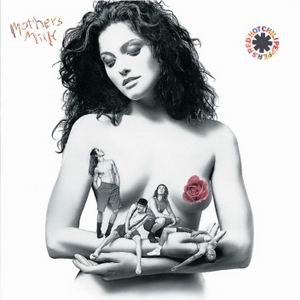
Red Hot Chili Peppers: Mother’s Milk

Apart from some brief sojourns in the ’90s, the last time I was really into rawk was during that incredible wave of bands who hit their straps in the late-’80s – Faith No More, Living Colour, Fishbone, 24/7 Spyz, Mr Bungle.

And this lot. Mother’s Milk, released by EMI Records in August 1989, is rock all right, channelling Led Zep and various LA punk heroes, but these boys had some serious funk chops too.

You knew they’d studied P-Funk, James Brown, The Meters, Fela Kuti, Hendrix. This immediately separated them from a lot of second-rate imitators.

After the death of great original guitarist Hillel Slovak and drummer issues to rival even Spinal Tap, they’d finally hit on two top-notch permanent members (don’t ask about the initiation rituals…). John Frusciante channels Hendrix, Jimmy Nolen and Adrian Belew (and even dares to take the p*ss out of Slash at the end of ‘Punk Rock Classic’) and contributes serious songwriting chops.

Chad Smith is an excellent groove player. And Mother’s Milk is one of the great bass albums of the ’80s: take a bow, Flea AKA Michael Balzary. The album screams: YOUTH! Listening back now after 10 years or so, it’s an extremely enjoyable listen and a real contact high for my teenage years of 1989/1990.

The issue for producer Michael Beinhorn was capturing the band’s incredible energy in the studio. In general, he achieves it; it explodes out of the traps, though its gated snares, multiple guitar overdubs and occasionally dodgy Anthony Kiedis vocals overpower it from time to time.

But it’s hard to think of any other band of the era who could pull off the controlled mayhem of ‘Magic Johnson’, ‘Stone Cold Bush’, Subway To Venus’ and ‘Nobody Weird Like Me’. The ‘pop’ tracks ‘Taste The Pain’ and ‘Knock Me Down’ work fine too, and have something to say.

Mother’s Milk has the feeling of ‘last chance saloon’ – various band members explain that they were sure it would be their last album. But it was just successful enough, going gold in the US although failing to chart in the UK.

The boys had bought themselves some time. They signed a shiny new deal with Warner Bros in 1990 and then made their magnum opus Blood Sugar Sex Magik, the one that truly fulfilled their potential.

David Sylvian: Secrets Of The Beehive 30 Years Old Today

And so we come to the ultimate autumn album and the closing chapter of an incredible run of form for the ex-Japan singer, songwriter and multi-instrumentalist.

For my money, Sylvian’s 1984-1987 output (Brilliant Trees, Gone To Earth, Secrets) is the equal of any ‘pop’ triptych.

Each song is memorable, with its own specific mood and soundworld. Space and melody are the key commodoties. Arrangements are kept as simple as possible. If Sylvian can accompany his voice with just double bass and occasional piano, acoustic guitar or percussion – as on ‘Mother And Child’ – he does so.

Some may find this minimalism disconcerting; I certainly did back in 1987, at least compared to the rich musical stew of Gone To Earth. But the sparseness also makes it timeless. Secrets is an album to live with.

Quality guest musicians – David Torn, Mark Isham, Phil Palmer, Steve Jansen, Danny Cummings, Danny Thompson – are brought in only when absolutely necessary.

But Ryuichi Sakamato is a mainstay of the album and man of the match, contributing piano, organ and beguiling string/woodwind arrangements.

Sylvian’s detractors may label him ‘poet laureate of depressives’ but lyrically he goes way beyond ‘depression’ here. This is an unashamedly serious, ‘pre-irony’ album; many probably recoil from that too.

‘The Boy With The Gun’ is a controversial and eerily relevant character study. ‘Maria’ and ‘The Devil’s Own’ are genuinely spooky and quintessentially gothic.

‘When Poets Dreamed Of Angels’ compares modern-day domestic abuse with medieval abuses of power, ‘bishops and knights well placed to attack’.

‘Let The Happiness In’ initially comes across as a two-chord dirge – it took me about 15 years to really appreciate it – but becomes an affecting song about hope against all the odds. A brave choice of lead-off single, it crawled to #66 in the UK chart.

Second single ‘Orpheus’ didn’t chart at all but is no less than a late-’80s masterpiece featuring a gorgeous string arrangement from Brian Gascoigne. ‘September’ and ‘Waterfront’ are milestones in orchestral pop.

Secrets scraped into the UK top 40 at #37 – where it stayed for one week. It marked the end of Sylvian’s pop career. He would wait 12 years to release another solo album.

Bryan Ferry: Bête Noire 30 Years On

‘Only’ two years in the making, Ferry was on a bit of a roll when he released Bête Noire on Virgin Records 30 years ago this week.

He was fresh from a UK #1 album Boys And Girls and had pretty much cornered the market in upmarket, shag-pad sophistication.

But a formula can be a dangerous thing. Bête Noire hasn’t aged too well. Or rather its songs generally underwhelm. You can scan the titles and draw a blank, with the exception of obvious standouts ‘Limbo’ and ‘New Town’.

Co-produced and occasionally co-written by key ’80s Madonna collaborator Patrick Leonard, it’s generally ‘multi-layered low energy’, as Q magazine memorably described it.

So why do I return to Bête Noire time after time again? Good lyrics help. Bowie rated Ferry, Lennon and Morrissey as the best British pop wordsmiths.

And its musical features are generally beguiling. Ferry is a bit of a sonic innovator in terms of human/machine interface.

His synths and piano shimmer on the surface of the mix, lead guitars are stacked up, drum machines accompany drummers on all grooves.

The bass playing is exemplary (Neil Jason, Marcus Miller, Guy Pratt, Abraham Laboriel). Bryan’s vocals are strong too, and he uses his favourite session singer Fonzi Thornton to great effect again.

The best tracks blend eerie synths, intriguing chord changes and striking lyrics. ‘Limbo’ features a gorgeous ambient intro, an irresistible post-Cupid & Psyche groove and cool rhythm guitar from David Williams.

‘New Town’ is a witty, late-’80s take on Roxy’s ‘In Every Dream Home A Heartache’. The juxtaposition of scary chord changes and ironic lyrics point to a seldom-revealed Ferry humour.

‘Zamba’ is a winner too, a minimalist piece in an unusual 6/4 time, weirdly reminiscent of Weather Report’s ‘The Elders’.

But the title track exemplifies the rest of Bête Noire – it’s an initially gorgeous fusion of tango, classical and ambient funk, but the song just doesn’t fire.

‘The Right Stuff’, adapted from Smiths B-side ‘Money Changes Everything’, is also a non-starter, but became the only UK top 40 single from the album.

‘Vive la Résistance‘, Bryan writes in the liner notes, introducing the list of session musicians on the album. So does he see them and himself as not part of the ‘system’? Who knows?

The problem is, with the exception of the occasional David Gilmour lead break, it’s very hard to identify any of the players (David Sanborn is sorely missed). Maybe that’s how Ferry likes it.

Bête Noire wasn’t as big as Boys And Girls but still reached #9 in the UK and spent 31 weeks on the US album chart. Ferry would wait another seven years to release any new original material, suggesting that maybe he was getting tired of the formula too.

Robbie Robertson (1987) @ 30

robbie robertson

Robbie had a strange old ’80s, after winding up The Band in 1976.

He began the decade acting alongside Jodie Foster in weirdo circus movie ‘Carny’ before becoming Martin Scorsese’s best buddy and music consultant on ‘The King Of Comedy’ and ‘The Colour Of Money’.

He ended it by making one of the best debut albums of the era – at 44 years old.

Your correspondent was far too young to have any knowledge of The Band first hearing Robbie’s superb ‘Somewhere Down The Crazy River’ single (which made #15 in the UK singles chart) in autumn 1987.

It’s all about the beguiling film-noir vocal, delicious Manu Katche/Tony Levin rhythm section (check out Levin’s little countermelody in the song’s opening minute) and swirling Daniel Lanois ‘gaseous effect’ (as Q magazine memorably dubbed the Canadian’s production style).

Everywhere you look on Robbie Robertson there are modern classics. Gabriel himself supplies synth and vocals to the majestic opener ‘Fallen Angel’ (dedicated to Robertson’s former Band-mate Richard Manuel) and trademark Yamaha CP-300 piano to the anthemic ‘Broken Arrow’ (later covered by Rod Stewart).

The superb ‘Sonny Got Caught In The Moonlight’ features yearning backing vocals from Band-mate Rick Danko. ‘Showdown at Big Sky’ and harrowing, Vietnam-themed, almost Clash-like ‘Hell’s Half Acre’ rock hard but with enormous finesse, mainly thanks to Katche.

‘American Roulette’ is a coruscating portrait of US celebrity culture; the first verse concerns James Dean, the second Elvis and the third Marilyn. There’s some top-class rhythm section work from Levin and drummer Terry Bozzio.

Robertson’s voice has power and presence. In the main, synths are eschewed in favour of Lanois’s ambient textures and Bill Dillon’s ethereal guitars. Robbie himself supplies some biting, Roy Buchanan-ish Telecaster leads here and there. Bob Clearmountain works his magic on the mix. We’ll pass swiftly over the two U2 collaborations.

But Robbie Robertson is a corking debut and fascinating companion piece to Joni Mitchell’s Chalk Mark In a Rainstorm, Steve Winwood’s Back In The High Life, Neil Young’s Freedom and Bob Dylan’s Oh Mercy. 

This was a really interesting era for the heroes of the ’60s and ’70s. Live Aid – featuring such strong showings by Jagger, The Who, Queen and Bowie – had given the older guys a new lease of life and reason to get back out there.

However, Robbie Robertson was surprisingly somewhat of a disappointment sales-wise, only reaching #38 in the US and #23 in the UK.

Thelonious Monk: That’s The Way I Feel Now

Most jazz players don’t really seem to ‘get’ the music of Thelonious Monk.

Decent cover versions are hard to come by, of course with some notable exceptions (Steve Khan, Kenny Kirkland, Lynne Arriale, Paul Motian and probably a few more).

During the centenary of the genius’s birth, it seems as good a time as any to revisit a classic 1980s Thelonious tribute album which puts his miraculous compositions front and centre (plus the fact that I’ve just acquired a brilliant new cassette player* which is bringing it to life again after years stuck in the proverbial drawer).


That’s The Way I Feel Now was masterminded by producer/curator Hal Willner and inspired by bad Monk cover versions. Willner told writer Howard Mandel:

‘I was sitting at Carnegie Hall at some jazz memorial to Monk, getting freaked out that all these other people who really had a love of Monk weren’t performing. Monk’s music was never boring.’

So, at New York’s Mediasound Studios in early 1984, he set about assembling an extraordinary cast of fans including Todd Rundgren, Donald Fagen, Joe Jackson, Carla Bley, Peter Frampton, John Zorn, Was (Not Was), Dr John, Gil Evans, Bobby McFerrin, John Scofield and Elvin Jones to celebrate Monk.

(Willner has gathered similarly eclectic casts for albums celebrating Mingus, Nino Rota, Kurt Weill and the music of Walt Disney films, as well as producing records by Lou Reed and Marianne Faithful and movie soundtracks including ‘Short Cuts’.)

Listened to in one sitting, That’s The Way I Feel Now still makes for a gloriously psychedelic celebration of Monk’s ouevre. Over 22 tracks, I can only make out three duds. It’s also a triumph of sequencing, holding the attention with ease.

First, the ‘rock’: Rundgren’s take on ‘Four In One’ is a gloriously anarchic, Gary Windo’s sax blaring out over a cacophony of samples, cheap drum machines and amateurish keyboards. Was (Not Was)’s take on ‘Ba-Lue-Bolivar-Ba-Lues-Are’ features a knockout multi-tracked guest spot from vocalist Sheila Jordan, while Donald Fagen and Steve Khan mesh perfectly on beautiful ballad ‘Reflections’.

NRBQ’s take on ‘Little Rootie Tootie’ comes near to perfection, as does Chris Spedding/Peter Frampton’s surf-rock-tinged ‘Work’ featuring a classic Marcus Miller bass performance. Only Joe Jackson didn’t get the memo, delivering an overly-lush – though obviously heartfelt – ‘Round Midnight’.

Then there’s the ‘jazz’: John Zorn lays down an outrageous ‘Shuffle Boil’ featuring babbling vocals, bubble-blowing, chainsaw guitar, Bontempi organ and hilariously remedial drumming; Elvin Jones and Steve Lacy deliver a memorable ‘Evidence’; Randy Weston, Dr John and Barry Harris’s contributions are solo piano masterworks; John Scofield and Mark Bingham smash ‘Brilliant Corners’ out of the park, as do vocalists Bobby McFerrin and Bob Dorough on ‘Friday The 13th’.

Finally, Carla Bley’s ‘Misterioso’ is possibly the album standout, an affecting symphony for Monk featuring electrifying performances from Kenny Kirkland on piano, Johnny Griffin on tenor and Hiram Bullock on guitar.

The Rundgren tune aside, to my ears That’s The Way I Feel Now could have been recorded yesterday. The only problem is that it’s almost impossible to buy these days. So I’m bloody glad I held onto my ancient cassette version. Here’s hoping for a CD/download re-release soon.

*a Denon DRR 6.5, if you’re interested…

Sting: Nothing Like The Sun @ 30

stingAlthough he was surely the most effortlessly brilliant British singer/songwriter of the 1980s, people always found reasons to dislike Sting: his ‘dabbling’ in ecological affairs, jazz and acting, plus the fact that he seemed to care about stuff besides pop music.

But perhaps the thing that most riled the critics in the anti-muso mid-’80s was Sting’s insistence on improving himself, as a singer, songwriter and musician.

British pop artists were supposed to exude a cool detachment from the ‘craft’ of pop, or at least not draw attention to it.

He probably didn’t give a monkey’s. And the fact is that in the late-’80s, some of the greatest rock, pop and jazz musicians were queueing up to collaborate with him (Frank Zappa, Mark Knopfler, Gil Evans, Herbie Hancock etc).

If his debut album now sounds largely like an indulgent misfire, with the jazz and classical elements crudely ladled in with the pop, the follow-up Nothing Like The Sun – co-produced by Brothers In Arms helmer Neil Dorfsman –  fused all of Sting’s musical and political concerns in a far more cogent way. And it demonstrated that his voice had become a remarkable instrument.

Along with Ten Summoner’s Tales, this is the one I come back to most all these years later. But it’s a decidedly weird mainstream pop album, where political protest songs and love songs contain elements of fusion, cod-funk, cod-reggae, hi-life and even bossa nova.

You might hear some of Herbie Hancock or Weather Report’s chords here. Sting’s songwriting speciality is a great one-chord groove, a pretty melody and unexpectedly out-there lyric which makes you think ‘Did I hear that right?’ ‘They Dance Alone’ and ‘History Will Teach Us Nothing’ are cases in point. Talk about a sting in the tale.

The emotional and musical range is pretty impressive. When he closes the album with a very pretty, sparse neo-classical art-song (‘The Secret Marriage’), it doesn’t seem forced or trite the way ‘Russians’ did on the first album. Sting also excels in writing genuinely happy music – no mean feat.

The very Paul Simonesque ‘Rock Steady’ (featuring a remarkable performance from drummer Manu Katche – listen on good speakers), ‘Straight To The Heart’, ‘We’ll Be Together’ (apparently very influenced by Peter Gabriel’s ‘Sledgehammer’), ‘History Will Teach Us Nothing’ and ‘Englishman In New York’ are deceptively simple with vibrant melodies which lodge in the memory and don’t grate.

And there are always interesting musical grace-notes throughout. Percussionist Mino Cinelu, headhunted from Weather Report, gets an amazing amount of freedom – ‘History Will Teach Us Nothing’ is almost a feature for him.

Andy Summers supplies excellent textural guitar on a few tracks. Sting nicks Gil Evans’ superb rhythm section (Mark Egan and Kenwood Dennard) for Hendrix’s ‘Little Wing’ and coaxes one of the great guitar solos from the late Hiram Bullock.

So, all in all, a cracking album which remains Sting’s most successful solo release, selling around 18 million and hitting #1 in the UK and #9 in the US.

But he couldn’t get arrested with singles – the first four from the album missed out on the UK top 40 (though ‘We’ll Be Together’ made the top 10 in the US) before fifth single ‘Englishman In New York’ made the top 20 (fact fans: astonishingly, he only has three UK top 10 singles to his name, all ’90s duets…).