Guns N’ Roses: Appetite For Destruction 30 Years On

Geffen Records, released 21 July 1987
Approximate worldwide sales: 30 million

Singles released: ‘Welcome To The Jungle’ (US #7, UK #24)
‘Sweet Child O’ Mine’ (US #1, UK #6)
‘Paradise City’ (US #5, UK #6)
‘Nightrain’ (US #93, UK #17)

W. Axl Rose (vocals/co-writer): ‘This record’s gonna sound like a showcase. I sing in five or six different voices, so not one song’s quite like another, even if they’re all hard rock. Sometimes six lines (of lyrics) take two years. It just has to say exactly what I mean…’

Slash (guitar/co-writer): ‘We can sound like AC/DC, the Mahavishnu Orchestra, Aerosmith. We can sound like what’s-his-name, that f***in’ idiot that plays guitar real fast… Al Di Meola…’

1987 was the year rock and metal made a comeback big-time. But Appetite doesn’t really sound like an ’80s album at all. It’s totally different to what Whitesnake, Motley Crue, Poison, Skid Row, Iron Maiden, AC/DC and Def Leppard offered in the same era, but not so different from Aerosmith, early Van Halen, Led Zeppelin, Sex Pistols or The Stones. It’s funky hard-rock rather than metal, with the occasional punky moment, and still sounds superb today.

W. Axl Rose (born William Bailey) was and is one of the all-time great rock frontmen. His vocals stand out: he unleashes the growling, banshee-screeching and brooding baritone, sometimes all in the space of one song.

Then there are the stage moves: the serpentine shuffle, ‘revolving stomp’, the pogo-ing, and the androgynous looks and gift for winding audiences up didn’t hurt either.

Guns were surely the ultimate ’80s Hollywood street band, seriously dangerous both to themselves and others. Signed to Geffen Records in March 1986, there was subsequently a lot of discontent at the label when it dawned on them just what they’d taken on.

One A&R man said: ‘They were having sex with porn stars, openly using hard drugs. Once they arrived at the Geffen office, late for a meeting, with a naked girl wrapped in a shower curtain. There was a real belief at the label that Axl was simply not going to make it out alive. I remember someone at Geffen saying, “We must record everything they do – rehearsals, soundchecks, concerts – because this band is going to be incredibly popular and incredibly short-lived. One of them is going to OD before it’s all over…”’.

Appetite producer Mike Clink (installed after aborted sessions with Paul Stanley of KISS and Sex Pistols engineer Bill Price) was nicknamed ‘That Was It!’ Clink: he preferred first takes if possible, with the band mostly playing live in the studio.

He captures the ferocity of the band, mostly keeping to a fairly basic format: Izzy Stradlin’s guitar panned hard left, Slash panned hard right, Steven Adler’s snare drum of doom (though Geffen apparently wanted to use a session player for the album) and Duff McKagan’s bass in the middle. Appetite was also pretty much the last major rock album mastered for vinyl.

They had built a formidable live following on the West Coast but Guns’ London Marquee shows of the 18, 22 and 28 June 1987 were their European debuts. They had to work. The pressure was on. The first show mostly sucked, with plastic beer glasses and snot raining down on the band, but the second and third gigs were apparently much better.

After Appetite‘s release on 21 July, nothing much happened in the States. Radio pretty much ignored it. MTV didn’t have a video to show. The New York writers thought they were just another hair-metal band from Hollywood.

There was a better reception in England. Kerrang! magazine loved it: ‘Rock is being thrust back into the hands of the real raunch rebels’. (Within a few years, Axl would be berating Kerrang! onstage…)

‘Sweet Child O’ Mine’ (based on Slash’s famous opening riff that was apparently just a ‘joke’ warm-up guitar pattern) pushed the album up to #64 in November 1987. Incredibly, Appetite didn’t hit the #1 spot in the US album chart until 23 July 1988 when Guns were on tour supporting Aerosmith – almost a year to the day after its release.

On 2 August 1988, Axl played live shows in his hometown of Lafayette, Indiana. He was a mega-star, the album was a smash, but he had mixed emotions about returning to the belly of the beast.

‘Don’t look up to him’, one of Bill Bailey’s old Jefferson High School teachers apparently said to some kids watching ‘Sweet Child’ on MTV. ‘He didn’t do well here…’

Further reading: ‘Watch You Bleed: The Saga Of Guns N’ Roses’ by Stephen Davis

Donna Summer (1982)

Geffen/Warner Bros. Records, released 19 July 1982

6/10

It’s understandable that Summer was reluctant to take on Billy Strayhorn’s song ‘Lush Life’.

A morning-after portrait of a failed romance, it’s a remarkable composition for a 16-year-old to write, with elliptical lyrics, few repeat sections and a challenging, endlessly-modulating melody line.

Nat ‘King’ Cole, Sarah Vaughan, John Coltrane/Johnny Hartman and Billy Eckstine all performed notable versions (Strayhorn himself apparently loved the latter).

But, coached through by producer Quincy Jones and keyboardists Greg Phillinganes, Herbie Hancock and Dave Grusin, Summer’s vocals are a knockout. Though the track sounds a bit rushed (Phillinganes would surely like another pass at his synth bass part), her work certainly paid off.

‘Lush Life’ closes Donna Summer, released 35 years old today. Classic singles begin the album and end side one: Grammy-nominated ‘Love Is In Control (Finger On The Trigger)’ and an inspired cover of Jon & Vangelis’s ‘State Of Independence’, the latter featuring an amazing array of guest vocalists.

The problem with Donna Summer is that it’s three classics and a lot of filler. Formula-wise, Quincy seems to be preparing for Thriller – there are many songwriters and a variety of styles.

Springsteen contributes the slightly underwhelming ‘Protection’ and elsewhere there’s a bit too much LM-1 drum machine and a few less-than-memorable choruses.

The album didn’t quite deliver the big hit to propel Summer into the ’80s but reached #20 in the US album charts and #13 in the UK.

Introducing The Hardline According To Terence Trent D’Arby: 30 Years Old Today

Yeau! The headline of Q Magazine’s September 1987 cover feature said it all.

Perrier-quaffing Terence was correctly predicting a phenomenal critical and commercial reaction to his debut album and ready to dish the dirt.

He had done it all on his terms; wrongfooted his record company (who had wanted a slick, current, ‘upwardly-mobile’ soul album) and played the press at their own game. But at what cost?

D’Arby had lived quite a life before becoming a ‘pop star’: he was born in the States, the son of a preacher father and gospel-singing mother, studied journalism in New York, became a half-decent boxer in his late teens, joined the army and was based in Germany throughout most of the ’80s during which time he worked on his music and acquired a manager (a strategy not dissimilar to another ex-army musical maverick, Jimi Hendrix).

Decamping to London in 1985, D’Arby worked on demos with Heaven 17’s Martyn Ware and, after being turned down by several major labels, finally got the nod from CBS.

They pulled off a pre-release masterstroke when D’Arby was block-booked for four weeks running on ‘The Tube’ after a knockout debut live TV performance. To say that there was a buzz about him would be an understatement. The general consensus was: ‘Who the hell is this guy?!’

Hardline still sounds like one of the better debut album of the ’80s or any other decade. From the opening bars of ‘If You All Get To Heaven’, it’s clear that something pretty special and pretty different is going on, though the album inadvertently tapped into the ‘retro-soul’ revival that had built up in the UK over 1986 and 1987 – Ben E King and Percy Sledge had both had number ones in the months before Hardline‘s release, and The Pasadenas, The Christians and various others would bring forth similar grooves in the months to come.

Hardline also reminded critics and audiences alike of some of the great soul vocalists of the ’60s, ’70s and early ’80s – Al Green, Otis Redding, Stevie, Prince, Michael Jackson, James Brown and especially Sam Cooke. All went into the mix but finally D’Arby sounded just like himself.

He peppered ‘Dance Little Sister’ – a track that Prince would have killed for – with some outrageously over-the-top vocals. But, refreshingly, his singing throughout the album ain’t perfect – he’s much more into getting the emotion across and bringing a party vibe to the studio.

‘Sign Your Name’, ‘If You Let Me Stay’ and ‘Wishing Well’ are funky yet accessible (if the latter doesn’t make you move, you’re probably dead), but the a cappella, African-themed ‘As Yet Untitled’ is totally original.

He even takes on Smokey Robinson and emerges unscathed on the closing ‘Who’s Loving You’. He plays a lot of instruments himself and only gets in occasional help when absolutely necessary (including future Skunk Anansie bassist Cass Lewis and Pop Group/PiL drummer Bruce Smith). As such it’s a remarkably cohesive album.

Hardline was a big hit, reaching #1 in the UK, #4 in the US and selling over eight million copies worldwide. D’Arby got the rep of being a ‘difficult’ artist when his follow-up album Neither Fish Nor Flesh missed deadlines and went over budget. Things would probably never be the same again. But we’d always have Hardline.

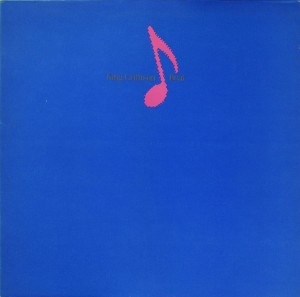
King Crimson: Beat 35 Years Old Today

EG Records, released 18 June 1982

UK Album Chart position: #39

9/10

If you were to ask fans of 1980s King Crimson why they love the band, lyrics probably wouldn’t be a priority.

But, pushed hard by Robert Fripp and possibly influenced by the 25th anniversary of Jack Kerouac’s ‘On The Road’, Adrian Belew came up with some choice words on Beat, the excellent second album from this remarkable quartet.

References to the Beat writers abound; ‘Neal and Jack and Me’ concerns Kerouac and his best friend Neal Cassady and mentions several significant Kerouac works; ‘Heartbeat’ is the name of a book written by Cassady’s wife Carolyn about her experiences with the Beats; ‘Sartori In Tangier’ references the Moroccan city where a number of Beats resided; ‘Neurotica’ shares its title with a very influential Beat-era magazine, and presumably ‘The Howler’ refers to Allen Ginsberg’s ‘Howl’.

As the saying goes, you take inspiration where you find it, and Belew had come up with a very handy concept on which to hang the new band improvisations. Musically, Beat is a brilliant development of the Discipline sound. ‘Neurotica’ and ‘The Howler’ feature some remarkable, unhinged ensemble playing, teetering on total chaos.

On the latter, Bill Bruford delivers intricate patterns on his acoustic/electric kit (with shades of Steve Reich, acknowledged with Bruford’s credit for ‘Drumming’) while Belew’s white-noise guitar outburst is a killer (he repeats the trick on ‘Waiting Man’ and ‘Neal’, extending his palette of sounds from Discipline and sometimes tuning his high E string down to a C).

‘Sartori’ is a superb vehicle for Fripp while ‘Waiting Man’ demonstrates the amazing rhythm dexterity of the band, a development of the ‘Village Music’ concept with Bruford and Tony Levin sharing a tricky 3/4 figure (joined by Belew on drums when they played it live) underneath an expressive vocal performance.

There’s even a noble, painless attempt at a pop hit with ‘Heartbeat’. The only track that outstays its welcome is ‘Requiem’, a fairly dreary investigation of A-minor.

In short, the musical intelligence of this unit was pretty damn scary. But they never neglected a crucial factor: melody. Lesser bands might have built their entire careers on any Beat song.

Not surprisingly, tensions were high during the London recording sessions. Echoing the situation with The Police around the same time, they sought out a producer who might act as peacemaker.

Fripp told writer Anthony DeCurtis in 1984: ‘We tried to get someone from the outside to organise it: Rhett Davies. I think if failed. I would rather have the wrong judgement of a member of the band than the right judgement of someone outside the band.’

Also, Belew was now very much the centre of attention and under pressure to produce melodies and lyrics to order. According to Bruford’s autobiography, Belew told Fripp to leave the studio after one too many barbs from the bespectacled Wimbornian, who ‘went straight back to Dorset and was silent for three days’. Only some desperate calls from Bruford and manager Paddy Spinks rescued the situation.

In the same 1984 interview as above, Fripp said of ’80s Crimson: ‘I feel I’ve created a field in which other people can discover themselves’. On the evidence of Beat, he did a fine job.

Larry Carlton: Last Nite 30 Years On

In a previous piece about Robert Cray, I talked about ‘touch’ guitarists, those whose sounds are almost entirely in their fingers and not dependent on pedals or amps.

Larry Carlton is certainly one of them. He played some of the great guitar of the 1970s with Steely Dan, The Crusaders, Michael Jackson and Joni Mitchell, his sound characterised by a deceptively ‘sweet’ take on the blues, alongside elements of jazz and rock. In the early ’80s, he put out some fine studio albums including Sleepwalk and Friends, but ’87’s Last Nite was his first official live release.


And what an album. In 1987, I was a big fan of his playing with Steely Dan but had never heard any of his solo stuff. A glowing review of Last Nite in Q Magazine sent me scuttling off to my local Our Price. Recorded on 17th February 1986 at the Baked Potato club in North Hollywood, the album is Larry uncut, blowing on a mixture of originals and jazz standards, with no thought of commercial or airplay potential.

It’s hard to think of another guitarist who could cover such a stylistic range so effortlessly. He kills on the slow blues, tears up the fast Texas-style shuffle, delivers deliciously ‘out’ fusion on the title track and swings his ass off on ‘All Blues and ‘So What’, though with a pleasingly piercing tone as opposed to the warm sound favoured by most ‘jazz’ players.

He’s also endlessly melodic, producing memorable phrase after memorable phrase. But don’t be fooled by the beatific expression and cream jacket – he isn’t afraid of throwing in some pretty wacky modal curveballs too.

Another key aspect of Last Nite is Carlton’s band. He uses the cream of the LA studio scene – John ‘JR’ Robinson on drums, Abe Laboriel on bass, Alex Acuna on percussion – and brings them right out of their comfort zone. Apparently they didn’t know ‘So What’ and ‘All Blues’ were on the setlist until Larry called them.

JR in particular is a revelation, sounding like he’s been cooped up in the studio for far too long. And who knew he could swing like he does on the jazz cuts. Keyboard player Terry Trotter also impresses with his rich voicings and empathetic accompaniment.

Sadly, Last Nite turns out to be a bit of an anomaly in Larry’s discography, marking the beginning of an era when he was veering more and more towards a much smoother studio sound. But he’s always ripped it up in the live arena and has spent a lot more time on the road in his later years.

Happy birthday to a true guitar classic.

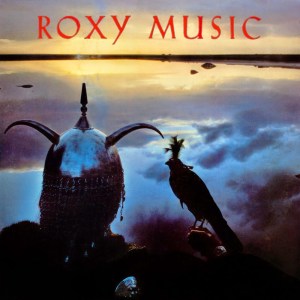
Roxy Music: Avalon 35 Years Old Today

How do you like your classic album: consistent in tone/texture or mercurial and unpredictable like Sgt. Pepper’s (released on this day 50 years ago)?

Avalon definitely belongs in the former camp. Beautifully performed, recorded, mixed and mastered, it maintains its mood throughout.

Through a variety of working methods – some originated on previous albums Manifesto and Flesh & Blood – Messrs Ferry, Manzanera and Mackay arrived at Roxy’s perfect studio swansong and, for many, the peak of ’80s sophisti-pop.

Today, Avalon sounds completely different to almost anything else released in 1982. It’s always a shock seeing reruns of Ferry on ‘Top Of The Pops’ miming something from the album – the whole package seems way too refined and luxurious for the worldly environs of a TV studio.

Crucial to Avalon‘s success was the reinstatement of the crack Flesh & Blood ‘backroom’ team: producer Rhett Davies and legendary mix engineer Bob Clearmountain. Also key was the choice of studios: Compass Point in Nassau and Power Station in New York, whose staircase was put to good use, as Davies told ‘Sound On Sound’ magazine: ‘The main thing at the Power Station was the stairwell. It had an unbelievable sound. You’d put anything through it and you’d just go “Yeah, we’ve got to have that.”’

Davies also brought with him another recording technique developed from working with Brian Eno on Taking Tiger Mountain and Another Green World. ‘Eno had opened me up to the way of working where you walk in with a blank sheet, stick some white noise down, count one to 100 and then fill in the spaces, and it was great working that way. When I started working with Roxy, Bryan had only known the “Let’s cut the track with the band in the studio” approach. I said, “Well, there is another way of working. We can put down our groove exactly as you want it synthetically, using a rhythm box, and the musicians can then play to that groove.” The musicians came in and responded to the atmosphere that was already on tape.’ (Eno of course also utilised a similar approach on Bowie’s Low and Heroes.)

Accordingly, drummer Andy Newmark was very often the last musician to overdub – most tracks were first laid down with a Linn drum machine backing. ‘The Main Thing’, ‘India’ (which sounds like Ferry was checking out Miles Davis’s On The Corner) and ‘The Space Between’ are the most obvious results of this approach, essentially jam sessions built on one-chord vamps. This painterly, piecemeal style of recording was also meat and drink to Ferry who was struggling with writer’s block at the time.

The title track was apparently a delightful accident, rescued at the eleventh hour after the song had almost been shelved: Davies: ‘We were mixing the album, and the version of the song that we’d done just wasn’t working out, so as we were mixing we recut the entire song with a completely different groove. We finished it off the last weekend we were mixing. In the quiet studio time they used to let local bands come in to do demos, Bryan and I popped out for a coffee and we heard a girl singing in the studio next door. It was a Haitian band that had come in to do some demos, and Bryan and I just looked at each other and went “What a fantastic voice!” That turned out to be Yanick Etienne who sang all the high stuff on ‘Avalon’. She didn’t speak a word of English. Her boyfriend, who was the band’s manager, came in and translated.’

Some have claimed that Avalon‘s beautiful closing track ‘Tara’ demonstrates a rare example of Ferry’s humour, ‘ta-ra’ of course being Northern English slang for ‘goodbye’ (the track was co-written with Mackay).

Lyrically, Avalon shows Ferry becoming a superb, somewhat surrealist chronicler of intense love affairs, often painting himself as the windswept loner weighed down by desire. Musically, the album is a marvel of ensemble playing – solid but expressive bass (Neil Jason and Alan Spenner) and drums (Newmark – superb), Ferry’s impressionistic piano and synths, colourful percussion from Jimmy Maelen, and spare, tasteful guitar licks placed around the stereo spectrum from Phil Manzanera and Neil Hubbard (who also plays a great solo on ‘To Turn You On’).

And finally there’s extra spice from Andy Mackay on various saxes and Fonzi Thornton on vocals, whose uncanny alto compliments Ferry so well.

Avalon was a hit, reaching #1 in the UK (though, surprisingly, only #53 in the US) and producing three UK hit singles. Sonically and lyrically, it also set the template for all of Ferry’s subsequent solo projects. Happy birthday to a true ’80s classic, oft imitated but never surpassed.

Swing Out Sister: It’s Better To Travel 30 Years Old Today

Though they emerged as a quintessentially-1980s pop act, Swing Out Sister had impeccable post-punk credentials.

Keyboardist Andy Connell had played with Factory Records-signed A Certain Ratio before SOS, drummer Martin Jackson had previously worked with Magazine and The Chameleons while singer Corinne Drewery had sung back-up with Working Week amongst others.

The result was a musically-rich, very commercial take on the self-contained recording ‘project’ in the Yazoo/Scritti/Steely mould. But Swing Out Sister’s USP was taking influences from the mid-’80s UK jazz revival and filtering them through ’60s pop and the burgeoning House scene.

Young tyro Paul Staveley O’Duffy, fresh from his work with Hipsway, was brought in to produce – an inspired choice. He recruited Pat Metheny/Frankie/ABC arranger Richard Niles for the horns/strings and mobilised the UK session elite (Wix, Guy Barker, Luis Jardim, John Thirkell, Gavin Wright, Chris Whitten, Jakko et al).

It’s Better To Travel was a fascinating mashup of jazz, early house, ZTT techno-flash and pop. First, the jazz. It’s all over the album: ‘After Hours’ has a melody line straight out of Joe Zawinul’s ‘In A Silent Way’. The verse of ‘Communion’ borrows liberally from Miles Davis’s ‘Milestones’ (and sounds a bit like Sade being produced by Trevor Horn) and also has an instrumental break reminiscent of Weather Report’s ‘Teen Town’.

‘Twilight World’ and ‘Fooled By A Smile’ are cracking pop songs with dynamic horns, memorable string arrangements and hints of Dusty and Bacharach. ‘Breakout’ may be one of the more irritating hits of the late ’80s (making the top 10 hit in both UK and US) but musically it’s far superior to the usual ’80s chart fare.

‘Surrender’ still sounds fantastic today, a modal dancefloor track with intricate backing vocals, epic strings and a cool Guy Barker trumpet solo. It was also another top 10 hit (UK #7).

Minor tracks ‘Blue Mood’ and ‘It’s Not Enough’ are more synth-pop than pure-pop, but still very likable, and It’s Better To Travel closes with a dramatic instrumental (‘Theme’) which channels John Barry’s memorable movie scores.

O’Duffy also does a sterling job with the mix: it’s very easy on the ear, not too loud or bassy. It’s music that breathes. It’s Better To Travel was one of the best pop debuts of the 1980s and also a big hit, making #1 in the UK charts.

Swing Out Sister waited a couple of years to release their followup, by which time they’d mainly ditched the house and jazz influences in favour of a far more poppy sound. But It’s Better To Travel still produces a very pleasant contact-high for summer 1987 – good days, good days, as Derek Smalls once said.

Frank Zappa: Ship Arriving Too Late To Save A Drowning Witch 35 Years Old Today

This is the first Zappa album I ever bought.

It was a cheapo Fame Records/EMI cassette edition. Before Ship, I had only heard choice cuts courtesy of a friend’s career-spanning compilation.

I was going to say that Ship was not the ideal album to start with, but actually with hindsight it probably was; it’s maddening, brilliant, tawdry, overblown – basically a microcosm of Zappa’s ’80s output.


Ship ditched the lush, multi-tracked sound of 1981’s You Are What You Is in favour of a no-reverb, claustrophobic mix featuring Chad Wackerman’s busy drums, blaring synths, in-your-face bass and loads of wacky guitar processing.

Opening track ‘No Not Now’, concerning the sexual dilemmas of a long-distance truck driver, is a six-minute disaster area that would surely test the patience of even the most diehard Zappa fan.

‘Valley Girl’ placed killer new-wave rock around daughter Moon’s hilarious vocal exclamations. It was a typically bold, spontaneous and very successful career move by FZ resulting in a timely hit single (peaking at #32 in the US).

But we then unfortunately segue into ‘I Come From Nowhere’, a fairly unlistenable track about the inanity of TV personalities with a ghastly vocal performance by Roy Estrada over an uninvolving, sub-Men At Work riff.

But side two of Ship demonstrates all that’s essential about ’80s Zappa. It should really be heard in its totality. The title track is surely one of his career highlights, a unique, surrealistic 12-minute salvo featuring spoken-word, ‘scatting’, a great rock guitar solo over a grinding 9/8 vamp, a blizzard of avant-garde piano/percussion and even a quote from Stravinsky’s ‘Rite Of Spring’ (of course also a piece about ritual sacrifice).

‘Envelopes’ is a brief but brilliant through-composed tribute to Conlon Nancarrow featuring close-interval, player-piano perversions, while ‘Teenage Prostitute’ is the R-rated version of ‘Valley Girl’, a hellish vision of Hollywood’s underbelly complete with ‘Peter Gunn’ riffs, intricate marimba and operatic vocals by Lisa Popeil.

I was in. I would immediately go back/forward and investigate FZ’s career in more detail. Next up was Sheik Yerbouti, the first CD I ever bought and probably my favourite Zappa album.

Ry Cooder: The Slide Area 35 Years Old Today

Gavin Lambert’s 1959 book ‘The Slide Area’ was a collection of inter-related stories about a group of Hollywood’s lonely losers.

His theme was that California’s natural phenomena made ‘normal’ behaviour virtually impossible.

‘The Slide Area’ obviously rang a bell with Ry. His 1982 album of the same name also featured an array of characters not exactly thriving in the Dream Factory.

But it also turned out to be almost the complete opposite of Cooder’s commercial breakthrough, 1979’s slick, sparkling, digitally-recorded Bop Til You Drop.

The Slide Area sounds like what it is – a rough-and-ready band, often audibly cued by Cooder, playing songs of varying quality live in the studio with minimal, if any, overdubs.

‘Which Come First’, ‘Yes It’s Me And I’m Drinking Again’ and ‘Mama Don’t You Treat Your Daughter Mean’ are incredibly loose, with some bum notes and tentative moments left in. Ry’s vocals are similarly raw but full of passion. On ‘Mama…’ he sounds a bit like Bobby ‘Blue’ Bland.

Drummer Jim Keltner is uncharacteristically hyperactive, speeding up drastically on almost every song (definitely no click tracks involved with this album), but full of creativity on what sounds like a homemade kit with timbale, double kick drums, a trash can and a few different snares.

Cooder composes a lot more than on recent albums and even co-writes an ’80s classic with Keltner, ‘UFO Has Landed In The Ghetto’, which finds time to gently lampoon disco, rap and funk with references to the Bee Gees and George Benson.

But perhaps predictably the three cover tunes are the standouts: a Tex-Mex version of Curtis Mayfield’s ‘Gypsy Woman’, funky take on Dylan’s ‘I Need A Woman’ and a gloriously arse-over-tit ‘Blue Suede Shoes’.

But The Slide Area also marked the end of an era. Americana, roots music and blues were out, synths and drum machines were in.

It was the end of the sort of albums Little Feat, Van Dyke Parks, the Doobie Brothers, Bonnie Raitt, Randy Newman and Ry made with Warner Bros and the beginning of the sort of albums Madonna, Pat Benatar and Laura Branigan were making.

Live, it was a different matter – Ry was still a big draw in 1982, playing legendary gigs at the Hammersmith Odeon (my dad took me to one night, maybe my first ever major gig) and big shows all over Europe. But that too proved a false economy.

‘Someone yelled “Think of the money!” from the audience (during a 1977 Hammersmith Odeon gig). I’d like to show him my bank balance. I could never make a dime doing anything. I came back to California in debt. I’d make a record and I’m broke cos they’re not making any money, they don’t sell. I said, to hell with it,’ Ry told Q Magazine in 1987.

It was back to the movie soundtracks. For a while…

Laurie Anderson: Big Science 35 Years On

The 1980s were littered with ‘novelty’ hits but perhaps none was more unexpected – or more powerful – than Laurie Anderson’s John Peel-endorsed, eight-minute UK #2 ‘O Superman (For Massenet)’.

Massenet was a French composer, whose aria ‘Ô Souverain, ô juge, ô père’ (‘O Sovereign, O Judge, O Father’) appeared in the 1885 opera ‘Le Cid’.

‘O Superman’ was totally hip at the time, a slice of NYC avant-garde post-punk appearing in the slipstream of Talking Heads’ ‘Once In A Lifetime’.

David Bowie was a big fan, covering the song during his 1997 Earthling tour. It still sounds unique and pretty hip today, even managing to throw in a little ode to Philip Glass with its brief, circular melodic motif that appears a few times.

A live performance of ‘O Superman’ was recorded in New York City in the week following the 9/11 attacks, and later appeared on the album Live In New York.

In this context, certain lyrics seem to take on greater significance: ‘Here come the planes/They’re American planes/Smoking or non-smoking?’ But Anderson has intimated that the song was inspired by watching television news reports of the Iran hostage crisis of 1979/80.

‘O Superman’ came from Anderson’s performance art/music piece ‘United States I-IV’, and was initially released as a single on the indie One Ten label. When it quickly sold out of its initial run of 1,000 copies, Warners picked it up and also asked for a whole album of music from the show.

What about the rest of Big Science? Not having heard it for a few years, I approached it with trepidation. But there was no need – ‘From The Air’ and ‘Sweaters’ (‘I no longer love the way you hold your pens and pen…cils’) are still very funny, but also oddly disquieting.

Lyrically, Big Science – like the performance piece it comes from – seems to be satirising the rebirth of American ‘heroism’ and industrial might of the Reagan era.

Anderson often speaks with (and mocks) the ‘voice of authority’, someone who, as she later said in an interview, is ‘either a shoe salesman or someone who wants to sell you an insurance policy you don’t want or need’ (now who does that remind you of…).

But there’s always a clash between this technological brave new world and spiritual binds that hold us together – family (‘O Mom and Dad…’), folklore and tradition.

The title track rams home the point with its ‘primitive’ percussion and vocals that sound vaguely like Native American chanting. ‘O Superman’ also does it with its initial focus on a piece of new technology – an answering machine – and then more metaphysical concerns (justice, God, love).

As the 1980s wore on, Anderson’s studio albums possibly suffered from being right on the ‘technological cutting edge’, but Big Science revels in simple acoustic/electric juxtapositions – some Velvet Underground drums here, an analogue synth, Vocoder or Harmonizer there, plus sax, percussion and treated violin.

Occasionally it would be nice to hear an instrumental solo, maybe someone of the NYC-art-rock-approved school such as Shankar or Jon Hassell, but generally Anderson keeps it simple and maintains a very assured minimalist musical style throughout.

Big Science slightly outstays its welcome, its last two tracks quite a stretch, but overall still sounds like a vital piece of work from a major, treasured artist.