Scritti Politti: Cupid & Psyche 85 30 Years Old Today

Listening again to the brilliant Cupid 30 years after its release, I wonder if it sounds very dated to modern ears.

Whilst it unabashedly utilised all manner of mid-’80s technology (Fairlight, drum machines, sequencers), I don’t really ‘hear’ those elements any more. All I hear is top-notch songwriting, intriguing and intelligent lyrics, great grooves and Green’s unique vocals.

Cupid hit me at exactly the right age; it was the soundtrack to endless summer evenings, teenage crushes, adolescent musings.

Though Scritti leader/vocalist/co-songwriter Green Gartside left behind his post-punk roots and the ‘indie’ sound of his Rough Trade debut album Songs To Remember to create this major-label debut, Cupid certainly had antecedents: Green and keyboardist/co-composer David Gamson revered the highly-syncopated R’n’B/electro of The System, Chaka Khan, ZAPP and Michael Jackson, but they added some classic pop songcraft and intricate harmony.

Rough Trade boss Geoff Travis gave Green his blessing and, coupled with manager Bob Last (who also managed Human League and ABC), Green pitched the Americans his fusion of pop and funk. As he told WORD magazine in 2006, ‘The American labels were all tickled pink by these big NME interviews we did and that loosened their wallets. Bob and I were terribly persuasive as to why they should part with vast sums so we could make a record.’

Legendary Aretha/Chaka producer Arif Mardin came on board as did a raft of quality players such as Marcus Miller, Steve Ferrone, David (The System) Frank, Robbie Buchanan, Robert Quine and Paul Jackson Jr. But Green apparently turned out to be more of a perfectionist than any of them: ‘It took us a great deal of time to get our bits right and my anxiety about singing was pretty acute. I would demand to sing things over and over again and I’m not sure I ever got it better than the first time.’

Cupid featured three classic singles – ‘The Word Girl’, ‘Absolute’ and ‘Wood Beez (Pray Like Aretha Franklin)’, though eventually a total of five tracks were released as A-sides.

The John Potoker remix of ‘Perfect Way’ (far superior to the album version) even became a massive hit in the States, reaching 11 on the Billboard Hot 100 and pushing worldwide sales of the album over the million mark.

While ‘Don’t Work That Hard’ and ‘Lover To Fall’ might be deemed ‘filler’, they easily transcend that label by dint of their sprightly grooves and sheer catchiness. The beautiful ‘A Little Knowledge’ showed that Green and Gamson were on the same page as Prefab’s Paddy McAloon when it came to sumptuous, intelligent romantic ballads in the mid-’80s, and the track is a great companion piece to ‘When Love Breaks Down’.

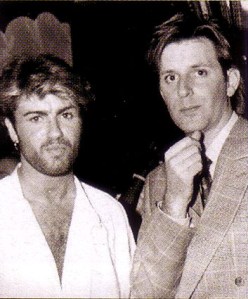
Post-Cupid, Green and Gamson booked and then cancelled a world tour (they were apparently visited in the studio by MTV executives who told them, ‘Just think, you’ll never have to tour again!’), wrote songs for Al Jarreau and Chaka Khan, made friends with Miles (who covered ‘Perfect Way’ on Tutu), hung out with George Michael at various London nightspots, embarked on a year of press in America to cash in on the success of ‘Perfect Way’ and then reluctantly hit the studios of New York and London to record the follow-up Provision.

george michael green gartside

George and Green, London, 1986

A cursory listen to a radio station like Absolute 80s reveals the wide-reaching influence of Cupid on countless late-’80s bands: a-ha, Go West, Climie Fisher, Living In A Box, Pet Shop Boys, Bros and Aztec Camera all tried for those clinical, Swiss-watch-precision arrangements and uplifting pure pop sound, but generally lacked Gamson’s ingenious chord changes and Green’s gift for melody.

Happy birthday to a bona fide ’80s classic.

Wayne Shorter: Atlantis 30 Years Old Today

Wayne-Shorter-Atlantis--Press-K-486376It’s not easy to write about an album that’s so much part of your musical DNA that it haunts you in the middle of the night and yet reveals fresh nuances every time you listen to it.

But first of all, I have to declare an interest – Wayne is one of my all-time musical heroes and has been since I was a teenager when his sax playing and compositions with Weather Report and Miles Davis totally bewitched me.

It wouldn’t be an overstatement to say that it took me 20 years to really appreciate Atlantisand also to realise that it had to be listened to on CD and listened to loud. The recent remaster, as part of Wayne’s Complete Albums Collection, is the best I’ve ever heard it.

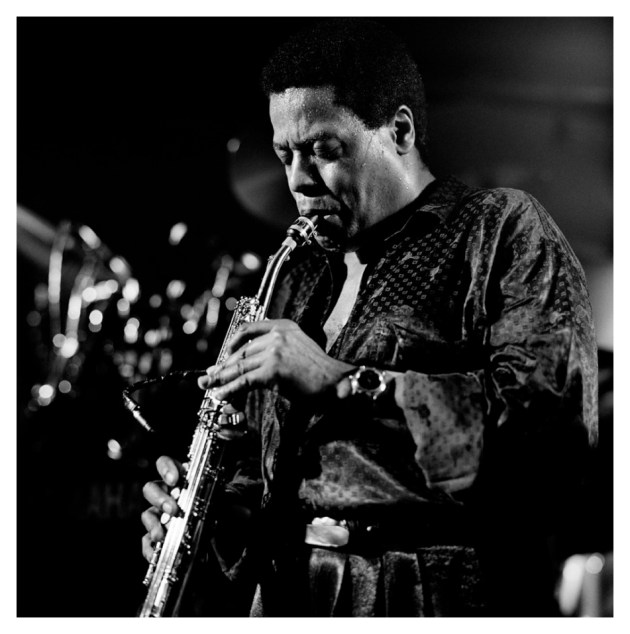
Wayne at The International, Manchester, 1989. Photo by William Ellis

Wayne at The International, Manchester, 1987. Photo by William Ellis

How to describe the magical though totally uncompromising music on Atlantis? It was Wayne’s first solo release after the official split of Weather Report and it’s fair to say it wasn’t the album many fans and critics were expecting.

It surely remains Wayne’s least understood work.  It’s ostensibly an album of through-composed, acoustic ‘fusion’, but that barely covers it. Someone once described it as the soundtrack to an animated children’s book.

Wayne seems to be weaning listeners away from a more bombastic form of jazz/rock towards a new combination of jazz, R’n’B and Third Stream which utilises sophisticated counterpoint and pure composition.

Shorter is the only player who gets any significant solo time. Acoustic piano, flute, vocals and multiple saxes supply the dense, challenging, sometimes dissonant harmonies.

Atlantis could hardly be described as a ‘jazz’ album at all; ensemble work and composition generally override individual expression, and none of the tracks ‘swing’ in a conventional sense. And yet it’s still an utterly melodic set, full of memorable, criss-crossing themes which jostle for your attention. It takes time to work its magic, but work its magic it does.

The phenomenal opener ‘Endangered Species’ (recently massacred by Esperanza Spalding) is somewhat of a  ‘sweetener’ at the top of the album, like Sirens luring sailors to their deaths, as Shorter biographer Michelle Mercer noted.

Many people, me included, struggled to get very far past it since the remainder of Atlantis sounded somewhat prim and precious in comparison. I wanted to hear Zawinul and Jaco’s blistering lines, Omar Hakim’s colourful drumming, some virtuosity.

But when I studied Atlantis more closely, there are many subtle displays of instrumental mastery. Ex-Weather Report drummer Alex Acuna plays a blinder throughout, blazing through the outro of ‘Who Goes There’, Larry Klein’s bass playing is nimble and impressive (try playing along to Wayne’s intricate written lines), Michiko Hill’s piano comping is inventive and Wayne plays some fantastic solos, particularly his Rollins-style tenor on calypso-flavoured ‘Criancas’.

I remember seeing Wayne playing much of this music live to a barely-half-full London Shaw Theatre in late 1985 – it seems that audiences, booking agents and press officers alike were finding his post-Weather Report music a hard sell at this point.

Critics were generally puzzled too, although Robert Palmer noted in the New York Times that ‘it’s not an album one should listen to a few times and then knowledgeably evaluate… It is an album to learn from and live with.’

wayne shorter

But if Atlantis was misunderstood and less than commercially successful on its original release, it seems to be gaining fans in the 30 years since.

A good yardstick is that several compositions from the album are still regularly played by Shorter’s esteemed current quartet, particularly the title track, an eerie, labyrinthine tango.

‘The Three Marias’, a treacherous tune in 6/4 inspired by press reports of three Portuguese woman being arrested for writing obscene literature, has even been the unlikely recipient of a few cover versions, perhaps most notably (though not wholly effectively) by ex-Police guitarist Andy Summers.

Thanks to William Ellis for use of his photo.

(P.S. I’m taking one mark off for ‘Shere Khan The Tiger’ which was far better rendered on Carlos Santana’s 1980 album The Swing Of Delight, a version which featured Herbie Hancock on piano, Ron Carter on bass and Harvey Mason on drums.)

How Not To Follow Up A Hit Album #2: Tears For Fears’ The Seeds Of Love

courtney pine

Tears For Fears’ second album Songs From The Big Chair did the business.

A relatively cheap record to make, it sold millions and elevated the Bath boys into the big league. Early ‘80s technology, boy-band looks and some great hooks had carried TFF through the first two albums but now they felt they had to deliver a polished, ‘musicians’ album’ to match their heroes. Big mistake…

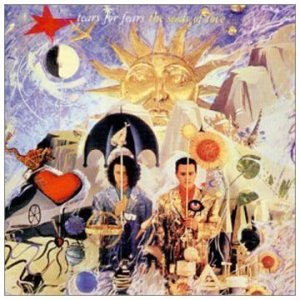
The Seeds Of Love was the result, and with it they tragically o’erreached themselves in the search to emulate their heroes Gabriel, Ferry and Sylvian. Four producers. Nine studios. Over a million pounds in studio costs. Broken marriages. Dozens of session musicians.

A famous Q article outlined the painful, sometimes embarrassing lengths the two protagonists Roland Orzabal and Curt Smith went to to complete Seeds.

Orzabal has said he wanted to make something musicians would love, something ‘world-class’. This over-egged curio shows what happened when pop stars tried to buy credibility in the late-‘80s, undeniably under a fair amount of record company pressure to follow up a monster.

The intro of ‘Woman In Chains’ still retains some Blue Nile-ish power before being obliterated by Phil Collins’ sledgehammer drums and overblown AOR guitars; Gabriel/Joni/Sting drummer Manu Katche plays a blinder on ‘Badman’s Song’ but the melodies barely register.

‘Sowing The Seeds Of Love’ still stands up though as a decent Beatles tribute complete with some lovely woozy drums from Big Chair producer and ex-Ant Chris Hughes and a very cool chord sequence.

‘Standing On The Corner Of The Third World’ is initially very attractive complete with Jon Hassell’s ethno-trumpet and some typically slinky fretless playing from Pino Palladino, but its grand atmosphere and ambience can’t obscure the lack of structure and good ideas.

Swords And Knives’ starts with an interesting piano/voice melody but quickly gets mired in a succession of annoying guitar solos and grandiloquent key changes.

‘Year Of The Knife’ (these boys are really interested in knives…) is a pretty ugly collision of gospel vocals and a sub-‘Broken Wings’ groove. Again, the song runs out of stream after two minutes and tries to cover it up with a fiddly string arrangement and weird avant-metal guitars. Even uber-drummer Simon Phillips sounds uninspired.

The Q article, September 1989

The Q article, September 1989

Orzabal almost achieves a Sylvian-ish level of sophistication on the closing ‘Famous Last Words’ but once again blows it, neglecting to supply a B section or cogent lyrics. Quiet/loud dynamics alone do not a good song make.

The album was a hit, going straight to number one in the UK and selling well in Europe and the States, but was it worth all the effort? Orzabal and Smith were barely on speaking terms and didn’t record together for over a decade after Seeds‘ completion. It was certainly a big and bold farewell to the ’80s from one of the decade’s success stories.

Robben Ford: Talk To Your Daughter

robben ford

Robben is surely guaranteed a place in the pantheon of modern blues guitar greats, and, like his contemporary and good buddy Larry Carlton, he makes guitar playing sound ridiculously easy however complicated the chord changes.

Fagen and Becker had been told about Robben’s prodigious soloing ability over changes, hiring him to play the break on Steely Dan’s altered blues ‘Peg’ in 1977, but he ended up on the cutting room floor (they famously went through six other guitarists before Jay Graydon smashed it at the eleventh hour).

But sometimes Ford’s good looks, cheerful stage persona and sweet sound can obscure his more extreme guitar statements; fusion drum monster Kirk Covington somewhat disparagingly called Robben’s style of music ‘happy blues’ in a recent interview with Drumhead magazine (admittedly after a failed audition for Robben’s band!).

miles robben ford

Robben cut his teeth with the likes of George Harrison, Joni Mitchell and Jimmy Witherspoon, but started off the 1980s playing beautifully at the Montreux Jazz Festival with David Sanborn, Randy Crawford, Al Jarreau et al, contributing three of my favourite ever guitar solos to the Casino Lights live document of that gig.

Then, in 1986, the dream sideman gig materialised: he replaced Mike Stern in Miles Davis’s band, gaining a new confidence in his abilities and a renewed love for the blues.

Apparently Miles believed he’d found his perfect guitar player. But Robben didn’t stay long – he left Miles to make his second solo album Talk To Your Daughter for Warner Bros in 1987.

It’s funny to think of Robben playing guitar with Miles just before this recording because sometimes his music could use a bit of Miles’s obliqueness and use of space.

Robben’s voice might not be to everyone’s tastes either, firmly in the Jackson Browne/Michael Franks school, but his guitar solos are always engaging and risk-taking, and a stellar band featuring monster drummer Vinnie Colaiuta, bassist Roscoe Beck and Yellowjackets keyboardist Russell Ferrante makes the music breathe. The album sounds like it was recorded live in the studio too, a big plus especially in the over-produced late-’80s.

The gospel-tinged ‘Revelation’ is worth the price of the album alone, possibly Robben’s finest recorded work to date and the only instrumental here. Robben’s take on ‘Ain’t Got Nothing But The Blues’, co-written by Duke Ellington and best-known as a Mose Allison number, is also superb, a feast of jazz chords and tasteful band accompaniment.

Down-and-dirty blues it ain’t, but Talk To Your Daughter definitely brought something fresh to the party. Other modern guitar greats Scott Henderson, Gary Moore, Frank Gambale and Larry Carlton were listening; within a few years, they’d all reacquaint themselves with the blues in a big way too.

Marcus Miller: Suddenly

marcus miller

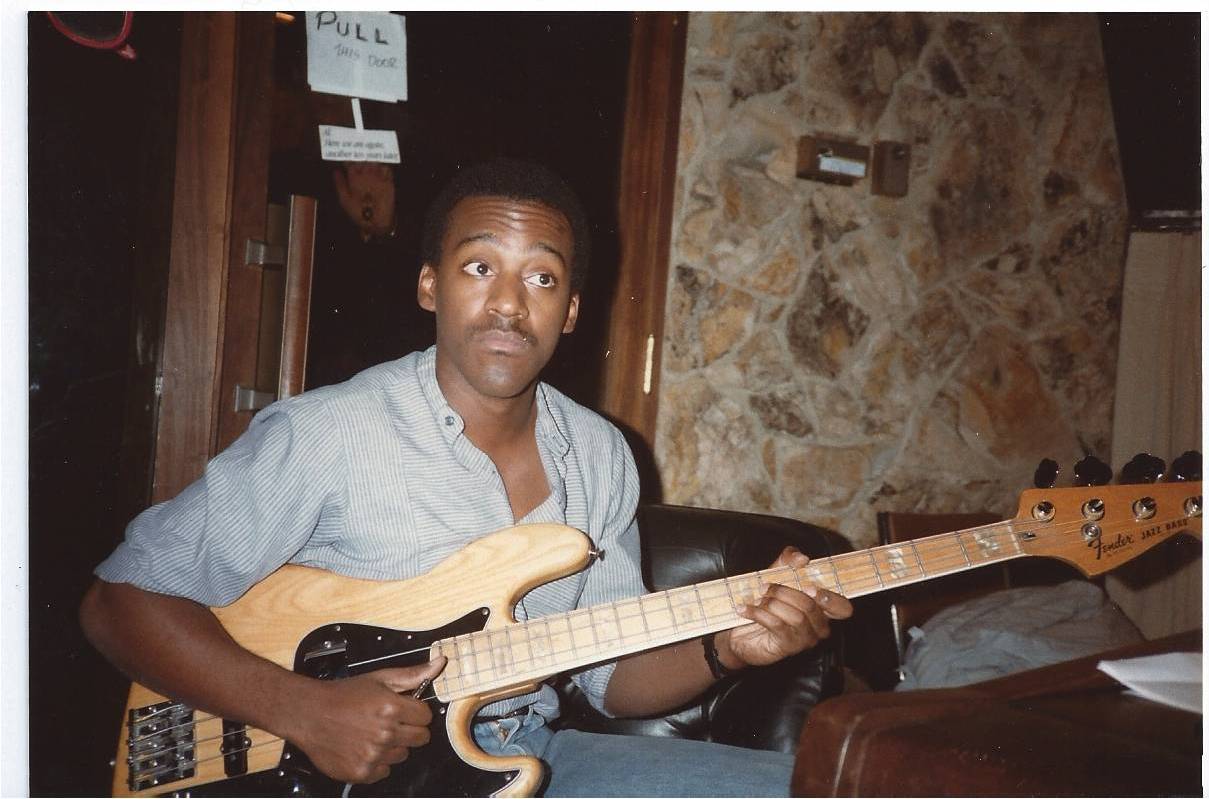
I first became aware of Marcus when I saw him playing bass with Miles Davis at the trumpeter’s Hammersmith Odeon ‘comeback’ gig in ’82.

He quickly became one of my bass heroes a few years later when I was bowled over by his contribution to Miles’ Star People album.

Marcus’s name came up again recently when I was talking to someone about great multi-instrumentalists. In the soul/funk/R’n’B world, obviously there’s Stevie, Prince, Lewis Taylor and Sly.

Marcus’s 1983 debut Suddenly almost puts him up there with that esteemed company too, though in the final analysis it suffers from a lack of top-quality material.

Marcus has put it on record that he was first inspired to play music by Michael Jackson and Stevie, and Suddenly was his first attempt to enter their world of quality soul/funk/R’n’B songwriting.

He’d certainly paid his dues for Warner Bros Records by 1983, producing, composing and/or playing bass with David Sanborn, Donald Fagen, Joe Sample, Roberta Flack, Grover Washington Jr. and Claus Ogerman, so a Warners solo debut was always on the cards.

Marcus-Miller

You can hear elements of ZAPP, Gap Band, The Time and Cameo on Suddenly, and if Marcus doesn’t quite establish himself as a genuine ’80s funk contender, there are a myriad of great grooves and musical touches to enjoy.

He pretty much plays all instruments, getting in selected guests (drummers Harvey Mason and Yogi Horton, Vandross, Sanborn, Mike Mainieri) to add spice here and there.

By his own admission, Marcus is not a great singer, his voice rather light and uncertain, but his bass and keyboard playing, songwriting and arranging really save the day.

‘Lovin’ You’ is uplifting pop/funk with a classic bassline, while ‘Just What I Needed’ features some great Richard Tee-like, gospel-tinged piano from Marcus. And his piccolo bass solo on ‘Much Too Much’ had me checking the sleevenotes in vain for the presence of late great guitarist Eric Gale.

‘Just For You’ was previously recorded by David Sanborn on the classic Voyeur album, but here it gets a nice new vocal treatment.

It’s telling though that the closing instrumental ‘Could It Be You’ is by far the most successful track, featuring Miller’s fabulous fretless bass solo. It was later covered excellently by Dizzy Gillespie on his 1984 Closer To The Source album.

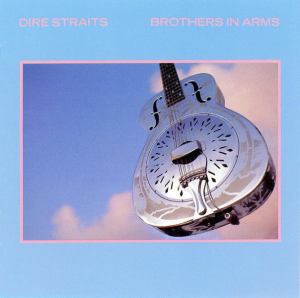
Dire Straits: Brothers In Arms 30 Years Old Today

dire-straitsVertigo/Warner Bros Records, released 13 May 1985
Recorded: AIR Studios, Montserrat

Produced by Neil Dorfsman and Mark Knopfler

Appox. UK Album Sales: 3,086,000

UK Album Chart Position: 1

Weeks On UK Album Chart: 195

Singles Released (and UK Chart Positions):

Walk Of Life (2)
Money For Nothing (4)
Brothers In Arms (16)
So Far Away (20)
Your Latest Trick (26)

Whilst enjoying Mark Knopfler’s considerable guitar skills and knack for writing cinematic ballads (‘Romeo And Juliet’ and ‘Private Investigations’ would probably make my top 20 songs of the ’80s), Dire Straits’ mega success has generally puzzled me.

Knopfler always seemed a Bob Dylan/Randy Newman/Donald Fagen kind of guy – subtle, intelligent and wry/wary – but Straits’ mostly meat-and-potatoes rock music told another story.

But Brothers In Arms hit at exactly the right time on its release in 1985; its digital sheen, beautifully-crafted songs, tasty drumming (Omar Hakim, except on ‘Walk Of Life’ and ‘Money For Nothing’) and mastery of various styles (ZZ Top-style boogie, roots rock, jazzy pop) created an ’80s perfect storm. It’s so much part of the furniture that it’s almost beyond criticism.

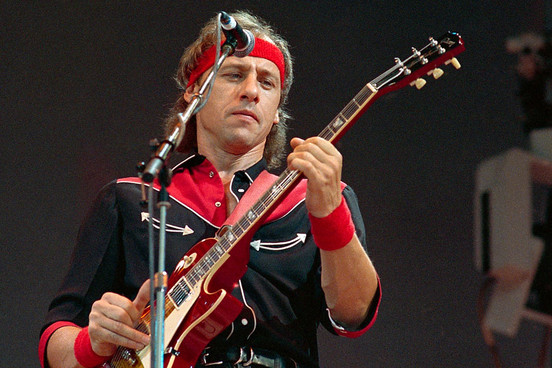
Mark Knopfler at Live Aid, 13th July 1985

Mark Knopfler at Live Aid, 13 July 1985

Knopfler’s laidback, post-Dylan vocals are a great antidote to all those oversingers of the ’80s (and right up to the present day).

On ‘So Far Away’ and ‘Walk Of Life’, his pitching is not perfect and his phrasing throwaway, but the overall effect is pleasing possibly because it’s such a contrast to the super-slick production and playing.

And he shows himself again to be a brilliant ballad writer – ‘Your Latest Trick’ carries on from where ‘Private Dancer’ and ‘Private Investigations’ left off, a noirish classic featuring a famous sax break by Michael Brecker just as memorable as ‘Careless Whisper’ (for better or worse!).

‘Why Worry’ and the title track (apparently Knopfler’s response to the Falklands War) are timeless epics. I found myself unexpectedly very moved listening again to the latter the other day. In fact, I was surprised how generally downbeat the album was, not having heard it for a good few years.

Brothers In Arms outsold both Michael Jackson releases (Bad and Thriller) to be the UK’s best-selling non-greatest hits album of the ’80s, spending 14 weeks at number one. Surely a big reason for its success was that it was heavily promoted as a digital recording and as such was perfectly suited to the new CD format.

The fact that it was the ‘test CD of choice’ for yuppies on the lookout for new hi-fi equipment must have been a delicious irony for Knopfler and Straits manager Ed Bicknell, given the lyrics to ‘Money For Nothing’. There were even rumours that at the time other artists were struggling to get their albums pressed onto CD due to the overwhelming demand for Brothers In Arms.

Happy birthday, chaps.

China Crisis: Flaunt The Imperfection 30 Years Old Today

china crisis

In the UK, despite decent chart success (six top 40 singles), China Crisis have always had what you might call an image problem – they’ve never quite been able to shake off an almost imperceptible naffness.

Is it because of their name? Because their first hit was the extremely wimpy ‘Christian’? Because they were neither doomy enough for the post-punk crowd nor cosmopolitan enough for the New Romantics?

Or maybe because they had the dubious honour of being playlisted by Alan Partridge? (Actually, they were played by Partridge’s nemesis Dave Clifton, Ed.)

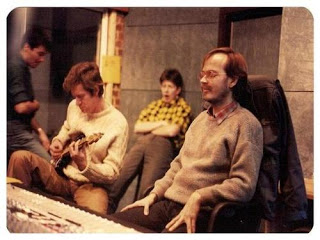
Steely Dan co-conspirator Walter Becker didn’t think they were too shabby though, apparently requesting a meeting with the Liverpudlians after he heard the nuclear-themed ‘Papua’ from their second album, 1983’s Working With Fire And Steel. He was intrigued by their obtuse lyrics, they liked the cut of his jib and apparently got on like a house on fire.

Becker signed on as producer and was summoned to Parkgate Studios near Battle, Sussex, to begin work on Flaunt The Imperfection which would turn out to be CC’s biggest success to date. Flaunt reached 9 in the album chart and stayed in the UK top 100 for 22 weeks.

China Crisis and Walter Becker, Parkgate Studios, 1985

China Crisis and Walter Becker, Parkgate Studios, 1985

With the steady hand of legendary Stones/Sly/Hendrix engineer Phill Brown onboard too, the album featured two infectious top 20 UK hits, ‘Black Man Ray’ and ‘Wake Up (King In A Catholic Style)’.

Well worth checking out too is the ‘Black Man Ray’ B-side ‘Animalistic’ which shows that the lads were also flirting with a variation on Britfunk in their spare time.

Apart from the singles, there are a host of other treats on this album, not least the drumming of the late Kevin Wilkinson. He was a big drumming hero in my teenage years. He’s very close to a British Jeff Porcaro or Carlos Vega, a tasteful groovemaster with a few chops too.

Gazza Johnson’s basslines are catchy and memorable and the songwriting is solid throughout, only ‘Wall Of God’ and ‘Blue Sea’ lacking strong choruses. Then there’s Becker’s top-draw production. He ‘Fagenizes’ Gary Daly’s excellent vocals (usually double-tracked with a touch of delay) and shows off his arranging skills with subtle synth/guitar layering and brooding horns.

In particular, ‘Strength Of Character’, ‘You Did Cut Me’, ‘Bigger The Punch I’m Feeling’ and ‘Gift Of Freedom’ bear his fingerprints, the latter featuring some Gil Evans-esque woodwinds.

China Crisis followed up Flaunt with 1986’s What Price Paradise, a massive misfire wherein producers Clive Langer and Alan Winstanley inexplicably tried to turn them into Madness (If I remember rightly, the Q review of the album ended with the phrase ‘File under: Victim Of A Cruel Medical Experiment’!). But the band reunited with Walter Becker on the excellent Diary Of A Hollow Horse four years later.

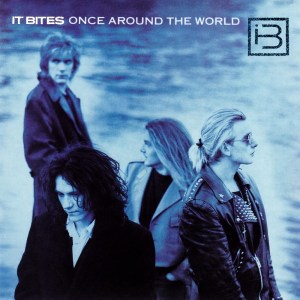
Classic Prog’s Last Hurrah: It Bites’ Once Around The World

it bitesEveryone has their favourite summer music and the brilliant Once Around The World is an album I always turn to at this time of year.

It’s a feast of resplendent chord changes, audacious song structures, good grooves, blistering lead guitar lines and uplifting, unusual melodies.

As a music-mad 15-year-old, this was the album I was really waiting for. I had recently become slightly obsessed by their debut The Big Lad In The Windmill and couldn’t wait to hear what the talented Cumbrian four-piece would come up with next.

For some reason, I didn’t buy OATW on its first week of release, but my schoolmate Jem Godfrey did. I would badger him for details in the playground. Me: ‘Are there any instrumentals on it?’ Jem: ‘No.’ Me: ‘What’s it like then?’ Jem: ‘It’s bloody brilliant, just get it!’

In 1988, the world didn’t need a dose of beautifully-recorded, full-on prog lunacy, but they got it anyway and the UK music scene was all the better for it. There were murmurs of a ‘prog revival’ at the time but It Bites (and to a certain extent Marillion) were streets ahead of the pack because they blended superb musicianship with great hooks and catchy songs.

Hats off to Richard Branson and Virgin for throwing some money at this album because it turned out to be classic prog’s last hurrah. Mainly recorded at The Manor in Oxfordshire (where rumour has it singer/guitarist Francis Dunnery gained access to Richard Branson’s bountiful wine cellar on the band’s first night of recording with disastrous consequences…), OATW is essentially one side of beautifully-produced pop/rock songs (mainly helmed by Virgin prog survivor Steve Hillage), and another of completely brilliant, barmy prog/pop pieces.

The Manor

‘Midnight’ and ‘Kiss Like Judas’ are lean, mean, well-crafted pop/rock songs with good hooks and meaty grooves, but both just missed the UK Top 40.

‘Plastic Dreamer’ fits an unbelievable amount of material into its four minutes, including a vocal harmony section that would make Roy Thomas Baker drool, a stunning guitar solo from Dunnery, some spooky Alice In Wonderland atmospherics and preposterous lyrics (very much inspired by Peter Gabriel’s Genesis output).

They repeat the trick on ‘Hunting The Whale’ and make good use of the Manor swimming pool in the process. The 14-minute title track, whilst owing a few licks and lyric ideas to Genesis’s ‘Supper’s Ready’, is nevertheless astoundingly ambitious and brilliantly realised considering it was recorded in the same year as Kylie’s ‘I Should Be So Lucky’.

(There are other nods to early Genesis throughout the album: the last few minutes of ‘Old Man And The Angel’ brilliantly revisits the rhythm games of ‘The Battle Of Epping Forest’; the main hook of ‘Hunting The Whale’ is very similar to Steve Hackett’s ‘Dancing With The Moonlit Knight’ central riff; the middle-eight of ‘Midnight’ uses Tony Banks’ opening chords to ‘Watcher Of The Skies’.)

They could play all this stuff live too, and with great elan (they played the whole of OATW at the much-missed London Astoria circa May 1988, and I also caught them a few months before that at Brunel University). Their range and ability was simply stunning.

John Beck’s keyboard textures have possibly dated a bit in comparison with what, say, Trevor Horn and David Sylvian were doing with synths at the time (though his voicings and arrangement ideas are always inventive), but people often forget what an amazing rhythm section (Dick Nolan on bass, Bob Dalton on drums) It Bites had.

There’s a ‘swing’ there that suggests that they were always influenced by much more than just progressive rock, and Dunnery’s guitar playing and vocals have incredible bite. Here’s some great footage of them recording the title track:

Though It Bites were turning into a very popular live draw throughout Europe, the album stalled at #43 in the UK – a big surprise and disappointment to the band. The lads’ music subsequently took a heavier direction, but OATW is the standout in their short but excellent career, showing off a brilliant band at its peak.

Gratifyingly, the album is gaining fans as the years go by. And check out this great interview with Francis Dunnery and John Beck about the making of Once Around The World

Francis Dunnery also did this interview after their first support gig with Robert Plant in April 1988.


Andy Summers & Robert Fripp: I Advance Masked/Bewitched

Andy-Summers-I-Advance-Masked-77760With hindsight, it seems completely logical (not least because they both hail from the county of Dorset, England) for these two guitar giants to record together, and their two 1980s collaborations are engaging if annoyingly inconsistent.
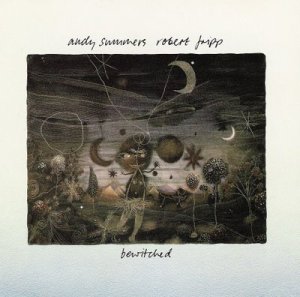
1982’s I Advance Masked is under-produced, tentative and unfinished-sounding, and this approach works fine on the beguiling title track (which prompted one of the worst videos of the decade) and evocative ‘Hardy Country’, where strong themes carry the day.

The album offers fascinating examples of the kinds of guitar woodshedding the players were doing in the early ‘80s. Summers is in full-on Ghost In The Machine mode with meshes of swelling guitar synth and simple, incongruously bluesy solos, while Fripp foregrounds ideas that he would use to greater effect on King Crimson’s Beat album.

But the duo’s limitations as multi-instrumentalists hamper the rest of I Advance Masked – the drum programming is limp, bass playing fairly amateurish and the synth playing simplistic (though sometimes perversely enjoyable in a kind of sub-John Carpenter way). The shorter tracks search in vain for some status as ‘ambient’ or ‘environmental’ music but are too quirky for that purpose.

And, amazingly, I Advance Masked cracked the top 60 in the US Billboard pop charts.

summers and fripp1985’s Bewitched is a dramatic improvement on that debut album. Side one features attractive melodies, well-thought-out song structures, (mostly) real drums, some incredible bass playing from Chris Childs and ex-League of Gentleman/Gang of Four Sara Lee, pristine mastering and more of a ‘band’ sound.

The opener ‘Parade’ flies out of the traps with New Wave drums and an engaging little synth guitar melody. With its major-chord exuberance and very short duration, it could easily have come from side one of Bowie’s Low.

‘What Kind Of Man Reads Playboy’ is pretty much a perfect distillation of the state of the electric guitar in the mid-‘80s. Summers’ ingenious layering takes in wah-wah funk, harmonic washes, bebop, bluesy leads and tasteful guitar-synth textures. Fripp plays one of the most extreme solos of his career while Sara Lee (or is it Chris Childs?) impresses with high-speed soloing and tasty grooving.

Unfortunately, side two is more in line with the debut album, a series of rather uninteresting, short and badly recorded tracks. Think ‘Behind My Camel’ in demo form but without Stewart Copeland. But the best is saved until last, the stunning closer ‘Image And Likeness’ featuring Summers’ cascading harmonics.

By his own admission, Fripp generally takes a back seat and basically provides a framework for Summers’ talents to shine through. An admirable position for sure, but he was becoming a bit like the Wayne Shorter of guitar at this point, happy to be in the shadows.

But this is in general an intriguing and somewhat overlooked collaboration calling to mind an era when big labels were putting some serious money behind instrumental music (though Summers reports that A&M were extremely reticent about this collaboration) and ‘rock’ was allowed to be intelligent.

Prince: Around The World In A Day @ 30

Prince-Around-the-World-in-a-DayI was a late starter when it comes to Prince, too young to get the sexual/spiritual absolutism of Purple Rain.

The one that really hooked me was 1986’s Parade, but these days I’d cite Around The World In A Day as my favourite Prince album.

It was released just ten months after Purple Rain, a serious statement of intent and a good indication of how prolific he was at the time.

Prince unveiled the first release on his new Paisley Park label at an uncomfortable listening party on 21 February 1985 in the LA offices of Warner Bros attended by 15 to 20 Warners executives, plus Joni Mitchell and Prince’s father, all of whom had to sit on the floor. Apparently the general reaction from the suits was: how the hell are we gonna sell this?

For me, ATWIAD is prime Prince, when he was tapping into jazz, psychedelia and even classical music. But, perhaps surprisingly, the main influence is gospel. Prince screams his way through the morality tales of ‘The Ladder’ and ‘Temptation’ with just as much intensity as Al Green, Bob Dylan or Bobby ‘Blue’ Bland.

I also hear a lot of late-’70s Joni in the more experimental tracks such as the intense ‘Temptation’ and sublime ballad ‘Condition Of The Heart’ – he’s not scared to leave a lot of space for lengthy piano and guitar improvisations. This is the first Prince album where you can add ‘arranger’ to his list of musical gifts.

Much of Around The World In A Day actually predates Purple Rain. The title track, ‘Pop Life’, ‘Temptation’ and ‘Paisley Park’ were all recorded in early ’84, while the other songs were put together during the Purple Rain tour. While the album is credited to ‘Prince And The Revolution’, only ‘America’ and ‘The Ladder’ feature the full band. The rest is a one-man-band operation with guests here and there.

Any album which contains the classic singles ‘Paisley Park’, ‘Raspberry Beret’, ‘Pop Life’, the title track and ‘America’ definitely works. It’s well worth seeking out the 12” version of ‘America’ which runs to 21 minutes with no edits and no ‘remix’ element – just endless grooving. Only ‘Tambourine’ now sounds suspiciously like filler, despite Prince’s spirited impersonation of Sheila E’s drum style.

And we’ve got to mention Doug Henders’ sumptuous cover art. He explained the concept to writer Per Nilsen: ‘Most of the figures are characters in the songs, but some of the people are parts of Prince so they’re all somewhat autobiographical.’

Prince insisted on zero promotion for the album – no singles, no press or TV ads. This was totally unheard of in the mid-1980s. Even so, Around The World In A Day went to #1 in the US album chart on 1 June 1985, just 20 weeks after Purple Rain had completed its 24-week run at the top. It eventually sold over three million copies in the US.

With Purple Rain, Prince had shown Warner Bros that he could mix it with the biggies – Springsteen, Hall and Oates, Madonna and Michael Jackson. But now he was battling to do things his way, beginning with Around The World In A Day.

While this stance produced arguably his best music, it also drove a wedge between him and Warners leading up to the ‘SLAVE’ debacle of 1994/1995. But it was also, thankfully, a battle he won, producing an astonishing output of work between Purple Rain and Batman which rivals any five-year run in pop history.