The Brecker Brothers: Live And Unreleased

Horn sections – they sure divide opinion, especially in the ‘pop’ realm.

Some people just cannot stand all of that pomp and circumstance, while others get turned on by a hot, punchy chart.

But like ’em or hate ’em, some great records just wouldn’t be the same without the horns: The Teardrop Explodes’ ‘Reward’ for example.

But who are the most-recorded sections of all time? You’d get very short odds on The Brecker Brothers, comprising Michael on tenor and Randy on trumpet, occasionally augmented by David Sanborn on alto too.

They graced hundreds of recordings before Michael’s death in 2007, including Parliament’s ‘Chocolate City’, Todd Rundgren’s ‘Hello It’s Me’ and Dire Straits’ ‘Your Latest Trick’. Under their own name, seven studio albums showcased a really cool sound with funky grooves and intricate harmony, somewhere between Stevie Wonder and Steely Dan.

And now they’ve been given the full-on archive treatment, a new Live And Unreleased album featuring a complete two-hours-plus gig with no edits or overdubs, recorded in Hamburg on 2nd July 1980.

This is a really impressive package, a beautifully-recorded double with extended liner notes by Bill Milkowski and additional, amusing memories from Randy Brecker.

The sh*t-hot band includes Neil Jason on bass (familiar to fans of Roxy Music’s Flesh & Blood and Avalon), Barry Finnerty on guitar (most famous for a short stint with Miles Davis), Mark Gray on keys and Richie Morales on drums.

The material is a mix of BB favourites like ‘Squids’, ‘Sponge’, ‘Some Skunk Funk’, ‘Straphanging’, ‘I Don’t Know Either’ and ‘East River’. Pleasingly, these are pretty faithful to the original studio versions tempo-and-arrangement-wise, but there’s also a big emphasis on extended solos and one-chord vamps.

It’s also clear that, by 1980, Michael was giving Randy a serious run for his money on the composing front – his tunes and sometimes extraordinary solos dominate proceedings, particularly on the sprightly ‘I Don’t Know Either’ and ‘Tee’d Off’.

Finnerty gets a hell of a lot of solo time but is generally pretty characterless compared to other Brecker-approved studio guitarists (Hiram Bullock, Steve Khan), while Gray is excellent but too low in the mix.

Morales is rock-solid but, again, fairly anonymous compared to other Brecker favourites Steve Jordan, Terry Bozzio, Steve Gadd and Harvey Mason (hardly surprising, since they are three of the all-time greats…). Jason, with his big, buoyant, funky sound, is the star of the rhythm section.

As usual, ‘Some Skunk Funk’ makes for fascinating listening – the funk/fusion standard has become a kind of test piece for drummers (Harvey Mason, Billy Cobham and Terry Bozzio all had memorable cracks at it, offering subtly different readings). Morales has a good go here but again lacks the invention and drive of the aforementioned.

So: three-and-a-half stars for the music, five for the package. It’s definitely worth immersing oneself in it on vinyl or CD, helped by Randy’s witty between-song comments.

It’s a really strong live album with some great performances, and exemplifies an interesting period for jazz/rock when good grooves and extended solos took precedence over technical chops. Even if you can’t stand horn sections…

Huey Lewis & The News: Weather

It’s not easy to make happy music.

But there was a lot of it about in the 1980s, and Huey Lewis And The News were hugely successful purveyors of the uplifting single, particularly during their mid-decade peak when ‘The Power Of Love’, ‘Hip To Be Square’ and ‘Stuck With You’ were seldom off the airwaves.

Does anybody in the world actually dislike this band (Patrick Bateman is a particular fan, of course… Ed.)?

Huey has a great set of pipes and they always deliver a reliable fusion of roots music: blues, R’n’B, rock’n’roll, doo-wop and country, with some pop and soul hooks thrown in too.

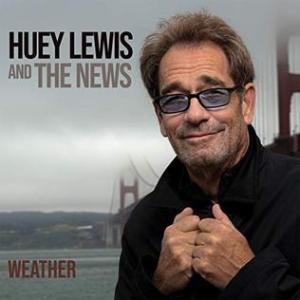
New album Weather is their first for ten years. Huey has had hearing problems due to a recent onset of Meniere’s Disease, about which he’s reliably sanguine, recently telling Classic Pop magazine: ‘Things could always be worse. After all, I’m deaf, not dead…’

Weather is only 26 minutes long. It’s intended as a followup of sorts to their most popular album Sports. Geddit? Sports and weather… These are simple songs, well played and well written, with decent melodies, bridges, middle-eights and nice guitar or sax solos.

And this time ’80s mixmaster general Bob Clearmountain (Simple Minds, Bryan Adams, Hall & Oates) is on hand to deliver a rich, punchy sound, with everything in exactly its right place.

‘While We’re Young’ is a witty R’n’B song about ageing. You can almost imagine Donald Fagen doing it. ‘Her Love Is Killing Me’ is out of the Robert Cray school. The Blues Brothers would have done a great version.

‘Hurry Back’ features a classic Texas shuffle and some decidedly Stevie Ray-style lead guitar. It won’t win any #woke points for its one-night-stand theme – but who cares.

The funky ‘Remind Me Why I Love You Again’ also scores highly on the un-PC scale to amusing effect, Huey complaining that his resolutely modern squeeze refuses to cook or clean.

There’s even a cover of Eugene Church’s 1958 doo-wop standard ‘Pretty Girls Everywhere’, complete with ‘boogalee-woogalee’ backing vox. And gentle C’n’W closer ‘One Of The Boys’ is touchingly faux-naive about Huey’s place in the world: ‘Yes I’m playing with my friends/Until the music ends‘.

Weather is not cool, certainly not hip, but effortlessly enjoyable. Somehow Huey Lewis And The News still sound like the best bar band you’ve ever heard in your life.

Prince: Dirty Mind/Controversy

Picture the scene: It’s August 1980 at Warner Bros Records’ Los Angeles HQ. Prince’s manager Steve Fargnoli is playing the suits his charge’s new demos.

Both the artist and his manager want to release these rough recordings as the next album.

Fargnoli hits the play button, and these lyrics crawl out over a peppy – but distinctly lo-fi – new-wave groove:

I was only sixteen but I guess that’s no excuse
My sister was thirty-two, lovely and loose
She don’t wear no underwear
She says it only gets in her hair…

Major labels often – quite rightly – take a lot of flak, but Warner Bros deserves credit for taking on Dirty Mind (released 8 October 1980) and Controversy (released 14 October 1981).

It was a brave move by Prince too, an incredible volte face after it looked like he might be going down a big-budget, soft-rock/disco rabbit hole. Just compare the Prince and Dirty Mind covers: it was definitely one in the eye for Reagan’s new, ultra-conservative regime.

I first heard these albums circa 1988 via a compilation tape made by my schoolfriend Seb. I already knew and loved Parade and Sign O’ The Times but these older songs sounded like they’d been sent down from a different planet. I didn’t pay much attention to lyrics in those days but sensed something very odd going on.

In the Dirty Mind/Controversy era, Prince’s main modus operandi seems to be: shock at all costs. It’s a novel approach, because if he can express himself completely freely, and then deliver such a classic, ‘throwaway’ rock song like ‘When You Were Mine’, you never know what’s going to come next. Cue a long, great career.

Recorded very quickly during summer 1980 at his rather ramshackle home studio in Lake Minnetonka, Minneapolis (the drum kit apparently sat in a puddle of water surrounded by sand bags), Dirty Mind has more in common with the B-52s, Elvis Costello, Blondie and The Cars than it does Earth, Wind & Fire or REO Speedwagon.

It’s nasty, brutish and short. And of course what struck me listening to it again after five or six years, it’s remarkably stripped down compared to a great deal of modern music – hardly surprising when nearly all the noises are made by Prince. Only ‘Head’, ‘Partyup’ and ‘Uptown’ outstay their welcome, underwhelming grooves with slight vocal performances (though the former became a great live track).

My old vinyl version of Controversy sounds absolutely great. Of course it helps that the album’s only 37 minutes long, and also there’s a lot more bottom-end this time. On a decent turntable, various details emerge like the scuzzy synth bass escaping from the left channel during the Lord’s Prayer on the title track (can you guess it’s a Prince album yet?) and some low-octave backing vocals throughout.

It’s also a totally schizophrenic album again, with the title track and ‘Sexuality’ laying down a kind of free-love/free-speech manifesto, two rockabilly tunes (one a message to Reagan), a graphic seduction ballad and synthetic funk tune (‘Private Joy’) which marks Prince’s first use of the Linn LM-1 drum machine.

Weirdly, none of these songs made the PMRC’s Filthy 15 list. But they still sound totally fresh, especially the unclassifiable stuff like ‘Dirty Mind’, ‘Annie Christian’, ‘Jack U Off’, ‘Sexuality’ and ‘Ronnie Talk To Russia’.

Prince toured Dirty Mind and Controversy extensively, and there were three particularly infamous gigs during the period: his London debut at The Lyceum on 2 June 1981 and the two shows supporting The Rolling Stones at the Los Angeles Memorial Coliseum on 9 and 11 October 1981.

Bireli Lagrene on Blue Note: Inferno/Foreign Affairs

It’s fair to say that many excellent jazz and jazz/rock guitar players emerged during the 1980s.

But arguably none – with the possible exception of Stanley Jordan – made as much of an impact as Bireli Lagrene.

He’s hardly a household name but Bireli recorded a few fine albums for Blue Note Records and toured extensively with Jaco Pastorius just before the bassist’s tragic death.

The French guitarist was seen in many circles as the natural heir to Django Reinhardt at the outset of the ’80s. The teenage prodigy wowed everyone with a few independent releases (initially in a manouche style) and European tours.

The key to his sound seemed to be absolute freedom. Like Jaco and Django, he has no fear. He tries things, always pushing himself. To paraphrase John McLaughlin, he’s swinging before he even starts playing.

Inferno, his debut Blue Note album, featured some excellent, freewheeling electric playing – more Mike Stern and Van Halen than Reinhardt – but the musical settings were a bit stilted and it suffered from too many changes in personnel.

But Bireli found a great foil in producer and fellow guitarist Steve Khan, and their 1988 follow-up Foreign Affairs was a big improvement.

I was mildly obsessed with this album for about a month during spring 1989 – I remember buying it on the same day as seeing ‘Rain Man’ in the cinema, fact fans…

There was far more of a ‘band’ vibe on this sophomore effort, and what a band: monster drummer Dennis Chambers is in Weather Report mode, with Zawinul-style half-time shuffles (‘Josef’) and fast Latin/fusion grooves (‘Senegal’).

And check out his burning solo at the end of the title track. Keyboardist Koono is a huge find and also obviously a big Zawinul fan, and recently departed bassist Jeff Andrews plays as tastily as ever.

Possibly as a result of his sad death in September 1987, Jaco’s influence is all over this album, particularly on the catchy opener ‘Timothee’ which features a mischievous, brilliant fretless bass solo by Bireli in tribute to his friend and mentor.

Elsewhere, Bireli’s sometimes outrageous guitar playing is typified by the screaming octave leap at the end of ‘St Jean’, and he uses a lot more tonal colours than on the debut album.

Tunes wise, Foreign Affairs‘ formula is not really that much different to the classic Blue Note albums of the ’60s – a few originals, a few sideman compositions and a few covers (Herbie Hancock’s ‘Jack Rabbit’ and Ira Gershwin/Vernon Duke’s ‘I Can’t Get Started’).

The latter in particular exemplifies a great production job by Khan, always getting a warm, ambient sound. Foreign Affairs is almost impossible to find on CD or vinyl these days but it’s just been added to streaming platforms, featuring some extra solo acoustic guitar tracks not on the original album. Bireli stayed with Blue Note for a couple more albums in the early ’90s, but they were far more traditional propositions.

Bill Laswell: Baselines Revisited

Bill Laswell has carved out one of the most critic-proof careers in music.

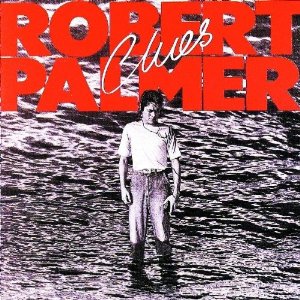
He’s probably best known as the producer of distinctive pop hits (Herbie Hancock’s ‘Rockit’, PiL’s ‘Rise’, Sly & Robbie’s ‘Boops’) and rock/jazz legends in need of a makeover (Mick Jagger’s She’s The Boss, Iggy Pop’s Instinct, Sonny Sharrock’s Ask The Ages, Ronald Shannon Jackson’s Red Warrior).

He was the Miles Davis Estate’s go-to man for reimagining the trumpeter’s 1970s catalogue (Panthalassa) and also hugely important for bringing the P-funk sound into the ’80s and ’90s.

But Laswell is also a highly-original bassist in his own right and was a key figure of the late-’70s/early-’80s Downtown New York scene, featuring in bands like Massacre, Last Exit and Material (though he was pretty disparaging about the ‘scene’, once telling writer Bill Milkowski: ‘There never really was a Downtown community. All that means is that people don’t have enough money to get a better place to live…’).

His solo career has been interesting too, latterly showcasing a fusion of ambient, world and dub styles. But it’s his debut album Baselines (released 14 June 1983 on Elektra/Asylum) that really floats my boat. He plays a lot more bass than usual, fusing the soundworlds of Bootsy and Ornette Coleman and doing cool things like sticking objects under the strings or digging out the old Mu-Tron pedal for some memorably funky lines.

To these ears, Baselines is also the project that gave him the perfect vehicle for all his interests – My Life In The Bush Of Ghosts-style found sounds, paranoid funk a la Talking Heads/King Crimson, Afrobeat, early hip-hop, avant-fusion, authentic jazz soloing and even post-punk white noise courtesy of future Chili Peppers/Soundgarden producer Michael Beinhorn.

I wasn’t in New York in 1983 but this album would seem to be a perfect amalgam of all the hippest sh*t that was going down at the time. It’s Laswell’s show, leading from the front on four/six/eight-string fretted and fretless basses and generally keeping the tracks short and sweet. Baselines is also beautifully recorded and produced – it’s easy on the ear despite some abrasive textures.

Shannon Jackson has never sounded better, supplying hilariously scattergun grooves and crunching fills. ‘Upright Man’ still inspires a kind of giggly menace, nearly 40 years on. Who supplies the scary spoken-word part? Whosampled doesn’t reveal, but the smart money’s on Fred Frith (who also plays some amusing violin on country-tinged curio ‘Lowlands’).

Baselines was certainly influential from a bass point of view too – you can bet Jah Wobble, Mick Karn, Stump and Human Chain had well-thumbed copies in their collections. But, to the best of my knowledge, Laswell has never returned to such a bass-led solo project since. A shame. He might have a future there…

John McLaughlin Trio: Live At The Royal Festival Hall 30 Years On

Recorded 30 years ago, Live At The Royal Festival was the beginning of John’s live career in concert halls rather than ‘rock’ venues, at least as far as the UK goes.
I’m not sure why I wasn’t at this gig, but, in those days, even major shows could easily go under the radar. If it wasn’t listed in Time Out or The Wire, you could easily miss it. Or maybe I was just turned off by the lack of ‘stars’ appearing with John.

Which was a big mistake, because this album introduced two monster players, both hitherto unknown to UK audiences. Bassist Kai Eckhardt was yet another miraculous bass find for McLaughlin, apparently fresh out of the Berklee School of Music.

Trilok Gurtu brought the best aspects of American jazz and fusion playing but also rhythmic concepts and sounds from his native Mumbai (including a water bucket and tablas). In short, he was a perfect fit for McLaughlin.

It had been a weird few years for the guitarist, closing down Mahavishnu for good, duetting with bassist Jonas Hellborg and guitarist Paco De Lucia but also recording the fabulous Mediterranean Concerto which was finally released in 1990.

So his return to the acoustic guitar had thus far been a partial success, but Live At The Royal Festival Hall was the beginning of an acclaimed trio that lasted nearly three years (though weirdly it doesn’t appear to have made it to streaming platforms yet).

The album starts slowly but gets better and better; a gentle take on Miles/Bill Evans’ ‘Blue In Green’ is nothing special but demonstrates John’s rich, Gil Evans-inspired chord concept.

Adventures In Radioland tracks ‘Florianapolis’ and ‘Jozy’ are quite superb, beautifully rearranged for the trio. When Gurtu lays into the half-time shuffle on the latter, it’s one of the great bits of modern fusion drumming.

His ‘Pasha’s Love’ is an intricately-arranged version of a track on an impossible-to-find Nana Vasconcelos live album. But the album’s centrepiece is ‘Mother Tongues’, the debut of a tune which is a mainstay of John’s live sets to this day. The only disappointment is the over-extended ‘Blues For LW’, almost derailed by some dodgy group vocals, Gurtu beatboxing and throwaway references to ‘Are You The One?’ and ‘Miles Beyond’.

Eckhardt didn’t stick around for long after this gig, for undisclosed reasons – Dominique Di Piazza came in, yet another Jaco-influenced chops monster. But Trilok stayed on for the decent 1992 studio album Que Alegria. Then it was time for another change – John’s forte.

Tin Machine: 1989

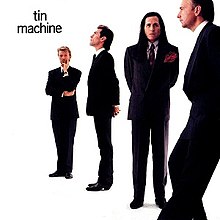
This week marks 30 years since Tin Machine wrapped up their first year of activity with a low-key gig at Moby Dick’s in Sydney, Australia on 4 November 1989.

In the previous 12 months, they’d recorded and released their first album, written and recorded most of the second album, and toured extensively.

Any true Bowie fan must surely like elements of Tin Machine, or at least appreciate the career-reviving value of the band. After all, he was reportedly seriously considering giving up music at the beginning of 1988.

My muso college mates and I had an instant kinship with Tin Machine, particularly picking up on the Jeff Beck and Hendrix influences. Never Let Me Down had completely passed me by, but this felt instinctively like the natural followup to Scary Monsters.

Bowie first hooked up with guitarist Reeves Gabrels, whose wife Sarah had been a press officer on the US leg of his ‘Glass Spider’ tour. But who should join them on bass and drums?

There were mentions of Percy Jones and Terry Bozzio, but they settled on the street-tough Sales brothers, of course previously known to Bowie as the rhythm section on Iggy’s Lust For Life.

Bowie realised what he had signed up for when drummer Hunt apparently strode into the first rehearsal wearing a ‘F*ck You I’m From Texas’ T-shirt.

One of the first things the assembled unit apparently did was make a list of the artists that would inform and influence the band’s sound: Neil Young, The Pixies, Cream, John Coltrane, Sonic Youth, Glenn Branca, Bo Diddley, Sex Pistols, John Lee Hooker, John Lennon.

The debut album was recorded quickly (producer Tim Palmer was apparently barely able to get a decent sound before he realised they were in the middle of a take) and released on 22 May 1989.

How does it sound these days? Pretty damn good. Bowie’s singing is as committed as at any time in his career, and the material is sometimes electrifying.

The Mission/Cult helmer Palmer brings cavernous drums and great guitar layering, finding a most willing participant in Gabrels; ‘Pretty Thing’ in particular delivers a huge wall of sound. Palmer discusses the making of the album in this excellent interview.

Hunt Sales: a rock drummer who swings. He goes double-time if he feels like it.  He slows down, he speeds up. You can’t teach this stuff. The music breathes. Gabrels plays brilliantly, consistently coming on like a cross between Adrian Belew and Robert Fripp, but with more of a blues attitude.

Back in 1989, it was also absolutely fascinating watching Bowie sublimate himself into a band situation, albeit very ‘artfully’ (one of Gabrels’ proposals for a band name was The Emperor’s New Clothes).

He was instructed by the Sales brothers not to over-think his lyrics, but rather to lean on his first instincts. Consequently a few tracks aren’t going to win any #MeToo awards but they’re an honest, unfettered portrayal of middle-aged male lust. And why not?

But those tracks are balanced by the tender ‘Amazing’ and politically-charged ‘Crack City’, ‘Video Crimes’ and ‘Under The God’. It’s invigorating hearing David eschewing irony and nihilism in favour of passionate commitment, though he dusts off the old ennui for the brilliant ‘I Can’t Read’.

The album is 20 minutes too long. If it had been shorn of the dire ‘Working Class Hero’, deafening ‘Baby Can Dance’, dreary ‘Bus Stop’, turgid ‘Run’ and silly ‘Sacrifice Yourself’, I’d put Tin Machine up there with Scary Monsters as Bowie’s last great rock album.

It’s also largely forgotten that it was a critical and commercial success, reaching #3 in the UK, selling a million copies and making many writers’ albums of the year. Hilariously, it also made the Melody Maker’s Worst Ever Albums top 20 list in 1998.

Weirdly, Bowie bounced straight into announcing his own solo ‘greatest hits’ tour in December 1989, ostensibly to promote the excellent series of Rykodisc CD reissues which had kicked off with the Sound + Vision box set.

Quite what his TM bandmates thought of this state of affairs isn’t documented, though Gabrels declined to play guitar on the ‘Sound + Vision’ tour (Belew accepted). Gabrels went off to guest on The Mission’s Carved In Sand instead.

Scott Henderson/Tribal Tech: Nomad 30 Years On

Who are the most self-critical instrumentalists? Surely guitarists.

And in this age of social media, fans have never had a better insight into musicians’ views of their own work.

Steve Khan, Francis Dunnery, Andy Partridge and James Grant often take a pretty dim view of their own stuff. Allan Holdsworth was virtually unable to listen to his own guitar playing on record.

But brilliant guitarist Scott Henderson may trump them all. He emerged as a poster boy of jazz/rock guitar in the mid-to-late ’80s, when, along with Holdsworth and Frank Gambale, he would often appear alongside metal players du jour in the pages of Guitar World or Guitar Player.

A remarkably fluid improviser with a ‘rock’ sound but ‘jazz’ attitude, Henderson’s technical ability was always tempered by a strong blues feeling (distinguishing him from Holdsworth and Gambale).

In 1985, he formed Tribal Tech with ex-Wayne Shorter bassist Gary Willis whilst pursuing a sideman career with Jean-Luc Ponty and Chick Corea (and, later, Weather Report’s Joe Zawinul).

I first heard Scott in my late teens when a very shrewd guitar-playing college acquaintance played me his third album Nomad, recorded in 1988 but not released until early 1990.

I was instantly smitten, picking up on the strong ‘Weather Report with guitar’ vibe – mainly due to Willis’s fretless bass – but quickly realising they had their own thing going on.

Also, like Weather Report, Tribal Tech were also fortunate to have not one but two fine composers in their ranks. Willis’s ‘Tunnel Vision’ may be Nomad‘s standout, but Henderson was extremely modest about his superb, much-transcribed solo, telling his website:

The opening eight bars is good because it’s not me – it’s a melody written by Willis. I start playing after the first eight bars and things get considerably worse… We had a good laugh when a critic who reviewed the album commented on how great the beginning of my solo was. Then the tune was put into one of the new Real Books and that eight-bar melody was mis-labelled as my solo. Willis said to me: ‘Wow, I’m really making you look good…’

The excellent opener ‘Renegade’ was another embarrassment for Henderson:

On every Tribal Tech album, there are amazingly bad playing and production flaws, because we thought we were capable of producing the albums ourselves, and we clearly weren’t. We had little to no experience in the studio and were learning as we went. An experienced producer would have made those records much better, but we couldn’t afford one anyway, so they are what they are. The funniest solo is mine on ‘Renegade’ – I didn’t have any vocabulary for that 6/4 feel, so I’m clearly playing lines meant for 4/4 and they don’t fit the groove at all. It’s one of my most embarrassing solos…

Then there’s Henderson’s superb album-closer ‘Rituals’, showingcasing a heavy Wayne Shorter influence:

The last time I listened to the Tribal Tech version, I thought I’d throw up. I played the melody in a horribly stiff way, with the thinnest tone ever, and the arrangement sounds like we’re trying to be Journey – very dated and funny. Then there’s the pan flute synth sound… Holy sh*t, talk about corny. It’s one of my favorites but it didn’t get the production it needed. The drum sound is pathetic and the keyboards aren’t loud and clear enough. Those are some badass voicings and sometimes they’re buried. It’s not a tune I could play trio because there’s too much going on, but I’d like to re-record it and make it sound like it should…

Whatever. Nomad is a great album, with excellent compositions and playing from everyone involved, including drummer Steve Houghton, percussionist Brad Dutz and keyboard player David Goldblatt.

Neil Young: Freedom 30 Years On

It’s probably fair to say that Neil had a dodgy old 1980s; at least that’s the critical consensus.

In 1983, he was sued by Geffen for delivering ‘unrepresentative’ albums.

But by 1988, he was back on his original label Reprise (Sinatra’s invention, natch) and had delivered This Note’s For You, ironically just the sort of record that had got him into such trouble at Geffen.

But it was the follow-up Freedom, released 30 years ago this week, that really got Neil back on track.

He retained This Note’s fine rhythm section (drummer Chad Cromwell and bassist Rick Rojas) and co-producer (Niko Bolas) and delivered a dizzyingly diverse selection, by turns sweet and savage, mostly recorded live in the studio.

I don’t particularly dig country, but love ‘Hangin’ On A Limb’ and ‘The Ways Of Love’, simple heartfelt love songs (Linda Ronstadt’s contributions sure help). I don’t dig grunge, but I love ‘Don’t Cry’, ‘Rockin’ In The Free World and the raucous cover of Lieber and Stoller’s ‘On Broadway’.

So how does he do it? I’d cite four major differences between Young and the also-rans – intelligent lyrics, a great drummer, Neil’s sense of space and his lead guitar playing (‘Don’t Cry’ features a few of his most unhinged solos).

Of the former, the album’s title seems to refer to a few tracks’ investigation of freedom in Reagan’s America, especially the scarily prescient ‘Rockin’ (‘There’s a lot of people sayin’ we’d be better off dead/Don’t feel like Satan/But I am to them‘), epic ‘Crime In The City’ and Peckinpahesque ‘Eldorado’. ‘Rockin’ could almost be Young’s ‘Born In The USA’.

The gentler tracks arguably take one back to the feeling of freedom long before Reagan was around. This Note’s For You outtake ‘Someday’ – complete with chain-gang chanting and tubular bells – and the gorgeous ‘Wrecking Ball’ still sound like timeless classics, both romantic and anthemic.

Conversely, ‘Don’t Cry’ gives Lou Reed and Bret Easton Ellis a run for their money, a chilling, blanked-out vision of a love affair gone wrong (with closing gunshot?).

Freedom was a gamechanger for Young, a near-perfect distillation of styles that would see him through the ’90s and beyond. It’s still an absolutely essential work and rightly seen as one of his greatest albums.

Marillion: Seasons End 30 Years On

Prog fans – perhaps understandably – are not generally known for their benevolence when a favourite band undergoes a personnel change.

Steve Howe has talked publicly about the poor reception Trevor Horn received when the latter made his debut as Yes’s new vocalist during their North American tour of 1980.

Phil Collins still believes some Genesis fans were convinced he was scheming to take Peter Gabriel’s place as the band’s singer.

But Marillion fans seem a far more amiable bunch. When Steve Hogarth was installed as their new frontman in 1989, he seems to have been welcomed pretty much with open arms (if this superb televised gig from only his second UK tour is anything to go by).

Seasons End, (no apostrophe?), released 30 years ago this week, was a weirdly assured debut from Hogarth and easily this writer’s favourite Marillion album (1989 was a bit of a Year Zero for me in terms of the band, the Fish era barely appearing on my radar).

Hogarth’s melodies are fresh and exciting and his vocals always strong. It helped of course that he was a triple threat, a proven singer/songwriter with mid-’80s bands The Europeans and How We Live (though he was apparently eyeing a job as a milkman when the latter wound down in early 1988) and possessing some decent keyboard chops.

His natural magnetism as a frontman didn’t hurt too, and he even brought a few gimmicks to the party, like the magic gloves and musical cricket bat (a tribute to Ian Faith? Ed.).

So how does Seasons End stack up these days? Pretty well. The singles ‘Easter’ (UK #34), ‘The Uninvited Guest’ (UK #53) and ‘Hooks In You’ (UK #30) were distinctive, well-arranged and featured soaring guitar playing from Steve Rothery.

Ian Mosley is that rare rock drummer, solid but expressive, and capable of great subtlety. Keyboardist Mark Kelly had become a superb texturalist too, as demonstrated on the Steve Reich-esque second half of the title track, plus ‘Holloway Girl’ and ‘The Space’.

Marillion, Genesis and It Bites were flying the UK prog/pop flag at this point, and their late-’80s careers make for interesting comparison. As for Seasons End, it did very nicely, touching down at #7 in the UK album chart and ensuring a long, fruitful career for the band’s new line-up.

Good guys, good record.