Marvin Gaye: 1983

marvin

Marvin entered 1983 with mixed emotions.

His comeback album Midnight Love, released in October 1982, was a certified hit, with decent sales, good PR and an attendant single ‘Sexual Healing’ that was building up quite a Grammy buzz.

But there were plenty of other problems brewing: in his rather paranoid state, Marvin believed that pretenders to his throne like Teddy Pendergrass, Frankie Beverly (whom Marvin had mentored early in his career), Lionel Richie and Michael Jackson were cashing in on his style and sound. The latter had even taken to wearing aviator shades and ‘military’ garb.

Elsewhere, Marvin’s relationship with his father had hit a new low. Bitter and resentful, he considered physically ejecting Father from the family home but decided instead to stay away completely.

The other problem was cashflow. Marvin was spending so much money on ‘extras’ that he had been forced to give up his houses in Bel Air and Palm Springs. Despite all this, in the first few months of 1983, Marvin reminded the music world of his luminous genius and, against all the odds, provided a few career high-points.

Broke and entering an introspective period, he found himself spending quite a lot of time at his sister Sweetsie’s pad. It was there, on Saturday 12 February 1983, that he got together with chief musical collaborator Gordon Banks to cook up a version of the national anthem that he would sing the next day before the National Basketball Association’s All-Star Game.

Despite the last-minute planning, there was no margin for error: Marvin’s performance would be broadcast live on national TV. He not only pulled it off – he smashed it out of the park. Only Marvin could have come up something so singular. His huge respect for the athletes ensured that he raised his game accordingly.

Funky, spiritual, heartfelt and yet controversial, it was a triumphant reading of ‘The Star Spangled Banner’, and one of the highlights of his career.

Less than two weeks later, on 23 February, there was another personal milestone for Marvin when he was awarded his first Grammy awards at the Shrine Auditorium in Los Angeles.

That the Best Male Vocal and Best Instrumental Performance awards were ‘only’ in the R’n’B category scarcely mattered. He had moved out from behind his Grammy nemesis Lou Rawls’ shadow and finally gained the acceptance of his peers, something that was extremely important to him. His speeches were heartfelt and touching.

His performance of ‘Sexual Healing’ was not an unqualified success (it was 10 or 15 BPMs too slow and Marvin seemed slightly uncomfortable), but it’s still essential and moving stuff.

Another very happy moment happened a few months later when Marvin appeared with Gladys Knight and the Pips on another TV special. According to David Ritz’s classic book ‘Divided Soul‘, Marvin and Gladys argued backstage about whose version of ‘I Heard It Through The Grapevine’ to do. He finally deferred to her, but still turned in another joyous and brilliant performance.

Then, on 25 March 1983, the Pasadena Civic Auditorium hosted the ‘Motown 25’ anniversary concert, most famous for Michael Jackson’s spellbinding reading of ‘Billie Jean’. Marvin once again defied expectations and provided one of the highlights of the evening.

Though looking somewhat haggard, his blues/gospel piano playing and philosophical pronouncements on the value and history of black music were nothing less than captivating. His subsequent performance of ‘What’s Going On’ was perhaps perfunctory in comparison, but still essential viewing.

Tougher, tragic times were to come over the next year, but for a few months in early 1983, Marvin was seeing a lot of his professional dreams come true. No one could take that away from him.

Prince: An Appreciation And Farewell

Prince_logo.svgIt’s never easy describing why a personal hero meant a lot to you – heaven knows I still haven’t been able to set down anything cogent about David Bowie’s life and work.

But I may be coming nearer to working out why Prince Rogers Nelson had such an effect on the way I heard – and still hear – music.

Before the release of  1986’s Parade, I was a confirmed chart-pop fan, but also into the weird rock of Frank Zappa, fusion of Weather Report and straight jazz of Courtney Pine, Miles Davis and Herbie Hancock.

Parade seemed to offer a perfect synthesis of all these forms. And, quite incredibly, one guy was pretty much responsible for all of it – and he was a brilliant singer and dancer too. Put simply, for fans and musicians of my age, Prince was the nearest thing to a Bowie/Ziggy figure.

His extravagantly-flamboyant stage persona also sometimes blinded people to the brilliance of his musicianship. Pre-Parade, that might have put me off initially too. But has there ever been a better keyboard/guitar double threat? (Steve Winwood, Johnny Guitar Watson and Lewis Taylor are decent competition but he surely outstrips all three.)

He obviously had natural talent but he worked extremely hard too – in his teenage years, he was living Malcolm Gladwell’s 10,000-hour rule. Influenced by Sly Stone, Graham Central Station, Funkadelic, Tower Of Power, Carlos Santana and Joni Mitchell, he was busy getting his chops together in his home music room and during various high-school battle-of-the-band competitions in Minneapolis’s North Side.

As he told Rolling Stone magazine in 1990: ‘Anyone who was around back then knew what was happening. I was working. When they were sleeping, I was jamming. When they woke up, I had another groove.’

On the bass, he took care of business. Along with a few other of his contemporaries (he credited future New Power Generation member Sonny Thompson as being a key early influence), he patented the Minneapolis bass sound, a rumbling, busy style, heavily influenced by Sly and the Family Stone’s Larry Graham.

But he also had a much more effervescent, Stanley Clarke-flavoured side as well, a good example being the incredible ‘I’m Yours’ from 1978’s For You.

On guitar, his sweet, creamy, heavily-distorted lead lines, usually injected with a healthy dose of delay, were coming out of the Carlos Santana and Ernie Isley school, but he also had many licks all of his own. For me, his lead guitar peak was 1985-1989; what an incredible tone, beautiful phrasing and a very ‘vocal’, human sound.

But he also had a funky ensemble rhythm guitar style out of Steve Cropper and Jimmy Nolan school. My favourite examples of Prince guitar would have to include ‘Lady Cab Driver’, ‘Bambi’, ‘My Love Is Forever’, ‘Alexa De Paris’, ‘The Question Of U’, ‘Temptation’, ‘Get Some Solo’, ‘One Of Us’, ‘Joy In Repetition’, ‘Batdance’, but there are many more. His playing throughout the ‘Sign O’ The Times’ and  ‘Lovesexy Live’ concert films is sublime.

On keyboards, he was equally proficient. As NPG drummer Michael Bland pointed out, his piano playing had a touch and rhythmic approach similar to Thelonious Monk. He also patented the Minneapolis synth sound (alongside other influential players such as Ricky Peterson and Jimmy Jam), exemplified by his work between 1980 and 1983 on solo albums and releases by The Time, Vanity 6 and Sheila E.

And he loved playing hot, churchy, gospel-flavoured organ too – check out ‘Hot Thing’ from the ‘Sign O’ The Times’ film or his superb Hammond playing on the Parade tour.

On drums, he was, by contrast, a late developer. Before discovering the Linn LM-1 drum machine in 1981, his playing was functional rather than spectacular. Purple Rain engineer Susan Rogers has talked about how much Prince’s drumming improved once Sheila E came into his life around 1983 – he very much wanted to impress her, and she taught him a few licks too.

But he definitely had his own touch on the drums: check out the 12” version of ‘Mountains’, ‘Tambourine’, ‘Lady Cab Driver’ and ‘Sexual Suicide’ for some good examples. He was also very influenced by The Time mainman Morris Day’s playing – ‘Cloreen Bacon Skin’ on Crystal Ball is quite illuminating.

Of course, it’s all very well playing lots of instruments, but it’s a question of arrangement. Good ingredients are important but you’ve got to know how to mix them up. Prince was a master.

A lot of his ‘producing’ decisions (ie. what to put in and what to leave out) came about because he very, very rarely left a song unfinished – he would work very long hours without a break to achieve exactly the sound he had originally heard in his head. This is why his best stuff sounds so fresh today – it has enough melody and groove for the casual listener but also retains a precious, ‘unfinished’ quality.

As a young musician in the ‘70s, Prince was very much a student of funk, soul and rock, but he came to jazz too later in life, inspired by his work with Eddie Minfield, Sheila E, Miles Davis, Eric Leeds and Matt Blistan in the mid-‘80s.

He tried a ‘one-man-band’ approach to jazz/rock/funk with his Madhouse project, and worked successfully with Leeds on his two Paisley Park solo albums, but was more successful when he integrated the jazz influences into his own ‘pop’ albums and gigs.

My ultimate was the Lovesexy tour, when the band could turn on a dime, going from cool Duke Ellington and Charlie Parker licks to blazing hard rock.

For every great single that came out in the mid-to-late-’80s, there was a great B-side. We fans had to hear as much as possible. My friend Marlon Celestine was our source for amazing bootlegs; the brilliant original demos for The Family album, ‘Others Here With Us’, ‘A Place In Heaven’, ‘Movie Star’.

What will happen to all these tracks now? Was Prince planning to let us hear everything? There was talk of opening the vaults and adding the outtakes to the ‘special edition’ re-releases of the Warner Bros studio albums. I wonder who owns these masters now.

Another important aspect of Prince was his sense of humour. Friends, collaborators and lovers have reported how hilarious he could be away from the media glare. He didn’t let it out very often on his own official albums, but you can hear it loud and clear on ‘Cloreen Bacon Skin’, ‘Mutiny’, ‘High Fashion’, ‘Movie Star’, ‘Housequake’, ‘Jerk Out’, ‘Chocolate’ and Sheila E’s Romance 1600 album.

There are apparently many other ‘comedy’ tracks in the vaults. His cheekiness came out often on stage too – check out ‘Blues In C/If I Had A Harem’ from ‘Lovesexy Live’, and there are plenty of other examples.

He was also a true Gemini, and as such it’s important to note how vitally important many women were to his career, and how often he sought their musical and personal company: Susan Rogers, Peggy McCreary, Wendy & Lisa, Susannah Melvoin, Jill Jones, Mavis Staples, Sheena Easton, Ingrid Chavez, Sheila E, Cat Glover, Boni Boyer, Rhonda Smith, Mayte, Rosie Gaines, Candy Dulfer, Marva King, 3rdeyegirl – just a partial list.

Yes, one might question some of his attitudes towards women when he put together the bands Apollonia 6 and Vanity 6 (and there’s some strange stuff in ‘Purple Rain’) but he was a very young man then. His ‘Camille’ songs (‘If I Was Your Girlfriend’, ‘Good Love’, ‘When 2 R In Love’, ‘Rockhard In A Funky Place’ etc.) present a perfect fusion of his male and female sides, and of course the design of his ‘90s Symbol heavily emphasised both genders.

Prince went out of his way to promote musicians who were important to him, figures such as Larry Graham, Joni Mitchell, Mavis Staples, Bonnie Raitt, Miles Davis and Chaka Khan. He came to George Clinton’s rescue in the late 1980s when George had a huge tax bill to pay – Prince signed him to Paisley Park for one album (The Cinderella Theory) and the sizeable advance took care of his debt.

He later enlarged on his feelings about George Clinton and Parliament/Funkadelic during this elegant speech inducting them into the Rock’n’Roll Hall Of Fame. Prince was also a musical philanthropist – he gave away instruments to schools and encouraged real playing in an age of samples and loops. He also played many, many charity shows throughout his career, donating hundreds of thousands of dollars.

Then there was the spiritual element to Prince’s music, increasingly visible as the ‘80s progressed. He was a living embodiment of the sacred/profane dichotomy. The man who wrote ‘Sister’ and ‘Lady Cab Driver’ ended the decade by telling us: ‘Look to the light’. He could write ‘I Love U In Me’ one day but then follow it up the next with ‘God’.

The entire Lovesexy live show (and album) was designed as a battle between good and evil. I wasn’t sure if I liked or understood the spiritual stuff back in 1988, but I loved the way he provoked questions. Still do.

In December 1987, when he had a change of heart and pulled The Black Album from release at the eleventh hour, believing it to be too angry, too dark, and an unrepresentative piece of work, he rush-released Lovesexy instead. Here was an artist of integrity.

(Apparently one frame in the ‘Alphabet Street’ video features the words: “Don’t buy The Black Album. I’m sorry.” Or does it? I could never find it back then… Maybe it was a great bit of Warner Bros PR.)

I never saw Prince play live, to my great regret. I passed up a ticket for the famous London O2 run in 2007. It just didn’t sit right. The nearest I got to seeing him perform was a signing session at HMV in Oxford Street with the NPG in 1995.

Around that time, he was way more visible on British TV than he had ever been before, memorably appearing on ‘The White Room’ and also being interviewed on the BBC’s ‘Sunday Show’. He seemed quite happy subsuming himself into a group ethos – there are shades of Bowie and Tin Machine.

Over the last few weeks, the press has frequently reported that the essential book about Prince is Matt Thorne’s biography. It’s good, but the killer is surely ‘Prince: The First Decade’ by Per Nilsen. There you will read about the recording of every single one of his albums from 1978 to 1988, find out what was happening in his private life throughout that time and also hear from all his key collaborators. Nilsen’s ‘Prince: The Documentary’ is also superb.

Though I struggled with a lot of Prince’s music in the ’90s and beyond, he seemed to live a pretty ‘noble’ life in a period when many musicians of his generation and popularity kind of lost their way.

There was certainly a conscious retreat towards the end of the ’90s, but then look at what was happening in the wider world around that time – the Disneyfication of the music business, the dumbing down of culture generally.

He chose not to play the whole global branding game (he never launched a clothes line or fragrance, for example), he took on his record company, temporarily withdrew the name ‘Prince’, resolutely promoted himself as a musician and spoke up about many of the things that troubled him.

That may explain a lot. We shall see, though I’m not looking for any ‘theories’ or ‘explanations’ concerning his death and trying not to hear news reports.

In 1990, Prince told Rolling Stone magazine, ‘When I pray to God, I say, “It’s your call – when it’s time to go, it’s time to go. But as long as you’re going to leave me here, I’m going to cause much ruckus!”’

He did it. C-ya.

Toto/Miles Davis: ‘Don’t Stop Me Now’

Toto-FahrenheitI’ve always had a somewhat ‘troubled’ relationship with Toto’s music, to put it mildly…
Toto IV (1982) was obviously a classic of its kind, Hydra (1979) had its moments and there are other classy tracks dotted around, but I’ve generally thought: David Hungate, David Paich, Jeff Porcaro and Steve Lukather are fantastic musicians who have played on some of the greatest albums of all time – so what are they doing in this band, writing these songs?

But I found a solution of sorts when I came across a track buried at the end of their lacklustre Fahrenheit album from 1986. ‘Don’t Stop Me Now’ is a cracking instrumental with nice chord changes, a great melody, gorgeous bridge, slick playing from co-writers Paich and Lukather and a memorable guest spot from Miles Davis.

Of course Miles was no stranger to the world of Toto and the LA session elite in general. He was tight with Quincy Jones, producer of Michael Jackson’s Thriller, an album that heavily featured Jeff Porcaro, Paich and Lukather.

Miles had also covered Thriller‘s ‘Human Nature’ (co-written by Toto keyboardist Steve Porcaro) on his You’re Under Arrest album the previous year. He was also apparently a big fan of Jeff Porcaro’s painting, not to mention his drumming, so a full-scale Miles/Toto collaboration was surely always on the cards.

But the recording of ‘Don’t Stop Me Now’, which took place at Jeff Porcaro’s home studio in early 1986, wasn’t a walk in the park, as Steve Lukather told George Cole in the excellent ‘Last Miles: The Music of Miles Davis, 1980-1991’:

‘We cut the track and left the melody off – we just left open spaces. When Miles got there, we ran it down together with him and he wasn’t really playing the melody. So we figured, we’re not going to tell Miles Davis what to play, so we said, “Miles, we have a take of this, would you mind just giving it a listen and play whatever you want?” He says, “Okay, I’ll play like that. You like that old shit, right?” So he gets out the Harmon mute and he played it – one take. We’re all stood there completely freaked out – it was unbelievable. At the end, the song just kind of fades out, but he just kept playing the blues. I was sitting there with chicken skin on my arms – it was an unbelievable moment. And that’s how we ended the record, with just Miles blowing. Later on, David Sanborn came down to play on a different tune on the record and he’d heard that we had cut a tune with Miles. He said: “I gotta hear it!”, so we played it and he flipped and said, “Please just let me be on the track!” He doubled the melody and played a couple of flurries. So we got Sanborn, Miles and us on one track – that was pretty cool!’

But Steve Porcaro alluded to the wider issue of including a ‘jazz’ track on a ‘heavy rock’ album when he told George Cole: ‘I don’t know how thrilled the record company or our managers were, but for us working with Miles was a major feather in our cap.’

But that kind of political scene didn’t affect Miles: he loved ‘Don’t Stop Me Now’ and quickly integrated it into his own live set. It remained a staple of his concerts from 1986 right up until 1990, the year before his death. It’s a beautiful piece of work. But while we’re at it, has anyone got a lead sheet of the tune? I want the chords…

Catching Up With Eddie Van Halen

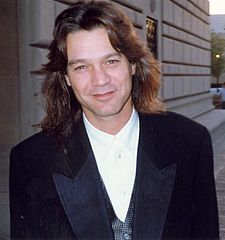
225px-Eddie_Van_Halen_(1993)When I think of ’80s Eddie Van Halen, the image in my mind’s eye is probably not a lot different to any other fan – he’s grinning from ear to ear, cavorting around the stage, playing some of the greatest rock guitar of all time with one of the sweetest tones.

So it’s interesting to see him recently – sober, reflective, brutally honest, fiercely independent – talking about his life and craft onstage at the Smithsonian Museum of American History in Washington DC.

‘Jump’ had always been a favourite of mine and was at the back of my mind when I came across Van Halen’s superb debut album at Harry’s Records in Twickenham (another one that’s bitten the dust), during my first week of sixth-form college in 1989.

I just loved the devil-may-care feel of Eddie’s playing. He was fearless, unconcerned about making mistakes (his dad gave him some advice: if you make a mistake, do it again – with a smile), the same attitude that spurred on Parker, Ornette, Hendrix and Jaco.

I later got heavily into the VH albums Women And Children First, Fair Warning, Diver Down, 1984 and OU812, but the band have been completely off my radar since the early ’90s, when I loved the ‘Poundcake’ single.

Having said that, not living in the States, I’ve completely missed the recent new album and TV appearances featuring David Lee Roth back on vocals. Maybe I need to check in again because I dug this:

Anyway, back to the interview. It’s fascinating hearing Eddie chatting about his life and career, away from all the controversy that has dogged the band over the last few decades.

He talks about building his first guitar, the last album he bought (clue: it was back in 1986 and by an English singer who was once in a very famous progressive rock band…), demonstrates some techniques and talks candidly about his sometimes difficult early life as an immigrant in the USA.

G’wan – give yourself an hour off and enjoy some words from a master.

Alex Sadkin: Sonic Architect Of The ’80s

Grace_Jones_-_NightclubbingOne of the nice things about putting together this website is finding out about some important – though often unsung – characters who pop up in the credits of many a classic album.

Alex Sadkin is just such a figure. You could probably write a history of 1980s music purely from the perspective of producers. Perhaps it was the decade of the pop producer.

There was certainly a lot of turd-polishing going on, but on the flip side it was a chance for someone to establish their own sound, hopefully in collaboration with a great artist or band.

In the early ’80s, everyone was pretty much using the same fairly limited (but very expressive in the right hands) equipment, so it was a question of being as original as possible.

Though he died at the age of just 38 in July 1987, not many producer/mixer/engineers of the early ’80s had a more distinctive sound than Alex Sadkin.

He worked with James Brown, Grace Jones, Bob Marley, Sly and Robbie, Robert Palmer, Talking Heads, XTC, Thompson Twins, Foreigner, Simply Red and Duran Duran during his short life.

His productions are full of colour and detail, usually featuring multiple percussion parts, kicking bass and drums and a very characteristic, super-crisp snare sound.

Alex’s first gig in the music biz was as a sax player in Las Olas Brass, a popular Florida R’n’B outfit, alongside future bass superstar Jaco Pastorius.

Jaco and Alex had gone to high school together, and Alex later became the house engineer at Criteria Studios in Miami where Jaco recorded the demos for his legendary 1976 debut album.

Sadkin then engineered James Brown’s ‘Get Up Offa That Thing’ and worked on Bob Marley’s Rastaman Vibration album, which brought him to the attention of legendary Island Records owner Chris Blackwell. Sadkin quickly secured a new gig as in-house engineer at Island’s Compass Point Studios in Nassau on the Bahamas.

This was where it really all began for Sadkin – an amazing melting pot of talent passed through the Compass Point doors including Talking Heads, AC/DC, Iron Maiden, Tom Tom Club, B-52’s, Robert Palmer and Will Powers AKA Lynn Goldsmith.

But his first bona fide producer credits were alongside Blackwell on Grace Jones’ stunning trio of early ’80s albums (Warm Leatherette, Nightclubbing, Living My Life).

Sadkin was now a name producer with a trademark sound and considerable rep, and as such started to attract significant attention, sometimes of the negative variety – legendary NME scribe Paul Morley even took agin him for some reason in a review for Thompson Twins’ ‘Hold Me Now’ single. It probably meant Sadkin was doing something right…

Later in the decade, though his work arguably became more anonymous (but then so did a lot of post-1986 pop), Alex’s career went from strength to strength, producing some big albums such as Robbie Nevil’s debut, Simply Red’s big-selling Men And Women and Arcadia’s (admittedly fairly dire) So Red The Rose.

Sadly, Alex Sadkin died in a motorbike accident in Nassau on 25 July 1987 just before he was due to begin working with Ziggy Marley.

He had also just recorded some demos with Jonathan Perkins, later to front underrated early ’90s act Miss World. Robbie Nevil’s song ‘Too Soon’ and Grace Jones’ ‘Well Well Well’ are dedicated to Sadkin’s memory, as is Joe Cocker’s album Unchain My Heart. Gone too soon, indeed.

Bigmouth Strikes Again: The 36 Greatest Music Quotes Of The 1980s

chrissie hyndeMusicians gave good quote in the ’80s.

There were various factors at play: an eclectic, popular, influential music press, a phalanx of opinionated, ambitious journos, the rise of tabloid ‘diaries’ and of course a surfeit of great interviewees.

The decade’s cultural mix of politics, drugs, sex, music and fashion also made for a rich brew of conversation topics.

Young, gobby and fearless artists wanted to make a significant first impression, knowing that good quotes made great publicity, while the big names of the ’70s were still hellbent on coming across as relevant or at least engaged.

So here’s a parade of sometimes preposterous, sometimes profound, sometimes downright weird and sometimes even intelligent quotes, archived from interviews, anthologies and mags of the time, all unapologetically taken completely out of context:

36. ‘If you want to make a lot of money out of pop, be number 3 a lot. Like New Order did or The Cure. Because when you’re number one, you’re everybody’s – nobody really cares about you any more.’

Phil Oakey of Human League


35. ‘To be a producer in the ’80s required a mixture of being an electronics engineer, a computer whiz, a synthesist, a musician, a sound engineer, a diplomat, a psychologist. And to be able to do it for 18 hours a day every day.’

Martin Rushent (Stranglers/Altered Images/Human League producer)


34. ‘A lot of songs that have been called sexist are about my daughter. I did a song called Girl which went: “You treat me like a dog and I shake my tail for you”, because she’s the only girl who’s ever had me on all fours doing impressions of horses.’

David Coverdale of Whitesnake (1984)


33. ‘Women rule the world and no man has ever done anything that a woman either hasn’t allowed him to do or encouraged him to do.’

Bob Dylan (1984)


32. ‘Sex? I’d rather have a nice cup of tea.’

Boy George (1983)


31. ‘You do an interview and they ask you if your guitar is a phallic symbol. F**k off. I don’t hold it because it’s shaped like a cock, I hold it because it’s a guitar.’

Lita Ford (1989)


30. ‘A lot of people I know are dead because of him.’

Chrissie Hynde on Keith Richards (1986)


29. ‘I’ve smoked so much pot I’m surprised I haven’t turned into a bush.’

Joe Strummer (1984)


28. ‘I’m self-made. I always wanted to make myself a better person because I was not educated. But that was my dream – to have class.’

Tina Turner (1986)


27. ‘People only get one chance to meet you, and if you’re not an arsehole, why give them the opportunity of thinking you are?’

Phil Collins (1989)


26. ‘I don’t like to relax. Show me a motherf****r that’s relaxed and I’ll show you a motherf****r that’s scared of success.’

Miles Davis (1983)


25. ‘I think I’m fairly consistent with people. But at the end of the day, I don’t give a bollocks.’

Bob Geldof (1989)


24. ‘When you look like a cartoon, you act like a cartoon.’

Billy Gibbons of ZZ Top (1989)


23. ‘Fancy being a bee, leading an incredible existence, all those flowers, designed just for you, incredible colours, some trip.’

Kate Bush (1989)


22. ‘A lot of people think I’m clinically mad.’

Morrissey (1989)


21. ‘I’m as good as anyone. Even Prince.’

Kevin Rowland (1988)


20. ‘I don’t mean to sound big-headed but I honestly don’t think we’ve put a foot wrong in 20 years.’

Mike Rutherford of Genesis (1989)


19. ‘Don’t forget Spandau did “To Cut A Long Story Short”, “Chant No. 1” and “True” – three big changes in music.’

Gary Kemp (1984)


18. ‘One more hit and we’re the most successful girl group of all time. We’ll pass The Supremes. Sad, isn’t it?’

Sarah Dallin of Bananarama (1988)


17. ‘I was walking down the street the other day and I heard this sound. I thought it was a great new band playing something intriguing. It turned out to be an air conditioner unit in an elevator.’

Reeves Gabrels of Tin Machine (1989)


16. ‘Don’t buy one of those pointy guitars, kids. They’ll give ya VD.’

Paul Westerberg of The Replacements (1987)


15. ‘Unlike other guitarists, I don’t play things that are rubbish.’

Yngwie Malmsteen (1984)


14. ‘Some of our best songs were written on one string.’

The Edge of U2 (1987)


13. ‘I’ve just always been like this slowhand…like the arthritic guitar method.’

George Harrison (1988)


12. ‘I will say one thing – I invented the electric bass and everybody knows it.’

Jaco Pastorius (1983)


11. ‘Lots of people think songs without singing is not a song. Tell Beethoven that and he’ll kick your ass!’

Eddie Van Halen (1985)


10. ‘After the first album, Meat just lost it completely. “GRUNT! GRUNT! GRUNT! GRUNT!” I had to listen to that for nine months. That pig can’t sing a f***ing note.’

Meat Loaf producer Jim Steinman (1989)


9. ‘Protect my voice? From what? Vandals?’

Tom Waits (1983)


8. ‘I’m listening to my album now and wishing that I had kept my yap shut. I hate my voice. It just makes me sick.’

Chrissie Hynde (1989)


7. ‘Bob is Bob and he always will be. And that’s why he’s Bob.’

Jeff Lynne on Bob Dylan (1989)


6. ‘I hate it. It’s the worst. A pile of shit. There is not one good thing I can find to say about it.’

Lee Mavers of The La’s on their debut album (1989)


5. ‘I’m not putting Elvis down but he was a shit-ass, a yellow belly and I hated the f***er.’

Jerry Lee Lewis (1989)


4. ‘Once upon a time it was enough to know that U2 are crap, but not anymore. Now you’ve got to know why they’re crap.’

Julian Cope (1983)


3. ‘My son likes Madness. I though he was going to start liking A Flock Of Seagulls, which worried me a lot…’

David Bowie (1983)


2. ‘I get a strange swell of pride when I hear of our football hooligans causing trouble abroad.’

Joe Strummer (1989)


1. ‘If you’re unemployed in New York, you’re an artist. If you’re unemployed in LA, you’re an actor. In London, everyone’s unemployed so it doesn’t matter.’

Lydia Lunch (1983)

Spitting Image: We’re Scared Of Bob

In the ’80s, there was no shortage of pop coverage to inspire conversation in the playground, whether it was Boy George’s first appearance on ‘Top Of The Pops’, Michael Jackson’s ‘Thriller’ video or Matt Bianco being verbally abused live on children’s TV.

Of course it really helped that there were only four terrestrial channels to choose from, breeding a feeling of community and sense of occasion.

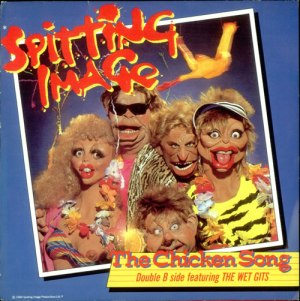
But one TV show absolutely guaranteed to get the creative juices flowing and rescue many a depressing Sunday evening was ‘Spitting Image’.

Just a cursory look at a show from its mid-’80s peak leaves one stunned at the craftsmanship and production values on offer, especially as they only had a few days to write, build and shoot each episode. There were some good musical spoofs too, composed by Philip Pope, fresh from UK comedy classic ‘Not The Nine O’Clock News’ and his parody band The Hee Bee Gee Bees, who even managed a few hits in the early ’80s.

‘Spitting Image’ also featured some memorable Phil Collins, ZZ Top and Madonna skits, and they even managed to rope Sting in to re-sing this. But ‘We’re Scared Of Bob’ is full of surprises and surely the best spoof. Its sheer potency is still a shock to the system. You also suspect that Sir Gandalf was watching, so unmissable was the programme in the mid-’80s.

Why isn’t there anything like this around now? Oh, lack of money and talent, probably. A show like ‘Spitting Image’ also highlights the paucity of genuinely interesting musical (and public) figures these days.

Tom Hibbert: ’80s Agent Provocateur

Maggie and Tom, 1987

Maggie and Tom, 1987

The PR boom that had swept the music business in the 1970s really hit its stride in the 1980s.

MTV launched on August 1st 1981 and ensured that artists’ images were just as important as the musical package. In fact, a good image and strong video could sell an artist all over the world without any need to play live.

At the same time, the tabloid press had cottoned on to the power of music biz celebrity; columns like Bizarre and The 3am Girls, both of which featured in The Sun newspaper, were huge successes and reiterated that the public’s appetite for showbiz stories knew no bounds. PR and tabloid journalism were in their heyday, and they could make or break a career.

So thank goodness there was a writer like Tom Hibbert around. He cut through the PR schtick and exposed the chancers, pretenders and prima donnas of the ’80s for what they were, and in the process wrote some of the most pithy and hilarious music articles of all time.

With his shoulder-length hair, ever-present fag/pint, disarmingly faux-naif style and penchant for obscure psych bands, he was always going to be more comfortable in the late-’60s than the preening mid-’80s (apparently he only really rated Iggy Pop, Jerry Garcia, Syd Barrett and Ray Davies from the ‘pop’ world).

Q Magazine, Issue One, October 1986

The first issue of Q, October 1986

Later, with his work on Smash Hits and particularly Q Magazine, he invented a whole new, much-imitated lexicon of music journalism. He would begin pieces with expressions like: ‘Phew, rock’n’roll, eh, readers?’

David Bowie was rechristened as The Dame, Cliff as Sir Clifford Of Richard, Paul McCartney as Fab Macca Wacky Thumbs Aloft and Freddie Mercury as Lord Frederick Lucan Of Mercury.

The gentle p*ss-taking was quite a change from the reverential Melody Maker/Sounds era. When commissioned to write a biography of Billy Joel, Hibbert apparently wrote most of it about Joel’s almost totally unknown psych band, The Hassles, and dismissed the rest of his career in the final chapter!*

Tom hit his stride writing the notorious ‘Who The Hell Do They Think They Are’ articles in Q which generally exposed and belittled the more gullible, self-important celebs of the ’80s, usually from the world of music. He was given a right bollocking by Jerry Lee Lewis after one too many questions about The Killer’s rivalry with Elvis:

‘Don’t nit-pick me, boy! You mention Elvis to me again, you keep digging me about that and I’m gonna kill you, so help me God!’

Ringo_Starr_(2007)

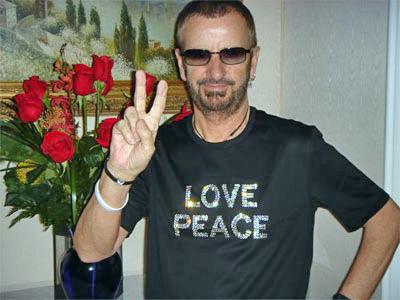
He pulled off a similar trick with Ringo, ignoring instructions from the PR and asking repeated questions about The Beatles. Mr Starkey could contain himself no longer, bawling:

‘You’re talking sh*t!’

Tom also elicited some seriously weird recollections from Chuck Berry and Yoko, and managed to nail topless-model-turned-pop-star Samantha Fox, Bananarama, Bros and Gary Glitter with his disarming, give-’em-enough-rope-to-hang-themselves style.

He flew to Brazil and tracked down notorious train robber/friend of the Sex Pistols Ronnie Biggs, and – perhaps predictably – got along quite well with him.

At the height of Q’s popularity in 1987, Tom was given the dream gig: an audience with Thatcher. She obviously thought this would be a golden chance to woo the nation’s ‘youth’ but came nicely unstuck when she gleefully revealed that her favourite singer was Cliff and favourite song ‘(How Much Is) That Doggie In The Window’. You can read the interview here.

41+96bAhW-L._BO1,204,203,200_

Tom also interviewed actor Rupert Everett in 1987, at a time when the thespian was trying to reposition himself as a credible pop singer. Hibbert’s preamble to the interview ran thus:

He wears the soiled leather jacket and the shades (on this drab and rainy day) of the rock star, but his attempt at the street-damaged look is foiled somewhat by the poise and delivery of the effete and English ac-tor. Close your eyes as he talks and you might imagine him to be dressed in a velveteen smoking jacket, and that it were a delicate ebony cigarette holder he was chewing on rather than a lettuce and tomato sandwich…

Later interviews with Status Quo, Boy George, Roger Waters, Television and Jonathan Richman make me chuckle to this day, and some of them are in this collection.

Son of esteemed historian Christopher Hibbert, Tom was born and brought up in Henley-on-Thames in Oxfordshire. His early career involved writing for home-improvement periodicals and playing guitar in a few unheralded bands.

Sadly, Tom died in September 2011 at the age of just 59, his rather unhealthy lifestyle finally catching up with him. But as John Lydon told Tom during a Q interview in 1995, ‘You’re rather squalid, but I enjoy that. Ha-ha-ha-ha!’

*I need to verify that…

1981: Best Pop Year Of The 1980s?

royWatching the excellent BBC doc ‘The Story Of 1981’ a few weekends ago got movingtheriver wondering if it was one of the very best years for pop.

Of course, all music fans have their ‘bedrock’ years, periods when their tastes are pretty much formed for life.

1981 was certainly the year when pop music first properly impinged itself onto this writer’s consciousness, but looking back now it certainly does seem to feature more than its fair share of classic singles and albums.

There was so much variety on offer, from post-punk, revival rock’n’roll/psychedelia and classic heavy metal through to 2-Tone, jazz/funk, reggae and soul.

1981 was full of singles that to this day are among my favourites of all time. Here’s just a selection:

Altered Images’ ‘Happy Birthday’
Bill Wyman’s ‘Je Suis Un Rock Star’
Kim Carnes’ ‘Bette Davis Eyes’
Haircut 100’s ‘Favourite Shirt (Boy Meets Girl)’
OMD’s ‘Souvenir’
Tom Tom Club’s ‘Wordy Rappinghood’
Adam And The Ants’ ‘Ant Rap’
The Police’s ‘Every Little Thing She Does Is Magic’
The Specials’ ‘Ghost Town’
Ultravox’s ‘Vienna’
Human League’s ‘Love Action (I Believe In Love)’
Soft Cell’s ‘Tainted Love’
Third World’s ‘Dancing On The Floor’
Imagination’s ‘Body Talk’
Freeez’s ‘Southern Freeez’
Cliff Richard’s ‘Wired For Sound’
Laurie Anderson’s ‘O Superman’
Depeche Mode’s ‘Just Can’t Get Enough’
The Teardrop Explodes’ ‘Reward’

And that’s just scratching the surface. There were also brilliant singles by Linx, Visage, Scritti Politti, The Pretenders, Squeeze, XTC, Talking Heads, Madness, Roxy Music, Level 42, Light Of The World, Smokey Robinson, George Benson etc etc etc.

And then there were the album releases of 1981. Here’s a partial list of favourites:

Human League: Dare
Phil Collins: Face Value
Randy Crawford: Secret Combination
Rickie Lee Jones: Pirates
Rush: Moving Pictures/Exit…Stage Left
Quincy Jones: The Dude
Chaka Khan: Whatcha Gonna Do For Me
Lee Ritenour: Rit
David Sanborn: Voyeur
Frank Zappa: Shut Up N Play Yer Guitar/You Are What You Is
John Martyn: Glorious Fool
David Byrne/Brian Eno: My Life In The Bush Of Ghosts
Grace Jones: Nightclubbing
Level 42: Level 42
John McLaughlin/Al Di Meola/Paco De Lucia: Friday Night In San Francisco
Jaco Pastorius: Word Of Mouth
King Crimson: Discipline
Japan: Tin Drum
The Tubes: The Completion Backward Principle
Bow Wow Wow: See Jungle…

Not bad. Hard to see how another year is gonna beat 1981, but we shall see…

Ladies And Gentlemen, It’s Max…Headroom!

388px-Mhcom_max_headroom_guidetolife_frontYep, it’s M-M-M-M-Max, scourge of celebrities everywhere and purveyor of surreal one-liners, bizarre stream-of-consciousness meanderings and often-quite-obscure music videos.

Max was created in 1985 by Annabel Jankel (sister of Ian Dury-collaborator Chaz), Rocky Morton and George Stone as rather eccentric, attention-grabbing ‘talking head’ to present videos on the burgeoning Channel Four.

Brilliantly played by Matt Frewer, who apparently had to endure over four hours in the make-up chair before each day of filming, Max was born in a one-off drama shown on Channel Four in 1985.

He then returned to front two series of ‘The Max Headroom Show’ in 1985 and 1986. The show then moved to the US for two series shown in ’87 and ’88.

People probably either loved or hated Max but I was an immediate fan. I even bought the book. Large swathes of his monologues are indelibly etched on my memory. Even today, I can’t hear the words ‘Sebastian Coe’ without thinking of Max’s unique delivery.

I also discovered some good music and vids on his shows too, including Peter Gabriel’s live version of ‘I Don’t Remember’, The Redskins’ ‘Bring It Down’, Donald Fagen’s amazing ‘New Frontier’ vid (directed by Jankel and Morton) and Sid Vicious’s terrifying ‘My Way’ (how did that get onto pre-watershed TV?).

Most of the press attention was aimed at the state-of-the-art computer graphics, the incredible make-up job and bizarre speech patterns. But, apart from the music vids, what immediately hooked me was his smarmy, gleeful piss-taking. He was kind of a mixture of Fletch and Johnny Rotten. There was also a touch of Dan Aykroyd/Chevy Chase’s smarmy Weekend Update newsreaders on ‘Saturday Night Live’.

Though the show had three regular writers – David Hanson, Tim John and Paul Owen – Frewer apparently improvised a large part of Max’s ramblings. I always assumed Max’s ‘cool guy’ persona was coming from Steve Martin but Frewer claims that he based Max’s shtick on Ted Knight’s hilariously hammy portrayal of Ted Baxter in ‘The Mary Tyler Moore Show’.

Possibly the sections of the show which have the most relevance now are Max’s interviews with stars like Sting (see below), Boy George and David Byrne. Years before Dennis Pennis, he was hilariously detached, if not downright dismissive of their celebrity status. I loved the way he ridiculed Sting’s new ‘jazz’ direction.

Later on, the tables were turned as Max found himself being interviewed on primetime chat shows by David Letterman and Terry Wogan. He calls Letterman ‘Davey-doo’ throughout and seems to be slowly driving him to distraction.

I had a few episodes on video for many years but chucked them out a while ago – a big mistake, as there’s still no sign of a UK DVD. Long live Max!