At the beginning of 1989, the tabloids were full of rumours that Prince was in dire financial straits.
While that seems unlikely, with hindsight it does seem a curious decision for him to take on a soundtrack gig for such a huge mainstream movie, stepping right into the belly of the Warner Bros. beast.
But then it’s also not much of a surprise that he smashed Batman out of the park. On many levels, it was the perfect project for the time – the movie’s themes appealed to his post-Lovesexy spiritual concerns and also tapped into his own feelings about fatherhood. He explored those themes poignantly on ‘The Future’ and ‘Vicki Waiting’.
Musically, in the main he retreated from Lovesexy‘s album’s dense, complex, band-inspired sounds and went back to a minimalist approach, pushing his guitar right to the fore and making liberal use of samplers and a Fairlight.
But even though ‘The Future’, ‘Electric Chair’, ‘Partyman’, ‘Batdance’ and ‘Lemon Crush’ are essentially one-chord jams, Prince knows exactly how to hold the attention with false endings, escalating riffs, hysterical guitar solos and quirky chord voicings. The net result is a somewhat forbidding but still undeniably funky album.
Also he doesn’t scrimp on the dancefloor classics – put on ‘Partyman’, ‘Trust’ or ‘Batdance’ (a UK #2 and US #1) and to this day you’ll get any party started. Elsewhere, ‘Scandalous’ is a brilliantly-sung, sometimes funny seduction ballad in the tradition of ‘Do Me Baby’ and ‘International Lover’, while ‘The Arms Of Orion’ is a pretty – if somewhat trite – ballad.
The album was a smash hit, selling over a million copies in its first week of release and becoming his first US #1 album since Around The World In A Day. Prince was almost returning to his Purple Rain popularity, no doubt helped by the huge success of the movie.
But this kind of mainstream success was short-lived. Something was eating him up inside – in typical form, he regrouped immediately and took on a deeply personal project, the doomed Graffiti Bridge movie/album. Probably his least-remembered album of the ’80s – and arguably his last classic – Batman is ripe for rediscovery as we reach more end-of-the-decade, spiritual/political uncertainty.
Singing drummers: the ’80s were chock-a-block with ’em.
But Narada seems a somewhat forgotten example, at least compared to the far more popular Phil C, Don H, Stevie W and Sheila E.
Yet he started the decade as the one you’d probably have put your money on, ending the ’70s as he did with an impressive run of R’n’B hits.
Narada had of course started his music career as a jazz/rock drumming tornado in the second incarnation of John McLaughlin’s mighty Mahavishnu Orchestra, going on to record famous fusion sides with Jeff Beck, Weather Report, Tommy Bolin, Alphonso Johnson and Jaco Pastorius.
During the ’80s, he was one of the most in-demand producers on the planet, helming Whitney Houston’s ‘I Wanna Dance With Somebody’, Aretha Franklin/George Michael’s ‘I Knew You Were Waiting For Me’ and Starship’s ‘Nothing’s Gonna Stop Us Now’. But his solo career was somewhat in limbo during this period, so it’s fascinating to check out a new, nicely-appointed three-album survey of his 1983-1988 output.
Looking At You, Looking At Me (1983) is the best of the three albums, but a frustratingly inconsistent record. Listening to the superb title track, you’d think he might have found hit his true metier, a languid, luxurious, West Coast pop/jazz, similar to the kind of music Al Jarreau or Manhattan Transfer were making at the time.
But an OK duet with Angela Bofill, passable cover of ‘Reach Out (I’ll Be There)’ and sick drum-machine/horn workout ‘Shake It Off’ aside, the rest of the album is fairly unmemorable R’n’B with occasional virtuosity from guitarist Corrado Rustici and bassist Randy Jackson.
The followup, 1985’s Nature Of Things, is even more problematic, sounding mainly like a kind of soft R’n’B version of the ‘Top Gun’ soundtrack, with way too many synth-based ballads. But Divine Emotion (1988) was a partial return to form, led by the effervescent title track (with one of the great ’80s basslines) which gave him a timely UK hit. Narada had obviously been prompted into action by his highly successful production work – his vocals and arrangements have never been better.
But while Divine Emotion sounds like a million dollars, there are still issues on the songwriting front. Put simply, only the title track, ‘But What Up Doh’ and closer ‘We Still Have A Dream’ have memorable hooks (the latter also features some brilliant jazz/rock kit work from Narada).
One wonders what might have happened if he had hooked up with some great ‘pop’ songwriters like Kenny Loggins, Rod Temperton, Michael McDonald, Carole Bayer Sager or even Burt Bacharach at the outset of the decade rather than relentlessly ploughing his own furrow; ‘Looking At Me, Looking At You’ offers tantalising possibilities.
But looking at his career as a whole, it’s all turned out fine – Narada’s always been one of the coolest, most talented musician/producers around, and apparently he’s a joy to work with.
I haven’t kept many VHS cassettes, but two vids that definitely won’t be hitting the charity shop any time soon are Prince’s ‘Lovesexy Live: Volumes 1 and 2’ (currently unavailable on DVD…).
The Lovesexy tour kicked off 30 years ago this week, on 8 July 1988 at Paris’s Palais Omnisport. The seven-month jaunt, taking in Europe, North America and Japan, was arguably Prince’s greatest ever.
A spectacular in-the-round stage set was designed as a kind of ‘fantasy island’, half a playground and half a dreamscape, with curtains, a mini basketball court, brass bed, swing set and a Ford T-Bird which Prince ‘drove’ around the stage at the start of the show.
The Lovesexy tour band: left to right, Cat Glover, Dr Fink, Boni Boyer, Miko Weaver, Eric Leeds, Prince, Levi Seacer Jr., Matt Blistan, Sheila E
Taped on the last night of the European tour – 9 September 1988, at the Westfalenhalle in Dortmund, Germany – ‘Lovesexy Live’ still makes for a thrilling watch. Firstly, the music: this band could turn on a dime. It’s hard to imagine any other set of musicians from the era pulling off the ‘Adore’/’Jack U Off’/’Sister’ medley. Prince’s guitar playing is at its best, with creamy, delay-drenched distortion and tight, tasty Telecaster.
And of all the ’80s ‘pop’ acts who incorporated jazz into their work, Prince may be the most successful. In collaboration with his superb horn section (Eric Leeds on saxes, Matt Blistan on trumpet), he often went back to the source: Ellington’s ‘Things Ain’t What They Used To Be’ and Charlie Parker’s ‘Billie’s Bounce’ infiltrate ‘Blues In C/If I Had A Harem’, and Blistan occasionally quotes from ‘It Don’t Mean A Thing (If It Ain’t Got That Swing’). Meanwhile Sheila E brings the Bay Area jazz/rock sound so beloved of Prince. Her solo feature is a highlight of his ’80s live work.
Then there’s the ‘story’. The Lovesexy show is structured like one of those old Warner Bros gangster pictures – in the first half (lucky for us), we see an ‘evil’ Prince, seduced by the sins of the flesh and tempted by drugs, money and criminality, giving him an excuse to dust off Black Album standouts ‘Superfunkicalifragisexy’ and ‘Bob George’.
Then there’s punishment, atonement and spiritual conversion. Yes, y’all, the second half of the show is ‘God stuff’. But if you don’t go along with it, the music is enough of a spiritual experience anyway. Anyway, Prince certainly seems genuinely transported during ‘Anna Stesia’ and ‘I Wish U Heaven’.
Europe couldn’t get enough of the tour. There were no less than seven nights at London’s Wembley Arena and a series of famous after-show gigs, particularly at the Camden Palace on 25 July when Mica Paris was picked out from the crowd to sing ‘Just My Imagination’ and Ron Wood joined Prince onstage for a memorable ‘Miss You’.
Ticket sales were not so good in the States (14 September to 29 November) where apparently Prince struggled to sell out many arenas, despite it being his first major tour there for over three years.
But normal service was resumed when the Japan leg kicked off in early February 1989. The last night of the tour on the 13th was apparently an exceptionally emotional one.
When Prince got home to Minneapolis, he commenced work on the ‘Batman’ soundtrack, another project about the duality of man. It’s not hard to see where his head was at as the ’80s drew to a close.
Peaking between 1983 and 1985, the digital funk sound took the base elements from early pioneers James Brown, The Isley Brothers and Sly and the Family Stone and combined them with the new studio technology of the early ’80s.
Producers Quincy Jones, Arif Mardin, Leon Sylvers III (The Whispers, Shalamar), Kashif, Prince and Steve Arrington, and keyboardists/programmers such as David Gamson, David Frank and Robbie Buchanan, instigated a new kind of funk incorporating syncopated synth parts, percussion and intricate rhythm guitar.
The resulting sound is instantly recognisable and an influence on everyone from Beck and Bruno Mars to Daft Punk and Mark Ronson. Here are 11 tracks that still retain the wow factor.
12. D-Train: ‘You’re The One For Me’ (1982)
11. Zapp & Roger: ‘More Bounce To The Ounce’ (1980)
Roger Troutman took the key elements of George Clinton/Bernie Worrell’s P-Funk template (squelchy synth bass, solid drums, clipped rhythm guitar) and stripped them back to their bare essentials, creating this classic single which made the Billboard top 100 in 1980.
10. The System: ‘You Are In My System’ (1982)
Later covered by Robert Palmer, ‘You Are In My System’ was the trademark track by the New York outfit comprising Mic Murphy on vocals and David Frank on keyboards and programming. If the opening minute of this doesn’t make you move, you’re probably dead…
9. Person To Person: ‘High Time’ (1983)
This was former ABC drummer David Palmer’s bid for solo pop stardom after jumping ship from the ‘Lexicon Of Love’ tour. Produced by David Frank, it’s catchy and beautifully arranged but lacks a decent vocalist and didn’t dent the charts on its 1983 single release.
8. The Girls: ‘I’ve Got My Eyes On You’ (1983)
Minneapolis was a hotbed of digital funk in the early ’80s too, not all generated by Prince (but I’d definitely have included ‘DMSR’ or ‘Erotic City’ if they were on YouTube…). This curio, produced by his 1979-1981 touring bassist Andre Cymone, lacks a decent chorus but is still a catchy funk stew all the same. The Girls released their one and only album in 1984.
7. Kashif: ‘Stone Love’ (1983)
This has more than a whiff of Luther’s ‘Never Too Much’ about it, but it was also a major influence on Scritti Politti (see below). Kashif released five studio albums between ’83 and ’89 and worked with Evelyn ‘Champagne’ King (‘Love Come Down’), Whitney Houston and George Benson before his death in 2016.
6. Chic: ‘Believer’ (1983)
The corking title track from their last studio album of the ’80s which received a critical mauling at the time. It sounds pretty fresh these days though maybe lacks the killer pop hooks that categorised their most successful work.
5. Scritti Politti: ‘Wood Beez (Pray Like Aretha Franklin)’ (1984)
Arif Mardin produced this classic single which made #10 in the UK chart in March 1984.
4. Wally Badarou: ‘Chief Inspector’ (1985)
Best known as keyboard player/strategist for Grace Jones and Level 42, Badarou also scored movies (‘Kiss Of The Spiderwoman’) and came up with this classic Afrocentric take on the digital funk sound.
3. Loose Ends: ‘Hanging On A String (Contemplating)’ (1985)
Obviously at the commercial end of the sound, this reached the giddy heights of #13 in the UK singles chart and was all held together by a superb performance by Ron Jennings on guitar.
2. Chaka Khan: ‘I Feel For You’ (1984)
Overfamiliar it may be, but this Prince-penned epic is undeniably the commercial apotheosis of the digital funk sound. The famous opening was apparently a total mistake, producer Arif Mardin getting trigger-happy with the sampler. Chaka was not amused and wanted it erased, but Mardin insisted on keeping it, telling her: ‘Don’t worry, my dear, it will be a hit.’ A hit it was, the only #1 of her career.
1. Beck: ‘Get Real Paid’ (1999)
The Los Angeles pop chameleon revived the sound for his underappreciated 1999 solo album Midnite Vultures.
Singles released: ‘Sign O’ The Times’ (#3 US, #10 UK)
‘If I Was Your Girlfriend’ (#67 US, #20 UK)
‘U Got The Look’ (#2 US, #11 UK)
‘I Could Never Take The Place Of Your Man’ (#10 US, #29 UK)
At the time of Sign O’ The Times’release, the general critical consensus seemed to be that it was a great double album but, shorn of a few tracks, would have made a sensational single album. But what the press probably didn’t know was that Prince had actually intended to release a triple album.
He believed the three-record set Crystal Ball would have been be a huge artistic statement after a relatively disappointing 1986, but the idea scared the hell out of Warner Bros and also his manager Bob Cavallo. Prince was reluctantly forced to back down.
The tracks intended for Crystal Ball but later abandoned for Sign O’ The Times were ‘Rebirth Of The Flesh’, ‘Rockhard In A Funky Place’, ‘The Ball’, ‘Joy In Repetition’, ‘Shockadelica’, and ‘Good Love’ (all hoovered up from two other aborted album projects, Dream Factory and Camille).
But even after Prince removed these, he was still left with a 16-track double album, a brilliant mix of the sacred and profane, and a record which many fans believe was his finest hour.
The famous title track was recorded on 15 July 1986 in a single ten-hour session at LA’s Sunset Sound. Prince was experimenting with a new piece of kit – the Fairlight sampler/synth – but characteristically made the technology swing in a way that no other artist could.
The track also demonstrates his love of space; it’s essentially just a minimalist blues featuring a three-note melody line, some sampled drums/bass and a bit of electric guitar. Listening again on the day after the Westminster Bridge ‘terrorist’ attack of 23 March, the song’s lyric also seems as relevant now as it was in 1987:
Hurricane Annie ripped the ceiling of a church and killed everyone inside You turn on the telly and every other story is tellin’ you somebody died Sister killed her baby cos she couldn’t afford to feed it And we’re sending people to the moon In September my cousin tried reefer for the very first time Now he’s doing horse, it’s June
It’s silly, no? When a rocket ship explodes And everybody still wants to fly Some say a man ain’t happy Until a man truly dies
‘Play In The Sunshine’ and ‘Housequake’ are pure party pop – it’s scarcely believable that Prince alone could generate such a raucous studio atmosphere with only Susannah Melvoin’s backing vocals, a few guests and Eric Leeds’ sax for company. The latter also represents his first recorded attempt at hip-hop (unless you count the brief ‘rap’ in ‘Girls & Boys’), typically supplying something usually missing from the genre: humour.
‘The Ballad Of Dorothy Parker’, recorded in Prince’s Minneapolis home studio on 15th March 1986, may be his most psychedelic recording, the soundtrack to a dream with seemingly-spontaneous musical moments that no one else could have created. He demonstrates his mastery with the LM-1 drum machine and, vocally, sets up a novel ‘Greek chorus’ effect.
‘Forever In My Life’ takes a melody line very similar to Sly And The Family Stone’s ‘Everyday People’ (and maintains Sly’s key of G) but again demonstrates Prince’s remarkable sense of space and also features another extraordinary backing vocal arrangement.
The heartfelt lyric was written when he believed he would settle down with fiancée Susannah Melvoin (twin sister of Wendy) – sadly it wasn’t to be.
‘It’, another bold experiment with the Fairlight, returns to the cold, sexualised world of 1999, while ‘Hot Thing’ is its flipside, a funky, James Brown-inspired one-chord romp with some great Leeds tenor sax.
‘If I Was Your Girlfriend’ (another song about Susannah/Wendy), ‘Strange Relationship’ (another big nod to Sly), ‘It’s Gonna Be A Beautiful Night’, ‘Starfish And Coffee’, ‘U Got The Look’ and ‘I Could Never Take The Place Of Your Man’ are just brilliantly performed, beautifully written pop tunes with dashes of psychedelia and soul.
According to engineer Susan Rogers, Prince was very influenced by Kate Bush’s Hounds Of Love during the recording of SOTT, the track ‘Cloudbusting’ a particular favourite. Other songs showed contemporary influences too – ‘Adore’ was apparently Prince’s response to the popularity of Luther Vandross’s Give Me The Reason and Patti Labelle’s The Winner In You, and it also hugely influenced the neo-soul movement, particularly D’Angelo’s ballad style.
‘U Got The Look’ – the last song recorded for Sign O’ The Times on 21 December 1986 – was apparently inspired by Robert Palmer’s ‘Addicted To Love’.
Sign O’ The Times sold 1.8 million copies in the US, a very similar number to Parade. Some believed the slightly disappointing sales were due to the choice of ‘If I Was Your Girlfriend’ as the second single; it is strange that ‘U Got The Look’ didn’t get the nod. But if Prince’s popularity was levelling out in the States, it was growing across Europe.
On 17 July 1986, Tampa-born sax great David Sanborn broke off from a European tour to guest with Miles Davis and band at the Montreux Jazz Festival.
Though obviously nervous, Sanborn acquitted himself well, getting stuck in with some tasty modal solos and prompting many Miles smiles. Hopefully the performance would bode well for Sanborn’s next studio recording.
Unfortunately not. Sanborn made some fine albums during the 1980s – Hideaway, Voyeur, As We Speak, Straight To The Heart – but A Change Of Heart was not one of them. It was the kind of over-produced, under-composed, unfunky ‘fusion’ record that Tutu should have killed off once and for all.
I bought it on cassette when it came out, proudly showing it off to a cool family friend who had previously introduced me to loads of great music. I hoped he would be impressed by my purchase. He turned his nose up, mumbling something about ‘Bloody muzak…’ Harsh but fair, at least when it comes to most of A Change Of Heart.
The opening two Marcus-written-and-produced tracks – ‘Chicago Song’ and ‘Imogene’ – deliver a quality that the rest of the album never even remotely approaches. Miller was in constant demand around this time and presumably couldn’t commit to the whole album. ‘Imogene’ is a classic ballad with a haunting fretless bass melody and beguiling bridge, while ‘Chicago Song’ transcends its simple melody with an irresistibly funky rhythm section and biting Hiram Bullock guitar bridge.
The rest of A Change Of Heart seems designed for the latest Don Simpson movie or an episode of ‘Miami Vice’. Syndrum overdubs and unsubtle Fairlight samples prevail alongside ugly synth sounds and flimsy melodic motifs, without a whiff of jazz or R’n’B. Producer/synth players/writers Ronnie Foster, Philippe Saisse and Michael Colina toil away fruitlessly and even Sanborn’s licks don’t stick.
Sanborn toured A Change Of Heart extensively with a great band featuring Bullock and Dennis Chambers on drums, even popping up on primetime UK music show ‘The Tube’ playing Michael Sembello’s smooth-jazz ballad ‘The Dream’. He was clearly at his commercial peak (the album made the top 100 in the US and UK) but the creative rot would prevail to the end of the ’80s. He got back on track with the release of 1991’s Another Hand.
Occasionally a musician appears out of nowhere, ‘fully-formed’, or at least it can seem that way during one’s formative years.
In my lifetime, there have been a few: Lewis Taylor, Omar Hakim, Trilok Gurtu, and probably a few more. Drummer Dennis Chambers, who plays brilliantly throughout Blue Matter, would definitely be one too.
My muso schoolmate Jem Godfrey had lent me John Scofield’s superb Still Warm album sometime around 1986. Before then, I knew John’s playing mainly from Miles Davis’s Star People, one of my mid-’80s favourites.
So when the Steve Swallow-produced Blue Matter dropped in early ’87, I was primed and ready – and instantly gripped.
The presence of Hiram Bullock’s rhythm guitar on three tracks gives a good indication of Scofield’s approach on this album – it’s R’n’B/funk-based jazz/rock, with great grooves, neat chord changes and no gratuitious displays of instrumental technique for technique’s sake – though Scofield and Chambers were of course quite capable of some serious chops, evident on the killin’ ‘Trim’.
The dynamic title track is clearly influenced by Miles/Marcus Miller’s ‘Tutu’ with its half-time groove, walking synth bass and enigmatic chords, but Chambers’ brilliant contribution (closely monitored by the excellent Gary Grainger on bass) transforms it into something totally new.
In the first minute of the tune, he achieves a novel ‘bouncing ball’ snare drum effect and then unleashes some of the most kick-ass kick-drum playing in music history.
Chambers had already turned some heads playing with George Clinton, but, even if he had never picked up the sticks again after 1987, ‘Blue Matter’ would probably have put him right up in the drum pantheon.
‘Heaven Hill’ – named for Sco’s favourite brand of bourbon – a slow blues with surprising chord changes and tasty gospel-tinged piano playing by Mitch Forman, influenced a whole host of ‘fusion’ guitarist/composers such as Robben Ford, Scott Henderson and Frank Gambale (compare it to Henderson’s ‘Slidin’ Into Charlisa’).
‘Now She’s Blonde’, ‘Time Marches On’, ‘The Nag’ and ‘So You Say’ manage to be both funky and catchy while retaining enough harmonic interest and ‘dirt’ to go way beyond the smooth jazz tag.
The Blue Matter band got quite a live following around this time, with good reason. They were somewhat of an antidote to the Chick Corea Elektric Bands and Al Di Meolas of this world, as musically jaw-dropping as those artists were/are. Scofield himself acknowledged as much during an interview with Howard Mandel in 1988:
‘What I hate about fusion music is the gymnastics. We are often playing to audiences who want to hear fast and loud and I have to watch myself. I’ve never been that good at doing fast stuff. Luckily, it doesn’t come easy to me. Now, Dennis Chambers is a chops phenomenon. On his solos, he destroys the drums. But he also has inbred musicianship, so it’s exciting and not so calculated…’
Musicians and writers have long puzzled over a definition of Harmolodics, the musical system invented by Ornette Coleman.
The man himself was famously coy on the subject, his brief liner note on the back of the Dancing In Your Head LP possibly the nearest he ever got to an outright definition: ‘Rhythms, harmonics and tempos are all equal in relationship’.
Of all the Ornette collaborators who developed their own take on Harmolodics, Ronald Shannon Jackson, who died in October 2013, probably came up with the most accessible version.
He had played with avant-garde pioneers Albert Ayler, Ornette, James Blood Ulmer and Cecil Taylor in the 1970s, but developed into a fine bandleader/composer in the ’80s, fronting a red-hot band featuring guitarist Vernon Reid (Living Colour), bassist Melvin Gibbs (Rollins Band), trombonist Robin Eubanks and saxophonist Zane Massey. (Shannon’s version of Harmolodics was so successful it possibly even influenced Ornette’s Virgin Beauty.)
My dad used to get sent a lot of music in his capacity as a programme consultant for Channel 4 TV’s music arm back in the mid-1980s. A surprising amount of it would come in home-compiled cassette format. One such tape was simply called ‘Dance Music’ – I’ve still got it somewhere.
Most of it was fairly standard Brazilian and Blue Note stuff but one track stood out a mile and became somewhat of an obsession for my brother and I: Shannon’s ‘Behind Plastic Faces’, from the 1985 album Decode Yourself. It was the beginning of my love affair with his music and drumming.
He lays down one of his patented military grooves on Simmons drums underneath slithering fretless bass, chattering Reid guitar and Onaje Allan Gumbs’ summery keyboards. But then the track suddenly changes gear halfway through and turns into a Afro-Funk/No-Wave rave-up, with Shannon moving over to the acoustic drums and Eric Person rhapsodising on alto sax.
The track and attendant album were recorded at Electric Lady Studios in New York and produced by Bill Laswell. Decode Yourself seems very difficult to find on physical formats these days, like many of Shannon’s numerous other ’80s albums, but thankfully it is on streaming platforms.
Shannon Jackson was born and brought up in Forth Worth, Texas, just like Ornette. His father’s jukebox introduced him to BB King, Howlin’ Wolf, Charlie Parker and Dave Brubeck, but there were many other influences in the mix too, as he told writer Gary Giddins in 1985:
‘You’d wake up and hear hillbilly music on the radio. In school, we’d play (Wagner’s) “Lohengin”, at night we’d hear Bo Diddley or Bobby “Blue” Bland. On Sunday, we’d hear gospel. It was a total black community, and music wasn’t categorised as jazz or pop – nobody told you you weren’t supposed to like something.’
In the mid-’80s, London seemed to be Hiram Bullock’s second home.
The late great New York-based guitarist was in David Sanborn’s band at the Wembley Arena in November ’84 (alongside Marcus Miller, Don Grolnick and Steve Gadd, one of my first ever gigs) and also appeared in town regularly with Carla Bley and Gil Evans during this period.
At a Sanborn Hammersmith Odeon gig in February 1987 (see the comments section below), Hiram embarked on a solo, and, with the aid of a wireless unit, promptly jumped off the stage to serenade the stalls.
He then vacated the auditorium, soloing all the while, and a few minutes later appeared in the front row of the balcony, still blazing away, illuminated by a single spot. Such shenanigans would earn himself column inches in the jazz magazines and a cult following but sometimes overshadow the fact that he was one of the great guitarists of the ’80s or any other decade, effortlessly mixing up the blues, funk, bebop and rock. You might even call him the Jaco of guitar.
By mid-1986, he had enjoyed ten years as a first-call session player (Steely Dan, Chaka Khan, Brecker Brothers et al) as well as being part of the famous ‘Saturday Night Live’ and ‘Late Night With Letterman’ bands.
He had also recently hooked up with his one-time bass student Jaco in the PDB trio (with drummer Kenwood Dennard) and produced Mike Stern’s excellent Upside Downside (guitar-wise, they have a lot in common).
In short, he had paid his dues. It was time for a solo album. Though From All Sidesis in many ways a classic ‘journeyman’ record, covering all the bases from funky fusion (‘Window Shoppin’, ‘Cactus’, written by Randy Brecker) through R’n’B (‘Funky Broadway’) to smooth Sinatra-influenced balladry (‘Really Wish I Could Love You’), it’s never boring, helped also by some good guest spots – Kenny Kirkland supplies a classy solo to ‘Window Shoppin’ while Sanborn lights up ‘Say Goodnight, Gracie’.
On the witty ‘state of the world’ blues ‘Mad Dog Daze’, Bullock even comes over a bit like a Johnny Guitar Watson for the ’80s. The album also benefits greatly from mostly sticking to the same excellent rhythm section – Charley Drayton on drums, Will Lee on bass, Clifford Carter on keys – which gives some consistency from tune to tune.
Hiram plays some brilliant solos, even on somewhat cheesy material such as ‘When The Passion Is Played’ and ‘Until I Do’. The production is state-of-the-art for ’86, ie. extremely high on treble and compression but short on low-end.
But From All Sides is still mostly a blast, driven on by Hiram’s irrepressible energy and good vibes, though the followup Give It What U Got was a big improvement – more on that later.
Here’s another key exhibit to support the motion ‘1981: The Greatest Ever Pop Year’.
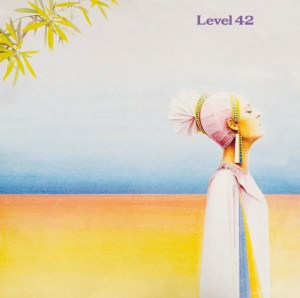
When three caulkheads – bassist/vocalist Mark King and brothers Phil (drums) and Boon Gould (guitar) – hooked up with keyboardist/vocalist Mike Lindup in London, they were fairly speedily signed to indie label Elite Records.
After adding their ‘fifth member’ Wally Badarou – who had just begun his epochal keyboard work with Grace Jones – they released the ‘Love Meeting Love’ 12” single in the summer of 1980.
It got the attention of Polydor, who speedily re-released it and then the follow-up ‘Flying On The Wings Of Love’. Both stalled outside the UK top 40 but there was suddenly a massive industry buzz about this band.
At this stage in their career, Level 42 were very much lumped in with the new wave of Brit-funk and jazz/funk bands, leading to an instant following, lots of noisy club gigs and many a provincial Soul Weekender alongside ‘Funk Mafia’ DJs with nicknames like Froggie and Wolfie.
None of this harmed Level’s popularity, though in truth they had little in common with the dancefloor scene – their sound was a much edgier proposition, with more guitar, a distinct jazz/rock influence and a punky energy.
As one fan apparently commented to Boon after a November 1980 all-dayer supporting Shakatak: ‘We didn’t expect Status Quo’. No matter – Polydor signed them to a five-year deal soon after that gig.
Legendary Bluesbreakers/Fleetwood Mac producer Mike Vernon was chosen to helm their debut album – Mark King was apparently most impressed that he had worked on Focus’s Moving Waves. Vernon turned out to be a superb choice.
They all convened first at the very haunted Vineyard Studios in South-East London (later owned by Stock, Aitken and Waterman) to record ‘Love Games’. It gave them their first hit in March 1981, scraping into the UK singles chart at number 39, and leading to their first appearance on ‘Top Of The Pops’.
But these guys lived and breathed music. Though songwriting didn’t come particularly easy early on in their career, there was an infectious, thrilling, percussive propulsion to their sound. It helped that they were all drummers (with the exception of Boon Gould).
Obvious influences such as Return To Forever, Herbie Hancock, John McLaughlin and Stanley Clarke merged with less obvious ones like Yes and Fairport Convention (mainly Phil Gould’s passions) to produce a very tasty brew, naturally easy on the ear. And after barely a year of singing, Mark King’s vocals were even starting to match his prodigious talent on the bass.
Level 42 presents a great variety of material littered with intricate, memorable arrangements. Wally Badarou’s mastery shines through throughout the album but especially on ’43’ – on the right channel, he sprinkles in shards of Prophet 5 synth, almost taking on the role of rhythm guitarist.
‘Why Are You Leaving’ is a superb quiet-storm ballad, not unlike something George Benson might have come up with in the Breezin’ era. Stanley Clarke is a towering influence – ‘Heathrow’ nicks the ‘Lopsy Lu’ shuffle (and also features a fantastic Gary Barnacle electric sax solo) while ‘Dune Tune’ paraphrases ‘Desert Song’ from Clarke’s classic School Days album. Phil Gould’s sparkling glockenspiel solo on ‘Starchild’ emphasises how versatile the band really were.
Level 42 is also a decidedly more lush and expensive-sounding album than any other ‘Brit-funk’ band managed to produce.
The evidence is Slipstream, a compilation which featured the band’s ‘Turn It On’ alongside other contemporary bands such as Light Of The World, Freeez, Morrissey Mullen and Incognito. The Level track sticks out a mile.
Level 42 reached #20 in the UK album chart, apparently a pleasant surprise to Polydor. Two UK tours followed in quick succession before they embarked on a seven-date German trip supporting The Police, which, by all accounts, didn’t go particularly well.
During one gig, a firecracker was hurled in the general direction of Mark King, lodging itself between his bass and elbow. Looking down, he recoiled from the mic in horror, believing he had been shot.
Despite Level 42‘s solid chart placing, there was still uncertainty about the future of the band – King was headhunted by Jeff Beck for a possible power trio with Simon Phillips on drums, and a few jam sessions ensued. Also, Barnacle’s band Leisure Process had recruited Mark and Phil for their upcoming album and there was talk of the them making the permanent switch.
Thankfully, neither project materialised – one of the great bands of the 1980s were back in business.

 At the beginning of 1989, the tabloids were full of rumours that Prince was in dire financial straits.


 Peaking between 1983 and 1985, the digital funk sound took the base elements from early pioneers James Brown, The Isley Brothers and Sly and the Family Stone and combined them with the new studio technology of the early ’80s.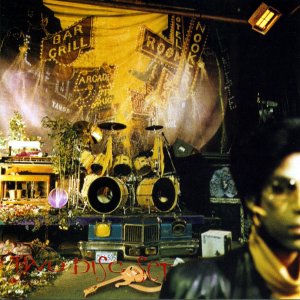



 movingtheriver.com