This is an intriguing, very promising, almost completely forgotten (currently not on any streaming platforms) debut album by a young American singer and songwriter who sadly died in a motorcycle crash only three years after its release (and reportedly the day before he was due to marry Vanity’s sister).
I came across Tony LeMans completely by chance at Mr CD on Berwick Street, Soho. It had piles and piles of CDs at five quid a pop, quite a steal by 1990s standards.
You just never knew what you would find, in the days when you would take a chance on an album just on the strength of the label, cover, musicians and/or producer. I saw the words ‘Sylvester Stewart’, ‘David Gamson’ and ‘Paisley Park’ on the back and had to have it.
Gamson plays keyboards and produces beautifully, fresh from Scritti Politti’s Provision. Tony LeMans was released on Prince’s Paisley Park Records – rumours were abound of the Purple One’s involvement, but he doesn’t appear.
But other ’80s funk masters do: Bernard Wright supplies some cracking wah-wah clavinet to a few tunes, though bassist Marcus Miller and guitarist Paul Jackson Jr. are fairly nondescript. Prince cohort Boni Boyer adds occasional back-up vocals alongside Michael Jackson collaborator Siedah Garrett (phenomenal on the opening ‘Higher Than High’).
The sonic clarity and mastering of Tony LeMans are outstanding; it’s a brilliant CD for auditioning a hi-fi. It’s also a real relief from the over-loud, over-compressed music of today. Musically and lyrically, it initially comes on like a ‘standard’ late-’80s pop/soul/funk album, but closer inspection reveals a strong psychedelic flavour. Mainly though, due to Gamson’s total involvement, the albumsounds like Provision-era Scritti fronted by Sly Stone.
The opener ‘Highest High’ fuses the synth hook from Prince’s ‘Lovesexy’ with Sly’s ‘The Same Thing’ (though neither get a songwriting credit) to great effect. The single ‘Forever More’ is a winning ballad with a fine falsetto vocal from LeMans and some classic Gamson chord changes, while ‘Good For You’ is an infectious, catchy slice of doo-wop-influenced pop.
There’s a bit too much filler on side two, but the closing ‘Different Kind Of Thing’ is possibly the stand-out and the nearest thing to a Prince song (very much influenced by ‘Erotic City’), though it was only an extra track on the original CD release.
LeMans toured the album in the States, sometimes supporting MC Hammer (!), and was recording his second Paisley Park album at the time of his death. It was due to feature a Prince composition called ‘Fuschia Light’. Sadly, it’s likely that it’ll never get an official release.
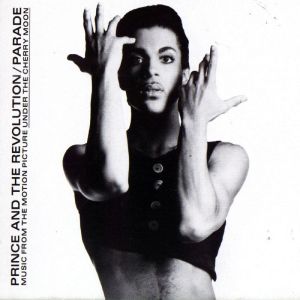
On 17 April 1985, just ten days after the end of the Purple Rain tour, Prince walked into LA’s Sunset Sound studios, sat at the drums, taped the lyrics of four new songs onto a music stand, picked up his sticks and instructed engineer Susan Rogers: ‘Don’t stop the tape when I stop playing. Just keep rolling.’
He then played through ‘Christopher Tracy’s Parade’, ‘New Position’, ‘I Wonder U’ and ‘Under The Cherry Moon’ without pausing. This guy worked fast. The recording sessions for Parade had begun.
The album would see Prince continue his extraordinary mid-’80s run of form, surely comparable to Stevie Wonder’s fabled 1972–1976 period. He couldn’t release albums fast enough and the wider world was waking up to just how prolific he really was.
His striking new horns-and-orchestra-driven sound, by turns jazzy, funky and psychedelic, lost him some fans in the States but made him a huge star in Europe. Parade showed off the amazing versatility of Prince (drums, bass, guitar and keyboards) and his main collaborators Wendy (guitar) & Lisa (keyboards).
It’s an anti-boredom album full of glorious contradictions – it features his first instrumental track but still contains four classic dancefloor singles; it’s his densest, most ‘produced’ ’80s album (alongside Lovesexy) and yet features his first all-acoustic track, recorded completely live in the studio; Clare Fischer’s orchestral arrangements are always high in the mix but rub shoulders with the Sunset Sound’s ancient sound effects library; Prince utilises ultramodern tech like a guitar synth and a Fairlight sampler, but the main solo instruments are Eric Leeds’ tenor and baritone sax. And there is zero electric lead guitar, barely 18 months after Purple Rain.
References this time around were The Beatles, ’80s Miles Davis, show tunes and funk-era James Brown. The biggest influence though is late-’70s Joni Mitchell. Parade is the nearest Prince ever got to the kaleidoscope range of her classic albums Don Juan’s Reckless Daughter and Hissing Of The Summer Lawns.
There were also more vocals in Prince’s music than ever before: Wendy, Lisa, Susannah (Wendy’s sister and Prince’s fiancée) and Sheila E all contributed massively to the occasional West Coast/Bangles sound.
By 2 June 1985, nine songs for Parade were in the can, though three would later be left off the final album – the spooky ‘Others Here With Us’, fantastic ‘All My Dreams’ and superfunky ‘Sexual Suicide’. Prince was also now working on not one but two other albums, Jill Jones and Mazarati’s debuts. By late June, he was also scouting locations in the south of France for the upcoming ‘Under The Cherry Moon’ movie. But, true to form, he couldn’t stop recording – he set up a makeshift recording studio in his Antibes hotel suite.
Parade‘s first three tracks – ‘Christopher Tracy’s Parade’, ‘New Position’ and ‘I Wonder U’ – pass by in the blink of an eye, gloriously odd, genuinely psychedelic funk miniatures. Very few have taken on the mantle of this style of music since 1986, though D’Angelo had a good go on the superb Voodoo album.
‘Under The Cherry Moon’ is almost a ’30s-style jazz number featuring asthmatic synths, fantastic piano playing and a daring melody line. I’d like to hear Tom Waits’ cover. If you listen very closely, you can hear the rattle of Prince’s necklace as he lays down the drum track.
‘Girls And Boys’ is a classic one-chord funk tune whose blaring guitar synth adds an engaging weirdness. Saxophonist Eric Leeds makes his mark on Prince’s music for the first time (though had already featured prominently on The Family’s album).
‘Life Can Be So Nice’ features fake harpsichord, sampled flute, piercing cowbell, some intricate acoustic guitar and a heavily-treated kick drum. It’s discordant and thrilling with an envelope-pushing vocal arrangement and some bizarre lyrics. The last minute of the song is a Latin/fusion jam in the Santana or Weather Report vein.
‘Venus De Milo’ is a sumptuous piece of symphonic muzak with some gorgeous trumpet from Matt Blistan (renamed Atlanta Bliss by Prince) while ‘Mountains’ is another classic single, largely penned by Wendy & Lisa. The 12” mix has to be heard. ‘Do U Lie’ is an intoxicating little slice of soft jazz with cocktail guitar, spoken word, strings and accordion.
‘Kiss’ is another effortless classic. It was the first single to be released from Parade, hitting US number one in April ’86, though apparently loathed by the Warner Bros suits. Initially given to the band Mazarati for their debut album, it was reclaimed by Prince when he realised the potential of the track. He kept their backing vocals and gave them some money.
‘Anotherloverholenyohead’, recorded on 16 December 1985, was the last track recorded for Parade. Lisa’s crystalline, densely-voiced piano sounds like it was recorded in a school assembly hall, and there’s more peculiar guitar synth and a few incredible bass runs from Prince. The full-length version made for another classic 12” single. Album-closer ‘Sometimes It Snows In April’ is Joni all the way. Its improvised, rubato prologue is very reminiscent of the opening to Mitchell’s ‘Cotton Avenue’.
Prince delivers an amazing lead vocal but the song needs a stronger chorus (‘Sometimes I feel so bad’) and Wendy & Lisa’s backing vox are extremely rough. The track divides opinion – some find it moving, some mawkish (I’m in the latter camp) – but it was a pretty brave choice to close such an important album.
The Parade sessions also spawned some fantastic B-sides: ‘Alexa De Paris’, ‘Sexual Suicide’, ‘Power Fantastic’, ‘4 The Tears In Your Eyes’, ‘Love Or Money’, ‘All My Dreams’ and the notorious ‘Old Friends 4 Sale’. All are well worth seeking out. Despite the success of ‘Kiss’ in the States, three follow-up singles peaked outside the top 50. Prince believed that Warner Bros’ choice of second single (‘Mountains’) was wrong – it should have been ‘Girls And Boys’.
Parade sold considerably less (1.8 million) in the States than Purple Rain (10 million) and Around The World In A Day (4 million). But in Europe, it was a huge hit. Then came the European tour. A funk revue. Horns, dance routines, backing vocals. Again, virtually no lead guitar. Europe loved him – there were riots in Holland – but the tour didn’t even make the States, which many insiders believe was a big mistake. Instead, there were several separate shows under the banner of the Hit & Run Tour.
But then it was all change: Wendy & Lisa were out of the band, Prince and Susannah had broken off their engagement and ‘Under The Cherry Moon’ had stiffed. But there were still a couple of amazing albums left in the tank before Prince’s ’80s were out.
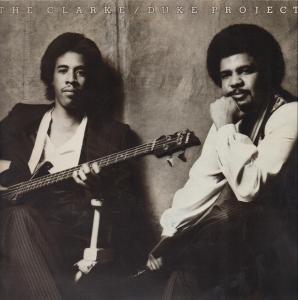
This one really divides people. The Clarke/Duke Project probably could and should have been a lot better given the talent involved and their stellar track record.
But the album shouldn’t be judged by jazz standards – by the early ’80s, these two protagonists of ‘fusion’ realised that jazz/rock had hit a massive dead end.
A fresh approach was called for. Earth, Wind & Fire’s effortless blending of funk, soul, disco, jazz, Latin and rock offered a new direction to all kinds of musicians, including Clarke and Duke.
So, leaving any kind of jazz credibility at the door, our heroes embraced their inner George Clintons, Frank Zappas and Stephen Bishops to make a really weird but occasionally enjoyable album of funk, disco, AOR and cheesy soul balladry (it’s surely up there in the ‘least classifiable albums of the ’80s’ list). In short, this was Stanley and George’s Tin Machine – you were either for or against.
My schoolfriend Seb and I were huge Stanley fans, but even we eyed this with some trepidation when we came across it around 1989. It had a pretty dodgy reputation even by ’80s Stanley standards. It’s certainly neither artists’ best work, but it’s worth a listen.
So, straight in at the deep end. It’s fair to say that most John Coltrane and Dexter Gordon fans will struggle with the ‘Louie Louie’ cover… But Clarke and Duke deliver great solos and the vocal jiving is good value.
Clarke’s ‘I Just Want To Love You’ is a minor disco/soul classic with a great bassline (later appropriated for Kylie’s ‘Spinning Around’). ‘Touch And Go’ is very pretty in a post-‘Sailing’ kind of way while the vapid ‘Sweet Baby’ miraculously delivered a big US hit (#19). The closing ‘Finding My Way’ is effective and quite unique in its way, a kind of pomp-funk/rock epic with a cool descending bridge and interesting structure.
JR Robinson’s ultra-solid, ultra-dry drums are very high in the mix and sometimes feel like they need a bit of air. Clarke impresses with a huge range of basses, guitars, sitars and cellos (and some very Santana-ish Piccolo lead bass playing) while Duke sticks mostly to squelchy synth basslines, acoustic piano and an occasional bit of trademark Mini Moog.
The album sounds very stripped back to modern ears and has a slightly ‘demo’ feel to it, but it was a hit. Two further collaborations followed, lasting into the early ’90s.
One thing’s for sure – Stanley and George were great friends until the latter’s death in 2013, and you can really hear it in the music they made together.
When it comes to the arts, ‘nobody knows anything’, as screenwriter William Goldman famously claimed.
But the music biz sure knows a good formula when it sees one. And in the late-1970s and early ’80s, formulas didn’t come much more successful than Johnny Guitar Watson’s.
His fusion of funk, blues, disco, jazz and R’n’B even gave Parliament/Funkadelic and Earth, Wind & Fire a run for their money. He was simply one of the coolest musicians ever to walk the planet.
A Texan blues master who influenced many guitarists including Frank Zappa (the two would collaborate regularly in the ’70s and ’80s), Watson relaunched his sound with Ain’t That A Bitch in 1977, a superb marriage of hilarious lyrics, double-tracked vocals, cool Stevie/Sly/Curtis grooves, ambitious horn arrangements and searing guitar solos. It was a big success and Watson spent the rest of the ’70s repeating the formula with minor variations and, to be honest, diminishing returns.
Ain’t That A Bitch hooked me right away. My dad had a knackered old cassette copy which came in a really horrible silver-and-yellow design, but for some reason I was fascinated by it. There was something seriously dodgy about the cover photo, title and…everything, really. But then I listened to it. By the late ’80s, I was getting into Sly, Stevie and The Isleys, so Bitch fitted in like a dream and became an essential soundtrack to summer 1989.
On 1980’s Love Jones, Johnny expanded his sound to include influences from P-Funk, gospel, bebop, bossa-nova, Afro-beat, hip-hop and even country, and the result is one of the weirdest but most interesting albums of his career. A lot of it sounds very rushed, as if his mind wasn’t really on the job, but that sometimes works in its favour!
With hindsight, Johnny should be included alongside Sly, Prince, D’Angelo, Stevie and Lewis Taylor as one of soul music’s finest multi-instrumentalists – on his great albums of the 1970s and early ’80s, he plays all the keyboards, bass, guitars and some drums, as well as producing and arranging.
His keyboard playing gives guys like Ramsey Lewis and Les McCann a run for their money, and he even once recorded a whole album of piano/vocal ballads, 1963’s I Cried For You.
Love Jones kicks off with the infectious ‘Booty Ooty’, powered by the great, unsung drummer Emry Thomas, which adds a touch of P-Funk to Johnny’s classic horn-driven sound.
The title track is a fairly cheesy soul ballad, while ‘Goin’ Up In Smoke’ continues his strand of state-of-the-nation political funk/blues tunes which began with Ain’t That A Bitch‘s title track in ’76. ‘Close Encounters’ is just plain odd, a bossa-nova with some funny lyrics about a mistaken love affair – ‘It was close encounters of the wrong kind’!
His update of ‘Lone Ranger’ is a classic, featuring some outrageous vocal scatting and some nutty electric piano and bass solos. The gospel curio ‘Jet Plane’ has a criminally-out-of-tune bass, badly-recorded keyboards and amateurish drums (presumably played by Johnny), but it still works.
Ditto the seriously weird ‘Children Of The Universe’, a country-rock coming-of-age piece which sounds like The New Seekers backing Sly Stone.
But Love Jones‘s centrepiece is of course the mighty ‘Telephone Bill’, oft cited as one of the first rap tracks. In 1994, Watson was asked if he had anticipated the hip-hop movement:
“Anticipated? I damn well invented it! And I wasn’t the only one. Talkin’ rhyming lyrics to a groove is something you’d hear in the clubs everywhere from Macon to Memphis. Man, talkin’ has always been the name of the game. When I sing, I’m talkin’ in melody. When I play, I’m talkin’ with my guitar. I may be talkin’ trash, baby, but I’m talkin’!”.
Yessir, but more importantly the track features his best guitar solo on record, an amazing mash-up of bebop, blues and funk.
Compared to the lush, meticulously-arranged Ain’t That A Bitch, Love Jones sounds like a series of demos but it still works, like pretty much all of Johnny’s music. He carried on touring and recording right through to his death in 1996. I wish I’d seen him play live. See ya, Johnny.
As a teenage jazz/fusion fan and burgeoning muso, 1983’s Star People caught my ear but it was You’re Under Arrest that really captured my imagination and made me a Miles fan for life.
Everything about the package was designed to be provocative, from the garish cover design to the in-your-face but always funky music. It’s a far more colourful and multi-layered listen than the previous year’s Decoy, partly because Miles was going public with his views on police intimidation, racism and the nuclear threat for the first time (and also getting involved with the anti-apartheid movement on the Sun City project).
In the era of ‘We Are The World’, even Miles was demonstrating that he had a social conscience, but he used gallows humour and an uncanny ear for a gorgeous melody to make his points.
Between 1981 and 1984, the primary musical style of Miles’s comeback had been so-called ‘chromatic funk’, a hard-driving, minimalist style consisting mainly of one-chord vamps, heavy bass lines, frantic Latin percussion and fleet-fingered melodic heads, usually played by sax and guitar in unison (and more often than not based on transcribed John Scofield guitar solos).
But in early 1984, Miles took his band into New York’s Record Plant studios to record a whole host of pop and AOR tunes, including ‘Wild Horses’ by Nik Kershaw, Tina Turner’s ‘What’s Love Got To Do With It’, Dionne Warwick’s’ ‘Deja Vu’, Michael Jackson’s ‘Human Nature’ and Cyndi Lauper’s ‘Time After Time’.
Though of course Miles was by no means new to recording pop songs, it’s doubtful whether any of these were anywhere near the calibre of ‘My Funny Valentine’ or ‘It’s Only A Paper Moon’. Various 1985 band members have since expressed their dissatisfaction Miles’s ‘pop’ direction and it’s telling that only ‘Time After Time’ and ‘Human Nature’ made the cut for You’re Under Arrest (and, to be fair, became centrepieces of his live gigs until the end of his life). The other covers are yet to see the light of day.
By all accounts, the album eventually came together very quickly and just under the wire; Miles took his band into the studio and re-recorded much of the 1984 material over a very short period in January 1985, later saying that the tempos had been wrong on the original takes and that they didn’t have enough punch.
The opening ‘One Phone Call/Street Scenes’, with its sound effects, darkly-comic spoken-word shenanigans (‘Smokin’ that marijaroney’!) and fleet funk, is the kind of thing you might expect from Prince or George Clinton, but not the most famous jazz artist in the world. The track was surely a big influence on Prince’s Madhouse project and also B-sides such as ‘Movie Star’.
John McLaughlin delivers an exciting modal guitar blowout on ‘Katia’ (named after his then wife the pianist Katia Lebeque) finding endless lines to play over the one-chord vamp. Despite the dated Simmons drums and synthesized horn blasts, the track is still gripping and dramatic after all these years.
Ditto the title track, the ultimate take on ‘chromatic funk’. The ‘Jean Pierre/And Then There Were None’ medley is also arresting with its eerie sound effects and childlike celeste. Listen out for Miles’ mordant closing remark too, intended either for Reagan or recording engineer Ron Lorman (or both?).
The only tracks I really can’t take are the two ballads, ‘Time After Time’ and ‘Human Nature’. Although the latter became a really powerful live number, Miles’s playing is fairly underwhelming and the arrangements don’t add anything to the originals. But, in general, You’re Under Arrest is a really strong album and quite a stunning statement from a 59-year-old ‘jazz’ musician.
Watching footage of Miles playing live in 1985 shows what an extraordinary presence he still was – stalking the stage, sometimes whispering into his bandmates’ ears, sometimes throwing mock-right-hooks towards the camera lens – coupled with possibly his best trumpet chops during the last decade of his life.
The music biz is littered with successful solo artists who were tempted out from behind the drums.
Marvin Gaye, Teddy Pendergrass, Phil Collins, Karen Carpenter, Dave Grohl, Frank Zappa and Iggy Pop all graduated from the engine room to centre stage.
But while Sheila has never been on that level in terms of record sales or cultural impact (though trumps all of them in terms of drumming chops), her transition from sidewoman to frontwoman led to a couple of really infectious, interesting albums in the mid-’80s.
She had an enviable CV long before going solo, including percussion work with Billy Cobham, Herbie Hancock, Marvin, George Duke and Diana Ross. Prince and Sheila were a similar age and had followed each other’s careers since the late-’70s. When he tasted his first mainstream success and was looking to mentor new artists, she was top of the list.
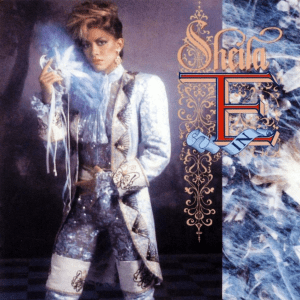
Their first collaboration was the superb B-side ‘Erotic City’, swiftly followed by Sheila’s debut album The Glamorous Life, a hit. But its follow-up,Sheila E In Romance 1600, was a far more expansive and experimental piece, even though recording sessions were squeezed in on days off during the Purple Rain Tour between December 1984 and January 1985.
Despite Sheila’s obvious musical pedigree, Romance 1600‘s liner notes and song credits are misleading – this is a Prince album in all but name. According to biographer Per Nilsen (and as listed at the ASCAP offices), he wrote all the tracks here bar one (kicking Latin/fusion instrumental ‘Merci For The Speed Of A Clown In Summer’) and played all instruments except drums, percussion and sax.
But lucky for us, Romance 1600 was recorded smack-bang in the middle of his golden period and features some of Prince’s finest performances as a musician. His guitar solos on ‘Dear Michelangelo’ and ‘A Love Bizarre’ are simply tremendous, the latter throwing in some ridiculous bass too.
But Sheila also brings out the best in him. There’s much more humour here than on his own albums of the period. She turns in some hilariously hammy vocal performances on ‘Sister Fate’, ‘Toy Box’ and dramatic ballad ‘Bedtime Story’. Sheila and Prince were having a lot of fun and you can hear the results. Sometimes the rushed nature of the recording shows, though – the mix is very murky and the album is short of a few memorable pop hooks.
Prince’s ‘movie’ concept was in full effect here. He was leaving behind the ‘street’ style of Vanity 6/Purple Rain/The Time and embracing a romantic, ‘Amadeus’-influenced image which also crossed over into The Family project and his Parade album.
Thinking of Romance 1600 as a movie also opened up the album musically, allowing Sheila and Prince to embrace jazz (‘Yellow’), fusion, wacky synth-pop (the title track), Latin and even Third Stream. This eclectic outlook was no doubt also influenced by his Revolution bandmates Wendy and Lisa.
Sheila E In Romance 1600 was a reasonable hit, going gold in the US and reaching #50 on the Billboard chart, no doubt helped by the success of the ‘Love Bizarre’ single (US #11). Sheila toured the US for the second time in two years.
She followed up Romance 1600 with a disappointingly bland self-titled album in 1987, which featured far less contribution from Prince. More successfully, she played some fantastic drums on the Sign ‘O’ The Times and Lovesexy tours.
Years before his huge hit ‘Ghostbusters’, Ray had played guitar on some great albums of the ’70s (Stevie’s Talking Book and Innervisions, Rufus/Chaka Khan’s Rags To Rufus, Harvey Mason’s Funk In A Mason Jar, Marvin’s I Want You, Leon Ware’s Musical Massage), not to mention sessions with the likes of Boz Scaggs, Barry White, Tina Turner, Herbie Hancock and Bill Withers.
He also enjoyed a few big hits as part of Raydio before going solo in ’82. Either side of ‘Ghostbusters’, he put out two interesting albums which are now released as a good-value two-fer by Cherry Red/Soulmusic.com.
’83’s Woman Out Of Control unleashes a kind of feminist funk with various tracks unashamedly taking the laydeez’ side in the battle of the sexes, creating something pretty original. ‘Electronic Lover’ and ‘Invasion’ also rock the kind of psych-synth-funk sound that Prince and his contemporaries were tapping into at the time.
‘85’s Sex And The Single Man, the post-‘Ghostbusters’ album, ups the stakes with a lot more fuzz-toned lead guitar and also some weird synth-pop fun on ‘Girls Are More Fun’ and ‘I’m A Dog’. ‘One Sided Love Affair’ is an amusingly-shameless ‘Hello’ rewrite and there’s some cracking Cameo-style funk/rock on the title track.
‘Men Have Feelings Too’ demonstrates more of his rhythm-guitar mastery. I was going to say that his playing sounds very Prince-influenced but it’s the other way round; check out this masterclass for the evidence. The albums were only minor hits – apparently Arista boss Clive Davis wasn’t blown away by their modest chart placings and was slow to return Parker Jr.’s call when contract-renewal time came around.
While it’s true that there’s nothing as immediate or hook-laden as ‘Ghostbusters’ on these two records, they’re definitely worth reappraising and make nice companion pieces to Miles Davis’s You’re Under Arrest, Cameo’s She’s Strange, Prince’s Purple Rain and The Time’s Ice Cream Castle. Ray’s still going strong too, playing festivals and turning up on the occasional session.
N.B. Parker Jr. has recently been subject to an out-of-court settlement regarding the similarity of ‘Ghostbusters’ to Huey Lewis And The News’ ‘I Need A New Drug’. Judge for yourself…
What are the greatest live albums in music history?
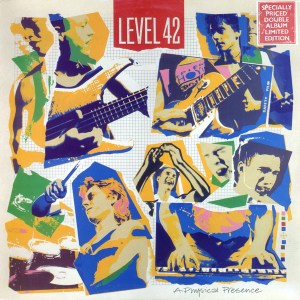
James Brown’s Live At The Apollo. Donny Hathaway’s Live and Bill Withers’ Live At Carnegie Hall might get a mention, but I would make a case for Level’s A Physical Presence too.
Quite simply, this album is the nearest a British band has ever come to the kind of effortless fusion of black music styles achieved by US supergroups such as Weather Report and Earth Wind & Fire. But Level 42 were always a far edgier proposition than those bands, mixing up the funk, world-class musicianship and jazz/rock with an almost punky intensity.
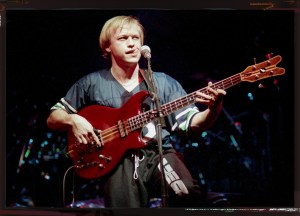
Mark King in 1985
Recorded in March 1985 at such suburban funk meccas as Golddiggers in Chippenham, The Coronet in Woolwich and The Hexagon in Reading, A Physical Presence showed off Level on the cusp of their mainstream pop breakthrough.
But you’d never know it. It’s hard to imagine any other British band before or since attempting the audacious fusion instrumentals ‘Foundation And Empire’ or ’88’.
Police-esque ‘Follow Me’ and driving ‘Chant Has Begun’ hinted at a new rockier direction which was quickly jettisoned when they got back into the studio for World Machine. Mark King’s vocals are punchy, distinct and soulful throughout.
Has there ever been a better British funk/R’n’B rhythm section than Mark King (bass) and Phil Gould (drums)? Bass players beware – this album features a succession of some of the most memorable and inventive B-lines in funk history. Try ‘Eyes Waterfalling’, ‘Kansas City Milkman’ and ‘Turn It On’ for starters.
Phil Gould’s drumming is a perfect combo of groove and chops, whilst somehow also retaining a ‘British’ sound, kind of a mixture of Bill Bruford and Billy Cobham. And keyboardist Mike Lindup gets through so much work that he sometimes sounds like he’s got four hands (with a real Lonnie Liston Smith influence on the Fender Rhodes), and 90% percent of his intricate playing is without the aid of a sequencer.
It’s hard to believe that only 18 months later, after recording commercial breakthroughs World Machine and Running In The Family, the classic Level line-up would splinter for good amidst touring pressures, musical differences and personal issues. But APP is a glorious snapshot of a golden summer and the pinnacle of surely the UK’s greatest ever jazz/funk/pop band.
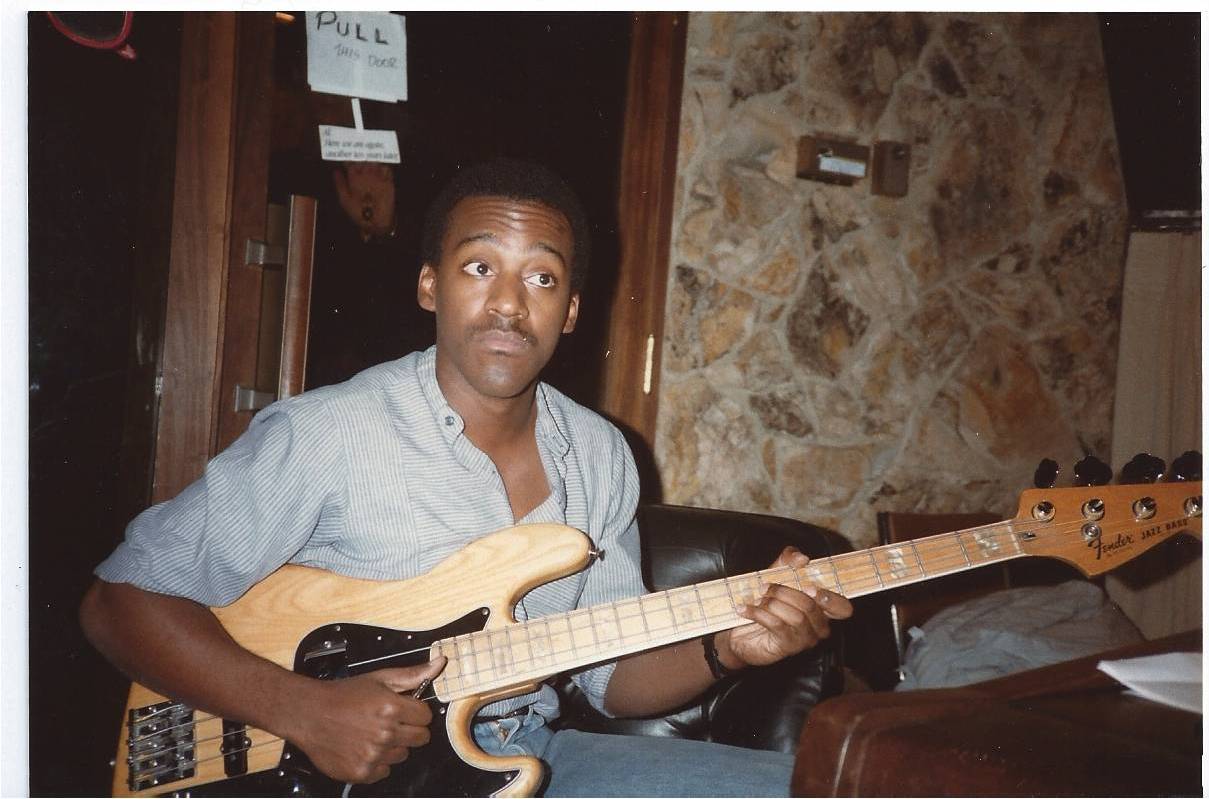
I first became aware of Marcus when I saw him playing bass with Miles Davis at the trumpeter’s Hammersmith Odeon ‘comeback’ gig in ’82.
He quickly became one of my bass heroes a few years later when I was bowled over by his contribution to Miles’ Star People album.
Marcus’s name came up again recently when I was talking to someone about great multi-instrumentalists. In the soul/funk/R’n’B world, obviously there’s Stevie, Prince, Lewis Taylor and Sly.
Marcus’s 1983 debut Suddenly almost puts him up there with that esteemed company too, though in the final analysis it suffers from a lack of top-quality material.
Marcus has put it on record that he was first inspired to play music by Michael Jackson and Stevie, and Suddenly was his first attempt to enter their world of quality soul/funk/R’n’B songwriting.
He’d certainly paid his dues for Warner Bros Records by 1983, producing, composing and/or playing bass with David Sanborn, Donald Fagen, Joe Sample, Roberta Flack, Grover Washington Jr. and Claus Ogerman, so a Warners solo debut was always on the cards.
You can hear elements of ZAPP, Gap Band, The Time and Cameo on Suddenly, and if Marcus doesn’t quite establish himself as a genuine ’80s funk contender, there are a myriad of great grooves and musical touches to enjoy.
He pretty much plays all instruments, getting in selected guests (drummers Harvey Mason and Yogi Horton, Vandross, Sanborn, Mike Mainieri) to add spice here and there.
By his own admission, Marcus is not a great singer, his voice rather light and uncertain, but his bass and keyboard playing, songwriting and arranging really save the day.
‘Lovin’ You’ is uplifting pop/funk with a classic bassline, while ‘Just What I Needed’ features some great Richard Tee-like, gospel-tinged piano from Marcus. And his piccolo bass solo on ‘Much Too Much’ had me checking the sleevenotes in vain for the presence of late great guitarist Eric Gale.
‘Just For You’ was previously recorded by David Sanborn on the classic Voyeur album, but here it gets a nice new vocal treatment.
It’s telling though that the closing instrumental ‘Could It Be You’ is by far the most successful track, featuring Miller’s fabulous fretless bass solo. It was later covered excellently by Dizzy Gillespie on his 1984 Closer To The Source album.
The Big Apple music scene is in a period of transition. New Wave and No Wave have been replaced by Mutant Disco and Punk/Funk, Madonna is planning her assault on the charts in dance studios and rehearsal rooms around Manhattan, major record labels are flirting with the harmolodic jazz/rock/funk of James Blood Ulmer, Miles Davis’s comeback is getting into its stride despite his continuing ill health and Hip-Hop is flourishing into a fully-fledged movement.
Meanwhile, Nile Rodgers is reaching a crossroads. Confidence is low; his band Chic have seemingly become passé (a very Chic word) with recent albums Tongue In Chic and Take It Off failing to set the charts alight. They are still seen as a disco act even though their music increasingly embraces jazz, funk, R’n’B and even early hip-hop.
The good news is that Rodgers has been given the green light to make his first solo album. But Adventures In The Land Of The Good Groove is not the record Chic fans are expecting from him. No female singers are featured (apart from a brief appearance by ex-Supremes/Labelle vocalist Sarah Dash) and the Chic rhythm section Bernard Edwards and Tony Thompson only appear on three tracks out of eight.
The album sounds far more stripped down than Chic, relying heavily on early drum machines, Rodgers’ guitar playing and his surprisingly effective, relatively downbeat vocals. Lyrically, the album focuses on debauched NYC nightlife rather than the faded glamour of the Chic aesthetic.
I loved this album from the day my dad played it to me in the mid-’80s. I came to it completely fresh; I’d never heard Chic before. But I possibly recognised something of Nile’s soundworld from Bowie’s Let’s Dance album which everyone dug.
Rodgers is almost the Thelonious Monk of funk, gregarious in his desire to entertain (to paraphrase Gary Giddins). He took the James Brown rhythm method and added jazz harmony and contemporary technology.
‘Rock Bottom’ puts dark lyrics to a burning funk/rock groove complete with one of Edwards’ finest basslines and a raucous Rodgers guitar solo that gives Stevie Ray Vaughan a run for his money (and pre-empts Vaughan’s playing on Let’s Dance).
‘My Love Song For You’ is the aforementioned duet with Sarah Dash, a classic Rodgers slow-burn ballad with jazzy chord changes, some almost Ellingtonian piano by Raymond Jones and a tantalising middle eight. The title track, ‘Yum Yum’, ‘Most Down’ and ‘Get Her Crazy’ are glorious Afro-funk chants with inventive back-up vocals by the Simms brothers and some typically slamming Rodgers guitar.
Adventures In The Land Of The Good Groove is a fascinating companion piece to Let’s Dance, though Rodgers claims in his book ‘Le Freak’ that on completion he immediately knew it was a ‘flop’, neither commercial nor innovative enough to make an impact. Bowie disagreed. Smash Hits magazine did too; they gave it a 10/10 review!
Certainly it may seem uncommercial compared to Chic smashes like ‘Good Times’ and ‘Le Freak’ but tracks like ‘Yum Yum’ and ‘Most Down’ surely wouldn’t have sounded out of place on the Black stations of the early ’80s that were playing Prince, The Time or Zapp.
Nile released one more solo album in the ’80s, the intermittently effective B-Movie Matinee, but it lacked the minimalist power of the underrated AITLOTGG. It’s long overdue a reassessment.