You know you’re doing something right when the boss takes an interest.
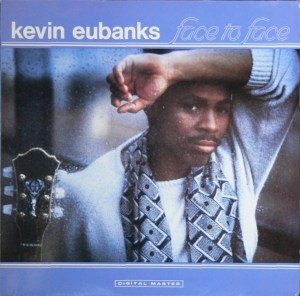
GRP Records was just coming into its own when label co-founder Dave Grusin co-produced, arranged and played keyboards on brilliant guitarist Kevin Eubanks’ fourth solo album Face To Face, released 40 years ago this month.
Part of the so-called Young Lions generation, Eubanks’ first major gig had been with Art Blakey. His playing was a turbo-charged fusion of Wes Montgomery, George Benson and John McLaughlin, and by 1986 he was a seriously hot property.
Face To Face remains probably his best solo album to date and one of GRP’s best too – but it’s still not on Spotify and bloody hard to find on CD… It apes the kinds of albums Verve and CTI were making in the 1960s with Montgomery and Benson, mainly jazz, Latin and pop covers with rich string arrangements and high production values.
But this one also benefits from some fantastic bass playing from Marcus Miller and Ron Carter (but hardly any drums – Buddy Williams is almost inaudible and the rhythmic energy comes from the percussion, guitar and bass).
As the 1980s progressed, mastering engineers were looking for new ways to push the bass front and centre in the mix, and here Miller obliges with one of the hottest slap tones ever committed to vinyl – the version of Stevie Wonder’s ‘Moments Aren’t Moments’ and title track are almost comical examples.
Grusin writes a new middle eight for the Bacharach/Bayer Sager classic ‘That’s What Friends Are For’, inspiring an absolutely brilliant Eubanks solo, while Carter and the guitarist duet beautifully on Charlie Parker’s ‘Relaxin’ At Camarillo’ and Montgomery’s ‘Trick Bag’.
Elsewhere the delicious version of Antonio Carlos Jobim’s ‘Wave’ may be its best cover version bar none. The three Eubanks originals are cool too, marrying his love of bebop, funk and McLaughlin. The mixture of his steel-string acoustic guitar and Miller’s bass is original and exciting.
Sadly Face To Face proved a bit of a false dawn in terms of Eubanks’ tenure on GRP and subsequent solo career, though his brief period on Blue Note in the 1990s has some fans. He also spent a long time on TV in Jay Leno’s ‘Tonight Show’ band, and guested fruitfully with artists like Dave Holland, Greg Osby and Will Downing.
But arguably his solo career has been hampered by a lack of memorable original compositions, not a problem on Face To Face. Happy birthday to one of the great guitar albums of the 1980s.
Continuing our look at some of the finest jazz/rock albums of the 1980s. You can find part 1 here.
Jaco Pastorius: Twins (1982)
A classic double album (an edited version was released as Invitation) recorded live in Japan just after the bass pioneer left Weather Report. Jaco’s brand of fusion took in jazz, Cuban, soul and R’n’B – no guitars here, but brilliant bass playing and powerful solos from Toots Thielemans, Lew Soloff, Jon Faddis and Bob Mintzer.
Frank Gambale: Live!(1989)
The Australian guitarist’s outrageous live debut was recorded at the Baked Potato in LA, and it finally showed just what he’s capable of – electrifying, original solos. His compositions are memorable too and there’s fantastic Latin/fusion drumming from Joey Heredia.
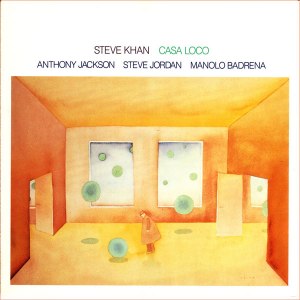
Steve Khan: Casa Loco (1983)
An album which still amazes musicians the world over. Arguably guitarist Khan, bassist Anthony Jackson, drummer Steve Jordan and percussionist Manolo Badrena have never done better work – that’s saying something considering who they’ve all played with.
Bill Bruford’s Earthworks: Dig? (1989)
Both of Bruford’s 1980s Earthworks albums were really good but this gets the nod due to Django Bates being given free reign, contributing superb keyboard solos, a cool reimagining of Petula Clark’s ‘Downtown’ and classic composition ‘Dancing On Frith Street’.
Paquito D’Rivera: Why Not! (1984)
An underrated album from the Cuban alto sax and clarinet star, also featuring Claudio Roditi on trumpet, Michel Camilo on keys and a wonderful performance from drummer Dave Weckl on the opening ‘Gdansk’.
Lyle Mays: Street Dreams(1988)
The Metheny Group keyboard player chucks in everything he knows on this big-budget project – ambient post-jazz, widescreen fuzak, big-band swing and Fagen-style fusion, and it’s all good. Some, like this writer, may also prefer the more red-blooded guitar playing of Bill Frisell to Metheny.
Pat Metheny Group: American Garage(1980)
No one is too sure if this came out in late 1979 or early 1980 but it’s this writer’s favourite Metheny album, though the guitarist himself seems to have almost disowned it. He loosens up and allows some rock and Steely Dan influences, driven along by Danny Gottlieb’s superb drums.
Level 42: A Physical Presence (1985)
A lot of it’s not strictly ‘fusion’, of course, but any album featuring such brilliant live versions of ‘Mr Pink’, ‘Foundation And Empire’ and ‘88’ has to make this list.
Mark King: Influences (1984)
The Level 42 mainman amazes with his 18-minute fusion classic ‘The Essential’, plus an eerily assured tribute to early Return To Forever called ‘There Is A Dog’. Plus he played almost everything on it.
John Patitucci: On The Corner (1989)
Both of the bassist’s 1980s solo albums were good but this gets the nod courtesy of the sheer variety of grooves from drummers Vinnie Colaiuta, Dave Weckl and Alex Acuna, and the leader’s exciting solos and excellent compositions, all memorable.
John Abercrombie: Getting There (1988)
A rare excursion into jazz/rock for ECM Records, the guitarist’s most dynamic ‘80s album featured Michael Brecker on sax, a hefty ‘rock’ mix courtesy of James Farber and arguably drummer Peter Erskine’s heaviest recorded performance to date.
Joni Mitchell: Wild Things Run Fast (1983)
She littered the album with influences from the Police but the main driver was the brilliant jazz/rock musicianship of bassist Larry Klein, drummers Colaiuta and John Guerin, saxist Wayne Shorter and keys player Russell Ferrante. ‘Moon At The Window’, ‘Be Cool’, ‘Ladies Man’ and ‘You’re So Square’ smuggled fusion into the album charts.
Miles Davis: Star People (1983)
Blues, blazing jazz/rock, chromatic funk and general weirdness combine for arguably Miles’s most exciting album of the decade, featuring all-time great guitar from Mike Stern and John Scofield.
John Martyn: Glorious Fool (1981)
John’s music was now bringing in influences from Weather Report, Latin and spiritual jazz, and Phil Collins, keyboard player Max Middleton, percussionist Danny Cummings and bassist Alan Thompson made for a fantastic rhythm section.
Bruford: Gradually Going Tornado (1980)
Any album featuring ‘Gothic 17’, ‘Land’s End’, ‘Joe Frazier’ and ‘Palewell Park’ has to be on this list. Epochal work from bassist Jeff Berlin, keys man Dave Stewart and the drummer himself.
Bubbling under:
Terje Rypdal: The Singles Collection (1988)
Power Tools: Strange Meeting (1987)
Stanley Clarke: If This Bass Could Only Talk (1988)
Terri Lyne Carrington: Real Life Story (1989)
Chick Corea Elektric Band: Eye Of The Beholder (1988)
Bill Frisell: Before We Were Born (1989) Loose Tubes (1984) Players (Jeff Berlin, Scott Henderson, Steve Smith, T Lavitz) (1986)
(PS. If you like the sound of any of these albums, please consider buying them on physical formats to best support the artists and their families.)
1980s jazz/rock generally gets the side-eye these days.
But it wasn’t all the Chick Corea Elektric Band prancing around the stage in tracksuits or pitiful WAVE-style smooth jazz.
The 1970s jazz/rock pioneers were mostly going strong and if some were too tempted by synths and drum machines, the best music was made by sticking pretty rigorously to the tried-and-tested real drums/bass/guitar/keys lineup favoured by Miles, Weather Report, Return To Forever et al.
So here’s a selection of 1980s jazz/rock albums that have consistently gripped movingtheriver, most of which he queued up to buy at the HMV or Virgin Megastore, or found in an Our Price bargain bin. (These are not proggy or funky. So no Herbie, Brecker Brothers, David Sanborn or David Torn, but there are elements of R’n’B/Latin/soul/whatever mixed in with the jazz).
Bireli Lagrene: Foreign Affairs (1988)
Just 21 years old when he recorded it with producer Steve Khan, the French guitarist’s second Blue Note album is a cohesive gem and massive improvement on the debut, with terrific contributions from keyboardist Koono and drummer Dennis Chambers.
Ornette Coleman: Virgin Beauty (1988)
One of the most ‘accessible’ albums of the master’s career, with memorable melodies, a brilliantly expressive bassist (Al McDowell) and some decidedly odd guest appearances from Jerry Garcia.
Tribal Tech (Scott Henderson/Gary Willis): Nomad(1988)
Recorded in April 1988 but not released until early 1990, guitarists were rightly wowed by Henderson’s brilliance, a mixture of Michael Brecker, Allan Holdsworth and Stevie Ray Vaughan, while the rhythm section is groovy and propulsive and both Henderson and Willis’s compositions are excellent. And ‘Tunnel Vision’ may feature the perfect guitar solo…
John McLaughlin: Mahavishnu (1984)
OK there are some question marks in the keyboard and sax departments, and a few mediocre tracks, but Billy Cobham has rarely sounded better and John contributes three or four classic compositions and a few brilliant solos to this reunion album of sorts.
Marc Johnson’s Bass Desires: Second Sight (1987)
Wonderful interplay between guitarists John Scofield and Bill Frisell, plus some classic compositions including Scofield’s surf-rock-meets-jazz ‘Twister’, Frisell’s Monk-like ‘1951’ and Johnson’s moving ‘Hymn For Her’.
Larry Carlton: Last Nite (1987)
Guitarists of all stripes were blown away by Carlton’s playing in the 1980s, and here’s the best evidence, captured live at LA’s Baked Potato club with Alex Acuna, Abe Laboriel and JR Robinson.
Human Chain: Cashin’ In (1988)
This Brit jazz/rock classic, released on EG Records, had elements of the Canterbury sound, West Coast cool jazz, English folk music and 1980s Weather Report, featuring Django Bates’ fantastic keys and French horn and some weirdly impressive guitar and fretless bass from Stuart Hall (who he?). Also injects a healthy dose of much-needed humour to the ’80s jazz world.
Hiram Bullock: Give It What U Got (1988)
All the fun of the fair from this gifted but troubled guitarist: raunchy funk/rock, instrumental Steely Dan, Brecker Brothers horns, classic fusion and an Al Jarreau guest appearance on a Sam Cooke tune, but all shot through with jazz chords and Hiram’s lyrical playing.
Ronald Shannon Jackson: Mandance (1982)
Ornette-style harmolodics and Mingus-like ensemble work meet NYC punk-jazz on the drummer’s intriguing and powerful album, recorded live in the studio, featuring future Living Colour axeman Vernon Reid.
Weather Report: Sportin’ Life(1985)
It was a toss-up between this and Night Passage, both classics, but this gets the nod courtesy of the newly-minted rhythm section of Omar Hakim and Victor Bailey, plus a few classic Wayne Shorter tunes including ‘Face On The Barroom Floor’ which reportedly Joni Mitchell was particularly smitten by.
Wayne Shorter: Atlantis (1985)
Wayne again, fronting this fascinating, complex song-cycle featuring Alex Acuna on drums and Joni’s husband Larry Klein on bass. Takes some time to digest, but like a good wine gets better every year.
Allan Holdsworth: Secrets(1989)
A toss-up between this and Metal Fatigue, this gets in because of his delicious guitar tone and the inspired contributions of drummer Vinnie Colaiuta – ‘City Nights’, ‘Spokes’, ‘Peril Premonition’ and ‘Joshua’ are musical landmarks. Fiery, exciting, unmissable.
Steps Ahead: Modern Times (1984)
Messrs Brecker, Erskine, Mainieri, Gomez and Bernhardt were embracing some new technology but they never let it overshadow the mostly excellent compositions with telling solos, particularly from Brecker.
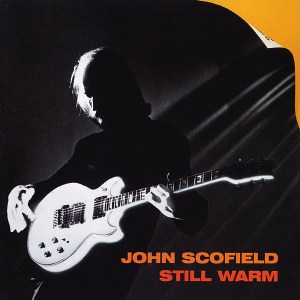
John Scofield: Still Warm (1985)
Take your pick between this, Blue Matter and Loud Jazz, all fantastic pieces of work, but Still Warm gets the nod courtesy of its dynamite rhythm section (Darryl Jones and Omar Hakim) and arguably John’s best writing of the ’80s.
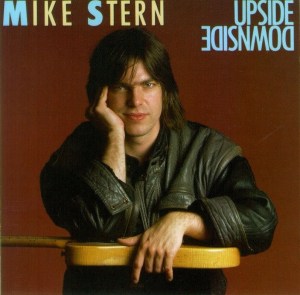
Mike Stern: Upside Downside (1986)
Produced by Hiram Bullock and featuring a crack band including Dave Weckl on drums, it showcases Stern’s finest/fieriest playing on record to date and also one of Jaco Pastorius’s last notable appearances. Still the best Stern solo album and quite extreme in its own way.
(If you’re new to any of these albums and they float your boat, please consider buying physical copies to best support the artists and their families.)
Anthony during the recording session for Steve Khan’s ‘Eyewitness’ in 1981. Photo by David Tan
The brilliant Anthony Jackson, who has died aged 73, was a vital part of the early-1970s electric bass revolution, but arguably never got the same attention as contemporaries Stanley Clarke, Jaco Pastorius, Bootsy Collins, Louis Johnson and Alphonso Johnson (Chuck Rainey, Steve Swallow and Larry Graham are a bit older).
In a music world beset by fly-by-night chancers and one-trick ponies, he was a player of principle, something like the Allan Holdsworth of bass.
It was Anthony’s playing on Steve Khan’s ‘Guy Lafleur’ that first completely hooked movingtheriver – I remember thinking: who the hell is THAT?!
In two major ways, he changed the instrument as much as Jaco (though, in later years, pointedly called himself a ‘guitarist who plays a variation called the contrabass guitar’).
First there was his stretching of the instrument’s range below the standard low E (inspired by his love of Jimmy Smith’s Hammond organ playing) and above the standard top G, via his pioneering use of six-string basses, which he started playing exclusively in 1982 (Steve Khan thinks his superb ‘Casa Loco’ may have featured the debut of Anthony’s six-string).
Before that, Jackson had regularly detuned the low E string on his trusty Fender Precision, producing strikingly rich, deep timbres on work with Grover Washington Jr., Quincy Jones, Steely Dan, Chaka Khan and Earl Klugh, amongst hundreds of others (he prided himself on playing all kinds of music, working with everyone from Judy Collins and Peter, Paul & Mary to George Benson and Will Downing).
Then there was his use of effects, particularly the trademark flanger, often accompanied by the use of a pick, best heard on The O’Jays’ ‘For The Love Of Money’ and ‘Give The People What They Want’, and on his work with Al Di Meola. Oh, and then there’s a third factor – he ALWAYS sat down whilst playing, claiming that sitting down and wearing no strap was the way to go for bassists.
Jackson started playing music after seeing The Beatles on The Ed Sullivan Show in 1964, then became obsessed with other Brit invasion bands, Motown (via James Jamerson) and Jefferson Airplane’s Jack Casady, plus classical composers Olivier Messiaen and Paul Hindemith.
Regarding the latter two, their influence on Anthony’s playing is particularly noticeable on the live version of Khan’s ‘The Suitcase’, from 1994. Steve described this brilliant performance on his website.
One of Jackson’s first major gigs was in 1973, playing for a year in Buddy Rich’s sextet. He later called the drummer the only bona fide genius with which he had played. But then Anthony loved drummers. He enjoyed brilliant hook-ups with Steve Gadd, Buddy Williams, Steve Jordan, Harvey Mason, Simon Phillips, Steve Ferrone, Yogi Horton, Earl Young and many others.
But he lost work by refusing to ‘slap’ his bass during the disco era, and also very rarely solo’d unless he had something specific to say (to Steve Khan’s great annoyance!). Some of these concepts were laid down in his famously stern columns for Bass Player magazine.
But even Jackson wasn’t immune to some of the ‘proclivities’ of other great artists – for example, his performance was wiped from the title track of Steely Dan’s Gaucho! (Chuck Rainey’s pass got the nod instead.) But he played epochal stuff on ‘Glamour Profession’ and ‘My Rival’ from the same album, and excelled on Donald Fagen’s ‘IGY’ and ‘Ruby Baby’.
He was also fiercely loyal to artists he respected, enjoying long associations with Hiromi, Michel Camilo, Al Di Meola, Sadao Watanabe, Lee Ritenour, Grover Washington, Chick Corea, Khan and Michel Petrucciani.
In one of his rare interviews, he expressed a wish to play with Phil Collins, Ringo and Charlie Watts. Sadly it seems he didn’t achieve those ambitions. Farewell to a true pioneer and personal musical hero. Check out this playlist which brings together movingtheriver’s favourite Anthony performances.
Anthony Claiborne Jackson (23 June 1952 – 19 October 2025)
Anthony Braxton has one of the largest discographies in music history, encompassing a huge variety of styles and formats: operas, pieces for two pianos, orchestras, solo saxophone, 100 tubas, jazz quartets, ‘found’ objects and many more.
The saxophonist/composer/teacher turned 80 in June, and has also just been inducted into the illustrious DownBeat Hall of Fame.
This writer has long championed ‘Forces In Motion’, Graham Lock’s excellent book about Braxton’s November 1985 tour of England, and a large portion of that tour can now be heard on a thrilling digital box set Quartet (England) 1985, for which Lock has provided new liner notes (he also recorded all the material on a portable cassette player).
The quartet, which comprised Braxton on various reed instruments, Marilyn Crispell on piano, Mark Dresser on double bass and Gerry Hemingway on percussion, was one of Braxton’s most active bands in the ’80s, but didn’t record in the studio until 1991.
Quartet (England) 1985 presents four complete concerts from Sheffield, Leicester, Bristol and Southampton (the London concert was officially recorded and broadcast by BBC radio). The original mono cassette recordings, captured by Lock as references for his book, have been restored by engineer Christopher Trent.
The package also features bonus recordings of the quartet playing John Coltrane’s ‘After the Rain’ and Miles Davis’s ‘Four’, plus soundcheck recordings of ‘All The Things You Are’ and ‘On Green Dolphin Street’. There are also previously unseen photos taken during the tour and a full list of the compositions played (the set was different every night).
Braxton (in borrowed coat), Dresser, Crispell and Hemingway at Stonehenge, 22 November 1985. Photo by Nick White
There’s no getting away from the fact that these are wild and woolly mono recordings, but pleased to report that Trent has done a superb job of cleaning up the tapes and the audio quality doesn’t hamper the listening experience one bit.
The music varies between good and excellent. ‘Free jazz’ barely covers it – the material is actually generally meticulously composed and arranged (featuring memorable, catchy melodies), though there are improvised sections which mainly serve as connecting interludes.
If you want to hear a collision between Sonic Youth, Ornette Coleman and Gyorgy Ligeti, enlist here. It’s a no-cliché zone, guaranteed to annoy the neighbours, and a valuable detox from the mainly safe, secure sounds of today. Quartet (England) 1985 is highly recommended and a fine 40th anniversary celebration of the 1985 tour.
(Postscript: for an impassioned defence of ‘spontaneous improvisation’, check out Stewart Lee’s appearance on the BBC’s ‘Great Lives’ discussing guitarist Derek Bailey.)
We’ve looked before at the celebrated 1980s rock and pop acts whose output somehow leaves this writer cold.
But how about the decade’s jazz, soul and fusion artists who always seem to get the props but inexplicably fail to float movingtheriver’s boat?
Rick James
Frequently mentioned in dispatches as a funk pioneer and influence on Prince etc. (and also mentor of Teena Marie?) but for this listener his music is generally coarse and one-dimensional, and his voice nothing to write home about.
Bill Connors
The guitarist made some excellent music for ECM Records in the 1970s both as solo artist and sideman (Jan Garbarek/Stanley Clarke/Return To Forever/Julian Priester etc.) but his 1980s work disappoints. He apparently developed a fixation on Allan Holdsworth’s sound/technique which hampered his progress. Somewhat regrouped in the 1990s and new millennium though.
Kazumi Watanabe
The guitarist employed some fantastic musicians (Jeff Berlin, Steve Jordan, Marcus Miller, Bill Bruford) in the 1980s but, outside of one or two half-decent riffs, seemingly failed to generate much memorable music.
Stanley Jordan
Bassist Anthony Jackson called him a ‘genius’, and he should know, but technical feats notwithstanding (he famously played the guitar exclusively by ‘tapping’ the strings with the fingers of both hands), he seemingly failed to develop his music beyond smoochy smooth jazz during the 1980s.
Chick Corea
Obviously a genius-level musical brain and maker of some memorable material in the 1970s but generally his ‘80s music and stage presentation was a bit embarrassing (though I have a penchant for the Light Years and Eye Of The Beholderalbums). A great mentor though (Dave Weckl, John Patitucci, Frank Gambale, Scott Henderson etc.).
Al Di Meola
See above.
Howard Hewett
Owner of some fantastic pipes and a stellar career co-fronting Shalamar, but for this writer his solo career generally seems like over-produced, underwhelming mush, and he doesn’t seem much of a songwriter. (He did an unforgettable take on Marvin Gaye in the 1990s though.)
Narada Michael Walden
One of the great drummers (Jeff Beck, Weather Report, McLaughlin etc.) and producers (Whitney, Aretha etc.) ended the 1980s with a half-decent album (Divine Emotions) but, to these ears, the rest of the decade’s solo career was unmemorable disco/funk…
Brand X
Often touted as a kind of British Weather Report – fugedaboudit. Their musicianship was competent at best and their compositions somehow didn’t stick in the brain, despite the occasional drumming contributions of a Mr P Collins. Bill Bruford did it much better with a far superior bunch of players (Jeff Berlin, Allan Holdsworth, Jon Clark, Dave Stewart). See also: Pierre Moerlen’s Gong.
Pat Metheny
This writer dug his stereo-chorus sound and musical approach at the dawn of the decade (80/81, American Garage, Travels) but, as the 1980s went on, he seemed to embrace a mushy new-age sensibility and indistinct jazz guitar sound that generally underwhelmed. And his stage presentation is one of the least savoury in music history… (Gary Giddins: ‘intoning plush melodies with excessive sobriety, as though the notes were transmitted directly from God…’). Liked his collaborations with Ornette Coleman and Bowie though.
Jean-Luc Ponty
Valued sideman for ’70s behemoths (Zappa, McLaughlin) but his solo career has generally disappointed this writer (but generally not other jazz/rock fans, who inexplicably seem to love his stuff…), outside of the fact that he doesn’t seem to possess a particularly pleasant violin tone with an annoying penchant for the phaser pedal. He employed some superb players in the ‘80s (Scott Henderson, Rayford Griffin, Baron Browne etc.) but never convinced that he’s much of a composer. Always quite liked this though…
You could put forward a pretty good case that John Scofield was THE guitarist of the 1980s.
Probably best known for his incendiary playing in Miles Davis’s band between 1982 and 1985, he also enjoyed a distinguished solo career.
Whilst focusing on straightahead jazz during the early part of the decade, his stellar ‘fusion’ period between 1984 and 1988 – encompassing classic albums Electric Outlet, Still Warm, Blue Matter, Pick Hits Live and Loud Jazz – featured excellent original compositions and formidable players such as David Sanborn, Don Grolnick, Omar Hakim, Darryl Jones, Dennis Chambers, Hiram Bullock and George Duke.
In the meantime Sco was much in demand as a sideman, playing with everyone from Terri Lyne Carrington to Tommy Smith (this playlist gathers some of his greatest music of the 1980s) whilst also teaming up with fellow guitarist Bill Frisell, drummer Peter Erskine and bassist Marc Johnson in the latter’s Bass Desires project that produced two classic albums on ECM Records: Bass Desires and Second Sight.
Immediately recognisable with his chorus/overdrive sound and molten, legato style – always informed by the blues – Scofield’s solo career has since gone from strength, and we now find him ensconced in a highly productive spell on ECM, his latest album being Uncle John’s Band.
movingtheriver caught up with John to talk about his wonderful 1980s as he prepared for a European tour with keyboardist John Medeski – he’s ever the road warrior and seems full of energy and good humour.
MTR: I’d love to know a little about how/when you signed with Gramavision Records, and did you consider other options for your mid-‘80s solo career such as ECM?
JS: I signed with Gramavision shortly before I recorded Electric Outlet. They were very interested and made us a good deal when no one else had contacted me. After I met (ECM founder/producer) Manfred Eicher at the Bass Desires recording session he expressed interest but I had already signed a multi-record contract with Gramavision. After that I stayed with other New York-based companies (Blue Note and Verve) because I met those people here at home and they were major international labels. I’m quite happy now that I’ve found a home at ECM that is aligned with my current musical direction.
Drummer Steve Jordan plays some wonderful stuff on Electric Outlet – was he overdubbed at the end after you’d tracked everything with a drum machine?
Yes, exactly. I had bought a Roland drum machine and used it to make a four-track demo at home with me playing guitars and bass. I recreated that in the studio and had Steve overdub on all the tunes. He was incredible and nailed them so quickly. We’d played together a bit before – he was on my Who’s Who album in 1978.
I’m fascinated by the work you did with saxophonist George Adams during the 1980s, especially More Sightings (1984) – can you tell me how that came about?
I had played with George in New York on gigs with the Gil Evans Orchestra and then did a tour and album as a guest with the George Adams/Don Pullen band. Then George wanted to do the tour with Hannibal Marvin Peterson. They invited me and we ended up recording a live show in Zürich. I loved George’s playing and we were friendly. I even got him to come in to record with Miles for Columbia in 1983, but it seems that that recording session was lost somehow. I believe it was at The Hit Factory on Broadway. When they were putting together some CBS tapes for reissue, I was told by Michael Cuscuna that they didn’t find anything from that session… That’s all I know. It was Miles‘s band but with George on saxophone. (Adams is understood to have guested with Miles’s band in the studio on 16 June 1983 and also in concert at the Avery Fisher Hall in NYC on 26 June 1983, and was also part of the big band which played with Miles at Montreux in 1991 – Ed.)
Is it true that Kenny Kirkland was supposed to play keyboards on Still Warm but didn’t show at the last minute? And please tell me how the fabulous Omar Hakim came to play on the album.
Yes, Kenny was a friend and I was lucky enough to get to play with him a bunch, but somehow he didn’t show up at rehearsal so I asked Don Grolnick. I think Kenny just had his dates mixed up maybe? I’m not sure. It was a real loss that he died so young. Omar and Darryl Jones were playing with Sting at that time and I knew Omar although I had never played with him but I thought that he and Darryl could really lock it in. They sounded fantastic together.
So was Still Warm recorded just after you left Miles?
I think it was before the last tour. The last stuff I did with Miles was later in the summer in Europe and then Japan.
How much rehearsal time did you get with the bands in general for Still/Blue/Loud? Or did you give the band demos to learn in advance? Because a few of these compositions are treacherous, I’m thinking of stuff like ‘Trim’ and ‘Loud Jazz’ – how did Dennis learn them (he famously doesn’t read music – Ed.)?
For Still Warm, I think we probably had one rehearsal, then one in the studio. I think I made demos of the tunes to give everybody, but I can’t remember. By Blue Matter and Loud Jazzwe were a working band. I had been playing some of the Blue Matter songs with a different keyboardist and drummer along with Gary Grainger. Gary recommended Dennis and I guess he learned the songs at rehearsal. Maybe I made demos… I just remember Dennis trying a go-go beat on ‘Blue Matter’ which I hadn’t tried before. I think I wrote that song just before the session and had never played it live. Then we played a week at Fat Tuesday before going into the studio with Dennis and Mitch Forman. For Loud Jazz, we rehearsed but also played the tunes live on tour before the recording.
Regarding producer Steve Swallow’s role, did he select material? The albums have stood the test of time so well because they’re generally free of 1980s production clichés.
Steve has been a friend and mentor to me since the ‘70s. He was interested in production and multi-track recording and I knew he would be great at it. Although he didn’t select the material, he probably helped me with selecting my own tunes. He was really involved in mixing and had suggestions for the arrangements. Because Gramavision had their own studios, we were allowed to mix for many hours and treated mixing more like we would for a pop record. We were really lucky to have the great engineer Joe Ferla, to whom we deferred for many of the mix ideas. Along with Steve, he was responsible for the sound.
Can you tell me a bit more about the tune ‘Gil B643’ – presumably it’s a tribute to Gil Evans? And was the title at all influenced by the movie ‘THX 1138’?
B643 was Gil‘s apartment number! We lived at the same building in Manhattan.
I’d love to know a bit more about ‘Picks And Pans’ and its 6/8 feel, it strikes me that it’s a very influential tune in ‘fusion’ but was it influenced by Joe Zawinul’s ‘The Juggler’ (from Weather Report’s Heavy Weather)?
I liked Joe’s tune but I don’t think I got the beat especially from that…but there were other examples of that kind of beat. Probably lots of them. Maybe it first came from Afro-Cuban music like Mongo Santamaria’s ‘Afro Blue’. Or you can take a jazz waltz and just put a backbeat in there!
Which is your favourite of the two terrific Bass Desires albums and why?
I can’t say that I really have a favourite, but I just remember the chemistry for the first record was really exciting and it was great when we realized we could play together and that the group had a different sound, largely because of Bill Frisell and his unique approach. Also the sound with the two of our styles working together. That’s not to take anything from Marc and Peter, who really contributed so much and brought in material and if it weren’t for Marc having the idea of putting us all together, it would never have happened. I remember we played some gigs together before we went in the studio as well as rehearsing. I think we played a strange cabaret club in New York City. I can’t remember the name of the place and we probably also played a gig in Boston as well before we went into the studio with Manfred Eicher.
How did Dennis Chambers and Gary Grainger come onboard for the Blue Matter band – did you headhunt them, did they audition, or a bit of both?
I was looking for an electric bass player and my friend, the keyboard player Marc Copland, recommended Gary who he had played with in Washington DC. He said Gary could play anything on electric bass and it turned out he was absolutely correct. I then played with Gary in another configuration and he recommended Dennis. Gary and Dennis grew up together in Baltimore and were old friends. I had heard about Dennis with The P-Funk All Stars and was so surprised to learn that he was looking to play more jazz/fusion. Actually, Darryl Jones had played me a great board tape and said, ‘Isn’t this drummer fantastic?’ But we didn’t know who it was. I found out later that it was Dennis so I was a fan already even though I didn’t know it!
Hiram Bullock is an inspired rhythm-guitar choice on Blue Matter – was he a Steve Swallow recommendation?
No, I knew Hiram was great. I knew him from the New York scene and we were friends. I wanted rhythm guitar on that one track and I thought he would do a better job than I did – I think he did.
Was ‘Blue Matter’ influenced by Miles’s ‘Tutu’ (composed by Marcus Miller)?
I just had a generic triplet-ish backbeat in mind. It had no relation to ‘Tutu’ – not at all. ‘Tutu’ sounds a bit like (Burt Bacharach tune) ‘The Look Of Love’, right?!
How did you achieve the final minute of ‘Time Marches On’ where you solo over that ‘drone’ – was it a slowed down tape loop?
No, we just did it in real time.
I’d love to know your favourite guitarists of the 1980s, any genre…
Mainly I liked the jazz guys Wes Montgomery, Jim Hall, George Benson, Pat Martino. But I always loved the blues guys starting with Hendrix and Clapton back in the ’60s, plus Otis Rush, Albert King and BB King. I always admired my contemporaries Metheny, Stern, Frisell, Abercrombie, Mick Goodrick… I went in the fusion direction because of my experience with Miles. If it wasn’t for him, I probably would’ve been just playing bebop and giving guitar lessons!
The only time I saw the Blue Matter band in London was a really weird but brilliant gig in the East End in summer 1987 I think, maybe it was called the Mile End Theatre? Do you remember that? And in general do you have good memories of touring the UK and Europe?
Was that the Half Moon Theatre? I’ll never forget the gig. The late John Cumming brought us to London and I played many gigs subsequently for him. Maybe it was my first one in London as a leader? Not sure? That band was so strong. We really had some success in UK/Europe in those days.
Did Miles ever give you feedback on your 1980s solo career, or did you ever seek it out?!
I know he liked my tunes because I wrote ‘You’re Under Arrest’ for him and gave him a demo of a bunch of other stuff, some of which ended up on my records. He said he was gonna record everything but then when I quit the band in order to go out on tour with Blue Matter, I didn’t get a chance to do any of that with Miles. He had moved on to Tutu. I remember I played him some of Blue Matter for him once and he was really blown away by Dennis’s playing…
Finally, how do you look back on your 1980s career in general? Was it a great era for guitar-based music?
It was an incredible time. It was great because of getting to play with Miles and all the exposure it got me, and then starting my own career, playing funk/jazz with those guys. I was so influenced by Miles and his direction in the ‘80s. But, for me, Weather Report and Herbie’s Head Hunters were the greatest. I think it was a really good era for guitar when you think of Holdsworth, Stern, Metheny, Robben Ford and so many more. And of course the classic rockers like Clapton and Beck were around. Pop music in general had some pretty hot-shot guitar stuff in there, and funk was really everywhere. Thanks to Sly…
Thanks John and good luck on the European tour…
John Scofield at the Cape Town Jazz Festival, 2003. Photo by William Ellis
Arguably no guitarist has stepped into Allan Holdsworth’s shoes since the Yorkshireman’s sad death in 2017 – hardly surprising since he was one of the greatest, most original voices on the instrument.
But if anyone can get close to recapturing Holdsworth’s compositional magic, it’s keyboard player Steve Hunt who toured/recorded with the guitarist between 1988 and 1995 and wrote two bona fide Allan classics – ‘Dodgy Boat’ and ‘Joshua’.
Hunt’s new album Changes features guitarist Tim Miller and three key Holdsworth collaborators: drummers Chad Wackerman and Gary Husband, plus bassist Jimmy Johnson. It’s a feast of interesting chord voicings and strong melodic statements. It doesn’t hurt that Miller is clearly a devotee of Holdsworth, a fluid, elegant player with a similar tone and legato approach, but obviously way off the unpredictable, effervescent brilliance of Allan. No shame in that…
This is heavy, intricate, epic music, decidedly nearer the prog/rock end of fusion than the jazz. Opener ‘Falling’ is a superb composition with lots of Holdsworth chord voicings, interesting modulations and a memorable melody. ‘Sevens’ seems inspired by Allan’s ‘The Un Merry Go Round’, with another great melody and beguiling ‘add-9’ modal flavour, plus a classic Husband drum solo also echoing that Holdsworth piece.
The title track is a moving, melancholy solo Hunt piece performed on various synths, while ‘Inverted’ features some ingenious chord voicings and a superb Moog solo from the composer. ‘Emergence’ is catchy with a lovely crisscrossing feel alternating between 4/4 and 6/8 time, while the closing ‘Next’ may be the most Holdsworth-ish melody of the whole album (and foregrounding a strong Joe Zawinul flavour during the solo section).
There are a few minor gripes – Changes has a slightly ‘whooshy’/over-compressed quality, and the drummers occasionally sound similar, never a problem when they shared studios with Holdsworth during the late 1980s and 1990s. And Miller’s two compositions – ‘Aerial Route’ and ‘Chrysalis’ – are less essential, lacking Hunt’s melodic sense, though the former tune has a brilliant Johnson bass solo which explores every inch of the instrument.
But overall this is a really strong, cohesive, consistent album, and this writer’s favourite ‘fusion’ record since John McLaughlin’s Is That So? from 2019. It’s also essential listening for fans of Holdsworth, McLaughlin, Husband and Wackerman.
One of the unexpected treats of last year was a new – and excellent – album from the Sun Ra Arkestra: Lights On A Satellite.
If you’re looking for an antidote to musical torpor, this could well be it. It draws on free jazz, classic big-band swing, spiritual jazz, gospel and light funk to create one of the most enjoyable collections of 2024.
Led by 100-year-old sax titan Marshall Allen, the Arkestra – celebrating the compositions of late, avant-garde legend Sun Ra, with a few other surprises thrown in – gathered at New York’s Power Station on 16 June 2024 under the jurisdiction of legendary engineer James Farber.
Notice is served by spellbinding opening title track which takes a simple chord sequence and then blows it to bits with a series of coruscating solos. One is then wrongfooted by the superbly played ‘traditional’ big-band melodies of ‘Dorothy’s Dance’ and ‘Big John’s Special’.
Vocals appear from time to time, most notably on the seriously strange cover of ‘Holiday For Strings’. Instrumentation frequently surprises, with snatches of harp, synth, violin and electric guitar sliding into the mix on occasion, such as on the wonderful ‘Tapestry From An Android’.
It is possible to stream the album but it’s worth forking out for the sumptuous gatefold CD or vinyl versions which come with a long essay and some excellent photos. And hey, while you’re at it, check out this excellent Don Letts-directed BBC doc about the remarkable Sun Ra. The first few minutes are worth the price of admission alone.
Pop musicians make comebacks all the time – in jazz or jazz/rock, it’s almost unheard of.
Reading King Crimson/Yes/Genesis/Earthworks drum legend Bill Bruford’s fine autobiography, there was no doubt he’d had his fill of the music business when he officially retired from performance on 1 January 2009 (his last headlining gig took place the previous July).
Away from the kit, in recent years he’s achieved a PhD from the University of Surrey, curated an excellent YouTube channel and released the occasional reissue or compilation, the latest of which is The Best of Bill Bruford.
But, as they say in sporting circles, you’re a long time retired. So it’s thrilling to report that Bruford is making tentative steps back to public performance – in a recent interview he described his return to playing as ‘explosive, unexpected, and very sudden’.
He turned up at the John Wetton tribute gig last year, performing ‘Let’s Stick Together’ alongside Phil Manzanera and Chris Difford, and now he’s joined up with his old drum tech, German ex-pat guitarist Pete Roth, plus bassist (usually on acoustic but here on electric) Mike Pratt, for some low-key trio gigs.
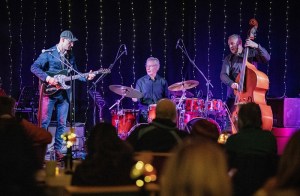
His recent show at the 606 was the busiest your correspondent had seen Chelsea’s treasured jazz club for years. Roth’s website describes his music as ‘jazz without borders’, and it’s a pretty good summary – they generally avoid fusion clichés like the plague, sounding more like John Abercrombie’s organ trio than anything Bruford recorded with Allan Holdsworth.
His kit was a return to his youth – two tom-toms, angled snare, two cymbals. And he still has that prodigious, propulsive technique on the hi-hats and ride cymbal, even if his snare drum no longer particularly has that distinctive ‘clang’.
‘Billie’s Bounce’ featured Bruford’s trademark figures between the tom-toms and snare drum, and Roth’s organ patch and octave pedal were a novel touch. ‘How Insensitive’ developed from a freeform rubato opening into an Abercrombie-esque mood-jazz piece, though Pratt’s strident bass seemed a little out of place.
‘If Summer Had Its Ghosts’, first recorded by Bruford with Eddie Gomez and Ralph Towner, meshed odd-time fun with the blues, Roth’s guitar at its more Scofield-like. ‘Summertime’ came with a tricky vamp which Pratt and Roth rushed somewhat – never a problem for Bruford, while a section from Dvořák’s Symphony No. 9 was a slowburn success. Meanwhile band composition ‘Trio of Five’ (or was it ‘Fun’?) was another attractive if a little harmonically inert, vamp-based piece in their favourite 5/4.
Though there were times when Bruford seems to have lost a little of the fluidity of old, it seems churlish to judge a performance thus when the performer and loyal crowd are having so much fun.
The trio play at the Oxford Spin club later this month, and for some other selected dates next year – don’t miss. What an unexpected pleasure to see Bruford back.

 You know you’re doing something right when the boss takes an interest.
 Continuing our look at some of the finest jazz/rock albums of the 1980s. You can find part 1
  1980s jazz/rock generally gets the side-eye these days.




 One of the unexpected treats of last year was a new – and excellent – album from the Sun Ra Arkestra: Lights On A Satellite.
 Pop musicians make comebacks all the time – in jazz or jazz/rock, it’s almost unheard of.
 movingtheriver.com