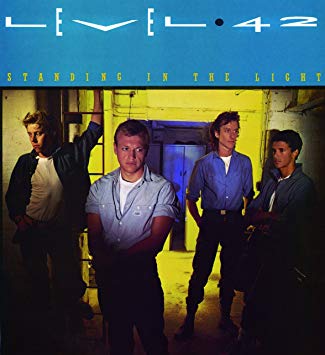
Boon Gould (1955-2019)

Boon Gould (second from right)

Every group needs a Boon Gould.

The George Harrison of Level 42, intelligent, erudite but naturally shy, he came up with consistently memorable guitar parts and the occasional exciting solo, whilst never overshadowing his more naturally exuberant bandmates.

His guitar playing probably peaked in the original band’s middle years, and he also wrote the words to many of their biggest hits including ‘Lessons In Love’, ‘It’s Over’, ‘To Be With You Again’ and ‘Heaven In My Hands’.

So Boon contributed much to one of the great bands of the ’80s. When I heard of his sad death this week, I first thought of his raunchy Jeff Beck-meets-Bill Connors solos on their jazz/funk opuses ‘Foundation And Empire’ and ‘Return Of The Handsome Rugged Man’, but then remembered how much his rhythm guitar parts added to the band’s key mid-’80s tracks such as ‘Micro Kid’, ‘Out Of Sight, Out Of Mind’ and ‘The Chinese Way’.

Guitar-wise, his peak was probably the 1984 Level 42 album True Colours, playing some fantastic stuff on ‘A Floating Life’, ‘True Believers’, ‘Hot Water’ and ‘Chant Has Begun’. The former features his heaviest riffs in a Level shirt. He also contributed lyrics to Mark King’s solo album Influences around this time.

Boon was the most reluctant live performer in the band, often afflicted with stage fright and frequently laid low by the bad food and bad sleep that are part and parcel of regular touring.

He jumped ship in 1987, his drummer brother Phil following soon after, and also who knows what kinds of pressures were involved with their elder sibling John managing the band too.

After officially leaving Level 42, Boon kept in touch and provided lyrics for 1988’s Staring At The Sun. He recorded a solo album, 1995’s Tin Man, which showed off his decent singing voice, and also came out of live retirement to guest with the reformed band during a Bristol gig in 2012.

By all accounts, Boon was a great guy, a gentle, self-effacing soul who just happened to be an excellent guitarist and intelligent lyricist.

RIP to one of 1980s pop’s unsung heroes. There’s part of my childhood gone.

Rowland Charles ‘Boon’ Gould (4 March 1955 – 30 April 2019)
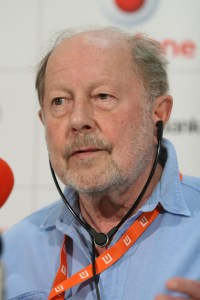
Nicolas Roeg (1928-2018)

London-born filmmaker Nicolas Roeg, who has died aged 90, will surely be remembered as one of the all-time greats.

He began his career as either lighting cameraman or director of photography on some key films of the 1960s: ‘The Caretaker’, ‘Doctor Zhivago’, ‘Lawrence Of Arabia’, ‘The Masque Of The Red Death’, ‘Far From The Madding Crowd’, ‘Fahrenheit 451’. He then of course co-directed (alongside Donald Cammell) the astonishing Mick Jagger vehicle ‘Performance’.

Roeg went to to make some of the finest films of the 1970s – ‘Walkabout’, ‘Don’t Look Now’ and ‘The Man Who Fell To Earth’, and began the 1980s staking a claim to being England’s greatest living director.

And that was when his films really came alive for me. Many of the above were shown regularly on terrestrial TV during the decade. Then came a series of always-surprising new works, some of which also transferred quickly onto the small screen.

‘Bad Timing’ (1980) was a brutally candid portrayal of a love affair gone wrong, starring Art Gartfunkel and Theresa Russell in the first of her memorable lead roles for then-husband Roeg (a role that was apparently first intended for Sissy Spacek).

‘Eureka’ (1983) is little seen these days and almost totally forgotten, but it’s unpredictable and brilliant. Gene Hackman heads up a superb cast including Mickey Rourke, Joe Pesci, Russell and Rutger Hauer. ‘Insignificance’ (1985) was a film to match the best of Roeg’s ’70s output, a what-if tale based on Terry Johnson’s play about a meeting between Marilyn Monroe, Joe DiMaggio, Joseph McCarthy and Albert Einstein.

‘Castaway’ (1986), a desert-island survival tale starring Oliver Reed and based on Lucy Irving’s bestselling book, was given a critical mauling but these days still looks like an incredibly vital film. ‘Track 29’ (1987) was, if anything, even stranger, a Dennis Potter-penned story about a demented manchild, with Gary Oldman and Russell the memorable leads.

And Roeg finished off the decade with a fine adaptation of Roald Dahl’s ‘The Witches’ (1990), well worth digging out for the kids this Christmas if you’re after some mildly-menacing, icky fun. Farewell to a bona fide Brit movie hero.

Nicolas Jack Roeg, 15 August 1928 – 23 November 2018

Chris Tsangarides (1956-2018)

Producer, engineer and mixer Chris ‘CT’ Tsangarides spent his last decade living and working at The Ecology Room studio overlooking Kingsdown, a pretty hamlet on the Kent coastline between Dover and Deal.

The studio is featured strongly in the brilliant documentary ‘Anvil! The Story Of Anvil’, as is the very charming Tsangarides.

CT was one of the sonic architects of ’80s music, working on key albums by Killing Joke, Depeche Mode, Gary Moore, Magnum, Japan, Bruce Dickinson, Judas Priest and Thin Lizzy.

He also had a unique perspective on the excesses of the era’s hard rock scene, recently telling Classic Rock magazine:

I was lucky enough to be looked after by Zomba Management who also had (major producers) Martin Birch, Mutt Lange and Tony Platt. Battery Studios (in Willesden, North West London) was our home. Any piece of equipment, any mic, you could have it. It was all, “Oh, we’ll go to Barbados to record the bass drum.” It got silly. I think we did disappear up our own jacksies…

People would put on 18 tracks of guitar doing the same thing because “it’ll sound mega, man.” Well, it didn’t. Because you’ve still got the same frequency spectrum. So the more you put on, the smaller it sounds…

You couldn’t mix a record unless you had 500 bits of outboard gear. There was this thing called the Aphex Aural Exciter. You used this machine on your final mix and they’d charge you something like £75 for every minute of song. And all it did was make everything sound really toppy. Pointless. But it was like, “You’ve got to have one of those…because they’ve got one!”

RIP, CT.

Jaco (1951-1987)

Jaco Pastorius died 30 years ago today: 21 September 1987.

He was beaten up outside the Midnight Bottle nightclub in Wilton Manors, Florida.

British Jaco fans had particularly meagre pickings in the late 1980s. You gleaned whatever info you could from Bass Player and The Wire magazine or swapped gossip with muso pals.

I’m not even sure I knew he had passed away when I got my hands on import albums like Stuttgart Aria and Live In Italy, both recorded with the brilliant French guitarist Bireli Lagrene, or heard his guest spot on Mike Stern’s Upside Downside.

Then my dad came home from work one day around 1989, excitedly talking about a Jaco concert movie for which he had secured the rights, eventually broadcast on Channel Four as part of the ‘Sounds Of Surprise’ series of jazz films.

Sure enough, the 1982 Montreal Jazz Festival show was a whole new insight into this master musician, shot at a time when he was firing on all cylinders and one of the biggest ‘jazz’ stars on the planet. He was ostensibly touring his Word Of Mouth album at the time, but didn’t play one tune from it.

Starting with his old ‘sweetener’, Pee Wee Ellis’s ‘The Chicken’, Jaco led his superb band (Peter Erskine on drums, Bob Mintzer on reeds, Randy Brecker on trumpet, Othello Molineaux on steel pans, Don Alias on percussion) through a tasty combo of jazz, R’n’B, blues and Caribbean influences.

Particularly notable are a breezy ‘Donna Lee’ and brilliant version of Mintzer’s ‘Mr Fone Bone’, starting at 27:40. Jaco’s soloing throughout the gig is beautiful – emotional, nuanced, dramatic. On the closer ‘Fannie Mae’, he plays the blues with as much feeling as Alberts King or Collins.

So here it is in all its glory. July 1982, Montreal, Canada. RIP Jaco.

Jerry Lewis (1926-2017)

Jerry’s recent death seems to have been rather passed over by the media.

He was a massive comedy hero of this writer in the late 1980s. In those days, you could turn on terrestrial TV of an afternoon and stumble across one of his movies.

My dad first introduced me to ‘The Disorderly Orderly’, his Frank Tashlin-directed 1964 hit, and I was a fan from then on (though even my teenage self quickly twigged that the quality of his ‘solo’ films trailed off pretty rapidly after that).

I loved the improvisatory schtick, lack of ‘character’ guff (though sentimentality was never far away), his verbal tics and physical manifestations. I also spotted some connections to other favourites of mine in the ’80s: the early films of Woody Allen, Chevy Chase, Martin Short, Tom Hanks, Steve Martin and, a bit later, Jim Carrey.

So here are a few routines – mostly music-related – from those movies watched in the ’80s that have stuck in my head, by way of tribute.

‘Cinderfella’ (1960)

‘The Errand Boy’ (1961)

‘Who’s Minding The Store’ (1963)

‘The Nutty Professor’ (1963)

‘The Disorderly Orderly’ (1964)

‘The Family Jewels’ (1965)

‘The King Of Comedy’ (1982)

Walter Becker (1950-2017)

A statement from Donald Fagen:

‘Walter Becker was my friend, my writing partner and my bandmate since we met as students at Bard College in 1967. We started writing nutty little tunes on an upright piano in a small sitting room in the lobby of Ward Manor, a mouldering old mansion on the Hudson River that the college used as a dorm.

We liked a lot of the same things: jazz (from the twenties through the mid-sixties), W.C. Fields, the Marx Brothers, science fiction, Nabokov, Kurt Vonnegut, Thomas Berger, and Robert Altman films come to mind. Also soul music and Chicago blues.

Walter had a very rough childhood — I’ll spare you the details. Luckily, he was smart as a whip, an excellent guitarist and a great songwriter. He was cynical about human nature, including his own, and hysterically funny. Like a lot of kids from fractured families, he had the knack of creative mimicry, reading people’s hidden psychology and transforming what he saw into bubbly, incisive art. He used to write letters (never meant to be sent) in my wife Libby’s singular voice that made the three of us collapse with laughter.

His habits got the best of him by the end of the seventies, and we lost touch for a while. In the eighties, when I was putting together the NY Rock and Soul Review with Libby, we hooked up again, revived the Steely Dan concept and developed another terrific band.

I intend to keep the music we created together alive as long as I can with the Steely Dan band.

Donald Fagen

September 3 2017′

Jonathan Demme (1944-2017)

Reading obituaries of director Jonathan Demme, who has died from cancer aged 73, it struck me how many memorable scenes his films spawned.

Born in Baldwin, Long Island, his early career was mentored by B-movie pioneer Roger Corman.

When Demme broke into Hollywood he never lost sight of his early exploitation influences and zany sense of humour; even ‘serious’ fare like ‘Silence Of The Lambs’ and ‘Philadelphia’ was hijacked by sundry in-jokes and bizarro guest stars including Corman, Chris Isaak and George A Romero.

Demme’s sets were famous for being fun places to work, and that’s borne out by the bonhomie and improvisatory vibe present in many of his films.

He was clearly a friend of musicians, frequently using music in his movies as symbol of collaboration or even spiritual release (writer David Bowman memorably described ‘Stop Making Sense’ as ‘a three-act play documenting the spiritual journey of a hapless white guy trying to “get down”’!).

Apparently Demme sat down with each original member of Talking Heads before filming ‘Stop Making Sense’ and asked them, ‘How do you see me doing this?’ It’s hard to imagine Brian De Palma doing that.

As a live-music documentarian, Demme let the viewer get to know each performer as if they were a character in a movie with the use of long, lingering shots, a world away from the clichéd, fast-cutting MTV style.

So, in tribute to a modern master, here are a few memorable moments from Demme films, in chronological order:

6. ‘Stop Making Sense’ (1984)

5. ‘Something Wild’ (1986)

4. ‘Swimming To Cambodia’ (1987) (swearing alert)

3. ‘Married To The Mob’ (1988)

2. ‘Philadelphia’ (1993)

1. ‘Rachel Getting Married’ (2008)