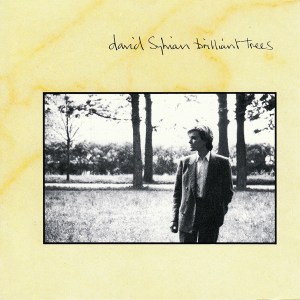
David Sylvian: The Brilliant Trees Sessions

Sylvian’s modus operandi for the studio sessions that made up his classic 1984 debut album perfectly reflected its ‘anti-rock’ stance.

Steve Jansen’s drums and/or percussion were generally recorded first, usually followed by David’s rough keyboards/guitars and a guide vocal. After that he worked closely with guest musicians on a one-to-one basis.

And the latter aspect is the main focus of some fascinating, newly-released footage of the Hansa Studio sessions in Berlin, documented by Sylvian’s then-partner Yuka Fujii.

It’s an absolute treat for Brilliant Trees fans and a great chance to see what actually happened in most recording studios during the 1980s. In common with making movies, there’s a lot of waiting around, a fair bit of chewing the fat and then some pretty intense bursts of performance/concentration.

It’s fascinating watching Sylvian collaborating with his good friends Ryuichi Sakamoto and Holger Czukay. Sakamoto is a model of quiet concentration, quickly learning the chords to album outtake ‘Blue Of Noon’. Czukay is full of smiles and fun while tinkering with his Dictaphone and laying down a guitar solo on ‘Red Guitar’ which didn’t make the cut.

Elsewhere we finally get to hear what ball-of-energy guitarist Ronny Drayton actually plays on ‘Pulling Punches’, and Jon Hassell is every inch the NYC avant-garde auteur (in his excellent book ‘Cries And Whispers’, Anthony Reynolds reports that he did just one five-hour session for Brilliant Trees, asking for and getting $5,000 upfront plus co-writing credits for the two tracks he played on).

But who knew he recorded his solos sitting on the floor in the corner of a tiny studio, Sylvian at his elbow? For his part, Sylvo is generally smiley, quiet, engaged, charming, extremely professional and seems to have a good rapport with co-producer Steve Nye.

Sadly the short bit of footage that emerged recently (then rapidly disappeared) of bassist Wayne Braithwaite recording ‘Red Guitar’ is not reinstated here.

The clip is a vital addition to one’s enjoyment of Brilliant Trees – check it out (and I’ve included Sylvian’s own notes on the footage below) before it gets taken down.

This raw footage, shot on what’s now seen as a primitive camera but which was a top of the line consumer product at the time, a massive, unwieldy object, was documented by Yuka Fujii. I’ve put the material together in the order it was recorded to give a very general idea of the process of development. It’s been my practice to work closely with each individual musician since my earliest days with the band in an attempt to get the best results. I’ve always maintained the band prepared me for working with others, gave me the confidence to work with my peers, the ‘newcomers’ in the room all being older than myself (25). At this point in time Ryuichi’s English was very rudimentary (this was to change radically within the next ten years or so) so we had to communicate as economically as possible, or rather, 95% of the exchange was purely musical. Yuka and Peter Barakan would step in when greater explication was needed. Holger’s English remained consistent throughout the years i knew him. Again, subtleties could be lost so the dialogue was relatively basic. These sessions in Berlin were my first step in creating what would become ‘Brilliant Trees’ and my initial move away from the structure of the band. It was one of the happiest recording experiences I can recall while signed with a major label. Because of the success of having everyone meet in Berlin, a city native to no one involved, it felt like an adventure. People arrived with a spirit of openness and receptivity. I went on to repeat this process with albums such as ‘Secrets of the Beehive’, ‘Rain Tree Crow’, and ‘The First Day’ among others.

I’ve left a lot of Jon’s conversation in as it’s of interest. In one section he’s explaining the nature of raga and how he came to it by working with renowned Indian singer/teacher Pandit Pran Nath. He was also intimating that, as ‘Brilliant Trees’ asked that he play in the western tradition, ‘steps’ as he describers it, he didn’t see how his performance could be incorporated into the title track. I persevered. He returned to his hotel room that evening to work on it and, overnight, came up with something so beautiful and complimentary to the piece, that moved away from raga (outside of the coda), and gave us one of the rare, if not unique recordings, of Jon playing in the western tradition.

Besides the limited nature of my vocabulary, the paired down nature of our exchanges for the reasons given above, my only regret is that I didn’t use Holger’s guitar solo on ‘Red Guitar’. At the time I felt it a little lightweight compared to the mix Steve Nye was prepping. I would now mix it quite differently pushing the drums way back (from the mid 70s through the 80s, drums were often foregrounded, a trend I wasn’t fond of. I fought for a change of approach on ‘Beehive’ and that’s about the time when things began to resemble how I’d initially imagined the material. There are always exceptions of course, ‘Weathered Wall’, ‘Before the Bullfight’ are just two examples). I loved Holger dearly and wish I’d imortalised his solo in some capacity. If it still exists on multitrack, all is not lost.

I came away from Berlin with an incomplete album and preceded to write a few remaining pieces to complement the best of what I had. “The Ink in the Well’, ‘Nostalgia’ and ‘Backwaters’ were added, ‘Blue of Noon’, an alternate version of ‘Forbidden Colours’, and a new track composed with Ryuichi were, with the exception of the latter, to find a home elsewhere. ‘Blue of Noon’ was originally a vocal piece but I felt this version didn’t hold together and, in any case, was out of place in the context of the album. Virgin released a working rough mix of the track as the B-side of a single.

I hope the mutual respect and good humour of everyone involved comes across along with their seriousness and committed nature to the material. Rarely has this proved otherwise for me. In this respect I feel very fortunate. From this session I made lifelong friends, a trend that was to continue for many years to come.

david sylvian july 2021

It Bites: Thankyou And Goodnight 30 Years Old Today

There’s a secret history of bands/artists disowning their own albums before they’ve even been released.

Lee Mavers’ La’s, Prince and Chrissie Hynde’s Pretenders come to mind, and the brilliant Cumbrian four-piece It Bites can also be added to that list. They even sent out a ‘please don’t buy our new album’ letter to their fan club. I still have it. Quote: ‘They feel Thankyou And Goodnight to be a complete rip-off on the part of Virgin Records…’ It didn’t work, of course. I bought it during its first week of release.

By summer 1991, a year after guitarist/lead vocalist Francis Dunnery had done a runner from the band (this interview gives intriguing hints as to his state of mind during spring 1990) while they were recording their never-to-be-released fourth studio album in Los Angeles, remaining members John Beck (keyboards), Dick Nolan (bass) and drummer Bob Dalton (then trying to make a go of it as Navajo Kiss, and later Sister Sarah) were less than thrilled to hear that Virgin intended to release an It Bites live album.

But it was out of their hands. They reluctantly helped with track selection/sequencing, approved the artwork and title and Thankyou And Goodnight became the official au revoir to one of the finest British bands of the 1980s. One top 40 single (‘Calling All The Heroes’) was a pretty dire return for one of the most melodic acts of the era.

Virgin should get some blame for that (they were generally better cheerleaders for their solo acts, apart from Genesis, Simple Minds and Culture Club). But these days you hear ‘Still Too Young To Remember’, ‘Underneath Your Pillow’, ‘Kiss Like Judas’ and ‘Midnight’ and it’s inexplicable that they didn’t crack the charts.

In particular, their singular lack of mainstream success throughout 1988 seems to have been a huge shock for the band, especially off the back of an extraordinary sophomore album Once Around The World, sold-out UK tour and well-received Robert Plant support slot. But back to Thank You And Goodnight. Visually, it’s a pretty shoddy package.

The cover looks like it was knocked off by a reluctant Virgin designer after a long liquid lunch. There are no recording dates or technical personnel, save for mixing engineer Nick Davis (XTC, Marillion, Genesis, Phil Collins), whose surname is misspelt.

Then there are some cursory ‘history of the band’ liner notes, with an annoying addendum by a Virgin staffer: ‘We owe you a drink, Ian!’. Yeah, right… And then there’s the track choice – it’s basically the audio from the televised June 1989 gig at London’s Town & Country Club, plus a few ringers: ‘Yellow Christian’ (recording date/venue unknown) and ‘You’ll Never Go To Heaven’ from London’s Marquee in 1987, previously the B-side of ‘Midnight’.

But it’s no surprise to report that most of the music on Thankyou And Goodnight is fantastic. Under Davis’s jurisdiction, Nolan’s bass and Dalton’s drums sound like a million dollars, at least on the T&C tracks. ‘Underneath Your Pillow’ is the standout, emerging as a superb pop song augmented by the extended, proggy ending, with Dunnery quoting from Holst’s Planet Suite (Venus, the Bringer of Peace).

‘The Ice Melts Into The Water’ and ‘Still Too Young To Remember’ (with its clever ‘Old Man & The Angel’ tag) are also superb, fitting reversions. From memory, I saw It Bites live five times (Brunel University/Astoria 1988, T&C/Hammersmith 1989, Hammersmith 1990) and they were never less than sensational. Thankyou And Goodnight is not a great package but a decent-enough document of their late-career pomp.

What a shame they couldn’t have recorded one more studio album after 1989’s Eat Me In St Louis though and basked in some long-overdue success. One further mystery – Dunnery has obviously added some post-production vocals to ‘Ice Melts Into The Water’ – when and where did he do them? Maybe he was secretly in on the project after all…


Grace Jones: Nightclubbing 40 Years On

Nightclubbing, which turns 40 this week, would be iconic even if it was only half as good, thanks to Jean-Paul Goude’s fantastic cover painting.

But drop the needle anywhere and it’s an all-time classic, one of the jewels in Island Records’ crown and hugely influential.

Arguably its mashup of new wave, reggae, synth pop, disco and Caribbean flavours blueprinted the sound all the key New Pop acts of 1982/1983 (Talking Heads, Kid Creole, Spandau Ballet, Duran Duran, ABC, The Associates, Simple Minds, Thompson Twins et al) sought.

Some, of course, went route one and employed Nightclubbing co-producer and movingtheriver.com favourite Alex Sadkin. But you might also call Nightclubbing Grace’s covers album – it features not one but six classics, if you count ‘Libertango’ and the Marianne Faithfull’s previously-co-written-but-never-recorded ‘I’ve Done It Again’ (Sting lent her ‘Demolition Man’ before laying it down with The Police).

She revolutionises Flash & The Pan’s ‘Walking In The Rain’ (her androgynous alto freaked me out when I first heard it as kid, there was just no reference point…) and compare her funky, succinct ‘DM’ to The Police’s ponderous, overblown version.

On a good system Nightclubbing‘s sonic details delight: the tambourine commentary throughout ‘Use Me’, Sly Dunbar’s dub-delay cross-sticks on ‘Walking In The Rain’, Grace’s whispered chorus on ‘Art Groupie’. The Compass Point All Stars, particularly man-of-the-match Wally Badarou on keys, are perfectly poised to provide such moments.

But there is a weird quirk – the mastering. The album seems to get quieter as it goes along, at least on the original CD version. ‘Demolition Man’ requires some serious crankage. I’m not sure if subsequent reissues have rectified that.

Nightclubbing was NME’s album of the year for 1981 and it got to #32 on the US Billboard chart, a certified crossover hit. You might even say that the 1980s Proper started here, and it helped make 1981 one of the greatest ever pop years.

And we haven’t even mentioned Grace’s electrifying One-Man-Show that accompanied the album, directed by Goude, taking place at London’s Drury Lane Theatre and New York City’s Savoy. It was surely a huge influence on everyone from Laurie Anderson to Annie Lennox.

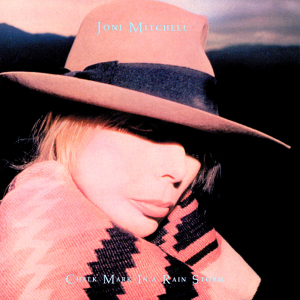
Joni Mitchell: Chalk Mark In A Rainstorm

Intelligent pop was alive and well in summer 1988 with key albums from Prefab Sprout, It Bites, Scritti Politti, Prince, Thomas Dolby…and, would you believe it, Joni.

Chalk Mark In A Rainstorm was a few years in the making after the underperforming (but excellent) Dog Eat Dog, and she was feeling the pressure. ‘I could use a hit’, she confessed to Q magazine in a long interview (they also gave the album a glowing four-star review).

She also granted a long interview to the NME, and was rewarded with her highest charting album (#26) in the UK since Mingus, almost ten years earlier. Stateside, off the back of a stinking, poorly-written Rolling Stone review, it reached a disappointing #45.

Released on 23 March 1988, Chalk Mark is based around a core band of Joni on keys, guitars and vocals, Larry Klein on bass and keys, Mike Landau on guitars and Manu Katche on drums. Larry and Joni co-produce.

There’s a real consistency to the sound, but, with its hermetically sealed nature, it seems almost critic-proof. There’s nothing to compare it too, apart from Joni’s own work.

Reviewers were generally confused by her choice to use the latest synth/sampling technology to illuminate anti-war, anti-advertising, anti-‘toxic crap’ (Joni’s words), pro-Native American songs. Well, that’s what’s known as ‘irony’…

Gorgeous opener and first single ‘My Secret Place’ was mostly recorded at Peter Gabriel’s Ashcombe House studio (he also offered her free studio time to make the demos for the album).

PG guests on vocals (though Joni plays all keyboards, including the memorable piano motif) while Katche delivers a superb, subtly-building performance with hints of Steve Gadd’s famous ’50 Ways To Leave Your Lover’ groove.

As usual, musicians and singers were queuing up to appear on a Joni record. Steve Stevens, Billy idol and Tom Petty combine to memorable effect on ‘Dancin’ Clown’ (apparently one of Bob Dylan’s favourites), while Wendy & Lisa add their gossamer back-ups to sumptuous ‘The Tea Leaf Prophecy (Study War No More)’.

‘The Reoccurring Dream’ is a collage of advertising cliches over richly-chorded Joni vocals. The standout is possibly ‘Beat Of Black Wings’, a furious anti-war song with a stately, orchestral theme in an unusual 6/4 time.

Less effective are the plodding ‘Number One’, ‘Snakes And Ladders’ and ‘Cool Water’, despite some welcome guest vocals by Willie Nelson on the latter. All would probably have been more effective as solo, acoustic songs (she often promoted the album with solo versions of the former).

The album ends with Wayne Shorter’s hearty chuckle after his multi-tracked, soprano sax deluge on ‘A Bird That Whistles’ (apparently Joni’s only instruction to him in the studio was: ‘You’re the bird’!).

Joni was in a group of one in 1988, feeling no particular kinship with the female singer-songwriters making their way towards the end of the decade, the likes of Suzanne Vega, Julia Fordham, Jane Siberry, Mary Margaret O’Hara, Louise Goffin, Toni Childs and Tracy Chapman (the latter beating Joni to a Best Pop Vocal Performance Grammy in 1989).

She was still far ahead of the competition, but also painting herself into a corner. It was the end of an era. The acoustic guitar and ‘folky’ forms would re-emerge in time for the next album Night Ride Home; a logical, commercially-led move, but the end of a fascinating progression of sounds and styles during the ‘80s.

Read a great interview with Joni, Larry Klein, Billy Idol, Tom Petty and Willie Nelson about the making of the album here

David Bowie Impersonates Marc Bolan: 18 August 1985

1985 was a mixed year for DB.

Tragically, his half-brother Terry Burns took his own life in January, but then the summer was a very ‘up’ period – he was a wholehearted contributor to Live Aid, promoting the event widely and enjoying the company of his contemporaries and assorted young bucks alike.

He was also relishing getting out of his comfort zone courtesy of key roles in Jim Henson’s ‘Labyrinth’ and Julien Temple’s ‘Absolute Beginners’.

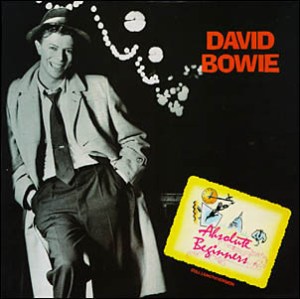
Then summer 1985 spawned one of his greatest singles, the theme song for the latter movie. Like ‘Dancing In The Street’, ‘Absolute Beginners’ was produced by David alongside Madness/Dexys/Costello collaborators Alan Winstanley and Clive Langer.

The backing tracks had been laid down at Abbey Road but the final vocal session took place at London’s West Side Studios (owned by Langer and Winstanley), Olaf Street, near Latimer Road tube station (and very close to Grenfell Tower), on 18 August 1985.

After nailing the song in just a few passes – as was his wont – Bowie found himself in the studio with a bit of time on his hands. Instead of making an early exit, he quickly wrote some rather overwrought lyrics vaguely in the style of Bruce Springsteen and then entertained Langer and Winstanley with a succession of vocal impersonations.

Engineer Mark Saunders thankfully captured these precious moments and has very kindly put them on YouTube for our delectation. So enjoy Bowie’s irresistible takes on Springsteen, Marc Bolan, Tom Waits, Lou Reed, Anthony Newley, Iggy Pop and Neil Young, complete with charming asides (‘That’s it – night-night!’).

It’s a doorway to happier times. DB: miss him, miss him, miss him.

Roxy Music: Flesh + Blood 40 Years On

Couldn’t let 2020 squeak by without celebrating 40 years of Flesh + Blood.

As a young whippersnapper, along with Sgt. Pepper’s, it was probably the first LP I enjoyed all the way through. But these days it’s often mentioned as an afterthought to Avalon and the early albums (maybe Peter Saville’s cover rankles?).

It featured not one but three classic singles (‘Oh Yeah’, ‘Same Old Scene’, ‘Over You’), two distinctive cover versions, and was arguably one of the most influential collections of the 1980s.

It also perfectly compliments such contemporary new-wave/disco work from Blondie, Duran Duran and Japan (also sharing with those acts a reliance on the Roland CR-78 rhythm box, heard prominently in the intro of the below).

Flesh + Blood is the last Roxy studio album where Andy Mackay (sax) and Phil Manzanera (guitar) were major players if not songwriters (all tracks were written by Ferry apart from the covers, though Manzanera had a hand in ‘Over You’, ‘No Strange Delight’ and ‘Running Wild’). Both add memorable solos and nice ensemble work throughout.

It’s also a classic early-’80s bass album: reliably excellent Alan Spenner and Neil Jason joined new boy Gary Tibbs, fresh from his acting role in Hazel O’Connor’s ‘Breaking Glass’ movie and about to become one of Adam’s Ants.

The great Andy Newmark piled in on drums, having just completed work on Lennon/Ono’s Double Fantasy, alongside fellow NYC sessionman Allan Schwartzberg (who plays a blinder on ‘Same Old Scene’).

Londoner Rhett Davies was on board as co-producer, fresh from groundbreaking work with Brian Eno (both are apparent influences on the psychedelic/ambient outros to ‘My Only Love’ and ‘Eight Miles High’, and atmospheric overdubbing throughout), working with the band at his favourite Basing Street Studios (later Sarm West) in London’s Notting Hill. There were also occasional sessions at Manzanera’s Gallery Studios in Chertsey, Surrey.

Burgeoning star NYC mixing engineer Bob Clearmountain took time off his work with Chic to add some hefty bottom-end and fat drums at the fabled Power Station studios. Bob Ludwig’s ‘definitive’ 1999 CD remaster is one of the loudest, bassiest re-releases of the last few decades (but not a patch on the original cassette!).

But basically Flesh + Blood is very much Ferry’s show, layering Yamaha CP-80 piano (in his trademark ‘no thirds’ style) and synths to great effect, and even adding some amusingly sleazy guitar on the title track. He also sings superbly, delivering a particularly impassioned performance on ‘Running Wild’.

Even when he veers slightly out of tune, as on ‘Rain Rain Rain’, it’s an artful, conscious move (unlike these days…), a la Dylan or Bowie. His lyrics are generally fascinating – dreamlike, elliptical, odes to unrequited love and possibly one or two illicit substances.

Flesh + Blood was a big hit in the UK, reaching #1 on two separate occasions between May and September 1980. But surprisingly it didn’t quite work in the States, just scraping into the top 40, possibly not helped by a stinking review in Rolling Stone (‘…such a shockingly bad Roxy record that it provokes a certain fascination…’!).

But Ferry could see a path ahead, and would repeat the winning formula (drum machine + piano + painstaking overdubs + much-pondered-over lyrics/melody lines) for the rest of the decade. Rhett Davies had his work cut out – he moved on to work with Robert Fripp on the classic King Crimson reunion album Discipline.

Talking Heads (1980/1981): Reagan, Ghosts & Listening Winds

For many Americans, 1980 hoped to offer a break from the recent past: the Watergate scandal, defeat in Vietnam, the Iran hostage crisis, a major recession. Disco.

A Presidential Election was also pending in November. At the beginning of the year, Jimmy Carter stood at 62% in the polls, Ronald Reagan at 33.

Reagan promised to return America to a pre-countercultural era, prioritising family values and social order. He courted the Fundamentalist vote; evangelists and motivational speakers suddenly popped up all over the radio.

Something pinged in David Byrne’s head, and he later outlined the febrile atmosphere of early 1980 in Simon Reynolds’ book ‘Totally Wired’: ‘The text was saying “Thou shalt not” but the preacher’s performance was this completely sensual, sexual thing. I thought, “This is great – the whole conflict is embodied right there…”’

Byrne and Brian Eno explored some of these themes on their groundbreaking My Life In The Bush Of Ghosts (named after the 1954 book by Nigerian writer Amos Tutuola) with a particular emphasis on Islam and its contrasts with Christianity.

The project was originally supposed to be a three-way collaboration between Jon Hassell, Eno and Byrne, a fake ‘field work’ complete with ethnography, liner notes and photos, but Hassell dropped out at the eleventh hour. The album is strikingly original, still relevant and sometimes terrifying.

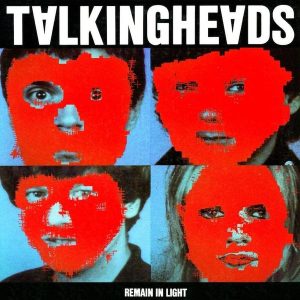
A month before the Presidential Election, on 8 October 1980, Talking Heads released their masterpiece Remain In Light, also a collaboration with Eno. The album’s key tracks, ‘Once In A Lifetime’ and ‘Listening Wind’, went even further than Bush Of Ghosts: the former showed that Byrne had completely assimilated the ‘sensual preacher’ persona, while the latter outlined a young Arab’s act of terror.

Mojique resents the rich ‘foreigners in fancy houses’ turning up in his country, makes a bomb ‘with quivering hands’ and dispatches it to his American enemy. It’s a unique, powerful piece of work, and one wonders whether its inclusion on Remain In Light contributed to the album being their worst-ever seller in the USA.

Reagan was elected on 4 November 1980 with 50.7% of the national vote. His famous Election Eve speech mentioned ‘that shining city on the hill’, invoking both Jesus’s Sermon On The Mount and noted Puritan John Winthrop. But Byrne’s New York had been under the cosh: more murders, robberies, burglaries and subway breakdowns were reported in 1980 than in any other year since records began 49 years earlier.

Reagan was inaugurated on 20 January 1981. My Life In The Bush Of Ghosts was finally released – after several postponements – almost exactly a month later.

Further reading: ‘Life And Death On The New York Dancefloor’ by Tim Lawrence

Robert Palmer: Clues 40 Years On

If in 1979 you’d been asked to draft a list of key 1970s artists most likely to go ‘new-wave’, Robert Palmer would surely have been near the bottom.

After all, he spent most of the decade as a kind of sophistifunk Bryan Ferry, with his ‘problematic’ album covers and Little Feat-inspired grooves.

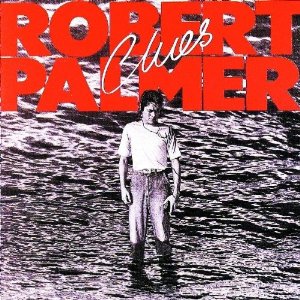
1979’s Secrets had shown glimpses of ‘rock’, but Clues, released 40 years ago this week, went the whole hog. And, along with 1978’s Double Fun, it’s probably his most consistent album and definitely worth a reappraisal.

There are good omens in the liner notes – a Talking Heads guest appearance here, a Gary Numan song there, Compass Point mixmaster general Alex Sadkin (Nightclubbing etc.) on knob-twiddling duties, Free’s Andy Fraser on bass. And Clues delivers big-time, exploding out of the speakers and clocking in at just over half-an-hour (it must sound great on vinyl).

It’s buoyed by two superb singles, ‘Looking For Clues’ and ‘Johnny And Mary’, the former scraping into the UK top 40 (shockingly, Robert only had SIX top 40 singles during the 1980s…). But there are other treats throughout: ‘Sulky Girl’ sounds curiously like Low-era Bowie, with its histrionic vocals, unhinged guitars, processed drums and barrelhouse piano.

The Beatles cover ‘Not A Second Time’ is excellent (with a new second verse), as is the Numan contribution ‘I Dream Of Wires’. When Gary’s synths squelch into action, it’s a great moment, as is the funky fanfare in the middle. And no-one but Palmer could have pulled off the minimalist Township swing of ‘Woke Up Laughing’, featuring a brilliant, polyrhythmic vocal performance.

If Good Drum Sounds are your thing, Sadkin delivers a masterclass here. I’ll be amazed if anyone can point to a better-recorded 1980s kit than on album-closer ‘Found You Now’, played by the excellent Dony Wynn (who he?).

Clues was, perhaps surprisingly, not a big success in the UK, making just #31. Nor did it go down too well in the US, peaking at #59. But it was a big hit in France, Sweden and the Netherlands.

Robert generally gets a bad rap these days, maybe due to those album covers (despite glowing character references in Phill Brown’s ‘Are We Still Rolling’ and Guy Pratt’s ‘My Bass And Other Animals’), and he seldom gets the ‘career overview’ treatment in the rock monthlies.

But he was actually married to the same woman for 28 years (from 1971 to 1999) and had two kids. A private man and music fan through and through, he died of a heart attack in 2003 at the age of just 54.

Story Of A Song: Prefab Sprout’s ‘Nightingales’ (1988)

Prefab Sprout’s 1988 album From Langley Park To Memphis was their pop breakthrough, reaching #5 in the UK charts, and is probably most casual fans’ favourite.

But let’s take a close look at the fifth track, the epic ‘Nightingales’. Featuring Stevie Wonder on harmonica and released as the fourth single from From Langley Park in November 1988, it remains one of Prefab’s most beguiling songs.

Written by Paddy McAloon under the influence of Barbra Streisand’s Broadway Album, it’s a stellar piece of work by any standards; melody, harmony and lyric are inextricably linked, as if the song had always existed and was just plucked out of the air.

Thought follows thought, musical idea follows musical idea completely naturally, without any songwriter ‘tricks’ such as looped chord sequences or vamps.

It’s fair to say that by the time of From Langley Park’s recording, McAloon was becoming a proficient pianist; eight of ten songs on the album were written on keyboards, including ‘Nightingales’.

Its harmonic concept, with an emphasis on major-seventh chords (including an audacious jump from F#m7 to Cmaj7 in bars four and five of the chorus) and triads superimposed over apparently unrelated root notes, possibly reveals a Brian Wilson influence, but the final effect is more Stephen Sondheim than ‘Surf’s Up’.

‘Nightingales’ also has no apparent antecedents in the 1980s pop firmament, though, at a stretch, approaches one of Green Gartside and David Gamson’s gossamer Scritti Politti ballads.

In a year when Acid House and the ‘Madchester’ sound were gestating and Stock Aitken Waterman ruled the charts, McAloon delivered something unabashedly romantic and somewhat old-fashioned; the opening line (‘Tell me do, something true‘) and general tenor of the lyric are more akin to ‘Daisy Bell’ than anything by the Stone Roses (and Paddy made no secret of his general distaste for late-’80s pop).

The song’s protagonist analyses his love affair, asking his paramour whether their love is fleeting like a ‘firework show’ or whether it’s a lasting, valuable entity. They agree that such questions are unhelpful and/or irrelevant – the key is to live in the moment.

‘Nightingales’ was co-produced by Jon Kelly and McAloon. By 1987, London-born Kelly was an experienced, highly-regarded producer and engineer, probably best known as one of Kate Bush’s key early collaborators on the classic 1980 album Never For Ever.

He had also worked on successful albums by Chris Rea (Dancing With Strangers) and Paul McCartney (Ram) and just produced Deacon Blue’s debut album Raintown, the latter definitely influenced by Prefab.

Double and triple-tracked keyboard parts dominate ‘Nightingales’, played by McAloon and legendary British session player Wix, AKA Paul Wickens. They closely follow the chord voicings of McAloon’s original acoustic piano demo, echoed on this lovely live version from 2000:

By the time of the first chorus, sampled sleigh bells and silky Synclavier drums are added to the mix alongside McAloon’s rather incongruous but effective (sampled?) banjo. Robin Smith’s widescreen string arrangement becomes increasingly prominent throughout the track; particularly notable is a flurry of ascending, almost celestial notes in three distinct phases beginning at 2:14 (and check out the rustle of fake locusts at 4:26!).

Stevie Wonder had long been a hero of McAloon’s, the album Journey Through The Secret Life Of Plants being a particular favourite. Mentioning as much to Prefab manager Keith Armstrong one day, Paddy half-joked that a Stevie harmonica solo on ‘Nightingales’ would really bring the track to life.

Armstrong stunned McAloon by informing him that he was a good friend of Wonder’s operations manager Keith Harris and would put in a good word for the band (it’s also worth noting that Wonder played some sublime harmonica on Thomas Dolby’s ‘Don’t Turn Away’ a year before the recording of ‘Nightingales’ – perhaps Thomas gave the band a good reference…).

Wonder’s harmonica solo for ‘Nightingales’ was recorded in a very rushed session during September 1987 at Westside Studios in Notting Hill, West London. He apparently learnt the song quickly, disappearing into a corner of the studio with a rough mix on his Walkman, and then recorded two takes in the lower octave and two in the higher. The released solo is a composite of the four.

Richard Moakes was the young engineer tasked with capturing Wonder’s solo on tape. According to McAloon:

He (Moakes) looked at me and said, ‘Oh God, I’m a bit worried I won’t know how to get his sound’. I said, ‘Well, look, we’ll just see what happens’. And of course you put the microphone on him and you turn the fader up and he sounds like Stevie Wonder. You don’t do anything. Unless you’re doing something really silly, you’ll get it and it will be identifiable. So I thought, OK, when you play a guitar, don’t blame an engineer if you don’t know what you’re doing…

New York mix engineer Michael Brauer cooked up the 12” version of ‘Nightingales’. He made some drastic changes from the 7” single, placing the sleigh bells right at the front of the mix, reinstating some of Wendy Smith’s stacked backing vocals originally left on the cutting room floor, stripping McAloon’s lead vocal of its reverb (though adding a lot more to the snare drum) and leaving more space for Smith’s string arrangement and McAloon’s banjo.

A video was also made, though it’s almost impossible to track down these days.

Huey Lewis & The News: Weather

It’s not easy to make happy music.

But there was a lot of it about in the 1980s, and Huey Lewis And The News were hugely successful purveyors of the uplifting single, particularly during their mid-decade peak when ‘The Power Of Love’, ‘Hip To Be Square’ and ‘Stuck With You’ were seldom off the airwaves.

Does anybody in the world actually dislike this band (Patrick Bateman is a particular fan, of course… Ed.)?

Huey has a great set of pipes and they always deliver a reliable fusion of roots music: blues, R’n’B, rock’n’roll, doo-wop and country, with some pop and soul hooks thrown in too.

New album Weather is their first for ten years. Huey has had hearing problems due to a recent onset of Meniere’s Disease, about which he’s reliably sanguine, recently telling Classic Pop magazine: ‘Things could always be worse. After all, I’m deaf, not dead…’

Weather is only 26 minutes long. It’s intended as a followup of sorts to their most popular album Sports. Geddit? Sports and weather… These are simple songs, well played and well written, with decent melodies, bridges, middle-eights and nice guitar or sax solos.

And this time ’80s mixmaster general Bob Clearmountain (Simple Minds, Bryan Adams, Hall & Oates) is on hand to deliver a rich, punchy sound, with everything in exactly its right place.

‘While We’re Young’ is a witty R’n’B song about ageing. You can almost imagine Donald Fagen doing it. ‘Her Love Is Killing Me’ is out of the Robert Cray school. The Blues Brothers would have done a great version.

‘Hurry Back’ features a classic Texas shuffle and some decidedly Stevie Ray-style lead guitar. It won’t win any #woke points for its one-night-stand theme – but who cares.

The funky ‘Remind Me Why I Love You Again’ also scores highly on the un-PC scale to amusing effect, Huey complaining that his resolutely modern squeeze refuses to cook or clean.

There’s even a cover of Eugene Church’s 1958 doo-wop standard ‘Pretty Girls Everywhere’, complete with ‘boogalee-woogalee’ backing vox. And gentle C’n’W closer ‘One Of The Boys’ is touchingly faux-naive about Huey’s place in the world: ‘Yes I’m playing with my friends/Until the music ends‘.

Weather is not cool, certainly not hip, but effortlessly enjoyable. Somehow Huey Lewis And The News still sound like the best bar band you’ve ever heard in your life.