Geffen/Warner Bros. Records, released 19 July 1982
6/10
It’s understandable that Summer was reluctant to take on Billy Strayhorn’s song ‘Lush Life’.
A morning-after portrait of a failed romance, it’s a remarkable composition for a 16-year-old to write, with elliptical lyrics, few repeat sections and a challenging, endlessly-modulating melody line.
Nat ‘King’ Cole, Sarah Vaughan, John Coltrane/Johnny Hartman and Billy Eckstine all performed notable versions (Strayhorn himself apparently loved the latter).
But, coached through by producer Quincy Jones and keyboardists Greg Phillinganes, Herbie Hancock and Dave Grusin, Summer’s vocals are a knockout. Though the track sounds a bit rushed (Phillinganes would surely like another pass at his synth bass part), her work certainly paid off.
‘Lush Life’ closes Donna Summer, released 35 years old today. Classic singles begin the album and end side one: Grammy-nominated ‘Love Is In Control (Finger On The Trigger)’ and an inspired cover of Jon & Vangelis’s ‘State Of Independence’, the latter featuring an amazing array of guest vocalists.
The problem with Donna Summer is that it’s three classics and a lot of filler. Formula-wise, Quincy seems to be preparing for Thriller – there are many songwriters and a variety of styles.
Springsteen contributes the slightly underwhelming ‘Protection’ and elsewhere there’s a bit too much LM-1 drum machine and a few less-than-memorable choruses.
The album didn’t quite deliver the big hit to propel Summer into the ’80s but reached #20 in the US album charts and #13 in the UK.
Yeau! The headline of Q Magazine’s September 1987 cover feature said it all.
Perrier-quaffing Terence was correctly predicting a phenomenal critical and commercial reaction to his debut album and ready to dish the dirt.
He had done it all on his terms; wrongfooted his record company (who had wanted a slick, current, ‘upwardly-mobile’ soul album) and played the press at their own game. But at what cost?
D’Arby had lived quite a life before becoming a ‘pop star’: he was born in the States, the son of a preacher father and gospel-singing mother, studied journalism in New York, became a half-decent boxer in his late teens, joined the army and was based in Germany throughout most of the ’80s during which time he worked on his music and acquired a manager (a strategy not dissimilar to another ex-army musical maverick, Jimi Hendrix).
Decamping to London in 1985, D’Arby worked on demos with Heaven 17’s Martyn Ware and, after being turned down by several major labels, finally got the nod from CBS.
They pulled off a pre-release masterstroke when D’Arby was block-booked for four weeks running on ‘The Tube’ after a knockout debut live TV performance. To say that there was a buzz about him would be an understatement. The general consensus was: ‘Who the hell is this guy?!’
Hardline still sounds like one of the better debut album of the ’80s or any other decade. From the opening bars of ‘If You All Get To Heaven’, it’s clear that something pretty special and pretty different is going on, though the album inadvertently tapped into the ‘retro-soul’ revival that had built up in the UK over 1986 and 1987 – Ben E King and Percy Sledge had both had number ones in the months before Hardline‘s release, and The Pasadenas, The Christians and various others would bring forth similar grooves in the months to come.
Hardline also reminded critics and audiences alike of some of the great soul vocalists of the ’60s, ’70s and early ’80s – Al Green, Otis Redding, Stevie, Prince, Michael Jackson, James Brown and especially Sam Cooke. All went into the mix but finally D’Arby sounded just like himself.
He peppered ‘Dance Little Sister’ – a track that Prince would have killed for – with some outrageously over-the-top vocals. But, refreshingly, his singing throughout the album ain’t perfect – he’s much more into getting the emotion across and bringing a party vibe to the studio.
‘Sign Your Name’, ‘If You Let Me Stay’ and ‘Wishing Well’ are funky yet accessible (if the latter doesn’t make you move, you’re probably dead), but the a cappella, African-themed ‘As Yet Untitled’ is totally original.
He even takes on Smokey Robinson and emerges unscathed on the closing ‘Who’s Loving You’. He plays a lot of instruments himself and only gets in occasional help when absolutely necessary (including future Skunk Anansie bassist Cass Lewis and Pop Group/PiL drummer Bruce Smith). As such it’s a remarkably cohesive album.
Hardline was a big hit, reaching #1 in the UK, #4 in the US and selling over eight million copies worldwide. D’Arby got the rep of being a ‘difficult’ artist when his follow-up album Neither Fish Nor Flesh missed deadlines and went over budget. Things would probably never be the same again. But we’d always have Hardline.
How do you like your classic album: consistent in tone/texture or mercurial and unpredictable like Sgt. Pepper’s (released on this day 50 years ago)?
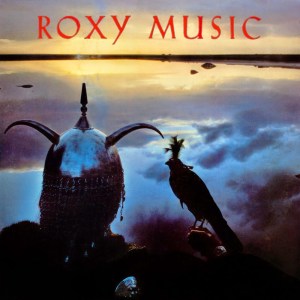
Avalon definitely belongs in the former camp. Beautifully performed, recorded, mixed and mastered, it maintains its mood throughout.
Through a variety of working methods – some originated on previous albums Manifesto and Flesh & Blood – Messrs Ferry, Manzanera and Mackay arrived at Roxy’s perfect studio swansong and, for many, the peak of ’80s sophisti-pop.
Today, Avalon sounds completely different to almost anything else released in 1982. It’s always a shock seeing reruns of Ferry on ‘Top Of The Pops’ miming something from the album – the whole package seems way too refined and luxurious for the worldly environs of a TV studio.
Crucial to Avalon‘s success was the reinstatement of the crack Flesh & Blood ‘backroom’ team: producer Rhett Davies and legendary mix engineer Bob Clearmountain. Also key was the choice of studios: Compass Point in Nassau and Power Station in New York, whose staircase was put to good use, as Davies told ‘Sound On Sound’ magazine: ‘The main thing at the Power Station was the stairwell. It had an unbelievable sound. You’d put anything through it and you’d just go “Yeah, we’ve got to have that.”’
Davies also brought with him another recording technique developed from working with Brian Eno on Taking Tiger Mountain and Another Green World. ‘Eno had opened me up to the way of working where you walk in with a blank sheet, stick some white noise down, count one to 100 and then fill in the spaces, and it was great working that way. When I started working with Roxy, Bryan had only known the “Let’s cut the track with the band in the studio” approach. I said, “Well, there is another way of working. We can put down our groove exactly as you want it synthetically, using a rhythm box, and the musicians can then play to that groove.” The musicians came in and responded to the atmosphere that was already on tape.’ (Eno of course also utilised a similar approach on Bowie’s Low and Heroes.)
Accordingly, drummer Andy Newmark was very often the last musician to overdub – most tracks were first laid down with a Linn drum machine backing. ‘The Main Thing’, ‘India’ (which sounds like Ferry was checking out Miles Davis’s On The Corner) and ‘The Space Between’ are the most obvious results of this approach, essentially jam sessions built on one-chord vamps. This painterly, piecemeal style of recording was also meat and drink to Ferry who was struggling with writer’s block at the time.
The title track was apparently a delightful accident, rescued at the eleventh hour after the song had almost been shelved: Davies: ‘We were mixing the album, and the version of the song that we’d done just wasn’t working out, so as we were mixing we recut the entire song with a completely different groove. We finished it off the last weekend we were mixing. In the quiet studio time they used to let local bands come in to do demos, Bryan and I popped out for a coffee and we heard a girl singing in the studio next door. It was a Haitian band that had come in to do some demos, and Bryan and I just looked at each other and went “What a fantastic voice!” That turned out to be Yanick Etienne who sang all the high stuff on ‘Avalon’. She didn’t speak a word of English. Her boyfriend, who was the band’s manager, came in and translated.’
Some have claimed that Avalon‘s beautiful closing track ‘Tara’ demonstrates a rare example of Ferry’s humour, ‘ta-ra’ of course being Northern English slang for ‘goodbye’ (the track was co-written with Mackay).
Lyrically, Avalon shows Ferry becoming a superb, somewhat surrealist chronicler of intense love affairs, often painting himself as the windswept loner weighed down by desire. Musically, the album is a marvel of ensemble playing – solid but expressive bass (Neil Jason and Alan Spenner) and drums (Newmark – superb), Ferry’s impressionistic piano and synths, colourful percussion from Jimmy Maelen, and spare, tasteful guitar licks placed around the stereo spectrum from Phil Manzanera and Neil Hubbard (who also plays a great solo on ‘To Turn You On’).
And finally there’s extra spice from Andy Mackay on various saxes and Fonzi Thornton on vocals, whose uncanny alto compliments Ferry so well.
Avalon was a hit, reaching #1 in the UK (though, surprisingly, only #53 in the US) and producing three UK hit singles. Sonically and lyrically, it also set the template for all of Ferry’s subsequent solo projects. Happy birthday to a true ’80s classic, oft imitated but never surpassed.
Though they emerged as a quintessentially-1980s pop act, Swing Out Sister had impeccable post-punk credentials.
Keyboardist Andy Connell had played with Factory Records-signed A Certain Ratio before SOS, drummer Martin Jackson had previously worked with Magazine and The Chameleons while singer Corinne Drewery had sung back-up with Working Week amongst others.
The result was a musically-rich, very commercial take on the self-contained recording ‘project’ in the Yazoo/Scritti/Steely mould. But Swing Out Sister’s USP was taking influences from the mid-’80s UK jazz revival and filtering them through ’60s pop and the burgeoning House scene.
Young tyro Paul Staveley O’Duffy, fresh from his work with Hipsway, was brought in to produce – an inspired choice. He recruited Pat Metheny/Frankie/ABC arranger Richard Niles for the horns/strings and mobilised the UK session elite (Wix, Guy Barker, Luis Jardim, John Thirkell, Gavin Wright, Chris Whitten, Jakko et al).
It’s Better To Travel was a fascinating mashup of jazz, early house, ZTT techno-flash and pop. First, the jazz. It’s all over the album: ‘After Hours’ has a melody line straight out of Joe Zawinul’s ‘In A Silent Way’. The verse of ‘Communion’ borrows liberally from Miles Davis’s ‘Milestones’ (and sounds a bit like Sade being produced by Trevor Horn) and also has an instrumental break reminiscent of Weather Report’s ‘Teen Town’.
‘Twilight World’ and ‘Fooled By A Smile’ are cracking pop songs with dynamic horns, memorable string arrangements and hints of Dusty and Bacharach. ‘Breakout’ may be one of the more irritating hits of the late ’80s (making the top 10 hit in both UK and US) but musically it’s far superior to the usual ’80s chart fare.
‘Surrender’ still sounds fantastic today, a modal dancefloor track with intricate backing vocals, epic strings and a cool Guy Barker trumpet solo. It was also another top 10 hit (UK #7).
Minor tracks ‘Blue Mood’ and ‘It’s Not Enough’ are more synth-pop than pure-pop, but still very likable, and It’s Better To Travel closes with a dramatic instrumental (‘Theme’) which channels John Barry’s memorable movie scores.
O’Duffy also does a sterling job with the mix: it’s very easy on the ear, not too loud or bassy. It’s music that breathes. It’s Better To Travel was one of the best pop debuts of the 1980s and also a big hit, making #1 in the UK charts.
Swing Out Sister waited a couple of years to release their followup, by which time they’d mainly ditched the house and jazz influences in favour of a far more poppy sound. But It’s Better To Travel still produces a very pleasant contact-high for summer 1987 – good days, good days, as Derek Smalls once said.
If you’d taken a walk along London’s King’s Road in the summer of 1987, chances are you would have seen a lot of lads who looked just like Curiosity Killed The Cat; jeans from Dickie Dirts in Westbourne Grove, black polo neck, white T-shirt or Fred Perry, bomber jacket or cardigan, loafers or Doc Martens, and a flat-top haircut with a bit of gel.
Certainly most of the girls at my school fancied Curiosity. But then there was the music. You knew they had raided their parents’ cool record collections – they had a bit of Sly & Robbie, Trouble Funk, Robert Palmer, Dr John, Michael McDonald and Chic in there, also a large dollop of Little Feat.
Singer Ben Volpeliere-Pierrot had a light, attractive baritone voice, some eccentric dance moves and ‘relaxed’ stage patter. Drummer Migi Drummond and bassist Nick Thorpe definitely knew where ‘one’ was, and the band rounded out their sound with some fine horn and percussion arrangements.
Curiosity were the slightly sloaney South-West London lads who found the funk, probably the most musically accomplished of ’80s ‘teenybopper’ bands.
They formed in 1984 from the ashes of Twilight Children, a post-punk band originally formed by Drummond and Thorpe. Offered studio time by family friend Eric Clapton, they cut a number of demos and quickly got the attention of businessman/impressario Peter Rosengard, who became their manager.
Curiosity played their first gig at London’s Embassy Club in December 1984 and quickly picked up quite a big live following. After co-writing ten tracks with session keyboardist Toby Andersen, they were snapped up by Phonogram/Mercury Records in summer 1985 after a considerable bidding war.
Simply Red/Crusaders/Randy Crawford/Sly and the Family Stone producer Stewart Levine was selected to rescue their debut album after aborted sessions with Sly & Robbie, Paul Staveley O’Duffy and Culture Club’s Roy Hay.
First single ‘Misfit’ stiffed in August 1986, even though its video featured early champion Andy Warhol (who writes amusingly about Curiosity in his diaries). But ‘Down To Earth’ crashed into the top 10 soon after and Keep Your Distance went straight into the UK album charts at number one in April 1987, and also made the US top 60.
A rereleased ‘Misfit’ then hit the UK top 10, and the Staveley O’Duffy-produced ‘Ordinary Day’ was a further hit. A fourth single, the Sly & Robbie-helmed ‘Free’, missed the top 40 entirely, possibly because its chorus featured one of the most hare-brained lyrical couplets of the decade.
But apart from Keep Your Distance‘s singles – all of which stand up pretty well these days – the album’s deep cuts showcase what the band were all about: the rather lovely ‘Red Lights’ and shimmering ‘Know What You Know’ are a winning fusion of Sade and Little Feat.
Andersen was dumped by the band just three months after the album’s release. He kvetched about it to Q Magazine in the December 1987 issue, saying ‘I suppose it could have been down to looks…’ Ben V-P disagreed, saying Andersen’s replacement ‘was just a better player’. What did Toby do after Curiosity? A Discogs search doesn’t reveal much beyond a few sessions for Belouis Some.
Curiosity’s impact was sudden, but their success short-lived. Why? Sacking a key songwriter and then waiting two years to release a follow-up didn’t help. Also their good looks and immediate success skewed record company expectations which would subsequently be almost impossible to fulfil, and also possibly blunted their musical potential.
Who knows what else they could have achieved? With a bit of luck and better guidance, they might have developed into a Simply Red-style crossover soul/funk band, if that’s what they wanted to do. Still, they departed the 1980s with two very decent studio albums and some memorable gigs.
Singles released: ‘Sign O’ The Times’ (#3 US, #10 UK)
‘If I Was Your Girlfriend’ (#67 US, #20 UK)
‘U Got The Look’ (#2 US, #11 UK)
‘I Could Never Take The Place Of Your Man’ (#10 US, #29 UK)
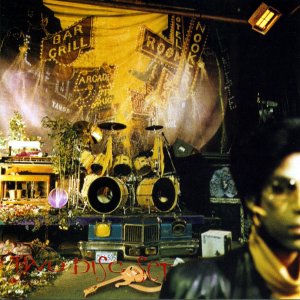
At the time of Sign O’ The Times’release, the general critical consensus seemed to be that it was a great double album but, shorn of a few tracks, would have made a sensational single album. But what the press probably didn’t know was that Prince had actually intended to release a triple album.
He believed the three-record set Crystal Ball would have been be a huge artistic statement after a relatively disappointing 1986, but the idea scared the hell out of Warner Bros and also his manager Bob Cavallo. Prince was reluctantly forced to back down.
The tracks intended for Crystal Ball but later abandoned for Sign O’ The Times were ‘Rebirth Of The Flesh’, ‘Rockhard In A Funky Place’, ‘The Ball’, ‘Joy In Repetition’, ‘Shockadelica’, and ‘Good Love’ (all hoovered up from two other aborted album projects, Dream Factory and Camille).
But even after Prince removed these, he was still left with a 16-track double album, a brilliant mix of the sacred and profane, and a record which many fans believe was his finest hour.
The famous title track was recorded on 15 July 1986 in a single ten-hour session at LA’s Sunset Sound. Prince was experimenting with a new piece of kit – the Fairlight sampler/synth – but characteristically made the technology swing in a way that no other artist could.
The track also demonstrates his love of space; it’s essentially just a minimalist blues featuring a three-note melody line, some sampled drums/bass and a bit of electric guitar. Listening again on the day after the Westminster Bridge ‘terrorist’ attack of 23 March, the song’s lyric also seems as relevant now as it was in 1987:
Hurricane Annie ripped the ceiling of a church and killed everyone inside You turn on the telly and every other story is tellin’ you somebody died Sister killed her baby cos she couldn’t afford to feed it And we’re sending people to the moon In September my cousin tried reefer for the very first time Now he’s doing horse, it’s June
It’s silly, no? When a rocket ship explodes And everybody still wants to fly Some say a man ain’t happy Until a man truly dies
‘Play In The Sunshine’ and ‘Housequake’ are pure party pop – it’s scarcely believable that Prince alone could generate such a raucous studio atmosphere with only Susannah Melvoin’s backing vocals, a few guests and Eric Leeds’ sax for company. The latter also represents his first recorded attempt at hip-hop (unless you count the brief ‘rap’ in ‘Girls & Boys’), typically supplying something usually missing from the genre: humour.
‘The Ballad Of Dorothy Parker’, recorded in Prince’s Minneapolis home studio on 15th March 1986, may be his most psychedelic recording, the soundtrack to a dream with seemingly-spontaneous musical moments that no one else could have created. He demonstrates his mastery with the LM-1 drum machine and, vocally, sets up a novel ‘Greek chorus’ effect.
‘Forever In My Life’ takes a melody line very similar to Sly And The Family Stone’s ‘Everyday People’ (and maintains Sly’s key of G) but again demonstrates Prince’s remarkable sense of space and also features another extraordinary backing vocal arrangement.
The heartfelt lyric was written when he believed he would settle down with fiancée Susannah Melvoin (twin sister of Wendy) – sadly it wasn’t to be.
‘It’, another bold experiment with the Fairlight, returns to the cold, sexualised world of 1999, while ‘Hot Thing’ is its flipside, a funky, James Brown-inspired one-chord romp with some great Leeds tenor sax.
‘If I Was Your Girlfriend’ (another song about Susannah/Wendy), ‘Strange Relationship’ (another big nod to Sly), ‘It’s Gonna Be A Beautiful Night’, ‘Starfish And Coffee’, ‘U Got The Look’ and ‘I Could Never Take The Place Of Your Man’ are just brilliantly performed, beautifully written pop tunes with dashes of psychedelia and soul.
According to engineer Susan Rogers, Prince was very influenced by Kate Bush’s Hounds Of Love during the recording of SOTT, the track ‘Cloudbusting’ a particular favourite. Other songs showed contemporary influences too – ‘Adore’ was apparently Prince’s response to the popularity of Luther Vandross’s Give Me The Reason and Patti Labelle’s The Winner In You, and it also hugely influenced the neo-soul movement, particularly D’Angelo’s ballad style.
‘U Got The Look’ – the last song recorded for Sign O’ The Times on 21 December 1986 – was apparently inspired by Robert Palmer’s ‘Addicted To Love’.
Sign O’ The Times sold 1.8 million copies in the US, a very similar number to Parade. Some believed the slightly disappointing sales were due to the choice of ‘If I Was Your Girlfriend’ as the second single; it is strange that ‘U Got The Look’ didn’t get the nod. But if Prince’s popularity was levelling out in the States, it was growing across Europe.
London-born Thomas Morgan Robertson had already made a bit of a name for himself as a synth wiz for hire – working with Bruce Woolley/The Camera Club, Joan Armatrading, Thompson Twins, Lene Lovich and Foreigner – before embarking on his debut solo album in late summer 1981.
But, as he once said, he knew ‘too many chords’ to get any regular employment in the punk and new-wave bands of the era, so was pretty much forced to go it alone.
The Golden Age Of Wireless was mainly recorded at Tapestry (a subterranean South-West London studio built and owned by John Kongos), essentially a one-man-band operation with occasional contributions from various muso mates (Daniel Miller, Tim Friese-Greene, Andy Partridge, Simon House, Kevin Armstrong, Mutt Lange).
Lyrically, the album seemed to be a Janus-like vision of England – looking back to its WW2 past and forward to the kinds of urban dystopias explored by novelist JG Ballard.
‘Europa And The Pirate Twins’ emphasises this collision of past and future with Andy Partridge’s blues harmonica and the song’s rockabilly feel rubbing up against a barrage of synths and sequencers.
The haunting ‘One Of Our Submarines’ repeats the trick with ‘futuristic’ vocal samples alongside ARP string synths more redolent of the mid 1970s.
The album is also for me inextricably linked to the coastal area of South-East England near the White Cliffs Of Dover where I spent family holidays during my late teens, an area of course also reverberating with military history. I’d comb the beaches and walk the cliffs with Wireless playing loud on my Walkman.
But first to ‘She Blinded Me With Science’. The title is taken from a war-time phrase, an expression of female appreciation, as in: ‘Cor, she fair blinded me with science, guvnor!’
For a ‘novelty’ single, it has aged pretty well, mainly due to the incredible amount of detail placed across the stereo image: TV scientist Magnus Pyke’s still-pretty-funny interjections, Simon House’s beguiling, Middle-Eastern violin licks, Matthew Seligman’s pithy synth bass and Dolby’s intriguing sonic ‘events’.
The song was a huge American hit, making #5 in May 1983, but could it have been any more British? Never mind the title – one wonders how many Americans even came close to understanding a lyric such as ‘She blinded me with science and failed me in biology’.
But ‘Blinded’ was somewhat of an anomaly. Much of Wireless is downbeat, enigmatic and haunting. Dolby proves himself a brilliant producer and arranger, a master of painting pictures with sound: the shortwave radio which kicks off ‘Radio Silence’; the shipping forecast closing ‘One Of Our Submarines’, the ‘doom’ vocals which introduce ‘Weightless’ and close ‘Cloudburst At Shingle Street’.
He’s also obviously a tremendous keys player, with endless excellent arrangement ideas and even a few chops (you wouldn’t catch anyone from OMD attempting anything like the extended Moog solo in the very Prefab-esque ‘Commercial Breakup’).
In the middle of recording his second album (and second masterpiece) The Flat Earth, ‘Blinded’ took off in the States, becoming a signature tune of the Second British Invasion. Dolby had to drop everything and get over there pronto. Michael Jackson wanted to meet him.
But he would never again trouble the singles charts in the States, and the ‘mad scientist’ image would only very occasionally be dusted off from here on in. Not necessarily a bad thing.
Recorded at The Manor, Oxfordshire, October/November 1981
Working titles: Rogue Soup, Motorcyle Landscape, World Colour Banner, Explosion Of Flowers, Knights On Fire
Album Chart position: #5 (UK), #48 (US)
Singles released: ‘Senses Working Overtime’ (UK #10)
‘Ball And Chain’ (UK #58)
‘No Thugs In Our House’ (did not chart)
Andy Partridge (vocals, guitar, keyboards, percussion, co-composer): ‘We spent the summer of 1981 rehearsing at Terry “Fatty” Alderton’s Tudor Rehearsal Studio and it was very sweaty. All the Swindon heavy rock bands would rehearse there, drink cider and piss in the corner. Terry (Chambers) had forgotten how to drum. He had spent the early summer working on a building site and when he set up his drum kit it was more like scaffolding. He was just useless (but apparently improved pretty quickly… Ed.). I forced him to buy a new snare drum and timbale. I bought a Yamaha acoustic. It opened up possibilities for new sounds where the live arrangements mattered less. I’d become unhinged a couple of times on tour and wanted a break. The album cover (by Ken Ansell)? I think it was just that we were fascinated with the Uffington Horse. The Americans thought it was a duck…’
Dave Gregory (guitar, keyboards, backing vocals): ‘I’d always dreamed about owning a 12-string Rickenbacker but it had seemed like a frivolous folly until now. I fell totally in love with the sound. English Settlement was a watershed record for us. We’d made a couple of guitar records and then the acoustic side came out. It was definitely a progression. There weren’t too many songs, just not enough time…’
Colin Moulding: (vocals, bass, keyboards, percussion, co-composer): ‘I bought a fretless bass. I thought it would fit in with the acoustic stuff we were doing but it was impossible on tour. You have to have a flair for playing something without frets and I haven’t. As soon as the lights went out…the rest is history…’
For much more info on English Settlement, check out Neville Farmer’s book ‘XTC Song Stories’.
The 1980s are littered with bands who started out with the noblest of indie intentions, but then got seduced and/or corralled into major-label action.
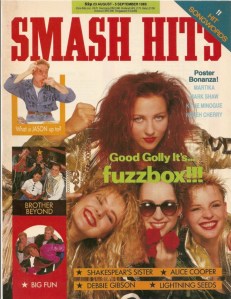
And they didn’t come much more indie than We’ve Got A Fuzzbox And We’re Gonna Use It, the Birmingham-born-and-bred, all-female, John Peel-endorsed quartet which formed in 1985.
By 1988, though they had enjoyed a lone top 40 single, you probably wouldn’t have put much money on them making a claim for serious stardom. But against all odds, they spent most of 1989 as proper pop stars.
Too young to appreciate their early stuff, I had only ever known their ‘pop’ period. But I hadn’t thought about them for over 25 years until the other day when I heard their 1989 single ‘Self’ on Absolute 80s.
I was immediately impressed and intrigued; an irresistible slice of post-Frankie, everything-but-the-kitchen-sink pomp-pop, ‘Self’ features swooning synths, powerhouse drums, strident, Claudia Brucken-esque vocals, a brilliant chorus and even a saucy Brian May guitar solo. How did they do that?
It was all so different back in ’86. Their first UK single, a double A-side of ‘XX Sex’ and ‘Rules And Regulations’, appeared on Vindaloo Records and reached number 41 in March of that year. In December, debut album Bostin’ Steve Austin was released, spawning hilarious first UK Top 40 single ‘Love Is The Slug’.
Further single releases included ‘Rocking With Rita (Head To Toe)’, featuring a version of ‘Itsy Bitsy Teenie Weenie Yellow Polka Dot Bikini’ on the B-side, and even a cover of ‘Spirit In The Sky’.
Clearly a change of direction was needed. Apparently it was WEA A&R gurus Rob Dickins and Bill Drummond who masterminded the band’s assault on the charts, recommending a shortening of their name to Fuzzbox, bringing in songwriter Liam ‘Walk Like An Egyptian’ Sternberg, putting more focus on lead singer Vickie Perks and recruiting session keyboard player Andy Richards to produce the Big Bang album.
Richards’ credentials were exemplary – prior to ’89 he had played on no less than eight ’80s UK number ones: Frankie’s ‘Relax’ and ‘Two Tribes’, George Michael’s ‘Careless Whisper’, Chris De Burgh’s ‘Lady In Red’ and the Pet Shop Boys’ ‘It’s A Sin’, ‘Always On My Mind’ and ‘Heart’. He had also recently produced Prefab Sprout’s ‘Hey Manhattan’.
And, in the short-term, Richards did a sterling job – Big Bang went top 5 and Fuzzbox were pop stars. Three singles from the album got into the top 30 – the infuriatingly-catchy Sternberg co-writes ‘Pink Sunshine’ and ‘International Rescue’ as well as ‘Self’. But the fourth single, a cover of Yoko’s ‘Walking On Thin Ice’, flopped, as did later stand-alone single ‘Your Loss My Gain’. Warners pulled the plug, probably prematurely.
But the story doesn’t end there. Fuzzbox made a comeback in 2010 with a spiffing cover of M’s ‘Pop Muzik’ but sadly lost founding member Jo Dunne in October 2012. After a brief hiatus, they reformed again in 2015 and have just finished touring with The Wonder Stuff. Their YouTube channel claims they are officially the most successful British all-female band. Dispute it at your peril…
Sometimes a decent music documentary can really open up a subject like a good book or movie.
The Dexys/KeRowland film ‘Nowhere Is Home’ did the job recently, and last weekend’s ‘Promises & Lies’ does it superbly too.
It lets the protagonists speak for themselves purely in interview format without any ‘I’m-going-on-a-journey’, narrator-led BBC guff.
Like Simply Red, Madness or The Beautiful South, UB40 are so much part of the ’80s UK chart furniture (39 Top 40 singles including three number ones to date – surely only Shakin’ Stevens and Madness bettered them during the decade?) that it’s quite hard to listen to their music objectively these days.
By the mid-1980s, they had essentially become a stadium reggae band, exemplified by their joyous Nelson Mandela 70th birthday duet with early mentor Chrissie Hynde (she headhunted them at a London Rock Garden gig in 1980 for a big US tour
UB40’s huge success has possibly obscured their great passion for the music – singer/guitarist Ali Campbell claims several times in the film that they were always promoting reggae rather than seeking fame, and the claim rings true.
But their amazing hit-rate was somewhat of a smokescreen for some serious inter-band issues, culminating in a disastrous schism between vocalist/guitarist brothers Ali and Robin in 2008 that makes the Gallagher boys’ break-up look like a petty family tiff.
It was arguably always on the cards. A very tight-knit bunch of Brummies in their early days, UB40 had always split all their performance and songwriting royalties eight ways, a decision which created financial ‘situations’ (millions missing) that would have given even Billy Joel and Leonard Cohen serious cause for concern.
The resentments, claims and counterclaims piled up, and now in 2016 there are two bands gigging as UB40, one almost unbelievably fronted by another Campbell brother, Duncan.
James ‘Jimmy’ Brown
‘Promises & Lies’ gleans strikingly honest interviews from everyone involved – no punches are pulled. And despite lots of fascinatingly-grim stuff, the documentary shows all band members to be an incredibly resilient, exceptionally talented, somewhat stubborn bunch.
Drummer James ‘Jimmy’ Brown gets an especially bad ride in the film, apparently the chief social-media ‘Ali-hater’, but his playing sounds great throughout (no less an ’80s pop personage than The Police’s Stewart Copeland once named him as his favourite rock drummer), as do almost all of UB40’s classic ’80s anthems.
I’ll be looking more closely into a band I’d mainly ‘dismissed’ as a singles act. Catch ‘Promises & Lies’ while you can on the BBC iPlayer.






 Virgin Records, released 12 February 1982

 movingtheriver.com