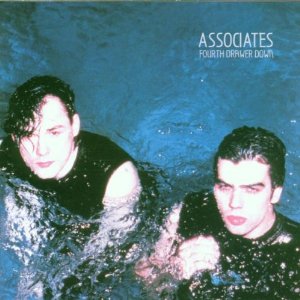
Associates: Fourth Drawer Down 40 Years On

The Associates gave good title: ‘Tell Me It’s Easter On Friday’, ‘Kitchen Person’, ‘White Car In Germany’, ‘Q Quarters’, ‘No’, ‘Those First Impressions’, ’18 Carat Love Affair’, ‘Nude Spoons’, ‘Party Fears Two’ etc. etc.

The first four of those tracks appeared on Fourth Drawer Down, released 40 years ago this weekend.

Mostly co-produced by 19-year-old Flood (Depeche Mode, U2), it was a collection of the increasingly bizarre singles released by the ‘band’ during 1981, all of which featured strongly on the Independent charts.

The Associates were yet another impressive 1980s pop duo, at least in their early incarnation. Billy Mackenzie was arguably the greatest singer of the post-punk era, while Alan Rankine was a key guitarist (and talented multi-instrumentalist) alongside John McGeoch, Charlie Burchill, Will Sergeant et al.

They were also arch music-biz pranksters, years before The KLF, good-looking, talented lads milking the record companies for all they were worth. Newly departed from Fiction Records, with ex-Cure bassist Michael Dempsey in tow, the three spent 1981 holed up in their St John’s Wood flat by day and Willesden’s Morgan (later Battery) Studios by night.

If taken in an amount just over their recommended dose, Quiet Life (also an ‘influence’ on David Sylvian/Japan?) health tablets would give a nice buzz, found in the ‘fourth drawer down’ of their bedroom cabinet.

It was a hedonistic, musically expansive period. Experimentation was king. It wasn’t unusual to see Billy singing down a vacuum tube or through tracing paper, while Rankine occasionally applied a water-filled balloon to his guitar strings.

Vintage synths were layered with dulcimer, xylophone, early drum machines, ‘funky’ bass and mad fuzz-toned guitar. It was a brittle, lo-fi sound, influenced by Bowie, Roxy, Sparks, Ennio Morricone and John Barry, quite insane in places.

The scary, majestic ‘White Car In Germany’ was the logical conclusion to all of that icy, post-Heroes Euro-grandeur, but is it a pastiche? ‘Lisp your way through Zurich/Walk on eggs in Munich’, croons Billy. It’s impossible to say, but that’s part of the fun.

The brilliant ‘Q Quarters’ is strongly reminiscent of Scott Walker’s ‘70s/’80s soundworld, and comes complete with Billy’s coughing solo. Superbly chaotic ‘The Associate’ is invaded by a screaming fit and what sounds like a major vacuum-cleaner malfunction.

Some of it may remind one of early Cocteau Twins (particularly Mackenzie’s strident vocals and oblique lyrics), early Suede and the work of Frankie Goes To Hollywood and Propaganda from later in the decade (Trevor Horn apparently almost produced a solo Mackenzie album around 1987, sadly yet another what-if in this gifted artist’s short life).

Less than a year later, aided by some more streamlined material, Warners money and the excellent producer Mike Hedges (who also worked on ‘White Car In Germany’ and ‘The Associate’), they spent nine months as bona fide pop stars in the UK.

But nothing ever sounded as singular as Fourth Drawer Down. And don’t miss out on the wacky B-sides, newly added to the remastered 2-CD version. Also worth checking out is their extraordinary Peel Session from April 1981.

Further reading:

‘The Glamour Chase’ by Tom Doyle

‘Rip It Up’ by Simon Reynolds

Simple Minds: Sparkle In The Rain

After ‘82’s critically acclaimed New Gold Dream, the logical step for Simple Minds would seem to have been to go even further away from their art-rock roots and rush headlong towards some funky ‘sophisti-pop’.

After all, head honcho Jim Kerr is on record as saying that his favourites from the era were Grace Jones’ Nightclubbing, Donna Summer’s two classic 1982 singles and Carly Simon’s ‘Why’.

To that end, Nightclubbing co-helmer Alex Sadkin was eagerly approached to produce Sparkle In The Rain, but he declined, busy with Duran Duran and Thompson Twins work.

Instead, inspired by premiering the pile-driving, Pink Floyd-meets-Doors ‘Waterfront’ at Dublin’s Phoenix Park gig (supporting U2) on 14 August 1983, they turned to producer Steve Lillywhite, chief architect of the Return to Rock that was eclipsing New Pop during summer 1983, courtesy of his work with Big Country and U2.

Lillywhite hastily took them into Shepherds Bush’s legendary Townhouse Studios 2, with Howard Gray engineering. Guitarist Charlie Burchill wrote ‘Herzog’ on the back of Lillywhite’s chair, inspired by his and Kerr’s newfound love of the German director’s ‘Fitzcarraldo’ and its theme of dreams moving mountains. A photo of Nastassja Kinski took pride of place on the control-room wall.

There were regular games of table tennis, Kerr using them to psych himself up for the very adrenalized vocal takes, especially on the hysterial ‘Kick Inside Of Me’.

After previous drummer problems to match Spinal Tap, the excellent Mel Gaynor was a real find for the band. Though quiet in the studio, he was a monster on the kit and also apparently contributed effective keyboard and guitar ideas.

Bassist Derek Forbes was more in the background, spending a lot of time drawing his ‘Dan Yer Man’ cartoons. Burchill allegedly gave him a bollocking about his lack of ‘commitment’; the writing was on the wall for the talented player. He’d soon join fellow ex-Mind Brian McGee in a superb iteration of Propaganda’s touring band.

Tellingly, Sparkle’s songwriting royalties are split five ways, except for a truncated cover of Lou Reed’s ‘Street Hassle’ which jettisons some of the more ‘unsavoury’ statements of the original (shades of Bowie’s ‘Tonight’, recorded a few months later?).

But it’s Gaynor, Kerr and McNeil’s album. The latter provides epic textures, very high in the mix. Kirsty MacColl provides a very welcome ‘girl’s voice’. ‘Shake Off The Ghosts’ was certainly noted by U2. ‘Waterfront’ is brilliant. How many other hits use guitar harmonics for their main riff? (only The Hooters’ ‘Satellite’ comes to mind).

Alongside Empires And Dance, Sparkle remains my favourite Minds album. Yes it’s a sonic ‘experiment’ and most tracks go on for a minute too long, but it’s rooted in strong band playing and delicious ambient textures. And it’s bloody loud.

Released on 6 February 1984, it became their first of four straight UK #1 albums. But they weren’t delivering on the singles front: ‘Waterfront’ only got to #13, ‘Speed Your Love’ #20 and ‘Up On The Catwalk’ #27. With hindsight, their reluctant November 1984 recording of Keith Forsey/Steve Schiff’s ‘Don’t You (Forget About Me)’ was a vital career move.

Minds hit the gig circuit for a very busy summer 1984 tour including a record-breaking (at the time) eight nights at Hammersmith Odeon. This was a very different group to a year earlier. It’s fascinating to compare two ‘Oxford Road Show’ gigs from early 1983 and early 1984.

Gone was the skinny, neurotic Euro art-funk. Kerr was a far more wholesome, energised, welcoming character than before, screaming ‘Charlie Burchill!’ before the regular guitar breaks. He even started the Hammersmith gigs up a pole, Julian Cope-style!

But Kerr quickly disowned this period, citing exhaustion on the part of the band. Stateside success seemed so near yet so far. But then came ‘Don’t You’, Kerr’s marriage to Chrissie Hynde, ‘The Breakfast Club’ and Live Aid. The world was theirs.

Further reading: ‘Simple Minds’ by Adam Sweeting

Grace Jones: Nightclubbing 40 Years On

Nightclubbing, which turns 40 this week, would be iconic even if it was only half as good, thanks to Jean-Paul Goude’s fantastic cover painting.

But drop the needle anywhere and it’s an all-time classic, one of the jewels in Island Records’ crown and hugely influential.

Arguably its mashup of new wave, reggae, synth pop, disco and Caribbean flavours blueprinted the sound all the key New Pop acts of 1982/1983 (Talking Heads, Kid Creole, Spandau Ballet, Duran Duran, ABC, The Associates, Simple Minds, Thompson Twins et al) sought.

Some, of course, went route one and employed Nightclubbing co-producer and movingtheriver.com favourite Alex Sadkin. But you might also call Nightclubbing Grace’s covers album – it features not one but six classics, if you count ‘Libertango’ and the Marianne Faithfull’s previously-co-written-but-never-recorded ‘I’ve Done It Again’ (Sting lent her ‘Demolition Man’ before laying it down with The Police).

She revolutionises Flash & The Pan’s ‘Walking In The Rain’ (her androgynous alto freaked me out when I first heard it as kid, there was just no reference point…) and compare her funky, succinct ‘DM’ to The Police’s ponderous, overblown version.

On a good system Nightclubbing‘s sonic details delight: the tambourine commentary throughout ‘Use Me’, Sly Dunbar’s dub-delay cross-sticks on ‘Walking In The Rain’, Grace’s whispered chorus on ‘Art Groupie’. The Compass Point All Stars, particularly man-of-the-match Wally Badarou on keys, are perfectly poised to provide such moments.

But there is a weird quirk – the mastering. The album seems to get quieter as it goes along, at least on the original CD version. ‘Demolition Man’ requires some serious crankage. I’m not sure if subsequent reissues have rectified that.

Nightclubbing was NME’s album of the year for 1981 and it got to #32 on the US Billboard chart, a certified crossover hit. You might even say that the 1980s Proper started here, and it helped make 1981 one of the greatest ever pop years.

And we haven’t even mentioned Grace’s electrifying One-Man-Show that accompanied the album, directed by Goude, taking place at London’s Drury Lane Theatre and New York City’s Savoy. It was surely a huge influence on everyone from Laurie Anderson to Annie Lennox.

12 Angry Men: The 1980s Midlife Crisis Collection (Part One)

Here they come, these days about as welcome as turds in a jacuzzi, a collection of white, male, middle-aged ‘rockers’.
Then again, by the time of Live Aid, anyone over 30 was deemed a ‘veteran’, one of the funnier legacies of punk and New Pop.

Let’s survey the ages of some of the ‘ancient’ rock legends who appeared at Wembley Stadium and in Philadelphia on 13 July 1985: Pete Townshend (40), Paul McCartney (43), Freddie Mercury (39), David Bowie (38), Bob Dylan (44), Keith Richards (41), Bryan Ferry (39), Mick Jagger (41), Elton John (37), Brian Wilson (43).

Looking at the output of rock’s ageing alpha males during the ‘80s, angst, anger and lust were apparently the main drivers, alongside an interest in psychoanalysis and politics. Let’s take a look at some of their most coruscating work. For our purposes, we’ll define ‘mid life’ as 30 and above…

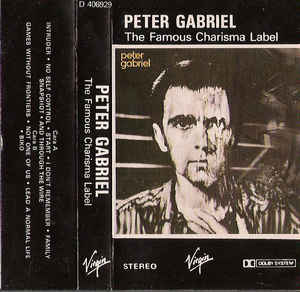
Peter Gabriel: ‘And Through The Wire’ (1980)
Upon hearing the early mixes of Peter Gabriel III, the US arm of his record company reportedly wondered if 30-year-old Pete had recently spent time in a mental asylum. But no, he was just letting off some steam, inviting Paul Weller along to supply raucous guitar, and unleashing a newfound, barely-concealed sexual energy: ‘Prowling the water hole/I wait for the kill/Pressure’s building/Overspill/I want you’. Ding-dong!

Richard Thompson: ‘Don’t Tempt Me’ (1988)
The folk/rock guitar/songwriting hero (38 at the time of recording) employed a killer US drums and bass team (Mickey Curry/Tony Levin) to carry off this pile-driving, piss-taking portrait of male jealousy and ‘little man’ syndrome. Note that he’s only ‘halfway’ out of his seat… Superb.

The Police: ‘Mother’ (1983)
Andy Summers (40 at the time of recording) takes some inspiration from Hitchcock’s ‘Psycho’ for this monstrosity, a hysterical, Oedipal blues in 7/4 time, very much inspired by his pal/guitar partner Robert Fripp. It’s quite funny to think that it was a contractually-obliged inclusion on the enormous-selling Synchronicity album, listened to by millions of unsuspecting teenagers before the emergence of the ‘skip’ button.

The Police: ‘Synchronicity II’ (1983)
Sting (31 at the time of recording) filters a Carl Jung concept through the story of family discord, a father’s paranoia and disquiet literally spawning a monster (in a Scottish loch!). Along the way, there’s also a barely concealed hatred for the common sprawl, ‘packed like lemmings into shiny metal boxes’ during the morning commute, and the protagonist’s secretaries who ‘pout and preen like cheap tarts in a red-light street’, while Sting, Summers and Stewart Copeland lay down one of the most aggressive grooves in the band’s history. Scary, strange, midlife stuff.

David Bowie: ‘It’s No Game (Part One)’ (1980)
33-year-old Bowie is jolly well peed off about…everything. There was certainly a lot to be angry about in 1980, and accordingly his Scary Monsters album dealt with some of the fears he felt for his son, from the increasingly bold tabloid press to the ever-present right-wing bully boys. In surely the most histrionic vocal performance of his career, he sounds terrified of the ‘fascists’ and violent revolutions on his TV screen.

Robbie Robertson: ‘Hell’s Half Acre’ (1987)
From the classic self-titled album, Robertson (43) sounds seriously teed off about the legacy of the Vietnam War, and more specifically, The Battle For Cu Chi of 1965/1966 (‘Down on Hell’s half acre/Shakin’ with fever/Rumble in the jungle’). Tony Levin and Manu Katche make for an appropriately barnstorming rhythm section and Robbie’s guitar is almost Clash-like in its viciousness.

Talking Heads (1980/1981): Reagan, Ghosts & Listening Winds

For many Americans, 1980 hoped to offer a break from the recent past: the Watergate scandal, defeat in Vietnam, the Iran hostage crisis, a major recession. Disco.

A Presidential Election was also pending in November. At the beginning of the year, Jimmy Carter stood at 62% in the polls, Ronald Reagan at 33.

Reagan promised to return America to a pre-countercultural era, prioritising family values and social order. He courted the Fundamentalist vote; evangelists and motivational speakers suddenly popped up all over the radio.

Something pinged in David Byrne’s head, and he later outlined the febrile atmosphere of early 1980 in Simon Reynolds’ book ‘Totally Wired’: ‘The text was saying “Thou shalt not” but the preacher’s performance was this completely sensual, sexual thing. I thought, “This is great – the whole conflict is embodied right there…”’

Byrne and Brian Eno explored some of these themes on their groundbreaking My Life In The Bush Of Ghosts (named after the 1954 book by Nigerian writer Amos Tutuola) with a particular emphasis on Islam and its contrasts with Christianity.

The project was originally supposed to be a three-way collaboration between Jon Hassell, Eno and Byrne, a fake ‘field work’ complete with ethnography, liner notes and photos, but Hassell dropped out at the eleventh hour. The album is strikingly original, still relevant and sometimes terrifying.

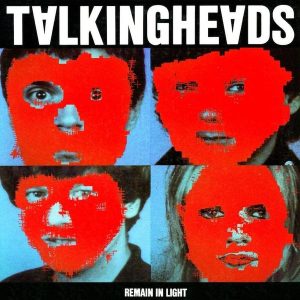
A month before the Presidential Election, on 8 October 1980, Talking Heads released their masterpiece Remain In Light, also a collaboration with Eno. The album’s key tracks, ‘Once In A Lifetime’ and ‘Listening Wind’, went even further than Bush Of Ghosts: the former showed that Byrne had completely assimilated the ‘sensual preacher’ persona, while the latter outlined a young Arab’s act of terror.

Mojique resents the rich ‘foreigners in fancy houses’ turning up in his country, makes a bomb ‘with quivering hands’ and dispatches it to his American enemy. It’s a unique, powerful piece of work, and one wonders whether its inclusion on Remain In Light contributed to the album being their worst-ever seller in the USA.

Reagan was elected on 4 November 1980 with 50.7% of the national vote. His famous Election Eve speech mentioned ‘that shining city on the hill’, invoking both Jesus’s Sermon On The Mount and noted Puritan John Winthrop. But Byrne’s New York had been under the cosh: more murders, robberies, burglaries and subway breakdowns were reported in 1980 than in any other year since records began 49 years earlier.

Reagan was inaugurated on 20 January 1981. My Life In The Bush Of Ghosts was finally released – after several postponements – almost exactly a month later.

Further reading: ‘Life And Death On The New York Dancefloor’ by Tim Lawrence

Robert Palmer: Clues 40 Years On

If in 1979 you’d been asked to draft a list of key 1970s artists most likely to go ‘new-wave’, Robert Palmer would surely have been near the bottom.

After all, he spent most of the decade as a kind of sophistifunk Bryan Ferry, with his ‘problematic’ album covers and Little Feat-inspired grooves.

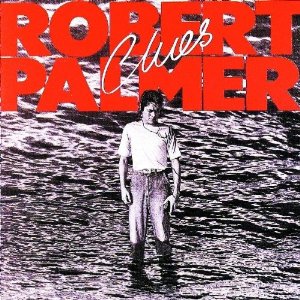
1979’s Secrets had shown glimpses of ‘rock’, but Clues, released 40 years ago this week, went the whole hog. And, along with 1978’s Double Fun, it’s probably his most consistent album and definitely worth a reappraisal.

There are good omens in the liner notes – a Talking Heads guest appearance here, a Gary Numan song there, Compass Point mixmaster general Alex Sadkin (Nightclubbing etc.) on knob-twiddling duties, Free’s Andy Fraser on bass. And Clues delivers big-time, exploding out of the speakers and clocking in at just over half-an-hour (it must sound great on vinyl).

It’s buoyed by two superb singles, ‘Looking For Clues’ and ‘Johnny And Mary’, the former scraping into the UK top 40 (shockingly, Robert only had SIX top 40 singles during the 1980s…). But there are other treats throughout: ‘Sulky Girl’ sounds curiously like Low-era Bowie, with its histrionic vocals, unhinged guitars, processed drums and barrelhouse piano.

The Beatles cover ‘Not A Second Time’ is excellent (with a new second verse), as is the Numan contribution ‘I Dream Of Wires’. When Gary’s synths squelch into action, it’s a great moment, as is the funky fanfare in the middle. And no-one but Palmer could have pulled off the minimalist Township swing of ‘Woke Up Laughing’, featuring a brilliant, polyrhythmic vocal performance.

If Good Drum Sounds are your thing, Sadkin delivers a masterclass here. I’ll be amazed if anyone can point to a better-recorded 1980s kit than on album-closer ‘Found You Now’, played by the excellent Dony Wynn (who he?).

Clues was, perhaps surprisingly, not a big success in the UK, making just #31. Nor did it go down too well in the US, peaking at #59. But it was a big hit in France, Sweden and the Netherlands.

Robert generally gets a bad rap these days, maybe due to those album covers (despite glowing character references in Phill Brown’s ‘Are We Still Rolling’ and Guy Pratt’s ‘My Bass And Other Animals’), and he seldom gets the ‘career overview’ treatment in the rock monthlies.

But he was actually married to the same woman for 28 years (from 1971 to 1999) and had two kids. A private man and music fan through and through, he died of a heart attack in 2003 at the age of just 54.

Story Of A Song: Iggy Pop’s ‘Play It Safe’ (1980)

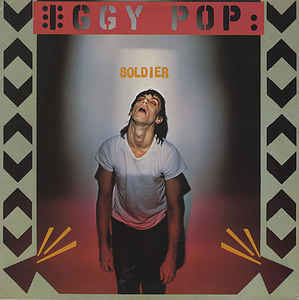
Soldier, released 40 years ago this month, was seen by Iggy’s paymasters Arista as a great opportunity for mainstream acceptance.

The Idiot and Lust For Life were now distant memories, and the label’s new head of A&R Tarquin Gotch and big boss Clive Davis were ‘taking an interest’, in Coen Brothers-speak a la ‘Barton Fink’.

As band (including ex-Pistol Glen Matlock and ex-XTC keyboard man Barry Andrews) and crew assembled at the legendary/infamous Rockfield Studios in south Wales, producer and fellow ex-Stooge James Williamson was feeling the pressure, apparently at times brandishing a bottle of vodka in one hand and loaded pistol in the other.

The Soldier sessions were long and laborious. No-one seemed to be steering the ship. Iggy was bored, brooding in deepest Monmouthshire.

Then, one night, the proverbial saloon doors swung open and David Bowie swanned in with trusty assistant Coco Schwab. The mood changed instantly. Iggy lightened up and the old megawatt smile returned.

Around the dinner table, Bowie told the story of John Bindon, friend of the Krays, one-time Led Zeppelin bodyguard, part-time actor, alleged lover of Princess Margaret and possessor – also allegedly – of an unnaturally large appendage.

Iggy was fired up. Next morning, he and Bowie jumped into the studio and cooked up an ironic rumination on the lure of the criminal world, with some choice quotes lifted almost verbatim from Bowie’s monologue.

Originally titled ‘I Wanna Be A Criminal’, it featured a classic Bowie descending chord sequence, icy synths and a superb vocal from Iggy.

Fellow Arista signings Simple Minds, hard at work recording their album Empires And Dance in the studio next door, were enlisted to provide amusing faux-Cockney backing vocals (you can also hear Bowie over the talkback mic at the song’s outset).

Some of the more libellous words about Bindon and Princess Margaret were later excised (Bowie apparently sidled up to Iggy at New York’s Mudd Club in early 1980 and begged him not to include them) and the song was finally released as ‘Play It Safe’, possibly Iggy’s self-conscious comment on his loss of nerve.

But he still mustered a brilliantly insane ad-lib towards the end:

Rockin’ and reelin’ like Al Capone
Slippin’ and slidin’ like Joey Gallo
Movin’ and groovin’ with the Son Of Sam
Splish splash, I was Jim Jones!

Bowie had once again inspired his friend to create some of his best – if hardly commercial – work, and the best track on Soldier (though I also have a soft spot for ‘I’m A Conservative’).

The album stalled at #62 in the UK chart and made a one-week appearance at #126 in the US, hardly a success in terms of making Iggy a mainstream concern. He stuck around on Arista for one more record, the forgettable Party.

Predictably, it was Bowie who would again inspire Iggy four years later to create his most effective album of the 1980s: Blah-Blah-Blah.

Prince: Dirty Mind/Controversy

Picture the scene: It’s August 1980 at Warner Bros Records’ Los Angeles HQ. Prince’s manager Steve Fargnoli is playing the suits his charge’s new demos.

Both the artist and his manager want to release these rough recordings as the next album.

Fargnoli hits the play button, and these lyrics crawl out over a peppy – but distinctly lo-fi – new-wave groove:

I was only sixteen but I guess that’s no excuse
My sister was thirty-two, lovely and loose
She don’t wear no underwear
She says it only gets in her hair…

Major labels often – quite rightly – take a lot of flak, but Warner Bros deserves credit for taking on Dirty Mind (released 8 October 1980) and Controversy (released 14 October 1981).

It was a brave move by Prince too, an incredible volte face after it looked like he might be going down a big-budget, soft-rock/disco rabbit hole. Just compare the Prince and Dirty Mind covers: it was definitely one in the eye for Reagan’s new, ultra-conservative regime.

I first heard these albums circa 1988 via a compilation tape made by my schoolfriend Seb. I already knew and loved Parade and Sign O’ The Times but these older songs sounded like they’d been sent down from a different planet. I didn’t pay much attention to lyrics in those days but sensed something very odd going on.

In the Dirty Mind/Controversy era, Prince’s main modus operandi seems to be: shock at all costs. It’s a novel approach, because if he can express himself completely freely, and then deliver such a classic, ‘throwaway’ rock song like ‘When You Were Mine’, you never know what’s going to come next. Cue a long, great career.

Recorded very quickly during summer 1980 at his rather ramshackle home studio in Lake Minnetonka, Minneapolis (the drum kit apparently sat in a puddle of water surrounded by sand bags), Dirty Mind has more in common with the B-52s, Elvis Costello, Blondie and The Cars than it does Earth, Wind & Fire or REO Speedwagon.

It’s nasty, brutish and short. And of course what struck me listening to it again after five or six years, it’s remarkably stripped down compared to a great deal of modern music – hardly surprising when nearly all the noises are made by Prince. Only ‘Head’, ‘Partyup’ and ‘Uptown’ outstay their welcome, underwhelming grooves with slight vocal performances (though the former became a great live track).

My old vinyl version of Controversy sounds absolutely great. Of course it helps that the album’s only 37 minutes long, and also there’s a lot more bottom-end this time. On a decent turntable, various details emerge like the scuzzy synth bass escaping from the left channel during the Lord’s Prayer on the title track (can you guess it’s a Prince album yet?) and some low-octave backing vocals throughout.

It’s also a totally schizophrenic album again, with the title track and ‘Sexuality’ laying down a kind of free-love/free-speech manifesto, two rockabilly tunes (one a message to Reagan), a graphic seduction ballad and synthetic funk tune (‘Private Joy’) which marks Prince’s first use of the Linn LM-1 drum machine.

Weirdly, none of these songs made the PMRC’s Filthy 15 list. But they still sound totally fresh, especially the unclassifiable stuff like ‘Dirty Mind’, ‘Annie Christian’, ‘Jack U Off’, ‘Sexuality’ and ‘Ronnie Talk To Russia’.

Prince toured Dirty Mind and Controversy extensively, and there were three particularly infamous gigs during the period: his London debut at The Lyceum on 2 June 1981 and the two shows supporting The Rolling Stones at the Los Angeles Memorial Coliseum on 9 and 11 October 1981.

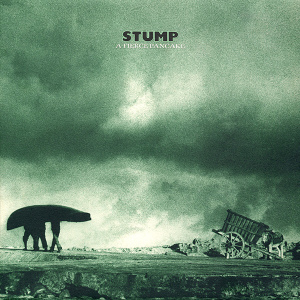
Stump: A Fierce Pancake 30 Years Old Today

The general consensus seems to be that Anglo/Irish late-1980s band Stump didn’t quite ‘make it’.
But maybe we should probably be thankful that they stayed together for as long as they did. They released one great mini album (Quirk Out) and just one full-length one, A Fierce Pancake (currently not on streaming platforms due to a contractual disagreement).

Released 30 years old today, the latter is probably in my 1980s top 10, and reportedly one of Faith No More/Mr Bungle frontman Mike Patton’s favourites too.

It was never going to be easy: the drummer (Rob McKahey) sounded like he belonged in Beefheart’s Magic Band or Ornette Coleman’s Prime Time, the fretless bassist (Kev Hopper) was into sampling, Pere Ubu and Brand X, the guitarist (Chris Salmon) sounded like a cross between Hank Marvin and Adrian Belew and brilliant frontman/lyricist (the late Mick Lynch) was more than likely to engage in a bit of onstage belly dancing.

But it somehow works. A Fierce Pancake is dedicated to the life and works of physician/psychoanalyst Wilhelm Reich and writer Flann O’Brien. It was released on Ensign Records, mainly known for breaking Irish acts like Sinead O’Connor and the Waterboys.

Recording sessions at Hansa in Berlin were apparently long and difficult – original producer Holger Hiller jumped ship halfway through and then ‘stabilising influence’ engineer Stephen Street got summoned away to work with Morrissey.

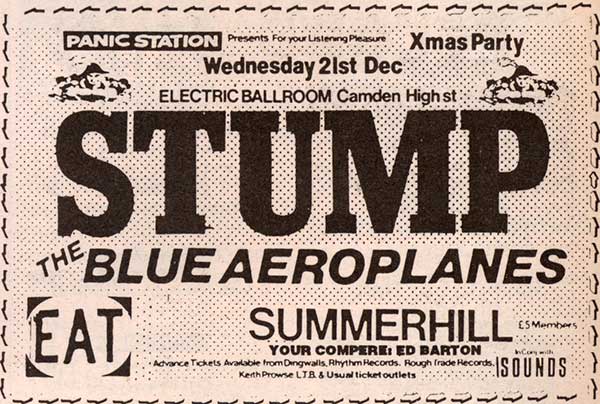
But the album’s sometimes hilarious (‘Bone’, ‘Charlton Heston’, ‘Chaos’, ‘Eager Bereaver’), sometimes touching (‘Alcohol’, ‘Boggy Home’) and always musically interesting, kind of a cross between Viz magazine and XTC. It’s a shame that they couldn’t maintain the John Peel-endorsed momentum of their early days. Their manager persuaded them to call it a day after a disastrous Camden Electric Ballroom gig supported by The Blue Aeroplanes on 21 December 1988.

A Fierce Pancake hadn’t come close to recouping its costs and the Rave scene was in full flow. It was all over, barring a one-off comeback gig in May 2015.

For more on the band, check out this excellent podcast.

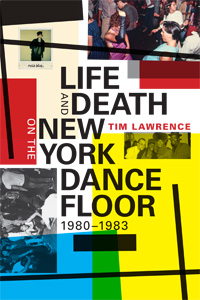
Book Review: Life And Death On The New York Dance Floor by Tim Lawrence

No less a pop personage than Brian Eno called the early 1980s ‘the most exciting era of New York music’, and he should know a thing or two about the subject.

Tim Lawrence’s excellent ‘Life And Death On The New York Dance Floor 1980-1983’ backs up Eno’s claim.

The book traces the many musical and cultural strands of the early ’80s NYC scene, from the ‘Disco Sucks’ movement which briefly blossomed at the beginning of the decade through to the end-of-an-era AIDS panic of late ’83.

Lawrence vividly brings to life a scene where musicians, DJs, dancers, artists and club owners fused new-wave, no-wave, punk, dub, pop-art, Afro-funk, kitsch, S&M, psychedelia, disco, gospel, electro and hip-hop to create an exciting, vibrant, anything-goes aesthetic.

Along the way, the book also looks at the making of some of the key NYC records of the era – ‘The Message’, ‘Rapture’, ‘Moody’, ‘Blue Monday’, ‘Planet Rock’.

Pretty much all the key players of the scene make memorable appearances, a fascinating roll call including Larry Levan, David Byrne, Madonna, Afrika Bambaataa, Fab 5 Freddy, Sylvia Robinson, Keith Haring, Jean-Michel Basquiat, Kool Herc, Arthur Baker, Melle Mel, Grandmaster Flash, Francois Kevorkian, Don Was and James Chance.

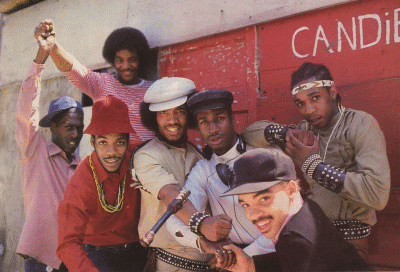
Grandmaster Flash and the Furious Five

Lawrence also paints a vivid picture of the diverse dancefloors of The Roxy, Danceteria, Paradise Garage, Mudd Club and Canal Zone, where on any given night you could see people doing martial arts moves, magic tricks or even aerobics (yes, apparently early ’80s NY also foresaw that cultural boom which hit big later in the decade).

Many rare and previously unpublished photos are included, and Lawrence also gets his hands on many interesting artefacts from the era such as Kraftwerk and Bambaataa full DJ setlists from The Ritz in 1981.

But all good things must come to an end, and ‘Life And Death On The New York Dance Floor’ doesn’t scrimp on the full details of how Reaganomics, gentrification, corporate intrusion and the spread of AIDS decimated the scene.

The book is a great achievement by Lawrence, with a level of detail and seriousness befitting a Professor of Cultural Studies but also large doses of fun and gossip befitting a good-time era and its fascinating protagonists.

‘Life And Death On The New York Dance Floor 1980-1983’ is published by Duke University Press.