How We Live: Dry Land 30 Years On

How+We+Live+Dry+Land+554632Madchester aside, the late-’80s may be the least-heralded period of British pop, but the era also produced a surprising amount of intelligent, original bands that arguably never got their commercial due: Love And Money, Danny Wilson, The Bible, The Lilac Time, It Bites, Stump…

The list of ‘under-achievers’ is long and varied. But one name often forgotten is How We Live.

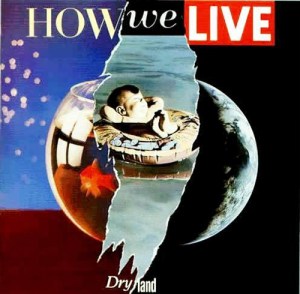
Most famous for featuring a pre-Marillion Steve Hogarth on vocals and keyboards, the band emerged from the ashes of new-wave popsters The Europeans to release their one and only album Dry Land in 1987.

Originally appearing on CBS offshoot Portrait Records but now given a shiny new remaster by Esoteric/Cherry Red, the album certainly ticks lots of ‘quality 1980s pop’ boxes: it was recorded at Crescent Studios in Bath with XTC/Peter Gabriel producer David Lord and The The/Deacon Blue engineer Warne Livesey, and features Tears For Fears’ drummer Manny Elias on a few tracks. Peter Gabriel and XTC get a thank-you on the inside cover.

Colin Woore and Steve Hogarth

Colin Woore and Steve Hogarth

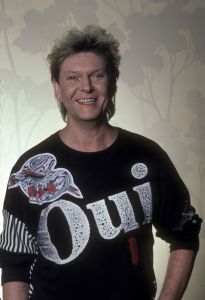
Malcolm Dome’s incisive liner notes for this re-release outline the record-company shenanigans which dramatically shortened How We Live’s lifespan, whilst also acknowledging how Hogarth and fellow ex-European Colin Woore’s songwriting was very much informed by the other quality British pop of the time – Talk Talk, David Sylvian, Gabriel, Hue & Cry (Hogarth apparently being a big fan of Pat Kane’s vocals), Kate Bush.

And while it’s tempting to view Dry Land as the prelude to Marillion’s second phase, it’s pretty clear that Hogarth already had an extremely strong presence as a singer, songwriter and keyboard player long before he joined the Brit-prog behemoths.

Dry Land‘s opening 1-2-3 of ‘Working Girl’, ‘All The Time In The World’ and the title track (latter taken into the top 40 by Marillion) is pure dream-pop bliss. The latter benefits from a dramatic string arrangement, missing from the Marillion version, though connoisseurs might rue the big snare-drum sound.

‘Working Girl’ is simply a classic, with a haunting verse and swooning, truly uplifting chorus. How that and ‘All The Time’ didn’t crack the top 40 is still a mystery, though, according to manager Mark Thompson, CBS were spending most of their time and money trying to break Deacon Blue during this period.

Whilst the rest of Dry Land can’t quite maintain the quality of the first three tracks, there are plenty of other pleasures: ‘Games In Germany’ is a fine fusion of late-’80s PiL and Season’s End-era Marillion, a crashing new-wave groove with a fabulous, wrong-footing chorus.

Classy ballad ‘Lost At Sea’ is somewhat reminiscent of David Sylvian’s work of the same period, while ‘In The City’ takes a left turn into jazzy pop with great aplomb; its shimmering synths, swinging groove and catchy trumpet melody bring to mind such late-’80s movie soundtracks as ‘The Big Blue’ and ‘Betty Blue’.

‘India’ is unfortunately a bit more Chris De Burgh than It Bites, though Dave ‘Taif’ Ball’s elegant fretless bass impresses, as it does throughout Dry Land. ‘The Rainbow Room’ is perhaps the most ‘prog’ track on the album, powered along by an intricate keyboard sequence and guitar motif.

Unfortunately Dry Land was a dead end for How We Live – it stalled outside the top 40, and, although there were some big gigs including a Munich show on the same bill as Eurythmics and Tina Turner in front of 100,000 people, they called it a day in late 1987.

Hogarth was enquiring about becoming a milkman when he heard from his publisher that Marillion had been in touch. He was back in business, and remains so to this day. But Dry Land is a fascinating and worthwhile precursor.

Dry Land is out now on Esoteric/Cherry Red.

Peter Gabriel: So 30 Years Old Today

gabriel

‘At the time of coming back, he had tremendous determination. He said do want to make it! I do want to succeed!” Instead of going along with the idea that he is different, special, unique, precious, So was about him saying, “F**k that! I’m going to allow myself to succeed.”’ Jill Gabriel, quoted in ‘Peter Gabriel’ by Spencer Bright

So was the Peter Gabriel album that put him – albeit very briefly – into The Big League, alongside the likes of Madonna, Michael Jackson, Phil Collins, Prince, Hall and Oates and Springsteen, leaving his ‘art-rock’ contemporaries (Laurie Anderson, Brian Eno, Peter Hammill, Robert Fripp) in the dust.

He opened himself up to mainstream success via more direct lyrics and music. And it worked a treat. So still sounds fantastic today; a near-perfect mix of art and commerce.

photo by Steven Toole

photo by Steven Toole

In interviews, Gabriel has described the ’83/’84’ period as a dark time in his life. He mixed and released an excellent live album and looked for solace in film soundtrack work, producing two fairly inconsequential tracks: ‘Walk Through The Fire’ from ‘Against All Odds’ and ‘Out Out’ from ‘Gremlins’.

Far more substantial was his soundtrack for Alan Parker’s ‘Birdy’, but, most importantly, it was the project that introduced him to So co-producer Daniel Lanois.

Gabriel later credited Lanois and his then wife Jill for steering him back towards more positive thoughts, and much more ‘up’ music and lyrics.

Gabriel came up with 20 new songs by early 1985. Lanois helped him whittle them down to 12, and then six months of pre-production began, focusing on song structures and arrangements. So was mainly recorded at Gabriel’s home studio, Ashcombe House near Bath.

Working at home was intended to save money on big studio fees and also speed up the creative process, but lyric-writing was still a big problem and a lack of words necessitated two missed release deadlines for So: 31st July 1985 and 14th December 1985.

Virgin were patient. Lanois once even nailed him into a back room to force him to come up with some lyrics – Gabriel was not amused, at least not for a few hours. ‘It is the most upset I’ve seen him at the studio,’ guitarist David Rhodes remarked. Lanois had made his point.

Musically, Gabriel very much leaned on tried-and-tested collaborators such as Rhodes and Tony Levin – it’s hard to imagine anyone else playing bass on So. He’s so much part of the music. Check out his ‘drumstick bass’ (later marketed as Funk Fingers!) on ‘Big Time’.

Joni Mitchell’s then husband Larry Klein also plays some lovely fretless on ‘Mercy Street’. French-African newcomer Manu Katche amazed everyone with his drumming, particularly on ‘That Voice Again’ and ‘In Your Eyes’. He had a new twist on Stewart Copeland’s style and also somehow found the time to fit occasional tom-tom flurries into his grooves too.

Migrant Mother by Dorothea Lange

Migrant Mother by Dorothea Lange

‘Red Rain’ opens with some resplendent Copeland hi-hat work, and ends with the kind of piano/vocal coda that Simple Minds excelled at – the influences were now flowing both ways.

‘Don’t Give Up’ was inspired by a BBC TV documentary about the effect of unemployment on British family life, and also the photography of Dorothea Lange, portraying dust-bowl conditions during the Great Depression.

‘Mercy Street’, dedicated to poet Anne Sexton, shows evidence of Lanois’ influence; its opening ambient textures resemble Brian Eno’s ‘Under Stars’ which Lanois co-produced.

Gabriel’s low-octave vocals apparently had to be recorded first thing in the morning for maximum deepness. The song’s Brazilian/African groove predates Paul Simon’s Graceland by six months or so.

‘We Do What We’re Told (Milgram’s 37)’, concerning social psychologist Stanley Milgram’s infamous experiments, was originally recorded for Melt in 1980. While musically very rich and dark (I always think of Kate Bush’s ‘Running Up That Hill’ when I hear that opening minor chord), lyrically it is possibly a little half-baked.

‘Big Time’ is Gabriel’s amusing, self-mocking, Randy Newmanesque satire on success and celebrity – ‘This drive for success is a basic part of human nature and my nature’, he later said.

Musically, it’s a potent mixture of driving Copeland drums, treated rhythm guitar, synth bass, quasi-industrial samples and some great Hammond organ by Simon Clark.

Another much rockier version – featuring Jerry Marotta on drums – was also recorded but scrapped just before the mastering stage.

‘Sledgehammer’ was the last song written and recorded for So. Ironically, it dislodged Genesis’s ‘Invisible Touch’ to become a US number one single in July 1986.

A catalogue of sexual innuendos, it’s one of the weirder hits of the 1980s. Its odd cheerfulness may come from the fact that it’s mainly in a major key, a rarity for an R’n’B-influenced track. David Rhodes’ rhythm guitar part is eccentric and the Farfisa organ bizarre.

The opening sampled bamboo flute was copied by hundreds of keyboard players across the UK (or at least a few in my school). The groundbreaking video for the song, directed by Stephen Johnson (who had used similar techniques for Talking Heads’ ‘Road To Nowhere’ clip), required 100 hours of Gabriel’s time.

Apparently Gabriel was obsessed with the album’s sequencing: he made up endless cassettes featuring just song endings/beginnings, testing all the different permutations.

He always wanted ‘In Your Eyes’ to close So, but was persuaded otherwise when told that its drums and bass wouldn’t hold up very well at the end of a long side of vinyl (though it’s hard to ‘hear’ it anywhere else but at the beginning of side two…). He finally got it where he wanted it on the definitive remastered version.

Gabriel’s only concession to the record company was to name the album something apart from ‘Peter Gabriel’. So seemed suitably off-the-cuff – ‘It had a nice shape but very little meaning’, he later said.

He also decided that a simple cover shot would better suit the directness of the music and lyrics than some of the more disturbing covers of albums past. So‘s design and packaging still look fantastic today.

The album topped the charts on both sides of the Atlantic and by summer 1987 had sold over 5 million copies worldwide. Gabriel promoted the album extensively before embarking on Amnesty’s Human Rights Now! with Sting, Tracy Chapman and Bruce Springsteen in 1988.

He had a lot more than music on his mind – he waited a full six years before releasing the official follow-up to So. The commercial assault had paid off but at what cost to his long-term creativity?

Francis Dunnery: Back To It Bites

francis dunneryIn some ways, it may not be much of a surprise to hear that ex-It Bites vocalist, guitarist and songwriter Francis Dunnery has returned to the music of his old band, one of the great British units of the ‘80s.

He met up with the other three members – keyboardist John Beck, bassist Dick Nolan and drummer Bob Dalton – during a London Union Chapel gig in 2003, and for a while a full-scale reunion looked to be on the cards. But it wasn’t to be.

Then Dunnery recorded various ‘reversions’ of It Bites songs on his 2011 album There’s A Whole New World Out There, and he has frequently performed the old material in concert (check out this amazing version of Once Around The World’s title track from a few years ago). So he’s never exactly been averse to revisiting former glories.

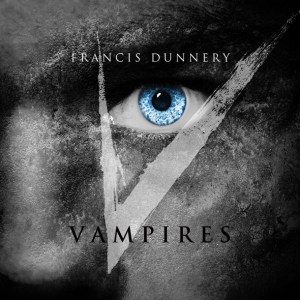
But Vampires is different. It goes the whole hog: he’s re-recorded not just one album but 100 minutes of It Bites classics, singing all the vocal parts himself (with much-improved body and range, though his vocals weren’t exactly shabby in the old days) and enlisting various musicians including ex-Go West drummer Tony Beard to navigate the musical twists and turns.

Two years in the making, the album is also a blast from the past in terms of its audio qualities – it was recorded without EQ or compression, only a small amount of the latter being added at mastering stage.

Francis_Dunnery_Robin

Francis discusses the new album and the It Bites days in this excellent interview for The Mouth magazine.

He reveals – for the first time, as far as I’m aware – the full story of how the band got signed to Virgin, Dunnery’s period squatting in South London, his relationship with John Beck, his favourite It Bites songs, the band’s split and loads more. It’s a must-listen for any fans.

You can also hear many excerpts from Vampires and make your own mind up about whether his new versions improve on the originals.

And, in other Dunnery-related news, who knew that we would be able to add ‘radio presenter’ to his list of abilities?

Yes, his new Progzilla show is by turns hilarious, controversial, infantile, informative, philosophical and troubling. He’s a natural, but the show’s not for everyone…

RIP Chris Squire (Take Three)

chris sIt’s the beautifully-written piece you’d hope to read from a newly-awarded professor of music, but I thought it well worth quoting Bill Bruford’s tribute to Chris Squire in full (with apologies for tardiness), which I believe first appeared on the Yes website.

‘Really saddened to hear of the death of my old Yes band-mate, Chris Squire. I shall remember him fondly; one of the twin rocks upon which Yes was founded and, I believe, the only member to have been present and correct, Rickenbacker at the ready, on every tour. He and I had a working relationship built around our differences. Despite, or perhaps because of, the old chestnut about creative tension, it seemed, strangely, to work.

He had an approach that contrasted sharply with the somewhat monotonic, immobile bass parts of today. His lines were important; counter-melodic structural components that you were as likely to go away humming as the top line melody; little stand-alone works of art in themselves. Whenever I think of him, which is not infrequently, I think of the over-driven fuzz of the sinewy staccato hits in ‘Close to the Edge’ (6’04” and on) or a couple of minutes later where he sounds like a tuba (8’.00”). While he may have taken a while to arrive at the finished article, it was always worth waiting for.  And then he would sing a different part on top.

An individualist in an age when it was possible to establish individuality, Chris fearlessly staked out a whole protectorate of bass playing in which he was lord and master. I suspect he knew not only that he gave millions of people pleasure with his music, but also that he was fortunate to be able to do so. I offer sincere condolences to his family.

Adios, partner. Bill.’


Story Of A Song: Bill Bruford’s ‘Palewell Park’ (1981)

The 1980s were a pretty good time to be a songwriting drummer; Sheila E, Phil Collins and Don Henley all flourished, and probably a few more too.

Not that master Yes/King Crimson sticksman Bill Bruford had any particular desire to match their commercial standing as the decade got underway. He was quite happy gaining harmonic knowledge (with the assistance of keyboardist Dave Stewart), making sizeable contributions to the percussion community and composing incredible pieces of music like ‘Palewell Park’.

In a way, it was the culmination of his work with the Bruford group which had released three studio albums between 1978 and 1980, two featuring the brilliant Allan Holdsworth on guitar.

Palewell Park, East Sheen, London

Palewell Park, East Sheen, London

This track has a special resonance for me as Palewell Park was a childhood hangout, site of many great cricket, tennis and football games as well as a fair few teenage hijinks. Bruford apparently lived nearby during the piece’s recording at Surrey Sound in Leatherhead (also the studio The Police used for their first two albums) and wanted to write an ode to the area.

Someone on YouTube very aptly described ‘Palewell Park’ as ‘a contemporary piece for piano and bass’. It doesn’t fit comfortably into any genre, but it’s a pretty remarkable composition coming from the pen of a ‘drummer’, and one who doesn’t even feature on his own composition (Stewart played the piano).

Jeff Berlin, Jon Clark, Dave Stewart, Bill Bruford in 1980

Jeff Berlin, Jon Clark, Dave Stewart, Bill Bruford in 1980

The 26-year-old Jeff Berlin lays down one of the great pieces of post-Jaco bass playing. With just a touch of chorus pedal, he sticks to the pretty treacherous melody in the first half and then stretches out to play a fantastic solo over the changes, a total lesson in melody construction, with no gimmicks.

Next up for Bill was a reunion with Robert Fripp and one of the great albums of the ’80s, King Crimson’s Discipline.

It Bites: Eat Me In St Louis

eat-me-in-st-louis-527b870be5b7f

It Bites go Metal? Nearly. A brave attempt to break the US? Possibly.

Even Kerrang! magazine took notice of this one. Riff-heavy, blues-based rock was making a big comeback on the late-‘80s UK music scene, typified by the success of Thunder, The Quireboys, Gun and Little Angels.

The gifted Cumbrian four-piece came up with a neat twist and produced their heaviest album yet in Eat Me. But they could never completely jettison their penchant for brilliant pop hooks, colourful instrumentation and intricate arrangements.


Francis Dunnery’s guitar playing was leaner, meaner and more direct than before, with a stronger blues flavour; Hendrix and Clapton were touchstones now rather than Holdsworth and Gambale.

The song and performance were paramount. He talked glowingly of David Sylvian and The Blue Nile in interviews. Producer Mack brought the big drum sound and ban on reverb. Dick Nolan expanded the grooves with his new six-string bass.

There were three near-hits (‘Still Too Young To Remember’, ‘Underneath Your Pillow’, ‘Sister Sarah’). Roger Dean provided the album cover concept/graphics/masks, possibly a weird move for a band trying to escape the Prog tag. It was red rag to a bull for the NME who ran a sarcastic mini-interview with Dunnery at the time which barely mentioned the band’s music.

First single ‘Still Too Young To Remember’ was Classic Rock of an early-‘70s vintage, sounding more like Family, Cat Stevens or Free than Genesis or Marillion. Virgin flogged it mercilessly with not one but two re-releases but there was still no sign of a hit.

I remember excitedly rushing out to the buy the 12” version one beautiful spring day in 1989. Its superb B-side ‘Vampires’ features one of Dunnery’s most outrageous guitar solos. Other fine B-sides of the time include ‘Bullet In The Barrell’ and ‘Woman Is An Addict’ which features a killer whole-tone Nolan/Dunnery riff.

As the ’80s turned into the ’90s, It Bites were shaping up to be one of the bigger live draws in British rock – they embarked on three tours in the space of a year, selling out the Hammersmith Odeon and impressing everyone. A glorious night at the old Town And Country Club featured on the ‘Meltdown’ TV show.

They played extensively in Japan and toured the States with Jethro Tull. The feeling in the Virgin camp was that the fourth album would deliver the big hit they were striving for. Too heavy for pop but too pop for metal? Too good for the charts? Suddenly, despite the lack of singles action, it didn’t seem to matter too much.

But the cracks were starting to show – Dunnery was reportedly a barely-functioning alcoholic whose self-loathing tendencies led to sublimely pissed-off guitar solos but more often than not wound up the rest of the band – especially the equally gifted yet far more docile John Beck (Dunnery recently said in a Classic Prog interview that they had very different ‘energy levels’), often leading to some thrillingly edgy onstage duels but also some resentment.

Decamping to Los Angeles to write songs for the fourth album proved a career move too far – Beck, Dalton and Nolan refused to work with Dunnery who was AWOL periodically throughout the sessions. The band splintered and that was that, despite a brief reunion of the original line-up the early noughties.

It’s fascinating to imagine what might have been if they’d been able to hold on a bit longer and harness the creative tension between Beck and Dunnery. The breakup was a sad end to one of the most prodigious groups of musicians in the ‘80s pop pantheon.

Dreams By The Sea: Peter Gabriel & Kate Bush

kate bushI’m certainly not alone in finding the seaside very evocative of childhood memories and, in turn, musical revelations gone by.
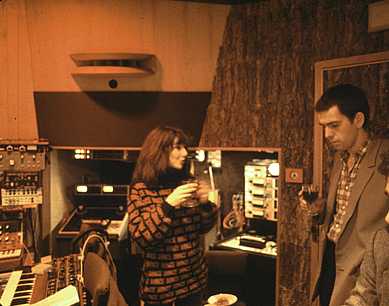
Walking on Devon’s Slapton Sands recently, I was taken back to family holidays at St Margaret’s Bay, a little village atop the famous White Cliffs of Dover on the English Channel.

Armed with my Walkman, I’d take off towards the creepy, deserted air-raid shelters, then scramble up the steep chalk track to enjoy the huge expanse of sea in all directions and the French coast in the distance.

The two tracks most redolent of that time – and two which somehow seem to capture something about the English fascination with all things nautical – are Kate Bush’s ‘And Dream Of Sheep’ and Peter Gabriel/Robert Fripp’s ‘Here Comes The Flood’. They are almost indistinguishable to me and will forever be connected to that coastline and the seaside in general.

Gabriel’s sea song was originally recorded for his 1976 debut album in a bombastic style. But in 1978, he laid down a much gentler, far superior piano/vocal version, to which Fripp later added Frippertronics and a spoken-word segment from his spiritual guide/Gurdjieff-protegee JG Bennett (who also turned up on David Sylvian’s Gone To Earth).

kate bush peter gabriel

Gabriel’s lyric seems to point towards the inhabitants of an island (England?) joining forces (telepathically?) to save themselves from a pending (apocalyptic?) tsunami. In doing so, the islanders taken on mystical, extra-sensory powers.

There are shades of the Genesis track ‘Supper’s Ready’, with its epic tale of good versus evil, and also elements of the research into ESP that Gabriel was apparently doing at the time.

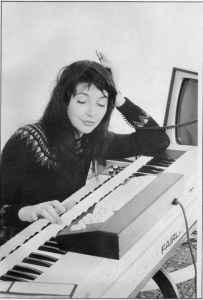
Bush’s sea song kicks off the extraordinary Ninth Wave suite (and uses very similar chords to ‘Here Comes The Flood’: C#min, A and B) taking up the entire second side of her classic 1985 album Hounds Of Love. We are thrust unceremoniously into a psychic association with a female protagonist who finds herself in the middle of the sea after a shipwreck. Echoes of past/present obsessions, loves and losses float to the surface of her mind (including the Radio 4 Shipping Forecast), ostensibly to keep her awake so that she doesn’t drown.

The conclusion of the song cycle suggests that she’s now at peace and in a far more positive state of mind, either in death or safe at shore.

RIP Chris Squire (Updated)

In my recent piece on Chris’s sad passing and bass style, I put forward my half-arsed theories on his ’80s tunings.

I stand corrected, as the excellent video below shows. The whole thing is worth watching, but he gets into the issue of his five-string bass at around 12:10 (and also rattles off a nice demonstration of the ‘I’m Running’ riff).

Needless to say, his approaches to the five-string and tunings in general are as original as all his other musical ideas. Enjoy.

RIP Chris Squire

chris squireEven solely based on the evidence of his rather unappreciated ’80s playing, Chris Squire would surely still get into the pantheon of bass greats.

I first heard him on Yes’s 1987 album Big Generator and worked backwards from there. I was won over by Trevor Horn’s pristine production, the band’s outrageous musicianship and the sheer originality of the songwriting, but recently Chris’s bass playing from the era is kind of obsessing me.

To my ears, he detuned his low E string on a standard four-string bass to a low A, one octave lower than the second string, presumably to best accompany the new songs which generally tended towards A major. You can hear it most clearly on the powerful title track and ‘Love Will Find A Way’.

Anyone who’s ever picked up a bass will know how potentially treacherous that tuning could be, but he just sails through. It also gives him a massive melodic range, from the funky twang of the ‘I’m Running’ riff, to the brutal low-end grooves of the title track and ‘Almost Like Love’.

The 1983 Yes album 90125 is also full of great Squire moments (with mostly regular tuning this time), from the catchy riff underpinning ‘It Could Happen To You’ to the flanger freakout ‘Cinema’ and rifftastic ‘City Of Love’. He really extended the Paul McCartney melodic bass concept into exciting new territories.

Sadly, sometimes it takes a great player’s passing to spur you on to check out music that has thus far escaped you, so the 1980 album Drama is my latest discovery. The lead-off track ‘Machine Messiah’ and ‘Does It Really Happen’ are chock-full of classic Squire moments and I’m sure loads more will reveal themselves. I must also investigate his short-lived project XYZ alongside Jimmy Page and Robert Plant.

By all accounts, Chris was a great and totally unique character too. RIP to a definite lord of the low end.

Christopher Russell Edward Squire (4 March 1948 – 27 June 2015)

Classic Prog’s Last Hurrah: It Bites’ Once Around The World

it bitesEveryone has their favourite summer music and the brilliant Once Around The World is an album I always turn to at this time of year.

It’s a feast of resplendent chord changes, audacious song structures, good grooves, blistering lead guitar lines and uplifting, unusual melodies.

As a music-mad 15-year-old, this was the album I was really waiting for. I had recently become slightly obsessed by their debut The Big Lad In The Windmill and couldn’t wait to hear what the talented Cumbrian four-piece would come up with next.

For some reason, I didn’t buy OATW on its first week of release, but my schoolmate Jem Godfrey did. I would badger him for details in the playground. Me: ‘Are there any instrumentals on it?’ Jem: ‘No.’ Me: ‘What’s it like then?’ Jem: ‘It’s bloody brilliant, just get it!’

In 1988, the world didn’t need a dose of beautifully-recorded, full-on prog lunacy, but they got it anyway and the UK music scene was all the better for it. There were murmurs of a ‘prog revival’ at the time but It Bites (and to a certain extent Marillion) were streets ahead of the pack because they blended superb musicianship with great hooks and catchy songs.

Hats off to Richard Branson and Virgin for throwing some money at this album because it turned out to be classic prog’s last hurrah. Mainly recorded at The Manor in Oxfordshire (where rumour has it singer/guitarist Francis Dunnery gained access to Richard Branson’s bountiful wine cellar on the band’s first night of recording with disastrous consequences…), OATW is essentially one side of beautifully-produced pop/rock songs (mainly helmed by Virgin prog survivor Steve Hillage), and another of completely brilliant, barmy prog/pop pieces.

The Manor

‘Midnight’ and ‘Kiss Like Judas’ are lean, mean, well-crafted pop/rock songs with good hooks and meaty grooves, but both just missed the UK Top 40.

‘Plastic Dreamer’ fits an unbelievable amount of material into its four minutes, including a vocal harmony section that would make Roy Thomas Baker drool, a stunning guitar solo from Dunnery, some spooky Alice In Wonderland atmospherics and preposterous lyrics (very much inspired by Peter Gabriel’s Genesis output).

They repeat the trick on ‘Hunting The Whale’ and make good use of the Manor swimming pool in the process. The 14-minute title track, whilst owing a few licks and lyric ideas to Genesis’s ‘Supper’s Ready’, is nevertheless astoundingly ambitious and brilliantly realised considering it was recorded in the same year as Kylie’s ‘I Should Be So Lucky’.

(There are other nods to early Genesis throughout the album: the last few minutes of ‘Old Man And The Angel’ brilliantly revisits the rhythm games of ‘The Battle Of Epping Forest’; the main hook of ‘Hunting The Whale’ is very similar to Steve Hackett’s ‘Dancing With The Moonlit Knight’ central riff; the middle-eight of ‘Midnight’ uses Tony Banks’ opening chords to ‘Watcher Of The Skies’.)

They could play all this stuff live too, and with great elan (they played the whole of OATW at the much-missed London Astoria circa May 1988, and I also caught them a few months before that at Brunel University). Their range and ability was simply stunning.

John Beck’s keyboard textures have possibly dated a bit in comparison with what, say, Trevor Horn and David Sylvian were doing with synths at the time (though his voicings and arrangement ideas are always inventive), but people often forget what an amazing rhythm section (Dick Nolan on bass, Bob Dalton on drums) It Bites had.

There’s a ‘swing’ there that suggests that they were always influenced by much more than just progressive rock, and Dunnery’s guitar playing and vocals have incredible bite. Here’s some great footage of them recording the title track:

Though It Bites were turning into a very popular live draw throughout Europe, the album stalled at #43 in the UK – a big surprise and disappointment to the band. The lads’ music subsequently took a heavier direction, but OATW is the standout in their short but excellent career, showing off a brilliant band at its peak.

Gratifyingly, the album is gaining fans as the years go by. And check out this great interview with Francis Dunnery and John Beck about the making of Once Around The World

Francis Dunnery also did this interview after their first support gig with Robert Plant in April 1988.