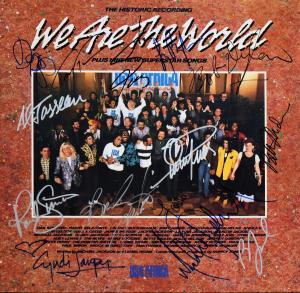
USA For Africa: We Are The World @ 40

Released 40 years ago this month and officially the fastest-selling single in American music history, USA For Africa’s ‘We Are The World’ shifted over 20 million copies and raised a huge amount of money for African famine relief.
Co-written by Michael Jackson and Lionel Richie during a few sessions at the former’s house in Encino, the song divides opinion but only the hardest heart could fail to be moved by its recording (even if one can definitely feel the vibe of some major agent/star power – no arriving in the manager’s battered old car for this lot…).

It brought together a fairly astonishing cast list of the great and good. And, inadvertently, it also arguably represented a last gasp for classic 1980s R’n’B and yacht rock.

The basic track was recorded at Kenny Rogers’ Lion Share Studios on 22 January 1985 with king-of-the-cross-stick John ‘JR’ Robinson on drums, bassist Louis Johnson and pianist Greg Phillinganes, closely monitored by a huge press corps, co-producers Quincy Jones and Michael Omartian and engineer Humberto Gatica. According to Robinson, all the musicians were sight-reading a chart and a click track was used, and they didn’t do more than two takes.

A few days later, Lionel sat down with Quincy and vocal arranger Tom Bahler to prep who would sing which lines (the decision was also made to mainly record vocals live and ‘in the round’ with no or at least very few ‘punch-ins’, unlike ‘Do They Know It’s Christmas’). All the major vocalists were then sent a copy of the basic track featuring Jackson’s guide vocal and with an enclosed letter from Lionel.

The featured singers then assembled at A&M Studios at around 9pm on Monday 28 January, most arriving after the American Music Awards (which Richie hosted). Notable absentees: Madonna (who was apparently bumped in favour of Cyndi Lauper), Prince (check out Duane Tudahl’s superb book for the details), George Benson, Dolly Parton, Donna Summer, Michael McDonald, Pat Benatar, Rod Temperton, Stevie Nicks, Joni Mitchell, Billy Idol? And is it odd that Smokey Robinson didn’t sing a solo line?

The complete footage of the recording session is still fascinating. We see how some of the biggest names in music history found different ways of preparing. Steve Perry waits for his line with eyes shut, looking down, listening intently. Diana Ross does just the opposite.

Bob Geldof gives a stirring pep talk and Stevie Wonder brings in two Ethiopian women to address the singers, moving many to tears. It’s hard not to be touched by Stevie, Kenny Rogers, Dionne Warwick, Diana, Steve Perry, Ray Charles and Cyndi Lauper’s vocals. But Harry Belafonte, Ray Charles, Bob Dylan and Bruce Springsteen seem to get the most respect from the assembled stars.

Other observations: Brucie – who had finished the latest leg of the Born In The USA tour the night before – looking like Judd Nelson in ‘The Breakfast Club’. Al Jarreau struggling throughout. Lionel the team player. Stevie giggling like a naughty schoolkid when Quincy gets annoyed. James Ingram hiding behind Kenny Rogers after a boo-boo.

Paul Simon twice saying to Rogers: ‘Can I help?’ Lauper sharing vocal tips with Kim Carnes. MJ holding hands with Diana and Stevie. Quincy and Stevie rehearsing with Bob Dylan. Stevie and Ray Charles using their braille machine. Quincy reading the score as he conducts the soloists, and his witty asides: ‘Who you gonna call?’ etc.

It looks like they recorded the first half of the song first (up to and including Daryl Hall) and then spent some time on the middle eight with Huey Lewis, Lauper and Carnes.

How does it sound now? Phillinganes’ piano playing is a pleasure to hear, typically tasty and gospel-inflected. But the track is inundated with synths – no less than four players are credited, including David Paich and Steve Porcaro from Toto – and probably why it reminded many of a Pepsi ad.

And it’s odd that the song features no guitar, though Prince offered to play a solo – Quincy reportedly told Prince’s manager Bob Cavallo: ‘I don’t need him to play guitar, we got f*ckin’ guitars’!

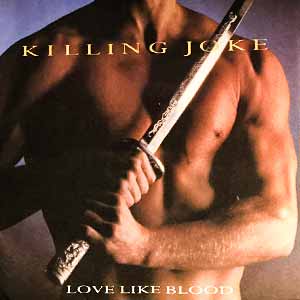
Killing Joke: Love Like Blood @ 40

Look up ‘intense’ in the dictionary and you might just see a photo of Jaz Coleman.

One of the best bits of post-Lockdown ‘normality’ was walking into Fopp in Covent Garden and quite by chance seeing the erstwhile Killing Joke frontman/keyboardist doing a signing session in full make-up.

His band’s ‘Love Like Blood’ hit its peak position of #16 in the singles chart 40 years ago this month. It was their sole top 40 single of the 1980s and biggest hit to date, a brilliant highlight of that Goth/ post-punk sound/attitude.

But, in a decade full of literary pop music, the song has an interesting and surprising genesis. Recently, Coleman told Songfacts:

That was inspired by the author Yukio Mishima… It was his views on writing with your blood as an artist that really inspired me. It’s a metaphor for the commitment an artist must take to his art form. When I was reading ‘Spring Snow’, one of Mishima’s novels, I really couldn’t speak for 24 hours after reading that book – it hit me so hard. The song itself was a distillation of everything that we hold dear, and one must aspire to walk and talk what you write about in your songs – actually live it. That’s the other part of art, isn’t it? You can’t just be conceptual, writing songs. It’s the way you live your life as well. It’s as important as the way you play your instruments or the music you create…

Musically, it’s fascinating too, the late great Kevin ‘Geordie’ Walker’s doom-laden guitar (with a very odd tuning), scary keyboards (played by Coleman) and a powerful, influential groove – apparently no click track here. Attendant album Night Time was a hit too, featuring the single ‘Eighties’ which Nirvana ripped off for ‘Come As You Are’.

The real corker though was this live performance of ‘Love Like Blood’ from ‘The Tube’. Makes you hanker for a time when bands really meant it… No mucking about. Audiences too. Like to have been there.


Bronski Beat: ‘Smalltown Boy’ @ 40

40 years ago, gay artists weren’t just occasional visitors to the British pop charts – they were leading the agenda.
A famous top three of August 1984 featured George Michael at #1, Frankie Goes To Hollywood at #2 and Bronksi Beat’s ‘Smalltown Boy’ at #3.

Remarkably, the latter was also the Bronskis’ debut single, coming from debut album The Age Of Consent. And what a trailblazing/timeless classic it is, danceable and tearjerking, with a once-in-a-lifetime vocal performance from Jimmy Somerville and that winning chord sequence.

Bernard Rose’s sombre video (which has had 121 million YouTube views at the time of writing) was obviously a huge part of the song’s success, combining the ‘realist’ style of Mike Leigh and Ken Loach with a few poetic touches to brilliant and moving effect.

Producer Mike Thorne’s role on the track is often undervalued too – there was a touch of his ‘Tainted Love’ in his bass sound and extensive use of top-end on synths and drums, and he also gets a pat on the back for leaving in a few mistakes (check out the shockingly-played synth lead line in the first 30 seconds, a section that also seems to speed up a lot).

The legacy of ‘Smalltown Boy’ is rather sad though – writers/co-founders Steve Bronski and Larry Steinbachek have both died recently, deaths that seems to have been somewhat under-reported in the media.

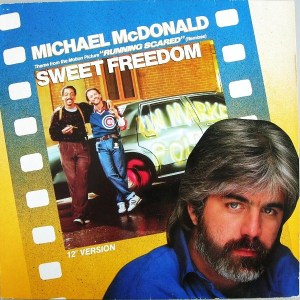
Michael McDonald: Sweet Freedom (Extended)

It’s always a nice surprise when a classic 1980s track suddenly appears on streaming services out of the blue.
Michael McDonald’s ‘Sweet Freedom’, written by Rod Temperton and co-produced by Temperton, Bruce Swedien and Dick Rudolph, is one such single, but the only version currently available is the superb seven-minute extended mix.

It was a good period for McDonald (weird that he wasn’t involved with ‘We Are The World’?). Despite a now-very-dated 1985 album No Lookin’ Back, he had recorded fine duets with James Ingram, Patti Labelle and Joni Mitchell.

As for Temperton, hot off the back of Thriller he had worked on Steven Spielberg’s ‘The Color Purple’ soundtrack, then ‘Running Scared’, nowadays a pretty-much-forgotten Billy Crystal/Gregory Hines vehicle. Recorded at Westlake in Los Angeles, where most of Thriller was laid down, ‘Sweet Freedom’ was the movie’s key song and arguably Temperton’s final masterpiece. The verses owe a little to Lionel Richie’s ‘All Night Long’ and Temperton finally gets his ‘starlight’ motif into the middle eight (‘Starlight’ was an early title for the song ‘Thriller’).

The extended version is a brilliant little pop/soul symphony, with every performer getting a feature. Greg Phillinganes adds his special sauce on keys and there are some beautiful backing vocals from Siedah Garrett. The horn section (Bill Reichenbach, Chuck Findley, Jerry Hey, Larry Williams) contribute brief solos as does guitarist Paul Jackson Jr.

It would have been nice to have heard a real rhythm section (JR Robinson and Nathan East?) let loose on this but no matter. And people who say McDonald isn’t a soulful singer need to hear his performance in the second half of this extended version.

Released in June 1986, ‘Sweet Freedom’ reached #7 in the US and #12 in the UK.

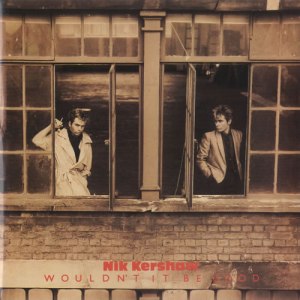
Nik Kershaw: Wouldn’t It Be Good @ 40

Bristol-born, Ipswich-raised Nik Kershaw had a spiffing 1984 – no other solo artist spent more time on the UK singles charts during the year.

‘Wouldn’t It Be Good’, released 40 years ago this weekend (on the same day as Echo & The Bunnymen’s ‘The Killing Moon’) and reaching #4, was his second single – ‘I Won’t Let The Sun Go Down On Me’ initially flopped in September 1983.

‘Wouldn’t It Be Good’ was predominantly recorded at Sarm East studios on Osborn Street, Aldgate (don’t look for it – it’s not there any more). Peter Collins produced soon after helming Musical Youth’s ‘Pass The Dutchie’ and Tracy Ullman’s solo output (he later worked with Rush, Alice Cooper and Queensryche). The song’s original title was ‘Wouldn’t It Be Nice’ – Collins demanded a better word than ‘nice’.

It’s a great single, the beginning of movingtheriver’s love affair with Kershaw’s music, and its ominous lyrics have the slight whiff of ‘In The Air Tonight’ about them, as well as a subtle social conscience. I also always liked the weird emphases he placed on some words/syllables – ‘You must be JOKING/You don’t know A thing about it/You got no probLEM‘ etc…

I distinctly remember watching him perform the song on ‘Top Of The Pops’ for the first time – who was this tramp on telly, with the snood and fingerless gloves? My parents liked the track too, which was a bit disarming.

The song’s overdriven guitars were layered/overdubbed, Brian May-style (best heard on the 12” remix), and their major-seventh chords create some strange timbres. Its structure is seriously weird too – the second chorus comes right at the end, after a lengthy guitar/horn solo. The delayed gratification is clever and totally outside the norm.

The video was directed by Storm Thorgersen, mostly filmed in a large, disused building opposite Buckingham Palace, apart from a bit at the Mullard Radio Astronomy Observatory in Cambridge. An extremely odd cover version features on the ‘Pretty In Pink’ movie soundtrack. Nik fluffed the words at Live Aid but hardly anyone noticed.

Happy birthday to another classic single from 1984.

Big Country: ‘Wonderland’ Kicks Off One Of The Greatest Ever Pop Years

Big Country kicked off 1984 – one of the greatest ever pop years – with their between-album, standalone A-side ‘Wonderland’. It reached #8, their second most successful single in the UK.
Also 40 years ago this week, Radio 1 DJ Mike Read ‘banned’ Frankie Goes To Hollywood’s ‘Relax’ and the Second British Invasion was sweeping the States, led by Eurythmics, Duran Duran, Culture Club, A Flock Of Seagulls and The Police (a remarkable Hot 100 chart of April 1984 featured 40% British acts).

Meanwhile, Big Music of a distinctly Celtic hue was sweeping the UK: The Waterboys, Simple Minds, U2, Echo & The Bunnymen and Big Country. They made ‘elemental’ music, as the cliché goes, with lots of space and lyrics about wars, work, glaciers, mountains, seas and skies.

You could make the case that Big Country were the best musicians of the lot (see the live clip below). And they had an extraordinary run of singles success between 1983 and 1986 – after their debut (‘Harvest Home’) missed the top 40, all the next ten reached the top 30. They also made some serious inroads into the US market.

Tommy Vance liked ‘Wonderland’, reviewing it in Kerrang! magazine thus: ‘Should be heard by anyone who likes fine music. I’m a real fan of Steve Lillywhite’s productions and he’s done a superb job here. The guitar sound is good and the drumming superb.’ Indeedy. Ver Country’s second album Steeltown (sans ‘Wonderland’) emerged in October 1984 and went to #1 in the UK. Cool times.

RIP the terrific Annie Nightingale.

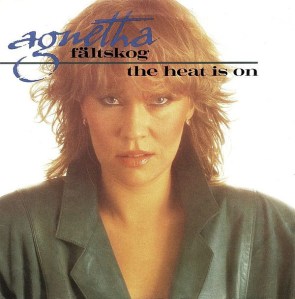
Agnetha Faltskog: The Heat Is On

One of the many pleasures of listening to the Forgotten 80s radio show is hearing a hit of which you have absolutely no memory whatsoever.

A classic example came on the air a few weekends ago. The intro featured a ramshackle, lumbering, almost-reggae groove with party voices, sleazy horns and a good bass player (revealed when listening on a decent system, but it’s almost impossible to find out which musicians played on the single) before a strident, excellent, slightly familiar voice took centre stage.

Eddi Reader? Basia? Debbie Harry? Lene Lovich? Wrong, wrong, wrong, wrong. I was gobsmacked to hear that it was actually the first solo single by Agnetha Faltskog of ABBA, released just over 40 years ago (her bandmate Frida had just had her own hit, ‘I Know There’s Something’s Going On’, produced by Phil Collins).

‘The Heat Is On’ got to #1 in Sweden, Denmark, Norway, Finland, and Belgium, #2 in The Netherlands and Germany, #29 in the USA and #35 in the UK.

The incredibly catchy number turns out to be a cover of a 1979 near-hit by Australian singer Noosha Fox. Written by Florrie Palmer and Tony Ashton, it was also massacred by Manfred Mann’s Earth Band in 1980 in a truly screwed up version retitled ‘On The Run’.

But back to Agnetha. Her version of ‘The Heat Is On’ was produced by Mike Chapman, on a particularly hot streak in early 1983 having just helmed Blondie’s biggest albums and Altered Images’ classic single ‘Don’t Talk To Me About Love’.

Faltskog’s accompanying album Wrap Your Arms Around Me is not so great but has apparently sold approximately 1.5 million copies worldwide to date (her second solo album, 1985’s Eyes Of A Woman, was produced by 10cc’s Eric Stewart). She has also been the subject of a BBC Four documentary (a dubious honour?) in the UK.

Now, got to get this damn song out of my head – almost an impossible task once heard a few times…

Genesis: ‘Mama’ @ 40

If any more proof was needed as to how far the UK pop charts have declined since the mid-1990s, look no further than the fact that Genesis’s ‘Mama’ – released 40 years old this week – was their biggest hit, going all the way to #4.
Not bad for a nearly-seven-minute song without a proper chorus about a young man’s troubled relationship with a sex worker.

In my opinion, ‘Mama’ is one of the great singles of the 1980s, epic and menacing, and the last decent showing for post-Gabriel Genesis (I couldn’t/can’t get anywhere with its attendant 1983 self-titled album, nor any of their subsequent projects).

In autumn 1983, I was vaguely aware of Phil Collins, my ears having been piqued by my dad’s frequent playing of Face Value around the house. But when my uncle bought me the ‘Mama’ 12-inch single, I’m pretty sure I’d never heard of Genesis. But Uncle Jim wrote ‘Side A is the good side!’ on the front for guidance, knowing I’d love Phil’s immense drum sound (to these ears, still just as ‘shocking’ as ‘In The Air Tonight’). For me, this is the apex of Phil’s best era – roughly 1976 to 1983.

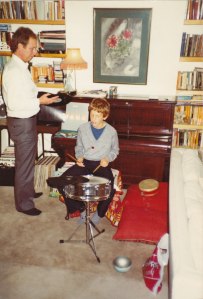
The author with his first snare drum, his dad the DJ about to put on ‘Mama’, circa autumn 1983

‘Mama’ was recorded at the band’s Farm studio near Chiddingfold, Surrey, and co-produced by Hugh Padgham. Phil set up in the new drum room modelled on the famous Townhouse Studio 2 in Shepherds Bush.

There are still so many pleasures – Phil’s sibilant, Lennon-influenced vocals (including a homage to Melle Mel), making full use of the slapback echo which went straight onto tape rather than being added later. Banks’s ominous synth layering and wacky lead tones. Mike Rutherford’s Linn drum programming, played through a guitar amp.

Also listen out for the way Phil avoids metal completely until the beginning of the fade, when his enormous crash cymbal is a huge release.


Sweat Band: Jamaica

There must be a huge cache of unreleased material in the George Clinton vaults – we’re probably talking Prince/James Brown/Frank Zappa amounts here.

And will it be Warners, BMG or Universal who get control of his recorded legacy (unless the deal has already been done…)?

As it is, you could probably spend a lifetime listening to his existing work. And just when you think you’ve got a handle on it, new things keep trickling through, like Sweat Band’s self-titled 1980 debut album.

The P-Funk side project, mainly written and performed by Bootsy Collins and Maceo Parker and recorded at United Sound Studios in Detroit, was the first release on Clinton’s short-lived Uncle Jam label, distributed by CBS.

In truth the album is very patchy (not helped by the cover which probably should have made my worst of the 1980s list) and shows the decline also encountered by Parliament/Funkadelic and Bootsy (whose Ultra Wave was released in the same week) around the same period, when funk was getting watered down by disco and commercial R’n’B.

But the track ‘Jamaica’ is brilliant. It’s gone straight into my 1980s Funk playlist with a bullet. It features legendary London music writer Lloyd Bradley (credited as Lloyd Bridges) talking rubbish all over it plus a seriously arse-over-teacup groove, catchy chants, underwater bass and fantastic horns.

And is that an uncredited Harvey Mason on drums? It sure sounds like him. Bring on the Clinton vaults if there’s a lot more like this lying around.

Story Of A Song: Ambrosia’s ‘Poor Rich Boy’ (1981)

Apart from Steely Dan reaction videos on YouTube, my other mini viewing obsession over the last year or so has been ‘Columbo’ repeats.

You expect amusing performances and ingenious plotting from the classic Peter Falk-fronted show; you don’t expect music tips.

But there it was – a great piece kicking off ‘Columbo Goes To College’, the first episode of the show’s tenth season, debuting on 9 December 1990.

A bit of detective work revealed that it was Ambrosia’s ‘Poor Rich Boy’, written for the Oscar-winning ‘Arthur’ soundtrack, the one headed up by Christopher Cross’s US #1 ‘Arthur’s Theme (Best That You Can Do)’. I’d never heard of the band but apparently they had some big hits at the tail end of the 1970s.

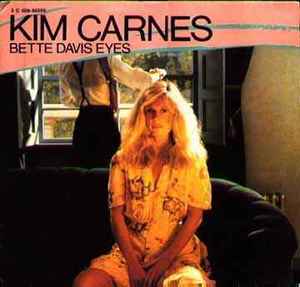
Co-written – like the rest of the soundtrack album – by Burt Bacharach (alongside band members David Pack and Joe Puerta) and produced by Val Garay (Kim Carnes’ ‘Bette Davis Eyes’), it taps into that great period at the dawn of the 1980s when yacht rock dovetailed with prog/AOR/new wave/whatever.

It’s mixed refreshingly dry, with barely any reverb, and features a treacherous arrangement that separates the men from the boys. It’s in 2/4 but has some very odd accents (especially in that deliciously long fade). Try playing along. Where’s ‘one’? There’s a nice use of the ‘flatted fifth’ in the verse and also a superb vocal by…who? Pack or Puerta?

The chorus lyric smartly lays out the film’s plot and concerns of Dudley Moore’s Arthur:

Life is more than time and money that’s easy to spend
When you know that she’s out there
Lookin’ for the girl whose eyes out-sparkle all of your gold
And a heart that’s bigger than Times Square

‘Poor Rich Boy’ was released as a single in 1981 but didn’t chart…