At this late stage of the game, it’s very rare to hear a piece of music that has you gripped from bar one.
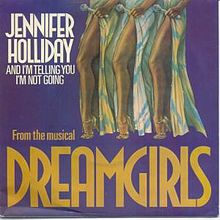
But that happened recently when Jennifer Holliday’s ‘And I’m Telling You I’m Not Going’ turned up on Forgotten 80s.
The song was vaguely familiar. Then the penny dropped – I was a big fan of ‘The Larry Sanders Show’ and always loved Jim Carrey’s performance on the final episode (see below) in 1998, but didn’t have a clue at the time that it was a cover version.
But back to Jennifer Holliday. She first performed ’And I’m Telling You I’m Not Going’ at the age of just 20 when she took on the role of Effie Wright in the musical ‘Dreamgirls’, which opened on 21 December 1981 at the Imperial Theatre on Broadway. Written by Tom Eyen and Henry Krieger, the song ends Act One with a dramatic flourish.
Released as a David Foster-produced single in 1982, it got to #22 on the Billboard Hot 100 and won a Best Female R’n’B Vocal Performance Grammy for Holliday. It’s an electrifying vocal performance, fusing soul and gospel and injecting a touch of humour to boot.
Holliday was subsequently one of the first signings to the Geffen label, her first solo album Feel My Soul produced and co-written by Earth, Wind & Fire mainman Maurice White – it reached #31 on the Billboard pop chart and was Grammy-nominated. She also got a Grammy nomination for Best New Artist.
Holliday was then featured vocalist and arranger of The New Jersey Mass Choir on Foreigner’s #1 single ‘I Want To Know What Love Is’, a performance which reportedly reduced the song’s co-writer/guitarist Mick Jones to tears when recorded at New York’s Right Track Studios during summer 1984
Less successful was a second album for Geffen, 1987’s Get Close To My Love, but Holliday has continued to perform to this day in both secular and non-secular formats. More power to her elbow, and bravo for an absolutely spellbinding vocal performance (Jim’s not bad either, sounding occasionally a bit like Mike Patton).
It’s highly unlikely that any critics’ poll of the greatest soul albums from the last 70 years would include anything from the 1980s, save possibly for a Diana, Anita Baker, Terence TD or Bobby Womack outlier.
There was the odd huge-selling ‘crossover’ album (Can’t Slow Down, Thriller, Whitney Houston) but arguably the decade didn’t produce a What’s Going On or Songs In The Key Of Life.
Classic soul fans generally became used to poor-to-middling album packages, with the requisite two or three-star reviews and complaints about too many producers and underwhelming material. The greats of the ’60s and ’70s also sometimes struggled to move with the times, getting hamstrung by technology and/or unsuitable collaborators.
But my goodness there were some superb tracks, particularly between 1980 and 1985, an interesting period when Classic Soul drew from Yacht Rock and Jazz/Funk. However, these songs tended to get quickly forgotten and/or ignored. In the late-’80s, ’90s and noughties, enterprising indie labels put together fondly-remembered compilations (Mastercuts, StreetSounds) that brought these tracks back for a small but very enthusiastic audience.
But the beauty of streaming services is that we can compile these beauties to create one sh*t-hot album, so I have, here. This has been my go-to playlist during lockdown. Forget the talent-show wannabees – these vocalists have serious pipes, and the songwriting and arrangements are top-class too. Here’s a small selection of lost classic soul tracks from the 1980s:
14. Johnny Gill: ‘Half Crazy’ (1985)
Co-written by legendary Philly wordsmith Linda Creed (‘Betcha By Golly Wow’, ‘People Make The World Go Round’), this was the lead-off track and first single from Gill’s second album and still sounds like a bona fide soul standard today. It was a long way from New Edition for Johnny, though he was just 18 years old when he recorded it. Scary…
13. Teena Marie: ‘My Dear Mr Gaye’ (1984)
Moving tribute to Marvin from the less-than-excellent album Starchild, featuring a string arrangement by Motown mainman Paul Riser and a groovy change of pace in the middle of the tune.
12. Carl Anderson: ‘Buttercup’ (1985)
Stevie Wonder-penned minor classic from a little-known vocalist who recorded many solo albums before his death in 2004, but was probably best known for his portrayal of Judas Iscariot in the Broadway and film versions of ‘Jesus Christ Superstar’.
11. Gladys Knight & The Pips: ‘Bourgie Bourgie’ (1980)
Just check out co-writer (with Nick Ashford) Valerie Simpson’s gospel-tinged piano playing on this – absolutely fabulous. And Gladys’s super-funky vocals are perfect. It’s adapted from a 1977 Ashford & Simpson instrumental.
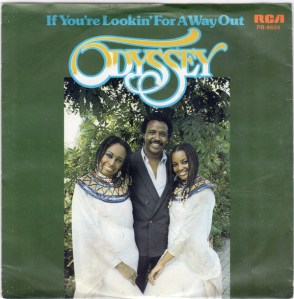
10. Odyssey: ‘If You’re Lookin’ For A Way Out’ (1980)
Heartbreaking ballad written by Ralph Kotkov and superbly sung by Lillian Lopez. Made #6 in the UK singles chart.
9. Millie Jackson: ‘This Is It’ (1980)
Now THIS is how you kick off a soul album. A hilarious eight-minute tour-de-force that aims to get men squirming in their seats. Remarkably, it’s also officially a Kenny Loggins/Michael McDonald composition.
8. Chris Jasper: ‘Superbad’ (1987)
Great song from long-time keyboard player of The Isley Brothers. A socially-conscious lyric looking at the value of inner-city education and the kind of tune Stevie should have been producing in the mid-’80s.
7. Diana Ross: ‘Cross My Heart’ (1987)
Superb, catchy song, written by frequent Leonard Cohen collaborator Sharon Robinson, and Diana’s vocals are just gorgeous. From the otherwise fairly uninspired Red Hot Rhythm And Blues album.
6. Leon Ware: ‘Why I Came To California’ (1982)
Cool mixture of soul, jazz/funk and yacht rock, an ode to the West Coast with a top-drawer rhythm section of Chuck Rainey (bass) and James Gadson (drums) and vocals from Manhattan Transfer’s Janis Siegel. But who plays the great sax solo? Seems impossible to find out…
5. SOS Band: ‘Weekend Girl’ (1984)
More evidence that producing/songwriting team Jam & Lewis were going to be arguably THE musical force of the decade, a gorgeous, upwardly-mobile, mature ballad that has the same kind of grandeur as one of Chic’s slow-burners.
4. Patti Labelle: ‘If Only You Knew’ (1983)
Just…wow. Killer ballad co-written by Kenny Gamble and Dexter Wansel which reached #1 on the Billboard R’n’B chart. Super arrangement too, emphasised by the unexpected key change going into the first verse.
3. Bobby Womack: ‘Games’ (1983)
‘You see, I like all kinds of music – no favourites!’, Bobby proclaims at the beginning of this superb track, then demonstrates it with a lovely little nod to Wes Montgomery’s guitar style.
2. Phyllis Hyman: ‘Why Did You Turn Me On’ (1983)
A hint of Rod Temperton about this catchy Narada Michael Walden-penned mid-tempo smoocher, showcasing Hyman’s giant voice to great effect. Sadly the Philly soul legend took her own life in 1995.
1. Terence Trent D’Arby: ‘As Yet Untitled’ (1987)
Ambitious accappella piece from Terence’s classic debut album, with a vocal nod to Sam Cooke but also featuring some stirring sounds purely of his own creation.
In a recent podcast, Donald Fagen spoke about the importance of vocal tone, saying that he’d rather listen to Ray Charles singing a mediocre song completely ‘straight’ than a jazz singer pointlessly embellishing a songbook standard.
It got me thinking about Phyllis Hyman’s crackerjack performance on ‘I’ll Be Around’ (not to be confused with the Alec Wilder standard sung by many including Frank Sinatra and Chaka Khan), from McCoy Tyner’s 1982 CBS album Looking Out.
The song, which has haunted me since I first heard it in the late 1980s, was mainly written by Stanley Clarke and recycled from his lacklustre (despite featuring Stan Getz on saxophone) 1979 track ‘The Streets Of Philadelphia’. ‘I’ll Be Around’ comes from an otherwise fairly mediocre McCoy album, mainly notable for featuring Carlos Santana, Clarke and Gary Bartz on several tracks.
But Tyner’s fabled work with John Coltrane must have seemed a distant memory by 1982. In jazz terms, CBS was obsessed with Wynton Marsalis and neo-classicism, though still had time for Herbie Hancock’s hip-hop explorations and Miles’s comeback.
Phyllis and McCoy in the studio
Maybe McCoy in turn thought he’d hit paydirt by grabbing Santana, Bartz and Clarke (huge Coltrane fans, all), but Looking Out is now barely a footnote to his illustrious career – it was his second and last album for Columbia.
‘I’ll Be Around’ doesn’t feature Santana or Bartz, and was the sole LA-recorded track on the album (the other tracks being recorded at the Power Station in NYC), adding the excellent pairing of Charles ‘Icarus’ Johnson on guitar and Ndugu Chancler on drums.
Chancler and Tyner work together almost telepathically, the former driving the song forward, though always with one ear on the groove, the latter sprinkling on his majestic chord voicings. Hyman’s vocals are huge, luscious, but she also adds some subtle flavours over Tyner’s piano solo, consciously removing vibrato and sometimes singing ever-so-slightly sharp for emotional effect.
Of course it’s virtually impossible now to assess this heartfelt performance without considering her tragic suicide in 1995. But, happily, ‘I’ll Be Around’ gives a different slant on a fine career and shows Hyman’s mastery of Black Music.
Singing drummers: the ’80s were chock-a-block with ’em.
But Narada seems a somewhat forgotten example, at least compared to the far more popular Phil C, Don H, Stevie W and Sheila E.
Yet he started the decade as the one you’d probably have put your money on, ending the ’70s as he did with an impressive run of R’n’B hits.
Narada had of course started his music career as a jazz/rock drumming tornado in the second incarnation of John McLaughlin’s mighty Mahavishnu Orchestra, going on to record famous fusion sides with Jeff Beck, Weather Report, Tommy Bolin, Alphonso Johnson and Jaco Pastorius.
During the ’80s, he was one of the most in-demand producers on the planet, helming Whitney Houston’s ‘I Wanna Dance With Somebody’, Aretha Franklin/George Michael’s ‘I Knew You Were Waiting For Me’ and Starship’s ‘Nothing’s Gonna Stop Us Now’. But his solo career was somewhat in limbo during this period, so it’s fascinating to check out a new, nicely-appointed three-album survey of his 1983-1988 output.
Looking At You, Looking At Me (1983) is the best of the three albums, but a frustratingly inconsistent record. Listening to the superb title track, you’d think he might have found hit his true metier, a languid, luxurious, West Coast pop/jazz, similar to the kind of music Al Jarreau or Manhattan Transfer were making at the time.
But an OK duet with Angela Bofill, passable cover of ‘Reach Out (I’ll Be There)’ and sick drum-machine/horn workout ‘Shake It Off’ aside, the rest of the album is fairly unmemorable R’n’B with occasional virtuosity from guitarist Corrado Rustici and bassist Randy Jackson.
The followup, 1985’s Nature Of Things, is even more problematic, sounding mainly like a kind of soft R’n’B version of the ‘Top Gun’ soundtrack, with way too many synth-based ballads. But Divine Emotion (1988) was a partial return to form, led by the effervescent title track (with one of the great ’80s basslines) which gave him a timely UK hit. Narada had obviously been prompted into action by his highly successful production work – his vocals and arrangements have never been better.
But while Divine Emotion sounds like a million dollars, there are still issues on the songwriting front. Put simply, only the title track, ‘But What Up Doh’ and closer ‘We Still Have A Dream’ have memorable hooks (the latter also features some brilliant jazz/rock kit work from Narada).
One wonders what might have happened if he had hooked up with some great ‘pop’ songwriters like Kenny Loggins, Rod Temperton, Michael McDonald, Carole Bayer Sager or even Burt Bacharach at the outset of the decade rather than relentlessly ploughing his own furrow; ‘Looking At Me, Looking At You’ offers tantalising possibilities.
But looking at his career as a whole, it’s all turned out fine – Narada’s always been one of the coolest, most talented musician/producers around, and apparently he’s a joy to work with.
I haven’t kept many VHS cassettes, but two vids that definitely won’t be hitting the charity shop any time soon are Prince’s ‘Lovesexy Live: Volumes 1 and 2’ (currently unavailable on DVD…).
The Lovesexy tour kicked off 30 years ago this week, on 8 July 1988 at Paris’s Palais Omnisport. The seven-month jaunt, taking in Europe, North America and Japan, was arguably Prince’s greatest ever.
A spectacular in-the-round stage set was designed as a kind of ‘fantasy island’, half a playground and half a dreamscape, with curtains, a mini basketball court, brass bed, swing set and a Ford T-Bird which Prince ‘drove’ around the stage at the start of the show.
The Lovesexy tour band: left to right, Cat Glover, Dr Fink, Boni Boyer, Miko Weaver, Eric Leeds, Prince, Levi Seacer Jr., Matt Blistan, Sheila E
Taped on the last night of the European tour – 9 September 1988, at the Westfalenhalle in Dortmund, Germany – ‘Lovesexy Live’ still makes for a thrilling watch. Firstly, the music: this band could turn on a dime. It’s hard to imagine any other set of musicians from the era pulling off the ‘Adore’/’Jack U Off’/’Sister’ medley. Prince’s guitar playing is at its best, with creamy, delay-drenched distortion and tight, tasty Telecaster.
And of all the ’80s ‘pop’ acts who incorporated jazz into their work, Prince may be the most successful. In collaboration with his superb horn section (Eric Leeds on saxes, Matt Blistan on trumpet), he often went back to the source: Ellington’s ‘Things Ain’t What They Used To Be’ and Charlie Parker’s ‘Billie’s Bounce’ infiltrate ‘Blues In C/If I Had A Harem’, and Blistan occasionally quotes from ‘It Don’t Mean A Thing (If It Ain’t Got That Swing’). Meanwhile Sheila E brings the Bay Area jazz/rock sound so beloved of Prince. Her solo feature is a highlight of his ’80s live work.
Then there’s the ‘story’. The Lovesexy show is structured like one of those old Warner Bros gangster pictures – in the first half (lucky for us), we see an ‘evil’ Prince, seduced by the sins of the flesh and tempted by drugs, money and criminality, giving him an excuse to dust off Black Album standouts ‘Superfunkicalifragisexy’ and ‘Bob George’.
Then there’s punishment, atonement and spiritual conversion. Yes, y’all, the second half of the show is ‘God stuff’. But if you don’t go along with it, the music is enough of a spiritual experience anyway. Anyway, Prince certainly seems genuinely transported during ‘Anna Stesia’ and ‘I Wish U Heaven’.
Europe couldn’t get enough of the tour. There were no less than seven nights at London’s Wembley Arena and a series of famous after-show gigs, particularly at the Camden Palace on 25 July when Mica Paris was picked out from the crowd to sing ‘Just My Imagination’ and Ron Wood joined Prince onstage for a memorable ‘Miss You’.
Ticket sales were not so good in the States (14 September to 29 November) where apparently Prince struggled to sell out many arenas, despite it being his first major tour there for over three years.
But normal service was resumed when the Japan leg kicked off in early February 1989. The last night of the tour on the 13th was apparently an exceptionally emotional one.
When Prince got home to Minneapolis, he commenced work on the ‘Batman’ soundtrack, another project about the duality of man. It’s not hard to see where his head was at as the ’80s drew to a close.
Marvin Gaye: ‘I wasn’t going to peddle myself like I was some new kid on the block. I didn’t want to hear about any rejections, so I went about it differently. I decided what I wanted – to be with the biggest and best record company in the world – and I made it happen. No matter what, I couldn’t come up with another art album. After all, CBS was digging me out of a hole, paying off the IRS, Anna (Gordy, his ex-wife), the feds, the whole works. I felt like an old vet, a seasoned ballplayer who’d been traded to another team that still had faith in him. I owed CBS something – at least a couple of grand slams…’
Geffen/Warner Bros. Records, released 19 July 1982
6/10
It’s understandable that Summer was reluctant to take on Billy Strayhorn’s song ‘Lush Life’.
A morning-after portrait of a failed romance, it’s a remarkable composition for a 16-year-old to write, with elliptical lyrics, few repeat sections and a challenging, endlessly-modulating melody line.
Nat ‘King’ Cole, Sarah Vaughan, John Coltrane/Johnny Hartman and Billy Eckstine all performed notable versions (Strayhorn himself apparently loved the latter).
But, coached through by producer Quincy Jones and keyboardists Greg Phillinganes, Herbie Hancock and Dave Grusin, Summer’s vocals are a knockout. Though the track sounds a bit rushed (Phillinganes would surely like another pass at his synth bass part), her work certainly paid off.
‘Lush Life’ closes Donna Summer, released 35 years old today. Classic singles begin the album and end side one: Grammy-nominated ‘Love Is In Control (Finger On The Trigger)’ and an inspired cover of Jon & Vangelis’s ‘State Of Independence’, the latter featuring an amazing array of guest vocalists.
The problem with Donna Summer is that it’s three classics and a lot of filler. Formula-wise, Quincy seems to be preparing for Thriller – there are many songwriters and a variety of styles.
Springsteen contributes the slightly underwhelming ‘Protection’ and elsewhere there’s a bit too much LM-1 drum machine and a few less-than-memorable choruses.
The album didn’t quite deliver the big hit to propel Summer into the ’80s but reached #20 in the US album charts and #13 in the UK.
Yeau! The headline of Q Magazine’s September 1987 cover feature said it all.
Perrier-quaffing Terence was correctly predicting a phenomenal critical and commercial reaction to his debut album and ready to dish the dirt.
He had done it all on his terms; wrongfooted his record company (who had wanted a slick, current, ‘upwardly-mobile’ soul album) and played the press at their own game. But at what cost?
D’Arby had lived quite a life before becoming a ‘pop star’: he was born in the States, the son of a preacher father and gospel-singing mother, studied journalism in New York, became a half-decent boxer in his late teens, joined the army and was based in Germany throughout most of the ’80s during which time he worked on his music and acquired a manager (a strategy not dissimilar to another ex-army musical maverick, Jimi Hendrix).
Decamping to London in 1985, D’Arby worked on demos with Heaven 17’s Martyn Ware and, after being turned down by several major labels, finally got the nod from CBS.
They pulled off a pre-release masterstroke when D’Arby was block-booked for four weeks running on ‘The Tube’ after a knockout debut live TV performance. To say that there was a buzz about him would be an understatement. The general consensus was: ‘Who the hell is this guy?!’
Hardline still sounds like one of the better debut album of the ’80s or any other decade. From the opening bars of ‘If You All Get To Heaven’, it’s clear that something pretty special and pretty different is going on, though the album inadvertently tapped into the ‘retro-soul’ revival that had built up in the UK over 1986 and 1987 – Ben E King and Percy Sledge had both had number ones in the months before Hardline‘s release, and The Pasadenas, The Christians and various others would bring forth similar grooves in the months to come.
Hardline also reminded critics and audiences alike of some of the great soul vocalists of the ’60s, ’70s and early ’80s – Al Green, Otis Redding, Stevie, Prince, Michael Jackson, James Brown and especially Sam Cooke. All went into the mix but finally D’Arby sounded just like himself.
He peppered ‘Dance Little Sister’ – a track that Prince would have killed for – with some outrageously over-the-top vocals. But, refreshingly, his singing throughout the album ain’t perfect – he’s much more into getting the emotion across and bringing a party vibe to the studio.
‘Sign Your Name’, ‘If You Let Me Stay’ and ‘Wishing Well’ are funky yet accessible (if the latter doesn’t make you move, you’re probably dead), but the a cappella, African-themed ‘As Yet Untitled’ is totally original.
He even takes on Smokey Robinson and emerges unscathed on the closing ‘Who’s Loving You’. He plays a lot of instruments himself and only gets in occasional help when absolutely necessary (including future Skunk Anansie bassist Cass Lewis and Pop Group/PiL drummer Bruce Smith). As such it’s a remarkably cohesive album.
Hardline was a big hit, reaching #1 in the UK, #4 in the US and selling over eight million copies worldwide. D’Arby got the rep of being a ‘difficult’ artist when his follow-up album Neither Fish Nor Flesh missed deadlines and went over budget. Things would probably never be the same again. But we’d always have Hardline.
Singles released: ‘Sign O’ The Times’ (#3 US, #10 UK)
‘If I Was Your Girlfriend’ (#67 US, #20 UK)
‘U Got The Look’ (#2 US, #11 UK)
‘I Could Never Take The Place Of Your Man’ (#10 US, #29 UK)
At the time of Sign O’ The Times’release, the general critical consensus seemed to be that it was a great double album but, shorn of a few tracks, would have made a sensational single album. But what the press probably didn’t know was that Prince had actually intended to release a triple album.
He believed the three-record set Crystal Ball would have been be a huge artistic statement after a relatively disappointing 1986, but the idea scared the hell out of Warner Bros and also his manager Bob Cavallo. Prince was reluctantly forced to back down.
The tracks intended for Crystal Ball but later abandoned for Sign O’ The Times were ‘Rebirth Of The Flesh’, ‘Rockhard In A Funky Place’, ‘The Ball’, ‘Joy In Repetition’, ‘Shockadelica’, and ‘Good Love’ (all hoovered up from two other aborted album projects, Dream Factory and Camille).
But even after Prince removed these, he was still left with a 16-track double album, a brilliant mix of the sacred and profane, and a record which many fans believe was his finest hour.
The famous title track was recorded on 15 July 1986 in a single ten-hour session at LA’s Sunset Sound. Prince was experimenting with a new piece of kit – the Fairlight sampler/synth – but characteristically made the technology swing in a way that no other artist could.
The track also demonstrates his love of space; it’s essentially just a minimalist blues featuring a three-note melody line, some sampled drums/bass and a bit of electric guitar. Listening again on the day after the Westminster Bridge ‘terrorist’ attack of 23 March, the song’s lyric also seems as relevant now as it was in 1987:
Hurricane Annie ripped the ceiling of a church and killed everyone inside You turn on the telly and every other story is tellin’ you somebody died Sister killed her baby cos she couldn’t afford to feed it And we’re sending people to the moon In September my cousin tried reefer for the very first time Now he’s doing horse, it’s June
It’s silly, no? When a rocket ship explodes And everybody still wants to fly Some say a man ain’t happy Until a man truly dies
‘Play In The Sunshine’ and ‘Housequake’ are pure party pop – it’s scarcely believable that Prince alone could generate such a raucous studio atmosphere with only Susannah Melvoin’s backing vocals, a few guests and Eric Leeds’ sax for company. The latter also represents his first recorded attempt at hip-hop (unless you count the brief ‘rap’ in ‘Girls & Boys’), typically supplying something usually missing from the genre: humour.
‘The Ballad Of Dorothy Parker’, recorded in Prince’s Minneapolis home studio on 15th March 1986, may be his most psychedelic recording, the soundtrack to a dream with seemingly-spontaneous musical moments that no one else could have created. He demonstrates his mastery with the LM-1 drum machine and, vocally, sets up a novel ‘Greek chorus’ effect.
‘Forever In My Life’ takes a melody line very similar to Sly And The Family Stone’s ‘Everyday People’ (and maintains Sly’s key of G) but again demonstrates Prince’s remarkable sense of space and also features another extraordinary backing vocal arrangement.
The heartfelt lyric was written when he believed he would settle down with fiancée Susannah Melvoin (twin sister of Wendy) – sadly it wasn’t to be.
‘It’, another bold experiment with the Fairlight, returns to the cold, sexualised world of 1999, while ‘Hot Thing’ is its flipside, a funky, James Brown-inspired one-chord romp with some great Leeds tenor sax.
‘If I Was Your Girlfriend’ (another song about Susannah/Wendy), ‘Strange Relationship’ (another big nod to Sly), ‘It’s Gonna Be A Beautiful Night’, ‘Starfish And Coffee’, ‘U Got The Look’ and ‘I Could Never Take The Place Of Your Man’ are just brilliantly performed, beautifully written pop tunes with dashes of psychedelia and soul.
According to engineer Susan Rogers, Prince was very influenced by Kate Bush’s Hounds Of Love during the recording of SOTT, the track ‘Cloudbusting’ a particular favourite. Other songs showed contemporary influences too – ‘Adore’ was apparently Prince’s response to the popularity of Luther Vandross’s Give Me The Reason and Patti Labelle’s The Winner In You, and it also hugely influenced the neo-soul movement, particularly D’Angelo’s ballad style.
‘U Got The Look’ – the last song recorded for Sign O’ The Times on 21 December 1986 – was apparently inspired by Robert Palmer’s ‘Addicted To Love’.
Sign O’ The Times sold 1.8 million copies in the US, a very similar number to Parade. Some believed the slightly disappointing sales were due to the choice of ‘If I Was Your Girlfriend’ as the second single; it is strange that ‘U Got The Look’ didn’t get the nod. But if Prince’s popularity was levelling out in the States, it was growing across Europe.
The strand of jazzy soul music developed by artists like Minnie Riperton, Phyllis Hyman, Chaka Khan, Jon Lucien, Al Jarreau, Randy Crawford and Carl Anderson probably reached its commercial apex with Anita Baker’s eight-million-selling 1986 album Rapture.
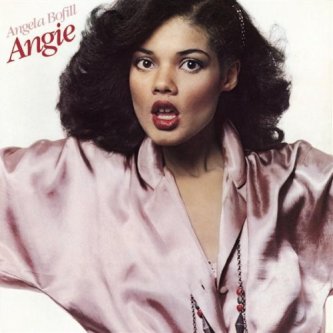
But perhaps the most underrated singer in that style was Angela Bofill, an ever-present on the US R’n’B charts between 1978 and 1984.
Best known for her sultry ballads and Latin-tinged mid-tempo jazz/soul tracks, I stumbled upon an Angie Best-Of sometime in the early ’90s and have been a fan ever since.
Her voice has a lovely, yearning quality, with power, range, great enunciation and a hint of Whitney Houston about it. But you’ll never hear Bofill’s music on the radio, at least here in the UK, and it’s a shame that she didn’t quite manage that breakthrough pop hit.
Born in the Bronx to a Cuban father and Puerto Rican mother, Bofill studied classical singing at the Manhattan School of Music.
After a tip-off from Latin Jazz flautist Dave Valentin, she was initially mentored by producers Dave Grusin and Larry Rosen, recording her successful first two albums Angie and Angel Of The Night for the fledgling GRP label.
Moving to Arista Records under the supervision of legendary impresario Clive Davis, she worked with some big-name producers throughout the ’80s: George Duke, Narada Michael Walden, Norman Connors and The System (David Frank/Mic Murphy).
Narada particularly seemed a good fit for her, co-writing a few killers such as ‘Tropical Love’ and ‘Too Tough’ and teaming up with future ‘American Idol’ judge Randy Jackson on bass to make a phenomenal rhythm section.
Angela also made a wonderful guest appearance on ‘Where Do We Go’, the standout track from Stanley Clarke’s lacklustreHideaway album of 1986, and there were also interesting duets with Boz Scaggs and Johnny Mathis around the same time.
But her most impressive material was self-penned. ‘You’re A Special Part Of Me’, ‘Gotta Make It Up To You’, ‘Song For A Rainy Day’ (which she also produced), ‘I Try’ (memorably covered by Will Downing in the early ’90s), ‘Accept Me’, ‘Rainbow Inside My Heart’ and ‘Time To Say Goodbye’ are all stand-outs which demonstrate her fine musicianship as well as vocal skills.
It’s a shame her composing, producing and arranging talents were never properly utilised, though she left us with a few classics nevertheless.
Angela made a comeback in the mid-’90s with Love In Slow Motion, a nice album featuring three superb tunes – ‘All She Wants Is Love’, ‘Soul Of Mine’ and the very Janet Jackson/Jam & Lewis-esque ‘Love Changes’ – which matched anything from her ’80s peak.
She also made a notable appearance at the 1998 Montreux Jazz Festival with Billy Cobham and George Duke.
Unfortunately serious illness befell Angela in 2006. Two strokes have limited her recording and live appearances, but she did make a brief return to the stage in 2012: ‘The Angela Bofill Experience’ featured stories from her life and career, with artists such as Maysa Leak, Phil Perry and Melba Moore performing signature songs.
Since then, things have been quiet, but we send good vibes from London. Angie’s certainly not forgotten in these parts.

 At this late stage of the game, it’s very rare to hear a piece of music that has you gripped from bar one.
  It’s highly unlikely that any critics’ poll of the greatest soul albums from the last 70 years would include anything from the 1980s, save possibly for a Diana, Anita Baker, Terence TD or Bobby Womack outlier.
 What makes a ‘good’ singer?



 The strand of jazzy soul music developed by artists like Minnie Riperton, Phyllis Hyman, Chaka Khan, Jon Lucien, Al Jarreau, Randy Crawford and Carl Anderson probably reached its commercial apex with Anita Baker’s eight-million-selling 1986 album Rapture.
 movingtheriver.com