Jaco Pastorius: Three Views Of ‘Three Views Of A Secret’

Three-Views-to-a-Secret-Lead-Sheet

click to enlarge

First of all, I’ve got to declare an interest: Jaco’s in my all-time top five favourite musicians.

Ever since I started really noticing music in the late ’70s, he was always on my radar – my dad would play Weather Report’s Heavy Weather and Mr Gone around the house, and by the time I knew Jaco’s name I was totally (if subconsciously) immersed in his stuff.

I bought his legendary 1976 debut album from a secondhand vinyl shop in Blandford Forum, Dorset (don’t look for it now, it’s not there any more) sometime in the mid-’80s, and I’ve been a superfan since.

The general critical consensus seems to be that, at his best, when he was healthy and strong between the early ’70s and early ’80s, Jaco’s composing skills were improving at the same rate as his bass-playing skills.

Luckily, in his short, somewhat tragic life, he left us five or six classic compositions (a list that would have to include ‘Havona’, ‘Teen Town’, ‘City Of Angels’, ‘Punk Jazz’, ‘Dania’ and ‘Las OIas’), but perhaps the most enduring of all is ‘Three Views Of A Secret’, a tune that has beguiled me since I first heard it.

He copped the title from a totally unrelated composition by Charlie Brent, the musical director of Wayne Cochran and the CC Riders, a hard-touring funk/R’n’B band Jaco played with in the early ’70s.

‘Three Views’ is essentially a medium jazz waltz built on three sections (A, B and C). The 16-bar A section has a bluesy feel and strong, simple melody.

The B section modulates to D-flat, before returning eventually to E. The third and final C section features repetitions of a four-bar phrase centred again around E, but with added colours to develop the tonality. It is, by any standards, an expertly-crafted piece.

Weather+Report+Night+Passage+505026

The first recording of the tune was arguably the standout track from Weather Report’s 1980 album Night Passage, recorded live at The Complex, Los Angeles, in July 1980.

Joe Zawinul (a very tough critic, apparently calling Jaco’s ‘Liberty City’ “typical high-school big-band bullshit” right to his face a year later) rated it as his finest composition.

‘Three Views’ represented a distinct change of pace for Jaco in terms of his Weather Report career, coming hot on the heels of the frantic ‘Teen Town’, ‘Punk Jazz’ and ‘Havona’.

The closest stylistic reference in jazz to ‘Three Views’ would probably be Charles Mingus, though Jaco himself claimed to be more a Gil Evans man.

Jaco starts the tune with his trademark false harmonics (most famously heard in the head of ‘Birdland’), aided by Zawinul’s shimmering accompaniment.

Then, in the B section, Wayne Shorter deliciously deconstructs the melody in the way only he can. He refers to it, flirts with it, skitters around it, but never fully commits to it, leaving Zawinul’s strong harmony to point the way forward.

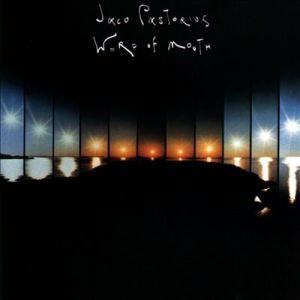
The second version appeared on Jaco’s second solo album Word Of Mouth, released in 1981. A controversial release, it was supposed to be Jaco’s big Warner Bros ‘fusion’ debut but it ended up going way over budget and making him almost persona non grata at the company.

jaco

The basic track was recorded at the Power Station, New York, with Jaco on piano, Toots Thielemans on harmonica and Jack DeJohnette on drums.

Strings, brass, woodwinds, voices and bass were added later in LA, at enormous expense; Jaco hired a 31-piece string section from the LA Philharmonic at a cost of $9,000, but later erased their contribution, not believing they had delivered the performance required.

Seven players from the section were selected by Jaco to come back a few weeks later and try again – they were overdubbed nine times each to create the illusion of a 63-piece string section!

So was it all worth it? Judge for yourself below. I know which version I prefer…

There’s also a lovely 1986 live (bootleg) version featuring Jaco’s short-lived but storming trio with Hiram Bullock on guitar and Kenwood Dennard on drums, but it’s really hard to find.

‘Three Views’ was played by a specially-selected band at Jaco’s funeral mass on 25th September 1987 at St Clement’s Church in Fort Lauderdale, Florida, where he had once served as an altar boy. It rang out as the pallbearers, including Zawinul and Shorter, led the procession of mourners out of the church.

Cover versions have been multiple and generally pretty faithful to the originals: Bob Mintzer, Gil Goldstein and Richard Bona, though there is also this ill-advised smooth jazz/funk abomination by Brian Bromberg. But no matter – it can’t erode the majesty of this classic Jaco composition.

For much more about Jaco, check out the great recent documentary, produced by Metallica’s Rob Trujillo, and Bill Milkowski’s controversial, though very detailed, biography.

Steve Khan: The Eyewitness Trilogy

51jiJqsP8ML._SX425_I’ve just had the absolute pleasure of writing the liner notes for a brand new Steve Khan 2-CD reissue featuring his three classic albums of the early ’80s, Eyewitness, Modern Times and Casa Loco, just released on BGO Records.

It was an honour to work with Steve on this project. He couldn’t have been more generous with his time/memories and hopefully the package does justice to the quality of the music.

Here’s an excerpt from the liner notes, giving some background to the three albums and also the legendary Eyewitness band:

Acclaimed guitarist/composer Steve Khan’s three classic albums of the early ’80s – Eyewitness, Modern Times and Casa Loco – came about seemingly against all the odds. By the end of the 1970s, the jazz/rock boom had come to an end, and the record industry was entering a major post-Punk/post-Disco recession.

Khan’s tenure with Columbia Records – which had produced three well-received solo albums, and a ‘Best Of’ compilation – ended in early 1980. Acts such as Weather Report, John McLaughlin, Return To Forever and Herbie Hancock, all of whom had been signed to Columbia before Khan, were no longer selling the same quantities of records, and the ‘Young Lions’, Neo-Bop boom of the early ’80s was just around the corner.

Khan’s response was to go back to basics. The stripped-down masterpiece Evidence (1980) was a one-man-band project featuring an arsenal of multi-tracked acoustic guitars; the album showcased excellent takes on Lee Morgan, Joe Zawinul, Wayne Shorter and Horace Silver as well as the famous ‘Thelonious Monk Medley’.

The purity of the acoustic guitar sound on the album inspired a new approach to his electric playing too: “In 1981, I was still searching for a direction on the electric guitar, and it led me to go back to the most basic sound, the one I began with when I was 19 years old at UCLA: just plug into an amp with a Gibson, dial in a little reverb, and play!”

The time was also right to move away from classic song-form and branch out into more improvised music-making. “I was ready to surround myself with a totally different group of players in conjunction with a new spirit of making music, something much looser, something not so married to having everything perfectly placed and played. Phone calls were made to three special and very unique players. We got together and the experiment began.”

Drummer Steve Jordan and bassist Anthony Jackson were two of the most in-demand musicians on the New York scene and first-call rhythm section on numerous high-profile sessions including John Scofield’s Who’s Who album. Jackson had also recently joined Khan on the recording of Steely Dan’s Gaucho while Jordan had been busy working with a huge variety of world-class artists as part of David Letterman’s ‘World’s Most Dangerous Band’.

And when Khan hooked up with ex-Weather Report percussionist Manolo Badrena during the recording of Mike Mainieri’s Wanderlust album, the final piece of the jigsaw clicked into place. Khan, Jackson, Jordan and Badrena began to jam regularly at Steve Jordan’s Chelsea loft.

It was quickly clear to Khan that something very significant was happening during those informal get-togethers. “I’m still not certain just what to call what we did”, he says today. “We would begin to play ideas that didn’t seem to have a place in any other musical setting. Here you had four very distinct perspectives on music-making, and four of the most stubborn maniacs one could gather in a room, but somehow it was working. It was magical!”

Khan recorded the sessions on a cheap cassette player and, listening back to them at home, quickly realised that the music should be recorded, “before we actually figured out what it was that we were doing!”

In the experimental era of King Crimson’s Discipline, Japan’s Tin Drum and Peter Gabriel’s Melt, the Eyewitness band began with very basic sounds and concepts but over the course of its existence came to use some fairly unique instrumentation to produce music that was complex but always accessible.

Jordan’s hybrid drum set included a cowbell, a broken splash cymbal, two hi-hats, two snare drums (tuned slightly differently) and a Simmons bass drum. Jackson developed, designed and played a state-of-the-art six-string bass, while Badrena’s constantly-mutating percussion kit included a turtle shell, timbales, congas and eventually Pearl’s Syncussion synthesizer. He also employed a multitude of eerie vocal effects. This clearly was not your standard ‘fusion’ band.

Co-produced by Khan and Doug Epstein, Eyewitness was recorded at Mediasound Studios over a single weekend in November 1981. It has the spontaneity of a great jazz album and the high production values of a contemporary pop album…

To hear the three albums and read the full article, check out the 2-CD reissue.

Alex Sadkin: Sonic Architect Of The ’80s

Grace_Jones_-_NightclubbingOne of the nice things about putting together this website is finding out about some important – though often unsung – characters who pop up in the credits of many a classic album.

Alex Sadkin is just such a figure. You could probably write a history of 1980s music purely from the perspective of producers. Perhaps it was the decade of the pop producer.

There was certainly a lot of turd-polishing going on, but on the flip side it was a chance for someone to establish their own sound, hopefully in collaboration with a great artist or band.

In the early ’80s, everyone was pretty much using the same fairly limited (but very expressive in the right hands) equipment, so it was a question of being as original as possible.

Though he died at the age of just 38 in July 1987, not many producer/mixer/engineers of the early ’80s had a more distinctive sound than Alex Sadkin.

He worked with James Brown, Grace Jones, Bob Marley, Sly and Robbie, Robert Palmer, Talking Heads, XTC, Thompson Twins, Foreigner, Simply Red and Duran Duran during his short life.

His productions are full of colour and detail, usually featuring multiple percussion parts, kicking bass and drums and a very characteristic, super-crisp snare sound.

Alex’s first gig in the music biz was as a sax player in Las Olas Brass, a popular Florida R’n’B outfit, alongside future bass superstar Jaco Pastorius.

Jaco and Alex had gone to high school together, and Alex later became the house engineer at Criteria Studios in Miami where Jaco recorded the demos for his legendary 1976 debut album.

Sadkin then engineered James Brown’s ‘Get Up Offa That Thing’ and worked on Bob Marley’s Rastaman Vibration album, which brought him to the attention of legendary Island Records owner Chris Blackwell. Sadkin quickly secured a new gig as in-house engineer at Island’s Compass Point Studios in Nassau on the Bahamas.

This was where it really all began for Sadkin – an amazing melting pot of talent passed through the Compass Point doors including Talking Heads, AC/DC, Iron Maiden, Tom Tom Club, B-52’s, Robert Palmer and Will Powers AKA Lynn Goldsmith.

But his first bona fide producer credits were alongside Blackwell on Grace Jones’ stunning trio of early ’80s albums (Warm Leatherette, Nightclubbing, Living My Life).

Sadkin was now a name producer with a trademark sound and considerable rep, and as such started to attract significant attention, sometimes of the negative variety – legendary NME scribe Paul Morley even took agin him for some reason in a review for Thompson Twins’ ‘Hold Me Now’ single. It probably meant Sadkin was doing something right…

Later in the decade, though his work arguably became more anonymous (but then so did a lot of post-1986 pop), Alex’s career went from strength to strength, producing some big albums such as Robbie Nevil’s debut, Simply Red’s big-selling Men And Women and Arcadia’s (admittedly fairly dire) So Red The Rose.

Sadly, Alex Sadkin died in a motorbike accident in Nassau on 25 July 1987 just before he was due to begin working with Ziggy Marley.

He had also just recorded some demos with Jonathan Perkins, later to front underrated early ’90s act Miss World. Robbie Nevil’s song ‘Too Soon’ and Grace Jones’ ‘Well Well Well’ are dedicated to Sadkin’s memory, as is Joe Cocker’s album Unchain My Heart. Gone too soon, indeed.

Bigmouth Strikes Again: The 36 Greatest Music Quotes Of The 1980s

chrissie hyndeMusicians gave good quote in the ’80s.

There were various factors at play: an eclectic, popular, influential music press, a phalanx of opinionated, ambitious journos, the rise of tabloid ‘diaries’ and of course a surfeit of great interviewees.

The decade’s cultural mix of politics, drugs, sex, music and fashion also made for a rich brew of conversation topics.

Young, gobby and fearless artists wanted to make a significant first impression, knowing that good quotes made great publicity, while the big names of the ’70s were still hellbent on coming across as relevant or at least engaged.

So here’s a parade of sometimes preposterous, sometimes profound, sometimes downright weird and sometimes even intelligent quotes, archived from interviews, anthologies and mags of the time, all unapologetically taken completely out of context:

36. ‘If you want to make a lot of money out of pop, be number 3 a lot. Like New Order did or The Cure. Because when you’re number one, you’re everybody’s – nobody really cares about you any more.’

Phil Oakey of Human League


35. ‘To be a producer in the ’80s required a mixture of being an electronics engineer, a computer whiz, a synthesist, a musician, a sound engineer, a diplomat, a psychologist. And to be able to do it for 18 hours a day every day.’

Martin Rushent (Stranglers/Altered Images/Human League producer)


34. ‘A lot of songs that have been called sexist are about my daughter. I did a song called Girl which went: “You treat me like a dog and I shake my tail for you”, because she’s the only girl who’s ever had me on all fours doing impressions of horses.’

David Coverdale of Whitesnake (1984)


33. ‘Women rule the world and no man has ever done anything that a woman either hasn’t allowed him to do or encouraged him to do.’

Bob Dylan (1984)


32. ‘Sex? I’d rather have a nice cup of tea.’

Boy George (1983)


31. ‘You do an interview and they ask you if your guitar is a phallic symbol. F**k off. I don’t hold it because it’s shaped like a cock, I hold it because it’s a guitar.’

Lita Ford (1989)


30. ‘A lot of people I know are dead because of him.’

Chrissie Hynde on Keith Richards (1986)


29. ‘I’ve smoked so much pot I’m surprised I haven’t turned into a bush.’

Joe Strummer (1984)


28. ‘I’m self-made. I always wanted to make myself a better person because I was not educated. But that was my dream – to have class.’

Tina Turner (1986)


27. ‘People only get one chance to meet you, and if you’re not an arsehole, why give them the opportunity of thinking you are?’

Phil Collins (1989)


26. ‘I don’t like to relax. Show me a motherf****r that’s relaxed and I’ll show you a motherf****r that’s scared of success.’

Miles Davis (1983)


25. ‘I think I’m fairly consistent with people. But at the end of the day, I don’t give a bollocks.’

Bob Geldof (1989)


24. ‘When you look like a cartoon, you act like a cartoon.’

Billy Gibbons of ZZ Top (1989)


23. ‘Fancy being a bee, leading an incredible existence, all those flowers, designed just for you, incredible colours, some trip.’

Kate Bush (1989)


22. ‘A lot of people think I’m clinically mad.’

Morrissey (1989)


21. ‘I’m as good as anyone. Even Prince.’

Kevin Rowland (1988)


20. ‘I don’t mean to sound big-headed but I honestly don’t think we’ve put a foot wrong in 20 years.’

Mike Rutherford of Genesis (1989)


19. ‘Don’t forget Spandau did “To Cut A Long Story Short”, “Chant No. 1” and “True” – three big changes in music.’

Gary Kemp (1984)


18. ‘One more hit and we’re the most successful girl group of all time. We’ll pass The Supremes. Sad, isn’t it?’

Sarah Dallin of Bananarama (1988)


17. ‘I was walking down the street the other day and I heard this sound. I thought it was a great new band playing something intriguing. It turned out to be an air conditioner unit in an elevator.’

Reeves Gabrels of Tin Machine (1989)


16. ‘Don’t buy one of those pointy guitars, kids. They’ll give ya VD.’

Paul Westerberg of The Replacements (1987)


15. ‘Unlike other guitarists, I don’t play things that are rubbish.’

Yngwie Malmsteen (1984)


14. ‘Some of our best songs were written on one string.’

The Edge of U2 (1987)


13. ‘I’ve just always been like this slowhand…like the arthritic guitar method.’

George Harrison (1988)


12. ‘I will say one thing – I invented the electric bass and everybody knows it.’

Jaco Pastorius (1983)


11. ‘Lots of people think songs without singing is not a song. Tell Beethoven that and he’ll kick your ass!’

Eddie Van Halen (1985)


10. ‘After the first album, Meat just lost it completely. “GRUNT! GRUNT! GRUNT! GRUNT!” I had to listen to that for nine months. That pig can’t sing a f***ing note.’

Meat Loaf producer Jim Steinman (1989)


9. ‘Protect my voice? From what? Vandals?’

Tom Waits (1983)


8. ‘I’m listening to my album now and wishing that I had kept my yap shut. I hate my voice. It just makes me sick.’

Chrissie Hynde (1989)


7. ‘Bob is Bob and he always will be. And that’s why he’s Bob.’

Jeff Lynne on Bob Dylan (1989)


6. ‘I hate it. It’s the worst. A pile of shit. There is not one good thing I can find to say about it.’

Lee Mavers of The La’s on their debut album (1989)


5. ‘I’m not putting Elvis down but he was a shit-ass, a yellow belly and I hated the f***er.’

Jerry Lee Lewis (1989)


4. ‘Once upon a time it was enough to know that U2 are crap, but not anymore. Now you’ve got to know why they’re crap.’

Julian Cope (1983)


3. ‘My son likes Madness. I though he was going to start liking A Flock Of Seagulls, which worried me a lot…’

David Bowie (1983)


2. ‘I get a strange swell of pride when I hear of our football hooligans causing trouble abroad.’

Joe Strummer (1989)


1. ‘If you’re unemployed in New York, you’re an artist. If you’re unemployed in LA, you’re an actor. In London, everyone’s unemployed so it doesn’t matter.’

Lydia Lunch (1983)

Story Of A Song: Everything but the Girl’s ‘Driving’ (1990)

drivingThe 1980s are littered with Brit pop bands going ‘across the pond’ to work with US producers and musicians.

It was almost a rite of passage, or – according to some music critics of the slightly more cynical persuasion – a desperate attempt at credibility.

You could hardly level that accusation at Tracey Thorn and Ben Watt, AKA Everything but the Girl. They were headhunted by legendary producer Tommy LiPuma, who had just put the finishing touches to Miles Davis’s Amandla, and their ‘Driving’ single (released in early 1990 but recorded spring 1989) seems a near-perfect marriage of US and UK sensibilities.

I confess I hardly knew anything about EBTG when my brother first played me ‘Driving’. I just heard something extremely classy, with intriguing chord changes, a great singer and strong jazz flavour.

I didn’t know Tracey and Ben had spent much of the ’80s building up a considerable rep as ‘indie jazz/folk’ darlings of the music press and enjoying not inconsiderable commercial success too, but I was possibly vaguely familiar with Tracey’s gorgeous vocals on The Style Council’s ‘Paris Match’.

Taken from The Language Of Life album, the song was recorded in LA at the famous Ocean Way and Sunset Sound studios with pretty much the finest session players money can buy (Omar Hakim on drums, John Patitucci on bass, Larry Williams on keys/arrangements, Michael Brecker on tenor).

But, according to Tracey’s superb memoir ‘Bedsit Disco Queen’, the American musicians were totally ignorant of the fiercely independent English scene from which Tracey and Ben had emerged.

When Larry Williams found out that EBTG had recently recorded at Abbey Road, he blurted out: ‘Wow! Abbey Road! The home of the Beatles!’ Tracey’s reply: ‘God, I HATE the Beatles.’ There was a pregnant pause. Eventually Williams spluttered out: ‘You h-h-hate the Beatles?’

But such musical differences were all in a day’s work for EBTG.

‘Driving’ obviously sounds more like Anita Baker than, say, The Smiths. It’s sophisticated but still has bite, with rich chords and a glorious Brecker solo (inexplicably with a different, inferior take on my 7” vinyl version).


‘Driving’ became somewhat of an airplay hit in the States (though surprisingly only reached #54 in the UK), and led to several high-profile US gigs which unfortunately seemed to precipitate a crisis of confidence for Tracey.

The EBTG live band, which included future smooth jazz star Kirk Whalum on sax, whipped the crowds into a frenzy night after night, but there wasn’t much space for her subtle, low-key vocals any more.

Cue a few years of soul-searching and a distinct change of direction, exemplified by 1994’s Amplified Heart.

RIP Chris Squire (Take Three)

chris sIt’s the beautifully-written piece you’d hope to read from a newly-awarded professor of music, but I thought it well worth quoting Bill Bruford’s tribute to Chris Squire in full (with apologies for tardiness), which I believe first appeared on the Yes website.

‘Really saddened to hear of the death of my old Yes band-mate, Chris Squire. I shall remember him fondly; one of the twin rocks upon which Yes was founded and, I believe, the only member to have been present and correct, Rickenbacker at the ready, on every tour. He and I had a working relationship built around our differences. Despite, or perhaps because of, the old chestnut about creative tension, it seemed, strangely, to work.

He had an approach that contrasted sharply with the somewhat monotonic, immobile bass parts of today. His lines were important; counter-melodic structural components that you were as likely to go away humming as the top line melody; little stand-alone works of art in themselves. Whenever I think of him, which is not infrequently, I think of the over-driven fuzz of the sinewy staccato hits in ‘Close to the Edge’ (6’04” and on) or a couple of minutes later where he sounds like a tuba (8’.00”). While he may have taken a while to arrive at the finished article, it was always worth waiting for.  And then he would sing a different part on top.

An individualist in an age when it was possible to establish individuality, Chris fearlessly staked out a whole protectorate of bass playing in which he was lord and master. I suspect he knew not only that he gave millions of people pleasure with his music, but also that he was fortunate to be able to do so. I offer sincere condolences to his family.

Adios, partner. Bill.’


Talk Talk: The Colour Of Spring 30 Years Old Today

talk talkBy the release of The Colour Of Spring, there was barely any trace of Talk Talk’s previous synth-pop incarnation. Out went the Duran Duran, in came the Debussy, Traffic and Satie.

Instrumentation was generally centred around acoustic piano, acoustic guitar, Hammond organ, electric bass and drums, with the addition of quirky items like the Variophon, Mellotron, melodica, harp and dobro.

The core unit of singer/co-writer/co-producer/keyboardist Mark Hollis, co-writer/co-producer/keyboardist Tim Friese-Green, bassist Paul Webb and drummer Lee Harris distilled their sound to eliminate all but the essentials.

The opening 16 bars of the majestic, haunting ‘Happiness Is Easy’, a winning combination of man and machine (Lee Harris’s drums and a nifty bit of programming, followed a little later by Martin Ditcham and Morris Pert’s percussives) is surely one of the great album intros of the ‘80s. It hooked this writer immediately back in 1986.

The 1980s were full of albums whose big-name guest spots barely made a mark on the music. Not The Colour Of Spring; the session players are chosen with the precision of a good movie casting director.

‘I Don’t Believe In You’, a left turn into doomy, atmospheric rock, features one of the great guitar solos by Robbie McIntosh. David Rhodes’ deliciously swampy lick, with minor but important amendments, holds ‘Life’s What You Make It’ together.

Double bassist Danny Thompson’s tone is immediately recognisable on ‘Happiness Is Easy’, before ex-Average White Band man Alan Gorrie brings in some light funk for the piece’s second half.

Steve Winwood also adds some tasty Hammond to three tracks, while Friese-Green’s piano on ‘April 5th’ even brings to mind the great Bill Evans. We must also acknowledge James Marsh’s exquisite cover artwork, an auspicious start to his triptych of TT album designs.

Though to my ears The Colour Of Spring tails off around the middle of side two, the album was a hit, reaching #8 in the UK chart and #50 in the US, while ‘Life’s What You Make It’ remains one of the most original singles of the mid-‘80s.

Next stop was the post-rock magnum opus Spirit Of Eden – the retreat from pop would be almost complete.

The 5 Creepiest Music Videos Of The 1980s

Peter_gabriel_31081978_02_400In the 1980s, big-name directors generally had no qualms about helming pop videos: Landis, Scorsese, De Palma, Fincher, Peckinpah, Demme, Friedkin and Sayles all brought their visual sense to bear on the medium.

But if you weren’t tying the song in with a movie, you had to interpret the sometimes fairly nonsensical lyrics somehow (begging the question: were ’80s lyricists ever inspired by how their words would be interpreted in a song’s video?).

Given an almost blank slate, it’s fair to say that some directors’ imaginations ran riot; sometimes the storyboards got – how shall we put it kindly – a bit out of hand, riddled with disturbing symbols, disconcerting imagery and creepy concepts.

Here are five of the strangest clips of the decade:

5. David Bowie: ‘Underground’ (1986)
Legendary director Steve Barron (‘Beat It’, ‘Take On Me’) helmed this curio which accompanied David’s appearance in the movie ‘Labyrinth’. The song (which clearly influenced Madonna’s ‘Like A Prayer’ a few years later) seems to be about a young girl’s alienation and initiation into the adult world (‘No one can blame you for walking away… Daddy, daddy, get me out of here!’), echoing the movie’s plot. But the video goes off into very odd tangents: David dissolves into the floor, has a flashback to all his previous personas and then moves into a murky underworld where he becomes an animated character. The disembodied ‘helping hands’ from the movie mime to the gospel backing vocals and David dances with muppets before he rips off his ‘real’ face and becomes a cartoon character forever. Albert Collins’ earthy, raunchy blues licks seem a bit out of place alongside this surreal stew…

4. Laura Branigan: ‘Self Control’ (1984)
‘Exorcist’ director William Friedkin was in charge of this expensive curio. Words are hard to come by. This excellent analysis says it all really. Was the video an influence on Kubrick’s ‘Eyes Wide Shut’?

3. Bonnie Tyler: ‘Total Eclipse Of The Heart’ (1983)
Directed by another future Hollywood helmer Russell Mulcahy, this expensive weirdorama was filmed at the Holloway Sanatorium, a large, unused Victorian mental hospital in Surrey. It was a very apt choice of location: virginal boarding-school teacher Bonnie seems to be either dreaming or fantasizing about her students participating in various activities including swimming, karate, gymnastics, football, fencing, singing and dancing. As you do. Apparently there’s an urban legend that the boy who shakes Bonnie’s hand at the end is Italian footballer Gianfranco Zola. Let’s hope it’s true.

2. Peter Gabriel: ‘I Don’t Remember’ (1983)
This forbidding track, remixed from Peter Gabriel Plays Live, was never going to get a happy-clappy ‘Sound Of Music’-style vid, but it’s still pretty out-there. There are echoes of Bowie’s ‘Blackstar’ in its conflation of poverty, physical threat, trance-like states and religious reverence. ‘I Don’t Remember’ is certainly one of the most distinctive vids of the mid-’80s but seems way too menacing for wide appeal.

1. The Jacksons: ‘Torture’ (1984)
The track seems to be about the ‘torture’ of relationship breakdown but director Jeff Stein and designer Bryce Walmsley (hi, Bryce!) over-egg the concept something rotten here. It pretty much comes on like a manual for trauma-based mind control. Both Michael and Jermaine refused to appear in the video, which ran over time and over budget, driving its production company into bankruptcy. Almost unbelievably, a wax dummy of Jacko was rented from a Madame Tussaud’s in Nashville and appears in three sequences including the tragic and really quite sad final salute. Stein recalls the shoot as ‘an experience that lived up to the song title’ and says it was so stressful that one of his crew members lost control of her bodily functions. Vigilant Citizen has put together an excellent analysis of the video.

Any more for any more? Let me know below.

Sadao Watanabe: Maisha

sadaoAh, the joy of tape-to-tape machines.

One day, when I was about 16, my parents’ cool music-biz friend Steve brought me round a pile of cassettes, all tape-to-tape recordings, two albums per tape.

That was an important little selection right there: Little Feat’s Last Record Album, Steely Dan’s Katy Lied, Talking Heads ’77 and a few others that have skipped my mind.

Sadao Watanabe’s Maisha was also amongst them, an album/artist I’d never heard of. He’s a highly-regarded Japanese sax player who has performed in many different idioms from straight ahead to bossa nova.

He’s probably best known for his late-’70s jazz/funk material when he borrowed Grover Washington Jr’s band (Steve Gadd, Richard Tee, Eric Gale, Ralph McDonald and Anthony Jackson) for some huge home-country gigs and a few fairly popular albums on CBS.

Maisha is a fairly light jazz-funk album of a mid-’80s vintage, but on reflection it’s got more in common with MJ’s Thriller than anything by Spyro Gyra or Shakatak. This is due to a really phenomenal rhythm section and very subdued production with no blaring synths, drum machines or digital reverb. Instead, it’s a lesson in groove construction. Drummers John Robinson/Harvey Mason and bassists Nathan East and Jimmy Johnson have seldom played better.

Yellowjacket Russell Ferrante’s keys are typically tasteful, sticking to Rhodes and acoustic piano rather than synths, while Jerry Hey adds brilliant horn arrangements to various tracks. Paulinho Da Costa is his usual effervescent self on all manner of percussion. And finally, guitarists Carlos Rios and David Williams play beautifully, the latter of course a mainstay of Thriller.


In general, the musicianship is loose and spontaneous, a world away from the studied session-head sounds usually associated with the ’80s LA studio scene. Mason marshals the band through ‘Paysages’ with a fantastically loose interpretation of the famous Bernard Purdie shuffle.

Herbie Hancock pops in to contribute a ridiculously great synth solo to ‘What’s Now’ (which is surely due a big-band cover version) while Brenda Russell’s refreshingly artless vocals feature on the Calypso-tinged ‘Tip Away’ and infectious ‘Men And Women’. And not even Stanley Clarke could have bettered Nathan East’s bass-and-scat solo on ‘Good News’.

Unfortunately Sadao’s sax chops get a bit swamped by all this classy playing, but he does have a lovely tone, almost like an alto-playing Stan Getz, and writes several memorable themes on the album.


The Pop Group: Where There’s A Will…

pop groupPunk’s tributaries reached far and wide post-1976.

Save country and classical, there was barely a music genre that wasn’t affected by it.

But one of the most singular and unclassifiable collectives to emerge from the punk boom was Bristol’s The Pop Group, who just for a few years fused all their passions – reggae, dub, free jazz, funk, Erik Satie, Beat poetry, Dadaism, Situationism – into a gloriously chaotic unit.

hqdefault

I don’t know a better band for annoying the neighbours. At their best, The Pop Group sound a bit like an avant-garde jazz band trying and somehow failing to play like Chic, run through Adrian Sherwood’s dub effects.

But they are pretty damn exciting in small doses and offer textures that are genuinely surprising. I generally turn to them as an antidote to the Ed Sheerans and Ellie Gouldings of this world. They also came up with some of the best cover artwork of their era.

The Pop Group emerged from a gang of West Country teenage music fans called The Bristol Funk Army who apparently would wear zoot suits and brothel creepers and listen to heavy ’70s funk. Meanwhile, vocalist/lyricist and Last Poets fan Mark Stewart was getting a serious political awakening, hellbent on documenting his research into consumerism, nuclear power and US foreign policy.

The band’s lifespan was pretty brief, limited to two albums (the debut Y was produced by UK reggae legend Dennis Bovell) and three classic singles – ‘She Is Beyond Good And Evil’ (not about Thatcher, according to Stewart), ‘We Are All Prostitutes’ and ‘Where There’s A Will’, which was released as a double A-side with The Slits’ ‘In The Beginning There Was Rhythm’ in March 1980.

R-196296-1403389558-3690.jpeg

They apparently lost thousands of pounds of revenue by mainly playing benefit gigs for Cambodia and Scrap The Sus (stop and search law). It was a very volatile time and they definitely put their money where their mouth was.

Their last gig before an amicable parting of the ways was the Campaign For Nuclear Disarmament benefit in Trafalgar Square on 26 October 1980 in front of 250,000 people.

Mark Stewart spent the rest of the ’80s pursuing a fascinating solo career, while Gareth Sager and Bruce Smith formed Rip Rig & Panic (later featuring Neneh Cherry on vocals), and Smith has also been PiL’s drummer since the mid-’80s.

The Pop Group’s sound has also been massively influential on a host of punk/funk bands over the last 20 years or so including Radio 4, Primal Scream and LCD Soundsystem.

And guess what – they are back among us again. They released a superb comeback album in 2015, Citizen Zombie, and have played live fairly regularly since 2011. It’s a pleasure to report that the rage and weirdness are very much still there.

But back to ‘Where There’s A Will’. This recently unearthed clip has become a favourite (I love the studious Belgian host attempting to make some sense of this insanity), an antidote for anaemic, safe music everywhere. Not even Chris Morris could have come up with anything more grippingly bizarre.

For much more about The Pop Group and early ’80s music, check out Simon Reynolds’ excellent ‘Rip It Up And Start Again‘.