It Bites: Eat Me In St Louis

eat-me-in-st-louis-527b870be5b7f

It Bites go Metal? Nearly. A brave attempt to break the US? Possibly.

Even Kerrang! magazine took notice of this one. Riff-heavy, blues-based rock was making a big comeback on the late-‘80s UK music scene, typified by the success of Thunder, The Quireboys, Gun and Little Angels.

The gifted Cumbrian four-piece came up with a neat twist and produced their heaviest album yet in Eat Me. But they could never completely jettison their penchant for brilliant pop hooks, colourful instrumentation and intricate arrangements.


Francis Dunnery’s guitar playing was leaner, meaner and more direct than before, with a stronger blues flavour; Hendrix and Clapton were touchstones now rather than Holdsworth and Gambale.

The song and performance were paramount. He talked glowingly of David Sylvian and The Blue Nile in interviews. Producer Mack brought the big drum sound and ban on reverb. Dick Nolan expanded the grooves with his new six-string bass.

There were three near-hits (‘Still Too Young To Remember’, ‘Underneath Your Pillow’, ‘Sister Sarah’). Roger Dean provided the album cover concept/graphics/masks, possibly a weird move for a band trying to escape the Prog tag. It was red rag to a bull for the NME who ran a sarcastic mini-interview with Dunnery at the time which barely mentioned the band’s music.

First single ‘Still Too Young To Remember’ was Classic Rock of an early-‘70s vintage, sounding more like Family, Cat Stevens or Free than Genesis or Marillion. Virgin flogged it mercilessly with not one but two re-releases but there was still no sign of a hit.

I remember excitedly rushing out to the buy the 12” version one beautiful spring day in 1989. Its superb B-side ‘Vampires’ features one of Dunnery’s most outrageous guitar solos. Other fine B-sides of the time include ‘Bullet In The Barrell’ and ‘Woman Is An Addict’ which features a killer whole-tone Nolan/Dunnery riff.

As the ’80s turned into the ’90s, It Bites were shaping up to be one of the bigger live draws in British rock – they embarked on three tours in the space of a year, selling out the Hammersmith Odeon and impressing everyone. A glorious night at the old Town And Country Club featured on the ‘Meltdown’ TV show.

They played extensively in Japan and toured the States with Jethro Tull. The feeling in the Virgin camp was that the fourth album would deliver the big hit they were striving for. Too heavy for pop but too pop for metal? Too good for the charts? Suddenly, despite the lack of singles action, it didn’t seem to matter too much.

But the cracks were starting to show – Dunnery was reportedly a barely-functioning alcoholic whose self-loathing tendencies led to sublimely pissed-off guitar solos but more often than not wound up the rest of the band – especially the equally gifted yet far more docile John Beck (Dunnery recently said in a Classic Prog interview that they had very different ‘energy levels’), often leading to some thrillingly edgy onstage duels but also some resentment.

Decamping to Los Angeles to write songs for the fourth album proved a career move too far – Beck, Dalton and Nolan refused to work with Dunnery who was AWOL periodically throughout the sessions. The band splintered and that was that, despite a brief reunion of the original line-up the early noughties.

It’s fascinating to imagine what might have been if they’d been able to hold on a bit longer and harness the creative tension between Beck and Dunnery. The breakup was a sad end to one of the most prodigious groups of musicians in the ‘80s pop pantheon.

The Sundays: Can’t Be Sure

the sundays

I don’t recall seeing this excellent band on TV or hearing them on the radio back in 1989/1990.

To this day, I don’t really know what they look like and don’t want to know. Though their debut single ‘Can’t Be Sure’ was released in January 1989 and reached just #45 in the singles charts, it ended the year as number one in John Peel’s Festive Fifty. The track also has a weird prog connection – it was (excellently) co-produced by Ray Shulman, a founding member of Gentle Giant.

‘Can’t Be Sure’ and its attendant classic album Reading, Writing And Arithmetic now seem redolent of a far gentler time, an era of hope and innocence, pre-Grunge and Britpop. For that reason, along with the Cocteaus’ Heaven Or Las Vegas, they’re quite hard to listen to now but no less powerful. The Sundays were also arguably a very influential band on many inferior acts (The Cranberries, The Corrs etc etc).

sundays

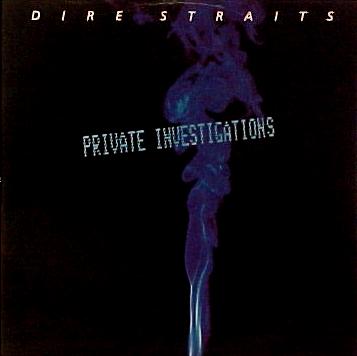
Story Of A Song: Dire Straits’ ‘Private Investigations’ (1981)

Andy Beckett’s excellent new book ‘Promised You A Miracle UK80-82’ has got me thinking about the early ’80s a lot.

It was in many ways a bleak time in the UK (temporarily lightened by the Royal Wedding and Ian Botham’s cricket heroics against the Aussies), mainly defined by Thatcher’s deeply unpopular government, the Yorkshire Ripper murders, various terrorist attacks and fears of a nuclear war that were hardly appeased by the terrifying ‘Protect And Survive’ public information films.

dire straits

Contemporary pop generally railed against this attitude, wresting some much-needed fun and glamour from the gloom.

Although ‘Private Investigations’ shares almost nothing with prevailing musical trends of the period (and Mark Knopfler saved his reaction to the Falklands War for Brothers In Arms‘ title track), it continues to hold my fascination.

These days it’s hard to read the song as anything other than a portrait of a love affair gone wrong, emphasised by the slightly dodgy video.

The song’s protagonist is fixated on looking for clues of his paramour’s infidelities, so he goes ‘checking out the reports’ and ‘digging up the dirt’, finding some ‘confidential information in the diary’.

We never found out exactly what he finds but it definitely ain’t good; in this song, to discover the truth of a relationship is a fate worse than death, leaving one ‘scarred for life’ with ‘no compensation’.

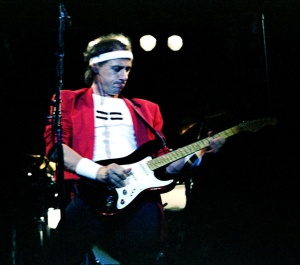
Love Over Gold Tour, Zagreb, 1983

Love Over Gold Tour, Zagreb, 1983

I love the track’s sonic detail. The sense of drama and use of dynamics leaves other contemporary pop for dust.

The stereo spectrum is used as a kind of panaromic field across which various sonic events are ‘placed’ to fit the narrative, including Mike Mainieri’s intricate marimba and subtle bits of percussion.

The result is a kind of mini-movie set to music, best listened to with headphones. Ennio Morricone couldn’t have done it better. You could argue that ‘Private Investigations’ was the catalyst for all Knopfler’s film soundtrack work.

He also demonstrates a mastery of many guitar styles on the track, from the nylon-string acoustic main theme/mini-solos through to the power-chorded interjections towards the end, the latter frequently inspiring some of my uncle’s most spirited air guitar-playing back in the ’80s.

Then Knopfler’s volume-pedal swell perfectly imitates a cat’s nocturnal howl. The last section, with its picked-bass/kick-drum heartbeat and Alan Clark’s chiming piano chords, seems very influenced by the title track of Steely Dan’s ‘Royal Scam‘.

I love that glass (window?) breaking and the click of a suitcase opening, or is it the latch of a door being tampered with? The space in the track forces you to focus on these details. It all adds up to something akin to Knopfler’s version of Peter Gabriel’s ‘Intruder’.

Astonishingly, in a slightly edited form, ‘Private Investigations’ reached UK number 2 in September 1982 (sitting incongruously in the top 10 alongside ABC, Duran Duran, Dexys, Shalamar and The Kids From Fame!), a sure signifier as to just how much better the charts were back then.

The track’s accompanying album, Love Over Gold, is seen as somewhat of a disappointment in Dire Straits’ discography, and I can’t say that any of its other tracks have had much effect on me.

But now that the nights are drawing in and the blinds are being shut, it’s always fun to dim the lights and give ‘Private Investigations’ a spin. The game commences…

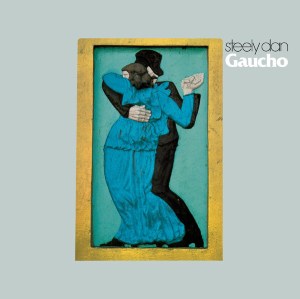
Steve Khan talks about recording Steely Dan’s ‘Gaucho’

steely

When I was about 12 or 13 years old, I was obsessed with my dad’s very old ABC Records cassette of Steely’s Greatest Hits.

It may have been the opening eight bars of ‘Do It Again’ that did it. I never looked back; they quickly became my favourite ‘band’, and remain so to this day.

I heard Gaucho – which turns 35 today – a few years later, maybe in 1986 or ’87, not even knowing of its existence until then. The album knocked me out. I practiced my drums to it every day.

By all accounts, it was a laborious and very expensive record to make, with various obstacles: whole songs were inadvertently erased (‘The Second Arrangement’) and other classics shelved.

Walter Becker endured a serious injury after being hit by a cab and there was even a lawsuit from Keith Jarrett regarding the similarity between the title track and his 1974 composition ‘Long As You Know You’re Living Yours’.

But it all paid off in the end; Gaucho was sumptuously mixed and mastered with songs that were built to last. Guitarist Steve Khan was a key contributor to Gaucho. Along with Larry Carlton, he would seem the perfect player for their later work, combining a jazz sensibility with a great feeling for the blues and also speedy sight-reading skills.

I was delighted to catch up with Steve from his New York base to talk about his role on the album and the ‘Glamour Profession’ session that led to one of the great guitar solos in the Steely canon.

On getting the call to play on Gaucho:

SK: I had played on almost all the tracks for Gaucho (even though I was erased from some, and some tracks didn’t survive), so I was a pretty healthy part of that recording. As to why they thought of me, who the hell really knows? Donald tends to like players who have a jazz sensibility but who also have a bluesiness or soulfulness about their playing. I guess, in his eyes, I fall into that category of possibilities.  I was the last thing to go on ‘Glamour Profession’, just as I was the last one to go on ‘Third World Man’ as well.

‘Glamour Profession’ lead sheet, prepared by Steve Khan. Click to enlarge

On playing the ‘Glamour Profession’ rhythm parts:

SK: The first thing we did was all the rhythm parts. In a sense that was very simple because they just wanted me to double what some kind of synth had already played – probably sequenced – and with perfect time. At about 3:30 in the track, there’s a little four-bar guitar chorale that Donald wanted me to play, so we wrote out the four voices and I played each voice individually, giving each one a touch of ‘soul’ with a little personal phrasing and vibrato here and there. Then, I think that we returned to doing the rest of the rhythm part. Honestly, I don’t recall if I did the rhythm part on my Telecaster Custom or not – when I listen now, there’s a crispness to the sound which leads me to believe that this was the Tele.

On recording the famous ‘Glamour Profession’ solo:

SK: I used my new Gibson ES-Artist (with active electronics) – which is really a 335 – and after that solo, I never used it again – I sold it back to Manny’s Music! In the end, all the fancy things that they can do to guitars are fine but everything comes down to one’s touch, and I’m mostly speaking about the fingertips on the left-hand. If one has a good touch, the music will translate through virtually any amp. Equipment is just a tool.

glampro2

In concept, the solo represents a lot of linear concepts that I had been working on for years. And only in hindsight, many years later, after the publication of my second theory book ‘PENTATONIC KHANCEPTS‘, I hear these kinds of linear ideas at work. Based upon the chord progressions, it all seemed to work perfectly because, in the end, it is a combination of the angular with a bluesy feeling to it – and that’s what Donald and Walter like – with a touch of harmonic sophistication.  I think that the things that I was working on, a long time ago, in terms of other approaches to changing up the normal jazz/bebop-oriented construction of lines, seemed to be very present on ‘Glamour Profession’. If you apply the Pentatonic Khancepts to those chords, you’ll see/hear exactly what I was doing then, mixed in with a healthy dose of blues too.

The horns and the synth lines were already there, so it becomes like playing through a bit of a minefield because you have to dance around those other linear elements. I did one complete take which I actually liked very much. Then, of course, they asked me to do another one. Because of track space, I couldn’t have done more than three of them. Then, thank goodness, I think that we all felt that the first one had the most ‘meat’ to it, and so we would work from that. Then we went back through it. They kept all the phrases that they loved and asked me to try something else in a number of spots. Whether I wanted to or not, it’s still a job and you do what you are asked to do!

For more on Steve’s contribution to Gaucho and the rest of his career, check out his website and this great interview with Leo Sidran.

For much more about Steely Dan, check out ‘Reeling In The Years’ by Brian Sweet and ‘Aja 33 and 1/3’ by Don Breithaupt. 

Japan: A Foreign Place

japanIt’s only befitting that Japan – a groundbreaking ’80s band who undeniably put a big emphasis on surface and style – should be rewarded with Anthony Reynolds’ glossy, beautifully-designed biography.

To paraphrase an old joke, when I got ‘A Foreign Place’ in my hands I didn’t know whether to read it or frame it. It comes with a weighty, thick binding and a glorious cover featuring the band’s characteristic logo.

It’s also packed with many fantastic photos, almost all of which were new to this correspondent. Many of them even appear to show David Sylvian smiling…

Mick Karn and David Sylvian, Toronto, 24th November 1979

Mick Karn and David Sylvian, Toronto, 24th November 1979

But what of the book’s content? Though it will satisfy the most information-starved Japan fan, with detailed commentaries on the band’s music and relationships, it also works very nicely as a portrait of the wider late-’70s/early-’80s music scene: Giorgio Moroder, Ryuichi Sakamato, Simon Napier-Bell, Gary Numan and David Bowie make regular appearances.

Though the band were, critically, a laughing stock up until the Quiet Life album in 1979, it’s often forgotten quite how out of place they always were in the UK pop firmament.

From androgynous glam-rockers to glacial art-popsters, Japan resolutely stuck to their own guns and, by the time of their split in 1983, had become probably the most influential group of their era.

Sylvian and Barbieri, The Oxford Road Show, November 1981

Sylvian and Barbieri, The Oxford Road Show, November 1981

Reynolds expertly builds up a lucid picture of South-East London in the 1970s with its racial/cultural/class divisions and dodgy schoolmasters.

The brothers Batt (soon to be rechristened David Sylvian and Steve Jansen) hooked up with schoolmate Andonis Michaelides (soon to become Mick Karn) to jam and write songs.

Reynolds reveals some of Japan’s more outré musical influences (Stanley Clarke, Chick Corea, Aynsley Dunbar) and also that their early material was full of Sylvian guitar solos.

Jumping forward a bit, we get many gossipy revelations: Sylvian’s toe-curling audition for legendary manager Simon Napier-Bell, Gary Numan’s frequent stalking and also Japan’s early (and uniformly bad) experiences on the live scene of the late-’70s, supporting the likes of Blue Oyster Cult.

Though the band were all resolutely straight, onstage they were subjected to constant homophobic comments and a barrage of missiles. Reynolds reveals that Black Sabbath guitarist Tony Iommi had a real thing for Sylvian, pestering Napier-Bell for an introduction, not realising Sylvian wasn’t a ‘chick’. But this surely wasn’t the first time Sylvian had been mistaken for Brigitte Bardot.

Japan, November 1982

November 1982

Japan’s pop breakthrough is expertly handled, Reynolds spelling out in great musical detail how Sylvian’s emergence as a high-quality songwriter fused with Richard Barbieri’s canny synth programming and the stunning Karn/Jansen rhythm section to finally produce some music of worth.

But success had come at a great cost; the band had completely grown apart, not helped by Karn’s girlfriend moving in with Sylvian on the eve of an important tour.

This Kickstarter project has clearly been a labour of love but ‘Japan: A Foreign Place’ punches way above its weight with in-depth interviews, sumptuous design and anecdotes aplenty.

Occasionally, the text has a repetitious, ‘cut and paste’ quality, but this is a minor quibble. It’s hard to imagine that anyone will ever write a better book about one of the key bands of the ’80s. Highly recommended.

‘Japan: A Quiet Place’ is published by Burning Shed.

Lee Ritenour: Rit 2

ritenourSequels are seldom a good idea in the movie business, and thankfully they’re a lot less prevalent in the music game.

But one of the most successful ‘franchises’ of the ’80s was guitarist Lee Ritenour’s Rit/Rit 2 combo, now re-released by Cherry Red on a single CD, and they’re two of the best-sounding albums of the era.

Of course that shouldn’t be a huge surprise when you notice the presence of names such as Humberto Gatica, David Foster, Harvey Mason, Jeff Porcaro, Jerry Hey, Abe Laboriel, Alex Acuna and Greg Philinganes on the song credits, but then again a lot of albums at that time featured all the right ‘names’ but didn’t deliver the goods.


But if 1982’s Rit 2 is not quite in the same league as its predecessor, it’s still another classic piece of sumptuously-produced, blissed-out West Coast AOR with touches of jazz and soul, helped by the excellent vocals, keyboards and songwriting of Eric Tagg.

To these ears, it sounds as if Quincy Jones had produced Toto and got a good singer and a few decent songwriters in.’Promises Promises’ is superior disco/funk/rock and wouldn’t sound out of place on Quincy’s The Dude or Jacko’s Thriller.

‘Dreamwalkin’ is kind of the ‘happy’ version of Earth Wind & Fire’s ‘After The Love Has Gone’ and would make a great theme song for a an early-’80s, California-set Chevy Chase/Goldie Hawn vehicle. Ditto ‘Keep It Alive’.

‘Tied Up’ and ‘Voices’ initially seem like standard AOR fare, but reveal their superiority with interesting, layered vocal arrangements and surprising chord changes (and a classic bit of Porcaro drums on the latter).

But the real standout is killer instrumental ‘Road Runner’ featuring Harvey Mason’s incredibly intricate hi-hat work, a spicy Jerry Hey horn arrangement, some tasty Fender Rhodes from Philinganes and a corking set of solos from Ritenour.

Ritenour tried to repeat the formula on ’84’s less successful Banded Together before embarking on a decade of underwhelming instrumental smooth jazz with the occasional high point.

But Rit and Rit 2 are classics of their kind and belong alongside Steely’s Gaucho, Randy Crawford’s Secret Combination, Quincy’s The Dude, Michael Jackson’s Thriller and George Benson’s Give Me The Night as key albums of the era.

The Tube: The Best ’80s Music Show?

Paula and Jools

Paula and Jools

My favourite music show still is and probably always will be ‘The Tube’, which ran on Friday nights between 1982 and 1987 and was presented mainly by Jools Holland and Paula Yates.

Though Jools has found his niche presenting the very successful ‘Later…’ series for BBC1, I preferred the more youthful, risky, ‘uncut’ Holland (who was given a hefty slap on the wrist when he famously trailed the show one week by saying people who watched it were ‘groovy f***ers’!) and he had a great chemistry with the intelligent, funny and sexy Paula.

From week to week, you could never guess what you were going to see. There were live bands, star interviews, specially-filmed videos, on-location featurettes and weird bits of alternative comedy usually involving Rik Mayall in various degrees of drunkenness.

Some of it was great, some of it was OK and some of it was crap, but you couldn’t take your eyes off it. It helped launch some careers (Twisted Sister, Fine Young Cannibals, Frankie Goes To Hollywood, Terence Trent D’Arby) and relaunch others, and you could see every type of music on the show – Metal, Goth, Funk, Fusion, Indie, Pop, Soul – all in the spirit of discovery without any pandering reverence or bourgeois pretension.

And though the show featured many huge names, it also embraced up-and-comers: if your band was any good, had some fans and a decent plugger, you were on. And there was a bar on the set too. Here are a few clips from ‘The Tube’ that have stuck in the memory:

5. The Bangles – ‘Manic Monday’

Check out the creepy guy at the front staring straight at Susanna Hoffs throughout, almost blocking the camera. Full marks to the girls for giving the (Prince-penned) song their all despite a dumbstruck Newcastle crowd. Tight harmonies.

4. Billy Mackenzie interview, 1985

One of those great, weird, un-PR’d interviews that popped up now and again. A post-‘Party Fears Two’ Billy is clearly taking the piss throughout, in the nicest possible way, and it also shows how The Tube wasn’t scared of going out into the ‘provinces’ (Dundee in this case).

3. Cocteau Twins – ‘Pink Orange And Red’

Great haircuts, great voice, great guitar sound and underwater bass. The golden age of goth/pop.

2. Blancmange – ‘Living On The Ceiling’

Good hair again, and someone or something is making singer Neil Arthur struggle to keep a straight face throughout.

1. Prefab Sprout – ‘Cruel’

This little Bacharach-influenced bossa nova was my first glimpse of the marvellous Prefab.

Joni Mitchell: Dog Eat Dog 30 Years Old Today

joni_mitchell-dog_eat_dog(2)Most music fans of a certain age probably had their favourite ‘Walkman albums’, those cassettes that worked perfectly on headphones, revealing intricacies (weird panning effects, funky little motifs, stereo drum kits) rarely noticed when played on normal speakers.

As much as I had loved Joni Mitchell’s music ever since my dad played me ‘Chinese Cafe (Unchained Melody)’ in 1983, I’d never have predicted that the superb Dog Eat Dog – released on 30 October 1985 – would turn into one of my top headphone albums. A clue, of course, was the presence of Thomas Dolby as co-producer and keyboard player, master of quirky soundscapes and synth textures.

joni

Though initially he might seem a weird choice of collaborator, with hindsight it’s not that much of a surprise that Joni and co-producer/bassist/hubbie Larry Klein should enlist his services. Joni admitted in contemporary interviews that she ‘could use a hit’. But they didn’t get along particularly well in the studio, Dolby not enamouring himself to her by blithely calling her ‘Joan’ between takes.

But the Englishman contributes a lot to Dog Eat Dog – interesting audio effects like Wayne Shorter’s sampled soprano throughout ‘Lucky Girl’, beats, dub textures here and there (‘Shiny Toys’) and of course the odd spoken word intrusion (maybe it was his idea to use Rod Steiger on ‘Tax Free’?).

One of the key aspects of Dog Eat Dog is Joni’s anger at the state of the world, both lyrically and vocally. Her cover pose says it all – throwing her hands up in the air with indignation and/or helplessness. As she puts it, the album is a portrait of ‘a culture in decline’. She takes aim at TV evangelists, consumerism, lawyers, yuppies and Reaganites with equal candour, letting fly with an F-bomb on the superb ‘Tax Free’.

The album also features some of Joni’s strongest singing on record. Her melodies are sometimes resplendent too, particularly on the title track and ‘Lucky Girl’. It’s also interesting to hear her trying out a slightly more minimalist lyric-writing approach on ‘Fiction’ and ‘Tax Free’, marrying her short, sharp lines to Klein’s music.

‘Good Friends’, initially a brooding piano ballad in demo form, kicks the album off in fine style, an AOR classic with more interesting chord changes than the usual and a typically distinctive guest spot from Michael McDonald. It was a bold though unsuccessful attempt at a hit, far too good for the charts. Joni even sung it live on ‘Wogan’ with a McDonald impersonator!

The elegant, stately ‘Impossible Dreamer’ is described by Joni as ‘a tribute to Martin Luther King, John Lennon, and Robert Kennedy – all those who gave us hope and were killed for it.’ It also features some sparkling soprano sax from Wayne Shorter. Master drummer Vinnie Colaiuta is mainly reduced to providing drum samples for Dolby, though plays some lovely stuff on ‘Shiny Toys’, the second single from the album and subject to a great 12″ mix by Francis Kevorkian

The ’80s weren’t particularly easy on Joni and her contemporaries Don Henley, Neil Young, Bob Dylan, Linda Ronstadt and Robbie Robertson. As she put it, ‘I made four albums for Geffen. For one reason or another, they were viewed as being out of sync with the ’80s. But I was out of sync with the ’80s. Thank God! To be in sync with these times, in my opinion, was to be degenerating both morally and artistically. Materialism became a virtue; greed was hip.’

A lot of people would probably have liked her to carry on making Blue for the rest of the ’70s and ’80s, but she was moving on. Every album was different and this may be the one most in need of critical reassessment. Some tracks would possibly benefit from acoustic reinvention, but hey… It’s Joni.

Level 42: World Machine 30 Years Old Today

level-42-world-machineAs a young band starting out in the ’80s, your ideal career trajectory would probably go something like this: Get together with a few mates, start rehearsing, get the gear in a van, tour the nation’s toilets, slowly build your audience, get a manager, get the record deal, release your debut, get on ‘Top Of The Pops’ and then hope you’ve got a career.

But it’s one of the rules of pop that some folks can’t handle fame when it hits. To paraphrase Bill Bruford: first you cope with failure, then you cope with success.

From Syd Barrett through Ian Curtis to Billy Mackenzie (is it mainly a British thing?), there are always artists who have bailed out when the constant routine of promotion and miming to the hit single becomes too much like a regular job.

The syndrome even affected pop/jazz/funk heroes Level 42, who in 1985 produced arguably their finest album in World Machine, though lost half their original line-up in the process including one of the finest-ever British drummers.

The band’s popularity had been steadily building throughout the ’80s. Though their live following had always been strong and they always had hits, the singles usually seemed like happy accidents – ‘Sun Goes Down (Living It Up)’, ‘Chinese Way’ and ‘Hot Water’ were all last-minute album additions based on studio jams.

Now their record label Polydor wanted a more concerted assault on the singles charts and a more current sound, and to that end outstanding bassist/vocalist Mark King took much more of a lead than before.

Alongside co-producer/keys man Wally Badarou, the band laid down the most cohesive, streamlined collection of songs in their career thus far with two or three obvious singles at demo stage (though not a view apparently shared by then manager John Gould whose negative reaction to the new songs contributed to him being given the push in a heated band meeting).

Not everyone in the band was happy with this brave new musical direction either. Main lyricist and drummer Phil Gould (brother of ex-manager John and guitarist Boon) had always peppered Level 42’s songs with allusions to psychology, science fiction and esoteric spirituality, drawing on writers like Arthur Koestler, Hermann Hesse and EM Forster, but by early 1985 the pressure was on to deliver boy/girl songs with universal themes.

In an excellent recent interview, Phil has talked about Polydor wanting the band to do party anthems like ‘Let’s Groove’ and suggesting they do a cover version of ‘Nature Boy’. He struggled against this direction, rightly surmising that they would quickly become typecast as a clichéd Brit-funk band.

Though he did eventually tone down the lyrical imagery a bit on World Machine, he still smuggled in some depth and despair to songs such as the title track, ‘Physical Presence’, ‘Leaving Me Now’ and ‘Coup D’Etat’.

Oh yes – the music. One of the great pleasures of World Machine is its consistency of tone; you can drop the needle anywhere and hear the quality. Engineer Julian Mendelsohn is a big contributor to that.

The band had mastered the kind of half-time funk groove which had frequently littered their earlier work, and the style reached its apogee here with bassists and drummers rushing off to play along to ‘Good Man In A Storm’ (why has it never been played live?), ‘A Physical Presence’, ‘Leaving Me Now’, ‘Dream Crazy’ and ‘It’s Not The Same For Us’ (which was initially going to be a Mark King lead vocal as revealed on this amusing demo).

But the sequence-heavy nature of some other tracks (particularly the title track, ‘Something About You’ and ‘I Sleep On My Heart’) also aroused some musical differences in the band. It’s intriguing to imagine what these songs would have sounded like shorn of their ‘hi-tech’ elements.

Level 42 had secured several hits before, but ‘Something About You’ was the real breakthrough. Incredibly, it reached #7 in the US singles chart, perhaps inspired by a really good accompanying video.

World Machine delivered, both commercially and artistically. It reached #3 in the UK album chart, staying in the top 100 for 72 weeks. I saw the band at the Hammersmith Odeon on the – as usual – completely sold-out UK tour. They later went off to the US to tour with Madonna and Steve Winwood. The brothers Phil and Boon Gould left the band soon after recording the follow-up Running In The Family and the classic line-up was no more.

Great memories, great sounds, great band.

From Diva To De Palma: Seven Soundtrack Moments

withnail

Ralph Brown as Danny in ‘Withnail & I’

When it comes to the marriage of sound and vision, there’s a particular kind of ’80s cliché probably originating from the work of directors like Ridley/Tony Scott, Adrian Lyne, Hugh Hudson and Alan Parker (interestingly, all Brits who ended up in Hollywood).

It’s basically a slick, beautifully-shot montage of images usually accompanied by vaguely ‘New Age’ kind of music which probably features some Satie-esque piano, possibly some strings (synthesized or real) and/or a bit of acoustic guitar or sax.

Well, I’m here to tell you that this combo is pure comfort food for me in these troubled times. It must be another of those ‘blokes of a certain age’ things. And it turns out that some of those directors also produced some of my favourite movie soundtrack moments of the ’80s:

7. Diva (1981)
Composer Vladimir Cosma channels Erik Satie, Peter Gabriel and Tangerine Dream to create a beguiling mix of solo piano, bleak new-wave rock and classic minimalism. I don’t ‘do’ opera but the two versions of Catalani’s ‘La Wally’ which bookend this superb album get me every time.

6. Angel Heart (1987)
A bleak synth swells in the distance, De Niro (?) whispers ‘Johnny… Johnny…’ and we’re off. Courtney Pine blows impressively over Trevor Jones’ ambient backing and the rest of the album features some excellent crooner tunes and R’n’B too.

5. Blow Out (1981)
Melody-maestro Pino Donaggio pulls out all the stops for this rather beautiful theme which accompanies director Brian De Palma’s most ’emotional’ movie slaying…

4. Betty Blue (1986)
Gabriel Yared’s haunting soundtrack for this famously-overrated art-house melodrama gives me an instant nostalgia rush. Very influential too, particularly on the next choice.

3. Withnail & I (1987)
David Dundas and Rick Wentworth’s music perfectly evokes some of the film’s themes darker themes, though the blues guitar licks were perhaps best left out of the final mix.

2. 9 1/2 Weeks (1986)
The bizarre, chameleon-like career of pianist/composer Jack Nitzsche is one for another time, but his ‘love theme’ from Adrian Lyne’s guilty pleasure is sentimental, hokey and clichéd, and gets me every time. There are other crackers by Jean-Michel Jarre, Brian Eno and The Eurythmics on the quite-hard-to-find soundtrack album.

1. Mrs Soffel (1984)
A confession – I’ve never seen this movie. And I’m really not sure I ever will. But Mark Isham’s majestic theme never fails to beguile, originally heard on a mid-’80s Windham Hill Records taster cassette.