Five Great 1980s Madonna Moments

5. Late Night With David Letterman, 1 July 1988
Though her most famous Letterman appearance was probably 1994’s swearfest, here she comes off more like a naughty big sister than an established star. Madonna and Sandra Bernhard laugh off Dave’s temper tantrums and seem to have stepped out of a ’50s B-movie (video removed by YouTube…).

4. Live Aid
This footage from La Ciccone’s Philadelphia appearance on 13 July 1985 gives a great insight into the atmosphere on the day and the adrenalin (and other substances?)-fuelled panic of the artist soundchecks. Live Aid came just a week after Madonna’s pre-fame topless pictures were leaked to the press. Her response was to wear lots of layers and silence the cat-calls with style, humour and an irrepressible joie de vivre.

3. ‘Crazy For You’
My favourite Madonna tracks are ballads (‘This Used To Be My Playground’, ‘Take A Bow’, ‘Something To Remember’, ‘Oh Father’, ‘Promise To Try’) but this is possibly the pick of the bunch. Beautifully arranged by Rob Mounsey, it was transformed from just another song in a so-so movie into a UK #2 and US #1 in March 1985.

2. The 1984 MTV Awards
Imagine the reactions of the Armani-suited execs in the stalls. Madonna and Joni Mitchell have both spoken publicly about the chauvinistic attitudes that prevailed in the music industry of the mid-’80s. This was a brave response.

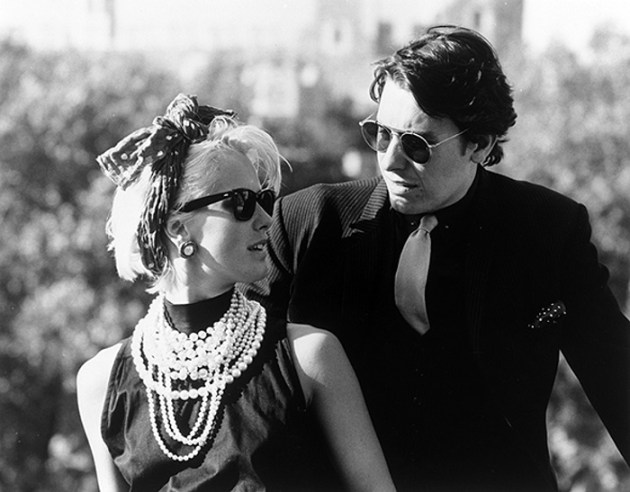
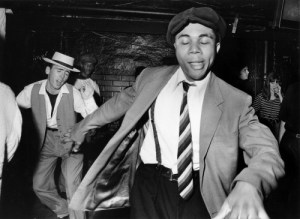
1. The ‘Desperately Seeking Susan’ club scene
For many people, this was her only decent movie performance, and I wouldn’t argue with that (though I need to see Abel Ferrera’s ‘Snake Eyes’ again…). Roman Polanski paid homage to this scene ten years later in ‘Bitter Moon’, starring Hugh Grant, to similarly comic effect.

ECM Goes Rock: David Torn’s Cloud About Mercury

Cloud_About_Mercury

The late ‘80s was a great period for avant-garde guitar playing with the likes of Vernon Reid, Reeves Gabrels, Adrian Belew, Arto Lindsay, Fred Frith, Dave Fiuczynski, Stevie Salas, Sonny Sharrock, Skip McDonald, Robert Quine, Steve Vai and Bill Frisell laying down some seriously mind-bending tones and textures.

Cloud About Mercury, David Torn’s second ECM solo album, definitely put him into the same league. Though just as influential as many of the aforementioned guitarists, he has never really gained as much of a public profile despite occasional solo albums and stellar sideman work with the likes of David Bowie and David Sylvian.

My dad used to get sent a lot of music for his work and I vaguely remember him passing Cloud About Mercury onto me, knowing I was a big fan of early-’80s King Crimson.

My muso mates and I quickly grew to like the album’s perverse musical concepts and silly song titles. With a superstar avant-rock rhythm section of Bill Bruford and Tony Levin on board, it came on a bit like the follow-up to Crimson’s Three Of A Perfect Pair, but also offered a strikingly original take on jazz/rock.

I recall a contemporary review of Cloud About Mercury in Q magazine which said something like: ‘Torn luxuriates in the silence for a bit…and then goes KRAOOOOOOW!’ But in its louder moments, CAM is definitely one to annoy the neighbours. Torn’s Trans-Trem guitar enables him to create some very novel effects and original lines, with micro-tones and Middle Eastern flavours, and you can really get lost in his ambient loops.

CAM is also a very uncharacteristic ECM album, being much more in-your-face and rockist in its mixing and playing than most of the label’s output. In fact, it’s not really fair to judge it as a ‘jazz’ album at all.

But sometimes Torn seems much happier playing solo or in duet with Isham; his superb rhythm section is underused, and the tunes rely too heavily on one-chord improvisations. Consequently Bruford and Levin sound somewhat muted and can’t quite bring the sort of forward-motion dynamics so crucial to jazz/rock.

Torn toured extensively to promote CAM (but presumably not London or I surely would have been there…) with ex-Japan bass player Mick Karn replacing the unavailable Tony Levin. An excellent decision, both musically and commercially.

The band sounded fantastic and the tunes really came to life. Torn and Isham then accompanied David Sylvian on the ‘In Praise Of Shamen’ world tour which I caught at the Hammersmith Odeon in 1988.

Two quick questions to end, prompted by a discussion with my brother about Torn the other day: why isn’t there any music like this around these days? Or is there?

Ray Parker Jr.: Woman Out Of Control/Sex And The Single Man

Years before his huge hit ‘Ghostbusters’, Ray had played guitar on some great albums of the ’70s (Stevie’s Talking Book and Innervisions, Rufus/Chaka Khan’s Rags To Rufus,  Harvey Mason’s Funk In A Mason Jar, Marvin’s I Want You, Leon Ware’s Musical Massage), not to mention sessions with the likes of Boz Scaggs, Barry White, Tina Turner, Herbie Hancock and Bill Withers.

He also enjoyed a few big hits as part of Raydio before going solo in ’82. Either side of ‘Ghostbusters’, he put out two interesting albums which are now released as a good-value two-fer by Cherry Red/Soulmusic.com.

’83’s Woman Out Of Control unleashes a kind of feminist funk with various tracks unashamedly taking the laydeez’ side in the battle of the sexes, creating something pretty original. ‘Electronic Lover’ and ‘Invasion’ also rock the kind of psych-synth-funk sound that Prince and his contemporaries were tapping into at the time.

85’s Sex And The Single Man, the post-‘Ghostbusters’ album, ups the stakes with a lot more fuzz-toned lead guitar and also some weird synth-pop fun on ‘Girls Are More Fun’ and ‘I’m A Dog’. ‘One Sided Love Affair’ is an amusingly-shameless ‘Hello’ rewrite and there’s some cracking Cameo-style funk/rock on the title track.

‘Men Have Feelings Too’ demonstrates more of his rhythm-guitar mastery. I was going to say that his playing sounds very Prince-influenced but it’s the other way round; check out this masterclass for the evidence. The albums were only minor hits – apparently Arista boss Clive Davis wasn’t blown away by their modest chart placings and was slow to return Parker Jr.’s call when contract-renewal time came around.

While it’s true that there’s nothing as immediate or hook-laden as ‘Ghostbusters’ on these two records, they’re definitely worth reappraising and make nice companion pieces to Miles Davis’s You’re Under Arrest, Cameo’s She’s Strange, Prince’s Purple Rain and The Time’s Ice Cream Castle. Ray’s still going strong too, playing festivals and turning up on the occasional session.

N.B. Parker Jr. has recently been subject to an out-of-court settlement regarding the similarity of ‘Ghostbusters’ to Huey Lewis And The News’ ‘I Need A New Drug’. Judge for yourself…

RIP Chris Squire (Updated)

In my recent piece on Chris’s sad passing and bass style, I put forward my half-arsed theories on his ’80s tunings.

I stand corrected, as the excellent video below shows. The whole thing is worth watching, but he gets into the issue of his five-string bass at around 12:10 (and also rattles off a nice demonstration of the ‘I’m Running’ riff).

Needless to say, his approaches to the five-string and tunings in general are as original as all his other musical ideas. Enjoy.

No Brown M&Ms: Great Backstage Riders Of The ’80s

brown-milk-chocolate-m-m-1-poundYou know you’ve made it in the music biz when your gig rider raises eyebrows.

The rider: a contract drawn up by the promoter stipulating a band’s concert requirements including ‘dressing room extras’ – food, drink and drugs to you and me. And, if the general tenor of the 1980s was extravagance and exuberance, many artists’ backstage demands were no different. Here are five corkers:

5. Howard Jones
He had barely registered a hit and was only undertaking a modest college tour of the UK during summer 1983, but his backstage demands included ‘eight pounds of brown rice, six large aubergines, three pounds of courgettes, three green peppers, one head of garlic, three pounds of fresh tomatoes, twelve mixed yogurts and twelve bananas.’ He also requested that security not have ‘guns or dogs’, that the dressing room possess a ‘sweet-smelling ambience’ and that he must have ‘physical contact with the audience’. And you thought he was just a slightly vapid though ultimately harmless pop guy…

4. Van Halen
They famously often requested ‘large bowls of M&Ms with the brown ones taken out’ but their legendary 1984 Monsters Of Rock show at Castle Donington also required ‘eight litre bottles of Jack Daniels, eight litre bottles of brandy, eight litre bottles of vodka, 16 cases of domestic beer and a worldwide selection of cheeses’. Those boys knew how to partay. And were also rather fond of continental cheeses.

3. Iggy Pop
Late great musician/writer Ian Carr once described seeing Miles Davis come offstage and collapse into the arms of two specially-placed roadies as soon as he was out of the audience’s sight, but that’s nothing compared to The Iggster’s post-show routine. His rider for a 1983 UK tour stipulated ‘it is absolutely essential at the end of the show that there is a nurse in attendance with two cylinders of oxygen and masks’. Presumably Iggy wanted the ‘nurse’ for a bit more than ‘oxygen’…

2. David Thomas
The portly Pere Ubu frontman demanded meticulous sandwich preparation for a University of London show in the early ’80s: ‘A sandwich is defined as three pieces each of meat and/or cheese, one-inch thickness of lettuce, a half-inch thickness of onion, mayonnaise, two slices of three-quarters of an inch of tomato, all between two thick slices of wholemeal bread. NO BUTTER. AND I WILL REPEAT: NO BUTTER OR MARGARINE. PERIOD.’ It’s as if punk never happened…

1. Aerosmith
The Bad Boys From Boston didn’t leave anything drug-related to chance when putting together their backstage rider for a particularly blitzed tour in the early ’80s. The stand-out clause read: ‘No snow, no show’! Well, at least they were honest.

A tip of the hat to Simon Garfield’s excellent book ‘Expensive Habits’.

Live Aid: 30 Years Ago Today

live aidWith barely a mention in the media or press, Live Aid turns 30 today. 

I was a very excited 12-year-old pop fan on Saturday 13th July, 1985. The weather was hot and sunny and the whole nation seemed united. On the morning of Live Aid, my dad drove us up to the Virgin Megastore on Oxford Street where I bought cassettes of Level 42’s A Physical Presence and Scritti Politti’s Cupid And Psyche ’85 in preparation for the day. The streets were almost deserted. We got home around midday, turned the telly on and settled in for the afternoon.

That was then but this is now, as ABC sang. But how does the music from that day stand up in 2015?

Though many of New Pop’s architects got in on the act, it was the older artists who – for better or worse – made the biggest impact on the day (Queen, Tina Turner, Phil Collins, Status Quo, Dylan, Led Zep, Dire Straits, The Who, Bowie, Jagger). Apart from Led Zep and Dylan’s hilariously dodgy turns, Live Aid reminded people that the oldies were still hungry and could still cut it live, and the event arguably ushered in the mainstream success of Peter Gabriel, Steve Winwood, Eric Clapton and Robbie Robertson.

mick jagger tina turner

Many of the youngsters fudged it: Spandau were shown up by their lack of musicianship and quality material, Adam Ant chose the wrong songs, Sade were dull, Style Council were shrill and under-rehearsed, Duran were hamstrung by LeBon’s famous vocal boo-boo, Paul Young and Alison Moyet cornily rehashed some very old soul-revue moves and The Thompson Twins sounded out of their depth despite backing from Madonna and Nile Rodgers.

Perhaps surprisingly, U2, Madonna, Howard Jones, George Michael and Nik Kershaw might just have been the best ambassadors of Pure Pop on the day with engaging performances and solid musicianship. Post-punkers such as Sting, Elvis Costello and The Cars were merely functional.

But maybe the biggest disappointment of the day was the lack of black superstars (Prince, Michael Jackson, Stevie, Miles?), female solo artists and Second British Invasion popsters (Culture Club, Eurythmics, Tears For Fears, Frankie Goes To Hollywood).

david bowie

Naysayers claim that most of the acts appeared simply to further their careers. Well, yes, surely that was a factor for the younger artists but it’s a crushingly cynical view. Anyway, did you buy ANY music as a direct result of seeing Live Aid on the box (Queen’s Greatest Hits doesn’t count)?

I just enjoyed it for what it was. Anyway, most of my favourite pop acts didn’t get anywhere near Live Aid (Scritti, Jacko, Propaganda, Level 42, Prefab). It’s hard to really complain when the event has raised over £150 million.

So three cheers to Bob Gandalf, as Joss Stone memorably called Geldof.


Gig Review: Let’s Rock Exeter, Saturday 4th July 2015

let's rockThe ’80s nostalgia festivals are big business right now judging by the quality of acts and impressive turnout of punters at Let’s Rock Exeter.

Taking place in a large, picturesque estate next to Powderham Castle, this all-day festival will be repeated at various venues across the country over the summer and it was a great chance to see if the musicianship and songwriting of the decade stand up today.

And I’m pleased to say that, by and large, they do. Also it helped that there was no ubiquitous ‘house band’ – all the artists brought their own back line. This was no cost-cutting package deal.

We were too late to catch Altered Images or Nathan Moore from Brother Beyond – no great hardship – but heard most of The Real Thing’s impressive set while queuing. Nick Heyward followed with some fairly downbeat and strangely unmemorable near-hits bookended by still-effervescent Haircut One Hundred tracks ‘Love Plus One’ and ‘Fantastic Day’.

Five Star were the first big surprise of the day, featuring surprisingly strong lead vocals from Lorraine Pearson and a supertight, R’n’B-tinged band. ‘Rain Or Shine’ transcended its ‘guilty pleasure’ tag to become a true ‘80s pop classic.

Nik Kershaw

Nik Kershaw

Nik Kershaw brought some real muso cred to proceedings with some extended Allan Holdsworth-esque guitar solos, more excellent singing (a big improvement on his mid-’80s vocals) and some engagingly dry humour, preceding ‘The One And Only’ with a curt ‘If you know this, sing along. If you don’t, don’t!’

A quick look at Go West’s singles chart positions show that they were big in the States in the late ‘80s and early ‘90s; ‘Faithful’ and ‘King Of Wishful Thinking’ sounded tailor-made for that market.

Peter Cox’s vocals were superb, soulful and inventive, and they’d put a lot of thought into their arrangements with some tracks sounding almost like 12” remixes. Covers of ‘Sex On Fire’ and ‘Black And Gold’ initially seemed curious choices but went down very well with the crowd.

And the trio of great vocalists were concluded with the appearance of Martin Fry’s ABC who provided the classiest set of the day. A superb percussionist filled out the Lexicon Of Love material beautifully and Fry exuded charisma.

bananarama

Bananarama

I didn’t bother with much of Midge Ure or Howard Jones’ sets; Bananarama, now just a duo of Sara Dallin and Keren Woodward, looked good but unfortunately didn’t sound great or perform with much intensity – their vocals were harsh and there was apparently no love lost between them.

Early-’80s pure pop classics like ‘Cruel Summer’ and ‘Robert De Niro’s Waiting’ were also inexplicably mired in disco-lite arrangements and there was a bit too much emphasis on the Stock Aitken Waterman era for my liking.

We legged it before Billy Ocean and The Thompson Twins’ Tom Bailey – I quite regret not seeing the latter but wasn’t too bothered about the former. But, all in all, this was an impressive showing for some great 1980s singles acts. There’s life in them yet.

Level 42: A Physical Presence 30 Years Old Today

level 42

What are the greatest live albums in music history?

James Brown’s Live At The Apollo. Donny Hathaway’s Live and Bill Withers’ Live At Carnegie Hall might get a mention, but I would make a case for Level’s A Physical Presence too.

Quite simply, this album is the nearest a British band has ever come to the kind of effortless fusion of black music styles achieved by US supergroups such as Weather Report and Earth Wind & Fire. But Level 42 were always a far edgier proposition than those bands, mixing up the funk, world-class musicianship and jazz/rock with an almost punky intensity.

Mark King in 1985

Mark King in 1985

Recorded in March 1985 at such suburban funk meccas as Golddiggers in Chippenham, The Coronet in Woolwich and The Hexagon in Reading, A Physical Presence showed off Level on the cusp of their mainstream pop breakthrough.

But you’d never know it. It’s hard to imagine any other British band before or since attempting the audacious fusion instrumentals ‘Foundation And Empire’ or ’88’.

Police-esque ‘Follow Me’ and driving ‘Chant Has Begun’ hinted at a new rockier direction which was quickly jettisoned when they got back into the studio for World Machine. Mark King’s vocals are punchy, distinct and soulful throughout.

Has there ever been a better British funk/R’n’B rhythm section than Mark King (bass) and Phil Gould (drums)? Bass players beware – this album features a succession of some of the most memorable and inventive B-lines in funk history. Try ‘Eyes Waterfalling’, ‘Kansas City Milkman’ and ‘Turn It On’ for starters.

Phil Gould’s drumming is a perfect combo of groove and chops, whilst somehow also retaining a ‘British’ sound, kind of a mixture of Bill Bruford and Billy Cobham. And keyboardist Mike Lindup gets through so much work that he sometimes sounds like he’s got four hands (with a real Lonnie Liston Smith influence on the Fender Rhodes), and 90% percent of his intricate playing is without the aid of a sequencer.

It’s hard to believe that only 18 months later, after recording commercial breakthroughs World Machine and Running In The Family, the classic Level line-up would splinter for good amidst touring pressures, musical differences and personal issues. But APP is a glorious snapshot of a golden summer and the pinnacle of surely the UK’s greatest ever jazz/funk/pop band.

Propaganda: A Secret Wish 30 Years Old Today

propagandaTo many fans, A Secret Wish represents the peak of ’80s pop.

The glamorous though mysterious project was a flawed masterpiece but also the beginning of the end for big-budget, endlessly-fussed-over ‘concept’ albums.

It doesn’t really sound much like much else around in mid-’85 (though Pet Shop Boys and a-Ha were definitely listening), nor is it particularly similar to other ZTT releases or Propaganda’s subsequent albums.

A large part of the mystique is provided by Stephen Lipson’s pristine, widescreen production (Trevor Horn only produced ‘Dr Mabuse’), as well as his formidable mixing and guitar work (check out the extended mix of ‘Duel’). Claudia Brucken’s lead vocals are original and Suzanne Freytag’s spoken-word interludes carry unmistakable echoes of Nico (emphasised by their seriously weird ‘Femme Fatale‘ cover from the album sessions).

Yes guitarist Steve Howe contributes a nifty solo to ‘The Murder Of Love’ and David Sylvian has a hand in writing the gripping ‘p:Machinery’. But man of the match is ZTT house keyboardist Peter-John Vettese, purveyor of doomy soundscapes and intriguing chord voicings. Josef K’s post-punk classic ‘Sorry For Laughing’ is reinvented as a Wagnerian synth-pop anthem and there aren’t many more epic album openers than the majestic ‘Dream Within A Dream’.

Paul Morley, ZTT marketing/content man and former husband of Claudia Brucken, has talked about Trevor Horn and David Sylvian’s involvement in A Secret Wish:

Propaganda

‘When Trevor pulled out of producing them, I actually asked David Sylvian. While he was thinking about it, he came up with the ghostly top line of ‘P:Machinery’ – the music, if you like – and a gorgeous watery slowed down version of ‘Duel’, but he decided against producing them, and it stayed within the Sarm (London recording studio owned by ZTT label owners Trevor Horn and Jill Sinclair) pop factory. Actually, another sign of the split between sensibilities at the label: I asked David Sylvian to produce Propaganda and Jill approached Stock Aitken and Waterman!’

A Secret Wish wasn’t a huge hit and surely didn’t make back its sizeable recording costs, reaching just 16 in the UK album chart, but the singles ‘Duel’ and ‘p:Machinery’ both made the top 30.

The band picked up the first-class rhythm section of ex-Simple Minds pair Derek Forbes on bass and Brian McGee on drums (as well as Bowie/Dolby guitarist Kevin Armstrong) and toured the album extensively. I very clearly remember this performance on the BBC music show ‘Whistle Test’ in late 1985. Happy days:

RIP Chris Squire

chris squireEven solely based on the evidence of his rather unappreciated ’80s playing, Chris Squire would surely still get into the pantheon of bass greats.

I first heard him on Yes’s 1987 album Big Generator and worked backwards from there. I was won over by Trevor Horn’s pristine production, the band’s outrageous musicianship and the sheer originality of the songwriting, but recently Chris’s bass playing from the era is kind of obsessing me.

To my ears, he detuned his low E string on a standard four-string bass to a low A, one octave lower than the second string, presumably to best accompany the new songs which generally tended towards A major. You can hear it most clearly on the powerful title track and ‘Love Will Find A Way’.

Anyone who’s ever picked up a bass will know how potentially treacherous that tuning could be, but he just sails through. It also gives him a massive melodic range, from the funky twang of the ‘I’m Running’ riff, to the brutal low-end grooves of the title track and ‘Almost Like Love’.

The 1983 Yes album 90125 is also full of great Squire moments (with mostly regular tuning this time), from the catchy riff underpinning ‘It Could Happen To You’ to the flanger freakout ‘Cinema’ and rifftastic ‘City Of Love’. He really extended the Paul McCartney melodic bass concept into exciting new territories.

Sadly, sometimes it takes a great player’s passing to spur you on to check out music that has thus far escaped you, so the 1980 album Drama is my latest discovery. The lead-off track ‘Machine Messiah’ and ‘Does It Really Happen’ are chock-full of classic Squire moments and I’m sure loads more will reveal themselves. I must also investigate his short-lived project XYZ alongside Jimmy Page and Robert Plant.

By all accounts, Chris was a great and totally unique character too. RIP to a definite lord of the low end.

Christopher Russell Edward Squire (4 March 1948 – 27 June 2015)