Anthony Jackson (1952-2025)

Anthony during the recording session for Steve Khan’s ‘Eyewitness’ in 1981. Photo by David Tan

The brilliant Anthony Jackson, who has died aged 73, was a vital part of the early-1970s electric bass revolution, but arguably never got the same attention as contemporaries Stanley Clarke, Jaco Pastorius, Bootsy Collins, Louis Johnson and Alphonso Johnson (Chuck Rainey, Steve Swallow and Larry Graham are a bit older).

In a music world beset by fly-by-night chancers and one-trick ponies, he was a player of principle, something like the Allan Holdsworth of bass.

It was Anthony’s playing on Steve Khan’s ‘Guy Lafleur’ that first completely hooked movingtheriver – I remember thinking: who the hell is THAT?!

In two major ways, he changed the instrument as much as Jaco (though, in later years, pointedly called himself a ‘guitarist who plays a variation called the contrabass guitar’).

First there was his stretching of the instrument’s range below the standard low E (inspired by his love of Jimmy Smith’s Hammond organ playing) and above the standard top G, via his pioneering use of six-string basses, which he started playing exclusively in 1982 (Steve Khan thinks his superb ‘Casa Loco’ may have featured the debut of Anthony’s six-string).

Before that, Jackson had regularly detuned the low E string on his trusty Fender Precision, producing strikingly rich, deep timbres on work with Grover Washington Jr., Quincy Jones, Steely Dan, Chaka Khan and Earl Klugh, amongst hundreds of others (he prided himself on playing all kinds of music, working with everyone from Judy Collins and Peter, Paul & Mary to George Benson and Will Downing).

Then there was his use of effects, particularly the trademark flanger, often accompanied by the use of a pick, best heard on The O’Jays’ ‘For The Love Of Money’ and ‘Give The People What They Want’, and on his work with Al Di Meola. Oh, and then there’s a third factor – he ALWAYS sat down whilst playing, claiming that sitting down and wearing no strap was the way to go for bassists.

Jackson started playing music after seeing The Beatles on The Ed Sullivan Show in 1964, then became obsessed with other Brit invasion bands, Motown (via James Jamerson) and Jefferson Airplane’s Jack Casady, plus classical composers Olivier Messiaen and Paul Hindemith.

Regarding the latter two, their influence on Anthony’s playing is particularly noticeable on the live version of Khan’s ‘The Suitcase’, from 1994. Steve described this brilliant performance on his website.

One of Jackson’s first major gigs was in 1973, playing for a year in Buddy Rich’s sextet. He later called the drummer the only bona fide genius with which he had played. But then Anthony loved drummers. He enjoyed brilliant hook-ups with Steve Gadd, Buddy Williams, Steve Jordan, Harvey Mason, Simon Phillips, Steve Ferrone, Yogi Horton, Earl Young and many others.

But he lost work by refusing to ‘slap’ his bass during the disco era, and also very rarely solo’d unless he had something specific to say (to Steve Khan’s great annoyance!). Some of these concepts were laid down in his famously stern columns for Bass Player magazine.

But even Jackson wasn’t immune to some of the ‘proclivities’ of other great artists – for example, his performance was wiped from the title track of Steely Dan’s Gaucho! (Chuck Rainey’s pass got the nod instead.) But he played epochal stuff on ‘Glamour Profession’ and ‘My Rival’ from the same album, and excelled on Donald Fagen’s ‘IGY’ and ‘Ruby Baby’.

He was also fiercely loyal to artists he respected, enjoying long associations with Hiromi, Michel Camilo, Al Di Meola, Sadao Watanabe, Lee Ritenour, Grover Washington, Chick Corea, Khan and Michel Petrucciani.

In one of his rare interviews, he expressed a wish to play with Phil Collins, Ringo and Charlie Watts. Sadly it seems he didn’t achieve those ambitions. Farewell to a true pioneer and personal musical hero. Check out this playlist which brings together movingtheriver’s favourite Anthony performances.

Anthony Claiborne Jackson (23 June 1952 – 19 October 2025)
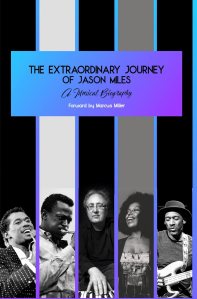
Book Review: The Extraordinary Journey Of Jason Miles (A Musical Biography)

Surprisingly few musical memoirs take the reader right into the recording studios of the 1980s and 1990s, documenting what actually went down during the making of some classic albums.

In his enjoyable new book, Jason Miles – synth player/programmer for Miles Davis, Whitney Houston, Luther Vandross, Roberta Flack, David Sanborn, Diana Ross, George Benson, Will Downing, Marcus Miller, Chaka Khan, Scritti Politti and The Brecker Brothers – does just that, in the process outlining the joys and sorrows of the American music business in its money-drenched pomp.

‘The Extraordinary Journey Of Jason Miles’ traces the author’s young life as a teenage Brooklyn jazz fanatic to becoming a first-call studio sessionman for some of the biggest artists on the planet. The book is also notable for outlining the considerable pressures – and potential threats to one’s mental health – of coming up with the goods and harnessing the ever-evolving music technology when time is money.

There’s a memorably tense episode when things go very wrong on a Vandross session and an unsparingly honest view of putting together his Miles Davis-celebrating Kind Of New project with trumpeter Ingrid Jensen. Jason also outlines his struggles bringing award-winning tributes to the music of Grover Washington Jr., Ivan Lins, Weather Report and Marvin Gaye to life.

Printing problems bring about a few curious errors/typos but the book is an absolutely key text for Miles Davis fans, a fast-paced, brave, uncompromising read also featuring some superb photographs. There are also intriguing, fond portraits of musicians such as Bernie Worrell, Lenny White, Marcus Miller and Joe Sample.

Also it strikes movingtheriver that we don’t have much first-person documentation of great 1980s and 1990s Black music – ‘The Extraordinary Journey Of Jason Miles’ corrects that, and sheds more light on who actually played what on Tutu and Amandla, though sadly my favourite ‘80s Davis (and Miller) album Siesta barely gets a mention (Jason tells movingtheriver he will write about it in his second book, coming soon).

(Postscript – One of Jason’s gripes is the lack of credit he has received through his career – sure enough, my remastered CD copy of Davis’s Amandla only gives him a sole credit, on the classic track ‘Mr Pastorius’… But Jason assures movingtheriver that Warners has made corrections to more recent versions of the album).


The Curse Of 1986?

The critical consensus: 1986 was the worst music year of the decade, perhaps of any decade. But is that true?

There was certainly a vacuum between the end of New Pop/New Romanticism and the Rock Revival of ’87.

Add in the one-hit-wonder merchants, TV soap actors, Europop poseurs, musical-theatre prima donnas, jazz puritans and Stock Aitken & Waterman puppets who hit paydirt towards the end of the decade.

Also most pop records just didn’t sound good. The drums were too loud, the synths were garish, ‘slickness’ was the order of the day. Perhaps nothing emphasised these factors as much as The Police’s disastrous comeback version of ‘Don’t Stand So Close To Me’.

But listen a little harder and 1986 seems like a watershed year for soul, house, go-go, art-metal, John Peel-endorsed indie and hip-hop. Synth-pop duos were back on the map, the NME C86 compilation was a lo-fi classic and there were a handful of groundbreaking jazz/rock albums too.

So here’s a case for the opposition: a selection of classic singles and albums from 1986. Not a bad year after all…

Paul Simon: Graceland

Stump: Quirk Out

David Bowie: ‘Absolute Beginners’

Mantronix: Music Madness

PiL: Album

Rosie Vela: ‘Magic Smile’

George Michael: ‘A Different Corner’

Eurythmics: ‘Thorn In My Side’

Al Jarreau: L Is For Lover

XTC: Skylarking

Duran Duran: ‘Skin Trade’

George Benson: ‘Shiver’

Erasure: ‘Sometimes’

Cameo: ‘Candy’

Chris Rea: On The Beach

Europe: ‘The Final Countdown’

David Sylvian: Gone To Earth

OMD: ‘Forever Live And Die’

The Real Roxanne: ‘Bang Zoom’

The The: Infected

Half Man Half Biscuit: ‘Dickie Davies Eyes’

Anita Baker: Rapture

Michael McDonald: ‘Sweet Freedom’

Prince: Parade

Talk Talk: The Colour Of Spring

Luther Vandross: Give Me The Reason

Pet Shop Boys: ‘Suburbia’

Chaka Khan: ‘Love Of A Lifetime’

Gabriel Yared: Betty Blue Original Soundtrack

The Pretenders: ‘Don’t Get Me Wrong’

Janet Jackson: Control

Run DMC: Raising Hell

Beastie Boys: Licensed To Ill

Miles Davis: Tutu

Iggy Pop: Blah Blah Blah

Courtney Pine: Journey To The Urge Within

George Clinton: ‘Do Fries Go With That Shake’

Talking Heads: ‘Wild Wild Life’

Kurtis Blow/Trouble Funk: ‘I’m Chillin”

The Source ft. Candi Staton: ‘You Got The Love’

Gwen Guthrie: ‘Ain’t Nothing Going On But The Rent’

The Housemartins: ‘Happy Hour’

Peter Gabriel: So

Mike Stern: Upside Downside

Steps Ahead: Magnetic

It Bites: The Big Lad In The Windmill

12 Digital Funk Classics

Peaking between 1983 and 1985, the digital funk sound took the base elements from early pioneers James Brown, The Isley Brothers and Sly and the Family Stone and combined them with the new studio technology of the early ’80s.

Producers Quincy Jones, Arif Mardin, Leon Sylvers III (The Whispers, Shalamar), Kashif, Prince and Steve Arrington, and keyboardists/programmers such as David Gamson, David Frank and Robbie Buchanan, instigated a new kind of funk incorporating syncopated synth parts, percussion and intricate rhythm guitar.

The resulting sound is instantly recognisable and an influence on everyone from Beck and Bruno Mars to Daft Punk and Mark Ronson. Here are 11 tracks that still retain the wow factor.

12. D-Train: ‘You’re The One For Me’ (1982)

11. Zapp & Roger: ‘More Bounce To The Ounce’ (1980)
Roger Troutman took the key elements of George Clinton/Bernie Worrell’s P-Funk template (squelchy synth bass, solid drums, clipped rhythm guitar) and stripped them back to their bare essentials, creating this classic single which made the Billboard top 100 in 1980.

10. The System: ‘You Are In My System’ (1982)
Later covered by Robert Palmer, ‘You Are In My System’ was the trademark track by the New York outfit comprising Mic Murphy on vocals and David Frank on keyboards and programming. If the opening minute of this doesn’t make you move, you’re probably dead…

9. Person To Person: ‘High Time’ (1983)
This was former ABC drummer David Palmer’s bid for solo pop stardom after jumping ship from the ‘Lexicon Of Love’ tour. Produced by David Frank, it’s catchy and beautifully arranged but lacks a decent vocalist and didn’t dent the charts on its 1983 single release.

8. The Girls: ‘I’ve Got My Eyes On You’ (1983)
Minneapolis was a hotbed of digital funk in the early ’80s too, not all generated by Prince (but I’d definitely have included ‘DMSR’ or ‘Erotic City’ if they were on YouTube…). This curio, produced by his 1979-1981 touring bassist Andre Cymone, lacks a decent chorus but is still a catchy funk stew all the same. The Girls released their one and only album in 1984.

7. Kashif: ‘Stone Love’ (1983)
This has more than a whiff of Luther’s ‘Never Too Much’ about it, but it was also a major influence on Scritti Politti (see below). Kashif released five studio albums between ’83 and ’89 and worked with Evelyn ‘Champagne’ King (‘Love Come Down’), Whitney Houston and George Benson before his death in 2016.

6. Chic: ‘Believer’ (1983)
The corking title track from their last studio album of the ’80s which received a critical mauling at the time. It sounds pretty fresh these days though maybe lacks the killer pop hooks that categorised their most successful work.

5. Scritti Politti: ‘Wood Beez (Pray Like Aretha Franklin)’ (1984)
Arif Mardin produced this classic single which made #10 in the UK chart in March 1984.

4. Wally Badarou: ‘Chief Inspector’ (1985)
Best known as keyboard player/strategist for Grace Jones and Level 42, Badarou also scored movies (‘Kiss Of The Spiderwoman’) and came up with this classic Afrocentric take on the digital funk sound.

3. Loose Ends: ‘Hanging On A String (Contemplating)’ (1985)
Obviously at the commercial end of the sound, this reached the giddy heights of #13 in the UK singles chart and was all held together by a superb performance by Ron Jennings on guitar.

2. Chaka Khan: ‘I Feel For You’ (1984)
Overfamiliar it may be, but this Prince-penned epic is undeniably the commercial apotheosis of the digital funk sound. The famous opening was apparently a total mistake, producer Arif Mardin getting trigger-happy with the sampler. Chaka was not amused and wanted it erased, but Mardin insisted on keeping it, telling her: ‘Don’t worry, my dear, it will be a hit.’ A hit it was, the only #1 of her career.

1. Beck: ‘Get Real Paid’ (1999)
The Los Angeles pop chameleon revived the sound for his underappreciated 1999 solo album Midnite Vultures.

‘Tis The Season For Crap Cover Versions

An ’80s music scribe whose name escapes me once wrote that Paul Young didn’t just murder Joy Division’s ‘Love Will Tear Us Apart’, he dismembered it and burnt its house down.
I’m paraphrasing of course, but, listening to the current crop of seasonal offerings, I can sympathise.

Readers in the UK will have recently been – or will shortly be – inundated with Christmas TV ads half-inching ‘classic’ songs.

Years gone by have seen hugely successful ‘pop’ takes on ‘indie’ standards such as Lily Allen’s ‘Somewhere Only We Know’, and probably a few more too.

Love ’em or hate ’em, at least there’s some kind of stylistic consistency there. More disturbing is the recent appropriation of soul and funk classics.

There’s a beyond-anodyne, twee, puny take on Rufus & Chaka Khan’s ‘Ain’t Nobody’ knocking about, sung by a vocalist/arranged by an arranger who have meticulously removed every vestige of emotion, feel and syncopation from the original.

You could say the same about the version of Camille Yarbrough’s ‘Take Yo’ Praise’ currently all over the telly. Thank you, some bright spark in adland. High-fives all round. (Of course Fatboy Slim was first out of the blocks with this one).

And we won’t even get into the cover of Chic’s ‘Good Times’ that has recently reared its ugly head.

When did all of this start? I blame Foghorn Florence’s annihilation of Candi Staton’s ‘You Got The Love’. (She even had the audacity to rename it ‘You’ve Got The Love’.)

On the plus side, the original writers are getting a decent wedge from the publishing. Yarbrough apparently takes 60% of the Fatboy royalties. So at least the pioneers won’t have any problem buying Christmas presents this year, or any other for that matter.

But money isn’t everything. So I’ll be hunkering down and attempting to avoid Elbow’s cover of ‘Golden Slumbers’ for as long as humanly possible. In the meantime, feel free to nominate your worst-ever cover versions below.

Story Of A Song: Chaka Khan’s ‘And The Melody Still Lingers On’ (1982)

Jazz regained some ground in the ’80s.

After a chastening period in the late-’60s and ’70s when rock pretty much swept all before it, major labels took a renewed interest in established jazz acts and underground movements flourished (no wave, acid jazz, harmolodic funk, neo-bop). Wynton Marsalis, Miles, Courtney Pine and Loose Tubes even put jazz back on primetime TV.

But when Chaka Khan recorded ‘And The Melody Still Lingers On (Night In Tunisia)’, the dramatic centrepiece of her What Cha’Gonna Do For Me album, she arguably set the whole revival in motion.

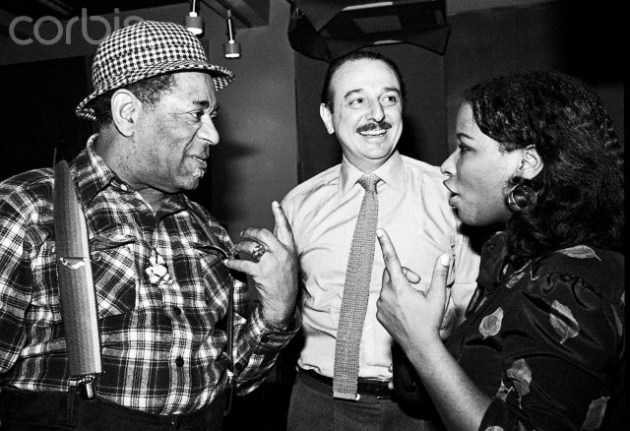
Dizzy Gillespie, Arif Mardin and Chaka Khan

Dizzy Gillespie, Arif Mardin and Chaka Khan, Atlantic Studios 1981

It was producer Arif Mardin’s idea, his mind wandering during a flight between New York and LA. The album was one song short – so how about a tribute to the bebop masters of the ’40s using the crème de la crème of the early ’80s soul/R’n’B/jazz session players? They could use Dizzy Gillespie and Frank Paparelli’s 1942 bebop classic ‘A Night In Tunisia’ as a template.

Chaka loved the idea. Mardin hoped to find a lyricist but deadlines were pending so he tackled it himself with Chaka adding the final touches. Mardin made a demo of the arrangement which cheekily inserted Charlie Parker’s famous 1946 alto break.

Charlie Parker in 1946, photo by Ted Giola

Charlie Parker in 1946

A lengthy chart was quickly made up (resembling a ‘Chinese laundry list written in cuneiform’, according to Mardin) which included eight spare bars for the insertion of the Parker lick.

The musicians – Casey Scheuerell on drums, David Foster and Ronnie Foster (no relation) on keys, Abe Laboriel on bass and Paulinho Da Costa on percussion (mostly heard on shaker in the first verse and congas in the second) – were booked and smashed the tune in one take.

Herbie Hancock later contributed a brilliant synth solo. Chaka then added her sublime vocals. Her four-part big-band harmonies and spine-tingling ad-libs bring the song right up to date.

But there was still space for an opening head melody and a solo in the final verse. Dizzy had been sent the demo by Mardin with a note asking him to contribute.

But the bebop legend replied that he would be on tour and so couldn’t make the recording session – but he suddenly arrived two days before the album’s mastering date at New York’s Atlantic Studios to add his part. The track was complete.

Chaka and Mardin attempted to repeat the trick a few years later with ‘Bebop Medley’ but it lacked the finesse of this timeless classic.