Anthony Jackson (1952-2025)

Anthony during the recording session for Steve Khan’s ‘Eyewitness’ in 1981. Photo by David Tan

The brilliant Anthony Jackson, who has died aged 73, was a vital part of the early-1970s electric bass revolution, but arguably never got the same attention as contemporaries Stanley Clarke, Jaco Pastorius, Bootsy Collins, Louis Johnson and Alphonso Johnson (Chuck Rainey, Steve Swallow and Larry Graham are a bit older).

In a music world beset by fly-by-night chancers and one-trick ponies, he was a player of principle, something like the Allan Holdsworth of bass.

It was Anthony’s playing on Steve Khan’s ‘Guy Lafleur’ that first completely hooked movingtheriver – I remember thinking: who the hell is THAT?!

In two major ways, he changed the instrument as much as Jaco (though, in later years, pointedly called himself a ‘guitarist who plays a variation called the contrabass guitar’).

First there was his stretching of the instrument’s range below the standard low E (inspired by his love of Jimmy Smith’s Hammond organ playing) and above the standard top G, via his pioneering use of six-string basses, which he started playing exclusively in 1982 (Steve Khan thinks his superb ‘Casa Loco’ may have featured the debut of Anthony’s six-string).

Before that, Jackson had regularly detuned the low E string on his trusty Fender Precision, producing strikingly rich, deep timbres on work with Grover Washington Jr., Quincy Jones, Steely Dan, Chaka Khan and Earl Klugh, amongst hundreds of others (he prided himself on playing all kinds of music, working with everyone from Judy Collins and Peter, Paul & Mary to George Benson and Will Downing).

Then there was his use of effects, particularly the trademark flanger, often accompanied by the use of a pick, best heard on The O’Jays’ ‘For The Love Of Money’ and ‘Give The People What They Want’, and on his work with Al Di Meola. Oh, and then there’s a third factor – he ALWAYS sat down whilst playing, claiming that sitting down and wearing no strap was the way to go for bassists.

Jackson started playing music after seeing The Beatles on The Ed Sullivan Show in 1964, then became obsessed with other Brit invasion bands, Motown (via James Jamerson) and Jefferson Airplane’s Jack Casady, plus classical composers Olivier Messiaen and Paul Hindemith.

Regarding the latter two, their influence on Anthony’s playing is particularly noticeable on the live version of Khan’s ‘The Suitcase’, from 1994. Steve described this brilliant performance on his website.

One of Jackson’s first major gigs was in 1973, playing for a year in Buddy Rich’s sextet. He later called the drummer the only bona fide genius with which he had played. But then Anthony loved drummers. He enjoyed brilliant hook-ups with Steve Gadd, Buddy Williams, Steve Jordan, Harvey Mason, Simon Phillips, Steve Ferrone, Yogi Horton, Earl Young and many others.

But he lost work by refusing to ‘slap’ his bass during the disco era, and also very rarely solo’d unless he had something specific to say (to Steve Khan’s great annoyance!). Some of these concepts were laid down in his famously stern columns for Bass Player magazine.

But even Jackson wasn’t immune to some of the ‘proclivities’ of other great artists – for example, his performance was wiped from the title track of Steely Dan’s Gaucho! (Chuck Rainey’s pass got the nod instead.) But he played epochal stuff on ‘Glamour Profession’ and ‘My Rival’ from the same album, and excelled on Donald Fagen’s ‘IGY’ and ‘Ruby Baby’.

He was also fiercely loyal to artists he respected, enjoying long associations with Hiromi, Michel Camilo, Al Di Meola, Sadao Watanabe, Lee Ritenour, Grover Washington, Chick Corea, Khan and Michel Petrucciani.

In one of his rare interviews, he expressed a wish to play with Phil Collins, Ringo and Charlie Watts. Sadly it seems he didn’t achieve those ambitions. Farewell to a true pioneer and personal musical hero. Check out this playlist which brings together movingtheriver’s favourite Anthony performances.

Anthony Claiborne Jackson (23 June 1952 – 19 October 2025)

1980s Jazz, Fusion, Soul and Funk Acts I Should Like But Don’t

We’ve looked before at the celebrated 1980s rock and pop acts whose output somehow leaves this writer cold.

But how about the decade’s jazz, soul and fusion artists who always seem to get the props but inexplicably fail to float movingtheriver’s boat?

Rick James
Frequently mentioned in dispatches as a funk pioneer and influence on Prince etc. (and also mentor of Teena Marie?) but for this listener his music is generally coarse and one-dimensional, and his voice nothing to write home about.

Bill Connors
The guitarist made some excellent music for ECM Records in the 1970s both as solo artist and sideman (Jan Garbarek/Stanley Clarke/Return To Forever/Julian Priester etc.) but his 1980s work disappoints. He apparently developed a fixation on Allan Holdsworth’s sound/technique which hampered his progress. Somewhat regrouped in the 1990s and new millennium though.

Kazumi Watanabe
The guitarist employed some fantastic musicians (Jeff Berlin, Steve Jordan, Marcus Miller, Bill Bruford) in the 1980s but, outside of one or two half-decent riffs, seemingly failed to generate much memorable music.

Stanley Jordan
Bassist Anthony Jackson called him a ‘genius’, and he should know, but technical feats notwithstanding (he famously played the guitar exclusively by ‘tapping’ the strings with the fingers of both hands), he seemingly failed to develop his music beyond smoochy smooth jazz during the 1980s.

Chick Corea
Obviously a genius-level musical brain and maker of some memorable material in the 1970s but generally his ‘80s music and stage presentation was a bit embarrassing (though I have a penchant for the Light Years and Eye Of The Beholder albums). A great mentor though (Dave Weckl, John Patitucci, Frank Gambale, Scott Henderson etc.).

Al Di Meola
See above.

Howard Hewett
Owner of some fantastic pipes and a stellar career co-fronting Shalamar, but for this writer his solo career generally seems like over-produced, underwhelming mush, and he doesn’t seem much of a songwriter. (He did an unforgettable take on Marvin Gaye in the 1990s though.)

Narada Michael Walden
One of the great drummers (Jeff Beck, Weather Report, McLaughlin etc.) and producers (Whitney, Aretha etc.) ended the 1980s with a half-decent album (Divine Emotions) but, to these ears, the rest of the decade’s solo career was unmemorable disco/funk…

Brand X
Often touted as a kind of British Weather Report – fugedaboudit. Their musicianship was competent at best and their compositions somehow didn’t stick in the brain, despite the occasional drumming contributions of a Mr P Collins. Bill Bruford did it much better with a far superior bunch of players (Jeff Berlin, Allan Holdsworth, Jon Clark, Dave Stewart). See also: Pierre Moerlen’s Gong.

Pat Metheny
This writer dug his stereo-chorus sound and musical approach at the dawn of the decade (80/81, American Garage, Travels) but, as the 1980s went on, he seemed to embrace a mushy new-age sensibility and indistinct jazz guitar sound that generally underwhelmed. And his stage presentation is one of the least savoury in music history… (Gary Giddins: ‘intoning plush melodies with excessive sobriety, as though the notes were transmitted directly from God…’). Liked his collaborations with Ornette Coleman and Bowie though.

Jean-Luc Ponty
Valued sideman for ’70s behemoths (Zappa, McLaughlin) but his solo career has generally disappointed this writer (but generally not other jazz/rock fans, who inexplicably seem to love his stuff…), outside of the fact that he doesn’t seem to possess a particularly pleasant violin tone with an annoying penchant for the phaser pedal. He employed some superb players in the ‘80s (Scott Henderson, Rayford Griffin, Baron Browne etc.) but never convinced that he’s much of a composer. Always quite liked this though…

In Memoriam: movingtheriver.com Salutes The Fallen Of 2020/2021

Janice Long (pictured left – the first woman to have a daytime show on Radio 1, the first female presenter of ‘Top Of The Pops’ and a great supporter of upcoming artists)

Nick Kamen

Dave Greenfield (Stranglers keyboardist)

Charlie Watts

Henry Woolf (teacher, poet, actor and member of Harold Pinter’s ‘Hackney Gang’)

Terence ‘Astro’ Wilson (co-founder of UB40)

Mick Rock

Baron Browne (bassist with Billy Cobham, Steve Smith’s Vital Information, Jean-Luc Ponty)

Joan Didion

Dean Stockwell

Stephen Russell (Barefoot Doctor)

Jimmy Heath

John Sessions

Eddie Van Halen

Lyle Mays

Betsy Byars

Jon Christensen (drummer for Keith Jarrett, Jan Garbarek etc.)

McCoy Tyner

Ian St. John & Jimmy Greaves (Saint & Greavsie)

Wallace Roney (jazz trumpeter)

Onaje Allan Gumbs (keyboardist with Will Downing, Phyllis Hyman, Billy Cobham etc.)

Hal Willner

Lee Konitz

Little Richard

Jimmy Cobb (drummer on Miles Davis’s Kind Of Blue)

Gary Peacock (bassist with Keith Jarrett, Miles Davis etc.)

Lee ‘Scratch’ Perry

Deon Estus (bass player with Wham!, George Michael and Marvin Gaye in Ostend, solo artist and producer)

Nanci Griffith

Dusty Hill (ZZ Top bassist)

George Wein (pianist, impresario and founder of the Newport Jazz Festival)

Phil Schaap (jazz historian and key contributor to Ken Burns’ ‘Jazz’ documentaries)

Pee Wee Ellis

Stephen Sondheim

Matthew Seligman (Thomas Dolby/Thompson Twins/Soft Boys bassist)

Genesis P-Orridge (co-founder of Throbbing Gristle)

Cristina (post-punk singer of ‘Drive My Car’ fame)

Michael Apted (director of ‘The Coal Miner’s Daughter’, ‘Ptang Yang Kipperbang’, ‘Gorillas In The Mist’, ‘Bring On The Night’, ‘The World Is Not Enough’, ‘Gorky Park’ and co-creator/director of the ‘Seven Up’ TV series)

Ed ‘Duke Bootee’ Fletcher (teacher, hip-hip pioneer and co-writer of Grandmaster Flash/Furious Five’s ‘The Message’)

Phil Chen (bassist on Jeff Beck’s Wired and Blow By Blow)

Phil Spector

Cicely Tyson (Academy Award/Emmy-winning actress and wife of Miles Davis)

Larry McMurtry

Lawrence Ferlinghetti (Beat poet)

Charles Grodin

Pauline Ann Strom (synth pioneer)

Bill Withers

Al Schmitt (recording engineer for Steely Dan, Toto, Diana Krall etc.)

George Segal

Jackie Mason

Robbie Shakespeare (Sly & Robbie bassist)

Una Stubbs

Ed Asner

Jean-Paul Belmondo

Yaphet Kotto

Chick Corea

Malcolm Cecil (jazz bassist and co-producer/synth programmer on Stevie Wonder’s Innversions, Talking Book and Music Of My Mind)

Greg Tate (jazz and soul writer)

Barry Harris (bebop pianist)

Charlie Watts

Lennie Niehaus

Steve Bronski (c0-founder of Bronski Beat)

Pat Martino

Rick Laird (Mahavishnu Orchestra bassist)

Milford Graves

Jon Hassell

Alan Hawkshaw (composer of many great TV and film themes including ‘Channel 4 News’, ‘Countdown’, John Carpenter’s ‘The Fog’ and this cracker which soundtracked much of my 1980s:)

Ben Sidran: Talking Jazz (An Oral History)

They say that if you want to understand why an instrumentalist plays the way he or she plays, listen to them speak.

That makes total sense when hearing Wayne Shorter or Ornette Coleman being interviewed. And now, courtesy of Ben Sidran, there’s never been a better chance to hear other examples of this.

Sidran is a renowned pianist/composer and author of three excellent music books: ‘Black Talk’, ‘The Ballad Of Tommy LiPuma’ and ‘Talking Jazz’. The latter was based on a series of interviews broadcast on USA’s National Public Radio between 1984 and 1990. And now we can hear them in their entirety.

What a fascinating collection it is. Many interviewees go against type: those with a reputation for being somewhat ‘taciturn’ (Paul Motian, Donald Fagen, Tony Williams, Miles) are open, light-hearted and often giggly.

Some have their axes with them – we hear modern masters Chick Corea, McCoy Tyner, John Scofield, John Patitucci, David Sanborn and Steve Khan demonstrate their harmonic hallmarks. I asked the latter for his recollections of the ‘Talking Jazz’ interview:

It was done on 23 October 1984 at Roxy Recording, located at 648 Broadway, NYC – which was downtown, near Soho. It was conducted from 1-3pm! How about THAT?!

Elsewhere, Art Blakey talks touchingly about his appeal to a young, eager London crowd, Carla Bley is amusingly honest and Kevin Eubanks sounds 30 years ahead of his time, discussing global warming and environmental disasters.

It’s also fascinating to hear lost masters’ voices on tape, speaking with such candour: Gil Evans, Johnny Griffin, Chick Corea, Dizzy Gillespie, Freddie Hubbard, and many more. Sidran is a great host/interviewer, friendly and hip to the artists’ work but not scared to ask the tough questions.

Don’t miss. Listen to the interviews on Bandcamp.

Milford Graves (1941-2021)

One of the most memorable music documentaries broadcast in Britain during the late 1980s was ‘Speaking In Tongues’, directed by Doug Harris for German TV and originally shown in 1982.

It began with John Coltrane’s funeral on 21 July 1967, featuring music from drummer Milford Graves, trumpeter Donald Ayler and saxophonists Ornette Coleman and Albert Ayler, then mused on the mysterious death of the latter before opening up to focus on Graves’ extraordinary life and some coruscating duets with saxophonist David Murray.

Born 20 August 1941 in South Jamaica, Queens, New York, Milford Graves was a ‘drummer’, but, equally importantly, a truly evolved human being, a strict vegetarian, herbologist, acupuncturist, teacher and trained martial artist. He was famous locally for his backyard dojo and basement laboratory.

He began his career playing bongos and timbales, including a short-lived Latin-jazz band with a very young Chick Corea. At the urging of superstar percussionist Don Alias, he moved over to the drum kit in 1963 and found his true metier.

Alongside Sunny Murray, Andrew Cyrille, Ronald Shannon Jackson and a few others, he freed the drummer from purely a timekeeping role, introducing new melodic and tonal textures for the kit. But this wasn’t a po-faced, technical endeavour – it led to some of the most intense, high-volume work of the last 50 years. He described each of his limbs as playing ‘a different feeling’ (see below).

Legendary jazz writer Nat Hentoff apparently made a prediction in the late 1960s that the greats of the avant-garde jazz movement would eventually get lecturing jobs in universities, such was the importance and rigour of their conceptual flow.

It was true. Since 1973, Graves had been teaching at Bennington College in Vermont, a variety of courses including those touching on the healing aspect of music. He performed regularly across the world, including at a school for autistic children in Japan. From the late 1960s on, he eschewed nightclub and club gigs, restricting his live performances to festivals, community centres and outdoor shows.

He recorded astonishing duets with pianist Don Pullen, Andrew Cyrille (Dialogue Of The Drums) and David Murray on the classic 1991 album The Real Deal. He worked with Albert Ayler on various albums including Love Cry. He toured extensively during the 1980s, producing a sound as heavy as anything Black Flag or Metallica came up with.

Tragically, though he had studied the heartbeat as a source of rhythm since the 1970s, Milford died of congestive heart failure on 12 February. ‘It turns out, I was studying the heart to prepare for treating myself,’ he told The New York Times last year.

Last autumn, his life and work had just been subject to a residency at the ICA in Philadelphia, including a screening of ‘Speaking Of Tongues’ and a wide-ranging interview with Jason Moran.

RIP to a true one-off. To paraphrase Art Blakey, if jazz was about washing away the dust of everyday life, Milford Graves did it.

Milford Graves (20 August 1941 – 12 February 2021)

Further reading: ‘As Serious As Your Life’ by Val Wilmer


Chick Corea Elektric Band: Light Years (1987)

Jazz/fusion of the late-’80s variety is sure to give any John Peel acolyte nightmares: visions of guys in tracksuit bottoms, trainers and vests, looking like extras from ‘Thirtysomething’, playing absurdly gymnastic jazz/rock based on corny ‘funk’ or Latin vamps, grinning at each other and the audience, using the cheesiest modern gizmos (Simmons electric drums, EWI wind instruments, guitar synths).

The Chick Corea Elektric Band (Corea: keyboards, Frank Gambale: guitar, John Patitucci: bass, Dave Weckl: drums) probably best epitomised this style. But guess what – revisiting their 1987 album Light Years recently, it emerges as one of the best and least ridiculous projects of Chick’s career.

He reins in the chops and gothic longeurs to produce a collection of really good themes and tight, attractive arrangements (though the three ‘extra’ tracks on the CD/streaming versions are disaster areas). The album is also musical catnip for me, bringing back memories of when I was first getting into jazz and fusion.

The thing is that Chick seems to actually relish including some pentatonic/blues-based harmony on Light Years. Some of his playing wouldn’t seem out of place in the music of Will Downing or Lonnie Liston Smith. There are even a few II-V-I chord changes. ‘Starlight’ and the title track are as catchy and immediate as David Sanborn’s ‘Run For Cover’ or ‘Hideaway’, though Marienthal’s alto tone is a bit too close to Dave’s for comfort. Weckl delivers lesson after lesson in Latin-flavoured funk and rock drumming. Gambale and Patitucci barely break sweat, or rather don’t get any room to show off, but still make a few telling contributions.

‘Time Track’ and ‘View From The Outside’ demonstrate everything that’s good about Light Years – catchy melodies, cool grooves and meticulous, gradually-escalating arrangements. The ridiculously technical last four bars of the former demonstrate some of the killer musical chops that are kept pretty much in the locker throughout the album, only to be brought out when strictly necessary.

I saw them live a couple of times around this time and of course the musicianship was incredible, even if the relentlessly ‘up’ stage presentation now looks pretty embarrassing.

Light Years is obviously good. It’s brutally, clinically good. It’s almost critic-proof. The Elektric Band were the Level 42 of high-octane fusion and this album is their World Machine. Of course it’ll always sound a bit like muzak to some, but that’s quite cool too. The CD’s inlay card features a really weird poem by Chick, kind of an ode to Scientology. It’s worth reading. And actually the album cover is pretty strange too…

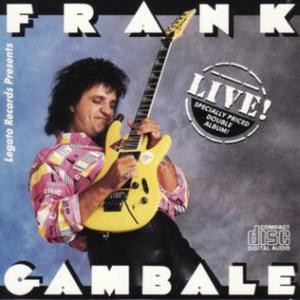
Frank Gambale Live! 30 Years On

I’ll never forget it. Circa 1990, I was on holiday with my parents in Kent, near the Cliffs of Dover.

A summer storm was chucking it down. Holed up inside, I flicked through some French music stations on my longwave radio.

Suddenly I heard this absolutely ridiculous guitar playing – deafeningly loud, hysterical, but totally precise, with great phrasing and notes that spluttered out in absurdly wide intervals.

The tone was heavily distorted but the feel was closer to jazz/rock than metal. And the rhythm section didn’t sound too shabby either.

By this time, I had heard Allan Holdsworth, Paul Gilbert, Yngwie Malmsteen, John McLaughlin, some pretty outrageous guitarists, but this was different. Who the hell was it? I strained my ears and just about heard the French DJ utter the words ‘Frank Gambale’.

Yes, it was the Italian-Australian wunderkind, the man who introduced so-called ‘sweep picking’ to a wider audience than before. And the album was revealed to be Live!, released 30 years ago this week and recorded at LA’s jazz/rock haven The Baked Potato on 21st August 1988.

What was really weird was that I had heard Gambale with the Chick Corea Elektric band before this, and even seen them live a few times, but he seemed pretty anonymous in that band.

Not here. To this day, ‘Credit Reference Blues’, ‘Fe Fi Fo Funk’, ‘Touch Of Brasil’ and ‘The Natives Are Restless’ sound like guitar landmarks.

But he was way more than a chops phenomenon – he’s an excellent composer too, clearly influenced by Chick Corea and Larry Carlton but with some moves all of his own.

The album also introduced me to the fantastic Joey Heredia on drums, a completely original player who can do fiery jazz/rock, spicy Latin and Police-style rock, sometimes all in the space of one tune. And the excellent keyboard player Kei Akagi was moonlighting with Miles Davis while playing some sh*t-hot stuff on this album.

Frank Gambale Live! was a key artefact in the golden age of shred guitar, and it gained him some crossover success with metal fans and lots of coverage in guitar magazines.

Sadly his solo career refused to fire after this release, with only moments of 1990’s Thunder From Down Under subsequently holding much interest for me, but this was a sporadically brilliant live jazz/rock album – and one of the best. (It has to be said, there’s not much competition – Larry Carlton’s Last Nite, Weather Report’s 8:30, Jeff Beck With The Jan Hammer Group Live!, Mahavishnu’s Between Nothingness And Eternity, and…er…)

The 12 Worst Music Videos Of The 1980s

Billy Squier doing his ‘thing’

When MTV launched on 1 August 1981, it was estimated that only 150 music videos were in circulation.

So if the round-the-clock station was going to succeed, it needed new content, and fast. But, mired in the middle of a recession, record companies were initially sceptical about the commercial clout of videos.

That period was short-lived; as record exec Mick Kleber put it in the hilarious book ‘I Want My MTV’, ‘Once Duran Duran started selling records in Oklahoma, it opened everyone’s eyes.’

Suddenly the video department of the major labels was the ONLY department that was expanding. In the rush to fill MTV schedules, production went into overdrive. The likes of Toto, Christopher Cross, Journey, Stevie Nicks, Van Halen, Steve Miller and Chicago – still-big-selling acts from a different generation – were forced to ham it up in front of the camera.

And thank goodness that some of their lamest, most ill-advised attempts are preserved for posterity, and for our delectation. We are pleased to present 11 of the worst clinkers. Here you will find a strange parade of transvestites, mullets, models, douchebags, disco line-dancers and little people. What were the directors thinking? Who knows. And interesting that Andy Summers features in two of these…

12. Robert Fripp/Andy Summers: ‘I Advance Masked’ (1982)

Just a snippet, but a snippet’s more than enough. Fripp reportedly came up with the concept on the spur of the moment for a joke, but was then astonished to turn up for the shoot and find that his idea had been taken seriously. His expression says it all.

11. Chick Corea Elektric Band: ‘Elektric City’ (1985)

From that weird sub-genre of ’80s music video: the jazz-fusion artist looks for a hit. One has to feel particularly sorry for sh*t-hot guitarist Scott Henderson (who didn’t even play on the track!), looking like Screech from ‘Saved By The Bell’, hamming it up against his better judgement, and brilliant jazz dance troupe IDJ.

10. Hall & Oates: ‘Private Eyes’ (1981)

After an unforgivable snare-drum-in-the-wrong-place opening, one of the most unimaginative visual documents in pop history, fronted by an anaemic, manic, clearly uncomfortable Hall. It didn’t stop the single from getting to #1 in the States, though.

9. Billy Joel: ‘Allentown’ (1982)

Actually, Russell Mulcahy’s homoerotic curio would make a pretty good musical. Just putting it out there… (Billy’s appalling ‘The Longest Time’ clip also almost made the cut.).

8. The Police: ‘Wrapped Around The Finger’ (1983)

Directors Godley and Creme’s instructions to the lads seem to have been: look as much of a pr*ck as possible…

7. Billy Squier: ‘Rock Me Tonite’ (1984)

Apparently our Billy was aiming for a homage to ‘American Gigolo’ but ended up with this slightly deranged, camp classic. ‘Directed’ by Kenny Ortega, later famed for ‘High School: The Musical’ and Michael Jackson’s ‘This Is It’.

6. Steve Miller Band: ‘Abracadabra’ (1983)

Boring, boring, boring, boring, boring…

5. Toto: ‘Waiting For Your Love’ (1982)

We’ll leave aside that this is a very ill-advised choice of single off the back of ‘Rosanna’ and ‘Africa’. According to guitarist Steve Lukather, the video was so bad that even MTV wouldn’t play it.

4. Journey: ‘Separate Ways’ (1982)

Could it have been any more unflattering to poor singer Steve Perry? And whose ideas was it to have the guy playing air keyboards? Not to mention that the preyed-upon, obligatory ‘sexy woman’ is obviously a drag queen, when seen in long shot…

3. The Jacksons: ‘Torture’ (1984)

The clue is in the title. Michael obviously got wind of the impending disaster – he didn’t even turn up for the shoot. They used a Madame Tussauds dummy in his place.

2. Chicago: ‘Hard Habit To Break’ (1984)

Great piece of music, horrible video. Lots of ‘sensitive’ men of a certain age longing for a succession of scantily-clad model/actresses.

1. Van Halen: ‘(Oh!) Pretty Woman’ (1982)

Short people? Tick. Transvestite? Tick. Questionable antics? Tick. Ridiculously cheap production values? Tick. Definitely a case of too much bourbon and not enough brains. Roy Orbison’s views on this monstrosity are not recorded…

Are there other stinkers from the 1980s? Of course. Let us know below.

Wayne Shorter: Phantom Navigator 30 Years Old Today

wayne sh

In the late-’80s, Wayne was seemingly about as far away from ‘jazz’ as it’s possible for a jazz legend to get.

His music hadn’t featured any tinging ride cymbals or walking acoustic basses for decades. Even Miles thought Wayne was getting a bit too ‘far-out’ – he reportedly told the saxophonist as much when they met backstage during Miles’s Paris tribute show in July 1991.

Which must have come as quite a shock to Wayne – after all, his ’80s music featured strong, ‘funky’ grooves and attractive, happy melodies. On the face of it, albums like ’87’s Phantom Navigator (apparently inspired by the ‘Other Worlds’ sci-fi comic series he drew in his teenage years) weren’t that different from Miles’s Tutu and Amandla.

But of course they were completely different, and Phantom Navigator is probably the most ‘far-out’ collection of Wayne’s solo career.


Many critics couldn’t see beyond the drum machines, bass vamps and synths, missing the complexity of the arrangements and incredible care and attention that went into making the album, though maybe Wayne was asking for trouble by recruiting legendary NY beat-maker Jimmy Bralower, who had recently featured on Steve Winwood’s ‘Higher Love’ and Nile Rodgers’ B Movie Matinee.

wayne-shorter_in_amsterdam_1980

But these elements were just ‘sweeteners’ – Phantom Navigator was designed to be lived with, devoured in long stretches as one would a classical piece.

There were so many good melodic ideas packed into every tune but it wasn’t an album for short attention spans – not ideal in the MTV-flavoured, thrill-a-minute late-’80s.

‘Condition Red’ fairly bursts out of the speakers, with Wayne’s hair-raising soprano (I’d posit that Phantom Navigator features the best soprano tone of his career), sublime harmonies and witty scat vocals.

Chick Corea’s crystalline piano features strongly on the intricate, beguiling ‘Mahogany Bird’, while ‘Remote Control’ taps into a go-go groove (though Bralower’s snare is way too big – where was Ricky Wellman when Wayne needed him?) underpinning rich, endlessly-flowing soprano harmonies.

Side two’s triptych of ‘Yamanja’ (named for a sea goddess of Brazilian legend), ‘Forbidden – Plan-It!’ and ‘Flagships’ are nothing less than mini concertos for soprano sax, electric bass and synths. All would work fine with a symphony orchestra with their endlessly intertwining lines and countermelodies.

Wayne toured a lot during this period (I think I saw him three times in London between ’85 and ’88) and to a certain extent the music was a hard sell, both for audiences and the musicians. His sci-fi fusion stuck out like a sore thumb during the late-’80s London jazz/rare-groove revival when he was sometimes put on the same bill as people like The James Taylor Quartet and Gilles Peterson! I remember a really weird such gig at the old Town & Country Club in the late ’80s.

It’s the same old story – the problem of marketing music that goes way beyond category. But, in the final analysis, Wayne doesn’t play jazz, rock, go-go, funk or soul on Phantom Navigator – he plays life.

Six Great ’80s YouTube ‘Shreds’

SWING IN DEAUVILLE 1992

Chick Corea – look away now…

YouTube ‘shreds’ didn’t take off on social media the way trolling and cat videos did.

OK, they are a bit ‘niche’, probably only of interest to a select few musos. But these musical parodies take on a quality all of their own, producing a surreal, appealingly-amateurish mash-up of cheap synths, terrible guitar sounds and fake drums.

There is some intelligence behind them too – it’s not easy to sound this bad. You need talent. These clips also bring home just how great the targets of their ridicule really are.

But hey – some possibly need taking down a peg or two…

6. a-ha play ‘Take On Me’
I like the badly-played synths, Morten’s off-mic asides and the unexpectedly-early chorus. Also the drummer’s Herculean efforts juxtaposed with the tinny, inconsequential sounds he is producing.

5. The Chick Corea Elektric Band play…something
This band were always one of the more unsavoury fusion units of the late-’80s. Their freakily-flawless musicianship, cheesy synth sounds and ‘zany’ stage performances are ripe for a bit of a pisstake.

4. USA For Africa play ‘We Are The World’
This one gets in for sheer oddness. It sounds like it’s been overdubbed by people whose first language is not English. Chinese? French? Kenny Rogers, Tina Turner and Billy Joel always get me.

3. Miles Davis plays ‘Tutu’
Sorry Miles, but I like the way this classic piece is re-imagined as a kind of remedial reggae/world music/’50s rock jam. Don Alias’s ‘tinging’ ride cymbal gets me every time.

2. Dire Straits play ‘Money For Nothing’
This is ‘Money For Nothing’ played by a bunch of teenagers who have just been given a few cheap synths, a crap guitar and an old bass for Christmas. I particularly dig John Illsley’s backing vocals.

1. Chick Corea duets with Herbie Hancock
Why not some more Chick? There’s something about his smug performance style that lends itself to these clips. And of course the fact that he has made so much tasteless music for someone so near to genius…