Cor Baby, That’s Really Croydon: Captain Sensible, Bowie & The Sex Pistols

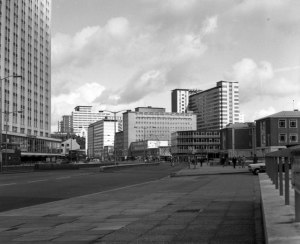
Downtown Croydon, yesterday

I don’t know if it was sparked by reading MOJO’s recent article about the 40th anniversary of the Sex Pistols’ Never Mind The Bollocks, but everything’s going punk round movingtheriver’s way.

I’ve been enjoying Steve Jones’s hilarious autobiography, revisiting Jon Savage’s essential ‘England’s Dreaming’ and the superb BBC doc ‘Punk And The Pistols’. Then I was pleased to find myself near the site of Malcolm McLaren and Vivienne Westwood’s Sex shop during a King’s Road sojourn last week.

There’s a unifying factor joining all these aspects that I’d never noticed before: Croydon. For those readers outside the London area, it’s a large town just to the south-east of the capital (and these days officially a London borough) with a pretty bad rep as far as popular culture is concerned.

David Bowie possibly spoke for many in 1999 when he told Q magazine:

‘I’ve got this thing about Croydon. It was my nemesis. It represented everything I didn’t want in life, everything I wanted to get away from. I think it’s the most derogatory thing I can say about somebody or something: “God, it’s so f***ing Croydon!” I haven’t been back in a few years but I guess things take on a certain beauty if there’s distance…’

But maybe Bowie got it totally wrong. Maybe Croydon has various claims to hipness. After all, the opening chapters of ‘England’s Dreaming’ outline what an influential place the Croydon School Of Art was in the late ’60s: key Sex Pistols agitators Malcolm McLaren and Jamie Reid studied there, as did future ‘Pop Muzik’ star Robin Scott who described it as ‘like nowhere else’, adding that ‘the Saturday morning market in Surrey Street was full of intrigue and corruption, very lurid.’

All three were involved in various anarchist/Situationist hijinks during their time there, laying the foundations for the Pistols. But it’s ex-Damned bassist Captain Sensible who perhaps best evokes l’essence de Croydon. This song, performed hilariously in the aformentioned ‘Punk And The Pistols’, kickstarted his ’80s solo career.

I have nothing but good memories of his music around this period and I’ll be revisiting it. It’ll be hard to top this affecting little number though – about all our hometowns.

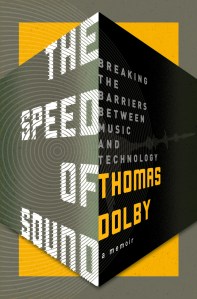
Book Review: The Speed Of Sound by Thomas Dolby

A cursory survey of Dolby’s musical career reveals that he’s a pivotal figure by any standards, collaborating with Prefab Sprout, Stevie Wonder, Eddie Van Halen, Jerry Garcia, George Clinton, Herbie Hancock, Trevor Horn, David Bowie, Def Leppard, Joni Mitchell…

And that’s not even factoring in the excellent solo albums and technological innovations (he created the software for the first popular mobile ringtones).

So if it’s pithy, musicianly anecdotes and the bittersweet memories of an Englishman (mostly) abroad you’re after, his enjoyable autobiography ‘The Speed Of Sound’ certainly does the business. But, as we’ll see, it’s very much a book of two halves.

A music-and-technology-mad teenager, Thomas Morgan Robertson first builds up his performing chops during a lengthy period of busking in Paris, finding out quickly that playing ‘Stairway To Heaven’ is the only way to make any money.

Returning to London, he’s in the right place at exactly the right time and on the verge of launching his solo career when summoned across the pond to work on Foreigner 4.

Christened ‘Booker T Boofin’ by the AOR legends for his considerable efforts, it nonetheless turns out to be a not entirely edifying entrée into the world of mega-bucks recording.

Then there’s solo-artist fame in the US, tempered by difficult video shoots, stage fright and the occasional debilitating panic attack. He’s summoned by Michael Jackson to come up with a few new post-Thriller tunes. It doesn’t end well.

His tours are well-attended but lose money and his second major single release ‘Hyperactive’ and attendant solo album The Flat Earth flatline partly due to dodgy record company ‘accounting’.

It’s a chastening experience; he focuses more on production work in the mid-’80s and any fans of Prefab’s Steve McQueen and Joni Mitchell’s Dog Eat Dog will find loads to enjoy here.

But Dolby inadvertently locks horns with Joni and finds himself sending in keyboard parts and arrangement ideas from Jenny Agutter’s spare room. Only in LA…

We get the inside story of his appearance with David Bowie’s at Live Aid (with only three short rehearsals), hear about a hilarious fishing trip with George Clinton and a memorable serenading by Stevie Wonder in a studio broom cupboard.

Then there’s an enjoyable detour into the world of movie soundtracks, ‘hanging out’ with George Lucas and meeting the love of his life in LA. By the early ’90s, we’re deep in ‘Spinal Tap’ territory when Dolby has amusingly mystifying dealings Eddie Van Halen and Jerry Garcia.

So far so good. But the second half of ‘Speed Of Sound’ focuses on Dolby’s lengthy sojourn in Silicon Valley. Depending on your taste, this will either be a trial or treat. I skipped large chunks of it.

I wanted a lot more music and a lot less tech, and you sometimes get the feeling Dolby did too throughout that period (he frequently laments the fact that his more ‘personal’ music on Aliens Ate My Buick and Astronauts & Heretics failed to find an audience).

The other issue – hardly Dolby’s fault of course – is that everyone seems to be writing a memoir these days and it only emphasises the dearth of decent recent music. And slightly lessens the mystique of the best ’80s material. I’d trade one more decent Dolby solo album for any number of ‘Speed Of Sound’s… But it’s still a very enjoyable read.

‘The Speed Of Sound’ is published now by Icon Books.

Dolby discusses the book here.

Story Of A Song: David Bowie’s ‘Loving The Alien’ (1984)

The lead-off track and third single (UK #19 in May 1985, not released in the US) from 1984’s Tonight album, ‘Loving The Alien’ was arguably Bowie’s most committed piece of writing since Scary Monsters‘ ‘Teenage Wildlife’ four years earlier.

Recorded at Quebec’s Le Studio in May 1984, the song was musically rich with a striking set of lyrics and a superb, soaring vocal performance. Like a good Kubrick movie, it distills down weeks of research to just the crucial components.

Bowie was apparently doing a lot of reading about Christianity and the Catholic Church, influenced particularly by Donovan Joyce’s notorious book ‘The Jesus Scroll’ which posited that Jesus died in Masada at the age of 80 and wrote a scroll currently in Russian hands. The wider implications of this led Bowie into further thoughts on organised religion in general and Christianity in particular. He told writer Charles Shaar Murray:

‘It was always more of a power tool than anything else, which was not very apparent to the majority of us. My father encouraged me to become interested in other religions. It’s extraordinary considering all the mistranslations in the Bible that our lives are being navigated by this misinformation, and that so many people have died because of it. That’s how the song started out: for some reason, I was very angry…’

Using the bloodshed of The Crusades as its central image, the lyric uses various effective ploys, one of which is an almost Pinteresque juxtaposition of the banal and portentous. While Bowie blithely stated ‘It’s just a song of images’ in the above interview, each line is ripe for analysis.

Watching them come and go
The Templars and the Saracens
They’re travelling the holy land
Opening telegrams

Torture comes and torture goes
Knights who’d give you anything
They bear the cross of Coeur de Leon
Salvation for the mirror-blind

But if you pray
All your sins are hooked upon the sky
Pray and the heathen lie will disappear

Prayers, they hide the saddest view
(Believing the strangest things, loving the alien)

And your prayers they break the sky in two

And you’ll believe you’re loving the alien

Thinking of a different time
Palestine a modern problem
Bounty and your wealth in land
Terror in a best-laid plan

Watching them come and go
Tomorrows and the yesterdays
Christians and the unbelievers
Hanging by the cross and nail

Bananarama it ain’t. Both lyrically and musically, the song stands out a mile on Tonight. But despite Bowie’s fantastic vocal, it’s let down by an immense production with huge, gated drums (Omar Hakim’s entrée into rock drumming that arguably got him the gigs with Dire Straits and Sting), muddy bass, overwrought Arif Mardin string arrangement and a ponderous Carlos Alomar guitar solo.

More successful are Guy St Onge’s marimba and the sampled Bowie vocals at the top (apparently more influenced by Philip Glass’s ‘Einstein On The Beach’ than Laurie Anderson’s ‘O Superman’ – the kind of detail that was very important to Bowie!). Regular collaborator David Mallet directed the video, storyboarded – as usual – by Bowie. Though seemingly a fairly disparate series of arresting images, the clip was fairly successful as a surreal assault on religion’s materialistic symbols and commodification of women.

It also makes a fascinating companion piece to his ‘Blackstar’ video. Bowie’s cheery grin that accompanies the ‘Opening telegrams/Whoa-oh’ line is a thrillingly weird moment. Bowie performed ‘Loving The Alien’ throughout the ‘Glass Spider’ tour. Then, in 2002, DJ Scumfrog remixed the track to create a single called ‘The Scumfrog vs Bowie’, a top 10 hit in the UK Dance Chart.

A year later Bowie himself resurrected the song, cooking up a stripped-down version in duet with guitarist Gerry Leonard. They dropped the key from E-minor down to C-minor and dispensed with many of the original’s passing chords, arguably dissolving some of its power, but it’s certainly a unique reading.

According to Bowie, the best version of ‘Loving The Alien’ is his original home demo of the song, yet to see the light of day. Let’s hope we get to hear it sometime.

Book Review: Backtrack by Tessa Niles

Excellent recent documentary ’20 Feet From Stardom’ busted the myth once and for all that backing singers aren’t ‘good’ enough to be solo artists.

In fact, the contrary is often true: they make the artist sound and look better, and there are often a myriad of reasons both professional and personal why they haven’t become headliners in their own right.

Tessa Niles is probably the UK’s most celebrated backing vocalist of the last 35 years, and her excellent new memoir lifts the lid on a distinguished career singing with David Bowie, George Harrison, Elton John, Kylie, Eric Clapton, Steve Winwood, Tina Turner, Pet Shop Boys, Annie Lennox, Gary Numan, The Police, Duran Duran, ABC, Tears For Fears and Robbie Williams.

It’s a real page-turner and ’80s guilty pleasure, a voyage through all the pop fads of the decade (and decades since) and a search for a fruitful work/life balance in the face of demanding touring schedules and family commitments.

We follow Niles’ career from her early days as factory worker, cabaret entertainer and ‘Benny Hill Show’-auditioner to the late-’70s/early-’80s London live music scene, where good, young female singers could make a decent living at the city’s many nightclubs.

She is excellent at painting a picture of this somewhat dodgy state of affairs, when a pre-New Romantic London was anything but swinging and ‘Page 3’ culture was at its peak.

But a shrewd volte face leads Tessa into the burgeoning jazz/funk scene and decent, reliable gigs with Morrissey Mullen and Incognito, plus a chance meeting with US ex-pat arranger and producer Richard Niles.

Though their subsequent marriage gives Tessa her professional surname, it also leads to some conflicts of interest when he helms her commercially-unsuccessful solo debut.

But then Trevor Horn is on the blower and she is whisked into the studio to work on ABC’s ephocal Lexicon Of Love album, the beginning of a long and successful professional relationship with the uber-producer. ‘Date Stamp’ in particular shows Niles’ voice off to great effect.

From here on in, her career goes from strength to strength, but it’s not without its pitfalls: The Police’s long ‘Synchronicity’ world tour plays havoc with her vocal cords due to Sting’s insistence that she (and cohorts Dolette McDonald and Michelle Cobbs) sing in ‘full voice’ throughout, without any vibrato.

There’s also a funny anecdote about what exactly constitutes an audition for Sting.

Then of course there’s Niles’ memorable, electrifying turn alongside David Bowie at Live Aid – it’s amazing that they only had two days’ rehearsal for the ‘little gig’, as Bowie called it.

Elsewhere, there’s lots of good technical stuff about what actually constitutes a decent studio vocal performance – and also what artists and producers demand from a backing vocalist – with wicked anecdotes concerning Tina Turner’s ‘What’s Love Got To Do With It’, Steve Winwood’s ‘Roll With It’, Duran’s ‘Notorious’ and Tears For Fears’ ‘Swords And Knives’. Niles also doesn’t shy away from personal reflections about her family relationships and romances.

There’s far too much Clapton and Robbie Williams for my liking and a decent proofreader wouldn’t have gone amiss, but I devoured ‘Backtrack’ almost in one sitting. A really enjoyable, gossipy read.

‘Backtrack’ is out now on Panoma Press.

Laurie Anderson: Big Science 35 Years On

The 1980s were littered with ‘novelty’ hits but perhaps none was more unexpected – or more powerful – than Laurie Anderson’s John Peel-endorsed, eight-minute UK #2 ‘O Superman (For Massenet)’.

Massenet was a French composer, whose aria ‘Ô Souverain, ô juge, ô père’ (‘O Sovereign, O Judge, O Father’) appeared in the 1885 opera ‘Le Cid’.

‘O Superman’ was totally hip at the time, a slice of NYC avant-garde post-punk appearing in the slipstream of Talking Heads’ ‘Once In A Lifetime’.

David Bowie was a big fan, covering the song during his 1997 Earthling tour. It still sounds unique and pretty hip today, even managing to throw in a little ode to Philip Glass with its brief, circular melodic motif that appears a few times.

A live performance of ‘O Superman’ was recorded in New York City in the week following the 9/11 attacks, and later appeared on the album Live In New York.

In this context, certain lyrics seem to take on greater significance: ‘Here come the planes/They’re American planes/Smoking or non-smoking?’ But Anderson has intimated that the song was inspired by watching television news reports of the Iran hostage crisis of 1979/80.

‘O Superman’ came from Anderson’s performance art/music piece ‘United States I-IV’, and was initially released as a single on the indie One Ten label. When it quickly sold out of its initial run of 1,000 copies, Warners picked it up and also asked for a whole album of music from the show.

What about the rest of Big Science? Not having heard it for a few years, I approached it with trepidation. But there was no need – ‘From The Air’ and ‘Sweaters’ (‘I no longer love the way you hold your pens and pen…cils’) are still very funny, but also oddly disquieting.

Lyrically, Big Science – like the performance piece it comes from – seems to be satirising the rebirth of American ‘heroism’ and industrial might of the Reagan era.

Anderson often speaks with (and mocks) the ‘voice of authority’, someone who, as she later said in an interview, is ‘either a shoe salesman or someone who wants to sell you an insurance policy you don’t want or need’ (now who does that remind you of…).

But there’s always a clash between this technological brave new world and spiritual binds that hold us together – family (‘O Mom and Dad…’), folklore and tradition.

The title track rams home the point with its ‘primitive’ percussion and vocals that sound vaguely like Native American chanting. ‘O Superman’ also does it with its initial focus on a piece of new technology – an answering machine – and then more metaphysical concerns (justice, God, love).

As the 1980s wore on, Anderson’s studio albums possibly suffered from being right on the ‘technological cutting edge’, but Big Science revels in simple acoustic/electric juxtapositions – some Velvet Underground drums here, an analogue synth, Vocoder or Harmonizer there, plus sax, percussion and treated violin.

Occasionally it would be nice to hear an instrumental solo, maybe someone of the NYC-art-rock-approved school such as Shankar or Jon Hassell, but generally Anderson keeps it simple and maintains a very assured minimalist musical style throughout.

Big Science slightly outstays its welcome, its last two tracks quite a stretch, but overall still sounds like a vital piece of work from a major, treasured artist.


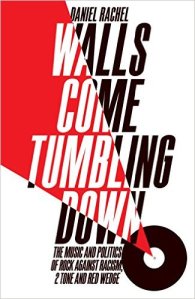
Book Review: Walls Come Tumbling Down by Daniel Rachel

walls come tumblingDaniel Rachel’s excellent new book focuses on the links between music and politics in the 1980s.

Ostensibly an oral history of three epochal movements of the era – Rock Against Racism, 2 Tone and Red Wedge – ‘Walls Come Tumbling Down’ shows how these campaigns politicised a whole generation.

Fresh from his fine ‘Isle Of Noises’ tome which interviewed key British songwriters, Rachel opens his contacts book again to get telling contributions from Pauline Black, Dennis Bovell, Billy Bragg, Lloyd Cole, Elvis Costello, Jerry Dammers, Andy Gill, Junior Giscombe, Paul Heaton, Linton Kwesi Johnson, Tracey Thorn, Tom Robinson, Paul Simonon, Paul Weller and many more. There are also rare or never-before-published photos of the era by the likes of Pennie Smith, Jill Furmanovsky and Kevin Cummins.

The story starts on 5 August 1976 when Eric Clapton used a notorious Birmingham Odeon gig to lambast the audience, calling for ‘w*gs’ and ‘P*kis’ to ‘leave the country’ and pledging his support for Enoch Powell, the Conservative MP who eight years earlier had made the infamous ‘Rivers Of Blood’ speech.

Clapton’s shocking proclamations sparked the Rock Against Racism movement, a campaign also inflamed by David Bowie’s comments to Playboy magazine concerning Hitler and the rise of fascism.

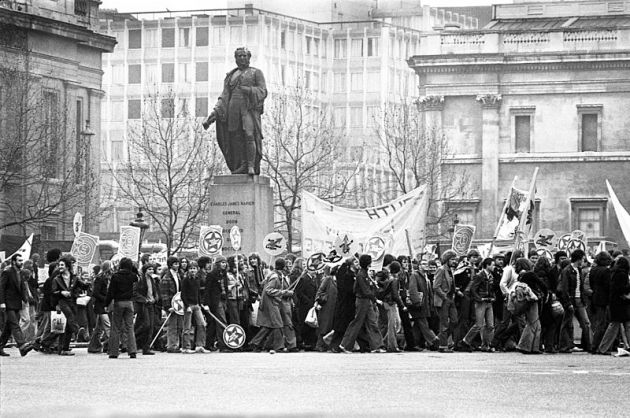
Rock Against Racism march, Trafalgar Square, April 1978

Rock Against Racism march, Trafalgar Square, April 1978

This troubling era is picked over in immense detail, with various jaw-dropping artefacts: Clapton’s handwritten ‘apology’ letter to Sounds magazine is printed in full, and there’s also an extremely rare photo of Bowie’s ‘Nazi salute’ at Victoria station in May 1976 (as well as a new-to-this-writer explanation/apology from Bowie). Black musicians and music-biz legends also comment with great candour about life in the UK during this period.

3-september-20162c-walls-come-tumbling-down-billy-bragg-in-conversation-with-author2c-daniel-rachel-40-people27s-history-museum-image-red-wedge5b45d

The 2 Tone movement attacked racism at its source while many artists under that umbrella also supported the Campaign For Nuclear Disarmament and Rock Against Sexism.

When Margaret Thatcher swept to a second term of office in 1983, bolstered by the Falklands War, a new pacifism emerged, typified by tracks like Elvis Costello’s ‘Shipbuilding’ and Heaven 17’s ‘(We Don’t Need This) Fascist Groove Thang’.

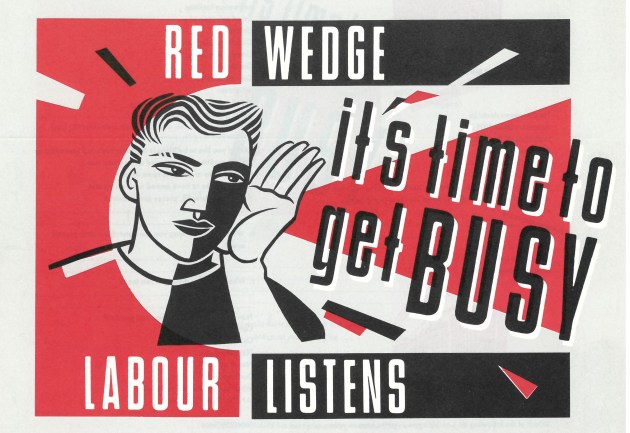
Later, as the miners’ strike took hold and Thatcher’s assault on socialism gathered pace, Paul Weller and Billy Bragg formed the Red Wedge movement which focused its attentions on ousting her in the 1987 General Election. It wasn’t to be, of course – although she did resign in December 1990.

The final section of ‘Walls Come Tumbling Down’ focuses on Dammers and various accomplices’ efforts to raise public awareness about the banned ANC, with high-profile singles and the famous 1988 Nelson Mandela 70th birthday tribute at Wembley Stadium, followed by his eventual freeing from jail on 11 February 1990.

Full of juicy details, potent memories of a far more passionate and politically-engaged era of pop music, and gripping, sometimes moving testimonies, this fascinating book outlines a period when youth culture demanded a voice.

‘Walls Come Tumbling Down’ is published by Picador.

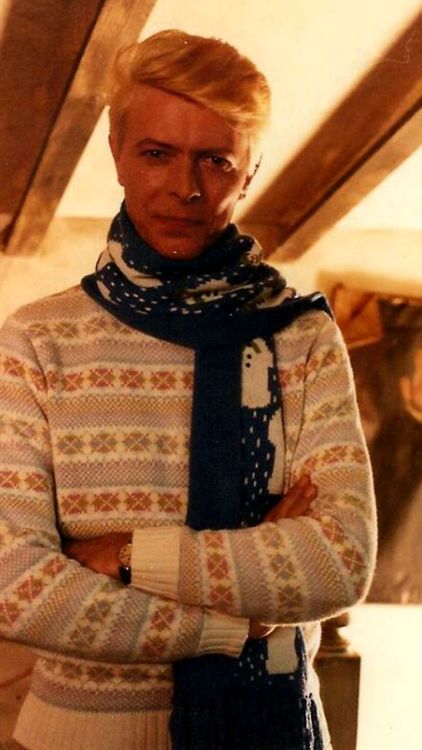
David Bowie & The Snowman

bowieDavid Bowie’s 1977-1985 period was one of his most fascinating and contradictory.

On the one hand, there were the ‘adult’ themes embedded in Heroes, Lodger, Scary Monsters, ‘The Elephant Man’, ‘Christiane F’, ‘Cat People’, ‘Merry Christmas Mr Lawrence’, ‘Baal’ and ‘The Hunger’.

But then there were the projects that were, on the face of it, more typical of a well-respected, part-of-the-furniture ‘family entertainer’; the 1977 Bing Crosby TV duet, the 1978 recording of Prokofiev’s children’s classic ‘Peter And The Wolf’, the ‘unthreatening’ pure pop of Let’s Dance and Tonight, the ‘Labyrinth’ movie and soundtrack, the huge investment of time and effort in various Band Aid/Live Aid ventures.

Were these karmic ‘atonements’ for those bleak Los Angeles and Berlin periods of the mid-’70s? Possibly, though his work had always touched on childhood themes, and he was apparently also very keen, whenever possible, to take on projects his young son could enjoy.

snowman

So, in early December 1983, when Bowie was – albeit briefly – probably the biggest ‘rock’ star on the planet, he found time to contribute a touching, heartfelt introduction to Dianne Jackson’s film of Raymond Briggs’ ‘The Snowman’.

First shown on British TV 33 years ago today (I can remember how much of an event it was in my house), it’s yet another fascinating piece of early-’80s Bowie ephemera, and his involvement was surely quite a coup for the film-makers.

Though ‘The Snowman’ has become a perennial Christmas favourite, it is often transmitted without the introduction. So here it is in all its glory. Merry Christmas.

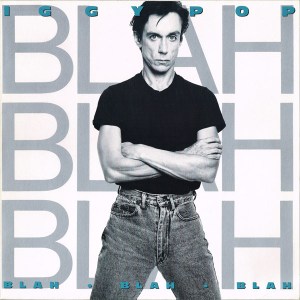
Iggy Pop: Blah-Blah-Blah 30 Years Old Today

iggy

While David Bowie was turning in one of his finest live performances of the 1980s at Live Aid, his good friend Jim Osterberg AKA Iggy Pop was ensconced in LA, writing songs with ex-Sex Pistol Steve Jones.

Bowie’s use of six Iggy lyrics on the Let’s Dance and Tonight albums had given Osterberg enough royalties to buy some much-needed thinking time after a disastrous run of early ’80s solo albums and the termination of his Arista record contract.

Iggy and Jones came up with nine new songs, three of which – ‘Fire Girl’, ‘Winners And Losers’ and ‘Cry For Love’ – would make it onto Blah-Blah-Blah (though they were clearly inferior to the Bowie/Iggy material).

The latter lyric especially had opened up a new vulnerability in Iggy’s writing. He later said: ‘Just expressing that openness frightened me. I didn’t want to admit I was in need of basic affection.’ Yes, Iggy was now singing boy/girl songs – love songs.

Bowie hooked up with Iggy in late 1985 to hear some of the new stuff. He was impressed. He suggested they co-write some more uptempo material and also offered to produce, apparently telling Iggy: ‘I can make this as commercial as hell.’

They disappeared off to David’s holiday home in Mustique with their respective girlfriends, then undertook a lengthy skiing holiday in Gstaad, taking a four-track tape machine with them. Mountain Studios, owned by Queen and scene of the ‘Under Pressure’ recording, was booked for April 1986, and co-producer/tech guru David Richards came onboard for the sessions too.

iggy-and-bowie-1986

Bowie recruited a crack band for Blah-Blah-Blah – Kevin Armstrong played guitar (joined by Steve Jones on one track), fresh from being David’s musical director at Live Aid and doing sessions for Prefab Sprout, Propaganda and Alien Sex Fiend!

Gifted Swiss multi-instrumentalist Erdil Kizilcay, who had worked on the Let’s Dance demos and also epic soundtrack single ‘When The Wind Blows’, played (excellent) bass and shared live drums with the Linn machine borrowed from Queen’s Roger Taylor. Bowie played most of the keyboards.

David was apparently workmanlike and professional in the studio, ticking off daily tasks on a notepad with lots of nervous energy. He was focused on helping his friend to the very best of his ability. ‘He’d be chucking down the coffee and fags, and it would be pretty neurotic and manic around him’, said Armstrong.

But Bowie was also a typically shrewd people-watcher – he apparently wrote the first verse of ‘Shades’ after watching Iggy give his girlfriend Suchi a gift, turning it around to make the guy the grateful, humble recipient.

Blah-Blah-Blah features Iggy’s best singing on record. He has developed a gloriously dark croon and finally has the right material to showcase it. ‘Winners And Losers’ particularly shows off his improved vocal range.

It’s also a very funny album. Bowie and Iggy clearly had a great laugh writing these songs, with some preposterous couplets thrown in, especially on ‘Isolation’ (‘I need some lovin’ like a body needs a soul/I need some lovin’ like a fastball needs control, here I am!‘).

‘Baby It Can’t Fail’ features some of the best opening lines in 1980s rock: ‘You have loved me with energy/Backed up hard work and guts!‘ Iggy’s committed delivery always prompts a smile.

There’s some excellent, genuinely uplifting material in the shape of ‘Shades’, ‘Isolation’ (with gorgeous Bowie backing vocals) and ‘Hideaway’.

The title track is a sample-heavy curio in the style of Sigue Sigue Sputnik’s ‘Love Missile F1-11’ (which Bowie later covered) with amusing ‘geeky’ vocal stylings by Iggy and some wilfully-gormless lyrics (‘Shimon Peres, whatcha gonna do?/I’m from Detroit’ etc etc).

‘Little Miss Emperor’ tellingly quotes Allen Ginsberg and features a classic Bowie piano flourish in the ‘Absolute Beginners’/’Life On Mars’ style. Blah-Blah-Blah even spawned Iggy’s first UK singles chart showing (#10) with ‘Real Wild Child’, a cover of Australian rock’n’roller Johnny O’Keefe’s only hit.

Promotional duties led to a very memorable appearance on the regional British kids’ TV show ‘Number 73’ wherein Iggy decided to simulate sexual relations with an oversized teddy bear.

Apparently Richard Branson heard an early pressing of Blah-Blah-Blah and phoned Iggy personally to invite him to Virgin Records. But he eventually went with A&M and delivered a reasonable hit for the company; the album went gold in Canada and made a decent dent in both the UK and US charts.

So is Blah-Blah-Blah the best Bowie-related album of the ’80s? It’s certainly up there. Older Iggy fans may have been shocked by the ‘poppy’ nature of some of the material, but there’s always an edge.

The album was also arguably an influence on bands like The Mission, Sisters Of Mercy and Miss World with its monolithic drum programming, deep vocals and anthemic songcraft.

To a certain extent, Bowie tried to repeat the formula on his own decidedly patchy Never Let Me Down album, but the news was better for Iggy; he embarked on a ten-month world tour, laying off the booze and drugs for the entirety.

For the band, however, it was a different story – apparently Kevin Armstrong and drummer Gavin Harrison were in a pretty terrible state by the time they got home to London in summer 1987.

But Bowie had done it again – he’d helped kickstart Iggy’s career for the fourth time and delivered probably the commercial apex of his solo work; Blah-Blah-Blah is definitely due a critical reappraisal.

Further reading: ‘Open Up And Bleed’ by Paul Trynka

‘The Complete David Bowie’ by Nicholas Pegg

Bigmouth Strikes Twice: More Classic 1980s Music Quotes

Art_Blakey_1973

Art Blakey

Here’s another selection of choice quotes taken from various 1980s magazines, TV shows, biographies and anthologies that have drifted through my transom in the last few months.

Check out the first instalment here if you missed it.


‘Morrissey’s a precious, miserable bastard. He sings the same song every time he opens his mouth. At least I’ve got two songs: “Love Cats” and “Faith”.’

Robert Smith of The Cure, 1985


‘George Clinton told me how much he liked Around The World In A Day. You know how much more his words mean than those from some mamma-jamma wearing glasses and an alligator shirt behind a typewriter?’

Prince, 1985


‘It would be nice to meet Madonna and squeeze her bum.’

Level 42’s Mark King looks forward to his first US tour, 1986


‘I hope nobody bought houses.’

Slash/Warners executive Bob Biggs upon hearing a preview of Faith No More’s Angel Dust album (OK, this quote is from the early 1990s, but wtf…). The band had bought houses…


‘The musician is like a house, and the music is like a friend that’s always out there knocking on the door, wanting nothing more than to come in. But you’ve got to get your house in order for music to come in. That’s where discipline comes in.’

Robert Fripp, 1984


‘Like the first side. The second side is rubbish. Miles don’t play jazz no more but feels kind of funny about it, so instead of just admitting that his chops aren’t what they used to be, he puts jazz down.’

Branford Marsalis on Miles Davis’s Tutu, 1986


‘Remember the hits? “Labour Of Love” was inspired by Antonio Gramsci, a love song called “Violently” and a tale of kitchen-sink realism about wife battery called “Looking For Linda”. We heard those songs on Radio 1 back to back with Yazz and we’d piss ourselves laughing. We pulled off the trick three times and I always think that lyrically I can pull it off again.’

Hue & Cry’s Pat Kane remembers the good old days, 1995


‘I have to be myself, and if being in rock music forces me to pretend I am an idiot or that I have to wear tight trousers or a wig, then I have to get another job.’

Sting, 1988


‘I heard the title song (‘Storms’) on the radio and the drum sound still makes me want to cry. I love Glyn (Johns, producer) but there were times during that album when I went back to the hotel to cry.’

Nancy Griffith on her 1989 album Storms, 1991


‘I would say that my entire life has been one massive failure. Because I don’t have the tools or wherewithal to accomplish what I want to accomplish.’

Frank Zappa, 1986
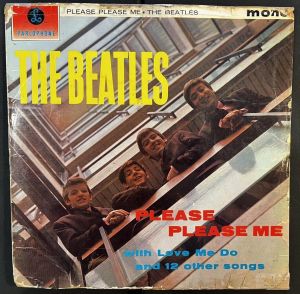
 

‘I went into the old EMI offices many times in the late ’80s and it never occurred to me to look up in reception and see exactly where that iconic photo had been taken. In the ’80s it seemed we had been looking forward.’

David Hepworth on the famous Beatles photo from the cover of Please Please Me


‘I tried the Jesus and Mary Chain but I just couldn’t believe it. It’s awful! It was so sophomoric – like the Velvets without Lou. I just know that they’re kids from Croydon! I just can’t buy it.’

David Bowie, 1987


‘I was surprised how hip it is. There’s a strange thing I don’t understand of people in Boy George outfits dancing to Jimmy McGriff and old Jackie McLean Blue Note records in discos.’

Guitarist John Scofield on the latest English ‘jazz revival’, 1988


‘Songwriting’s a craft, that’s all. I always knew my lyrics were better than anyone else’s anyway. I just edit more than other people, that’s my f***in’ secret. Also I never sleep and that helps too. You’ve got more time that way.’

Shane MacGowan, 1989


‘I hate having my picture taken, I always look like such a dog.’

Kirsty MacColl, 1989


‘I was a patsy. I never made more than $200 a week at the Five Spot.’

Ornette Coleman looks back on his legendary six-month residency during 1959 and 1960, 1985


‘All of us were naive, not just Ornette. We couldn’t even pay our rents. And they were making lots of money off us. That club was jammed every single night we were there.’

Charlie Haden on the same residency, 1985


‘You walk into the record label and they just weren’t as friendly as they used to be. When the record’s not a success, it’s your fault, and so you take on all those feelings. The label doesn’t sit down and talk to you. And they don’t drop you either, because they don’t want to lose you to the competition – just in case you do come up with something good next. And so they just remain sort of not as friendly, no more: “Hey Kevin, how are you?” It’s a head-f*ck, and you just have to work it out yourself.’

Kevin Rowland on the commercial failure of his 1988 solo album The Wanderer


‘Pop stars live the life of Caesar. And we know where the life of Caesar leads: it leads to blankness, it leads to despair. That’s the real message of these rock stars’ lives. To the public, they represent vitality, youth, innocence, joy. But in private life they represent despair and an infatuation with death.’

Albert Goldman, author of ‘The Lives Of John Lennon’ and ‘Elvis’, 1988


‘I remember sitting next to the stage and seeing all those little red lights glowing on the amps while we waited for the guys to come out and give us a real pasting.’

Allan Holdsworth reminisces about early gig-going, 1985


‘I have the best legs in the business. And they’ve got dancing feet at the bottom.’

David Lee Roth, 1982


‘There’s only one woman I have deep respect for in this industry and that’s Chrissie Hynde.’

Annie Lennox, 1986


‘I would have thought that people would be pleased to have a band that could play half decently.’

Francis Dunnery bemoans It Bites’ poor standing with the British music press, 1989


‘Sometimes he would call for Monk out of the clear blue sky. “Thelonious! Come save me from these dumb young motherf*ckers!”‘

Wynton Marsalis on playing with Art Blakey in the early 1980s


‘Prince really wants to be white. I know what that’s like. I tried hard to be white too.’

Daryl Hall, 1985


‘What we do is an alternative to Elton John and Chris Rea and all those old bastards who were there and still are. It’s embarrassing to see these old people like Dire Straits doddering about, they’re hideous.’

Robert Smith, 1989


‘I’ll tell you what I dig. In the Sting movie “Bring On The Night”, Omar Hakim taking off on that tune. Like Tony Williams, Jack DeJohnette. That’s being real free and comfortable. I don’t take my drums seriously, and they do.’

Drummer for the stars Jeff Porcaro, 1989


‘I believe that Bill (Bruford) and Adrian (Belew) thought that Beat was a better album than Discipline. I have no idea how anyone could come to that conclusion.’

Robert Fripp of King Crimson, 2022


‘Thanks for letting me drop by, guys. Hope I didn’t ruin your album.’

Herbie Hancock bids farewell to Simple Minds after playing a synth solo on their 1982 song ‘Hunter And The Hunted’


‘You should have seen us trying to sound like Windham Hill. We’d fall on our butts, man. I learned that you can’t fake it.’

’70s jazz/rock pioneer Larry Coryell on his mid-’80s collaboration with violinist Michal Urbaniak, 1985


‘We weren’t asked but we wouldn’t have done it anyway.’

Robert Smith on Live Aid, 1985


‘The band is getting back together and playing, maybe every six months or every year. If I can do so without it being public knowledge, that would be great. But I can’t do it, obviously. It would be nice to play together just as friends.’

Jimmy Page on Led Zeppelin reunions, 1986


‘I really, really would like to be in Led Zeppelin again. Whether or not time allows that to happen, I don’t know.’

Robert Plant on Led Zeppelin reunions, 1988


‘I’m a Catholic, and I would just ask God to to please help me find my own style. It’s not going to be like Tony or Elvin, so that when you hear me on a record, you know it’s Al Foster on the drums.’

Al Foster on his ‘stomping’ hi-hat technique, 1989


‘I feel I’ve created a field in which other people can discover themselves. I’m disappointed that they don’t create the room for me to discover myself.’

Robert Fripp on his King Crimson bandmates, 1984


‘I find therapy enormously valuable. It’s like car maintenance, send yourself in to be serviced every few thousand miles and, with any luck, it stops major problems developing.’

Peter Gabriel, 1989


‘I went to see this band INXS from Australia. They were on OK band, very much like a version of the Rolling Stones, but not as good. The singer is good and he looks great, but he doesn’t really move. He can’t be expending much energy.’

Mick Jagger, 1988


‘The band was like a fake democracy. Henley and I were making the decisions while at the same time trying to pacify and cajole the others.’

Glenn Frey looks back on The Eagles, 1988


‘(Jeff) Beck’s was a miserable f***ing band, horrible. Beck is a miserable old sod, but I do love him as a guitar player.’

Rod Stewart, 1988


‘I’ve always found it easier to write for other people. I feel terrible inhibited about writing for me. It’s only in the last few years that I’ve resigned myself into believing that I’m a moderately good singer.’

David Bowie, 1988


‘Of my writing partners since John (Lennon), Denny Laine was obviously nowhere near as good. Stevie Wonder is very good, but he’s not a lyricist. Michael Jackson is not as good of a writer as he is a performer. And Eric Stewart was good, but again, not as good as John.’

Paul McCartney, 1988


‘This new Clash compilation, which is meant to have sold a million copies, should be making me a rich man, but someone told me you only get quarter royalties for compilations. The CD wasn’t invented then so that wasn’t in the contract either. So I think I don’t get them royalties either. To tell the truth, I think we’re all a bit skint really.’

Joe Strummer on the legacy of The Clash, 1988


‘Those weird people on the street – every hundreth weirdest one has a Steely Dan record at home. That guy who hijacked a bus today probably has 47 copies of The Royal Scam.’

Walter Becker on Steely Dan’s audience, 1981


‘In 1981, something happened which changed my way of working with music. I woke up on a friend’s sofa in New York and simply understood something I’d known for a while: music was always present, completely with a life of its own, as a friend.’

Robert Fripp, 1984


‘The price of a ticket goes from two dollars to 20 dollars, the act doesn’t do an encore, someone has to stand in a long line, and it’s all my fault.’

Bill Graham on stadium rock, 1988


‘There are a lot of people who didn’t make a commitment and now they’re no longer with us. We lost Otis Redding, Sam Cooke, Jackie Wilson, Jimi Hendrix. I think maybe some of them didn’t know where or when to get off. The important thing is to be here.’

Al Green, 1988


‘Hell, we steal. We’re the robber barons of rock’n’roll.’

Donald Fagen of Steely Dan, 1981


‘After recording it, I flew off to see my manager and I said to him, “You’d better watch who you’re talking to. I’m the guy who wrote “Addicted To Love!”‘

Robert Palmer, 1988


‘I get the fans who write poetry. I have a slight David Sylvian audience, whereas Chris (Lowe) gets the sex audience, the ones who write obscene letters! It’s quite thrilling, actually!’

Neil Tennant of The Pet Shop Boys, 1988


‘It was the Enniskillen bombing that did it. The man whose daughter died beside him under the rubble; he was burning inside but he was so forgiving, so gracious. I thought, Christ, this is what courage is all about – Elton, just shut up and get back to work. After all, once you’ve been exposed naked on the cover of The Sun you ought to be able to face anything…’

Elton John on his 1988 comeback


‘It’s a better product than some others I could mention.’

David Bowie defends the Glass Spider Tour, 1987


‘Back then I thought I’d lost it and I did a bunch of things I was really unhappy with – all in public and on record. But it turned out not to be true. My ability hadn’t deserted me. And it won’t go away. Ever.’

Lou Reed, 1988


‘Michael Jackson’s just trying to cop my sh*t. I was insane years ago…’

Neil Young, 1988


‘I’ve said a lot of things in my time and 90 percent of them are bollocks.’

Paul Weller, 1988


‘We were excellent. Some of the best records of the ’80s are there. For the last six months of Wham!, it was OK to like us, we got a little hip. I cannot think of another band who got it together so much between the first and second albums. On Fantastic, you can tell I don’t think I’m a singer but some vocals on Make It Big are the best I’ve done. Even if we were wankers, you still had to listen.’

George Michael reassesses Wham!, 1998


‘The gig I have as the drummer in King Crimson is one of the few gigs in rock’n’roll where it’s even remotely possible to play anything in 17/16 and stay in a decent hotel.’

Bill Bruford, 1983


‘When I toured with The Rolling Stones, the audience would come up to me after the show and say, “Man, you’re really good, you ought to record.” How do you think that makes me feel after 25 years in the business?’

Bobby Womack, 1984


‘I find politics ruins everything. Music, films, it gets into everything and f*cks it all up. People need more sense of humour. If I ran for President, I’d give everybody Ecstasy.’

Grace Jones, 1985


‘I’m not the most gifted person in the world. When God handed out throats, I got locked out of the room.’

Joe Elliott of Def Leppard, 1988


‘I’m lazy and I don’t practice guitar and piano because I’ve gotten involved with so many other things in my life and I just had to make a sacrifice. Stephen Sondheim encourages me to start playing the piano again. Maybe I will.’

Madonna, 1989


‘Nile (Rodgers) couldn’t afford to spend much time with me. I was slotted in between two Madonna singles! She kept coming in, saying “How’s it going with Nile? When’s he gonna be free?” I said, “He ain’t gonna be free until I’m finished! Piss off!”’

Jeff Beck, 1989


‘I’ve never really understood Madonna’s popularity. But I’ve talked to my brothers and they all want to sleep with her, so she must have something.’

Nick Kamen, 1987


‘They ask you about being a Woman In Rock. The more you think about, the more you have to prove that you’re a Woman In Rock. But if you’re honest, it doesn’t matter whether you’re male or female. That’s the way we work.’

Wendy Melvoin, 1989


‘In Japan, someone told me I was playing punk saxophone. I said, “Call me what you want, just pay me”.’

George Adams, 1985


‘In the past, we’d bump into other musicians and it would be, “Oh, yes, haven’t I heard of you lot? Aren’t you the bass player that does that stuff with your thumb?” But once you’ve knocked them off the number 1 spot in Germany, they’re ringing you up in your hotel and saying, “Hey, howyadoin’? We must get together…”‘

Mark King of Level 42, 1987


‘We played London, we played Ronnie Scott’s, and I noticed that there were a lot punk-rock kids in the audience. After we finished playing, we had to go to the disco and sign autographs, because “Ping Pong”, the thing we made about 30 years ago, is a big hit over there.’

Art Blakey, 1985


‘I believe music – just about everything – sounds better these days. Even a car crash sounds better!’

Miles Davis, 1986


‘It’s a dangerous time for songwriters in that a monkey can make a thing sound good now.’

Randy Newman, 1988

Yoko+Ono+Season+Of+Glass+522787


‘To have those glasses on the cover was important because it was a statement and you have to understand that it was like John wanted you guys to see those glasses.’

Yoko Ono, 1989


‘I’ll f*cking… I’ll go and take on anyone, any white singer who wants to give me a go.’

Matt Goss of Bros, 1989


‘I’ve never said this before but my drums is so professional, man, know what I mean?’

Luke Goss of Bros, 1989


‘I hate parts of my own albums because I know I’m hearing something that doesn’t translate to piano. In fact, I’m being dishonest by playing piano at all.’

Keith Jarrett, 1987


‘When I began to see how Elvis lived, I got such a strong take off of it. It was all so revolting!’

Albert Goldman, 1988


‘The best way to make great art is to have it trivialised by other people as much as possible. That way, you fight and fight and fight.’

Julian Cope, 1989


‘Whatever you’re tops in, people is trying to bring you down, and that’s my philosophy.’

Samantha Fox, 1987


‘Call me fat and I’ll rip your spine out.’

Ian Gillan, 1983


‘Sure I care about my fans. Because fans is money, hahaha. Muh-neee! And who does not care about money? Me, I like muh-neee, haha.’

Chuck Berry, 1988


‘I have this long chain with a ball of middle-classness at the end of it which keeps holding me back and that I keep sort of trying to fight through. I keep trying to find the Duchamp in me.’

David Bowie, 1980


‘People who say, Oh, I don’t know anything about music – they’re the people who really do know about music because it’s only really what it does to you.’

Steve Winwood, 1988


‘I notice that critics and others don’t credit black people with the ability to write ingenious, creative lyrics.’

Nile Rodgers, 1981


‘I’m below the poverty line – I’m on £16 a week. We needed some clothes and our manager said, “I don’t know what you do with your money. I mean, 16 quid!”’

Gary Daly of China Crisis, 1984


‘You take four or five of those rattlesnakes, dry ’em out and put them inside your hollow-box guitar. Lightnin’ Hopkins taught me that trick.’

Albert Collins on his guitar tone, 1988


‘People are bored with Lionel Richie going “I love everybody, peace on earth, we are the world…” F*ck that! People love bastards.’

Terence Trent D’Arby, 1987


‘Epstein dressed The Beatles up as much as he could but you couldn’t take away the fact that they were working-class guys. And they were smart-arses. You took one look at Lennon and you knew he thought the whole thing was a joke.’

Billy Joel, 1987


‘I remember when the guy from Echo & The Bunnymen said I should be given National Service. F*** him...’

Boy George, 1987


‘No-one should care if the Rolling Stones have broken up, should they? People seem to demand that I keep their youthful memories intact in a glass case specifically for them and damn the sacrifices I have to make. Why should I live in the past just for their petty satisfaction?’

Mick Jagger, 1987


‘The industry is just rife with with jealousy and hatred. Everybody in it is a failed bassist.’

Morrissey, 1985


‘I couldn’t stand it – all that exploitation and posturing, the gasping at the mention of your name, the pursuit by photographers and phenomenon-seekers. You get that shot of adrenalin and it’s fight or flight. I chose flight many a time.’

Joni Mitchell, 1988


‘I’m strongly anti-war but defence of hearth and home? Sure, I’ll stick up for that… I’m not a total pacifist, you know? I’ve shot at people. I missed, but I shot at them. I’m sort of glad I missed…’

David Crosby, 1989

13 Memorable B-Sides Of The 1980s

princeThere was definitely a thing about B-sides in the 1980s.

You never quite knew what you would find on the reverse of your favourite 7” or 12″ – maybe a new direction, bold experiment, engaging curio, self-produced shocker or even the drummer’s long-awaited-by-nobody songwriting debut.

Sometimes a single track encapsulated all of the above…

This writer was never the biggest singles collector in the world, but had to try and hear everything by Prince, Level 42 and It Bites during their peak years. Some B-sides took on a kind of mythic stature and weren’t easy to access: you’d have to cadge from your mates, record things from the radio or trawl the Record & Tape Exchange.

Here’s a motley parade of ’80s backsides, some long-sought-after, some intriguing, some exciting, some fairly random but all inexplicably etched upon my memory.

13. David Bowie: ‘Crystal Japan’ (1981)

Though originally released as an A-side for the Japanese market, this charming instrumental later turned up as the B-side to the ‘Up The Hill Backwards’ single of March 1981.

12. Peter Gabriel: ‘Curtains’ (1987)

Almost every time this ‘Big Time’ B-side rolls around, it produces a slight chill and sense of wonder. One of PG’s most disquieting pieces but with a lovely melody and ambience.

11. Danny Wilson: ‘Monkey’s Shiny Day’ (1987)

The Dundonians are at their most sublimely Steely-ish on this ‘Mary’s Prayer’ B-side. The track’s lo-fi production and slightly low-budget horn section/backing vocals hinder it not one jot.

10. Prince: ‘Alexa De Paris’ (1986)

Prince had always threatened a full-on guitar instrumental and this ‘Mountains’ B-side delivered it. And boy was it worth the wait. Sheila E plays some fantastically unhinged drums (check out how she reacts to Prince’s guitar throughout) and Clare Fischer weighs in with a widescreen orchestral arrangement. The composition is reimagined as a solo piano piece in the movie ‘Under The Cherry Moon’.

9. It Bites: ‘Vampires’ (1989)

The B-side of ‘Still Too Young To Remember’, this glam-prog classic is notable for its crunching riff, catchiness and Francis Dunnery’s most extreme It Bites guitar solo (stitched together from multiple takes?). Pet Shop Boys were definitely listening – this is even in the same key.

8. David Sylvian: ‘A Brief Conversation Ending In Divorce’ (1989)

The accompanying track to one-off 12” single ‘Pop Song’, you get the feeling this microtonal, improvised miniature featuring late great pianist John Taylor was far more up Sylvian’s street than the hits requested by Virgin Records.

7. Donna Summer: ‘Sometimes Like Butterflies’ (1982)

This B-side to ‘Love Is In Control (Finger On The Trigger)’ is a bit of a guilty pleasure. But Summer’s exceptional performance transcends the schmaltz, as does a superb drum performance by…someone (Steve Gadd? Rick Marotta? Ed). Intriguingly, Dusty Springfield covered it in 1985.

6. Level 42: ‘The Return Of The Handsome Rugged Man’ (1982)

This irresistible B-side from the ‘Are You Hearing What I’m Hear’ 12” shows the lads in full-on Weather-Report-meets-Jeff-Beck mode. Drummer Phil Gould even gives Harvey Mason and Billy Cobham a run for their money.

5. Roxy Music: ‘Always Unknowing’ (1982)

This shimmering, beguiling Avalon outtake from the US single version of ‘More Than This’ was surely in competition with ‘While My Heart Is Still Beating’ and ‘Tara’ for an album spot. Beautiful playing from guitarist Neil Hubbard.

4. Donald Fagen: ‘Shanghai Confidential’ (1988)

This ‘Century’s End’ B-side is an intriguing slice of fuzak with lovely chord changes, some tasty Marcus Miller bass and a fine Steve Khan guitar solo. You can even feel Donald smirking slightly when he plays his synth motif.

3. Scritti Politti: ‘World Come Back To Life’ (1988)

The B-side of the ‘Boom There She Was’ 12-inch showcases all the charms of the Provision sound: intricate arrangements, pristine production, bittersweet lyrics and punchy vocals. For many fans, it’s better than a lot of stuff on the album.

2. China Crisis: ‘Animalistic’ (1985)

The Liverpudlians detour into minimalist jazz/funk with some success on this ‘Black Man Ray’ B-side. Gary Daly’s vocals have never been so wryly Lloyd Cole-esque and drummer Kevin Wilkinson is in his element.

1. Willy Finlayson: ‘After The Fall’ (1984)

The A-side, ‘On The Air Tonight’, was recently covered by The Zombies’ Colin Blunstone, but I’ve always had a soft spot for this B-side. Both tracks were written and produced by ex-Camel keyboardist Pete Bardens.