1980s Pop: The Best Bits

Earworms: 1980s pop was chock-a-block with ’em.

Studio technology was blossoming fast and there was constant temptation (and pressure?) to come up with new sounds. Fairlights, Emulators, Synclaviers, gated snare drums: there had never been more ways to skin a cat.

But woe betide the ’80s popster who neglected the basic tenets of songcraft; the trick was coming up with memorable bits that fitted seamlessly into a track and bore repeated listening.

Thankfully, for every what-does-this-button-do novelty, there was a genuinely innovative, memorable pop moment, and some great instrumental solos to boot. So here’s a compendium of good bits from the 1980s, details that mark the decade out as a unique musical era. The rules: one artist per slot and every song has to have made the UK or US top 40 singles chart, or both…

41. Ian Dury’s ‘…and!’ during his monologue/introduction at the start of ‘I Wanna Be Straight’

40. Helen Terry’s backing vocals on Culture Club’s 1984 hit ‘It’s A Miracle’.

39. The spoken word bit in SOS Band’s ‘Weekend Girl’.

38. Nigel Kennedy’s violin solo on Paul McCartney’s ‘Once Upon A Long Ago’.

37. Greg Phillinganes’ synth bass on Donna Summer’s ‘Love Is In Control (Finger On The Trigger)’, especially the ‘squelch’ at 2:53 below:

36. Lee Thompson’s sax in the second verse of Madness’s ‘My Girl’

35. Marc Almond’s spoken-word line in Soft Cell’s ‘Say Hello Wave Goodbye’

34. Mel Gaynor’s volcanic snare-drum fill after the breakdown in Simple Minds’ ‘Alive And Kicking’
There’s a similar eruption in ‘Don’t You Forget About Me’, but this one wins out for sheer audacity. I wonder what ‘anti-muso’ co-producer Jimmy Iovine had to say about it…

33. The fade of The Police’s ‘Every Little Thing She Does Is Magic’

32. The Middle Eastern synth riff in Blancmange’s ‘Living On The Ceiling’

31. Steve Jansen’s marimba solo on Japan’s ‘Ghosts’

30. Mark Knopfler’s lead guitar at the tail end of Dire Straits’ ‘Romeo And Juliet’

29. Martin Drover’s trumpet riff on Adam Ant’s ‘Goody Two Shoes’

28. The bassline enters at 0:20 of The Cure’s ‘Love Cats’
Phil Thornalley is a veritable Zelig figure in ’80s pop, but even he couldn’t have imagined that his superbly simple-yet-complex bassline (try playing along) could have had such an impact on this stand-alone UK top 5 single.

27. Martin Fry’s hysterical ‘You think you’re smart/That’s stupid/Right from the start/When you knew we would part!‘ at the tail end of ABC’s ‘Poison Ivy’ 
Pointing the way forward for similar outbursts from Jarvis Cocker et al.

26. The weird coda of Stephen Tin Tin Duffy’s ‘Kiss Me’
Just when you thought this slightly-annoying-but-effective UK top 10 single was all done and dusted, there’s that menacing little DX7 kiss-off…

25. Melle Mel’s laugh-rap on Grandmaster Flash’s ‘The Message’

24. The guitar riff on The Pretenders’ ‘Back On The Chain Gang’
The jury seems to be out on whether Billy Bremner or Robbie McIntosh played this (answers on a postcard please).

23. Pino Palladino’s opening bass salvo at 0:04 of Paul Young’s ‘I’m Gonna Tear Your Playhouse Down’ 

22. David Williams’ guitar break on Michael Jackson’s ‘Wanna Be Startin’ Somethin”

21. The jangling piano motif of Associates’ ‘Party Fears Two’
Who came up with this weird brilliance? For a generation of listeners, it’ll always be the theme to BBC radio’s ‘Week Ending’.

20. The post-chorus drum fills on It Bites’ ‘Calling All The Heroes’
Deceptively simple (leading with the left hand is not easy for a right-handed drummer), tasty fills from Bob Dalton, the Cumbrian four-piece’s sticksman.

19. The backing vocals at 1:45 of Quincy Jones’ ‘Razzamatazz’
Patti Austin’s kaleidoscopic overdubs on the Rod Temperton-penned single which reached #11 in the UK chart.

18. ‘Heeeere’s Grace!‘ on ‘Slave To The Rhythm’

17. ‘Science!’
Dr Magnus Pyke’s outburst on Thomas Dolby’s ‘She Blinded Me With Science’ still raises a titter, but apparently he quickly came to regret his contribution to this US #5 single.

16. The Emulator string stabs which close Paul Hardcastle’s ’19’

15. The spoken-word bits in Frankie Goes To Hollywood’s songs
Take your pick from: ‘Well ‘ard!’, ‘Are you flipping me off?’, ‘In Xanadu did Kublai Khan/Pleasuredome erect!’ or my favourite: ‘In the common age of automation, where people might eventually work ten or twenty hours a week, man for the first time will be forced to confront himself with the true spiritual problems of livin”!

14. Neneh Cherry’s cockney accent on ‘Buffalo Stance’

13. The Sweetbreaths’ backing vocals at 1:36 on Tom Tom Club’s ‘Wordy Rappinghood’
Tina Weymouth’s sisters Lani and Laura bring the silliness, interpreted by Google thus: ‘Ram sam sam, a ram sam sam/Guli guli guli guli guli ram sam sam/Haykayay yipi yaykayé/Ahou ahou a nikichi’.

12. Bill Wyman’s French accent in the chorus of ‘(Si Si) Je Suis Un Rock Star’

11. Stevie Wonder’s harmonica solo on Eurythmics’ ‘There Must Be An Angel’
Is there any musician in pop music history who has better communicated pure joy?

10. The ‘Hey!’ sample on Art Of Noise’s ‘Close (To The Edit)’
Not the Noise’s Anne Dudley apparently, but Camilla Pilkington-Smyth (Who she? Ed.). A song of good bits.

9. The ‘Oh yeah!’ sample in Yello’s…’Oh Yeah’

8. Eric B’s ‘Pump up the volume!’ on ‘Paid In Full’

7. That Phil Collins drum fill on ‘In The Air Tonight’
It’s always a bit louder than you think it’s going to be…

6. Roy Bittan’s flanged piano on David Bowie’s ‘Ashes To Ashes’

5. The banshee-wailing on The Specials’ ‘Ghost Town’
It’s a close call between that and the haunting air-raid sirens at the end.

4. The whistling on XTC’s ‘Generals And Majors’
Real whistling or a synth? Who cares? Colin Moulding’s song has more great pop hooks than you can shake a stick at.

3. Abby Kimber’s cod nursery rhyme at the end of Bucks Fizz’s ‘Land Of Make Believe’

2. The synth riff of Human League’s ‘Love Action (I Believe In Love)’

1. Ryuichi Sakamoto’s funky piano on David Sylvian’s ‘Red Guitar’

Memorable Gigs Of The 1980s (Part One)

Mark King of Level 42, Hammersmith Odeon, 13 November 1985

The London live music scene was buoyant in the 1980s.

There was a gig on pretty much every corner. You could see a Goth band, a pub-rock band, a reggae band, a psychobilly band, a soul band – sometimes all on the same bill.

Places like The Rock Garden in Covent Garden, Swan and King’s Head in Fulham, Clarendon in Hammersmith, Red Lion in Brentford, Astoria in Soho and Mean Fiddler in Harlesden are quite understandably still revered by music fans of a certain age.

There were brilliant nightclubs too: The Bat Cave, Dingwalls, Wag, Blitz, Limelight, Marquee. Let’s be thankful that, as we write, a handful of legendary venues from that era survive (The Half Moon in Putney, Ronnie Scott’s, Roundhouse, Scala, Borderline) and long may they last.

Here are a few gigs that still loom large (all in London unless otherwise stated). I hope they spark some memories of your own. Eagle-eyed readers will notice that I pretty much camped out at the Hammersmith Odeon in the late ’80s – well, it was my local, and it seemed like almost everyone came through that brilliant venue…

9. Frank Zappa @ Wembley Arena, 18 April 1988
Yessir, Frank was in town for the first time in four years. I was a new fan and very excited to see him live. His guitar was insanely loud and very trebly. The reggae version of ‘Stairway To Heaven’ was particularly memorable. Lots of onstage banter and political rhetoric. Lots of old-school hippies in the stalls. What a treat.

8. The New York Jazz Explosion (Roy Ayers/Tom Browne/Lonnie Liston Smith/Jean Carn) @ Hammersmith Odeon, 24 February 1985
I’d never heard of any of these guys when my dad offered me a ticket but I’m bloody glad I went. Lonnie started the show with some prime, instrumental, Rhodes-driven jazz/funk, then Roy played some old favourites and quite a lot from his In The Dark album. I don’t remember much about Jean or Tom but Roy blew me away (I’ve seen him at least five times since). The Odeon was packed and a very raucous crowd made a lot of noise in those glorious days when almost every famous US soul star played there. A real eye-opener.

7. David Sylvian @ Hammersmith Odeon, 30 May 1988
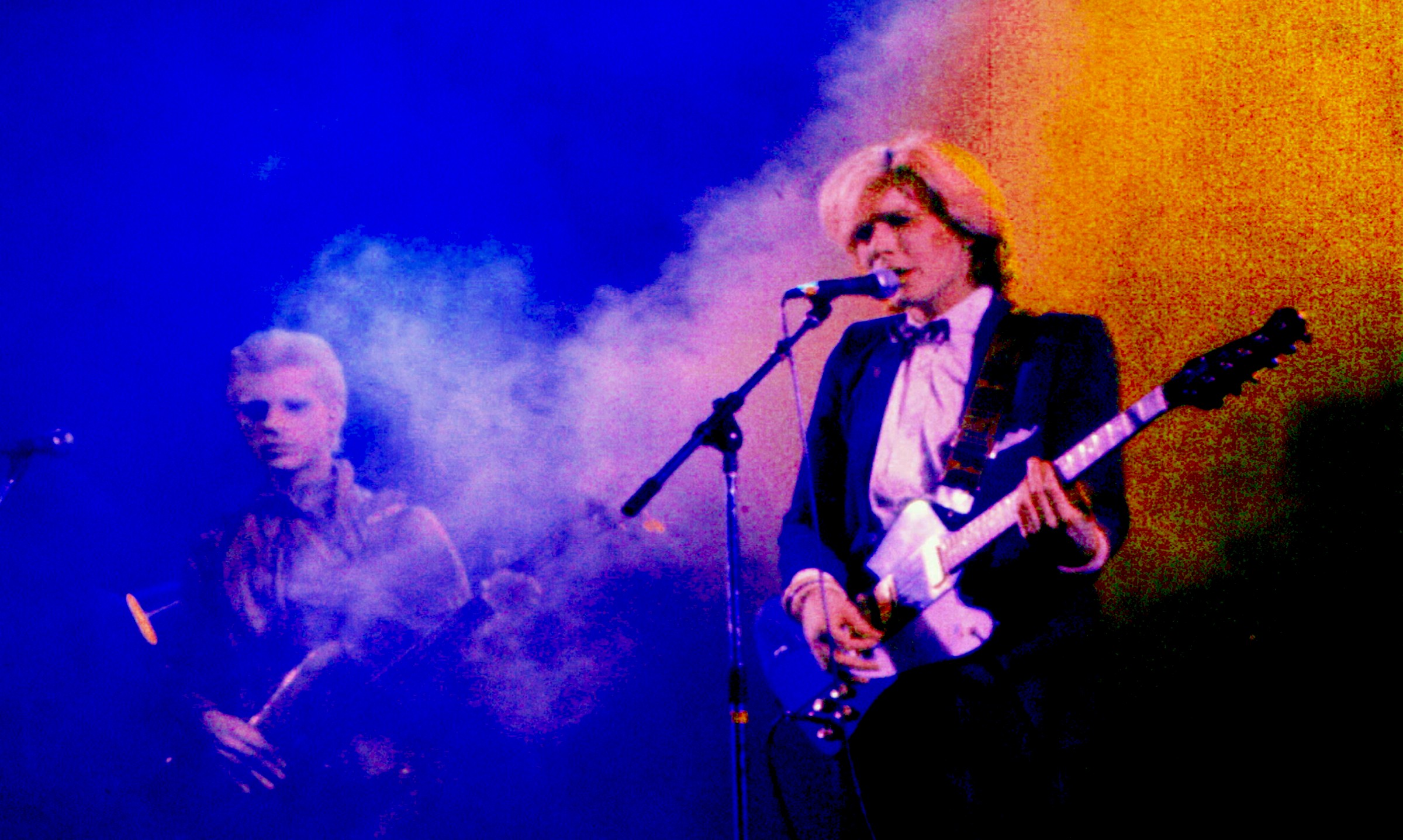
It was pretty much the first sight of David since Japan’s split and there was a genuinely exciting atmosphere in the old venue. Lots of screaming girls and a large Goth contingent. An unsmiling, slight and pale Sylvian silenced them by playing keys for the first few ethereal instrumentals (with hindsight, very reminiscent of Bowie’s ‘Stage’ tour a decade earlier). Fantastic band: David Torn, Mark Isham, Steve Jansen, Ian Maidman, Richard Barbieri.

6. Art Blakey @ Ronnie Scott’s, 26 January 1989
Ronnie’s hosted a lot of the bona fide jazz greats in those days. My dad took me to a see a fair few but catching Bu was a revelation. His sheer presence was memorable and his press rolls made the walls of the club shake. The suited-and-booted band, including top-notch Brit pianist Julian Joseph, were excellent too.

5. It Bites @ Brunel University, ? March 1988
My schoolmate Nigel had played me this band’s debut The Big Lad In The Windmill and I was becoming a massive fan when we got a lift out to darkest North-West London just before the release of their second album Once Around The World. They played in the low-ceilinged students union bar (scene also of The Sex Pistols’ final UK gig in December 1977, trivia fans…) and it became one of the most outstanding pop gigs I saw in the ’80s. A terrifyingly tight band – ‘coming at you like a f***in’ juggernaut’ as singer/guitarist Francis Dunnery said recently – with humour and chops. And a cracking version of ‘New York, New York’ in the middle of ‘Once Around The World’ to boot.

4. Level 42 @ Hammersmith Odeon, 13 November 1985
They were finally making the big pop breakthrough with World Machine but still had one foot in their jazz/funk ‘roots’ – this era was an exciting mix of both approaches. These boys were going places but were still quite naughty/rough’n’ready with it. Sadly this was the peak of the original four-piece band, but it was another brilliant, noisy, sweaty night at the Odeon.

3. John Scofield @ Half Moon Theatre, Docklands Festival, Sept 1988?
This took place at a makeshift venue in the back-end of nowhere within Thatcher’s huge Docklands development. It was a long car ride from West London into a strange wasteland. I had wanted to see this band since Blue Matter had come out a year earlier and accordingly watched drummer Dennis Chambers like a hawk throughout. From memory, he in turn eyeballed me throughout. His playing was pretty mindblowing from 10 yards away.

2. Wendy & Lisa @ Town & Country Club, 25 April 1989
It was a hot, sweaty night at the T&C, and the nearest to seeing Prince in such a small venue (which does a great disservice to Wendy and Lisa’s excellent playing and songwriting, but there you go). There was a genuine star quality to the (almost all-female) band and a very cool clientele – everyone was clocking a peak-fame Sinead O’Connor at the bar. The gig delivered the promise of summer and some cracking music too.

1. Animal Logic @ Town & Country Club, 25 May 1989
Back in the late ’80s, you only really gleaned info about musicians from magazines. When Rhythm – the now-defunkt UK monthly – printed that Stewart Copeland and Stanley Clarke were doing a gig in North London, we just had to be there. It was a surprise to say the least. There had literally been no sign of Copeland in the UK since The Police and the crowd seemed to be entirely composed of their fans – a huge roar erupted when Stewart’s kit was rolled onto the stage. Unfortunately the songs weren’t great but the atmosphere was.

David Sylvian: Secrets Of The Beehive 30 Years Old Today

And so we come to the ultimate autumn album and the closing chapter of an incredible run of form for the ex-Japan singer, songwriter and multi-instrumentalist.

For my money, Sylvian’s 1984-1987 output (Brilliant Trees, Gone To Earth, Secrets) is the equal of any ‘pop’ triptych.

Each song is memorable, with its own specific mood and soundworld. Space and melody are the key commodoties. Arrangements are kept as simple as possible. If Sylvian can accompany his voice with just double bass and occasional piano, acoustic guitar or percussion – as on ‘Mother And Child’ – he does so.

Some may find this minimalism disconcerting; I certainly did back in 1987, at least compared to the rich musical stew of Gone To Earth. But the sparseness also makes it timeless. Secrets is an album to live with.

Quality guest musicians – David Torn, Mark Isham, Phil Palmer, Steve Jansen, Danny Cummings, Danny Thompson – are brought in only when absolutely necessary.

But Ryuichi Sakamato is a mainstay of the album and man of the match, contributing piano, organ and beguiling string/woodwind arrangements.

Sylvian’s detractors may label him ‘poet laureate of depressives’ but lyrically he goes way beyond ‘depression’ here. This is an unashamedly serious, ‘pre-irony’ album; many probably recoil from that too.

‘The Boy With The Gun’ is a controversial and eerily relevant character study. ‘Maria’ and ‘The Devil’s Own’ are genuinely spooky and quintessentially gothic.

‘When Poets Dreamed Of Angels’ compares modern-day domestic abuse with medieval abuses of power, ‘bishops and knights well placed to attack’.

‘Let The Happiness In’ initially comes across as a two-chord dirge – it took me about 15 years to really appreciate it – but becomes an affecting song about hope against all the odds. A brave choice of lead-off single, it crawled to #66 in the UK chart.

Second single ‘Orpheus’ didn’t chart at all but is no less than a late-’80s masterpiece featuring a gorgeous string arrangement from Brian Gascoigne. ‘September’ and ‘Waterfront’ are milestones in orchestral pop.

Secrets scraped into the UK top 40 at #37 – where it stayed for one week. It marked the end of Sylvian’s pop career. He would wait 12 years to release another solo album.

Winter Music

winter-music

Richmond Park, UK, winter 2016

So the evenings draw in, Christmas clogs up the telly and hygge is all over the Sunday supplements. You contemplate your navel and your age and comment on how quickly the year has gone by…again.

And if you listen to music a lot, chances are you’ll probably notice how your tastes change as the season eases from autumn to winter. This may have happened when winter turned to spring too, but something a bit more introspective might be called for when your football team starts sliding and the heavy stuff comes out of storage and into your wardrobe.

Here are nine ’80s tracks that instantly say winter to me, calling at Ambient, Eerie and Lovelorn:

9. Pat Metheny Group: ‘Distance’ (1987)
This is the only track from the Still Life (Talking) album I can listen to these days. Lyle Mays’ composition sticks out like a sore thumb on that 1987 collection, a challenging, spooky piece with a touch of serialism that suggests Very Bad Things… A soundtrack for a movie that never was.

8. Roxy Music: ‘To Turn You On’ (1982)
Ferry’s tale of long-distance love for someone very unsuitable. He’s in London, she’s in New York. She possibly has some kind of ‘ailment’ – drug addiction? Mental health problem? (You may be reading too much into this… Ed). He is hopelessly and rather tragically smitten. One of Ferry’s finest ballads with a crackerjack band (Paul Carrack, Rick Marotta, Alan Spenner, Neil Hubbard) bringing it to life.

7. David Sylvian: ‘Pop Song’ (1989)
I could have chosen any amount of Sylvo tracks but have settled on this stand-alone 12” single, his cheeky response to Virgin Records’ request for one more solo hit (which never materialised). It paints a fairly bleak portrait of late-’80s Britain as a nation of clock-watching factory workers numbed by banal pop music, featuring microtonal synths, Steve Jansen’s clever drum layering and close-interval piano work from the late John Taylor.

6. U2: ‘4th Of July’ (1984)
Ostensibly a duet for bass (though surely that’s not Adam Clayton?) and ‘infinite guitar’ (The Edge put through Eno’s processing systems), U2’s first bash at pure ambience was a minor masterpiece. To say one doesn’t miss Bono’s voice would be an understatement. As far as I know, the band have never attempted anything similar since – more’s the pity.

5. The Sundays: ‘Skin & Bones’ (1990, recorded in 1989)
The unforgettable lead-off track from the classic Reading, Writing & Arithmetic album. The Cocteau Twins meets The Smiths? You betcha.

4. Mark Isham: ‘In The Blue Distance’ (1983)
Isham’s plaintive trumpet and atmospheric keyboard playing create a sombre yet uplifting winter masterpiece.

3. Joni Mitchell: ‘Chinese Cafe (Unchained Melody)’ (1982)
I first heard this nostalgic classic in late 1983 and it was my first exposure to Joni’s music. I’ve never forgotten it and will forever associate it with this time of year.

2. Love & Money: ‘Inflammable’ (1988)
One of many great torch songs penned by James Grant, featuring on the late-’80s classic Strange Kind Of Love. ‘I go looking for what I want in the wrong places’ – there’s a winter mantra for urban singletons right there…

1. Lloyd Cole: ‘Are You Ready To Be Heartbroken?’ (1985)
Let’s face it, winter can also be haunted by ghosts of failed romances, stolen moments and disastrous Christmas flings. This classic covers all that stuff very efficiently with a nice line in black humour.

Check out the playlist on Spotify (a few tracks not currently available).

10 More Great Album Covers Of The 1980s

Check out the first instalment here in case you missed it.


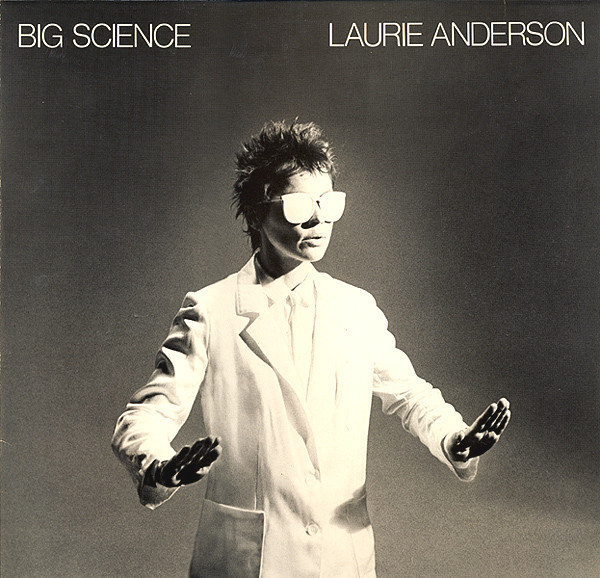
10. Laurie Anderson: Big Science (1981)

Cover concept by Laurie Anderson, design by Cindy Brown, art direction by Perry Oberman

9. XTC: Oranges & Lemons (1989)

Artwork and Design by Andy Partridge, Dave Dragon and Ken Ansell

orangeslemons

8. David Sylvian/Holger Czukay: Plight And Premonition (1988)

Photography and Design by Yuka Fujii

david_sylvian_holger_czukay_plight_premonition

7. Anderson Bruford Wakeman Howe (1989)

Artwork by Roger Dean

anderson-bruford-wakeman-howe-52a0c65177b8a

6. Grace Jones: Nightclubbing (1981)

Photography and Design by Jean-Paul Goude

grace-jones240214-jpg

5. Debbie Harry: KooKoo (1981)

Photography by Brian Aris, Design by HR Giger

debbie

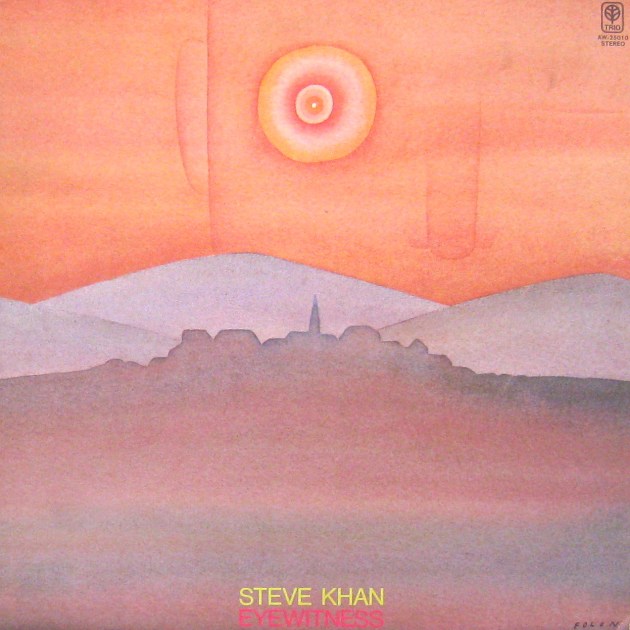
4. Steve Khan: Eyewitness (1981)

Artwork by Jean-Michel Folon

khan

3. King Crimson: Three Of A Perfect Pair (1984)

Artwork by Peter Willis

mi0000023563

2. Donald Fagen: The Nightfly (1982)

Photography by James Hamilton

fagen

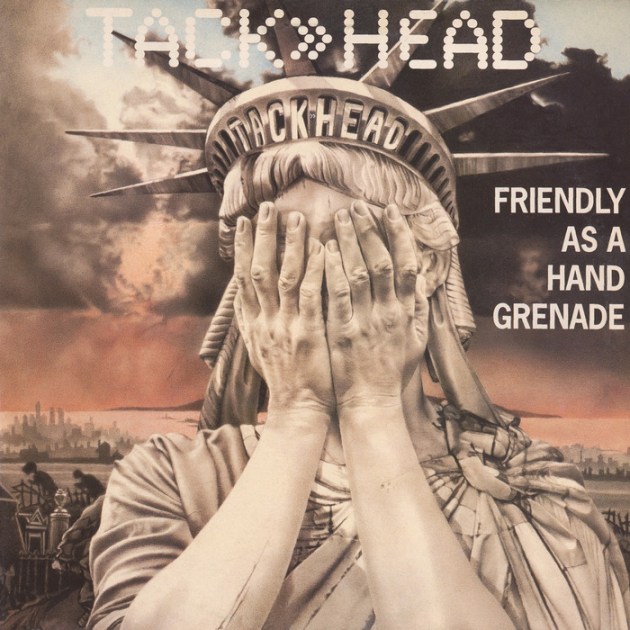
1. Tackhead: Friendly As A Hand Grenade (1989)

Artwork by Gee Vaucher.

tackhead

David Sylvian: Gone To Earth 30 Years Old Today

David sylvian

cover artwork by Russell Mills

Recently, I was honoured to be asked by photographer William Ellis to contribute to his One LP project where he asks musicians, writers and music business figures to speak about the album that has been most important to them.

Here’s what I said about Gone To Earth (with a few edits):

I was given the album by my parents on my 14th birthday. I had heard the single ‘Taking The Veil’ a few weeks before and it had struck me immediately as something I needed to check out. Concurrently, I was getting into Japan, Sylvian’s band from the early ’80s.

But Gone To Earth had a whole new influence: ECM-style jazz. Kenny Wheeler plays some beautiful solos, John Taylor features strongly on piano, and Harry Beckett blows all over ‘Wave’. Back in the mid-’80s, pop music embraced jazz with ease, but now it seems like the two worlds have completely diverged. Sylvian combines both elements really nicely.

When I delved deeper into Sylvian’s lyrics, I realised that they could be related to romantic affairs – there was a ‘pop’ element to them – but they could also be spiritual in nature, about ‘the other’ in general, touching on religious ideas, metaphysical ideas. That concept has fascinated me as I’ve got older.

Side two of Gone To Earth is completely instrumental. Sylvian loathed the term ‘new age’ and instead produced ambient music which was more environmental, geared towards self-reflection and an appreciation of nature. He once said, ‘If I didn’t live in a city, I wouldn’t need to make this music.’

On ‘The Healing Place’, German artist Joseph Beuys speaks about his vision of art. Another track features Robert Graves reciting his poem ‘The Foreboding’. The voice of JG Bennett makes a few appearances, familiar from Fripp’s Exposure.

And then, of course, there’s Sylvian’s voice. I think of it as an instrument. Some people find him a bit doomy, depressing, po-faced, but I’m always inspired by his melodies. He’s also a great, natural musician, very underrated/understated on keyboards and guitar.

The story goes that Virgin didn’t want to fund the second instrumental side. You can imagine, can’t you? They said, ‘This pop singer’s trying to an album of instrumentals? What’s going on?’, even though Bowie had done it ten years before. In this fascinating interview from 1986, Sylvian explains that he had to work on side two in his ‘spare’ time, away from Virgin’s watchful eye. I’m glad he did.

Musically, the album is also a guitarists’ dream: Robert Fripp, Phil Palmer, Bill Nelson and Sylvian himself contribute memorable, considered work. Nelson in particular is a revelation. Sylvian gives him space to sculpt and layer his parts, and he delivers some brilliant solos. BJ Cole adds some dreamy pedal steel.

David Sylvian

In 1988, I saw Sylvian at the Hammersmith Odeon with a great band featuring Mark Isham on trumpet, David Torn on guitar and Steve Jansen on drums. It was tremendously exciting; there was a kind of ‘goth’ element at the gig which surprised me and lots of young women screaming for Sylvian!

He was still holding onto his ‘pop’ status – it’s no mean feat for an 80-minute, half-instrumental album to reach 24 in the charts. It was a time when pop music had a lot more mystique; you had to scan The Face, Wire, NME or Melody Maker to glean any snippets of information about artists of Sylvian’s calibre.

Every time I listen to Gone To Earth, I notice something new. It’s such a layered, beautiful piece of music, almost always to be enjoyed in one sitting, and it came out during an incredibly fertile period for Sylvian – the 1984-1987 run of Brilliant Trees, Gone To Earth and Secrets Of The Beehive surely matches any other artist in ’80s music…

13 Memorable B-Sides Of The 1980s

princeThere was definitely a thing about B-sides in the 1980s.

You never quite knew what you would find on the reverse of your favourite 7” or 12″ – maybe a new direction, bold experiment, engaging curio, self-produced shocker or even the drummer’s long-awaited-by-nobody songwriting debut.

Sometimes a single track encapsulated all of the above…

This writer was never the biggest singles collector in the world, but had to try and hear everything by Prince, Level 42 and It Bites during their peak years. Some B-sides took on a kind of mythic stature and weren’t easy to access: you’d have to cadge from your mates, record things from the radio or trawl the Record & Tape Exchange.

Here’s a motley parade of ’80s backsides, some long-sought-after, some intriguing, some exciting, some fairly random but all inexplicably etched upon my memory.

13. David Bowie: ‘Crystal Japan’ (1981)

Though originally released as an A-side for the Japanese market, this charming instrumental later turned up as the B-side to the ‘Up The Hill Backwards’ single of March 1981.

12. Peter Gabriel: ‘Curtains’ (1987)

Almost every time this ‘Big Time’ B-side rolls around, it produces a slight chill and sense of wonder. One of PG’s most disquieting pieces but with a lovely melody and ambience.

11. Danny Wilson: ‘Monkey’s Shiny Day’ (1987)

The Dundonians are at their most sublimely Steely-ish on this ‘Mary’s Prayer’ B-side. The track’s lo-fi production and slightly low-budget horn section/backing vocals hinder it not one jot.

10. Prince: ‘Alexa De Paris’ (1986)

Prince had always threatened a full-on guitar instrumental and this ‘Mountains’ B-side delivered it. And boy was it worth the wait. Sheila E plays some fantastically unhinged drums (check out how she reacts to Prince’s guitar throughout) and Clare Fischer weighs in with a widescreen orchestral arrangement. The composition is reimagined as a solo piano piece in the movie ‘Under The Cherry Moon’.

9. It Bites: ‘Vampires’ (1989)

The B-side of ‘Still Too Young To Remember’, this glam-prog classic is notable for its crunching riff, catchiness and Francis Dunnery’s most extreme It Bites guitar solo (stitched together from multiple takes?). Pet Shop Boys were definitely listening – this is even in the same key.

8. David Sylvian: ‘A Brief Conversation Ending In Divorce’ (1989)

The accompanying track to one-off 12” single ‘Pop Song’, you get the feeling this microtonal, improvised miniature featuring late great pianist John Taylor was far more up Sylvian’s street than the hits requested by Virgin Records.

7. Donna Summer: ‘Sometimes Like Butterflies’ (1982)

This B-side to ‘Love Is In Control (Finger On The Trigger)’ is a bit of a guilty pleasure. But Summer’s exceptional performance transcends the schmaltz, as does a superb drum performance by…someone (Steve Gadd? Rick Marotta? Ed). Intriguingly, Dusty Springfield covered it in 1985.

6. Level 42: ‘The Return Of The Handsome Rugged Man’ (1982)

This irresistible B-side from the ‘Are You Hearing What I’m Hear’ 12” shows the lads in full-on Weather-Report-meets-Jeff-Beck mode. Drummer Phil Gould even gives Harvey Mason and Billy Cobham a run for their money.

5. Roxy Music: ‘Always Unknowing’ (1982)

This shimmering, beguiling Avalon outtake from the US single version of ‘More Than This’ was surely in competition with ‘While My Heart Is Still Beating’ and ‘Tara’ for an album spot. Beautiful playing from guitarist Neil Hubbard.

4. Donald Fagen: ‘Shanghai Confidential’ (1988)

This ‘Century’s End’ B-side is an intriguing slice of fuzak with lovely chord changes, some tasty Marcus Miller bass and a fine Steve Khan guitar solo. You can even feel Donald smirking slightly when he plays his synth motif.

3. Scritti Politti: ‘World Come Back To Life’ (1988)

The B-side of the ‘Boom There She Was’ 12-inch showcases all the charms of the Provision sound: intricate arrangements, pristine production, bittersweet lyrics and punchy vocals. For many fans, it’s better than a lot of stuff on the album.

2. China Crisis: ‘Animalistic’ (1985)

The Liverpudlians detour into minimalist jazz/funk with some success on this ‘Black Man Ray’ B-side. Gary Daly’s vocals have never been so wryly Lloyd Cole-esque and drummer Kevin Wilkinson is in his element.

1. Willy Finlayson: ‘After The Fall’ (1984)

The A-side, ‘On The Air Tonight’, was recently covered by The Zombies’ Colin Blunstone, but I’ve always had a soft spot for this B-side. Both tracks were written and produced by ex-Camel keyboardist Pete Bardens.

Book Review: Steve Jansen’s Through A Quiet Window

karn sylvian

Mick Karn and David Sylvian, Stanhope Gardens, London, 1981

Ringo Starr was once asked: What do you remember about recording Sgt Pepper’s? His reply? ‘I learnt how to play chess on that album.’

Not to do Ringo down at all – he’s the reason this writer picked up the drum sticks – but the line does say something about the sometimes tedious nature of recording in the era of multi-tracking.

The drummer may have laid down all his parts in the first week of a project, so he or she had better have a Plan B for when the rest of the band are tinkering endlessly.

カバー0720.indd

Japan drummer Steve Jansen didn’t learn chess but he did use his time very productively while the band recorded their masterpieces, Gentlemen Take Polaroids and Tin Drum; he developed his formidable photography skills, and now his work has been collected in a sumptuously-designed hardback book ‘Through A Quiet Window’.

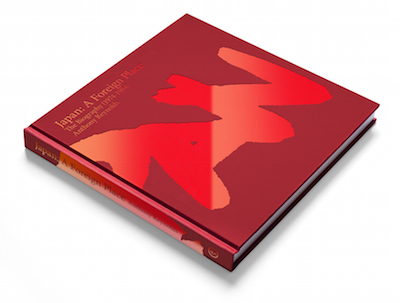
To say that it will appease Japan fans is a total understatement – it makes a brilliant companion piece to Anthony Reynolds’ excellent recent biography ‘A Foreign Place’, and brings the band’s relatively short but very eventful story to life.

We see portraits of the band in all kinds of different locations, mainly between 1979 and 1981: Mick Karn laying down his bass parts at AIR Studios and mooching about Holland Park in West London; David Sylvian lounging in various hotel rooms and recording studios including the Townhouse and the Manor, Richard Barbieri sitting stone-faced at his keyboard or smirking on the tour bus.

There is also a memorably candid shot of Karn and Sylvian at the breakfast table in their Stanhope Gardens flat. We also see fleeting glimpses of producers Steve Nye and John Porter at various mixing desks, often flanked by either Karn or Sylvian.

Jansen’s other musical projects of the time are also beautifully documented, including various Japanese sojourns featuring Ryuichi Sakamoto, Masami Tsuchiya and Akiko Yano.

JAPAN_1 (1)

Richard Barbieri, Mick Karn and David Sylvian, South Moulton Street, London 1981

While there are a lot of laughs about, the overall impression is of a very insular bunch of guys, extremely dedicated to their music but also their friendships. No real surprise there, then, but the intimate nature of many photos is very refreshing.

Steve Jansen demonstrates the same precision and natural sense of timing behind the camera as he always does behind the kit. And there are some cracking hairstyles on show too. Highly recommended.

‘Through A Quiet Window’ is available from Artes Publishing.

Japan: A Foreign Place

japanIt’s only befitting that Japan – a groundbreaking ’80s band who undeniably put a big emphasis on surface and style – should be rewarded with Anthony Reynolds’ glossy, beautifully-designed biography.

To paraphrase an old joke, when I got ‘A Foreign Place’ in my hands I didn’t know whether to read it or frame it. It comes with a weighty, thick binding and a glorious cover featuring the band’s characteristic logo.

It’s also packed with many fantastic photos, almost all of which were new to this correspondent. Many of them even appear to show David Sylvian smiling…

Mick Karn and David Sylvian, Toronto, 24th November 1979

Mick Karn and David Sylvian, Toronto, 24th November 1979

But what of the book’s content? Though it will satisfy the most information-starved Japan fan, with detailed commentaries on the band’s music and relationships, it also works very nicely as a portrait of the wider late-’70s/early-’80s music scene: Giorgio Moroder, Ryuichi Sakamato, Simon Napier-Bell, Gary Numan and David Bowie make regular appearances.

Though the band were, critically, a laughing stock up until the Quiet Life album in 1979, it’s often forgotten quite how out of place they always were in the UK pop firmament.

From androgynous glam-rockers to glacial art-popsters, Japan resolutely stuck to their own guns and, by the time of their split in 1983, had become probably the most influential group of their era.

Sylvian and Barbieri, The Oxford Road Show, November 1981

Sylvian and Barbieri, The Oxford Road Show, November 1981

Reynolds expertly builds up a lucid picture of South-East London in the 1970s with its racial/cultural/class divisions and dodgy schoolmasters.

The brothers Batt (soon to be rechristened David Sylvian and Steve Jansen) hooked up with schoolmate Andonis Michaelides (soon to become Mick Karn) to jam and write songs.

Reynolds reveals some of Japan’s more outré musical influences (Stanley Clarke, Chick Corea, Aynsley Dunbar) and also that their early material was full of Sylvian guitar solos.

Jumping forward a bit, we get many gossipy revelations: Sylvian’s toe-curling audition for legendary manager Simon Napier-Bell, Gary Numan’s frequent stalking and also Japan’s early (and uniformly bad) experiences on the live scene of the late-’70s, supporting the likes of Blue Oyster Cult.

Though the band were all resolutely straight, onstage they were subjected to constant homophobic comments and a barrage of missiles. Reynolds reveals that Black Sabbath guitarist Tony Iommi had a real thing for Sylvian, pestering Napier-Bell for an introduction, not realising Sylvian wasn’t a ‘chick’. But this surely wasn’t the first time Sylvian had been mistaken for Brigitte Bardot.

Japan, November 1982

November 1982

Japan’s pop breakthrough is expertly handled, Reynolds spelling out in great musical detail how Sylvian’s emergence as a high-quality songwriter fused with Richard Barbieri’s canny synth programming and the stunning Karn/Jansen rhythm section to finally produce some music of worth.

But success had come at a great cost; the band had completely grown apart, not helped by Karn’s girlfriend moving in with Sylvian on the eve of an important tour.

This Kickstarter project has clearly been a labour of love but ‘Japan: A Foreign Place’ punches way above its weight with in-depth interviews, sumptuous design and anecdotes aplenty.

Occasionally, the text has a repetitious, ‘cut and paste’ quality, but this is a minor quibble. It’s hard to imagine that anyone will ever write a better book about one of the key bands of the ’80s. Highly recommended.

‘Japan: A Quiet Place’ is published by Burning Shed.

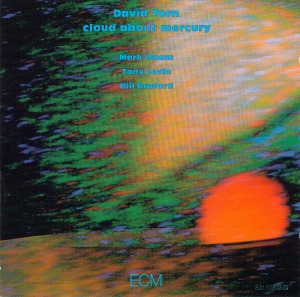
ECM Goes Rock: David Torn’s Cloud About Mercury

Cloud_About_Mercury

The late ‘80s was a great period for avant-garde guitar playing with the likes of Vernon Reid, Reeves Gabrels, Adrian Belew, Arto Lindsay, Fred Frith, Dave Fiuczynski, Stevie Salas, Sonny Sharrock, Skip McDonald, Robert Quine, Steve Vai and Bill Frisell laying down some seriously mind-bending tones and textures.

Cloud About Mercury, David Torn’s second ECM solo album, definitely put him into the same league. Though just as influential as many of the aforementioned guitarists, he has never really gained as much of a public profile despite occasional solo albums and stellar sideman work with the likes of David Bowie and David Sylvian.

My dad used to get sent a lot of music for his work and I vaguely remember him passing Cloud About Mercury onto me, knowing I was a big fan of early-’80s King Crimson.

My muso mates and I quickly grew to like the album’s perverse musical concepts and silly song titles. With a superstar avant-rock rhythm section of Bill Bruford and Tony Levin on board, it came on a bit like the follow-up to Crimson’s Three Of A Perfect Pair, but also offered a strikingly original take on jazz/rock.

I recall a contemporary review of Cloud About Mercury in Q magazine which said something like: ‘Torn luxuriates in the silence for a bit…and then goes KRAOOOOOOW!’ But in its louder moments, CAM is definitely one to annoy the neighbours. Torn’s Trans-Trem guitar enables him to create some very novel effects and original lines, with micro-tones and Middle Eastern flavours, and you can really get lost in his ambient loops.

CAM is also a very uncharacteristic ECM album, being much more in-your-face and rockist in its mixing and playing than most of the label’s output. In fact, it’s not really fair to judge it as a ‘jazz’ album at all.

But sometimes Torn seems much happier playing solo or in duet with Isham; his superb rhythm section is underused, and the tunes rely too heavily on one-chord improvisations. Consequently Bruford and Levin sound somewhat muted and can’t quite bring the sort of forward-motion dynamics so crucial to jazz/rock.

Torn toured extensively to promote CAM (but presumably not London or I surely would have been there…) with ex-Japan bass player Mick Karn replacing the unavailable Tony Levin. An excellent decision, both musically and commercially.

The band sounded fantastic and the tunes really came to life. Torn and Isham then accompanied David Sylvian on the ‘In Praise Of Shamen’ world tour which I caught at the Hammersmith Odeon in 1988.

Two quick questions to end, prompted by a discussion with my brother about Torn the other day: why isn’t there any music like this around these days? Or is there?