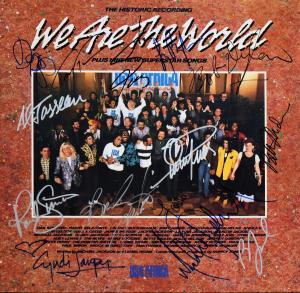
USA For Africa: We Are The World @ 40

Released 40 years ago this month and officially the fastest-selling single in American music history, USA For Africa’s ‘We Are The World’ shifted over 20 million copies and raised a huge amount of money for African famine relief.

Co-written by Michael Jackson and Lionel Richie during a few sessions at the former’s house in Encino, the song divides opinion but only the hardest heart could fail to be moved by its recording (even if one can definitely feel the vibe of some major agent/star power – no arriving in the manager’s battered old car for this lot…).

It brought together a fairly astonishing cast list of the great and good. And, inadvertently, it also arguably represented a last gasp for classic 1980s R’n’B and yacht rock.

The basic track was recorded at Kenny Rogers’ Lion Share Studios on 22 January 1985 with king-of-the-cross-stick John ‘JR’ Robinson on drums, bassist Louis Johnson and pianist Greg Phillinganes, closely monitored by a huge press corps, co-producers Quincy Jones and Michael Omartian and engineer Humberto Gatica. According to Robinson, all the musicians were sight-reading a chart and a click track was used, and they didn’t do more than two takes.

A few days later, Lionel sat down with Quincy and vocal arranger Tom Bahler to prep who would sing which lines (the decision was also made to mainly record vocals live and ‘in the round’ with no or at least very few ‘punch-ins’, unlike ‘Do They Know It’s Christmas’). All the major vocalists were then sent a copy of the basic track featuring Jackson’s guide vocal and with an enclosed letter from Lionel.

The featured singers then assembled at A&M Studios at around 9pm on Monday 28 January, most arriving after the American Music Awards (which Richie hosted). Notable absentees: Madonna (who was apparently bumped in favour of Cyndi Lauper), Prince (check out Duane Tudahl’s superb book for the details), George Benson, Dolly Parton, Donna Summer, Michael McDonald, Pat Benatar, Rod Temperton, Stevie Nicks, Joni Mitchell, Billy Idol? And is it odd that Smokey Robinson didn’t sing a solo line?

The complete footage of the recording session is still fascinating. We see how some of the biggest names in music history found different ways of preparing. Steve Perry waits for his line with eyes shut, looking down, listening intently. Diana Ross does just the opposite.

Bob Geldof gives a stirring pep talk and Stevie Wonder brings in two Ethiopian women to address the singers, moving many to tears. It’s hard not to be touched by Stevie, Kenny Rogers, Dionne Warwick, Diana, Steve Perry, Ray Charles and Cyndi Lauper’s vocals. But Harry Belafonte, Ray Charles, Bob Dylan and Bruce Springsteen seem to get the most respect from the assembled stars.

Other observations: Brucie – who had finished the latest leg of the Born In The USA tour the night before – looking like Judd Nelson in ‘The Breakfast Club’. Al Jarreau struggling throughout. Lionel the team player. Stevie giggling like a naughty schoolkid when Quincy gets annoyed. James Ingram hiding behind Kenny Rogers after a boo-boo.

Paul Simon twice saying to Rogers: ‘Can I help?’ Lauper sharing vocal tips with Kim Carnes. MJ holding hands with Diana and Stevie. Quincy and Stevie rehearsing with Bob Dylan. Stevie and Ray Charles using their braille machine. Quincy reading the score as he conducts the soloists, and his witty asides: ‘Who you gonna call?’ etc.

It looks like they recorded the first half of the song first (up to and including Daryl Hall) and then spent some time on the middle eight with Huey Lewis, Lauper and Carnes.

How does it sound now? Phillinganes’ piano playing is a pleasure to hear, typically tasty and gospel-inflected. But the track is inundated with synths – no less than four players are credited, including David Paich and Steve Porcaro from Toto – and probably why it reminded many of a Pepsi ad.

And it’s odd that the song features no guitar, though Prince offered to play a solo – Quincy reportedly told Prince’s manager Bob Cavallo: ‘I don’t need him to play guitar, we got f*ckin’ guitars’!
1980s Soul: 14 Lost Classics

It’s highly unlikely that any critics’ poll of the greatest soul albums from the last 70 years would include anything from the 1980s, save possibly for a Diana, Anita Baker, Terence TD or Bobby Womack outlier.
There was the odd huge-selling ‘crossover’ album (Can’t Slow Down, Thriller, Whitney Houston) but arguably the decade didn’t produce a What’s Going On or Songs In The Key Of Life.

Classic soul fans generally became used to poor-to-middling album packages, with the requisite two or three-star reviews and complaints about too many producers and underwhelming material. The greats of the ’60s and ’70s also sometimes struggled to move with the times, getting hamstrung by technology and/or unsuitable collaborators.

But my goodness there were some superb tracks, particularly between 1980 and 1985, an interesting period when Classic Soul drew from Yacht Rock and Jazz/Funk. However, these songs tended to get quickly forgotten and/or ignored. In the late-’80s, ’90s and noughties, enterprising indie labels put together fondly-remembered compilations (Mastercuts, StreetSounds) that brought these tracks back for a small but very enthusiastic audience.

But the beauty of streaming services is that we can compile these beauties to create one sh*t-hot album, so I have, here. This has been my go-to playlist during lockdown. Forget the talent-show wannabees – these vocalists have serious pipes, and the songwriting and arrangements are top-class too. Here’s a small selection of lost classic soul tracks from the 1980s:

14. Johnny Gill: ‘Half Crazy’ (1985)
Co-written by legendary Philly wordsmith Linda Creed (‘Betcha By Golly Wow’, ‘People Make The World Go Round’), this was the lead-off track and first single from Gill’s second album and still sounds like a bona fide soul standard today. It was a long way from New Edition for Johnny, though he was just 18 years old when he recorded it. Scary…

13. Teena Marie: ‘My Dear Mr Gaye’ (1984)
Moving tribute to Marvin from the less-than-excellent album Starchild, featuring a string arrangement by Motown mainman Paul Riser and a groovy change of pace in the middle of the tune.

12. Carl Anderson: ‘Buttercup’ (1985)
Stevie Wonder-penned minor classic from a little-known vocalist who recorded many solo albums before his death in 2004, but was probably best known for his portrayal of Judas Iscariot in the Broadway and film versions of ‘Jesus Christ Superstar’.

11. Gladys Knight & The Pips: ‘Bourgie Bourgie’ (1980)
Just check out co-writer (with Nick Ashford) Valerie Simpson’s gospel-tinged piano playing on this – absolutely fabulous. And Gladys’s super-funky vocals are perfect. It’s adapted from a 1977 Ashford & Simpson instrumental.

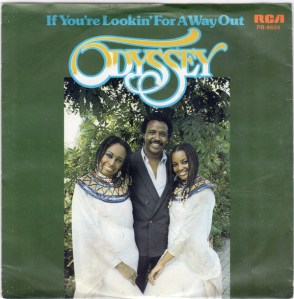
10. Odyssey: ‘If You’re Lookin’ For A Way Out’ (1980)
Heartbreaking ballad written by Ralph Kotkov and superbly sung by Lillian Lopez. Made #6 in the UK singles chart.

9. Millie Jackson: ‘This Is It’ (1980)
Now THIS is how you kick off a soul album. A hilarious eight-minute tour-de-force that aims to get men squirming in their seats. Remarkably, it’s also officially a Kenny Loggins/Michael McDonald composition.

8. Chris Jasper: ‘Superbad’ (1987)
Great song from long-time keyboard player of The Isley Brothers. A socially-conscious lyric looking at the value of inner-city education and the kind of tune Stevie should have been producing in the mid-’80s.

7. Diana Ross: ‘Cross My Heart’ (1987)
Superb, catchy song, written by frequent Leonard Cohen collaborator Sharon Robinson, and Diana’s vocals are just gorgeous. From the otherwise fairly uninspired Red Hot Rhythm And Blues album.

6. Leon Ware: ‘Why I Came To California’ (1982)
Cool mixture of soul, jazz/funk and yacht rock, an ode to the West Coast with a top-drawer rhythm section of Chuck Rainey (bass) and James Gadson (drums) and vocals from Manhattan Transfer’s Janis Siegel. But who plays the great sax solo? Seems impossible to find out…

5. SOS Band: ‘Weekend Girl’ (1984)
More evidence that producing/songwriting team Jam & Lewis were going to be arguably THE musical force of the decade, a gorgeous, upwardly-mobile, mature ballad that has the same kind of grandeur as one of Chic’s slow-burners.

4. Patti Labelle: ‘If Only You Knew’ (1983)
Just…wow. Killer ballad co-written by Kenny Gamble and Dexter Wansel which reached #1 on the Billboard R’n’B chart. Super arrangement too, emphasised by the unexpected key change going into the first verse.

3. Bobby Womack: ‘Games’ (1983)
‘You see, I like all kinds of music – no favourites!’, Bobby proclaims at the beginning of this superb track, then demonstrates it with a lovely little nod to Wes Montgomery’s guitar style.

2. Phyllis Hyman: ‘Why Did You Turn Me On’ (1983)
A hint of Rod Temperton about this catchy Narada Michael Walden-penned mid-tempo smoocher, showcasing Hyman’s giant voice to great effect. Sadly the Philly soul legend took her own life in 1995.

1. Terence Trent D’Arby: ‘As Yet Untitled’ (1987)
Ambitious accappella piece from Terence’s classic debut album, with a vocal nod to Sam Cooke but also featuring some stirring sounds purely of his own creation.


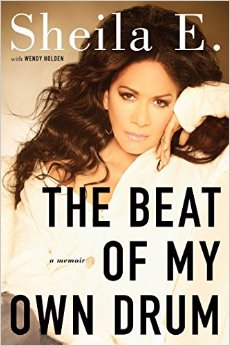
Book Review: Sheila E’s The Beat Of My Own Drum

sheila eConsidering he was such a huge star and cultural icon, it’s surprising that Prince’s eventful life and sad death has yet spawned so few ‘kiss and tell’ memoirs.

Let’s hope it stays that way. But while his long-time musical partner and one-time fiancée Sheila E certainly doesn’t shy away from sharing her memories of him in her fine autobiography ‘The Beat Of My Own Drum’ (co-written with Wendy Holden), those recollections form only a small part of a very rich, diverse collection of portraits.

After all, Sheila has played percussion and/or drums with some of the all-time greats: Carlos Santana, Herbie Hancock, Marvin Gaye, George Duke, Lionel Richie, Tito Puente, Diana Ross and Billy Cobham, not forgetting her father Pete Escovedo.

But while there are plenty of tasty music biz anecdotes, the book also provides a fascinating portrait of growing up in a mixed-race family (her mother is African-American and father Mexican) in a less-than-salubrious section of Oakland, California.

Sheila paints a rich picture of a seemingly happy childhood based around music, dancing, sports (she is apparently a pretty useful football player), charity and community, with shared cultural references such as The Carpenters (Sheila was hugely inspired by seeing Karen on the TV), Sly and the Family Stone and The Jackson 5, though there also some racial tensions around too.

But then the book goes in a completely different, unexpectedly harrowing direction when she chronicles the sexual abuse suffered as a young girl at the hands of several cousins. The section rivals James Rhodes’ recent book ‘Instrumental’ in its shocking candour.

Thankfully, if anything, the abuse drives her ambition rather than beats her down, though she admits to seeing it as a dark secret that clouds the rest of her life.

There are fascinating anecdotes about travelling to Colombia at the age of just 15 to play percussion with the Latin/fusion supergroup Azteca. Cobham, Duke and Gaye are mainly described in glowing terms, almost as father figures, and she is unexpectedly candid about her romantic and musical infatuations with Santana. There’s also a hilariously mismanaged backstage ‘meeting’ with Diana Ross.

But it’s easy to forget just how unique Sheila’s talent was in the 1980s when she made it as a ‘pop star’. We had never seen a percussionist/singer/dancer triple-threat before, as she herself points out, and Latin celebrities were very rare.

This pop period is grippingly covered in the book, with tales of disastrous video shoots, crazy tour schedules and much celebrity hobnobbing. Escovedo also very nicely juggles the spicy anecdotes with some genuine, intelligent advice for the modern musician, and just enough technical stuff about playing drums and percussion too.

Sheila also discusses her project Elevate Hope Foundation which focuses on music therapy for victims of child abuse, a noble and important program which continues to go from strength to strength.

So if the last quarter of ‘The Beat Of My Drum’ reads more like a self-help book than a famous musician’s autobiography, we can surely cut her some slack. Highly recommended.