Essential 1980s Jazz/Rock Albums (Part 1)

1980s jazz/rock generally gets the side-eye these days.

But it wasn’t all the Chick Corea Elektric Band prancing around the stage in tracksuits or pitiful WAVE-style smooth jazz.

The 1970s jazz/rock pioneers were mostly going strong and if some were too tempted by synths and drum machines, the best music was made by sticking pretty rigorously to the tried-and-tested real drums/bass/guitar/keys lineup favoured by Miles, Weather Report, Return To Forever et al.

So here’s a selection of 1980s jazz/rock albums that have consistently gripped movingtheriver, most of which he queued up to buy at the HMV or Virgin Megastore, or found in an Our Price bargain bin. (These are not proggy or funky. So no Herbie, Brecker Brothers, David Sanborn or David Torn, but there are elements of R’n’B/Latin/soul/whatever mixed in with the jazz).

Bireli Lagrene: Foreign Affairs (1988)
Just 21 years old when he recorded it with producer Steve Khan, the French guitarist’s second Blue Note album is a cohesive gem and massive improvement on the debut, with terrific contributions from keyboardist Koono and drummer Dennis Chambers.

Ornette Coleman: Virgin Beauty (1988)
One of the most ‘accessible’ albums of the master’s career, with memorable melodies, a brilliantly expressive bassist (Al McDowell) and some decidedly odd guest appearances from Jerry Garcia.

Tribal Tech (Scott Henderson/Gary Willis): Nomad (1988)
Recorded in April 1988 but not released until early 1990, guitarists were rightly wowed by Henderson’s brilliance, a mixture of Michael Brecker, Allan Holdsworth and Stevie Ray Vaughan, while the rhythm section is groovy and propulsive and both Henderson and Willis’s compositions are excellent. And ‘Tunnel Vision’ may feature the perfect guitar solo…

John McLaughlin: Mahavishnu (1984)
OK there are some question marks in the keyboard and sax departments, and a few mediocre tracks, but Billy Cobham has rarely sounded better and John contributes three or four classic compositions and a few brilliant solos to this reunion album of sorts.

Marc Johnson’s Bass Desires: Second Sight (1987)
Wonderful interplay between guitarists John Scofield and Bill Frisell, plus some classic compositions including Scofield’s surf-rock-meets-jazz ‘Twister’, Frisell’s Monk-like ‘1951’ and Johnson’s moving ‘Hymn For Her’.

Larry Carlton: Last Nite (1987)
Guitarists of all stripes were blown away by Carlton’s playing in the 1980s, and here’s the best evidence, captured live at LA’s Baked Potato club with Alex Acuna, Abe Laboriel and JR Robinson.

Human Chain: Cashin’ In (1988)
This Brit jazz/rock classic, released on EG Records, had elements of the Canterbury sound, West Coast cool jazz, English folk music and 1980s Weather Report, featuring Django Bates’ fantastic keys and French horn and some weirdly impressive guitar and fretless bass from Stuart Hall (who he?). Also injects a healthy dose of much-needed humour to the ’80s jazz world.

Hiram Bullock: Give It What U Got (1988)
All the fun of the fair from this gifted but troubled guitarist: raunchy funk/rock, instrumental Steely Dan, Brecker Brothers horns, classic fusion and an Al Jarreau guest appearance on a Sam Cooke tune, but all shot through with jazz chords and Hiram’s lyrical playing.

Ronald Shannon Jackson: Mandance (1982)
Ornette-style harmolodics and Mingus-like ensemble work meet NYC punk-jazz on the drummer’s intriguing and powerful album, recorded live in the studio, featuring future Living Colour axeman Vernon Reid.

Weather Report: Sportin’ Life (1985)
It was a toss-up between this and Night Passage, both classics, but this gets the nod courtesy of the newly-minted rhythm section of Omar Hakim and Victor Bailey, plus a few classic Wayne Shorter tunes including ‘Face On The Barroom Floor’ which reportedly Joni Mitchell was particularly smitten by.

Wayne Shorter: Atlantis (1985)
Wayne again, fronting this fascinating, complex song-cycle featuring Alex Acuna on drums and Joni’s husband Larry Klein on bass. Takes some time to digest, but like a good wine gets better every year.

Allan Holdsworth: Secrets (1989)
A toss-up between this and Metal Fatigue, this gets in because of his delicious guitar tone and the inspired contributions of drummer Vinnie Colaiuta – ‘City Nights’, ‘Spokes’, ‘Peril Premonition’ and ‘Joshua’ are musical landmarks. Fiery, exciting, unmissable.

Steps Ahead: Modern Times (1984)
Messrs Brecker, Erskine, Mainieri, Gomez and Bernhardt were embracing some new technology but they never let it overshadow the mostly excellent compositions with telling solos, particularly from Brecker.

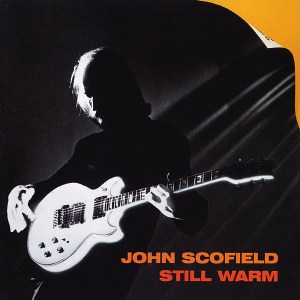
John Scofield: Still Warm (1985)
Take your pick between this, Blue Matter and Loud Jazz, all fantastic pieces of work, but Still Warm gets the nod courtesy of its dynamite rhythm section (Darryl Jones and Omar Hakim) and arguably John’s best writing of the ’80s.

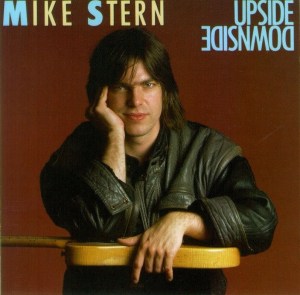
Mike Stern: Upside Downside (1986)
Produced by Hiram Bullock and featuring a crack band including Dave Weckl on drums, it showcases Stern’s finest/fieriest playing on record to date and also one of Jaco Pastorius’s last notable appearances. Still the best Stern solo album and quite extreme in its own way.

(If you’re new to any of these albums and they float your boat, please consider buying physical copies to support the artists.)

The John Scofield Interview: Sco in the ’80s, from Miles to Blue Matter

You could put forward a pretty good case that John Scofield was THE guitarist of the 1980s.

Probably best known for his incendiary playing in Miles Davis’s band between 1982 and 1985, he also enjoyed a distinguished solo career.

Whilst focusing on straightahead jazz during the early part of the decade, his stellar ‘fusion’ period between 1984 and 1988 – encompassing classic albums Electric Outlet, Still Warm, Blue Matter, Pick Hits Live and Loud Jazz – featured excellent original compositions and formidable players such as David Sanborn, Don Grolnick, Omar Hakim, Darryl Jones, Dennis Chambers, Hiram Bullock and George Duke.

In the meantime Sco was much in demand as a sideman, playing with everyone from Terri Lyne Carrington to Tommy Smith (this playlist gathers some of his greatest music of the 1980s) whilst also teaming up with fellow guitarist Bill Frisell, drummer Peter Erskine and bassist Marc Johnson in the latter’s Bass Desires project that produced two classic albums on ECM Records: Bass Desires and Second Sight.

Immediately recognisable with his chorus/overdrive sound and molten, legato style – always informed by the blues – Scofield’s solo career has since gone from strength, and we now find him ensconced in a highly productive spell on ECM, his latest album being Uncle John’s Band.

movingtheriver caught up with John to talk about his wonderful 1980s as he prepared for a European tour with keyboardist John Medeski – he’s ever the road warrior and seems full of energy and good humour.

MTR: I’d love to know a little about how/when you signed with Gramavision Records, and did you consider other options for your mid-‘80s solo career such as ECM?

JS: I signed with Gramavision shortly before I recorded Electric Outlet. They were very interested and made us a good deal when no one else had contacted me. After I met (ECM founder/producer) Manfred Eicher at the Bass Desires recording session he expressed interest but I had already signed a multi-record contract with Gramavision. After that I stayed with other New York-based companies (Blue Note and Verve) because I met those people here at home and they were major international labels. I’m quite happy now that I’ve found a home at ECM that is aligned with my current musical direction.

Drummer Steve Jordan plays some wonderful stuff on Electric Outlet – was he overdubbed at the end after you’d tracked everything with a drum machine?

Yes, exactly. I had bought a Roland drum machine and used it to make a four-track demo at home with me playing guitars and bass. I recreated that in the studio and had Steve overdub on all the tunes. He was incredible and nailed them so quickly. We’d played together a bit before – he was on my Who’s Who album in 1978.

I’m fascinated by the work you did with saxophonist George Adams during the 1980s, especially More Sightings (1984) – can you tell me how that came about?

I had played with George in New York on gigs with the Gil Evans Orchestra and then did a tour and album as a guest with the George Adams/Don Pullen band. Then George wanted to do the tour with Hannibal Marvin Peterson. They invited me and we ended up recording a live show in Zürich. I loved George’s playing and we were friendly. I even got him to come in to record with Miles for Columbia in 1983, but it seems that that recording session was lost somehow. I believe it was at The Hit Factory on Broadway. When they were putting together some CBS tapes for reissue, I was told by Michael Cuscuna that they didn’t find anything from that session… That’s all I know. It was Miles‘s band but with George on saxophone. (Adams is understood to have guested with Miles’s band in the studio on 16 June 1983 and also in concert at the Avery Fisher Hall in NYC on 26 June 1983, and was also part of the big band which played with Miles at Montreux in 1991 – Ed.)

Is it true that Kenny Kirkland was supposed to play keyboards on Still Warm but didn’t show at the last minute? And please tell me how the fabulous Omar Hakim came to play on the album.

Yes, Kenny was a friend and I was lucky enough to get to play with him a bunch, but somehow he didn’t show up at rehearsal so I asked Don Grolnick. I think Kenny just had his dates mixed up maybe? I’m not sure. It was a real loss that he died so young. Omar and Darryl Jones were playing with Sting at that time and I knew Omar although I had never played with him but I thought that he and Darryl could really lock it in. They sounded fantastic together.

So was Still Warm recorded just after you left Miles?

I think it was before the last tour. The last stuff I did with Miles was later in the summer in Europe and then Japan.

How much rehearsal time did you get with the bands in general for Still/Blue/Loud? Or did you give the band demos to learn in advance? Because a few of these compositions are treacherous, I’m thinking of stuff like ‘Trim’ and ‘Loud Jazz’ – how did Dennis learn them (he famously doesn’t read music – Ed.)?

For Still Warm, I think we probably had one rehearsal, then one in the studio. I think I made demos of the tunes to give everybody, but I can’t remember. By Blue Matter and Loud Jazz we were a working band. I had been playing some of the Blue Matter songs with a different keyboardist and drummer along with Gary Grainger. Gary recommended Dennis and I guess he learned the songs at rehearsal. Maybe I made demos… I just remember Dennis trying a go-go beat on ‘Blue Matter’ which I hadn’t tried before. I think I wrote that song just before the session and had never played it live. Then we played a week at Fat Tuesday before going into the studio with Dennis and Mitch Forman. For Loud Jazz, we rehearsed but also played the tunes live on tour before the recording.

Regarding producer Steve Swallow’s role, did he select material? The albums have stood the test of time so well because they’re generally free of 1980s production clichés.

Steve has been a friend and mentor to me since the ‘70s. He was interested in production and multi-track recording and I knew he would be great at it. Although he didn’t select the material, he probably helped me with selecting my own tunes. He was really involved in mixing and had suggestions for the arrangements. Because Gramavision had their own studios, we were allowed to mix for many hours and treated mixing more like we would for a pop record. We were really lucky to have the great engineer Joe Ferla, to whom we deferred for many of the mix ideas. Along with Steve, he was responsible for the sound.

Can you tell me a bit more about the tune ‘Gil B643’ – presumably it’s a tribute to Gil Evans? And was the title at all influenced by the movie ‘THX 1138’?

B643 was Gil‘s apartment number! We lived at the same building in Manhattan.

I’d love to know a bit more about ‘Picks And Pans’ and its 6/8 feel, it strikes me that it’s a very influential tune in ‘fusion’ but was it influenced by Joe Zawinul’s ‘The Juggler’ (from Weather Report’s Heavy Weather)?

I liked Joe’s tune but I don’t think I got the beat especially from that…but there were other examples of that kind of beat. Probably lots of them. Maybe it first came from Afro-Cuban music like Mongo Santamaria’s ‘Afro Blue’. Or you can take a jazz waltz and just put a backbeat in there!

Which is your favourite of the two terrific Bass Desires albums and why?

I can’t say that I really have a favourite, but I just remember the chemistry for the first record was really exciting and it was great when we realized we could play together and that the group had a different sound, largely because of Bill Frisell and his unique approach. Also the sound with the two of our styles working together. That’s not to take anything from Marc and Peter, who really contributed so much and brought in material and if it weren’t for Marc having the idea of putting us all together, it would never have happened. I remember we played some gigs together before we went in the studio as well as rehearsing. I think we played a strange cabaret club in New York City. I can’t remember the name of the place and we probably also played a gig in Boston as well before we went into the studio with Manfred Eicher.

How did Dennis Chambers and Gary Grainger come onboard for the Blue Matter band – did you headhunt them, did they audition, or a bit of both?

I was looking for an electric bass player and my friend, the keyboard player Marc Copland, recommended Gary who he had played with in Washington DC. He said Gary could play anything on electric bass and it turned out he was absolutely correct. I then played with Gary in another configuration and he recommended Dennis. Gary and Dennis grew up together in Baltimore and were old friends. I had heard about Dennis with The P-Funk All Stars and was so surprised to learn that he was looking to play more jazz/fusion. Actually, Darryl Jones had played me a great board tape and said, ‘Isn’t this drummer fantastic?’ But we didn’t know who it was. I found out later that it was Dennis so I was a fan already even though I didn’t know it!

Hiram Bullock is an inspired rhythm-guitar choice on Blue Matter – was he a Steve Swallow recommendation?

No, I knew Hiram was great. I knew him from the New York scene and we were friends. I wanted rhythm guitar on that one track and I thought he would do a better job than I did – I think he did.

Was ‘Blue Matter’ influenced by Miles’s ‘Tutu’ (composed by Marcus Miller)?

I just had a generic triplet-ish backbeat in mind. It had no relation to ‘Tutu’ – not at all. ‘Tutu’ sounds a bit like (Burt Bacharach tune) ‘The Look Of Love’, right?!

How did you achieve the final minute of ‘Time Marches On’ where you solo over that ‘drone’ – was it a slowed down tape loop?

No, we just did it in real time.

I’d love to know your favourite guitarists of the 1980s, any genre…

Mainly I liked the jazz guys Wes Montgomery, Jim Hall, George Benson, Pat Martino. But I always loved the blues guys starting with Hendrix and Clapton back in the ’60s, plus Otis Rush, Albert King and BB King. I always admired my contemporaries Metheny, Stern, Frisell, Abercrombie, Mick Goodrick… I went in the fusion direction because of my experience with Miles. If it wasn’t for him, I probably would’ve been just playing bebop and giving guitar lessons!

The only time I saw the Blue Matter band in London was a really weird but brilliant gig in the East End in summer 1987 I think, maybe it was called the Mile End Theatre? Do you remember that? And in general do you have good memories of touring the UK and Europe?

Was that the Half Moon Theatre? I’ll never forget the gig. The late John Cumming brought us to London and I played many gigs subsequently for him. Maybe it was my first one in London as a leader? Not sure? That band was so strong. We really had some success in UK/Europe in those days.

Did Miles ever give you feedback on your 1980s solo career, or did you ever seek it out?!

I know he liked my tunes because I wrote ‘You’re Under Arrest’ for him and gave him a demo of a bunch of other stuff, some of which ended up on my records. He said he was gonna record everything but then when I quit the band in order to go out on tour with Blue Matter, I didn’t get a chance to do any of that with Miles. He had moved on to Tutu. I remember I played him some of Blue Matter for him once and he was really blown away by Dennis’s playing…

Finally, how do you look back on your 1980s career in general? Was it a great era for guitar-based music?

It was an incredible time. It was great because of getting to play with Miles and all the exposure it got me, and then starting my own career, playing funk/jazz with those guys. I was so influenced by Miles and his direction in the ‘80s. But, for me, Weather Report and Herbie’s Head Hunters were the greatest. I think it was a really good era for guitar when you think of Holdsworth, Stern, Metheny, Robben Ford and so many more. And of course the classic rockers like Clapton and Beck were around. Pop music in general had some pretty hot-shot guitar stuff in there, and funk was really everywhere. Thanks to Sly…

Thanks John and good luck on the European tour…

John Scofield at the Cape Town Jazz Festival, 2003. Photo by William Ellis

Special thanks to William Ellis, George Cole and Jan Lohmann for their help with this piece.

Bill Bruford: The Comeback

Pop musicians make comebacks all the time – in jazz or jazz/rock, it’s almost unheard of.

Reading King Crimson/Yes/Genesis/Earthworks drum legend Bill Bruford’s fine autobiography, there was no doubt he’d had his fill of the music business when he officially retired from performance on 1 January 2009 (his last headlining gig took place the previous July).

Away from the kit, in recent years he’s achieved a PhD from the University of Surrey, curated an excellent YouTube channel and released the occasional reissue or compilation, the latest of which is The Best of Bill Bruford.

But, as they say in sporting circles, you’re a long time retired. So it’s thrilling to report that Bruford is making tentative steps back to public performance – in a recent interview he described his return to playing as ‘explosive, unexpected, and very sudden’.

He turned up at the John Wetton tribute gig last year, performing ‘Let’s Stick Together’ alongside Phil Manzanera and Chris Difford, and now he’s joined up with his old drum tech, German ex-pat guitarist Pete Roth, plus bassist (usually on acoustic but here on electric) Mike Pratt, for some low-key trio gigs.

His recent show at the 606 was the busiest your correspondent had seen Chelsea’s treasured jazz club for years. Roth’s website describes his music as ‘jazz without borders’, and it’s a pretty good summary – they generally avoid fusion clichés like the plague, sounding more like John Abercrombie’s organ trio than anything Bruford recorded with Allan Holdsworth.

His kit was a return to his youth – two tom-toms, angled snare, two cymbals. And he still has that prodigious, propulsive technique on the hi-hats and ride cymbal, even if his snare drum no longer particularly has that distinctive ‘clang’.

‘Billie’s Bounce’ featured Bruford’s trademark figures between the tom-toms and snare drum, and Roth’s organ patch and octave pedal were a novel touch. ‘How Insensitive’ developed from a freeform rubato opening into an Abercrombie-esque mood-jazz piece, though Pratt’s strident bass seemed a little out of place.

‘If Summer Had Its Ghosts’, first recorded by Bruford with Eddie Gomez and Ralph Towner, meshed odd-time fun with the blues, Roth’s guitar at its more Scofield-like. ‘Summertime’ came with a tricky vamp which Pratt and Roth rushed somewhat – never a problem for Bruford, while a section from Dvořák’s Symphony No. 9 was a slowburn success. Meanwhile band composition ‘Trio of Five’ (or was it ‘Fun’?) was another attractive if a little harmonically inert, vamp-based piece in their favourite 5/4.

Though there were times when Bruford seems to have lost a little of the fluidity of old, it seems churlish to judge a performance thus when the performer and loyal crowd are having so much fun.

The trio play at the Oxford Spin club later this month, and for some other selected dates next year – don’t miss. What an unexpected pleasure to see Bruford back.

Miles Davis: The Bootleg Series Vol. 7 (That’s What Happened)

The heart always beats a little faster when there’s news of a ‘previously unreleased’ Miles project. And if it’s from the 1980s, even better.

The era is still one the least understood/lauded periods of Miles’s work, despite the stellar efforts of George Cole.

It also has not been served well posthumously, particularly by his final label Warners; in recent years there has been the weirdly undercooked/incomplete Rubberband project, and the appallingly-mastered/incomplete Warners Years box set.

So hopes were high for Sony’s new Bootleg Series 7, which takes in the years 1982 to 1985 and looks at the sessions that made up the (classic) albums Star People, Decoy and You’re Under Arrest. The packaging looks OK:

But what about the music? Before his death, Teo Macero, producer of many epochal Davis albums and also Star People, was very critical of the ‘complete sessions’ boxes that appeared after Miles’s demise. It’s safe to say he would not like this either.

We essentially get a collection of long studio jams, featuring the occasional familiar section – generally the best bit of the jam, expertly filleted by Teo. He really earned his money during this era of Miles music. There are also some alternative versions of You’re Under Arrest material, a few full-length, unedited versions of released tracks and one or two outtakes such as ‘What’s Love Got To Do With It’.

The full, unedited versions of ‘Freaky Deaky’ (Darryl Jones’ first recording with Miles) and ‘Katia’ (before Miles took his razor blade to John McLaughlin’s remarkable solo) are well worth hearing. Marcus Miller plays a brilliant bass solo on ‘Remake Of OBX Ballad’. There’s also a really strange duet featuring trombonist JJ Johnson and Miles on keyboards.

Unlike some of the previous Bootleg Series albums, there’s a lack of interesting studio chatter, which would have enlivened things (though there is the occasional brief Miles interjection). And there are still tracks that refuse to leave the vaults, such as the version of Nik Kershaw’s ‘Wild Horses’.

Disc one just contains too many formless jams, with Mike Stern, Miles and Bill Evans struggling to put together cogent solos (despite Al Foster’s beautiful drumming), and basically the band is crying out for John Scofield’s arrival in autumn 1982. He brings immediate relief, from both a soloing and compositional perspective. The live disc is serviceable and quite well recorded, but certainly not one of the best nights from the 1983 tour.

Essentially, we learn three things from the very uneven Bootleg Series 7: Scofield was a vital addition to Miles’s band and prolonged his career, Miller was Miles’s best bass player of the 1980s and Macero did a great job on Star People. But we probably knew all of that already.

So, basically, it’s another opportunity missed. I’ll stick to the original albums, with one or two exceptions. But you gotta check it out if you’re a fan of Miles’s 1980s music. George Cole covers the box in a lot more detail here.

Memorable Gigs Of The 1980s (Part One)

Mark King of Level 42, Hammersmith Odeon, 13 November 1985

The London live music scene was buoyant in the 1980s.

There was a gig on pretty much every corner. You could see a Goth band, a pub-rock band, a reggae band, a psychobilly band, a soul band – sometimes all on the same bill.

Places like The Rock Garden in Covent Garden, Swan and King’s Head in Fulham, Clarendon in Hammersmith, Red Lion in Brentford, Astoria in Soho and Mean Fiddler in Harlesden are quite understandably still revered by music fans of a certain age.

There were brilliant nightclubs too: The Bat Cave, Dingwalls, Wag, Blitz, Limelight, Marquee. Let’s be thankful that, as we write, a handful of legendary venues from that era survive (The Half Moon in Putney, Ronnie Scott’s, Roundhouse, Scala, Borderline) and long may they last.

Here are a few gigs that still loom large (all in London unless otherwise stated). I hope they spark some memories of your own. Eagle-eyed readers will notice that I pretty much camped out at the Hammersmith Odeon in the late ’80s – well, it was my local, and it seemed like almost everyone came through that brilliant venue…

9. Frank Zappa @ Wembley Arena, 18 April 1988
Yessir, Frank was in town for the first time in four years. I was a new fan and very excited to see him live. His guitar was insanely loud and very trebly. The reggae version of ‘Stairway To Heaven’ was particularly memorable. Lots of onstage banter and political rhetoric. Lots of old-school hippies in the stalls. What a treat.

8. The New York Jazz Explosion (Roy Ayers/Tom Browne/Lonnie Liston Smith/Jean Carn) @ Hammersmith Odeon, 24 February 1985
I’d never heard of any of these guys when my dad offered me a ticket but I’m bloody glad I went. Lonnie started the show with some prime, instrumental, Rhodes-driven jazz/funk, then Roy played some old favourites and quite a lot from his In The Dark album. I don’t remember much about Jean or Tom but Roy blew me away (I’ve seen him at least five times since). The Odeon was packed and a very raucous crowd made a lot of noise in those glorious days when almost every famous US soul star played there. A real eye-opener.

7. David Sylvian @ Hammersmith Odeon, 30 May 1988
It was pretty much the first sight of David since Japan’s split and there was a genuinely exciting atmosphere in the old venue. Lots of screaming girls and a large Goth contingent. An unsmiling, slight and pale Sylvian silenced them by playing keys for the first few ethereal instrumentals (with hindsight, very reminiscent of Bowie’s ‘Stage’ tour a decade earlier). Fantastic band: David Torn, Mark Isham, Steve Jansen, Ian Maidman, Richard Barbieri.

6. Art Blakey @ Ronnie Scott’s, 26 January 1989
Ronnie’s hosted a lot of the bona fide jazz greats in those days. My dad took me to a see a fair few but catching Bu was a revelation. His sheer presence was memorable and his press rolls made the walls of the club shake. The suited-and-booted band, including top-notch Brit pianist Julian Joseph, were excellent too.

5. It Bites @ Brunel University, ? March 1988
My schoolmate Nigel had played me this band’s debut The Big Lad In The Windmill and I was becoming a massive fan when we got a lift out to darkest North-West London just before the release of their second album Once Around The World. They played in the low-ceilinged students union bar (scene also of The Sex Pistols’ final UK gig in December 1977, trivia fans…) and it became one of the most outstanding pop gigs I saw in the ’80s. A terrifyingly tight band – ‘coming at you like a f***in’ juggernaut’ as singer/guitarist Francis Dunnery said recently – with humour and chops. And a cracking version of ‘New York, New York’ in the middle of ‘Once Around The World’ to boot.

4. Level 42 @ Hammersmith Odeon, 13 November 1985
They were finally making the big pop breakthrough with World Machine but still had one foot in their jazz/funk ‘roots’ – this era was an exciting mix of both approaches. These boys were going places but were still quite naughty/rough’n’ready with it. Sadly this was the peak of the original four-piece band, but it was another brilliant, noisy, sweaty night at the Odeon.

3. John Scofield @ Half Moon Theatre, Docklands Festival, Sept 1988?
This took place at a makeshift venue in the back-end of nowhere within Thatcher’s huge Docklands development. It was a long car ride from West London into a strange wasteland. I had wanted to see this band since Blue Matter had come out a year earlier and accordingly watched drummer Dennis Chambers like a hawk throughout. From memory, he in turn eyeballed me throughout. His playing was pretty mindblowing from 10 yards away.

2. Wendy & Lisa @ Town & Country Club, 25 April 1989
It was a hot, sweaty night at the T&C, and the nearest to seeing Prince in such a small venue (which does a great disservice to Wendy and Lisa’s excellent playing and songwriting, but there you go). There was a genuine star quality to the (almost all-female) band and a very cool clientele – everyone was clocking a peak-fame Sinead O’Connor at the bar. The gig delivered the promise of summer and some cracking music too.

1. Animal Logic @ Town & Country Club, 25 May 1989
Back in the late ’80s, you only really gleaned info about musicians from magazines. When Rhythm – the now-defunkt UK monthly – printed that Stewart Copeland and Stanley Clarke were doing a gig in North London, we just had to be there. It was a surprise to say the least. There had literally been no sign of Copeland in the UK since The Police and the crowd seemed to be entirely composed of their fans – a huge roar erupted when Stewart’s kit was rolled onto the stage. Unfortunately the songs weren’t great but the atmosphere was.

Thelonious Monk: That’s The Way I Feel Now

Most jazz players don’t really seem to ‘get’ the music of Thelonious Monk.

Decent cover versions are hard to come by, of course with some notable exceptions (Steve Khan, Kenny Kirkland, Lynne Arriale, Paul Motian and probably a few more).

During the centenary of the genius’s birth, it seems as good a time as any to revisit a classic 1980s Thelonious tribute album which puts his miraculous compositions front and centre (plus the fact that I’ve just acquired a brilliant new cassette player* which is bringing it to life again after years stuck in the proverbial drawer).


That’s The Way I Feel Now was masterminded by producer/curator Hal Willner and inspired by bad Monk cover versions. Willner told writer Howard Mandel:

‘I was sitting at Carnegie Hall at some jazz memorial to Monk, getting freaked out that all these other people who really had a love of Monk weren’t performing. Monk’s music was never boring.’

So, at New York’s Mediasound Studios in early 1984, he set about assembling an extraordinary cast of fans including Todd Rundgren, Donald Fagen, Joe Jackson, Carla Bley, Peter Frampton, John Zorn, Was (Not Was), Dr John, Gil Evans, Bobby McFerrin, John Scofield and Elvin Jones to celebrate Monk.

(Willner has gathered similarly eclectic casts for albums celebrating Mingus, Nino Rota, Kurt Weill and the music of Walt Disney films, as well as producing records by Lou Reed and Marianne Faithful and movie soundtracks including ‘Short Cuts’.)

Listened to in one sitting, That’s The Way I Feel Now still makes for a gloriously psychedelic celebration of Monk’s ouevre. Over 22 tracks, I can only make out three duds. It’s also a triumph of sequencing, holding the attention with ease.

First, the ‘rock’: Rundgren’s take on ‘Four In One’ is a gloriously anarchic, Gary Windo’s sax blaring out over a cacophony of samples, cheap drum machines and amateurish keyboards. Was (Not Was)’s take on ‘Ba-Lue-Bolivar-Ba-Lues-Are’ features a knockout multi-tracked guest spot from vocalist Sheila Jordan, while Donald Fagen and Steve Khan mesh perfectly on beautiful ballad ‘Reflections’.

NRBQ’s take on ‘Little Rootie Tootie’ comes near to perfection, as does Chris Spedding/Peter Frampton’s surf-rock-tinged ‘Work’ featuring a classic Marcus Miller bass performance. Only Joe Jackson didn’t get the memo, delivering an overly-lush – though obviously heartfelt – ‘Round Midnight’.

Then there’s the ‘jazz’: John Zorn lays down an outrageous ‘Shuffle Boil’ featuring babbling vocals, bubble-blowing, chainsaw guitar, Bontempi organ and hilariously remedial drumming; Elvin Jones and Steve Lacy deliver a memorable ‘Evidence’; Randy Weston, Dr John and Barry Harris’s contributions are solo piano masterworks; John Scofield and Mark Bingham smash ‘Brilliant Corners’ out of the park, as do vocalists Bobby McFerrin and Bob Dorough on ‘Friday The 13th’.

Finally, Carla Bley’s ‘Misterioso’ is possibly the album standout, an affecting symphony for Monk featuring electrifying performances from Kenny Kirkland on piano, Johnny Griffin on tenor and Hiram Bullock on guitar.

The Rundgren tune aside, to my ears That’s The Way I Feel Now could have been recorded yesterday. The only problem is that it’s almost impossible to buy these days. So I’m bloody glad I held onto my ancient cassette version. Here’s hoping for a CD/download re-release soon.

*a Denon DRR 6.5, if you’re interested…

John Scofield: Blue Matter 30 Years On

scofield

Occasionally a musician appears out of nowhere, ‘fully-formed’, or at least it can seem that way during one’s formative years.

In my lifetime, there have been a few: Lewis Taylor, Omar Hakim, Trilok Gurtu, and probably a few more. Drummer Dennis Chambers, who plays brilliantly throughout Blue Matter, would definitely be one too.

My muso schoolmate Jem Godfrey had lent me John Scofield’s superb Still Warm album sometime around 1986. Before then, I knew John’s playing mainly from Miles Davis’s Star People, one of my mid-’80s favourites.

So when the Steve Swallow-produced Blue Matter dropped in early ’87, I was primed and ready – and instantly gripped.

The presence of Hiram Bullock’s rhythm guitar on three tracks gives a good indication of Scofield’s approach on this album – it’s R’n’B/funk-based jazz/rock, with great grooves, neat chord changes and no gratuitious displays of instrumental technique for technique’s sake – though Scofield and Chambers were of course quite capable of some serious chops, evident on the killin’ ‘Trim’.

The dynamic title track is clearly influenced by Miles/Marcus Miller’s ‘Tutu’ with its half-time groove, walking synth bass and enigmatic chords, but Chambers’ brilliant contribution (closely monitored by the excellent Gary Grainger on bass) transforms it into something totally new.

In the first minute of the tune, he achieves a novel ‘bouncing ball’ snare drum effect and then unleashes some of the most kick-ass kick-drum playing in music history.

Chambers had already turned some heads playing with George Clinton, but, even if he had never picked up the sticks again after 1987, ‘Blue Matter’ would probably have put him right up in the drum pantheon.

‘Heaven Hill’ – named for Sco’s favourite brand of bourbon – a slow blues with surprising chord changes and tasty gospel-tinged piano playing by Mitch Forman, influenced a whole host of ‘fusion’ guitarist/composers such as Robben Ford, Scott Henderson and Frank Gambale (compare it to Henderson’s ‘Slidin’ Into Charlisa’).

‘Now She’s Blonde’, ‘Time Marches On’, ‘The Nag’ and ‘So You Say’ manage to be both funky and catchy while retaining enough harmonic interest and ‘dirt’ to go way beyond the smooth jazz tag.

The Blue Matter band got quite a live following around this time, with good reason. They were somewhat of an antidote to the Chick Corea Elektric Bands and Al Di Meolas of this world, as musically jaw-dropping as those artists were/are. Scofield himself acknowledged as much during an interview with Howard Mandel in 1988:

‘What I hate about fusion music is the gymnastics. We are often playing to audiences who want to hear fast and loud and I have to watch myself. I’ve never been that good at doing fast stuff. Luckily, it doesn’t come easy to me. Now, Dennis Chambers is a chops phenomenon. On his solos, he destroys the drums. But he also has inbred musicianship, so it’s exciting and not so calculated…’

Bigmouth Strikes Twice: More Classic 1980s Music Quotes

Art_Blakey_1973

Art Blakey

Here’s another selection of choice quotes taken from various 1980s magazines, TV shows, biographies and anthologies that have drifted through my transom in the last few months.

Check out the first instalment here if you missed it.


‘Morrissey’s a precious, miserable bastard. He sings the same song every time he opens his mouth. At least I’ve got two songs: “Love Cats” and “Faith”.’

Robert Smith of The Cure, 1985


‘George Clinton told me how much he liked Around The World In A Day. You know how much more his words mean than those from some mamma-jamma wearing glasses and an alligator shirt behind a typewriter?’

Prince, 1985


‘It would be nice to meet Madonna and squeeze her bum.’

Level 42’s Mark King looks forward to his first US tour, 1986


‘I hope nobody bought houses.’

Slash/Warners executive Bob Biggs upon hearing a preview of Faith No More’s Angel Dust album (OK, this quote is from the early 1990s, but wtf…). The band had bought houses…


‘The musician is like a house, and the music is like a friend that’s always out there knocking on the door, wanting nothing more than to come in. But you’ve got to get your house in order for music to come in. That’s where discipline comes in.’

Robert Fripp, 1984


‘Like the first side. The second side is rubbish. Miles don’t play jazz no more but feels kind of funny about it, so instead of just admitting that his chops aren’t what they used to be, he puts jazz down.’

Branford Marsalis on Miles Davis’s Tutu, 1986


‘Remember the hits? “Labour Of Love” was inspired by Antonio Gramsci, a love song called “Violently” and a tale of kitchen-sink realism about wife battery called “Looking For Linda”. We heard those songs on Radio 1 back to back with Yazz and we’d piss ourselves laughing. We pulled off the trick three times and I always think that lyrically I can pull it off again.’

Hue & Cry’s Pat Kane remembers the good old days, 1995


‘I have to be myself, and if being in rock music forces me to pretend I am an idiot or that I have to wear tight trousers or a wig, then I have to get another job.’

Sting, 1988


‘I heard the title song (‘Storms’) on the radio and the drum sound still makes me want to cry. I love Glyn (Johns, producer) but there were times during that album when I went back to the hotel to cry.’

Nancy Griffith on her 1989 album Storms, 1991


‘I would say that my entire life has been one massive failure. Because I don’t have the tools or wherewithal to accomplish what I want to accomplish.’

Frank Zappa, 1986
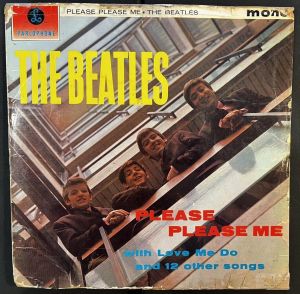
 

‘I went into the old EMI offices many times in the late ’80s and it never occurred to me to look up in reception and see exactly where that iconic photo had been taken. In the ’80s it seemed we had been looking forward.’

David Hepworth on the famous Beatles photo from the cover of Please Please Me


‘I tried the Jesus and Mary Chain but I just couldn’t believe it. It’s awful! It was so sophomoric – like the Velvets without Lou. I just know that they’re kids from Croydon! I just can’t buy it.’

David Bowie, 1987


‘I was surprised how hip it is. There’s a strange thing I don’t understand of people in Boy George outfits dancing to Jimmy McGriff and old Jackie McLean Blue Note records in discos.’

Guitarist John Scofield on the latest English ‘jazz revival’, 1988


‘Songwriting’s a craft, that’s all. I always knew my lyrics were better than anyone else’s anyway. I just edit more than other people, that’s my f***in’ secret. Also I never sleep and that helps too. You’ve got more time that way.’

Shane MacGowan, 1989


‘I hate having my picture taken, I always look like such a dog.’

Kirsty MacColl, 1989


‘I was a patsy. I never made more than $200 a week at the Five Spot.’

Ornette Coleman looks back on his legendary six-month residency during 1959 and 1960, 1985


‘All of us were naive, not just Ornette. We couldn’t even pay our rents. And they were making lots of money off us. That club was jammed every single night we were there.’

Charlie Haden on the same residency, 1985


‘You walk into the record label and they just weren’t as friendly as they used to be. When the record’s not a success, it’s your fault, and so you take on all those feelings. The label doesn’t sit down and talk to you. And they don’t drop you either, because they don’t want to lose you to the competition – just in case you do come up with something good next. And so they just remain sort of not as friendly, no more: “Hey Kevin, how are you?” It’s a head-f*ck, and you just have to work it out yourself.’

Kevin Rowland on the commercial failure of his 1988 solo album The Wanderer


‘Pop stars live the life of Caesar. And we know where the life of Caesar leads: it leads to blankness, it leads to despair. That’s the real message of these rock stars’ lives. To the public, they represent vitality, youth, innocence, joy. But in private life they represent despair and an infatuation with death.’

Albert Goldman, author of ‘The Lives Of John Lennon’ and ‘Elvis’, 1988


‘I remember sitting next to the stage and seeing all those little red lights glowing on the amps while we waited for the guys to come out and give us a real pasting.’

Allan Holdsworth reminisces about early gig-going, 1985


‘I have the best legs in the business. And they’ve got dancing feet at the bottom.’

David Lee Roth, 1982


‘There’s only one woman I have deep respect for in this industry and that’s Chrissie Hynde.’

Annie Lennox, 1986


‘I would have thought that people would be pleased to have a band that could play half decently.’

Francis Dunnery bemoans It Bites’ poor standing with the British music press, 1989


‘Sometimes he would call for Monk out of the clear blue sky. “Thelonious! Come save me from these dumb young motherf*ckers!”‘

Wynton Marsalis on playing with Art Blakey in the early 1980s


‘Prince really wants to be white. I know what that’s like. I tried hard to be white too.’

Daryl Hall, 1985


‘What we do is an alternative to Elton John and Chris Rea and all those old bastards who were there and still are. It’s embarrassing to see these old people like Dire Straits doddering about, they’re hideous.’

Robert Smith, 1989


‘I’ll tell you what I dig. In the Sting movie “Bring On The Night”, Omar Hakim taking off on that tune. Like Tony Williams, Jack DeJohnette. That’s being real free and comfortable. I don’t take my drums seriously, and they do.’

Drummer for the stars Jeff Porcaro, 1989


‘I believe that Bill (Bruford) and Adrian (Belew) thought that Beat was a better album than Discipline. I have no idea how anyone could come to that conclusion.’

Robert Fripp of King Crimson, 2022


‘Thanks for letting me drop by, guys. Hope I didn’t ruin your album.’

Herbie Hancock bids farewell to Simple Minds after playing a synth solo on their 1982 song ‘Hunter And The Hunted’


‘You should have seen us trying to sound like Windham Hill. We’d fall on our butts, man. I learned that you can’t fake it.’

’70s jazz/rock pioneer Larry Coryell on his mid-’80s collaboration with violinist Michal Urbaniak, 1985


‘We weren’t asked but we wouldn’t have done it anyway.’

Robert Smith on Live Aid, 1985


‘The band is getting back together and playing, maybe every six months or every year. If I can do so without it being public knowledge, that would be great. But I can’t do it, obviously. It would be nice to play together just as friends.’

Jimmy Page on Led Zeppelin reunions, 1986


‘I really, really would like to be in Led Zeppelin again. Whether or not time allows that to happen, I don’t know.’

Robert Plant on Led Zeppelin reunions, 1988


‘I’m a Catholic, and I would just ask God to to please help me find my own style. It’s not going to be like Tony or Elvin, so that when you hear me on a record, you know it’s Al Foster on the drums.’

Al Foster on his ‘stomping’ hi-hat technique, 1989


‘I feel I’ve created a field in which other people can discover themselves. I’m disappointed that they don’t create the room for me to discover myself.’

Robert Fripp on his King Crimson bandmates, 1984


‘I find therapy enormously valuable. It’s like car maintenance, send yourself in to be serviced every few thousand miles and, with any luck, it stops major problems developing.’

Peter Gabriel, 1989


‘I went to see this band INXS from Australia. They were on OK band, very much like a version of the Rolling Stones, but not as good. The singer is good and he looks great, but he doesn’t really move. He can’t be expending much energy.’

Mick Jagger, 1988


‘The band was like a fake democracy. Henley and I were making the decisions while at the same time trying to pacify and cajole the others.’

Glenn Frey looks back on The Eagles, 1988


‘(Jeff) Beck’s was a miserable f***ing band, horrible. Beck is a miserable old sod, but I do love him as a guitar player.’

Rod Stewart, 1988


‘I’ve always found it easier to write for other people. I feel terrible inhibited about writing for me. It’s only in the last few years that I’ve resigned myself into believing that I’m a moderately good singer.’

David Bowie, 1988


‘Of my writing partners since John (Lennon), Denny Laine was obviously nowhere near as good. Stevie Wonder is very good, but he’s not a lyricist. Michael Jackson is not as good of a writer as he is a performer. And Eric Stewart was good, but again, not as good as John.’

Paul McCartney, 1988


‘This new Clash compilation, which is meant to have sold a million copies, should be making me a rich man, but someone told me you only get quarter royalties for compilations. The CD wasn’t invented then so that wasn’t in the contract either. So I think I don’t get them royalties either. To tell the truth, I think we’re all a bit skint really.’

Joe Strummer on the legacy of The Clash, 1988


‘Those weird people on the street – every hundreth weirdest one has a Steely Dan record at home. That guy who hijacked a bus today probably has 47 copies of The Royal Scam.’

Walter Becker on Steely Dan’s audience, 1981


‘In 1981, something happened which changed my way of working with music. I woke up on a friend’s sofa in New York and simply understood something I’d known for a while: music was always present, completely with a life of its own, as a friend.’

Robert Fripp, 1984


‘The price of a ticket goes from two dollars to 20 dollars, the act doesn’t do an encore, someone has to stand in a long line, and it’s all my fault.’

Bill Graham on stadium rock, 1988


‘There are a lot of people who didn’t make a commitment and now they’re no longer with us. We lost Otis Redding, Sam Cooke, Jackie Wilson, Jimi Hendrix. I think maybe some of them didn’t know where or when to get off. The important thing is to be here.’

Al Green, 1988


‘Hell, we steal. We’re the robber barons of rock’n’roll.’

Donald Fagen of Steely Dan, 1981


‘After recording it, I flew off to see my manager and I said to him, “You’d better watch who you’re talking to. I’m the guy who wrote “Addicted To Love!”‘

Robert Palmer, 1988


‘I get the fans who write poetry. I have a slight David Sylvian audience, whereas Chris (Lowe) gets the sex audience, the ones who write obscene letters! It’s quite thrilling, actually!’

Neil Tennant of The Pet Shop Boys, 1988


‘It was the Enniskillen bombing that did it. The man whose daughter died beside him under the rubble; he was burning inside but he was so forgiving, so gracious. I thought, Christ, this is what courage is all about – Elton, just shut up and get back to work. After all, once you’ve been exposed naked on the cover of The Sun you ought to be able to face anything…’

Elton John on his 1988 comeback


‘It’s a better product than some others I could mention.’

David Bowie defends the Glass Spider Tour, 1987


‘Back then I thought I’d lost it and I did a bunch of things I was really unhappy with – all in public and on record. But it turned out not to be true. My ability hadn’t deserted me. And it won’t go away. Ever.’

Lou Reed, 1988


‘Michael Jackson’s just trying to cop my sh*t. I was insane years ago…’

Neil Young, 1988


‘I’ve said a lot of things in my time and 90 percent of them are bollocks.’

Paul Weller, 1988


‘We were excellent. Some of the best records of the ’80s are there. For the last six months of Wham!, it was OK to like us, we got a little hip. I cannot think of another band who got it together so much between the first and second albums. On Fantastic, you can tell I don’t think I’m a singer but some vocals on Make It Big are the best I’ve done. Even if we were wankers, you still had to listen.’

George Michael reassesses Wham!, 1998


‘The gig I have as the drummer in King Crimson is one of the few gigs in rock’n’roll where it’s even remotely possible to play anything in 17/16 and stay in a decent hotel.’

Bill Bruford, 1983


‘When I toured with The Rolling Stones, the audience would come up to me after the show and say, “Man, you’re really good, you ought to record.” How do you think that makes me feel after 25 years in the business?’

Bobby Womack, 1984


‘I find politics ruins everything. Music, films, it gets into everything and f*cks it all up. People need more sense of humour. If I ran for President, I’d give everybody Ecstasy.’

Grace Jones, 1985


‘I’m not the most gifted person in the world. When God handed out throats, I got locked out of the room.’

Joe Elliott of Def Leppard, 1988


‘I’m lazy and I don’t practice guitar and piano because I’ve gotten involved with so many other things in my life and I just had to make a sacrifice. Stephen Sondheim encourages me to start playing the piano again. Maybe I will.’

Madonna, 1989


‘Nile (Rodgers) couldn’t afford to spend much time with me. I was slotted in between two Madonna singles! She kept coming in, saying “How’s it going with Nile? When’s he gonna be free?” I said, “He ain’t gonna be free until I’m finished! Piss off!”’

Jeff Beck, 1989


‘I’ve never really understood Madonna’s popularity. But I’ve talked to my brothers and they all want to sleep with her, so she must have something.’

Nick Kamen, 1987


‘They ask you about being a Woman In Rock. The more you think about, the more you have to prove that you’re a Woman In Rock. But if you’re honest, it doesn’t matter whether you’re male or female. That’s the way we work.’

Wendy Melvoin, 1989


‘In Japan, someone told me I was playing punk saxophone. I said, “Call me what you want, just pay me”.’

George Adams, 1985


‘In the past, we’d bump into other musicians and it would be, “Oh, yes, haven’t I heard of you lot? Aren’t you the bass player that does that stuff with your thumb?” But once you’ve knocked them off the number 1 spot in Germany, they’re ringing you up in your hotel and saying, “Hey, howyadoin’? We must get together…”‘

Mark King of Level 42, 1987


‘We played London, we played Ronnie Scott’s, and I noticed that there were a lot punk-rock kids in the audience. After we finished playing, we had to go to the disco and sign autographs, because “Ping Pong”, the thing we made about 30 years ago, is a big hit over there.’

Art Blakey, 1985


‘I believe music – just about everything – sounds better these days. Even a car crash sounds better!’

Miles Davis, 1986


‘It’s a dangerous time for songwriters in that a monkey can make a thing sound good now.’

Randy Newman, 1988
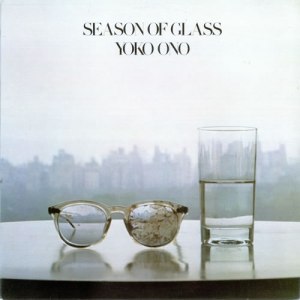
Yoko+Ono+Season+Of+Glass+522787


‘To have those glasses on the cover was important because it was a statement and you have to understand that it was like John wanted you guys to see those glasses.’

Yoko Ono, 1989


‘I’ll f*cking… I’ll go and take on anyone, any white singer who wants to give me a go.’

Matt Goss of Bros, 1989


‘I’ve never said this before but my drums is so professional, man, know what I mean?’

Luke Goss of Bros, 1989


‘I hate parts of my own albums because I know I’m hearing something that doesn’t translate to piano. In fact, I’m being dishonest by playing piano at all.’

Keith Jarrett, 1987


‘When I began to see how Elvis lived, I got such a strong take off of it. It was all so revolting!’

Albert Goldman, 1988


‘The best way to make great art is to have it trivialised by other people as much as possible. That way, you fight and fight and fight.’

Julian Cope, 1989


‘Whatever you’re tops in, people is trying to bring you down, and that’s my philosophy.’

Samantha Fox, 1987


‘Call me fat and I’ll rip your spine out.’

Ian Gillan, 1983


‘Sure I care about my fans. Because fans is money, hahaha. Muh-neee! And who does not care about money? Me, I like muh-neee, haha.’

Chuck Berry, 1988


‘I have this long chain with a ball of middle-classness at the end of it which keeps holding me back and that I keep sort of trying to fight through. I keep trying to find the Duchamp in me.’

David Bowie, 1980


‘People who say, Oh, I don’t know anything about music – they’re the people who really do know about music because it’s only really what it does to you.’

Steve Winwood, 1988


‘I notice that critics and others don’t credit black people with the ability to write ingenious, creative lyrics.’

Nile Rodgers, 1981


‘I’m below the poverty line – I’m on £16 a week. We needed some clothes and our manager said, “I don’t know what you do with your money. I mean, 16 quid!”’

Gary Daly of China Crisis, 1984


‘You take four or five of those rattlesnakes, dry ’em out and put them inside your hollow-box guitar. Lightnin’ Hopkins taught me that trick.’

Albert Collins on his guitar tone, 1988


‘People are bored with Lionel Richie going “I love everybody, peace on earth, we are the world…” F*ck that! People love bastards.’

Terence Trent D’Arby, 1987


‘Epstein dressed The Beatles up as much as he could but you couldn’t take away the fact that they were working-class guys. And they were smart-arses. You took one look at Lennon and you knew he thought the whole thing was a joke.’

Billy Joel, 1987


‘I remember when the guy from Echo & The Bunnymen said I should be given National Service. F*** him...’

Boy George, 1987


‘No-one should care if the Rolling Stones have broken up, should they? People seem to demand that I keep their youthful memories intact in a glass case specifically for them and damn the sacrifices I have to make. Why should I live in the past just for their petty satisfaction?’

Mick Jagger, 1987


‘The industry is just rife with with jealousy and hatred. Everybody in it is a failed bassist.’

Morrissey, 1985


‘I couldn’t stand it – all that exploitation and posturing, the gasping at the mention of your name, the pursuit by photographers and phenomenon-seekers. You get that shot of adrenalin and it’s fight or flight. I chose flight many a time.’

Joni Mitchell, 1988


‘I’m strongly anti-war but defence of hearth and home? Sure, I’ll stick up for that… I’m not a total pacifist, you know? I’ve shot at people. I missed, but I shot at them. I’m sort of glad I missed…’

David Crosby, 1989

Miles Davis: You’re Under Arrest 30 Years Old Today

miles

As a teenage jazz/fusion fan and burgeoning muso, 1983’s Star People caught my ear but it was You’re Under Arrest that really captured my imagination and made me a Miles fan for life.

Everything about the package was designed to be provocative, from the garish cover design to the in-your-face but always funky music. It’s a far more colourful and multi-layered listen than the previous year’s Decoy, partly because Miles was going public with his views on police intimidation, racism and the nuclear threat for the first time (and also getting involved with the anti-apartheid movement on the Sun City project).

In the era of ‘We Are The World’, even Miles was demonstrating that he had a social conscience, but he used gallows humour and an uncanny ear for a gorgeous melody to make his points.

Between 1981 and 1984, the primary musical style of Miles’s comeback had been so-called ‘chromatic funk’, a hard-driving, minimalist style consisting mainly of one-chord vamps, heavy bass lines, frantic Latin percussion and fleet-fingered melodic heads, usually played by sax and guitar in unison (and more often than not based on transcribed John Scofield guitar solos).

But in early 1984, Miles took his band into New York’s Record Plant studios to record a whole host of pop and AOR tunes, including ‘Wild Horses’ by Nik Kershaw, Tina Turner’s ‘What’s Love Got To Do With It’, Dionne Warwick’s’ ‘Deja Vu’, Michael Jackson’s ‘Human Nature’ and Cyndi Lauper’s ‘Time After Time’.

Though of course Miles was by no means new to recording pop songs, it’s doubtful whether any of these were anywhere near the calibre of ‘My Funny Valentine’ or ‘It’s Only A Paper Moon’. Various 1985 band members have since expressed their dissatisfaction Miles’s ‘pop’ direction and it’s telling that only ‘Time After Time’ and ‘Human Nature’ made the cut for You’re Under Arrest (and, to be fair, became centrepieces of his live gigs until the end of his life). The other covers are yet to see the light of day.

By all accounts, the album eventually came together very quickly and just under the wire; Miles took his band into the studio and re-recorded much of the 1984 material over a very short period in January 1985, later saying that the tempos had been wrong on the original takes and that they didn’t have enough punch.

The opening ‘One Phone Call/Street Scenes’, with its sound effects, darkly-comic spoken-word shenanigans (‘Smokin’ that marijaroney’!) and fleet funk, is the kind of thing you might expect from Prince or George Clinton, but not the most famous jazz artist in the world. The track was surely a big influence on Prince’s Madhouse project and also B-sides such as ‘Movie Star’.

John McLaughlin delivers an exciting modal guitar blowout on ‘Katia’ (named after his then wife the pianist Katia Lebeque) finding endless lines to play over the one-chord vamp. Despite the dated Simmons drums and synthesized horn blasts, the track is still gripping and dramatic after all these years.

Ditto the title track, the ultimate take on ‘chromatic funk’. The ‘Jean Pierre/And Then There Were None’ medley is also arresting with its eerie sound effects and childlike celeste. Listen out for Miles’ mordant closing remark too, intended either for Reagan or recording engineer Ron Lorman (or both?).

The only tracks I really can’t take are the two ballads, ‘Time After Time’ and ‘Human Nature’. Although the latter became a really powerful live number, Miles’s playing is fairly underwhelming and the arrangements don’t add anything to the originals. But, in general, You’re Under Arrest is a really strong album and quite a stunning statement from a 59-year-old ‘jazz’ musician.

Watching footage of Miles playing live in 1985 shows what an extraordinary presence he still was – stalking the stage, sometimes whispering into his bandmates’ ears, sometimes throwing mock-right-hooks towards the camera lens – coupled with possibly his best trumpet chops during the last decade of his life.

Marc Johnson’s Bass Desires: Second Sight

marc johnson

Since 1987, there have been a number of two-guitar celebrity summits but ex-Bill Evans bassist Marc Johnson’s superb ECM solo albums, ’85’s Bass Desires and Second Sight, both featuring John Scofield and Bill Frisell, quite possibly started off the whole trend.

1987’s Second Sight was considered somewhat of a disappointment on its original release, but for me this is the superior album of the two. I was a major Scofield fan when I bought it in ’87 but didn’t know Frisell’s name at all. Some of the interplay between the two is nothing less than miraculous, although one could hardly think of two more different guitarists in approach.

They leave each other space to play and at times even inadvertently double parts. The ever-reliable Peter Erskine slightly overplayed on the first Bass Desires album but here expertly marshals the material without ever being overbearing, and the compositions are so fresh, memorable and catchy.

Only the opening ‘Crossing The Corpus Callosum’ sounds like a studio jam session, but this is no ordinary jam; Scofield’s emotive bluesy cries dissolve into a fantastically-eerie Frisell ambient soundscape, leading the track inexplicably into David Lynch territory. ‘Small Hands’ and ‘Hymn For Her’ are shimmering, moving ballads, with the guitarists’ approaches meshing beautifully. ‘Sweet Soul’ is a soulful slow swinger full of fantastic Scofield soloing.

‘1951’ is a superb Frisell composition evoking Thelonious Monk’s best work. ‘Thrill Seekers’ simply swings like hell and features a classic Frisell fuzzbox solo. ‘Twister’ is great fun, Scofield’s affectionate ode to surf rock with some very funky bass and guitar interplay and a short drum solo almost as memorable as Ringo’s on Abbey Road.

As far as I know, the band toured Europe but never the UK. Would love to have seen them. The performance below is really special. No wonder Frisell is grinning like a Cheshire cat throughout.