Good Lyrics Of The 1980s

Joni_Mitchell_2004It has to be said, it was a bit easier coming up with good ’80s lyrics than it was to come up with crap ones.

I could probably have chosen three or four crackers from many of the artists featured below, but space permits only one. Maybe it’s not surprising that it was a great decade for lyricists when it was surely one of the most ‘literary’ musical decades to date – it would have to be with people like Bob Dylan, Morrissey, Paddy McAloon, Andy Partridge, Green Gartside, Tracey Thorn, Lloyd Cole, Joni Mitchell, Peter Gabriel and Springsteen around.

So here’s just a sprinkling of my favourites from the ’80s. Let me know yours.

I love you/You pay my rent

PET SHOP BOYS: ‘Rent’


Brother in the codpiece/I’ve seen him on the TV/I think he likes his ladies all sweet and sugary/I’m partial to a pudding/But that’s for second course/The main meal and the hors d’oeuvres must be smothered in hot sauce’

THOMAS DOLBY: ‘Hot Sauce’ (lyrics by George Clinton)


I believe in love/I’ll believe in anything/That’s gonna get me what I want/And get me off my knees’

LLOYD COLE AND THE COMMOTIONS: ‘Forest Fire’


I want you/It’s the stupid details that my heart is breaking for/It’s the way your shoulders shake and what they’re shaking for’

ELVIS COSTELLO: ‘I Want You’


Hey Mikey/Whatever happened to the f***in’ “Duke Of Earl”?’

RANDY NEWMAN: ‘Mikey’s’


If you had that house, car, bottle, jar/Your lovers would look like movie stars’

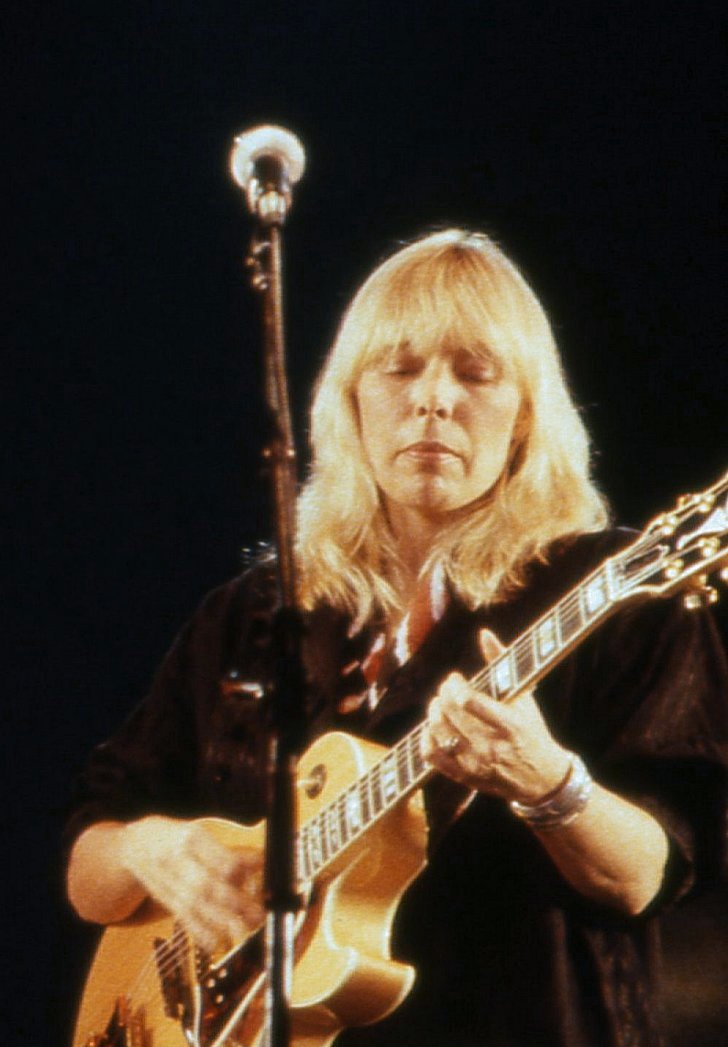
JONI MITCHELL: ‘The Reoccurring Dream’


‘Lost my shape/Trying to act casual/Can’t stop/I might end up in the hospital’

TALKING HEADS: ‘Crosseyed And Painless’


‘Once there was an angel/An angel and some friends/Who flew around from song to song/Making up the ends’

DANNY WILSON: ‘Never Gonna Be The Same’


Burn down the disco/Hang the blessed DJ’

THE SMITHS: ‘Panic’


‘Now the moon’s gone to hell/And the sun’s riding high/I must bid you farewell/Every man has to die/But it’s written in the starlight/And every line in your palm/We are fools to make war/On our brothers in arms’

DIRE STRAITS: ‘Brothers In Arms’


Out on the road today/I saw a Deadhead sticker on a Cadillac/A little voice inside my head said/Don’t look back, you can never look back…’

DON HENLEY: ‘Boys Of Summer’


‘Hello Johnson/Your mother once gave me a lift back from school/There’s no reason to get so excited/
I’d been playing football with the youngsters/Johnson says don’t dramatise/And you can’t even spell salacious’

PREFAB SPROUT: ‘Horsechimes’


‘I repeat myself when under stress/I repeat myself when under stress/I repeat…’

KING CRIMSON: ‘Indiscipline’


‘Come back Mum and Dad/You’re growing apart/You know that I’m growing up sad/I need some attention/I shoot into the light’

PETER GABRIEL: ‘Family Snapshot’


‘People say that I’m no good/Painting pictures and carving wood/Be a rich man if I could/But the only job I do well is here on the farm/And it’s breaking my back’

XTC: ‘Love On A Farmboy’s Wages’


So long, child/It’s awful dark’

DAVID BOWIE: ‘When The Wind Blows’


I could have been someone/Well so could anyone’

THE POGUES/KIRSTY MACCOLL: ‘Fairytale Of New York’


‘It’s an 18 carat love affair/I don’t know which side I’m on/But my best friend John said not to care’

ASSOCIATES: ’18 CARAT LOVE AFFAIR’
The Tube: The Best ’80s Music Show?

Paula and Jools

Paula and Jools

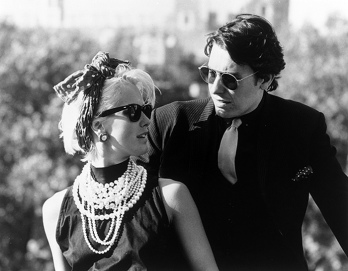
My favourite music show still is and probably always will be ‘The Tube’, which ran on Friday nights between 1982 and 1987 and was presented mainly by Jools Holland and Paula Yates.

Though Jools has found his niche presenting the very successful ‘Later…’ series for BBC1, I preferred the more youthful, risky, ‘uncut’ Holland (who was given a hefty slap on the wrist when he famously trailed the show one week by saying people who watched it were ‘groovy f***ers’!) and he had a great chemistry with the intelligent, funny and sexy Paula.

From week to week, you could never guess what you were going to see. There were live bands, star interviews, specially-filmed videos, on-location featurettes and weird bits of alternative comedy usually involving Rik Mayall in various degrees of drunkenness.

Some of it was great, some of it was OK and some of it was crap, but you couldn’t take your eyes off it. It helped launch some careers (Twisted Sister, Fine Young Cannibals, Frankie Goes To Hollywood, Terence Trent D’Arby) and relaunch others, and you could see every type of music on the show – Metal, Goth, Funk, Fusion, Indie, Pop, Soul – all in the spirit of discovery without any pandering reverence or bourgeois pretension.

And though the show featured many huge names, it also embraced up-and-comers: if your band was any good, had some fans and a decent plugger, you were on. And there was a bar on the set too. Here are a few clips from ‘The Tube’ that have stuck in the memory:

5. The Bangles – ‘Manic Monday’

Check out the creepy guy at the front staring straight at Susanna Hoffs throughout, almost blocking the camera. Full marks to the girls for giving the (Prince-penned) song their all despite a dumbstruck Newcastle crowd. Tight harmonies.

4. Billy Mackenzie interview, 1985

One of those great, weird, un-PR’d interviews that popped up now and again. A post-‘Party Fears Two’ Billy is clearly taking the piss throughout, in the nicest possible way, and it also shows how The Tube wasn’t scared of going out into the ‘provinces’ (Dundee in this case).

3. Cocteau Twins – ‘Pink Orange And Red’

Great haircuts, great voice, great guitar sound and underwater bass. The golden age of goth/pop.

2. Blancmange – ‘Living On The Ceiling’

Good hair again, and someone or something is making singer Neil Arthur struggle to keep a straight face throughout.

1. Prefab Sprout – ‘Cruel’

This little Bacharach-influenced bossa nova was my first glimpse of the marvellous Prefab.

Sondheim Meets Springsteen: Prefab Sprout’s From Langley Park To Memphis

prefab

Prefab go Pop. There are big-name guest spots (Stevie Wonder, Pete Townshend), gospel choirs, an orchestra and Deacon Blue’s producer.

The lengthy recording period and increased budget certainly paid off; synths and strings glisten, Paddy McAloon and Wendy Smith sound like they’re singing in the room with you and one can hear every nuance of Neil Conti’s tasty drumming.

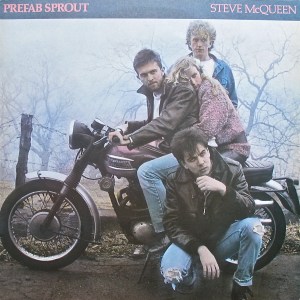
Steve McQueen producer Thomas Dolby could only find the time to oversee four out of the ten tracks; of these, only ‘Knock On Wood’ sounds like trademark TD. Apparently, once McAloon learned that Dolby would be unavailable for much of the recording, he flirted with the idea of using a different producer for each song. The notion was quickly abandoned but it reinforced the idea that this would be Paddy’s most collaborative project so far.

At the time of its release, Paddy publicly declared that he hated the sound of records being made in the late ’80s and in response seems to have looked for songwriting inspiration from pre-rock’n’roll forms – Gershwin, Berlin, Cole Porter, Broadway musicals (he also later said that he was slightly obsessed by Barbra Streisand’s The Broadway Album around this time).

Paddy had also by now made big strides in his keyboard playing, writing all but two From Langley Park tracks on piano. Consequently, his melodies are daring and original, but there’s arguably a fair degree of musical ‘schmaltz’ in the arrangements too, particularly on ‘Hey Manhattan’, ‘Nightingales’, ‘Nancy’ and ‘The Venus of the Soup Kitchen’, but it’s Stephen Sondheim schmaltz rather than Disney schmaltz. The wonderful ‘Nightingales’ sounds like the score from some kind of futuristic Broadway musical.

CBS obviously had high hopes for the album and their faith was paid off in the shape of a hit single, ‘King of Rock & Roll’, and one near-hit, ‘Cars And Girls’, though one wonders how McAloon views those now – I’ll wager with a degree of sheepishness. But I remember being extremely excited to see the video for ‘Cars And Girls’ popping up on ‘The Chart Show’.

Listening back after all this time, it’s From Langley‘s minor, more understated tracks that really stand the test of time. ‘Knock On Wood’ and ‘Enchanted’ could have come from Steve McQueen.

The former features a simple, unusually direct lyric from Paddy over a surreal, subtle pot-pourri of percussion and synth effects from Dolby. One wonders what McAloon’s demo sounded like. It’s slight and simple but no worse for that.

‘Nancy’ is gorgeous, a ‘Brief Encounter’esque tale of unrequited romance in the workplace, possibly inspired by McAloon’s relationship with his fellow Sprout (it doesn’t take a huge effort to imagine the word ‘Wendy’ in place of ‘Nancy’).

‘I Remember That’ sees McAloon in full-on crooner mode, emoting over MOR strings and weirdly-stilted gospel backing vocals. Paddy pokes fun at Springsteen’s obsessions on ‘Cars And Girls’, but then hilariously attempts a four-on-the-floor, Springsteenish rocker ‘The Golden Calf’ which doesn’t quite come off.

It’s hard to overstate the weirdness of the closing ‘Venus Of The Soup Kitchen’, a collision of slick Steely Dan drums, wonky Farfisa organ, distinctly-unfunky vocals from the Andrae Crouch singers and some amusing cocktail guitar from McAloon, coming over like a Ken Loach tale told in Broadway-musical style. For better or worse, there’s nothing else remotely like it in the Prefab output.

So, an important, big-selling album for Prefab (reaching #5 in the UK album charts) and another hugely impressive chunk of songwriting from McAloon. He was in a bullish mood, talking to the media about chart placings and competing with Michael Jackson and Prince, and his purple patch led to an even more cogent and powerful piece of work in the extraordinary Jordan The Comeback.

Prefab Sprout: Steve McQueen 30 Years Old Today

prefabSteve McQueen producer Thomas Dolby had taken part in a Radio One ‘Round Table’ singles review programme in early 1984, waxing lyrical about Prefab’s ‘Don’t Sing’.

The Sprouts happened to be listening in and asked their manager Keith Armstrong to ring Dolby the next day. Dolby takes up the story:

‘Keith said, “It so happens we’re actually looking for a producer right now. Are you interested?” I said, “Absolutely.” So they said, “Well, we don’t have many songs on tape to play you, but we’d like to invite you up to Paddy’s (McAloon, Prefab singer/songwriter) house.” I took the train up, spent the day there. He lived on the top of a hill in an old Catholic rectory where his mum had looked after the church. There were crucifixes on the walls. His dad, who’d had a stroke, was ill in bed upstairs. Paddy took me to his room and pulled out this stack of songs. He’d squint at them and strum his way through them. He would write notes for chords and melodies over the top of the lyrics but primarily it was about the poems.’

The songs for Steve McQueen were worked up in rehearsals with Dolby at Nomis Studios in West London in the autumn of 1984, before the recording sessions proper started at Marcus Studios.

The Sprouts apparently found the Big Smoke in turns beguiling and baffling. Taken out for dinner by CBS execs, they were introduced to the dubious pleasures of haute cuisine. According to Dolby, upon being delivered a tiny plate of food, bassist Martin McAloon was once heard to utter, ‘That was for me neck – now what’s for me stomach?’!

Dolby brought out the best in singer Wendy Smith, often using her unique soprano almost as a musical instrument, especially on ‘Moving The River’ and ‘Blueberry Pies’.

Dolby realised that part of his role as producer was to ‘smooth out’ some of the rough edges of Paddy’s remarkable songs:

‘What happened when the band started to arrange those was that there were lots of extra beats here and there, strange chord changes or rhythm changes, or odd lengths of phrases. The musicians tried to sort of accommodate those, but in fact what needed to happen was a few of the rough edges needed to be trimmed off. But at the same time, I didn’t want to throw out the baby with the bath water. I mean, what made them so unique is that they defied logic. So the task, really, at hand, for me, was how to elevate them to a more accessible level, commercially, without homogenizing the essence of the music.That was the first meeting with Paddy. He’s a very interesting guy, very well read but humble.’

The album was mixed at Farmyard Studios in Buckinghamshire. That was where Paddy really became aware of what Dolby had cooked up:

‘It’s taken me decades to try to absorb what it was that Thomas did. I mean, he had a great ear for individual sounds, he wasn’t swayed so much by the things of the day. He had a Fairlight and a PPG Wave and he would use them sparingly, and he had no time for the Yamaha DX7 and the things that everyone else rushed out and bought. He was into synthesis really. He didn’t make a big thing of it… it was just what he did, in addition to having a good sense of structure.’

Dolby talks about Paddy’s vocal style on the album:

‘He can be coaxed into letting rip every now and then. So one of my favourite things about the album is that you get these occasional primal screams. The way he sings “Antiques!”, the opening line. And then later on in “Goodbye Lucille” which is this very sort of lush, soft song, in the chorus he just lets rip at the end with this scream. And I always liked that he did that on that album. In later years he tended to be this sort of breathy crooner, and you hear less of that raw side.’

prefab

Drummer Neil Conti on recording Steve McQueen:

‘When we went in to record the album, there was a very relaxed vibe which I think you can hear in the music. After a rather tense start, when Thomas Dolby, who was used to drum machines, basically tried to get me to play like a machine, things loosened up and we had some hilarious late night jams after coming back from the pub. The track “Horsin’ Around” was recorded after one such rather inebriated sojourn to the boozer and you can hear Martin laughing while I’m counting it off. That track is all over the place, but it was just what the song needed. We couldn’t get it at all before we went to the pub to horse around a bit. I think the relaxed vibe really is one of the keys to why that album sounds good. No clicks, three takes max of each song, very loose and natural.’

Steve McQueen reached #21 on the UK album chart, perhaps a slight disappointment, but the critics generally loved it. It made #4 in NME’s Albums of 1985 poll and was well-received in Europe and the US. Rumours even appeared in the press (some good CBS PR) that Prefab might play at Live Aid. That was never going to happen but half the band did back David Bowie (producer Thomas Dolby, drummer Conti and occasional guitarist Kevin Armstrong).

An extensive UK and European tour followed the album release after which the band quickly recorded Protest Songs in late 1985, though it wouldn’t released for another four years. There was so much more to come from arguably the British band of the decade.

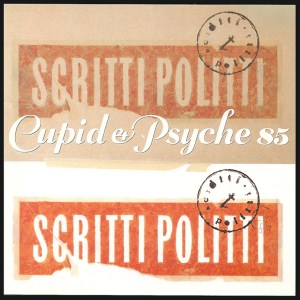
Scritti Politti: Cupid & Psyche 85 30 Years Old Today

Listening again to the brilliant Cupid 30 years after its release, I wonder if it sounds very dated to modern ears.

Whilst it unabashedly utilised all manner of mid-’80s technology (Fairlight, drum machines, sequencers), I don’t really ‘hear’ those elements any more. All I hear is top-notch songwriting, intriguing and intelligent lyrics, great grooves and Green’s unique vocals.

Cupid hit me at exactly the right age; it was the soundtrack to endless summer evenings, teenage crushes, adolescent musings.

Though Scritti leader/vocalist/co-songwriter Green Gartside left behind his post-punk roots and the ‘indie’ sound of his Rough Trade debut album Songs To Remember to create this major-label debut, Cupid certainly had antecedents: Green and keyboardist/co-composer David Gamson revered the highly-syncopated R’n’B/electro of The System, Chaka Khan, ZAPP and Michael Jackson, but they added some classic pop songcraft and intricate harmony.

Rough Trade boss Geoff Travis gave Green his blessing and, coupled with manager Bob Last (who also managed Human League and ABC), Green pitched the Americans his fusion of pop and funk. As he told WORD magazine in 2006, ‘The American labels were all tickled pink by these big NME interviews we did and that loosened their wallets. Bob and I were terribly persuasive as to why they should part with vast sums so we could make a record.’

Legendary Aretha/Chaka producer Arif Mardin came on board as did a raft of quality players such as Marcus Miller, Steve Ferrone, David (The System) Frank, Robbie Buchanan, Robert Quine and Paul Jackson Jr. But Green apparently turned out to be more of a perfectionist than any of them: ‘It took us a great deal of time to get our bits right and my anxiety about singing was pretty acute. I would demand to sing things over and over again and I’m not sure I ever got it better than the first time.’

Cupid featured three classic singles – ‘The Word Girl’, ‘Absolute’ and ‘Wood Beez (Pray Like Aretha Franklin)’, though eventually a total of five tracks were released as A-sides.

The John Potoker remix of ‘Perfect Way’ (far superior to the album version) even became a massive hit in the States, reaching 11 on the Billboard Hot 100 and pushing worldwide sales of the album over the million mark.

While ‘Don’t Work That Hard’ and ‘Lover To Fall’ might be deemed ‘filler’, they easily transcend that label by dint of their sprightly grooves and sheer catchiness. The beautiful ‘A Little Knowledge’ showed that Green and Gamson were on the same page as Prefab’s Paddy McAloon when it came to sumptuous, intelligent romantic ballads in the mid-’80s, and the track is a great companion piece to ‘When Love Breaks Down’.

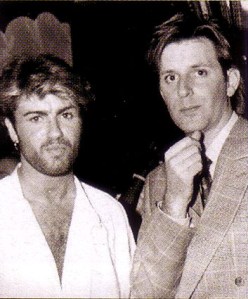
Post-Cupid, Green and Gamson booked and then cancelled a world tour (they were apparently visited in the studio by MTV executives who told them, ‘Just think, you’ll never have to tour again!’), wrote songs for Al Jarreau and Chaka Khan, made friends with Miles (who covered ‘Perfect Way’ on Tutu), hung out with George Michael at various London nightspots, embarked on a year of press in America to cash in on the success of ‘Perfect Way’ and then reluctantly hit the studios of New York and London to record the follow-up Provision.

george michael green gartside

George and Green, London, 1986

A cursory listen to a radio station like Absolute 80s reveals the wide-reaching influence of Cupid on countless late-’80s bands: a-ha, Go West, Climie Fisher, Living In A Box, Pet Shop Boys, Bros and Aztec Camera all tried for those clinical, Swiss-watch-precision arrangements and uplifting pure pop sound, but generally lacked Gamson’s ingenious chord changes and Green’s gift for melody.

Happy birthday to a bona fide ’80s classic.

Thomas Dolby: The Flat Earth

Circa 1988, my schoolmate Seb stuck a few tracks from The Flat Earth (possibly ‘Screen Kiss’ and ‘Mulu’) at the end of the Lovesexy tape he did for me.

I was smitten – I needed as much music as possible by this guy. I’ve since bought the albums several times on various formats.

On Earth, Dolby deliberately downplays the ‘zany’ image and creates an atmospheric, beautifully arranged, largely introspective collection.

He covers various styles (funk, lounge jazz, synth rock, World), mastering all with an incredible consistency of mood, production and songwriting.

My mates and I also loved his habit of incorporating seemingly-random clips of audio into/between his songs, like the spoken word outbursts from the likes of Robyn Hitchcock.

The title track came from an unused jam originally intended for Malcolm McLaren’s Trevor Horn-produced Duck Rock album. Its lilting South African melody (reminiscent of ‘Obtala’ from Duck Rock) and confessional lyrics signalled a new maturity in Dolby’s style, continuing with the majestic ‘Screen Kiss’ featuring excellent, much imitated fretless bass work from Matthew Seligman.

Techno-rocker ‘White City’ should be covered by someone. Dolby himself masters the art of the cover version with his take on Dan Hicks’s ‘I Scare Myself’ featuring a gorgeous muted trumpet solo by guitarist Kevin Armstrong who, according to Dolby’s liner notes, had never played the instrument before the recording.

And the album closer ‘Hyperactive’ (originally written for Michael Jackson, fact fans) is actually a bit out-of-place on the largely downbeat Earth but it’s a fun, funky, irresistible little pop song, perfect to send you out into the night with a smile.

Dolby is a brilliant painter of pictures with sound, relentlessly using audio fragments to augment melodic and lyrical ideas (check out the extraordinary tree-falling which pops up throughout the title track and also the typewriters which pepper ‘Dissidents’).

But these songs would also work beautifully played with just an acoustic piano accompaniment, as his recent solo tours have demonstrated.

Of course, over here in Blighty, the music press were a bit suspicious of Dolby’s technical mastery and obvious musicianship, though The Flat Earth reached a respectable #14 in the UK album chart, #35 in the US.

Dolby followed up The Flat Earth by playing keyboards with David Bowie at Live Aid (alongside Seligman and Armstrong), forming occasional project Dolby’s Cube with George Clinton, Lene Lovich and the Brecker Brothers and producing both Prefab Sprout’s triumphant Steve McQueen and Joni Mitchell’s underrated Dog Eat Dog.

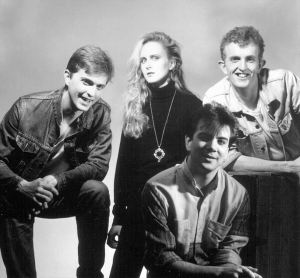
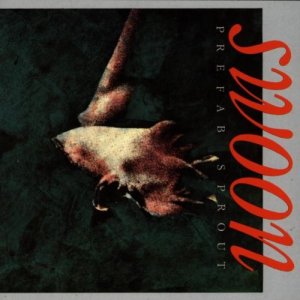
Portrait Of Paddy As A Young Man: Prefab Sprout’s Swoon

prefab swoonPerhaps like a lot of Prefab fans, I came to Swoon some time after I’d bought and fallen in love with the later albums Steve McQueen, Protest Songs, From Langley Park to Memphis and Jordan The Comeback.

The dry, Thomas Dolby-less production came as a bit of a shock at the time but Swoon stands up pretty well today. Though some critics have compared it to Steely Dan, my contemporary reference points would be Lloyd Cole, The Smiths, Aztec Camera and Songs To Remember-era Scritti, though it’s basically impossible to locate Prefab’s influences.

It’s tempting to say that Swoon – released in March 1984 – sounds like the epitome of an ‘indie’ record, 1980s style, with its stripped-back production values and jagged edges. Prefab singer/songwriter Paddy McAloon recently told The Guardian that he thinks of it as more akin to Captain Beefheart, nicknaming the album ‘Sprout Mask Replica’!

Swoon definitely still sounds very much like a debut album; it’s perky, eager to please, naive, studenty. McAloon’s vocals occasionally resemble the ramblings of a slightly squiffy, randy teenager. But the album’s adolescent in a really good way with its literary flights of fancy, indulgent ruminations on romantic love and lots of audacious melodic flourishes.

paddy prefabIt sounds almost like rock, with solid 4/4 drums, always-inventive bass from Paddy’s brother Martin and ‘girlie’ backing vocals from Wendy Smith, and yet it resolutely refuses to ‘rock out’ with not a single power chord or jangly electric guitar in the mix.

Instead, the intrepid layering of synths and acoustic guitars (utilised to far greater effect on Steve McQueen and Jordan) probes the songs’ pressure points. And Smith’s pristine vocals give the music an enigmatic, otherworldly flavour.

Lyrically, Swoon reminds me of Joyce’s ‘Ulysses’; a survey of a young man’s hopes, dreams and romantic/professional disappointments. From a songwriting perspective, the words presumably came before the music, resembling stream-of-consciousness prose rather than traditional verse/chorus songcraft. Novelist/essayist Dave Eggers wrote a great piece about how much he was influenced by this golden generation of literate British songwriters.

As befitting a band from the North East, work (and the lack of it) is a recurring theme, particularly on ‘I Never Play Basketball Now’ and the extraordinary ‘Technique’. ‘Couldn’t Bear To Be Special’ is a classic Prefab ballad (though surely never the right choice for second single) and seems to offer a truly original take on the doomed love affair – the narrator simply doesn’t feel worthy to deserve the attentions of another. Very Nick Hornby-esque.

Future producer Thomas Dolby has talked about the shock of hearing ‘Don’t Sing’ when he was a guest reviewer on the Radio 1 ‘Round Table’ show.

‘Cruel’ is still a delicious piece of pop/bossa nova, more than a decade before the likes of Belle and Sebastian mined similar ground. Some of Paddy’s chords are gorgeous on this. Lyrically it’s original too, an expression of lust and affection from someone who is desperately afraid of offending his ‘enlightened’ paramour. A very modern love song. It was once covered by Elvis Costello.

Oh – and don’t forget to read the funny mock liner notes penned by McAloon in the guise of an over-exuberant music scribe.