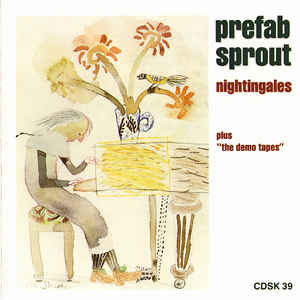
Story Of A Song: Prefab Sprout’s ‘Nightingales’ (1988)

Prefab Sprout’s 1988 album From Langley Park To Memphis was their pop breakthrough, reaching #5 in the UK charts, and is probably most casual fans’ favourite.

But let’s take a close look at the fifth track, the epic ‘Nightingales’. Featuring Stevie Wonder on harmonica and released as the fourth single from From Langley Park in November 1988, it remains one of Prefab’s most beguiling songs.

Written by Paddy McAloon under the influence of Barbra Streisand’s Broadway Album, it’s a stellar piece of work by any standards; melody, harmony and lyric are inextricably linked, as if the song had always existed and was just plucked out of the air.

Thought follows thought, musical idea follows musical idea completely naturally, without any songwriter ‘tricks’ such as looped chord sequences or vamps.

It’s fair to say that by the time of From Langley Park’s recording, McAloon was becoming a proficient pianist; eight of ten songs on the album were written on keyboards, including ‘Nightingales’.

Its harmonic concept, with an emphasis on major-seventh chords (including an audacious jump from F#m7 to Cmaj7 in bars four and five of the chorus) and triads superimposed over apparently unrelated root notes, possibly reveals a Brian Wilson influence, but the final effect is more Stephen Sondheim than ‘Surf’s Up’.

‘Nightingales’ also has no apparent antecedents in the 1980s pop firmament, though, at a stretch, approaches one of Green Gartside and David Gamson’s gossamer Scritti Politti ballads.

In a year when Acid House and the ‘Madchester’ sound were gestating and Stock Aitken Waterman ruled the charts, McAloon delivered something unabashedly romantic and somewhat old-fashioned; the opening line (‘Tell me do, something true‘) and general tenor of the lyric are more akin to ‘Daisy Bell’ than anything by the Stone Roses (and Paddy made no secret of his general distaste for late-’80s pop).

The song’s protagonist analyses his love affair, asking his paramour whether their love is fleeting like a ‘firework show’ or whether it’s a lasting, valuable entity. They agree that such questions are unhelpful and/or irrelevant – the key is to live in the moment.

‘Nightingales’ was co-produced by Jon Kelly and McAloon. By 1987, London-born Kelly was an experienced, highly-regarded producer and engineer, probably best known as one of Kate Bush’s key early collaborators on the classic 1980 album Never For Ever.

He had also worked on successful albums by Chris Rea (Dancing With Strangers) and Paul McCartney (Ram) and just produced Deacon Blue’s debut album Raintown, the latter definitely influenced by Prefab.

Double and triple-tracked keyboard parts dominate ‘Nightingales’, played by McAloon and legendary British session player Wix, AKA Paul Wickens. They closely follow the chord voicings of McAloon’s original acoustic piano demo, echoed on this lovely live version from 2000:

By the time of the first chorus, sampled sleigh bells and silky Synclavier drums are added to the mix alongside McAloon’s rather incongruous but effective (sampled?) banjo. Robin Smith’s widescreen string arrangement becomes increasingly prominent throughout the track; particularly notable is a flurry of ascending, almost celestial notes in three distinct phases beginning at 2:14 (and check out the rustle of fake locusts at 4:26!).

Stevie Wonder had long been a hero of McAloon’s, the album Journey Through The Secret Life Of Plants being a particular favourite. Mentioning as much to Prefab manager Keith Armstrong one day, Paddy half-joked that a Stevie harmonica solo on ‘Nightingales’ would really bring the track to life.

Armstrong stunned McAloon by informing him that he was a good friend of Wonder’s operations manager Keith Harris and would put in a good word for the band (it’s also worth noting that Wonder played some sublime harmonica on Thomas Dolby’s ‘Don’t Turn Away’ a year before the recording of ‘Nightingales’ – perhaps Thomas gave the band a good reference…).

Wonder’s harmonica solo for ‘Nightingales’ was recorded in a very rushed session during September 1987 at Westside Studios in Notting Hill, West London. He apparently learnt the song quickly, disappearing into a corner of the studio with a rough mix on his Walkman, and then recorded two takes in the lower octave and two in the higher. The released solo is a composite of the four.

Richard Moakes was the young engineer tasked with capturing Wonder’s solo on tape. According to McAloon:

He (Moakes) looked at me and said, ‘Oh God, I’m a bit worried I won’t know how to get his sound’. I said, ‘Well, look, we’ll just see what happens’. And of course you put the microphone on him and you turn the fader up and he sounds like Stevie Wonder. You don’t do anything. Unless you’re doing something really silly, you’ll get it and it will be identifiable. So I thought, OK, when you play a guitar, don’t blame an engineer if you don’t know what you’re doing…

New York mix engineer Michael Brauer cooked up the 12” version of ‘Nightingales’. He made some drastic changes from the 7” single, placing the sleigh bells right at the front of the mix, reinstating some of Wendy Smith’s stacked backing vocals originally left on the cutting room floor, stripping McAloon’s lead vocal of its reverb (though adding a lot more to the snare drum) and leaving more space for Smith’s string arrangement and McAloon’s banjo.

A video was also made, though it’s almost impossible to track down these days.

Happy 5th Birthday To Me

Can it really be five years ago today that a piece on Prefab Sprout’s Swoon kicked off this whole damn movingtheriver.com experiment?

Yes it ruddy well can, and it’s been a fun ride.

Even though there are some weeks when it seems the well has truly run dry, ’80s music and movies (to mix metaphors) turn out to be the gifts that keep on giving – there are always old sounds that continue to surprise and new avenues to explore.

So thanks for checking in and contributing now and then. You’ve made an old man very happy. My friend Spike Jones probably says it best:

The 17 Weirdest Record Company Freebies Of The 1980s

Pity the poor marketing manager of a 1980s major record label.

Everyone was telling you the future was in PR. The musicians were no longer running the music industry – the suits were. Millions of pounds were sloshing around but a dodgy decision could cost you your job.

Label MDs had read their Dale Carnegies or at least their Peter Yorks. Everyone wanted to hobnob with Branson. And for every proverbial ‘fifth member of the band’ manager like Paul McGuinness or Ed Bicknell, there was a PR like Magenta Devine.

And, as James Grant of Love And Money (more from them below) once told movingtheriver.com, people had breakdowns over this stuff. But is it any wonder when staffers were sending radio programmers and promoters gifts like the following? (All are 100% authentic, and based on extensive research*.)

17. Doobie Brothers dope kit
It included a Doobies logo’d stash pouch, rolling machine and ‘skins’…

16. INXS pyjamas
These sartorial delights were embroidered with the time-honoured phrase ‘I Need You Tonight’. Groan…

15. Prefab Sprout snow globe
This cute little number featured some mini skyscrapers and bore the legend ‘Hey Manhattan!’ Unfortunately it couldn’t hype this Paddy classic into the top 40…

14. 10,000 Maniacs ceramic elephant teapot
A useful mammalian kitchen implement that was sent around to promote the Blind Man’s Zoo album.

13. Simply Red dressing gown
A his’n’hers, terry-towelling dressing gown to promote the Men And Women album. See what they did there?

12. Bob Seger windcheater
It was sleevless, quilted and defiantly macho, as befitting the proletarian singer/songwriter. And it was sent to promote…you guessed it… ‘Against The Wind’!

11. Brothers Johnson zippo cigarette lighter
The funk legends’ PR machine came up with this curio for fans to hoist aloft during ‘Light Up The Night’.

10. WASP bottle of ‘house red’
This disgusting blood-coloured beverage was sent around to promote the Live…In The Raw live album.

9. Billy Bragg teabag
As befitting the socialist icon, a marvellously utilitarian artefact to celebrate the release of the Brewing Up With… album.

8. Kirsty MacColl kite
Yeah?

7. Love And Money road atlas
This hand-bound tome failed to hype ‘Jocelyn Square’ into the top 40, though it remains a great single.

6. Madness pacamac
It was advertising their downbeat single ‘The Sun And The Rain’. And why not?

5. Eurythmics umbrella
To promote…you guessed it…’Here Comes The Rain Again’. Obviously did a pretty good job, to be fair – the single reached #8 in the UK charts.

4. ZZ Top frozen meal
Those naughty boys from Texas sent this around to promote – of course – ‘TV Dinners’.

3. Frankie Goes To Hollywood condom
One of Paul Morley’s better ideas, actually…

2. PiL jigsaw puzzle
A very strange object sent around to promote Johnny and the boys’ 9 album.

1. Kane Gang walkman
No, me neither…

*Copied from a Q magazine listicle circa 1989

Gig Review: Kevin Armstrong @ Pizza Express Holborn, 12 September 2018

DB and Kevin A, 1986 photo by Paul McAlpine

It would be tempting to call Kevin Armstrong the ultimate ‘nearly man’ of 1980s pop – he nearly joined a post-Johnny-Marr Smiths, was nearly a founder member of David Bowie’s Tin Machine, nearly joined Level 42 Mark II, and nearly became Paul McCartney’s right-hand man during the ex-Beatle’s late-decade renaissance.

But that would be unfair on the guitarist; as well as stellar work with Bowie (Live Aid, ‘Absolute Beginners’, ‘Dancing In The Streets’) and Iggy Pop (Blah-Blah-Blah, countless world tours), he has also contributed to classic albums by Prefab Sprout, Thomas Dolby and Morrissey and performed live with Roy Orbison, Sinead O’Connor, Grace Jones, Propaganda and PiL.

This entertaining Pizza Express show was half wonderfully-indiscreet spoken-word memoir and half gig. Decked out in all-black rock-star garb, Armstrong described his initiation into the music world via an obsession with Zappa’s ‘Black Napkins’ and postal-order guitar handbooks, and lamented the current pop scene as ‘just another part of consumer culture’.

He spoke of one life-changing morning in early 1985 when he received the call from legendary (and brilliantly-named) EMI A&R man Hugh Stanley-Clarke: an invitation to Abbey Road to record with ‘Mr X’. Arriving at the famous address, Armstrong was shown upstairs to a tiny demo studio (not the big Beatles-frequenting Studio 1 downstairs) to find a bunch of session players and a smiling, suited Bowie holding an omnichord and uttering the totally superfluous ‘Hi, I’m David!’. Bowie then proceeded to teach the band a song called ‘That’s Motivation’ (from the ‘Absolute Beginners’ soundtrack) two bars at a time – and they then recorded it that way too.

A few days later, Bowie summoned Armstrong to Westside Studios near Ladbroke Grove for the ‘Absolute Beginners’ and ‘Dancing In The Street’ recordings (the former with vocals by Armstrong’s sister, then working behind the till at Dorothy Perkins, responding to Bowie’s request for a ‘shopgirl’ to sing duet with him!). The latter session was of course graced by an absurdly perky Mick Jagger. Apparently Bowie and Jagger spent most of the vocal sessions shouting ‘Let’s ring Maureen!’, their nickname for Elton John.

Armstrong then told great tales of Live Aid, mainly highlighting Bowie’s incredible generosity: fluffing the names of backing vocalists Helena Springs and Tessa Niles during his onstage band introductions (no other solo artist introduced his/her band on the day), according to Armstrong he immediately apologised profusely to the singers as soon as they were offstage.

There were further funny tales of Gil Evans, Iggy and McCartney (who apparently once smoked some unbelievably strong grass with Armstrong, said ‘That’s you stoned!’ to the erstwhile guitarist, then promptly disappeared) and an exceptionally eccentric Grace Jones who allegedly took a distinct liking to Armstrong at a party, taking him by the hand and leading him away for some sexual shenanigans. Who should intervene but Bowie, grabbing Armstrong’s other hand and whispering in the guitarist’s ear: ‘No you don’t. She’ll have you for breakfast, sunshine…’

In the second half of the evening, Armstrong was joined by Iggy bandmates Ben Ellis on bass and Matt Hector on drums to perform songs that he’d played live with all the aforementioned stars. Efficiently sung and superbly played, it nevertheless emphasised the difference between a perennial sessionman and born headliner.

But this was still a hugely enjoyable evening, foregrounding a time when music really was transformative. We await Armstrong’s forthcoming memoir with great anticipation.

Great Opening Lines In 1980s Songs

The 1980s produced some fine lyricists. You couldn’t move for decent wordsmithery. But interesting lyrics came from the damndest places. 

What was that Trevor Horn maxim? A good pop song should be like a good story, such that the listener is always asking: what’s going to happen next?

And, like a good story, pretty much every good song starts with an intriguing opening line or two. As the proverbial cigar-munching music-biz mogul might say: ‘You gotta grab ’em from the first bar, kid…’ So here are some great opening lines from 1980s songs, lines that hopefully satisfy Horn’s requirements.

Everything But The Girl: ‘Each And Every One’

‘If you ever feel the time/
To drop me a loving line/
Maybe you should just think twice/
I don’t wait around on your advice’


Associates: ‘Club Country’

‘The fault is/I can find no fault in you’


Wet Wet Wet: ‘Wishing I Was Lucky’

‘I was living in a land of make believe/
When my best friend wrote and told me that there may be a job in the city’


Lou Reed: ‘How Do You Speak To An Angel’

‘A son who is cursed with a harridan mother or a weak simpering father at best/
Is raised to play out the timeless classical motives of filial love and incest’


Steely Dan: ‘Babylon Sisters’

Drive west on Sunset to the sea/
Turn that jungle music down/
Just until we’re out of town’


Associates: ‘Party Fears Two’

I’ll have a shower then call my brother up/
Within the hour I’ll smash another cup’


Joni Mitchell: ‘Chinese Cafe’

‘Caught in the middle/
Carol, we’re middle-class/
We’re middle-aged/

We were wild in the old days/
Birth of rock’n’roll days’


The Smiths: ‘Reel Around The Fountain’

‘It’s time the tale were told/
Of how you took a child and you made him old’


Thomas Dolby: ‘Screen Kiss’

Miller Time in the bar where all the English meet/
She used to drink in the hills/
Only now she drinks in the valleys’


Love And Money: ‘Hallejulah Man’

On the blind side and down the back ways/
The roots of sadness crawl/
When you can’t get what you need/
You feel like taking a torch to it all’


Joy Division: ‘Love Will Tear Us Apart’

When routine bites hard and ambitions are low/
And resentment rides high but emotions won’t grow’


The Teardrop Explodes: ‘Reward’

Bless my cotton socks/I’m in the news’


Tom Waits: ‘Swordfishtrombones’

‘Well, he came home from the war with a party in his head/
And a modified Brougham DeVille and a pair of legs that opened up like butterfly wings’


Prefab Sprout: ‘Moving The River’

‘You surely are a truly gifted kid/
But you’re only as good as the last great thing you did’


Lloyd Cole & The Commotions: ‘Brand New Friend’

Walking in the pouring rain/
Walking with Jesus and Jane/
Jane was in a turtleneck/
I was much happier then’


Siouxsie & The Banshees: ‘Cascade’

Oh the air was shining/
Shining like a wedding ring’


Bob Dylan: ‘Jokerman’

Standing on the waters casting your bread/
While the eyes of the idol with the iron head are glowing/
Distant ships sailing into the mist/
You were born with a snake in both of your fists while a hurricane was blowing’


Robert Palmer: ‘Johnny And Mary’

Johnny’s always running around trying to find certainty/
He needs all the world to confirm that he ain’t lonely’


Prefab Sprout: Talking Scarlet

You hide under the eiderdown/
All you can’t sweep underneath the carpet’


The Human League: ‘Don’t You Want Me’

I was working as a waitress in a cocktail bar/When I met you’


Talking Heads: ‘Crosseyed And Painless’

Lost my shape/
Trying to act casual/
Can’t stop/
Might end up in the hospital’


Scritti Politti: ‘A Little Knowledge’

Now I know to love you/Is not to know you’


The Smiths: ‘Bigmouth Strikes Again’

Sweetness, I was only joking/
When I said I’d like to smash every tooth in your head’

Whistle Test: Best Of The 1980s

What a treat to watch a special live edition of ‘The Old Grey Whistle Test’ on BBC Four the other night.

The excellent Bob Harris returned to present – but where was Annie Nightingale? We saw a bit of her in her ’80s presenting pomp, but sadly she wasn’t in the studio.

The special reminisced unashamedly about a time when the musicians ran the music biz, and also documented the fascinating history of music TV with an interesting mix of guests (Joan Armatrading, Toyah, Chris Difford, Ian Anderson, Dave Stewart, Danny Baker) and live performances (Kiki Dee, Gary Numan, Albert Lee, Peter Frampton, Richard Thompson). Not exactly a cutting-edge, youthful lineup, but the musicianship was at an exceptionally high level.

Alongside ‘The Tube’, ‘Whistle Test’ was THE music show to watch in the mid-’80s, aided by some very agreeable presenters such as Nightingale, Andy Kershaw, Richard Skinner, David Hepworth, Ro Newton and Mark Ellen.

The only real caveat was that – as Richard Williams pointed out during the special – the show possibly didn’t feature enough black artists. But it provided me with some formative musical memories – here are some bits from the ’80s incarnation that lodged in my brain (most unfortunately with dodgy sound/picture quality):

8. The Eurythmics: ‘Never Gonna Cry Again’ (1981)
Maybe a less than brilliant song but Annie’s vocals and stage presence are spellbinding. And I like the flute interlude. Also look out for an amusing cameo from Holger Czukay, who creeps onstage (to Annie’s annoyance?) like Banquo’s ghost.

7. Prefab Sprout: ‘When Love Breaks Down’ (1985)
One of the first things I saw on the show. A tender reading of a classic song.

6. Joni Mitchell Special (1985)
Fascinating mini feature about Joni’s painting, ostensibly to promote her album Dog Eat Dog.

5. It Bites: ‘Calling All The Heroes’ (1986)
One that has only come to light recently, but I would have been blown away by it had I seen it at the time. A special mention for man-of-the-match John Beck on keys.

4. Propaganda: ‘The Murder Of Love’ (1985)
The ex-Simple Minds rhythm section (Derek Forbes and Brian McGee) are cooking on this ZTT classic, as is Bowie/Iggy/Prefab guitarist Kevin Armstrong.

3. PiL: Home/Round (1986)
Chiefly remembered for a great two-guitar frontline (John McGeoch and Lu Edmonds) but I was also fascinated by John Lydon’s red headphones and suit.

2. Peter Gabriel So Special (1986)
One of the more illuminating interviews about So plus an interesting solo version of ‘Red Rain’.

1. King Crimson: ‘Indiscipline’ (1981)
Another corker that’s come to light recently, unfortunately shorn of its witty Annie Nightingale intro here. Pity poor Adrian Belew – Fripp’s gaze hardly moves from him throughout.

Deacon Blue: Raintown

I missed the recent 30th anniversary of Raintown probably because I was surprised it was originally released as early as 1 May 1987.

A famous ‘sleeper’ record, it eventually crawled up to #14 in the UK album charts but remained in the top 100 for 18 months off the back of some re-released singles and constant touring.

Later on in Deacon Blue’s career, singer/lead songwriter Ricky Ross name-dropped Van Morrison and Springsteen, but on Raintown the big influence is surely Prefab Sprout.

They gave the game away a few years later, naming their collection of B-sides and outtakes Ooh Las Vegas. Nothing to do with Prefab’s ‘Hey Manhattan’, then… (To be fair, the influence may have worked the other way round too – Prefab employed Raintown producer Jon Kelly for some of From Langley Park To Memphis, and that album’s slick sheen bears an occasional resemblance to Raintown.)

Raintown is pop, not rock. The album positively sparkles. James Prime’s excellent keyboard playing is prominent (they didn’t really need a guitarist at this point) with his ‘mystery’ chord very recognisable (later also heard on ‘Real Gone Kid’ and ‘Love And Regret’).

Vocalist Lorraine McIntosh emerges as a kind of ‘bluesier’ version of Prefab’s Wendy Smith though she certainly divides opinion – she nearly ruins the title track and otherwise superb ‘Love’s Great Fears’ but is very effective when reining it in on ‘Loaded’ and ‘Dignity’.

There aren’t many more evocative ’80s album openers than the brief ‘Born In A Storm’, a gorgeous mood piece which sounds a bit like The Blue Nile with a few more chords.

‘Loaded’ is a classic song ‘about some of the people we’d met in the record business’, in Ross’s words. His gritty vocals really work on this – he sounds positively distraught by the last few choruses – and the modulation at 2:48 is one of the great moments of late-’80s pop.

‘When Will You Make My Phone Ring’ is also memorable, even if Ross struggles a little with the lead vocal and the whole thing is a little similar to the soul standard ‘If You Don’t Know Me By Now’.

The excellent ‘Chocolate Girl’ – influenced by Prefab’s ‘Cruel’ in its portrait of a modern relationship – features some gorgeous BJ Cole pedal steel and a few classic couplets including: ‘He calls her the chocolate girl/Cos he thinks she melts when he touches her’.

Finally, Raintown is a romantic album about work, home, love and nostalgia which probably gives a lot of people (including me) a warm glow when they hear it. I couldn’t get with the band’s later rockier direction but I’ll always have a soft spot for this one.

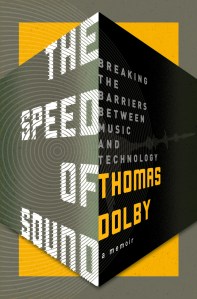
Book Review: The Speed Of Sound by Thomas Dolby

A cursory survey of Dolby’s musical career reveals that he’s a pivotal figure by any standards, collaborating with Prefab Sprout, Stevie Wonder, Eddie Van Halen, Jerry Garcia, George Clinton, Herbie Hancock, Trevor Horn, David Bowie, Def Leppard, Joni Mitchell…

And that’s not even factoring in the excellent solo albums and technological innovations (he created the software for the first popular mobile ringtones).

So if it’s pithy, musicianly anecdotes and the bittersweet memories of an Englishman (mostly) abroad you’re after, his enjoyable autobiography ‘The Speed Of Sound’ certainly does the business. But, as we’ll see, it’s very much a book of two halves.

A music-and-technology-mad teenager, Thomas Morgan Robertson first builds up his performing chops during a lengthy period of busking in Paris, finding out quickly that playing ‘Stairway To Heaven’ is the only way to make any money.

Returning to London, he’s in the right place at exactly the right time and on the verge of launching his solo career when summoned across the pond to work on Foreigner 4.

Christened ‘Booker T Boofin’ by the AOR legends for his considerable efforts, it nonetheless turns out to be a not entirely edifying entrée into the world of mega-bucks recording.

Then there’s solo-artist fame in the US, tempered by difficult video shoots, stage fright and the occasional debilitating panic attack. He’s summoned by Michael Jackson to come up with a few new post-Thriller tunes. It doesn’t end well.

His tours are well-attended but lose money and his second major single release ‘Hyperactive’ and attendant solo album The Flat Earth flatline partly due to dodgy record company ‘accounting’.

It’s a chastening experience; he focuses more on production work in the mid-’80s and any fans of Prefab’s Steve McQueen and Joni Mitchell’s Dog Eat Dog will find loads to enjoy here.

But Dolby inadvertently locks horns with Joni and finds himself sending in keyboard parts and arrangement ideas from Jenny Agutter’s spare room. Only in LA…

We get the inside story of his appearance with David Bowie’s at Live Aid (with only three short rehearsals), hear about a hilarious fishing trip with George Clinton and a memorable serenading by Stevie Wonder in a studio broom cupboard.

Then there’s an enjoyable detour into the world of movie soundtracks, ‘hanging out’ with George Lucas and meeting the love of his life in LA. By the early ’90s, we’re deep in ‘Spinal Tap’ territory when Dolby has amusingly mystifying dealings Eddie Van Halen and Jerry Garcia.

So far so good. But the second half of ‘Speed Of Sound’ focuses on Dolby’s lengthy sojourn in Silicon Valley. Depending on your taste, this will either be a trial or treat. I skipped large chunks of it.

I wanted a lot more music and a lot less tech, and you sometimes get the feeling Dolby did too throughout that period (he frequently laments the fact that his more ‘personal’ music on Aliens Ate My Buick and Astronauts & Heretics failed to find an audience).

The other issue – hardly Dolby’s fault of course – is that everyone seems to be writing a memoir these days and it only emphasises the dearth of decent recent music. And slightly lessens the mystique of the best ’80s material. I’d trade one more decent Dolby solo album for any number of ‘Speed Of Sound’s… But it’s still a very enjoyable read.

‘The Speed Of Sound’ is published now by Icon Books.

Dolby discusses the book here.

Thomas Dolby: Aliens Ate My Buick

aliens-ate-my-buick-52dea191dc659This was Dolby’s ‘Marmite’ album – the one that really tested his fanbase.

A relocation to the States after marrying soap actress Kathleen Beller (Dolby’s companion on the front cover) led to a new home in the Hollywood Hills (apparently a very large, rather creepy movie-star mansion), the recruitment of a great new band The Lost Toy People via an advert in a local paper and a wholesale embracing of American black music.

In many ways, Aliens is Dolby’s reaction to the work of George Clinton and Prince (of course, he’d collaborated rather spiffingly on the former’s Some Of My Best Jokes Are Friends). But it’s also a rather uptight Brit’s view of American culture complete with tacky local detail: smog alerts, Bel Air bimbos, pink leather upholstery, weird license plates.

dolby

A very brave bit of sequencing puts ‘The Key To Her Ferrari’ right at the front of the album.

A fake-jazz/B-Movie swinger with a vaguely ‘50s rock’n’roll feel featuring lots of Zappaesque spoken word stuff from Dolby and some brilliant close-harmony female vocals, it’s all pretty stupid but the band plays fantastically and everyone sounds like they’re having a great time. However, you do wonder how many listeners made it past such an uncompromising track.

The lead-off single ‘Airhead”s delirious mash-up of funk and pop is pretty irresistible.

Mr Clinton contributes the funny and funky ‘Hot Sauce’ which packs in an incredible amount of good stuff into its five minutes including a Spaghetti Western prelude, a reference to Cameo’s ‘Candy’, a touch of salsa and even a killer James Brown-style piano break.

Ditto ‘May The Cube Be With You’, featuring Clinton and Lene Lovich on backing vocals, the Brecker Brothers on horns and a brilliant groove from P-Funk bass/drums team Rodney ‘Skeet’ Curtis and Dennis Chambers.

But, as with most Dolby albums, the treasures are mostly found in the more introspective, less gimmicky moments. ‘My Brain Is Like A Sieve’ easily transcends its title and faux-reggae arrangement to become a superb and quite downbeat pop song in the Prefab style. ‘The Ability To Swing’ is a cracking piece of funk/jazz, with some excellent lyrics, possibly Dolby’s most covered song.

‘Budapest By Blimp’ is very much the centrepiece of Aliens and its stand-out track, an epic ballad harking back to the Flat Earth sound with a great, David Gilmour-esque guitar solo by Larry Treadwell (one of many on the album) and some superb, driving bass from the late Terry Jackson.

The only slight misfire is ‘Pulp Culture’, initially interesting but quickly grating with coarse lyrics and a melody line too similar to Stevie Wonder’s ‘Have A Talk With God’. It’s worth noting, though, that according to Dolby, the entire song (including his vocals) is made up of Fairlight samples.

The album’s very moderate success (#30 in the UK and #70 in the US) was probably not a surprise – it was totally out of sync with anything in British or US pop. Aliens probably rather reflected Dolby’s interest in music video and movie soundtracks (he’d just finished scoring ‘Gothic’ and ‘Howard The Duck’).

I’d put Aliens up there with The Flat Earth as his best album, a perfect companion piece to other classics of summer 1988 such as Prefab’s From Langley Park To Memphis, Scritti Politti’s Provision and Prince’s Lovesexy. It’s strong beer but I love its pungent textures. And let’s not forget Steve Vance and Leslie Burke’s brilliant cover artwork.