Blitz: The Club That Shaped The 80s @ Design Museum, 27 September 2025

England, 1979: punk is out, sus laws and Thatcher are in. Nightclubs are closing down and youth violence and political unrest are on the rise (as are movements like Rock Against Racism).

But, in a curious echo of punk five years before, something is stirring in the London suburbs. Young Roxy, Bowie and Kraftwerk fans from Bromley, Burnt Oak and Basildon are dressing up in style (Zoot and toy-soldier suits, cummerbunds, bolero hats, geometric haircuts) and flocking to clubs like Covent Garden’s famous Blitz, now the subject of an engaging exhibition running until 29 March 2026 at the Design Museum

It was the apex of a scene which encompassed fashion, graphic design, journalism, electronic dance music, squatting and a New Pop sensibility which would soon sweep the charts. In short, it’s arguably the best of the 1980s, and this fascinating exhibition neatly incorporates most of it.
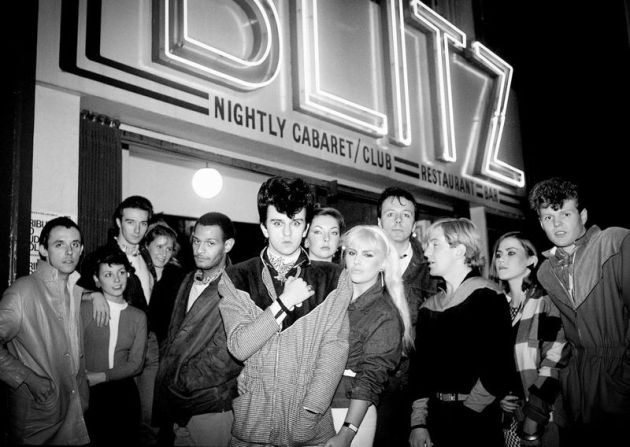
Blitz Kids including Midge Ure, Steve Strange, Billy Currie and Rusty Egan

We see the original flyers and posters which wittily and stylishly trailed the Blitz club nights, and there are many items of vintage clothing. The rarely-seen photos are worth the price of admission alone, many contributed by original scenesters like Boy George, Siobahn Fahey, Robert Elms and Marilyn, including a priceless shot of David Bowie with Toni Basil (we also get the full story of Bowie’s recruitment of Strange et al for the ‘Ashes To Ashes’ video).

But the jewel in the exhibition’s crown is probably the recreation of the Blitz itself, with an AI Rusty Egan on the decks and Spandau Ballet performing ‘To Cut A Long Story Short’ on the ‘live stage’ (elsewhere Elms has donated his embarrassing handwritten poem which he used to announce their debut gig at the club).

Rusty Egan, Gary Kemp, Fiona Dealey and Robert Elms in the exhibition’s recreated Blitz. Photo by PA Media

The exhibition widens out to encompass other fascinating early 1980s artefacts, like the posters advertising Sade’s pre-fame Ronnie Scott’s gigs – well over a year before Diamond Life was released – and evidence of the media’s generally condescending attitude towards The Cult With No Name/New Romantics/Blitz Kids.

Then there are the textiles, hats and magazines galore (the exhibition dovetails slightly with the Portrait Gallery’s recent Face exhibition), and even the first all-electronic drum set, a Simmons SDS-V, as used by Kajagoogoo, Flock Of Seagulls, Ultravox etc.

This is an engaging, fun exhibition curated by people who were there and/or obviously care about this stuff. And there’s just enough social/political context for it to be educational too – it was good to see so many youngsters enjoying it with their parents. Highly recommended.
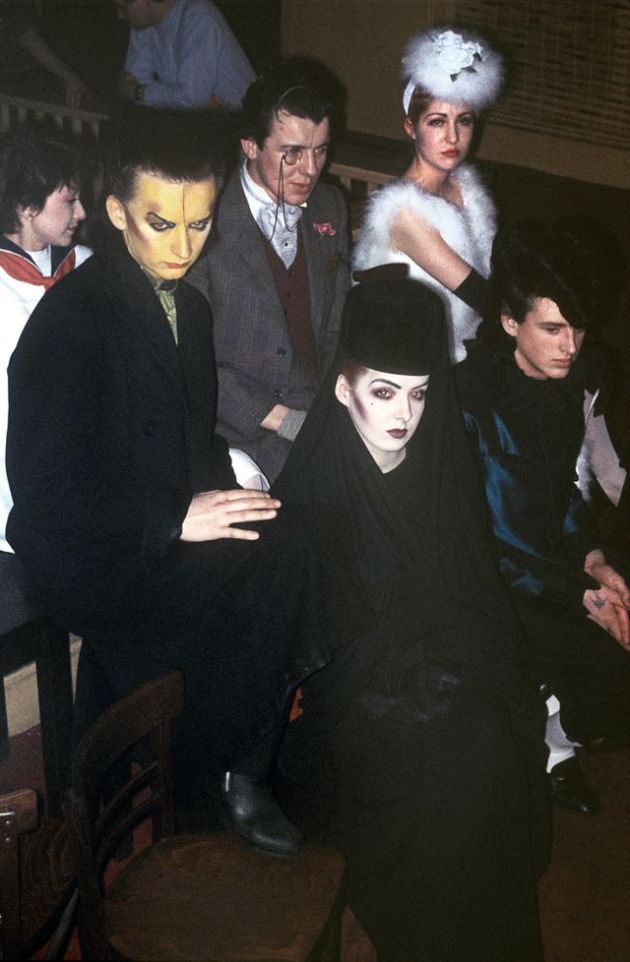
The Blitz in 1980, with Boy George (left)
The Face Magazine: Culture Shift @ National Portrait Gallery, London

Any British music fan who came of age during the 1980s must surely have a soft spot for The Face magazine.

Launched by Smash Hits founder/NME editor Nick Logan in May 1980, the monthly rag – so named because of its Mod allegiances – quickly become known as a first-rate style mag (it covered fashion, music, culture, clubbing and cinema too), with its many famous covers reaching the level of high-quality pop art.

Indeed, looking again at issue #1, it’s remarkable how many of its listed writers and photographers would turn out to be key documentors of the decade – Janette Beckman, Julie Burchill, Gary Crowley, Anton Corbijn, Ian Cranna, Jill Furmanovsky, David Hepworth, Tony Parsons, Sheila Rock, Pennie Smith (and that issue alone features iconic photos of Madness, The Specials, The Clash, John Lydon and Paul Weller, amongst others).

It was also unique amongst 1980s music mags in paying as much attention to reggae, hip-hop, electro, house, rare groove and jazz as it did to post-punk, 2-Tone and sophistipop.

But movingtheriver also remembers it most for its superb long-form interviews: I still have issues featuring in-depth pieces on Miles Davis, Trouble Funk, Dennis Hopper, David Sylvian, David Byrne, Robert Smith, Daryl Hall and Ken Russell.

The Face’s iconic imagery is celebrated at the excellent if compact new exhibition at London’s National Portrait Gallery. Predictably it’s photos from those post-punk/New Pop salad days of 1980-1983 which produce the most smiles of recognition/pleasure – Bowie in Japan, Adam Ant, Phil Oakey, John Lydon, Annie Lennox.

But there are great pics/stories from later in the decade too – Bros with their mum at home in Peckham, Shane MacGowan, Sade, Nick Kamen, Felix et al. There’s also a great chronology of 1980s clubbing, from Goth to Acid House, and a focus on long- lost London nightspots.

As the 1980s became the 1990s, The Face arguably reflected a gradual coarsening of the culture with more focus on fashion and lifestyle – but you knew that anyway. But this exhibition is a must-see for any music fan who loved the 1980s, and it was also refreshing to see such a broad range of ages attending.

The Face Magazine: Culture Shift runs at the National Portrait Gallery until 18 May 2025.

The Movers & Shakers Of 1980s Music: Their Real Names Revealed

Captain Sensible, AKA…

During the punk era, musicians often chose stage names so that the dole office wouldn’t identify them from album covers or gigs.

One wonders how much of an issue that was for Gordon Sumner, Paul Hewson and David Evans, AKA Sting, Bono and The Edge, but you never know.

But as the 1980s wore on and the post-punk era became the hip-hop era, a whole new generation of rappers, DJs, producers and musicians felt the need to create pseudonyms.

But what did their mums call them? Here, for your dubious pleasure, are some of the most intriguing real names. It’s fair to assume that most probably don’t like being reminded of these, for various reasons. YOU go taunting Ice-T with his real name (Tracy Marrow). But, on the other hand, kudos to The Cure’s Robert Smith for not using a pseudonym…

Terminator X (Public Enemy DJ): Norman Rogers

Jet Black (Stranglers drummer): Brian Duffy

W. Axl Rose: William Bruce Rose Jr.

Divine: Glenn Milstead

MC Lyte: Lana Moorer

Kate Bush: Catherine Bush

Sun Ra: Herman Blount

Sade: Helen Folasade Adu

Adam Ant: Stuart Goddard

Ozzy Osbourne: John Michael Osbourne

Genesis P-Orridge (Throbbing Gristle/Psychic TV frontperson): Neil Megson

Cosey Fanni Tutti (Throbbing Gristle co-founder): Christine Newby

Jamaaladeen Tacuma (Ornette Coleman bassist): Rudy McDaniel

Howard Devoto (Magazine singer/solo artist): Howard Trafford

Wilko Johnson: John Wilkinson

Jah Wobble: John Wardle (named by a drunken Sid Vicious, whose real name is John Ritchie…)

Prairie Prince (Tubes/XTC drummer): Charles Lempriere Prince

Sydney Youngblood (‘If Only I Could’ singer): Sydney Ford

Yazz (‘The Only Way Is Up’): Yasmin Evans

Belouis Some (‘Imagination’ singer): Neville Keighley

Hollywood Beyond (‘What’s The Colour Of Money’ singer): Mark Rogers

Tommy Vance (legendary DJ): Richard Anthony Crispian Francis Prew Hope-Weston

Melle Mel: Melvin Glover

John Martyn: Iain McGeachy

Tom Verlaine (Television frontman): Thomas Miller

Johnnie Walker (DJ): Peter Dingley

Kim Wilde: Kim Smith

Midge Ure: James Ure

Elvis Costello: Declan MacManus

Adrian Belew: Robert Steven Belew

Princess (London soul singer of ‘Say I’m Your Number One’ fame): Desiree Heslop

Dweezil Zappa: Ian Donald Calvin Euclid Zappa (The LA hospital nurse wouldn’t let Gail and Frank name him ‘Dweezil’ so FZ named him after his early collaborators Ian Underwood, Captain Beefheart, Carl Schenkel and ‘Motorhead’ Sherwood. Dweezil’s name was legally changed when he was five years old.)

Mick Mars (Motley Crue guitarist): Robert Alan Deal

John Foxx: Dennis Leigh

Trugoy (De La Soul rapper): David Jolicoeur

Cheryl Baker (Bucks Fizz vocalist): Rita Crudgington

Grandmaster Flash: Joseph Saddler

Kidd Creole (Furious Five rapper): Nathaniel Glover

KRS-One: Lawrence Parker

Pauline Black (Selecter singer): Belinda Magnus

Siouxsie Sioux: Susan Ballion

Geddy Lee: Gershon Eliezer Weinrib

Sebastian Bach (Skid Row singer): Sebastian Bierk

Marilyn (‘Calling Your Name’ singer): Peter Robinson

Don Was (Was Not Was co-founder/superstar producer): Don Fagenson

Falco (‘Rock Me Amadeus’ one-hit wonder): Johann Holzel

Steve Severin (Siouxsie and the Banshees bassist): John Bailey

Budgie (Siouxsie drummer): Peter Clarke

Dave Vanian (Damned singer): David Lett

Lydia Lunch: Lydia Koch

Flavor Flav: William Drayton

LL Cool J: James Smith

Tone Loc: Anthony Smith

Bonnie Tyler: Gaynor Hopkins

Yngwie Malmsteen: Lars Lannerback

Young MC: Marvin Young

Ice Cube: O’Shea Jackson Sr.

Shakin’ Stevens: Michael Barratt

Donna Summer: LaDonna Gaines

Captain Sensible: Raymond Burns

Rat Scabies (Damned drummer): Christopher Millar

Vanilla Ice: Matthew Van Winkle

MC Hammer: Stanley Burrell

DJ Kool Herc (hip-hop pioneer): Clive Campbell

Duke Bootee (hip-hop pioneer): Edward Fletcher

Afrika Bambaataa: Lance Taylor

Nikki Sixx (Motley Crue bassist): Franklin Ferrana

Skip McDonald (On-U Records/Sugar Hill guitarist): Bernard Alexander

Billy Idol: William Broad

Bill Wyman: William Perks

Fish: Derek Dick

Fee Waybill (Tubes vocalist): John Waldo

Billy Ocean: Leslie Charles

Posdnuous (De La Soul rapper): Kelvin Mercer

Maseo (De La Soul rapper): Vincent Mason Jr.

Chris De Burgh: Christopher Davidson

Kool Moe Dee: Mohandas Dewese

Dee C Lee (Style Council vocalist/’See The Day’ solo artist): Diane Sealey

Steve Strange (Visage frontman/Blitz pioneer): Stephen John Harrington

Youth (Killing Joke bassist/superstar producer): Martin Glover

Geordie (Killing Joke guitarist): Kevin Walker

Doug E Fresh: Douglas Davis

1980s Albums That Always Appear In Charity/Secondhand Shops

So it’s official: old music is hugely outselling new music. And vinyl is the most popular physical format again.

Go into a record shop and likely you’ll be stunned at the price of secondhand vinyl, not to mention new catalogue LPs that can cost up to 25 quid for a posh reissue.

All of which might amuse/surprise music fans of my vintage who kept hold of their record players through the years and spent the noughties digging around the vinyl discount stores, often picking up ‘esteemed’ albums for anything between 10p and a quid (the price of a postage stamp, for readers outside the UK).

So what were those 1980s vinyls that were/are ALWAYS in secondhand shops and, by extension, still ever-present in charity shops? And why were they always there?

Most smack of the impulse buy by people who get one album a year, or the ‘difficult’ follow-ups to a smash. Some are tainted by an almost ineffable naffness. Most were deemed surplus on vinyl once CD became the format of choice, and most are weirdly genre-less.

Stacked high/sold cheap, you’d think they’d be reissue-proof, never to be seen again. But not so fast: ‘deluxe’ editions of these are probably on their way to a shop/streaming service near you, or have already arrived…

The Beautiful South: Welcome To The Beautiful South

U2: Rattle And Hum

Del Amitri: Waking Hours

Bros: Push

Hothouse Flowers: People

Michael McDonald: Sweet Freedom (The Best Of Michael McDonald)

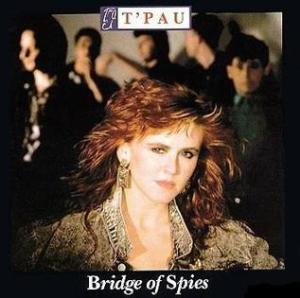
T’Pau: Bridge Of Spies

Foreigner: Agent Provocateur

Michael Bolton: Soul Provider

Meat Loaf: Dead Ringer

John Cougar Mellencamp: The Lonesome Jubilee

Enya: Watermark

Five Star: Silk And Steel

Arcadia: So Red The Rose

Sade: Diamond Life

Chris Rea: The Road To Hell

Phil Collins: No Jacket Required

Bryan Ferry: Boys And Girls

Genesis: Invisible Touch

George Michael: Faith

Tracy Chapman: Tracy Chapman

Fleetwood Mac: Tango In The Night

Wet Wet Wet: Popped In, Souled Out

Fairground Attraction: The First Of A Million Kisses

Paul Young: No Parlez

Tom Petty: Full Moon Fever

Michael Jackson: Bad

Tina Turner: Private Dancer

Lionel Richie: Can’t Slow Down

Alison Moyet: Alf

Patti Labelle: Winner In You

Howard Jones: Human’s Lib

Simply Red: A New Flame

Whitney Houston: Whitney

Paula Abdul: Forever Your Girl

Bon Jovi: Slippery When Wet

Madonna: True Blue

Tears For Fears: Songs From The Big Chair

1980s ‘Classics’ I Don’t Need To Hear Again (AKA The Bland Files)

Noel Coward famously noted the strange potency of ‘cheap’ music.

There was certainly a lot of cheap, potent music around in the 1980s.

But as the nostalgia industry has grown, so has the dossier of seemingly ‘untouchable’ ’80s pop songs, tracks that are staples of daytime radio but, to many ears, lack distinctive grooves, beguiling melodies or interesting hooks.

If you were being cruel, you might say it’s music for people who don’t really like music. And, weirdly, it mostly comes from established, experienced campaigners who have a lot of other strings to their bow. But we only ever seem to hear one or two of their songs.

Here are those overplayed tracks that always have me reaching for the ‘off’ switch but have retained a weird grip on radio programmers for over 30 years. We consign them to Room 101, here and now, never to be heard again…

Dire Straits: ‘Walk Of Life’/’Money For Nothing’

Yazz: ‘The Only Way Is Up’

King: ‘Love And Pride’

Whitney Houston: ‘I Wanna Dance With Somebody’

Tina Turner: ‘Simply The Best’

The Beautiful South: ‘Song For Whoever’

Spandau Ballet: ‘Through The Barricades’

Dream Academy: Life In A Northern Town

Anything by The Proclaimers

Anything by Texas

Chris Rea: ‘The Road To Hell’

Sade: ‘Your Love Is King’/’Smooth Operator’

Steve Winwood: ‘Higher Love’

Mike And The Mechanics: ‘The Living Years’

Anything by Fleetwood Mac

The Cars: ‘Drive’

Mental As Anything: ‘Live It Up’

Soul 2 Soul: ‘Back To Life’

Anything by U2 apart from ‘Pride (In The Name Of Love’)’ or ‘The Unforgettable Fire’

Cyndi Lauper: ‘Time After Time’

Depeche Mode: ‘Personal Jesus’

Talking Heads: ‘Road To Nowhere’

Tracy Chapman: ‘Fast Car’

Anything by Tom Petty

Simply Red: ‘Holding Back The Years’

Prince: ‘When Doves Cry’

Womack & Womack: ‘Teardrops’

Anything by Duran Duran except ‘Notorious’ or ‘Skin Trade’

Anything by Bon Jovi

Culture Club: ‘Karma Chameleon’

Anything by Pet Shop Boys except ‘Suburbia’

Red Wedge 30 Years On

red wedge

The Red Wedge gang including Paul Weller, Jimmy Somerville and Glenn Gregory meet Ken Livingstone and Labour leader Neil Kinnock, 1987

Some might say that music and politics should never mix. But it’s less than two weeks to the General Election here in England. Looking at the music press or listening to music radio, you’d never know it.

Is politics just terminally uncool? Do today’s musicians not give a damn about who gets into power? It seems to be a mixture of both, though I was intrigued to see Paloma Faith hand-picking the writer Owen Jones to open some of her recent gigs.

The deafening silence (apart from a recent Jazz For Labour event at the Barbican) can’t help but beg comparison to the state of play 30 years ago when the movement known as Red Wedge got underway.

Formed in 1985 initially as a Labour-supporting group to encourage young people to vote and get Margaret Thatcher out of office, it arguably politicised a second generation of music fans a decade after Rock Against Racism and punk. Though I was too young to fully understand Red Wedge’s aims (and too young to vote), I certainly took notice.

Red Wedge officially started on 21st November 1985 when Kirsty MacColl, Billy Bragg, Paul Weller and Strawberry Switchblade were invited to a reception at the Palace of Westminster by Labour MP Robin Cook.

Major tours followed in the next few years leading up to the 1987 General Election featuring additional artists such as The Communards, The Style Council, Junior, Jerry Dammers, Madness, The The, Bananarama, Prefab Sprout, Elvis Costello, Sade, The Beat, Lloyd Cole and the Commotions and The Smiths. In short, this was no Mickey Mouse setup.

Unfortunately, their efforts amounted to diddly squat; the 1987 election resulted in a third consecutive Conservative victory. But at least they tried and their message didn’t fall on deaf ears. And where is the new batch of protest songs and protest singers? Unfortunately the current crop of musicians are just like most of the politicians: bland, middle-of-the-road, lacking in ideas and desperate not to offend.