Little Feat provided some of my happiest musical memories of the late ’80s.
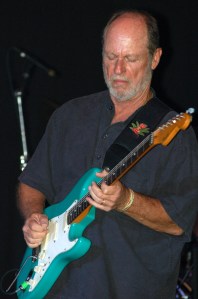
Paul Barrere, who has died at the age of 71, was a big part of that. His stinging leads, tasty rhythms, decent vocals and excellent songwriting were a massive part of Little Feat’s middle and later periods – the eras that really grabbed me – and he toured with the band right up until near his death.
Barrere joined Little Feat in time for the release of ’73’s classic Dixie Chicken. As Lowell George’s influence waned in the band’s middle years (and critics mainly derided the band’s embracing of prog, jazz and fusion alongside the blues, country and rock’n’roll), he contributed more and more.
As a teenager, Little Feat’s music fascinated me. There’s an oft-quoted maxim, attributed to Joe Zawinul, about Weather Report’s modus operandi: ‘We always solo and we never solo’. It could also be applied to Little Feat. Nothing was quite as it seemed. Barrere and George’s ensemble guitars meshed with Bill Payne’s keys to make a beguiling brew, sitting atop the brilliant rhythm section of Kenny Gradney (bass), Richie Hayward (drums) and Sam Clayton (congas).
Barrere was born on 3 July, 1948, in Burbank, California, the son of Hollywood actors Paul and Claudia Bryar. He wrote or co-wrote many Feat classics, including ‘Skin It Back’ from Feats Don’t Fail Me Now, ‘All That You Dream’ from The Last Record Album, ‘High Roller’, ‘Keepin’ Up With The Joneses’, ‘Old Folks Boogie’ and ‘Time Loves A Hero’.
Sadly it’s often a great musician’s death that leads one to explore the nooks and crannies of their recorded legacy, and Barrere is no different: he worked with Bob Dylan and unbeknownst to me also recorded three solo albums in the early ’80s.
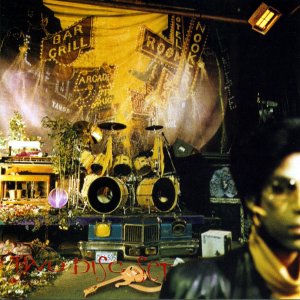
At the beginning of 1989, the tabloids were full of rumours that Prince was in dire financial straits.
While that seems unlikely, with hindsight it does seem a curious decision for him to take on a soundtrack gig for such a huge mainstream movie, stepping right into the belly of the Warner Bros. beast.
But then it’s also not much of a surprise that he smashed Batman out of the park. On many levels, it was the perfect project for the time – the movie’s themes appealed to his post-Lovesexy spiritual concerns and also tapped into his own feelings about fatherhood. He explored those themes poignantly on ‘The Future’ and ‘Vicki Waiting’.
Musically, in the main he retreated from Lovesexy‘s album’s dense, complex, band-inspired sounds and went back to a minimalist approach, pushing his guitar right to the fore and making liberal use of samplers and a Fairlight.
But even though ‘The Future’, ‘Electric Chair’, ‘Partyman’, ‘Batdance’ and ‘Lemon Crush’ are essentially one-chord jams, Prince knows exactly how to hold the attention with false endings, escalating riffs, hysterical guitar solos and quirky chord voicings. The net result is a somewhat forbidding but still undeniably funky album.
Also he doesn’t scrimp on the dancefloor classics – put on ‘Partyman’, ‘Trust’ or ‘Batdance’ (a UK #2 and US #1) and to this day you’ll get any party started. Elsewhere, ‘Scandalous’ is a brilliantly-sung, sometimes funny seduction ballad in the tradition of ‘Do Me Baby’ and ‘International Lover’, while ‘The Arms Of Orion’ is a pretty – if somewhat trite – ballad.
The album was a smash hit, selling over a million copies in its first week of release and becoming his first US #1 album since Around The World In A Day. Prince was almost returning to his Purple Rain popularity, no doubt helped by the huge success of the movie.
But this kind of mainstream success was short-lived. Something was eating him up inside – in typical form, he regrouped immediately and took on a deeply personal project, the doomed Graffiti Bridge movie/album. Probably his least-remembered album of the ’80s – and arguably his last classic – Batman is ripe for rediscovery as we reach more end-of-the-decade, spiritual/political uncertainty.
Here it is: Madonna’s artistic breakthrough, the first album of hers that was really geared to the CD-buying audience, and a fresh start after the distinctly dodgy years of 1987 and 1988.
Like A Prayer (weird title: didn’t someone in the Warner Bros. marketing department say, ‘Hey, it’s a bit similar to Like A Virgin‘?) was released 30 years ago this week.
It topped the US and UK charts, spawned six hit singles and has sold around 15 million copies to date.
It was a revelation on a few levels – Madonna’s singing voice had more range and richness. Her lyrics were getting personal. There were two songs about her marriage to Sean Penn, and three zoning in on family relationships.
She co-wrote and co-produced all the songs; by all accounts she knew exactly what she wanted and was present at all the tracking sessions, finding ever new ways of inspiring the performances she was after (see below).
She hooked up with co-producer/co-songwriter Pat Leonard to great effect. It was a classic double act – she provided melodies, street smarts and lyrics, he provided the classically-trained piano and arrangement skills. The result was her Sgt Pepper’s, a varied, ambitious, major work.
But how does Like A Prayer stack up these days? Here’s a track-by-track rundown of arguably Madonna’s greatest album.
‘Like A Prayer’: The lead-off single, a US and UK #1, once described by Rolling Stone magazine as ‘as close to art as pop music gets’. It was also highly controversial in its allusions to oral sex and an apparent conflation between religious/sexual ecstasy, not to mention the envelope-pushing video.
‘Express Yourself’: Great feminist party pop/funk tune co-written with Stephen Bray, inspired by Sly And The Family Stone and anchored by JR Robinson’s crisp grooving. Shep Pettibone’s single remix subsequently usurped the album version. David Fincher’s video cost a reported $5 million.
‘Love Song’: This duet with Prince was a curious meeting of pop giants, musically in the Lovesexy/Batman mould but lacking a great hook, though apparently they did initially write it eye to eye, Prince programming drums and Madonna donning a synth. Tapes were then worked on individually and sent back and forth between LA and Minneapolis. Whilst interesting, it’s nearer to a Prince B-side than something really memorable.
‘Til Death Do Us Part’: A coruscating portrait of her marriage breakup to Sean Penn, made even more poignant by its sprightly Scritti-style pop. Bassist Guy Pratt was the recipient of Madonna’s unique production style on this track. ‘What did you think of that?’ she asked him after one take. ‘Um… I think it was OK…’ was his response. ‘Did it make your d*ck hard?’ Madonna shot back!
‘Promise To Try’: A powerful ballad, featuring an uncharacteristically emotional vocal. According to Madonna, it was written completely spontaneously: ‘He (Leonard) just sat down and started playing, and I started singing.’
‘Cherish’: More Scritti-inspired pop fun, all major chords and twinkling synths, looking at happier times with Sean. Jeff Porcaro’s trademark shuffle is his one and only drumming appearance on the album.
‘Dear Jessie’: An inspired take on late-’60s psychedelia, almost like a children’s lullaby. A very cool, unexpected track.
‘Oh Father’: A gorgeous ballad in 6/4 with music by Leonard and lyrics by Madonna, written in a tiny rehearsal studio in the garment district of New York when Madonna was in ‘a very, very dark place’ during her tenure in the David Mamet play ‘Speed-the-Plow’. Madonna: ‘”Oh Father” is not just me dealing with my father. It’s me dealing with all the authority figures in my life’. The song’s intro alone can put a big lump in this writer’s throat. Madonna apparently coaxed the band through the song, telling bassist Pratt and drummer Jonathan Moffett in no uncertain terms where not to play. Apart from string section and guitar overdubs, they got it on the second full take, including Madonna’s live vocal. During the sessions, Moffett also asked her when he should come in. ‘You come in when I do this’, she replied, lifting up her blouse!
‘Keep It Together’: Another Stephen Bray co-write, this Go-Go-inspired ode to family togetherness, featuring some brilliant Randy Jackson bass, became a mainstay of her ‘Blond Ambition’ tour. If you play it loud you can also really hear the superb backing vocals of her regular live duo Niki Haris and Donna DeLory.
‘Pray For Spanish Eyes’: The point where Like A Prayer starts to run out of steam. A corny, soft-rock version compendium of Spanish clichés, complete with castanets and weary acoustic guitar, and a weirdly unmemorable melody.
‘Act Of Contrition’: And here’s the other stinker. Madonna free-associates awkwardly over a reversed version of the title track, with Prince’s backwards guitar track also ladled on to no great consequence.
Further reading: ‘Songwriters On Songwriting’ by Paul Zollo
Singles released: ‘Sign O’ The Times’ (#3 US, #10 UK)
‘If I Was Your Girlfriend’ (#67 US, #20 UK)
‘U Got The Look’ (#2 US, #11 UK)
‘I Could Never Take The Place Of Your Man’ (#10 US, #29 UK)
At the time of Sign O’ The Times’release, the general critical consensus seemed to be that it was a great double album but, shorn of a few tracks, would have made a sensational single album. But what the press probably didn’t know was that Prince had actually intended to release a triple album.
He believed the three-record set Crystal Ball would have been be a huge artistic statement after a relatively disappointing 1986, but the idea scared the hell out of Warner Bros and also his manager Bob Cavallo. Prince was reluctantly forced to back down.
The tracks intended for Crystal Ball but later abandoned for Sign O’ The Times were ‘Rebirth Of The Flesh’, ‘Rockhard In A Funky Place’, ‘The Ball’, ‘Joy In Repetition’, ‘Shockadelica’, and ‘Good Love’ (all hoovered up from two other aborted album projects, Dream Factory and Camille).
But even after Prince removed these, he was still left with a 16-track double album, a brilliant mix of the sacred and profane, and a record which many fans believe was his finest hour.
The famous title track was recorded on 15 July 1986 in a single ten-hour session at LA’s Sunset Sound. Prince was experimenting with a new piece of kit – the Fairlight sampler/synth – but characteristically made the technology swing in a way that no other artist could.
The track also demonstrates his love of space; it’s essentially just a minimalist blues featuring a three-note melody line, some sampled drums/bass and a bit of electric guitar. Listening again on the day after the Westminster Bridge ‘terrorist’ attack of 23 March, the song’s lyric also seems as relevant now as it was in 1987:
Hurricane Annie ripped the ceiling of a church and killed everyone inside You turn on the telly and every other story is tellin’ you somebody died Sister killed her baby cos she couldn’t afford to feed it And we’re sending people to the moon In September my cousin tried reefer for the very first time Now he’s doing horse, it’s June
It’s silly, no? When a rocket ship explodes And everybody still wants to fly Some say a man ain’t happy Until a man truly dies
‘Play In The Sunshine’ and ‘Housequake’ are pure party pop – it’s scarcely believable that Prince alone could generate such a raucous studio atmosphere with only Susannah Melvoin’s backing vocals, a few guests and Eric Leeds’ sax for company. The latter also represents his first recorded attempt at hip-hop (unless you count the brief ‘rap’ in ‘Girls & Boys’), typically supplying something usually missing from the genre: humour.
‘The Ballad Of Dorothy Parker’, recorded in Prince’s Minneapolis home studio on 15th March 1986, may be his most psychedelic recording, the soundtrack to a dream with seemingly-spontaneous musical moments that no one else could have created. He demonstrates his mastery with the LM-1 drum machine and, vocally, sets up a novel ‘Greek chorus’ effect.
‘Forever In My Life’ takes a melody line very similar to Sly And The Family Stone’s ‘Everyday People’ (and maintains Sly’s key of G) but again demonstrates Prince’s remarkable sense of space and also features another extraordinary backing vocal arrangement.
The heartfelt lyric was written when he believed he would settle down with fiancée Susannah Melvoin (twin sister of Wendy) – sadly it wasn’t to be.
‘It’, another bold experiment with the Fairlight, returns to the cold, sexualised world of 1999, while ‘Hot Thing’ is its flipside, a funky, James Brown-inspired one-chord romp with some great Leeds tenor sax.
‘If I Was Your Girlfriend’ (another song about Susannah/Wendy), ‘Strange Relationship’ (another big nod to Sly), ‘It’s Gonna Be A Beautiful Night’, ‘Starfish And Coffee’, ‘U Got The Look’ and ‘I Could Never Take The Place Of Your Man’ are just brilliantly performed, beautifully written pop tunes with dashes of psychedelia and soul.
According to engineer Susan Rogers, Prince was very influenced by Kate Bush’s Hounds Of Love during the recording of SOTT, the track ‘Cloudbusting’ a particular favourite. Other songs showed contemporary influences too – ‘Adore’ was apparently Prince’s response to the popularity of Luther Vandross’s Give Me The Reason and Patti Labelle’s The Winner In You, and it also hugely influenced the neo-soul movement, particularly D’Angelo’s ballad style.
‘U Got The Look’ – the last song recorded for Sign O’ The Times on 21 December 1986 – was apparently inspired by Robert Palmer’s ‘Addicted To Love’.
Sign O’ The Times sold 1.8 million copies in the US, a very similar number to Parade. Some believed the slightly disappointing sales were due to the choice of ‘If I Was Your Girlfriend’ as the second single; it is strange that ‘U Got The Look’ didn’t get the nod. But if Prince’s popularity was levelling out in the States, it was growing across Europe.
After a chastening period in the late-’60s and ’70s when rock pretty much swept all before it, major labels took a renewed interest in established jazz acts and underground movements flourished (no wave, acid jazz, harmolodic funk, neo-bop). Wynton Marsalis, Miles, Courtney Pine and Loose Tubes even put jazz back on primetime TV.
But when Chaka Khan recorded ‘And The Melody Still Lingers On (Night In Tunisia)’, the dramatic centrepiece of her What Cha’Gonna Do For Me album, she arguably set the whole revival in motion.
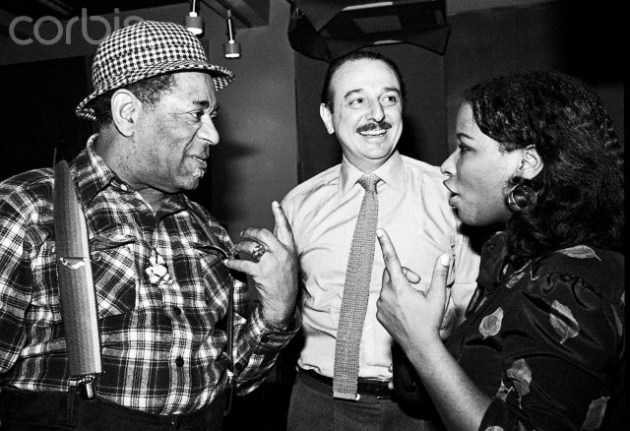
Dizzy Gillespie, Arif Mardin and Chaka Khan, Atlantic Studios 1981
It was producer Arif Mardin’s idea, his mind wandering during a flight between New York and LA. The album was one song short – so how about a tribute to the bebop masters of the ’40s using the crème de la crème of the early ’80s soul/R’n’B/jazz session players? They could use Dizzy Gillespie and Frank Paparelli’s 1942 bebop classic ‘A Night In Tunisia’ as a template.
Chaka loved the idea. Mardin hoped to find a lyricist but deadlines were pending so he tackled it himself with Chaka adding the final touches. Mardin made a demo of the arrangement which cheekily inserted Charlie Parker’s famous 1946 alto break.
Charlie Parker in 1946
A lengthy chart was quickly made up (resembling a ‘Chinese laundry list written in cuneiform’, according to Mardin) which included eight spare bars for the insertion of the Parker lick.
The musicians – Casey Scheuerell on drums, David Foster and Ronnie Foster (no relation) on keys, Abe Laboriel on bass and Paulinho Da Costa on percussion (mostly heard on shaker in the first verse and congas in the second) – were booked and smashed the tune in one take.
Herbie Hancock later contributed a brilliant synth solo. Chaka then added her sublime vocals. Her four-part big-band harmonies and spine-tingling ad-libs bring the song right up to date.
But there was still space for an opening head melody and a solo in the final verse. Dizzy had been sent the demo by Mardin with a note asking him to contribute.
But the bebop legend replied that he would be on tour and so couldn’t make the recording session – but he suddenly arrived two days before the album’s mastering date at New York’s Atlantic Studios to add his part. The track was complete.
Chaka and Mardin attempted to repeat the trick a few years later with ‘Bebop Medley’ but it lacked the finesse of this timeless classic.
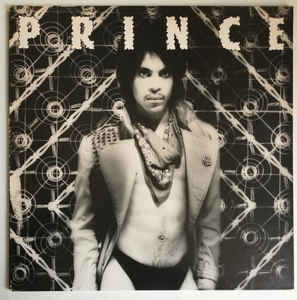
I was a late starter when it comes to Prince, too young to get the sexual/spiritual absolutism of Purple Rain.
The one that really hooked me was 1986’s Parade, but these days I’d cite Around The World In A Day as my favourite Prince album.
It was released just ten months after Purple Rain, a serious statement of intent and a good indication of how prolific he was at the time.
Prince unveiled the first release on his new Paisley Park label at an uncomfortable listening party on 21 February 1985 in the LA offices of Warner Bros attended by 15 to 20 Warners executives, plus Joni Mitchell and Prince’s father, all of whom had to sit on the floor. Apparently the general reaction from the suits was: how the hell are we gonna sell this?
For me, ATWIAD is prime Prince, when he was tapping into jazz, psychedelia and even classical music. But, perhaps surprisingly, the main influence is gospel. Prince screams his way through the morality tales of ‘The Ladder’ and ‘Temptation’ with just as much intensity as Al Green, Bob Dylan or Bobby ‘Blue’ Bland.
I also hear a lot of late-’70s Joni in the more experimental tracks such as the intense ‘Temptation’ and sublime ballad ‘Condition Of The Heart’ – he’s not scared to leave a lot of space for lengthy piano and guitar improvisations. This is the first Prince album where you can add ‘arranger’ to his list of musical gifts.
Much of Around The World In A Day actually predates Purple Rain. The title track, ‘Pop Life’, ‘Temptation’ and ‘Paisley Park’ were all recorded in early ’84, while the other songs were put together during the Purple Rain tour. While the album is credited to ‘Prince And The Revolution’, only ‘America’ and ‘The Ladder’ feature the full band. The rest is a one-man-band operation with guests here and there.
Any album which contains the classic singles ‘Paisley Park’, ‘Raspberry Beret’, ‘Pop Life’, the title track and ‘America’ definitely works. It’s well worth seeking out the 12” version of ‘America’ which runs to 21 minutes with no edits and no ‘remix’ element – just endless grooving. Only ‘Tambourine’ now sounds suspiciously like filler, despite Prince’s spirited impersonation of Sheila E’s drum style.
And we’ve got to mention Doug Henders’ sumptuous cover art. He explained the concept to writer Per Nilsen: ‘Most of the figures are characters in the songs, but some of the people are parts of Prince so they’re all somewhat autobiographical.’
Prince insisted on zero promotion for the album – no singles, no press or TV ads. This was totally unheard of in the mid-1980s. Even so, Around The World In A Day went to #1 in the US album chart on 1 June 1985, just 20 weeks after Purple Rain had completed its 24-week run at the top. It eventually sold over three million copies in the US.
With Purple Rain, Prince had shown Warner Bros that he could mix it with the biggies – Springsteen, Hall and Oates, Madonna and Michael Jackson. But now he was battling to do things his way, beginning with Around The World In A Day.
While this stance produced arguably his best music, it also drove a wedge between him and Warners leading up to the ‘SLAVE’ debacle of 1994/1995. But it was also, thankfully, a battle he won, producing an astonishing output of work between Purple Rain and Batman which rivals any five-year run in pop history.
I’ve bought this album (still unavailable on streaming platforms at the time of writing) on almost every format since I found a cassette copy in the early ’90s, back when it was a pretty rare groove.
The Family came out during my favourite Prince period. He was embracing jazz, fusion, psychedelia, classic rock and even modern classical, mainly prompted by his collaboration with the very excellent Wendy and Lisa but also other associates Sheila E, saxists Eric Leeds and Eddie M and string arranger Clare Fischer.
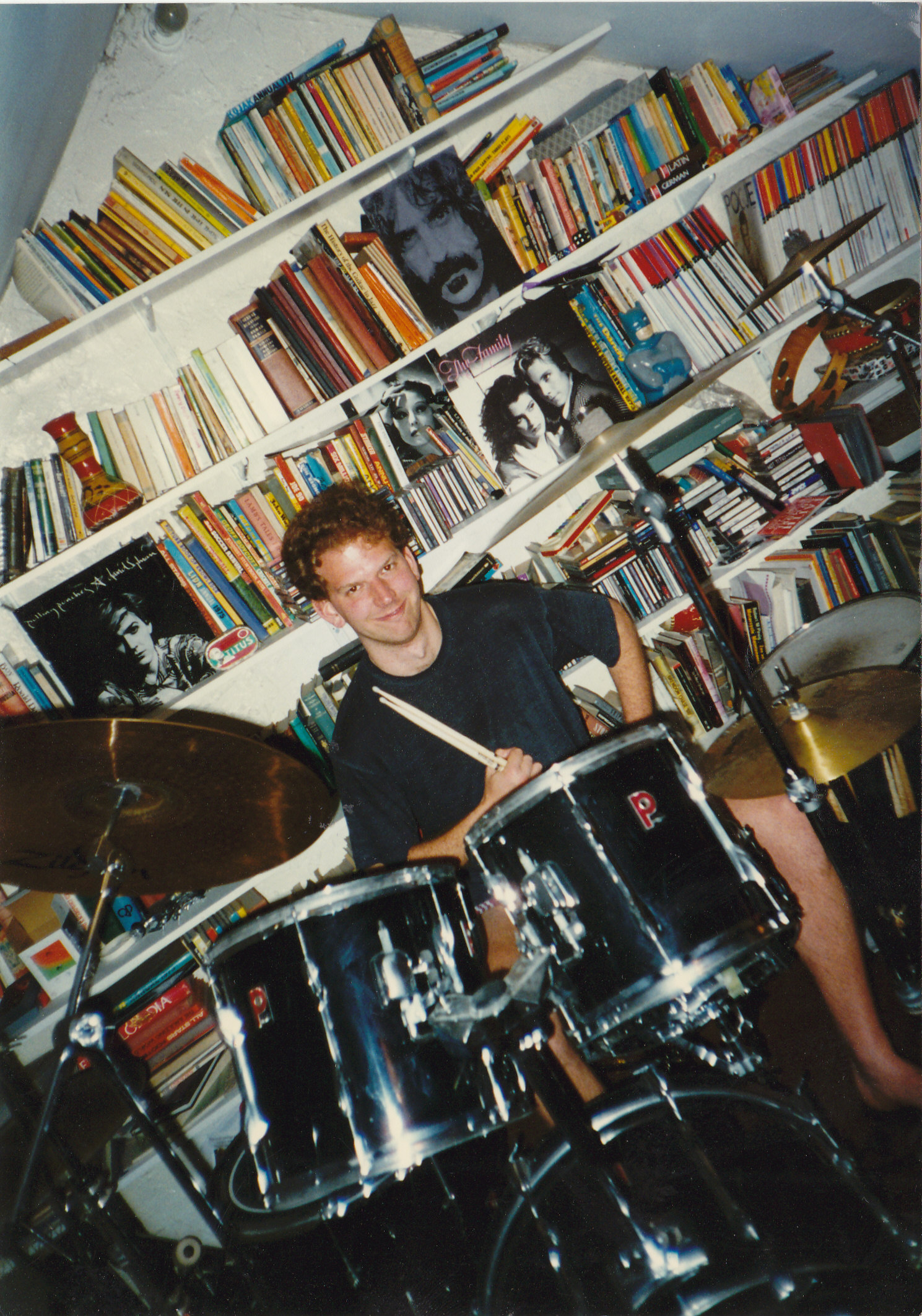
The author with The Family in background, summer 1991
This was my soundtrack to summer ’91. I instantly loved the retro Hollywood glamour of the cover artwork and the way it chimed with the whole Parade/Under The Cherry Moon concept.
The Family slipped out on Paisley Park Records in summer ’85 (just three months after Prince’s Around The World In A Day) to a very low-key critical and commercial reception. These days, the album is known mainly for including an early version of ‘Nothing Compares 2 U’.
But it’s full of far superior fare to that such as the killer opening funk medley, classic near-hit ‘The Screams of Passion’, charming pop of ‘Desire’ and especially instrumentals ‘Yes’ and ‘Susannah’s Pyjamas’ where Prince indulges in some fantastic Sly Stone-meets-Miles bass, guitar and drum grooves. This is the album that led Tutu producer Tommy LiPuma to recommend Prince to Miles as a possible collaborator and it’s easy to hear why.
The Family was put together by Prince when the first incarnation of his massively successful offshoot project The Time split up in the summer of 1984. The band’s keyboardist/vocalist Paul Peterson (renamed St Paul by Prince), drummer Jellybean Johnson and vocalist/dancer Jerome Benton were summoned to Prince’s house along with his then-fiancee (and sister of Wendy) Susannah Melvoin and Leeds.
A band concept was quickly ad-libbed by Prince, who, according to engineer David Rivkin (reported by Per Nilsen in his superb Prince: The First Decade book), issued them with the directive: ‘We gotta go after some of that Duran Duran money!’
But what they ended up with was far from Duran Duran music. Prince wrote all the songs (except ‘River Run Dry’), played all instruments on the basic tracks and sang all the guide vocals.
Peterson and Melvoin painstakingly replaced Prince’s scratch vocals (and apparently took dance and acting lessons!), Leeds added his trademark baritone, tenor and flute and Fischer provided deliciously non-linear string arrangements.
Prince’s ‘no bass’ philosophy (as famously heard on ‘When Doves Cry’ and ‘Kiss’) seems well to the fore on The Family. I still have in my possession a cassette of demos from the album featuring Prince’s phenomenal bass playing on ‘High Fashion’ and ‘Mutiny’, presumably deleted at the last minute.
The Family was released without much fanfare or marketing. After just one gig at First Avenue in Minneapolis (rare footage of which was recently removed from Youtube), the project was put on hold when Prince recruited Melvoin, Benton and Leeds for his Under The Cherry Moon movie.
Peterson was put on a retainer, but, tired of waiting around for Prince to get back from filming in the south of France, served his notice by phone call. According to Per Nilsen, Prince was flabbergasted, believing that The Family’s time wasn’t far away and that St Paul was jumping ship too soon.
And, in a way, he was right – The Family album just won’t go away. At the request of Roots/D’Angelo/Erykah Badu drummer Amir ?uestlove Thomson, a long-time fan, the four-piece minus Prince delivered a mesmerising comeback performance at a pre-Grammys bash in 2007.
And then in 2012 a full-length album Gaslight was released under the new name fDeluxe (with considerable contributions from Wendy and Lisa) and a successful world tour followed (including a great Jazz Cafe gig in London). It proves that this band was much more than a Prince side project and are a pretty formidable funk/soul act in their own right.