Thomas Dolby: Aliens Ate My Buick

aliens-ate-my-buick-52dea191dc659This was Dolby’s ‘Marmite’ album – the one that really tested his fanbase.

A relocation to the States after marrying soap actress Kathleen Beller (Dolby’s companion on the front cover) led to a new home in the Hollywood Hills (apparently a very large, rather creepy movie-star mansion), the recruitment of a great new band The Lost Toy People via an advert in a local paper and a wholesale embracing of American black music.

In many ways, Aliens is Dolby’s reaction to the work of George Clinton and Prince (of course, he’d collaborated rather spiffingly on the former’s Some Of My Best Jokes Are Friends). But it’s also a rather uptight Brit’s view of American culture complete with tacky local detail: smog alerts, Bel Air bimbos, pink leather upholstery, weird license plates.

dolby

A very brave bit of sequencing puts ‘The Key To Her Ferrari’ right at the front of the album.

A fake-jazz/B-Movie swinger with a vaguely ‘50s rock’n’roll feel featuring lots of Zappaesque spoken word stuff from Dolby and some brilliant close-harmony female vocals, it’s all pretty stupid but the band plays fantastically and everyone sounds like they’re having a great time. However, you do wonder how many listeners made it past such an uncompromising track.

The lead-off single ‘Airhead”s delirious mash-up of funk and pop is pretty irresistible.

Mr Clinton contributes the funny and funky ‘Hot Sauce’ which packs in an incredible amount of good stuff into its five minutes including a Spaghetti Western prelude, a reference to Cameo’s ‘Candy’, a touch of salsa and even a killer James Brown-style piano break.

Ditto ‘May The Cube Be With You’, featuring Clinton and Lene Lovich on backing vocals, the Brecker Brothers on horns and a brilliant groove from P-Funk bass/drums team Rodney ‘Skeet’ Curtis and Dennis Chambers.

But, as with most Dolby albums, the treasures are mostly found in the more introspective, less gimmicky moments. ‘My Brain Is Like A Sieve’ easily transcends its title and faux-reggae arrangement to become a superb and quite downbeat pop song in the Prefab style. ‘The Ability To Swing’ is a cracking piece of funk/jazz, with some excellent lyrics, possibly Dolby’s most covered song.

‘Budapest By Blimp’ is very much the centrepiece of Aliens and its stand-out track, an epic ballad harking back to the Flat Earth sound with a great, David Gilmour-esque guitar solo by Larry Treadwell (one of many on the album) and some superb, driving bass from the late Terry Jackson.

The only slight misfire is ‘Pulp Culture’, initially interesting but quickly grating with coarse lyrics and a melody line too similar to Stevie Wonder’s ‘Have A Talk With God’. It’s worth noting, though, that according to Dolby, the entire song (including his vocals) is made up of Fairlight samples.

The album’s very moderate success (#30 in the UK and #70 in the US) was probably not a surprise – it was totally out of sync with anything in British or US pop. Aliens probably rather reflected Dolby’s interest in music video and movie soundtracks (he’d just finished scoring ‘Gothic’ and ‘Howard The Duck’).

I’d put Aliens up there with The Flat Earth as his best album, a perfect companion piece to other classics of summer 1988 such as Prefab’s From Langley Park To Memphis, Scritti Politti’s Provision and Prince’s Lovesexy. It’s strong beer but I love its pungent textures. And let’s not forget Steve Vance and Leslie Burke’s brilliant cover artwork.

Peter Gabriel: So 30 Years Old Today

gabriel

‘At the time of coming back, he had tremendous determination. He said do want to make it! I do want to succeed!” Instead of going along with the idea that he is different, special, unique, precious, So was about him saying, “F**k that! I’m going to allow myself to succeed.”’ Jill Gabriel, quoted in ‘Peter Gabriel’ by Spencer Bright

So was the Peter Gabriel album that put him – albeit very briefly – into The Big League, alongside the likes of Madonna, Michael Jackson, Phil Collins, Prince, Hall and Oates and Springsteen, leaving his ‘art-rock’ contemporaries (Laurie Anderson, Brian Eno, Peter Hammill, Robert Fripp) in the dust.

He opened himself up to mainstream success via more direct lyrics and music. And it worked a treat. So still sounds fantastic today; a near-perfect mix of art and commerce.

photo by Steven Toole

photo by Steven Toole

In interviews, Gabriel has described the ’83/’84’ period as a dark time in his life. He mixed and released an excellent live album and looked for solace in film soundtrack work, producing two fairly inconsequential tracks: ‘Walk Through The Fire’ from ‘Against All Odds’ and ‘Out Out’ from ‘Gremlins’.

Far more substantial was his soundtrack for Alan Parker’s ‘Birdy’, but, most importantly, it was the project that introduced him to So co-producer Daniel Lanois.

Gabriel later credited Lanois and his then wife Jill for steering him back towards more positive thoughts, and much more ‘up’ music and lyrics.

Gabriel came up with 20 new songs by early 1985. Lanois helped him whittle them down to 12, and then six months of pre-production began, focusing on song structures and arrangements. So was mainly recorded at Gabriel’s home studio, Ashcombe House near Bath.

Working at home was intended to save money on big studio fees and also speed up the creative process, but lyric-writing was still a big problem and a lack of words necessitated two missed release deadlines for So: 31st July 1985 and 14th December 1985.

Virgin were patient. Lanois once even nailed him into a back room to force him to come up with some lyrics – Gabriel was not amused, at least not for a few hours. ‘It is the most upset I’ve seen him at the studio,’ guitarist David Rhodes remarked. Lanois had made his point.

Musically, Gabriel very much leaned on tried-and-tested collaborators such as Rhodes and Tony Levin – it’s hard to imagine anyone else playing bass on So. He’s so much part of the music. Check out his ‘drumstick bass’ (later marketed as Funk Fingers!) on ‘Big Time’.

Joni Mitchell’s then husband Larry Klein also plays some lovely fretless on ‘Mercy Street’. French-African newcomer Manu Katche amazed everyone with his drumming, particularly on ‘That Voice Again’ and ‘In Your Eyes’. He had a new twist on Stewart Copeland’s style and also somehow found the time to fit occasional tom-tom flurries into his grooves too.

Migrant Mother by Dorothea Lange

Migrant Mother by Dorothea Lange

‘Red Rain’ opens with some resplendent Copeland hi-hat work, and ends with the kind of piano/vocal coda that Simple Minds excelled at – the influences were now flowing both ways.

‘Don’t Give Up’ was inspired by a BBC TV documentary about the effect of unemployment on British family life, and also the photography of Dorothea Lange, portraying dust-bowl conditions during the Great Depression.

‘Mercy Street’, dedicated to poet Anne Sexton, shows evidence of Lanois’ influence; its opening ambient textures resemble Brian Eno’s ‘Under Stars’ which Lanois co-produced.

Gabriel’s low-octave vocals apparently had to be recorded first thing in the morning for maximum deepness. The song’s Brazilian/African groove predates Paul Simon’s Graceland by six months or so.

‘We Do What We’re Told (Milgram’s 37)’, concerning social psychologist Stanley Milgram’s infamous experiments, was originally recorded for Melt in 1980. While musically very rich and dark (I always think of Kate Bush’s ‘Running Up That Hill’ when I hear that opening minor chord), lyrically it is possibly a little half-baked.

‘Big Time’ is Gabriel’s amusing, self-mocking, Randy Newmanesque satire on success and celebrity – ‘This drive for success is a basic part of human nature and my nature’, he later said.

Musically, it’s a potent mixture of driving Copeland drums, treated rhythm guitar, synth bass, quasi-industrial samples and some great Hammond organ by Simon Clark.

Another much rockier version – featuring Jerry Marotta on drums – was also recorded but scrapped just before the mastering stage.

‘Sledgehammer’ was the last song written and recorded for So. Ironically, it dislodged Genesis’s ‘Invisible Touch’ to become a US number one single in July 1986.

A catalogue of sexual innuendos, it’s one of the weirder hits of the 1980s. Its odd cheerfulness may come from the fact that it’s mainly in a major key, a rarity for an R’n’B-influenced track. David Rhodes’ rhythm guitar part is eccentric and the Farfisa organ bizarre.

The opening sampled bamboo flute was copied by hundreds of keyboard players across the UK (or at least a few in my school). The groundbreaking video for the song, directed by Stephen Johnson (who had used similar techniques for Talking Heads’ ‘Road To Nowhere’ clip), required 100 hours of Gabriel’s time.

Apparently Gabriel was obsessed with the album’s sequencing: he made up endless cassettes featuring just song endings/beginnings, testing all the different permutations.

He always wanted ‘In Your Eyes’ to close So, but was persuaded otherwise when told that its drums and bass wouldn’t hold up very well at the end of a long side of vinyl (though it’s hard to ‘hear’ it anywhere else but at the beginning of side two…). He finally got it where he wanted it on the definitive remastered version.

Gabriel’s only concession to the record company was to name the album something apart from ‘Peter Gabriel’. So seemed suitably off-the-cuff – ‘It had a nice shape but very little meaning’, he later said.

He also decided that a simple cover shot would better suit the directness of the music and lyrics than some of the more disturbing covers of albums past. So‘s design and packaging still look fantastic today.

The album topped the charts on both sides of the Atlantic and by summer 1987 had sold over 5 million copies worldwide. Gabriel promoted the album extensively before embarking on Amnesty’s Human Rights Now! with Sting, Tracy Chapman and Bruce Springsteen in 1988.

He had a lot more than music on his mind – he waited a full six years before releasing the official follow-up to So. The commercial assault had paid off but at what cost to his long-term creativity?

Tony LeMans (1989)

download

This is an intriguing, very promising, almost completely forgotten (currently not on any streaming platforms) debut album by a young American singer and songwriter who sadly died in a motorcycle crash only three years after its release (and reportedly the day before he was due to marry Vanity’s sister).

I came across Tony LeMans completely by chance at Mr CD on Berwick Street, Soho. It had piles and piles of CDs at five quid a pop, quite a steal by 1990s standards.

You just never knew what you would find, in the days when you would take a chance on an album just on the strength of the label, cover, musicians and/or producer. I saw the words ‘Sylvester Stewart’, ‘David Gamson’ and ‘Paisley Park’ on the back and had to have it.

Tony-LeMans-Tony-LeMans-1989-Back-Cover-79406

Gamson plays keyboards and produces beautifully, fresh from Scritti Politti’s Provision. Tony LeMans was released on Prince’s Paisley Park Records – rumours were abound of the Purple One’s involvement, but he doesn’t appear.

But other ’80s funk masters do: Bernard Wright supplies some cracking wah-wah clavinet to a few tunes, though bassist Marcus Miller and guitarist Paul Jackson Jr. are fairly nondescript. Prince cohort Boni Boyer adds occasional back-up vocals alongside Michael Jackson collaborator Siedah Garrett (phenomenal on the opening ‘Higher Than High’).

The sonic clarity and mastering of Tony LeMans are outstanding; it’s a brilliant CD for auditioning a hi-fi. It’s also a real relief from the over-loud, over-compressed music of today. Musically and lyrically, it initially comes on like a ‘standard’ late-’80s pop/soul/funk album, but closer inspection reveals a strong psychedelic flavour. Mainly though, due to Gamson’s total involvement, the album sounds like Provision-era Scritti fronted by Sly Stone.

The opener ‘Highest High’ fuses the synth hook from Prince’s ‘Lovesexy’ with Sly’s ‘The Same Thing’ (though neither get a songwriting credit) to great effect. The single ‘Forever More’ is a winning ballad with a fine falsetto vocal from LeMans and some classic Gamson chord changes, while ‘Good For You’ is an infectious, catchy slice of doo-wop-influenced pop.

There’s a bit too much filler on side two, but the closing ‘Different Kind Of Thing’ is possibly the stand-out and the nearest thing to a Prince song (very much influenced by ‘Erotic City’), though it was only an extra track on the original CD release.

LeMans toured the album in the States, sometimes supporting MC Hammer (!), and was recording his second Paisley Park album at the time of his death. It was due to feature a Prince composition called ‘Fuschia Light’. Sadly, it’s likely that it’ll never get an official release.

Francis Dunnery: Back To It Bites

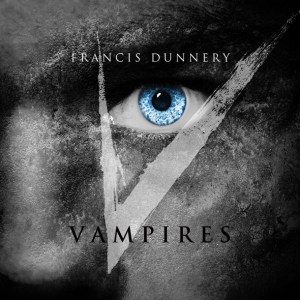
francis dunneryIn some ways, it may not be much of a surprise to hear that ex-It Bites vocalist, guitarist and songwriter Francis Dunnery has returned to the music of his old band, one of the great British units of the ‘80s.

He met up with the other three members – keyboardist John Beck, bassist Dick Nolan and drummer Bob Dalton – during a London Union Chapel gig in 2003, and for a while a full-scale reunion looked to be on the cards. But it wasn’t to be.

Then Dunnery recorded various ‘reversions’ of It Bites songs on his 2011 album There’s A Whole New World Out There, and he has frequently performed the old material in concert (check out this amazing version of Once Around The World’s title track from a few years ago). So he’s never exactly been averse to revisiting former glories.

But Vampires is different. It goes the whole hog: he’s re-recorded not just one album but 100 minutes of It Bites classics, singing all the vocal parts himself (with much-improved body and range, though his vocals weren’t exactly shabby in the old days) and enlisting various musicians including ex-Go West drummer Tony Beard to navigate the musical twists and turns.

Two years in the making, the album is also a blast from the past in terms of its audio qualities – it was recorded without EQ or compression, only a small amount of the latter being added at mastering stage.


Francis discusses the new album and the It Bites days in this excellent interview for The Mouth magazine.

He reveals – for the first time, as far as I’m aware – the full story of how the band got signed to Virgin, Dunnery’s period squatting in South London, his relationship with John Beck, his favourite It Bites songs, the band’s split and loads more. It’s a must-listen for any fans.

You can also hear many excerpts from Vampires and make your own mind up about whether his new versions improve on the originals.


The Robert Cray Band: Bad Influence

Bad-Influence-coverJust one note, and you know it’s Robert Cray.
He has always pretty much stuck to a tried and tested guitar sound: a Strat plugged straight into the amp, no effects apart from a very occasional tremolo pedal, and very, very hard picking.

But, in the process, on Bad Influence (inexplicably missing from streaming platforms at the time of writing…) he plays three or four of the most electrifying guitar solos of the ’80s, proving himself a worthy heir to Albert King and Albert Collins.

And his tough guitar style is a contrast to a fairly sweet, soulful vocals and songwriting which reflect the influence of Al Green and BB King more than Muddy Waters or John Lee Hooker.

Bad Influence was Cray’s second official release, and it was pretty much the one that alerted the wider world outside of blues aficionados to his potential. The Robert Cray Band had built up a formidable live following in the early ’80s, touring relentlessly on the West Coast and in Europe.

With the help of producers Bruce Bromberg and Dennis Walker, they were ready to take that consistency into the studio. And it certainly helps that there are no trinkets of ’80s production present on the album, no synths or dated drum sounds – Bad Influence mostly just sounds like a great band playing live in the studio, with the occasional addition of horns and Hammond organ.

Bad Influence is mainly known for its superb cover versions: Johnny Guitar Watson’s ‘Don’t Touch Me’ and Eddie Floyd’s ‘Got To Make A Comeback’, both slow 6/8 jams, the former angry and biting, the latter sweet and soulful. ‘The Grinder’ is another slowish 6/8 with a killer Cray solo. The CD version also comes with a great cover of the New Orleans R’n’B classic ‘I Got Loaded’.

Then there are the minor-key blues/funk standard ‘Phone Booth’ (featuring not one but two classic guitar solos), later covered by Albert King, and the title track which was subsequently covered by Eric Clapton on August (the two have collaborated many times since).

Also essential are the super-funky ‘So Many Women So Little Time’ and Bo Diddley-esque ‘No Big Deal’. Lyrically, my personal favourite is probably ‘Waiting For The Tide To Turn’, a kind of ‘ironic’ blues about procrastination.

To date, Bad Influence has reportedly shifted over a million copies. Cray’s two follow-ups False Accusations and Strong Persuader sold even more. And he’s very much still going strong at the time of writing.

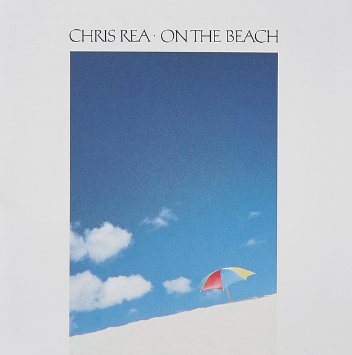
Chris Rea: On The Beach 30 Years Old Today

chris rea

Rea has – a little unfairly – never quite been able to escape a slightly dodgy image here in the UK, but, along with George Michael, he was probably the most popular male British singer/songwriter of the late ’80s and early ’90s.

The breakthrough/breakdown was his 1989 single/album ‘The Road To Hell’, so close to the Dire Straits sound as to be almost parody. I preferred the more laidback, distinctive Rea of the mid-’80s.

He started out pushing the glossy AOR and light, folky pop, enjoying a huge US hit with ‘Fool If You Think It’s Over’ in 1978 (later claiming that early producer Gus Dudgeon had blunted the ‘bluesier’ elements of his sound).

His career seemed to be hitting a cul-de-sac in the early ’80s, but On The Beach was one of the albums that turned things around, the beginning of his commercial era

It taps into the same kind of jazzy, introspective pop/soul sound that the likes of John Martyn, Joni Mitchell and Van Morrison were flirting with in the same period, helped by an excellent band including Fairport Convention/XTC drummer Dave Mattacks, Martin Ditcham on percussion and Max Middleton on keys. Rea also plays an impressive array of instruments himself, including fretless bass and synth.

Listening in one sitting to On The Beach again, the first thing that struck me is its almost relentlessly downbeat vibe. But the opening title track, with its lilting Latin-tinged groove and jazz chords, perfectly introduces the album’s themes of lost innocence and childhood reminiscences.

The moment when Mattacks lays into his fat snare drum for the first time is one of my favourite ’80s drumming moments.

‘Little Blonde Plaits’ is a vehicle for Middleton’s expressive Mini Moog, very redolent of his atmospheric playing on John Martyn’s Glorious Fool. There’s further ethereal jazziness on ‘Just Passing Through’, featuring a really lovely vocal performance and tasty solo guitar from Rea.

‘It’s All Gone’ ups the ante with some subtle Donald Fagen-style synths and excellent lyrics, and the groovy extended outro is close enough for jazz/funk with some empathetic Mattacks drums alongside Middleton’s fine Fender Rhodes solo.

On The Beach was a decent hit in the UK, reaching #11 in the album chart and selling over 300,000 copies. After this, Rea’s music became increasingly rootsy with elements of blues, country and rock’n’roll; he started channelling Dire Straits and ZZ Top rather than John Martyn and consequently enjoyed much more commercial success.

But On The Beach‘s four or five choice tracks are still my favourite Rea moments of the ’80s.

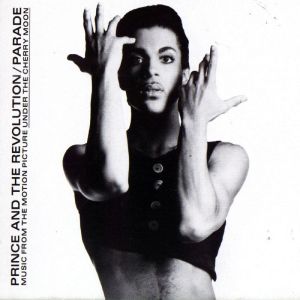
Prince: Parade 30 Years Old Today

princeOn 17 April 1985, just ten days after the end of the Purple Rain tour, Prince walked into LA’s Sunset Sound studios, sat at the drums, taped the lyrics of four new songs onto a music stand, picked up his sticks and instructed engineer Susan Rogers: ‘Don’t stop the tape when I stop playing. Just keep rolling.’

He then played through ‘Christopher Tracy’s Parade’, ‘New Position’, ‘I Wonder U’ and ‘Under The Cherry Moon’ without pausing. This guy worked fast. The recording sessions for Parade had begun.

The album would see Prince continue his extraordinary mid-’80s run of form, surely comparable to Stevie Wonder’s fabled 1972–1976 period. He couldn’t release albums fast enough and the wider world was waking up to just how prolific he really was.

His striking new horns-and-orchestra-driven sound, by turns jazzy, funky and psychedelic, lost him some fans in the States but made him a huge star in Europe. Parade showed off the amazing versatility of Prince (drums, bass, guitar and keyboards) and his main collaborators Wendy (guitar) & Lisa (keyboards).

It’s an anti-boredom album full of glorious contradictions – it features his first instrumental track but still contains four classic dancefloor singles; it’s his densest, most ‘produced’ ’80s album (alongside Lovesexy) and yet features his first all-acoustic track, recorded completely live in the studio; Clare Fischer’s orchestral arrangements are always high in the mix but rub shoulders with the Sunset Sound’s ancient sound effects library; Prince utilises ultramodern tech like a guitar synth and a Fairlight sampler, but the main solo instruments are Eric Leeds’ tenor and baritone sax. And there is zero electric lead guitar, barely 18 months after Purple Rain.

References this time around were The Beatles, ’80s Miles Davis, show tunes and funk-era James Brown. The biggest influence though is late-’70s Joni Mitchell. Parade is the nearest Prince ever got to the kaleidoscope range of her classic albums Don Juan’s Reckless Daughter and Hissing Of The Summer Lawns.

There were also more vocals in Prince’s music than ever before: Wendy, Lisa, Susannah (Wendy’s sister and Prince’s fiancée) and Sheila E all contributed massively to the occasional West Coast/Bangles sound.

By 2 June 1985, nine songs for Parade were in the can, though three would later be left off the final album – the spooky ‘Others Here With Us’, fantastic ‘All My Dreams’ and superfunky ‘Sexual Suicide’. Prince was also now working on not one but two other albums, Jill Jones and Mazarati’s debuts. By late June, he was also scouting locations in the south of France for the upcoming ‘Under The Cherry Moon’ movie. But, true to form, he couldn’t stop recording – he set up a makeshift recording studio in his Antibes hotel suite.

Parade‘s first three tracks – ‘Christopher Tracy’s Parade’, ‘New Position’ and ‘I Wonder U’ – pass by in the blink of an eye, gloriously odd, genuinely psychedelic funk miniatures. Very few have taken on the mantle of this style of music since 1986, though D’Angelo had a good go on the superb Voodoo album.

utcm-1

‘Under The Cherry Moon’ is almost a ’30s-style jazz number featuring asthmatic synths, fantastic piano playing and a daring melody line. I’d like to hear Tom Waits’ cover. If you listen very closely, you can hear the rattle of Prince’s necklace as he lays down the drum track.

‘Girls And Boys’ is a classic one-chord funk tune whose blaring guitar synth adds an engaging weirdness. Saxophonist Eric Leeds makes his mark on Prince’s music for the first time (though had already featured prominently on The Family’s album).

‘Life Can Be So Nice’ features fake harpsichord, sampled flute, piercing cowbell, some intricate acoustic guitar and a heavily-treated kick drum. It’s discordant and thrilling with an envelope-pushing vocal arrangement and some bizarre lyrics. The last minute of the song is a Latin/fusion jam in the Santana or Weather Report vein.

‘Venus De Milo’ is a sumptuous piece of symphonic muzak with some gorgeous trumpet from Matt Blistan (renamed Atlanta Bliss by Prince) while ‘Mountains’ is another classic single, largely penned by Wendy & Lisa. The 12” mix has to be heard. ‘Do U Lie’ is an intoxicating little slice of soft jazz with cocktail guitar, spoken word, strings and accordion.

‘Kiss’ is another effortless classic. It was the first single to be released from Parade, hitting US number one in April ’86, though apparently loathed by the Warner Bros suits. Initially given to the band Mazarati for their debut album, it was reclaimed by Prince when he realised the potential of the track. He kept their backing vocals and gave them some money.

‘Anotherloverholenyohead’, recorded on 16 December 1985, was the last track recorded for Parade. Lisa’s crystalline, densely-voiced piano sounds like it was recorded in a school assembly hall, and there’s more peculiar guitar synth and a few incredible bass runs from Prince. The full-length version made for another classic 12” single. Album-closer ‘Sometimes It Snows In April’ is Joni all the way. Its improvised, rubato prologue is very reminiscent of the opening to Mitchell’s ‘Cotton Avenue’.

Prince delivers an amazing lead vocal but the song needs a stronger chorus (‘Sometimes I feel so bad’) and Wendy & Lisa’s backing vox are extremely rough. The track divides opinion – some find it moving, some mawkish (I’m in the latter camp) – but it was a pretty brave choice to close such an important album.

The Parade sessions also spawned some fantastic B-sides: ‘Alexa De Paris’, ‘Sexual Suicide’, ‘Power Fantastic’, ‘4 The Tears In Your Eyes’, ‘Love Or Money’, ‘All My Dreams’ and the notorious ‘Old Friends 4 Sale’. All are well worth seeking out. Despite the success of ‘Kiss’ in the States, three follow-up singles peaked outside the top 50. Prince believed that Warner Bros’ choice of second single (‘Mountains’) was wrong – it should have been ‘Girls And Boys’.

Parade sold considerably less (1.8 million) in the States than Purple Rain (10 million) and Around The World In A Day (4 million). But in Europe, it was a huge hit. Then came the European tour. A funk revue. Horns, dance routines, backing vocals. Again, virtually no lead guitar. Europe loved him – there were riots in Holland – but the tour didn’t even make the States, which many insiders believe was a big mistake. Instead, there were several separate shows under the banner of the Hit & Run Tour.

But then it was all change: Wendy & Lisa were out of the band, Prince and Susannah had broken off their engagement and ‘Under The Cherry Moon’ had stiffed. But there were still a couple of amazing albums left in the tank before Prince’s ’80s were out.

Steve Khan: The Eyewitness Trilogy

51jiJqsP8ML._SX425_I’ve just had the absolute pleasure of writing the liner notes for a brand new Steve Khan 2-CD reissue featuring his three classic albums of the early ’80s, Eyewitness, Modern Times and Casa Loco, just released on BGO Records.

It was an honour to work with Steve on this project. He couldn’t have been more generous with his time/memories and hopefully the package does justice to the quality of the music.

Here’s an excerpt from the liner notes, giving some background to the three albums and also the legendary Eyewitness band:

Acclaimed guitarist/composer Steve Khan’s three classic albums of the early ’80s – Eyewitness, Modern Times and Casa Loco – came about seemingly against all the odds. By the end of the 1970s, the jazz/rock boom had come to an end, and the record industry was entering a major post-Punk/post-Disco recession.

Khan’s tenure with Columbia Records – which had produced three well-received solo albums, and a ‘Best Of’ compilation – ended in early 1980. Acts such as Weather Report, John McLaughlin, Return To Forever and Herbie Hancock, all of whom had been signed to Columbia before Khan, were no longer selling the same quantities of records, and the ‘Young Lions’, Neo-Bop boom of the early ’80s was just around the corner.

Khan’s response was to go back to basics. The stripped-down masterpiece Evidence (1980) was a one-man-band project featuring an arsenal of multi-tracked acoustic guitars; the album showcased excellent takes on Lee Morgan, Joe Zawinul, Wayne Shorter and Horace Silver as well as the famous ‘Thelonious Monk Medley’.

The purity of the acoustic guitar sound on the album inspired a new approach to his electric playing too: “In 1981, I was still searching for a direction on the electric guitar, and it led me to go back to the most basic sound, the one I began with when I was 19 years old at UCLA: just plug into an amp with a Gibson, dial in a little reverb, and play!”

The time was also right to move away from classic song-form and branch out into more improvised music-making. “I was ready to surround myself with a totally different group of players in conjunction with a new spirit of making music, something much looser, something not so married to having everything perfectly placed and played. Phone calls were made to three special and very unique players. We got together and the experiment began.”

Drummer Steve Jordan and bassist Anthony Jackson were two of the most in-demand musicians on the New York scene and first-call rhythm section on numerous high-profile sessions including John Scofield’s Who’s Who album. Jackson had also recently joined Khan on the recording of Steely Dan’s Gaucho while Jordan had been busy working with a huge variety of world-class artists as part of David Letterman’s ‘World’s Most Dangerous Band’.

And when Khan hooked up with ex-Weather Report percussionist Manolo Badrena during the recording of Mike Mainieri’s Wanderlust album, the final piece of the jigsaw clicked into place. Khan, Jackson, Jordan and Badrena began to jam regularly at Steve Jordan’s Chelsea loft.

It was quickly clear to Khan that something very significant was happening during those informal get-togethers. “I’m still not certain just what to call what we did”, he says today. “We would begin to play ideas that didn’t seem to have a place in any other musical setting. Here you had four very distinct perspectives on music-making, and four of the most stubborn maniacs one could gather in a room, but somehow it was working. It was magical!”

Khan recorded the sessions on a cheap cassette player and, listening back to them at home, quickly realised that the music should be recorded, “before we actually figured out what it was that we were doing!”

In the experimental era of King Crimson’s Discipline, Japan’s Tin Drum and Peter Gabriel’s Melt, the Eyewitness band began with very basic sounds and concepts but over the course of its existence came to use some fairly unique instrumentation to produce music that was complex but always accessible.

Jordan’s hybrid drum set included a cowbell, a broken splash cymbal, two hi-hats, two snare drums (tuned slightly differently) and a Simmons bass drum. Jackson developed, designed and played a state-of-the-art six-string bass, while Badrena’s constantly-mutating percussion kit included a turtle shell, timbales, congas and eventually Pearl’s Syncussion synthesizer. He also employed a multitude of eerie vocal effects. This clearly was not your standard ‘fusion’ band.

Co-produced by Khan and Doug Epstein, Eyewitness was recorded at Mediasound Studios over a single weekend in November 1981. It has the spontaneity of a great jazz album and the high production values of a contemporary pop album…

To hear the three albums and read the full article, check out the 2-CD reissue.

Talk Talk: The Colour Of Spring 30 Years Old Today

talk talkBy the release of The Colour Of Spring, there was barely any trace of Talk Talk’s previous synth-pop incarnation. Out went the Duran Duran, in came the Debussy, Traffic and Satie.

Instrumentation was generally centred around acoustic piano, acoustic guitar, Hammond organ, electric bass and drums, with the addition of quirky items like the Variophon, Mellotron, melodica, harp and dobro.

The core unit of singer/co-writer/co-producer/keyboardist Mark Hollis, co-writer/co-producer/keyboardist Tim Friese-Green, bassist Paul Webb and drummer Lee Harris distilled their sound to eliminate all but the essentials.

The opening 16 bars of the majestic, haunting ‘Happiness Is Easy’, a winning combination of man and machine (Lee Harris’s drums and a nifty bit of programming, followed a little later by Martin Ditcham and Morris Pert’s percussives) is surely one of the great album intros of the ‘80s. It hooked this writer immediately back in 1986.

The 1980s were full of albums whose big-name guest spots barely made a mark on the music. Not The Colour Of Spring; the session players are chosen with the precision of a good movie casting director.

‘I Don’t Believe In You’, a left turn into doomy, atmospheric rock, features one of the great guitar solos by Robbie McIntosh. David Rhodes’ deliciously swampy lick, with minor but important amendments, holds ‘Life’s What You Make It’ together.

Double bassist Danny Thompson’s tone is immediately recognisable on ‘Happiness Is Easy’, before ex-Average White Band man Alan Gorrie brings in some light funk for the piece’s second half.

Steve Winwood also adds some tasty Hammond to three tracks, while Friese-Green’s piano on ‘April 5th’ even brings to mind the great Bill Evans. We must also acknowledge James Marsh’s exquisite cover artwork, an auspicious start to his triptych of TT album designs.

Though to my ears The Colour Of Spring tails off around the middle of side two, the album was a hit, reaching #8 in the UK chart and #50 in the US, while ‘Life’s What You Make It’ remains one of the most original singles of the mid-‘80s.

Next stop was the post-rock magnum opus Spirit Of Eden – the retreat from pop would be almost complete.

Sadao Watanabe: Maisha

sadaoAh, the joy of tape-to-tape machines.

One day, when I was about 16, my parents’ cool music-biz friend Steve brought me round a pile of cassettes, all tape-to-tape recordings, two albums per tape.

That was an important little selection right there: Little Feat’s Last Record Album, Steely Dan’s Katy Lied, Talking Heads ’77 and a few others that have skipped my mind.

Sadao Watanabe’s Maisha was also amongst them, an album/artist I’d never heard of. He’s a highly-regarded Japanese sax player who has performed in many different idioms from straight ahead to bossa nova.

He’s probably best known for his late-’70s jazz/funk material when he borrowed Grover Washington Jr’s band (Steve Gadd, Richard Tee, Eric Gale, Ralph McDonald and Anthony Jackson) for some huge home-country gigs and a few fairly popular albums on CBS.

Maisha is a fairly light jazz-funk album of a mid-’80s vintage, but on reflection it’s got more in common with MJ’s Thriller than anything by Spyro Gyra or Shakatak. This is due to a really phenomenal rhythm section and very subdued production with no blaring synths, drum machines or digital reverb. Instead, it’s a lesson in groove construction. Drummers John Robinson/Harvey Mason and bassists Nathan East and Jimmy Johnson have seldom played better.

Yellowjacket Russell Ferrante’s keys are typically tasteful, sticking to Rhodes and acoustic piano rather than synths, while Jerry Hey adds brilliant horn arrangements to various tracks. Paulinho Da Costa is his usual effervescent self on all manner of percussion. And finally, guitarists Carlos Rios and David Williams play beautifully, the latter of course a mainstay of Thriller.


In general, the musicianship is loose and spontaneous, a world away from the studied session-head sounds usually associated with the ’80s LA studio scene. Mason marshals the band through ‘Paysages’ with a fantastically loose interpretation of the famous Bernard Purdie shuffle.

Herbie Hancock pops in to contribute a ridiculously great synth solo to ‘What’s Now’ (which is surely due a big-band cover version) while Brenda Russell’s refreshingly artless vocals feature on the Calypso-tinged ‘Tip Away’ and infectious ‘Men And Women’. And not even Stanley Clarke could have bettered Nathan East’s bass-and-scat solo on ‘Good News’.

Unfortunately Sadao’s sax chops get a bit swamped by all this classy playing, but he does have a lovely tone, almost like an alto-playing Stan Getz, and writes several memorable themes on the album.