By the release of The Colour Of Spring, there was barely any trace of Talk Talk’s previous synth-pop incarnation. Out went the Duran Duran, in came the Debussy, Traffic and Satie.
Instrumentation was generally centred around acoustic piano, acoustic guitar, Hammond organ, electric bass and drums, with the addition of quirky items like the Variophon, Mellotron, melodica, harp and dobro.
The core unit of singer/co-writer/co-producer/keyboardist Mark Hollis, co-writer/co-producer/keyboardist Tim Friese-Green, bassist Paul Webb and drummer Lee Harris distilled their sound to eliminate all but the essentials.
The opening 16 bars of the majestic, haunting ‘Happiness Is Easy’, a winning combination of man and machine (Lee Harris’s drums and a nifty bit of programming, followed a little later by Martin Ditcham and Morris Pert’s percussives) is surely one of the great album intros of the ‘80s. It hooked this writer immediately back in 1986.
The 1980s were full of albums whose big-name guest spots barely made a mark on the music. Not The Colour Of Spring; the session players are chosen with the precision of a good movie casting director.
‘I Don’t Believe In You’, a left turn into doomy, atmospheric rock, features one of the great guitar solos by Robbie McIntosh. David Rhodes’ deliciously swampy lick, with minor but important amendments, holds ‘Life’s What You Make It’ together.
Double bassist Danny Thompson’s tone is immediately recognisable on ‘Happiness Is Easy’, before ex-Average White Band man Alan Gorrie brings in some light funk for the piece’s second half.
Steve Winwood also adds some tasty Hammond to three tracks, while Friese-Green’s piano on ‘April 5th’ even brings to mind the great Bill Evans. We must also acknowledge James Marsh’s exquisite cover artwork, an auspicious start to his triptych of TT album designs.
Though to my ears The Colour Of Spring tails off around the middle of side two, the album was a hit, reaching #8 in the UK chart and #50 in the US, while ‘Life’s What You Make It’ remains one of the most original singles of the mid-‘80s.
Next stop was the post-rock magnum opus Spirit Of Eden – the retreat from pop would be almost complete.
One day, when I was about 16, my parents’ cool music-biz friend Steve brought me round a pile of cassettes, all tape-to-tape recordings, two albums per tape.
That was an important little selection right there: Little Feat’s Last Record Album, Steely Dan’s Katy Lied, Talking Heads ’77 and a few others that have skipped my mind.
Sadao Watanabe’s Maishawas also amongst them, an album/artist I’d never heard of. He’s a highly-regarded Japanese sax player who has performed in many different idioms from straight ahead to bossa nova.
He’s probably best known for his late-’70s jazz/funk material when he borrowed Grover Washington Jr’s band (Steve Gadd, Richard Tee, Eric Gale, Ralph McDonald and Anthony Jackson) for some huge home-country gigs and a few fairly popular albums on CBS.
Maisha is a fairly light jazz-funk album of a mid-’80s vintage, but on reflection it’s got more in common with MJ’s Thriller than anything by Spyro Gyra or Shakatak. This is due to a really phenomenal rhythm section and very subdued production with no blaring synths, drum machines or digital reverb. Instead, it’s a lesson in groove construction. Drummers John Robinson/Harvey Mason and bassists Nathan East and Jimmy Johnson have seldom played better.
Yellowjacket Russell Ferrante’s keys are typically tasteful, sticking to Rhodes and acoustic piano rather than synths, while Jerry Hey adds brilliant horn arrangements to various tracks. Paulinho Da Costa is his usual effervescent self on all manner of percussion. And finally, guitarists Carlos Rios and David Williams play beautifully, the latter of course a mainstay of Thriller.
In general, the musicianship is loose and spontaneous, a world away from the studied session-head sounds usually associated with the ’80s LA studio scene. Mason marshals the band through ‘Paysages’ with a fantastically loose interpretation of the famous Bernard Purdie shuffle.
Herbie Hancock pops in to contribute a ridiculously great synth solo to ‘What’s Now’ (which is surely due a big-band cover version) while Brenda Russell’s refreshingly artless vocals feature on the Calypso-tinged ‘Tip Away’ and infectious ‘Men And Women’. And not even Stanley Clarke could have bettered Nathan East’s bass-and-scat solo on ‘Good News’.
Unfortunately Sadao’s sax chops get a bit swamped by all this classy playing, but he does have a lovely tone, almost like an alto-playing Stan Getz, and writes several memorable themes on the album.
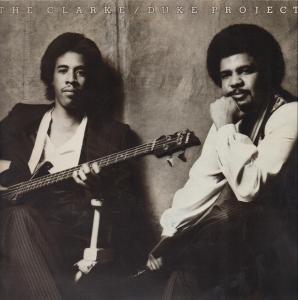
This one really divides people. The Clarke/Duke Project probably could and should have been a lot better given the talent involved and their stellar track record.
But the album shouldn’t be judged by jazz standards – by the early ’80s, these two protagonists of ‘fusion’ realised that jazz/rock had hit a massive dead end.
A fresh approach was called for. Earth, Wind & Fire’s effortless blending of funk, soul, disco, jazz, Latin and rock offered a new direction to all kinds of musicians, including Clarke and Duke.
So, leaving any kind of jazz credibility at the door, our heroes embraced their inner George Clintons, Frank Zappas and Stephen Bishops to make a really weird but occasionally enjoyable album of funk, disco, AOR and cheesy soul balladry (it’s surely up there in the ‘least classifiable albums of the ’80s’ list). In short, this was Stanley and George’s Tin Machine – you were either for or against.
My schoolfriend Seb and I were huge Stanley fans, but even we eyed this with some trepidation when we came across it around 1989. It had a pretty dodgy reputation even by ’80s Stanley standards. It’s certainly neither artists’ best work, but it’s worth a listen.
So, straight in at the deep end. It’s fair to say that most John Coltrane and Dexter Gordon fans will struggle with the ‘Louie Louie’ cover… But Clarke and Duke deliver great solos and the vocal jiving is good value.
Clarke’s ‘I Just Want To Love You’ is a minor disco/soul classic with a great bassline (later appropriated for Kylie’s ‘Spinning Around’). ‘Touch And Go’ is very pretty in a post-‘Sailing’ kind of way while the vapid ‘Sweet Baby’ miraculously delivered a big US hit (#19). The closing ‘Finding My Way’ is effective and quite unique in its way, a kind of pomp-funk/rock epic with a cool descending bridge and interesting structure.
JR Robinson’s ultra-solid, ultra-dry drums are very high in the mix and sometimes feel like they need a bit of air. Clarke impresses with a huge range of basses, guitars, sitars and cellos (and some very Santana-ish Piccolo lead bass playing) while Duke sticks mostly to squelchy synth basslines, acoustic piano and an occasional bit of trademark Mini Moog.
The album sounds very stripped back to modern ears and has a slightly ‘demo’ feel to it, but it was a hit. Two further collaborations followed, lasting into the early ’90s.
One thing’s for sure – Stanley and George were great friends until the latter’s death in 2013, and you can really hear it in the music they made together.
After several years playing guitar in cover bands and fronting East Anglia blue-eyed-soulsters Fusion, Nik Kershaw wrote a few poppy-sounding tracks and suddenly found himself thrust into the solo spotlight.
But he didn’t fool anyone with the snood, fingerless gloves and mullet – it was obvious from the get-go that Nik was a superb musician and songwriter. He had a voice a bit like Stevie Wonder (though my dad rightly identified something Numanoid too), played guitar a bit like Allan Holdsworth and wrote clever, catchy pop songs with prog, metal and funk undercurrents.
He also had some very famous fans in the US including Miles Davis and Herbie Hancock. But his image, dreamed up by some wags in MCA’s marketing department, probably didn’t do him any favours – Smash Hits summed it up perfectly, calling him ‘the thinking man’s Limahl’!
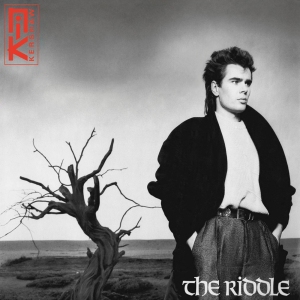
The Riddleis probably his best album. It was recorded pretty quickly to cash in on the unexpected success of his debut Human Racing, though featured a fair amount of post-production courtesy of the excellent Peter Collins who later produced Rush’s Power Windows and had previously worked on Musical Youth’s ‘Pass The Duchie’.
It features a very solid but expressive rhythm section (Elton John sticksman Charlie Morgan and ex-Secret Affair bassist Dennis Smith plus a great guest appearance from Level 42’s Mark King on ‘Easy’). Kershaw’s use of synths was kind of revolutionary, with intriguing sequencer patterns and subtle, almost subliminal pads. He also had invaluable input and some ZTT flash from keyboardist Andy ‘Relax’/’Two Tribes’ Richards throughout the album.
Yes, The Riddle screams the mid-1980s, but every song on it is memorable and has a very distinct flavour. On a songwriting level, Kershaw always knows how to keep things interesting for the listener. ‘Know How’ is a case in point – initially coming across somewhere between Level 42 and Talking Heads, it veers into prog territory with its superb pair of instrumental breakdowns.
Miles apparently recorded a cover of the very pretty ‘Wild Horses’ which has never seen the light of day. Hollywood-baiting ‘City Of Angels’ and eco-themed ‘Roses’ have more than a hint of Steely Dan about them, partly due to the use of the famous Purdie Shuffle, nicely reformatted by Morgan.
‘Wide Boy’ and ‘Don Quixote’ have lots of interesting melodic modulations under their pop sheen. ‘Easy’ is a brilliant band performance and crafty composition with a nutty middle eight, while the closing ballad ‘Save The Whale’ is also musically rich. And though the title track divides opinion, to say the least, check out its two-chords-per-bar middle-eight for a great example of Kershaw’s craft.
The cover photo was taken at Chesil Beach in Dorset. The Riddle peaked at #8 in the UK and went multi-platinum. The lead single was the title track which reached #3 in the UK. ‘Wide Boy’ peaked at #9, ‘Don Quixote’ #10. Three top 10 hits from a sophomore album – pretty damn good.
Nik was massive for approximately 18 months. He played Live Aid in July 1985 but then waited until autumn 1986 to follow up The Riddle – probably a mistake. The screaming girls were growing up fast or moving on to a-ha. He was developing as a musician and songwriter but gaining a much more ‘selective’ appeal, in the words of Spinal Tap’s manager Ian Faith.
One of the recurring themes of Randy Newman’s interviews seems to be the question of how long songwriters can maintain high-quality work.
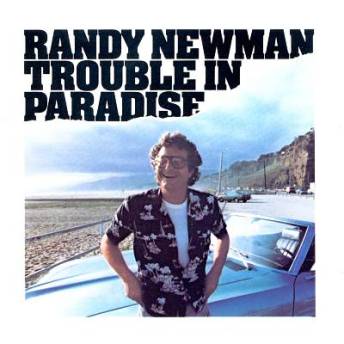
He frequently compares himself to Dylan, Joni Mitchell, Neil Young, Robbie Robertson, Don Henley and Paul Simon, wondering if he’s keeping pace. 1983’s Trouble In Paradise proved that he was certainly keeping up, if not outstripping all of them.
After somewhat of a commercial breakthrough with 1977’s Little Criminals, Randy came seriously unstuck with the 1979 follow-up, Born Again. So a lot was riding on Trouble and it certainly delivered; song for song, it arguably equals Sail Away or Little Criminals.
Randy unleashes a parade of shucksters, hucksters, bigots, junkies and unreliable narrators that would be right at home in a David Mamet play or Coen Brothers movie.
In a neat irony, he also used the cream of the LA session elite (Jeff Porcaro, Jerry Hey, Nathan East, Steve Lukather, various Eagles and Fleetwood Macs) to sugarcoat his short stories; Trouble is one of the best-sounding bad-vibes albums in rock history, alongside Frank Zappa’s Sheik Yerbouti and Steely Dan’s Gaucho.
Randy almost had a second hit single with the deceptively cheery ‘I Love LA’, the Cole Porter-style intro leading into an ironic, ambivalent comment on the American Dream and some of its discontents. ‘Christmas In Cape Town’ is a disturbing portrait of Apartheid-era South Africa apparently written under the influence of Nadine Gordimer’s books.
‘The Blues’ is an amusing duet with Paul Simon poking fun at the plight of the oversensitive singer-songwriter, though Newman has claimed that he regrets writing the song. ‘Mikey’s’ is another amusing portrait of a racist, reactionary douchebag, with our narrator sounding off over a robotic synth-rock backing which seems to be Randy’s pastiche of new-wave rock.
I love the way the narrator comments on the music, bellowing: ‘Didn’t used to be all this ugly music playing all time… Where are we, on the moon? Whatever happened to the old songs? Mikey, whatever happened to the fucking “Duke Of Earl”?’!
The hectoring continues on the hilarious ‘My Life Is Good’, a self-mocking vignette which eavesdrops on the life of an arrogant, rich and famous rock star. Springsteen gets a namecheck and Ernie Watts’ booming impersonation of Clarence Clemons is accompanied by Randy screaming, ‘Blow, big man, blow!’ Pretty weird and pretty funny.
Newman then proves that he’s a master of the gear shift with the inclusion of two devastating ballads, ‘Same Girl’ and ‘Real Emotional Girl’. The former, described by its author as a song about ‘two junkies in love’, is a heartbreaking portrait of lost innocence with a sumptuous string arrangement, indelible melody and sometimes dissonant harmonies. He’s just way ahead of his contemporaries here.
The latter is an uncharacteristically tender portrait of a sensitive, gentle young woman who can’t help but get her heart broken. The middle eight is just sublime. Linda Ronstadt has performed this song from time to time.
‘Miami’, which kicks off side two, is the most musically expansive track on Trouble, featuring a delicious performance from Randy’s favourite drummer Jeff Porcaro, intricate stop-start arrangements and eerie mandolins by Dean Parks.
The two filler tracks on Trouble, ‘Take Me Back’ and ‘There’s A Party At My House’, are buried in the middle of side two, while ‘I’m Different’ is a self-mocking swinger with some lovely close-harmony backing vocals by Jennifer Warnes and Ronstadt.
The closing ‘Song For The Dead’ is a devastating Vietnam War allegory features a mythological (dead?) colonel who has been left behind to say a prayer for his fallen comrades. The song bravely dares to send up a certain kind of American heroism, but still carries a hefty emotional punch.
Trouble In Paradise was not a commercial success, reaching only number 69 on the US album chart. That is a pretty shocking showing from such a major artist and one of the great songwriters.
The failure seemed to chasten Newman – he jumped back into the world of movies, scoring 1984’s ‘The Natural’ and co-writing the screenplay for the Steve Martin/Chevy Chase vehicle ‘The Three Amigos’. Like his friend and frequent collaborator Ry Cooder, it seemed that film work was now funding an increasingly unpopular solo career.
Randy returned as a solo artist in 1987 to make Land Of Dreams, perhaps the only album of his that hasn’t dated well (though he told Paul Zollo in the brilliant book ‘Songwriters On Songwriting‘ that it’s his personal favourite). Then, over a decade later and against all the odds, he released one more near-classic, 1999’s Bad Love, crowning 30 years of songwriting consistency.
He once told the writer Jon Ronson, tongue placed firmly in cheek: ‘My career has been a disappointment to me. I always hoped I’d sell millions of records. There are 40,000 people out there who just love me. But they may be surprised to hear I’ve been aiming beyond them…’
Even as a teenager, I picked up something faintly illicit (and excellent) about this band.
A cool friend of my dad’s stuck ‘Attack Of The Fifty Foot Woman’ on a cassette for me alongside Donald Fagen’s The Nightfly and Bill Withers’ Greatest Hits sometime around the late-’80s.
I loved it, though it would take me a good few years to find out who had recorded it. A lot of detective work was called for – The Tubes weren’t exactly big in the UK.
The band’s earlier career had taken them through glam/punk, Spector-style pop and new-wave rock, but The Completion Backward Principle was the first Tubes album produced by David Foster, a gifted Canadian keyboardist who already had a proven track record as a first-call session player, arranger and songwriter.
He had worked extensively on Earth Wind & Fire’s I Am (co-writing the megahit ‘After The Love Has Gone’), Lee Ritenour’s Rit and Boz Scaggs’ Middle Man.
According to most accounts, as a producer he was a pretty hard taskmaster, demanding absolute perfection. He wasn’t above telling a band member to go home early and calling in a name session player in his place (which he frequently did during the recording of Chicago 17).
But the results speak for themselves. The band had made a quantum leap since 1979’s Todd Rundgren-produced Remote Control. Fee Waybill had turned into a pretty damn good singer.
Drummer Prairie Prince is hardly the subtlest player in the world (Jeff Porcaro was surely waiting in the wings) but he’s every bit the human metronome on these songs and plays a blinder on the brilliant ‘Think About Me’.
Maybe ‘Don’t Wanna Wait Anymore’ and ‘Amnesia’ sound more like Chicago than Devo but they are memorable and interesting with great chord changes, while the fairly risqué ‘Sushi Girl’ could have come from Zappa’s You Are What You Is.
‘Let’s Make Some Noise’ even taps into the kind of pop/funk that Let’s Dance took to the bank a few years later. The album is also beautifully recorded, engineered and mastered, sounding superb on my original vinyl copy.
I also love the cover concept. The band’s corporate attire and conservative ‘message’ were apparently a satirical take on Reagan’s inauguration and the rise of motivational business concepts. But the smarter the clothes, the weirder the content, as the Surrealists proved decades before.
According to this interview with Fee Waybill, The Tubes imploded a few years later after The Completion Backward Principle when David Foster suggested that only he, Waybill and a few outside songwriters should compose singles for the band.
He would appear to have a point, that team having co-written ‘Talk To Ya Later’, the Top 40 hit ‘Don’t Want To Wait Anymore’ and the number 10 hit a few years later, ‘She’s A Beauty’.
Waybill believes they might have become as big as Foreigner or Journey had they taken Foster’s advice, but it wasn’t to be – the rest of the band vetoed the suggestion and Waybill first left in 1985 after the disastrous Rundgren-produced Love Bomb.
However, they have continued to be a successful live band to this day. I loved seeing them in 2000 at the much-missed London Astoria. Talk to ya later…
It Bites go Metal? Nearly. A brave attempt to break the US? Possibly.
Even Kerrang! magazine took notice of this one. Riff-heavy, blues-based rock was making a big comeback on the late-‘80s UK music scene, typified by the success of Thunder, The Quireboys, Gun and Little Angels.
The gifted Cumbrian four-piece came up with a neat twist and produced their heaviest album yet in Eat Me. But they could never completely jettison their penchant for brilliant pop hooks, colourful instrumentation and intricate arrangements.
Francis Dunnery’s guitar playing was leaner, meaner and more direct than before, with a stronger blues flavour; Hendrix and Clapton were touchstones now rather than Holdsworth and Gambale.
The song and performance were paramount. He talked glowingly of David Sylvian and The Blue Nile in interviews. Producer Mack brought the big drum sound and ban on reverb. Dick Nolan expanded the grooves with his new six-string bass.
There were three near-hits (‘Still Too Young To Remember’, ‘Underneath Your Pillow’, ‘Sister Sarah’). Roger Dean provided the album cover concept/graphics/masks, possibly a weird move for a band trying to escape the Prog tag. It was red rag to a bull for the NME who ran a sarcastic mini-interview with Dunnery at the time which barely mentioned the band’s music.
First single ‘Still Too Young To Remember’ was Classic Rock of an early-‘70s vintage, sounding more like Family, Cat Stevens or Free than Genesis or Marillion. Virgin flogged it mercilessly with not one but two re-releases but there was still no sign of a hit.
I remember excitedly rushing out to the buy the 12” version one beautiful spring day in 1989. Its superb B-side ‘Vampires’ features one of Dunnery’s most outrageous guitar solos. Other fine B-sides of the time include ‘Bullet In The Barrell’ and ‘Woman Is An Addict’ which features a killer whole-tone Nolan/Dunnery riff.
As the ’80s turned into the ’90s, It Bites were shaping up to be one of the bigger live draws in British rock – they embarked on three tours in the space of a year, selling out the Hammersmith Odeon and impressing everyone. A glorious night at the old Town And Country Club featured on the ‘Meltdown’ TV show.
They played extensively in Japan and toured the States with Jethro Tull. The feeling in the Virgin camp was that the fourth album would deliver the big hit they were striving for. Too heavy for pop but too pop for metal? Too good for the charts? Suddenly, despite the lack of singles action, it didn’t seem to matter too much.
But the cracks were starting to show – Dunnery was reportedly a barely-functioning alcoholic whose self-loathing tendencies led to sublimely pissed-off guitar solos but more often than not wound up the rest of the band – especially the equally gifted yet far more docile John Beck (Dunnery recently said in a Classic Prog interview that they had very different ‘energy levels’), often leading to some thrillingly edgy onstage duels but also some resentment.
Decamping to Los Angeles to write songs for the fourth album proved a career move too far – Beck, Dalton and Nolan refused to work with Dunnery who was AWOL periodically throughout the sessions. The band splintered and that was that, despite a brief reunion of the original line-up the early noughties.
It’s fascinating to imagine what might have been if they’d been able to hold on a bit longer and harness the creative tension between Beck and Dunnery. The breakup was a sad end to one of the most prodigious groups of musicians in the ‘80s pop pantheon.
When I was about 12 or 13 years old, I was obsessed with my dad’s very old ABC Records cassette of Steely’s Greatest Hits.
It may have been the opening eight bars of ‘Do It Again’ that did it. I never looked back; they quickly became my favourite ‘band’, and remain so to this day.
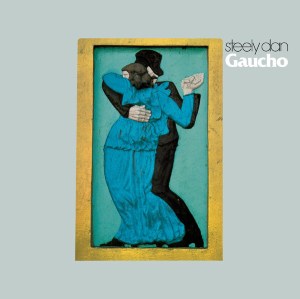
I heard Gaucho – which turns 35 today – a few years later, maybe in 1986 or ’87, not even knowing of its existence until then. The album knocked me out. I practiced my drums to it every day.
By all accounts, it was a laborious and very expensive record to make, with various obstacles: whole songs were inadvertently erased (‘The Second Arrangement’) and other classics shelved.
Walter Becker endured a serious injury after being hit by a cab and there was even a lawsuit from Keith Jarrett regarding the similarity between the title track and his 1974 composition ‘Long As You Know You’re Living Yours’.
But it all paid off in the end; Gaucho was sumptuously mixed and mastered with songs that were built to last. Guitarist Steve Khan was a key contributor to Gaucho. Along with Larry Carlton, he would seem the perfect player for their later work, combining a jazz sensibility with a great feeling for the blues and also speedy sight-reading skills.
I was delighted to catch up with Steve from his New York base to talk about his role on the albumand the ‘Glamour Profession’ session that led to one of the great guitar solos in the Steely canon.
On getting the call to play on Gaucho:
SK: I had played on almost all the tracks for Gaucho (even though I was erased from some, and some tracks didn’t survive), so I was a pretty healthy part of that recording. As to why they thought of me, who the hell really knows? Donald tends to like players who have a jazz sensibility but who also have a bluesiness or soulfulness about their playing. I guess, in his eyes, I fall into that category of possibilities. I was the last thing to go on ‘Glamour Profession’, just as I was the last one to go on ‘Third World Man’ as well.
‘Glamour Profession’ lead sheet, prepared by Steve Khan. Click to enlarge
On playing the ‘Glamour Profession’ rhythm parts:
SK: The first thing we did was all the rhythm parts. In a sense that was very simple because they just wanted me to double what some kind of synth had already played – probably sequenced – and with perfect time. At about 3:30 in the track, there’s a little four-bar guitar chorale that Donald wanted me to play, so we wrote out the four voices and I played each voice individually, giving each one a touch of ‘soul’ with a little personal phrasing and vibrato here and there. Then, I think that we returned to doing the rest of the rhythm part. Honestly, I don’t recall if I did the rhythm part on my Telecaster Custom or not – when I listen now, there’s a crispness to the sound which leads me to believe that this was the Tele.
On recording the famous ‘Glamour Profession’ solo:
SK: I used my new Gibson ES-Artist (with active electronics) – which is really a 335 – and after that solo, I never used it again – I sold it back to Manny’s Music! In the end, all the fancy things that they can do to guitars are fine but everything comes down to one’s touch, and I’m mostly speaking about the fingertips on the left-hand. If one has a good touch, the music will translate through virtually any amp. Equipment is just a tool.
In concept, the solo represents a lot of linear concepts that I had been working on for years. And only in hindsight, many years later, after the publication of my second theory book ‘PENTATONIC KHANCEPTS‘, I hear these kinds of linear ideas at work. Based upon the chord progressions, it all seemed to work perfectly because, in the end, it is a combination of the angular with a bluesy feeling to it – and that’s what Donald and Walter like – with a touch of harmonic sophistication. I think that the things that I was working on, a long time ago, in terms of other approaches to changing up the normal jazz/bebop-oriented construction of lines, seemed to be very present on ‘Glamour Profession’. If you apply the Pentatonic Khancepts to those chords, you’ll see/hear exactly what I was doing then, mixed in with a healthy dose of blues too.
The horns and the synth lines were already there, so it becomes like playing through a bit of a minefield because you have to dance around those other linear elements. I did one complete take which I actually liked very much. Then, of course, they asked me to do another one. Because of track space, I couldn’t have done more than three of them. Then, thank goodness, I think that we all felt that the first one had the most ‘meat’ to it, and so we would work from that. Then we went back through it. They kept all the phrases that they loved and asked me to try something else in a number of spots. Whether I wanted to or not, it’s still a job and you do what you are asked to do!
Sequels are seldom a good idea in the movie business, and thankfully they’re a lot less prevalent in the music game.
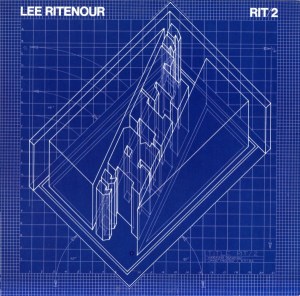
But one of the most successful ‘franchises’ of the ’80s was guitarist Lee Ritenour’s Rit/Rit 2 combo, now re-released by Cherry Red on a single CD, and they’re two of the best-sounding albums of the era.
Of course that shouldn’t be a huge surprise when you notice the presence of names such as Humberto Gatica, David Foster, Harvey Mason, Jeff Porcaro, Jerry Hey, Abe Laboriel, Alex Acuna and Greg Philinganes on the song credits, but then again a lot of albums at that time featured all the right ‘names’ but didn’t deliver the goods.
But if1982’s Rit 2 is not quite in the same league as its predecessor, it’s still another classic piece of sumptuously-produced, blissed-out West Coast AOR with touches of jazz and soul, helped by the excellent vocals, keyboards and songwriting of Eric Tagg.
To these ears, it sounds as if Quincy Jones had produced Toto and got a good singer and a few decent songwriters in.’Promises Promises’ is superior disco/funk/rock and wouldn’t sound out of place on Quincy’s The Dude or Jacko’s Thriller.
‘Dreamwalkin’ is kind of the ‘happy’ version of Earth Wind & Fire’s ‘After The Love Has Gone’ and would make a great theme song for a an early-’80s, California-set Chevy Chase/Goldie Hawn vehicle. Ditto ‘Keep It Alive’.
‘Tied Up’ and ‘Voices’ initially seem like standard AOR fare, but reveal their superiority with interesting, layered vocal arrangements and surprising chord changes (and a classic bit of Porcaro drums on the latter).
But the real standout is killer instrumental ‘Road Runner’ featuring Harvey Mason’s incredibly intricate hi-hat work, a spicy Jerry Hey horn arrangement, some tasty Fender Rhodes from Philinganes and a corking set of solos from Ritenour.
Ritenour tried to repeat the formula on ’84’s less successful Banded Together before embarking on a decade of underwhelming instrumental smooth jazz with the occasional high point.
But Rit and Rit 2 are classics of their kind and belong alongside Steely’s Gaucho, Randy Crawford’s Secret Combination, Quincy’s The Dude, Michael Jackson’s Thriller and George Benson’s Give Me The Night as key albums of the era.
Most music fans of a certain age probably had their favourite ‘Walkman albums’, those cassettes that worked perfectly on headphones, revealing intricacies (weird panning effects, funky little motifs, stereo drum kits) rarely noticed when played on normal speakers.
As much as I had loved Joni Mitchell’s music ever since my dad played me ‘Chinese Cafe (Unchained Melody)’ in 1983, I’d never have predicted that the superb Dog Eat Dog – released on 30 October 1985 – would turn into one of my top headphone albums.
A clue, of course, was the presence of Thomas Dolby as co-producer and keyboard player, master of quirky soundscapes and synth textures.
Though initially he might seem a weird choice of collaborator, with hindsight it’s not that much of a surprise that Joni and co-producer/bassist/hubbie Larry Klein should enlist his services.
Joni admitted in contemporary interviews that she ‘could use a hit’. But they didn’t get along particularly well in the studio, Dolby not enamouring himself to her by blithely calling her ‘Joan’ between takes.
But the Englishman contributes a lot to Dog Eat Dog – interesting audio effects like Wayne Shorter’s sampled soprano throughout ‘Lucky Girl’, beats, dub textures here and there (‘Shiny Toys’) and of course the odd spoken word intrusion (maybe it was his idea to use Rod Steiger on ‘Tax Free’?).
One of the key aspects of Dog Eat Dog is Joni’s anger at the state of the world, both lyrically and vocally. Her cover pose says it all – throwing her hands up in the air with indignation and/or helplessness.
As she puts it, the album is a portrait of ‘a culture in decline’. She takes aim at TV evangelists, consumerism, lawyers, yuppies and Reaganites with equal candour, letting fly with an F-bomb on the superb ‘Tax Free’.
The album also features some of Joni’s strongest singing on record. Her melodies are sometimes resplendent too, particularly on the title track and ‘Lucky Girl’.
It’s also interesting to hear her trying out a slightly more minimalist lyric-writing approach on ‘Fiction’ and ‘Tax Free’, marrying her short, sharp lines to Klein’s music.
‘Good Friends’, initially a brooding piano ballad in demo form, kicks the album off in fine style, an AOR classic with more interesting chord changes than the usual and a typically distinctive guest spot from Michael McDonald.
It was a bold though unsuccessful attempt at a hit, far too good for the charts. Joni even sung it live on ‘Wogan’ with a McDonald impersonator!
The elegant, stately ‘Impossible Dreamer’ is described by Joni as ‘a tribute to Martin Luther King, John Lennon, and Robert Kennedy – all those who gave us hope and were killed for it.’ It also features some sparkling soprano sax from Wayne Shorter.
Master drummer Vinnie Colaiuta is mainly reduced to providing drum samples for Dolby, though plays some lovely stuff on ‘Shiny Toys’, the second single from the album and subject to a great 12″ mix by Francis Kevorkian.
The ’80s weren’t particularly easy on Joni and her contemporaries Don Henley, Neil Young, Bob Dylan, Linda Ronstadt and Robbie Robertson.
As she put it, ‘I made four albums for Geffen. For one reason or another, they were viewed as being out of sync with the ’80s. But I was out of sync with the ’80s. Thank God! To be in sync with these times, in my opinion, was to be degenerating both morally and artistically. Materialism became a virtue; greed was hip.’
A lot of people would probably have liked her to carry on making Blue for the rest of the ’70s and ’80s, but she was moving on. Every album was different and this may be the one most in need of critical reassessment.

 By the release of The Colour Of Spring, there was barely any trace of Talk Talk’s previous synth-pop incarnation. Out went the Duran Duran, in came the Debussy, Traffic and Satie.





 Most music fans of a certain age probably had their favourite ‘Walkman albums’, those cassettes that worked perfectly on headphones, revealing intricacies (weird panning effects, funky little motifs, stereo drum kits) rarely noticed when played on normal speakers.
 movingtheriver.com