How We Live: Dry Land 30 Years On

How+We+Live+Dry+Land+554632Madchester aside, the late-’80s may be the least-heralded period of British pop, but the era also produced a surprising amount of intelligent, original bands that arguably never got their commercial due: Love And Money, Danny Wilson, The Bible, The Lilac Time, It Bites, Stump…

The list of ‘under-achievers’ is long and varied. But one name often forgotten is How We Live.

Most famous for featuring a pre-Marillion Steve Hogarth on vocals and keyboards, the band emerged from the ashes of new-wave popsters The Europeans to release their one and only album Dry Land in 1987.

Originally appearing on CBS offshoot Portrait Records but now given a shiny new remaster by Esoteric/Cherry Red, the album certainly ticks lots of ‘quality 1980s pop’ boxes: it was recorded at Crescent Studios in Bath with XTC/Peter Gabriel producer David Lord and The The/Deacon Blue engineer Warne Livesey, and features Tears For Fears’ drummer Manny Elias on a few tracks. Peter Gabriel and XTC get a thank-you on the inside cover.

Colin Woore and Steve Hogarth

Colin Woore and Steve Hogarth

Malcolm Dome’s incisive liner notes for this re-release outline the record-company shenanigans which dramatically shortened How We Live’s lifespan, whilst also acknowledging how Hogarth and fellow ex-European Colin Woore’s songwriting was very much informed by the other quality British pop of the time – Talk Talk, David Sylvian, Gabriel, Hue & Cry (Hogarth apparently being a big fan of Pat Kane’s vocals), Kate Bush.

And while it’s tempting to view Dry Land as the prelude to Marillion’s second phase, it’s pretty clear that Hogarth already had an extremely strong presence as a singer, songwriter and keyboard player long before he joined the Brit-prog behemoths.

Dry Land‘s opening 1-2-3 of ‘Working Girl’, ‘All The Time In The World’ and the title track (latter taken into the top 40 by Marillion) is pure dream-pop bliss. The latter benefits from a dramatic string arrangement, missing from the Marillion version, though connoisseurs might rue the big snare-drum sound.

‘Working Girl’ is simply a classic, with a haunting verse and swooning, truly uplifting chorus. How that and ‘All The Time’ didn’t crack the top 40 is still a mystery, though, according to manager Mark Thompson, CBS were spending most of their time and money trying to break Deacon Blue during this period.

Whilst the rest of Dry Land can’t quite maintain the quality of the first three tracks, there are plenty of other pleasures: ‘Games In Germany’ is a fine fusion of late-’80s PiL and Season’s End-era Marillion, a crashing new-wave groove with a fabulous, wrong-footing chorus.

Classy ballad ‘Lost At Sea’ is somewhat reminiscent of David Sylvian’s work of the same period, while ‘In The City’ takes a left turn into jazzy pop with great aplomb; its shimmering synths, swinging groove and catchy trumpet melody bring to mind such late-’80s movie soundtracks as ‘The Big Blue’ and ‘Betty Blue’.

‘India’ is unfortunately a bit more Chris De Burgh than It Bites, though Dave ‘Taif’ Ball’s elegant fretless bass impresses, as it does throughout Dry Land. ‘The Rainbow Room’ is perhaps the most ‘prog’ track on the album, powered along by an intricate keyboard sequence and guitar motif.

Unfortunately Dry Land was a dead end for How We Live – it stalled outside the top 40, and, although there were some big gigs including a Munich show on the same bill as Eurythmics and Tina Turner in front of 100,000 people, they called it a day in late 1987.

Hogarth was enquiring about becoming a milkman when he heard from his publisher that Marillion had been in touch. He was back in business, and remains so to this day. But Dry Land is a fascinating and worthwhile precursor.

Dry Land is out now on Esoteric/Cherry Red.

‘Level 42’: 35 Years Old Today

levelHere’s another key exhibit to support the motion ‘1981: The Greatest Ever Pop Year’.

When three caulkheads – bassist/vocalist Mark King and brothers Phil (drums) and Boon Gould (guitar) – hooked up with keyboardist/vocalist Mike Lindup in London, they were fairly speedily signed to indie label Elite Records.

After adding their ‘fifth member’ Wally Badarou – who had just begun his epochal keyboard work with Grace Jones – they released the ‘Love Meeting Love’ 12” single in the summer of 1980.

It got the attention of Polydor, who speedily re-released it and then the follow-up ‘Flying On The Wings Of Love’. Both stalled outside the UK top 40 but there was suddenly a massive industry buzz about this band.

At this stage in their career, Level 42 were very much lumped in with the new wave of Brit-funk and jazz/funk bands, leading to an instant following, lots of noisy club gigs and many a provincial Soul Weekender alongside ‘Funk Mafia’ DJs with nicknames like Froggie and Wolfie.

None of this harmed Level’s popularity, though in truth they had little in common with the dancefloor scene – their sound was a much edgier proposition, with more guitar, a distinct jazz/rock influence and a punky energy.

As one fan apparently commented to Boon after a November 1980 all-dayer supporting Shakatak: ‘We didn’t expect Status Quo’. No matter – Polydor signed them to a five-year deal soon after that gig.

Legendary Bluesbreakers/Fleetwood Mac producer Mike Vernon was chosen to helm their debut album – Mark King was apparently most impressed that he had worked on Focus’s Moving Waves. Vernon turned out to be a superb choice.

They all convened first at the very haunted Vineyard Studios in South-East London (later owned by Stock, Aitken and Waterman) to record ‘Love Games’. It gave them their first hit in March 1981, scraping into the UK singles chart at number 39, and leading to their first appearance on ‘Top Of The Pops’.

But these guys lived and breathed music. Though songwriting didn’t come particularly easy early on in their career, there was an infectious, thrilling, percussive propulsion to their sound. It helped that they were all drummers (with the exception of Boon Gould).

Obvious influences such as Return To Forever, Herbie Hancock, John McLaughlin and Stanley Clarke merged with less obvious ones like Yes and Fairport Convention (mainly Phil Gould’s passions) to produce a very tasty brew, naturally easy on the ear. And after barely a year of singing, Mark King’s vocals were even starting to match his prodigious talent on the bass.

Level 42 presents a great variety of material littered with intricate, memorable arrangements. Wally Badarou’s mastery shines through throughout the album but especially on ’43’ – on the right channel, he sprinkles in shards of Prophet 5 synth, almost taking on the role of rhythm guitarist.

‘Why Are You Leaving’ is a superb quiet-storm ballad, not unlike something George Benson might have come up with in the Breezin’ era. Stanley Clarke is a towering influence – ‘Heathrow’ nicks the ‘Lopsy Lu’ shuffle (and also features a fantastic Gary Barnacle electric sax solo) while ‘Dune Tune’ paraphrases ‘Desert Song’ from Clarke’s classic School Days album. Phil Gould’s sparkling glockenspiel solo on ‘Starchild’ emphasises how versatile the band really were.

slipstream

Level 42 is also a decidedly more lush and expensive-sounding album than any other ‘Brit-funk’ band managed to produce.

The evidence is Slipstream, a compilation which featured the band’s ‘Turn It On’ alongside other contemporary bands such as Light Of The World, Freeez, Morrissey Mullen and Incognito. The Level track sticks out a mile.

Level 42 reached #20 in the UK album chart, apparently a pleasant surprise to Polydor. Two UK tours followed in quick succession before they embarked on a seven-date German trip supporting The Police, which, by all accounts, didn’t go particularly well.

During one gig, a firecracker was hurled in the general direction of Mark King, lodging itself between his bass and elbow. Looking down, he recoiled from the mic in horror, believing he had been shot.

Despite Level 42‘s solid chart placing, there was still uncertainty about the future of the band – King was headhunted by Jeff Beck for a possible power trio with Simon Phillips on drums, and a few jam sessions ensued. Also, Barnacle’s band Leisure Process had recruited Mark and Phil for their upcoming album and there was talk of the them making the permanent switch.

Thankfully, neither project materialised – one of the great bands of the 1980s were back in business.

Stanley Clarke: If This Bass Could Only Talk

stanley_clarke-1988-if_this_bass_could_only_talk

This album was a substantial breath of fresh air when it came out in 1988.

I remember walking into Our Price and hearing Wayne Shorter’s majestic soprano sax over some swooning chord changes and thinking: ‘What the hell is this?!’

It was a relief and total surprise when it turned out to be Stanley’s cover of Mingus’s ‘Goodbye Pork Pie Hat’ (and what a brave choice of track to play in the shop…).

It wasn’t just the Baby Boom rockers who struggled a bit during the 1980s. Stanley started the decade very well with Rocks Pebbles & Sand but then there were a few middling collaborations with George Duke and a very patchy run of albums: Let Me Know You, Time Exposure and Hideaway. 1985’s Find Out had some brilliant moments though.

But ITBCOT put Stanley back on the jazz map. Its full-on playing – with admittedly a few late-’80s production values in tow – brought to mind classic ’70s albums Journey To Love and School Days. Drum machines were out: drummers were back in (Ndugu Chancler, John Robinson, Gerry Brown and Stewart Copeland, all of whom play beautifully).

The album also emphasised how much of a singular voice Clarke had now developed on piccolo bass, as distinctive on his instrument as Parker, Miles, Monk or Rollins were on theirs.

‘Working Man’ is an update of ‘Lopsu Lu’ from Stanley’s classic first album and features some ridiculously brilliant soloing leaning very heavily towards John Coltrane’s ‘sheets of sound’ approach.

Gerry Brown stays toe-to-toe with Stanley, providing some spectacularly-unhinged drums, though maybe with a bit too much ’80s ‘gated’ snare for some ears.

My cassette copy of ITBCOT didn’t have any personnel listed on it, so when I first heard ‘Stories To Tell’ I didn’t realise I was getting my first exposure to the extraordinary guitar playing of Allan Holdsworth.

I’m very thankful that Stanley unleashed Holdsworth onto my sensibilities. He delivers some remarkably-fluid playing with a shrill, almost reedy tone. The first and last four bars of his solo are really special. Copeland plays superbly too, with more restraint than usual.

Freddie Hubbard shines on a fine cover of Janet Jackson/Jam and Lewis’s ‘Funny How Time Flies (When You’re Having Fun)’ while Stanley brings the funk with a great take-off of Zapp’s Roger Troutman on ‘I Want To Play For You’.

Elsewhere there are two fun but rather dispensable duets with tapdancer Gregory Hines but they don’t outstay their welcome. Finally, ‘Tradition’ may feature Stanley’s finest recorded playing bar none and highlights a strong John McLaughlin influence (via Coltrane, of course).

In a much-maligned genre of music, ’80s fusion, ITBCOT is a minor classic that deserves critical reappraisal. It also led to a really good period for Stanley – he joined Shorter in Lenny White’s short-lived but intriguing Manhattan Project, and also toured as part of a supergroup with Herbie Hancock, Shorter and Omar Hakim.

Stanley was back, back, back!

Neil Young: This Note’s For You

Neil+Young+This+Notes+For+You+507216The general critical consensus maintains that Neil had a rotten ’80s.

He made folk albums, rockabilly albums, synth-rock albums, undercooked Crazy Horse albums and country albums.

But you can’t say he wasn’t prolific, and hey, he’s Neil Young – there’s always something good going on somewhere.

But none of these projects came anywhere near the commercial jackpot, to the extent that his label boss David Geffen sued him for ‘unrepresentative’ product!

But, with the release of 1988’s This Note’s For You, Young was getting back on track. He had returned to the Reprise label of his peak years and was gigging with a hard-hitting ten-piece band The Bluenotes (later changing its name to Ten Men Workin’ after a legal challenge from Harold Melvin) which featured a hot horn section and cracking new drummer Chad Cromwell.

Neil had ten new songs in the can too, veering between two-chord R’n’B stompers and love ballads in the ballpark of his teenage hero Roy Orbison. He was also playing as much if not more lead guitar than he ever had in his solo career, this time in the biting, incisive style of Alberts King and Collins.

Lyrically, the songs were basically about workin’ hard, lookin’ for love, not sellin’ out and havin’ a good time, but with more humour than Bruce or Billy Joel. ‘I’m a married man – respect my happy home!’ he barks on ‘Married Man’.

Neil gave writer Paul Zollo some cool insights into the writing of the song in the book ‘Songwriters On Songwriting’:

‘Oh, I like that song. I think I wrote that in my car. I have a ’54 Caddy limo. I was on my way down from Northern California to play with the Bluenotes. I was on Highway 5. Our driver was listening to tapes and I was playing my guitar…’

Neil’s tremulous voice croons ‘You have changed my life in so many ways’ on ‘Can’t Believe Your Lyin’, and it’s both touching and amusing. ‘Ten Men Workin” and ‘Life In The City’ are driving old-school R’n’B gems while ‘Sunny Inside’ is almost Brian Wilsonesque in its charming naivety.

Then there’s the title track, the standout cut on the album (though it inexplicably fades way too soon). A rum, anti-product-placement protest song which nevertheless manages to mention four big brands (and of course mocks Budweiser’s ‘This Bud’s For You’ campaign), it defiantly has its cake and eats it. It’s also a total blast.

In a delicious irony, the old hippie who had spent most of the ’80s in purgatory made one of the great vids of the decade (winning Video Of The Year at the 1989 Video Music Awards), with notable help from writer Charlie Coffey and legendary director Julien Temple. Temple talked about his motivations for making the video:

‘Beer companies and the like were beginning to take over music. A lot of beer ads were using rock musicians. The line between videos and commercials was blurring. We managed to get banned from MTV and win the Video Of The Year award. That was the peak of my video-making career…’

The clip mostly mocks the series of Michelob beer ads which featured the likes of Genesis, Eric Clapton and Steve Winwood. And it didn’t scrimp on Michael Jackson and Whitney Houston lookalikes.

What’s also notable and totally unprecedented is that Neil decided to use a live take of the song for this video, completely different to the album version. Which major star would have the balls to do that today?

This Note’s For You was not a hit, only reaching #61 in the US album chart. But Neil was laying down a marker for the classic follow-up Freedom. And he had also tapped into something very prescient by focusing on guitar-led soul, blues and R’n’B forms, echoing the resurgence of Clapton, Buddy Guy, John Lee Hooker, Jeff Beck, Albert Collins and Gary Moore, and emergence of hotshots like Jeff Healey and Robert Cray.

Sideways & Steve Jobs: An Invitation To Windham Hill 30 Years On

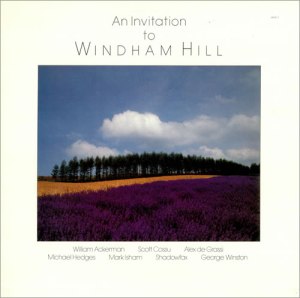
Windham+Hill+An+Invitation+To+Windham+Hill+164800DVD commentaries come and go, but among the best I’ve heard is for ‘Sideways’, Alexander Payne’s classic 2004 movie starring Paul Giamatti and Thomas Haden Church.

One scene, set at at the fictitious Frass Canyon winery, opens on the shot of a pale, very sincere acoustic guitarist playing a ‘tender’ ballad. On the commentary, Haden Church mutters: ‘Very Windham Hill-ish’, eliciting a chuckle from Giamatti.

You get the feeling that the term ‘Windham Hill’ is a code for something not entirely positive…

frass canyon

For a brief period in my teens, a cassette copy of An Invitation To Windham Hill was always near the family hi-fi.

It has since become one of those weird, unclassifiable albums that I can’t shake. Why is that? What is this kind of music really about once you subtract the nostalgia?

The Windham Hill label was founded in 1976 by Californian guitarist William Ackerman, who initially used the imprint to sell his own music out of a Palo Alto garage. Just down the road, Steve Jobs was establishing his Apple empire, and guess what: he was a big fan of Windham Hill, as Ackerman later recounted in an interview:

‘Steve fell in love with the aesthetic. All the Apple computers (played) Windham Hill music when you turned them on. It was such an exciting time. Anything seemed possible. People were making dreams come true, and I did feel part of that.’

Early on, the label emphasised solo acoustic instruments, eliciting a ‘back to nature’ vibe. Later, electronic music, contemporary bluegrass, smooth Latin/jazz and Celtic sounds were eased into the mix.

The stark, ‘natural’ style of their album covers was apparently influenced by ECM, as was some of the musical ethos; Keith Jarrett’s Koln Concert and the acoustic guitar work of Ralph Towner, John Abercrombie and Pat Metheny were certainly important to Windham Hill.

Also, in the same way that Jarrett’s album proved a huge sales breakthrough for ECM, a similar thing happened to Windham Hill – George Winston’s Autumn unexpectedly sold over a million copies and changed the label from a modest, regional imprint to nationally-known entity (and Autumn was the first of his seasonal-themed recordings!).

The whole Windham Hill package, both musically and visually, is very ‘white’, very ‘corporate’, very ‘Thirtysomething’. It contributed massively to the mid-’80s popularity of New Age music (and the eventual backlash against it). It also has a lot in common with the Minimalist movement (including geography).

But Ian MacDonald has written persuasively about the infantilising effects of this stuff in his brilliant ‘The People’s Music’:

‘Something happens to people who listen to too much minimalism. They begin to smile facetiously, display a genially indiscriminate omni-tolerance and put their feet on your furniture. Some start wearing dungarees and playing with frisbees’!

There is definitely that element to An Invitation To Windham Hill, but it does also highlight the work of two genuinely excellent artists: Mark Isham and Michael Hedges. Isham has been a first-call soundtrack composer for 30 years now but his 1983 debut album Vapour Drawings is an ambient/electronic classic (more on that to come).

Hedges, who died in 1997, blew guitarists’ minds with the release of his debut album Aerial Boundaries. The title track manages to be both an amazing technical feat (it’s a solo piece for drastically detuned guitar sometimes featuring up to four intertwining melodies, achieved with a mixture of picking, tapping and hammer-ons) and also a substantial composition in its own right.

The other solo guitar tracks by Alex De Grassi and Ackerman are weirdly memorable, as are the solo piano pieces. In fact, the whole album is, and it might make a nice soundtrack to your wine-tasting evening or campfire gathering. Or it might not…

Track listing:

A1 George Winston ‘Thanksgiving’ (3:07),
A2 Alex De Grassi ‘Western’ (4:04),
A3 Mark Isham ‘Love Theme’ (From ‘Mrs. Soffel’) (4:11),
A4 William Ackerman ‘Visiting’ (6:07),
A5 Mark Isham ‘In The Blue Distance’ (4:07),
B1 Shadowfax ‘Angel’s Flight’ (4:00),
B2 Scott Cossu ‘Ohana’ (5:03),
B3 Michael Hedges ‘Aerial Boundaries’ (4:39),
B4 William Ackerman ‘The Bricklayer’s Beautiful Daughter’ (3:50)
B5 George Winston ‘Longing/Love’ (5:11)
Steps Ahead: Magnetic 30 Years On

steps

Some improvised music hits you at just the right age, to the extent that 30 years later you can still hum along to all the solos.

Baby boomers were lucky enough to have Kind Of Blue, Time Out or Mingus Ah Um but jazz fans brought up on Weather Report and 1980s Miles had albums like Magnetic.

In 1986, recording and instrument technology was moving quickly, maybe too quickly. This development influenced all kinds of music, from rock to fusion, and, in the wrong hands, led to a lot of grossly-overproduced, unmemorable stuff that barely holds up today. As a few people have said, 1986 may be the worst music year of the decade.

But that year also somehow produced some memorable fusion music. Smooth Jazz (AKA The Wave) was just a twinkle in some bored record exec’s eye and the ever-reliable Japanese market was keeping quality electric jazz alive; Lyle Mays, Mike Stern, Wayne Shorter, John Abercrombie, Miles, Bireli Lagrene, John Scofield, Bill Frisell and John McLaughlin were going strong.

Though Steps Ahead’s Magnetic album embraces technology to a full extent, even more so than on ’84’s Modern Times, given the writing and playing talent (Michael Brecker, Peter Erskine, Mike Mainieri) it’s no great surprise that they pull it off with so much aplomb, aided by formidable ex-Weather Report bassist Victor Bailey.

A timeless classic it ain’t, but Magnetic isn’t any old ‘what does this button do?’ mid-’80s studio creation. Though the sound and mastering are superb, emphasised by the presence of Brothers In Arms producer Neil Dorfsman on engineering duties alongside future back-room stars James Farber and Tom Lord-Alge (fresh from Steve Winwood’s Back In The High Life), the compositions very definitely come first and the audio ‘experiments’ second.

Despite all this, Magnetic is definitely the least-heralded Steps Ahead album amongst jazz critics, probably because it’s a real onslaught of styles and sounds, closer to a ‘pop’ album in concept. The melodic themes are strong without ever getting too sugary and each track has a unique flavour.

It’s hard to believe the same band can come up with ‘Something I Said’ (featuring one of Brecker’s great ballad performances) and also the coruscating avant-fusion of ‘Beirut’ (developed from a band jam session).

Hiram Bullock plays one of his many classic solos on ‘Trains’, adding some much-needed grit, while George Duke co-produces the weird but exciting contemporary R’n’B of ‘Magnetic Love’ featuring some outrageous sampled Brecker tenor lines and killer Dianne Reeves lead vocals (and great backups from Jocelyn Brown, Janice Pendarvis and Diva Gray).

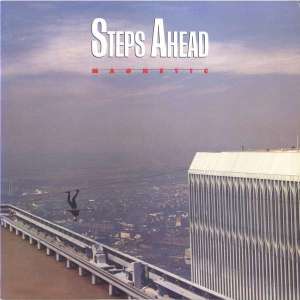
A synthesized cover of Ellington’s ‘In A Sentimental Mood’ proves Steps’ link to the past masters and features some astonishing EWI (an electronic instrument with the same fingering as a sax that looks like an elongated metal lollipop) from Brecker. There’s even time for some banjo-playing on ‘Cajun’, powered along by Erskine’s superb ride cymbal work. Yellowjackets were definitely listening to that. Oh, and is that Philippe Petit on the sneakily-doctored album cover?

It’s weird seeing Steps Ahead playing this material live. They had obviously worked a bit on their stage ‘presentation’ between 1984 and 1986, maybe influenced by Chick Corea’s shenanigans. Peter Erskine and Victor Bailey had left to join Joe Zawinul’s Weather Update tour, so ex-Journey drummer Steve Smith, Sting/Miles bassman Darryl Jones and Stern came in, adding some big-name clout and a much tougher sound.

Magnetic was the last major-label action for Steps Ahead. Brecker and Erskine jumped ship but Mike Mainieri would continue with the name over the next few decades fronting a multitude of line-ups. He even fronted a ‘reunion’ tour in 2016 with a formidable band including pianist Eliane Elias and sax player Donny McCaslin.

Thomas Dolby: Aliens Ate My Buick

aliens-ate-my-buick-52dea191dc659This was Dolby’s ‘Marmite’ album – the one that really tested his fanbase.

A relocation to the States after marrying soap actress Kathleen Beller (Dolby’s companion on the front cover) led to a new home in the Hollywood Hills (apparently a very large, rather creepy movie-star mansion), the recruitment of a great new band The Lost Toy People via an advert in a local paper and a wholesale embracing of American black music.

In many ways, Aliens is Dolby’s reaction to the work of George Clinton and Prince (of course, he’d collaborated rather spiffingly on the former’s Some Of My Best Jokes Are Friends). But it’s also a rather uptight Brit’s view of American culture complete with tacky local detail: smog alerts, Bel Air bimbos, pink leather upholstery, weird license plates.

dolby

A very brave bit of sequencing puts ‘The Key To Her Ferrari’ right at the front of the album.

A fake-jazz/B-Movie swinger with a vaguely ‘50s rock’n’roll feel featuring lots of Zappaesque spoken word stuff from Dolby and some brilliant close-harmony female vocals, it’s all pretty stupid but the band plays fantastically and everyone sounds like they’re having a great time. However, you do wonder how many listeners made it past such an uncompromising track.

The lead-off single ‘Airhead”s delirious mash-up of funk and pop is pretty irresistible.

Mr Clinton contributes the funny and funky ‘Hot Sauce’ which packs in an incredible amount of good stuff into its five minutes including a Spaghetti Western prelude, a reference to Cameo’s ‘Candy’, a touch of salsa and even a killer James Brown-style piano break.

Ditto ‘May The Cube Be With You’, featuring Clinton and Lene Lovich on backing vocals, the Brecker Brothers on horns and a brilliant groove from P-Funk bass/drums team Rodney ‘Skeet’ Curtis and Dennis Chambers.

But, as with most Dolby albums, the treasures are mostly found in the more introspective, less gimmicky moments. ‘My Brain Is Like A Sieve’ easily transcends its title and faux-reggae arrangement to become a superb and quite downbeat pop song in the Prefab style. ‘The Ability To Swing’ is a cracking piece of funk/jazz, with some excellent lyrics, possibly Dolby’s most covered song.

‘Budapest By Blimp’ is very much the centrepiece of Aliens and its stand-out track, an epic ballad harking back to the Flat Earth sound with a great, David Gilmour-esque guitar solo by Larry Treadwell (one of many on the album) and some superb, driving bass from the late Terry Jackson.

The only slight misfire is ‘Pulp Culture’, initially interesting but quickly grating with coarse lyrics and a melody line too similar to Stevie Wonder’s ‘Have A Talk With God’. It’s worth noting, though, that according to Dolby, the entire song (including his vocals) is made up of Fairlight samples.

The album’s very moderate success (#30 in the UK and #70 in the US) was probably not a surprise – it was totally out of sync with anything in British or US pop. Aliens probably rather reflected Dolby’s interest in music video and movie soundtracks (he’d just finished scoring ‘Gothic’ and ‘Howard The Duck’).

I’d put Aliens up there with The Flat Earth as his best album, a perfect companion piece to other classics of summer 1988 such as Prefab’s From Langley Park To Memphis, Scritti Politti’s Provision and Prince’s Lovesexy. It’s strong beer but I love its pungent textures. And let’s not forget Steve Vance and Leslie Burke’s brilliant cover artwork.

Peter Gabriel: So 30 Years Old Today

gabriel

‘At the time of coming back, he had tremendous determination. He said do want to make it! I do want to succeed!” Instead of going along with the idea that he is different, special, unique, precious, So was about him saying, “F**k that! I’m going to allow myself to succeed.”’ Jill Gabriel, quoted in ‘Peter Gabriel’ by Spencer Bright

So was the Peter Gabriel album that put him – albeit very briefly – into The Big League, alongside the likes of Madonna, Michael Jackson, Phil Collins, Prince, Hall and Oates and Springsteen, leaving his ‘art-rock’ contemporaries (Laurie Anderson, Brian Eno, Peter Hammill, Robert Fripp) in the dust.

He opened himself up to mainstream success via more direct lyrics and music. And it worked a treat. So still sounds fantastic today; a near-perfect mix of art and commerce.

photo by Steven Toole

photo by Steven Toole

In interviews, Gabriel has described the ’83/’84’ period as a dark time in his life. He mixed and released an excellent live album and looked for solace in film soundtrack work, producing two fairly inconsequential tracks: ‘Walk Through The Fire’ from ‘Against All Odds’ and ‘Out Out’ from ‘Gremlins’.

Far more substantial was his soundtrack for Alan Parker’s ‘Birdy’, but, most importantly, it was the project that introduced him to So co-producer Daniel Lanois.

Gabriel later credited Lanois and his then wife Jill for steering him back towards more positive thoughts, and much more ‘up’ music and lyrics.

Gabriel came up with 20 new songs by early 1985. Lanois helped him whittle them down to 12, and then six months of pre-production began, focusing on song structures and arrangements. So was mainly recorded at Gabriel’s home studio, Ashcombe House near Bath.

Working at home was intended to save money on big studio fees and also speed up the creative process, but lyric-writing was still a big problem and a lack of words necessitated two missed release deadlines for So: 31st July 1985 and 14th December 1985.

Virgin were patient. Lanois once even nailed him into a back room to force him to come up with some lyrics – Gabriel was not amused, at least not for a few hours. ‘It is the most upset I’ve seen him at the studio,’ guitarist David Rhodes remarked. Lanois had made his point.

Musically, Gabriel very much leaned on tried-and-tested collaborators such as Rhodes and Tony Levin – it’s hard to imagine anyone else playing bass on So. He’s so much part of the music. Check out his ‘drumstick bass’ (later marketed as Funk Fingers!) on ‘Big Time’.

Joni Mitchell’s then husband Larry Klein also plays some lovely fretless on ‘Mercy Street’. French-African newcomer Manu Katche amazed everyone with his drumming, particularly on ‘That Voice Again’ and ‘In Your Eyes’. He had a new twist on Stewart Copeland’s style and also somehow found the time to fit occasional tom-tom flurries into his grooves too.

Migrant Mother by Dorothea Lange

Migrant Mother by Dorothea Lange

‘Red Rain’ opens with some resplendent Copeland hi-hat work, and ends with the kind of piano/vocal coda that Simple Minds excelled at – the influences were now flowing both ways.

‘Don’t Give Up’ was inspired by a BBC TV documentary about the effect of unemployment on British family life, and also the photography of Dorothea Lange, portraying dust-bowl conditions during the Great Depression.

‘Mercy Street’, dedicated to poet Anne Sexton, shows evidence of Lanois’ influence; its opening ambient textures resemble Brian Eno’s ‘Under Stars’ which Lanois co-produced.

Gabriel’s low-octave vocals apparently had to be recorded first thing in the morning for maximum deepness. The song’s Brazilian/African groove predates Paul Simon’s Graceland by six months or so.

‘We Do What We’re Told (Milgram’s 37)’, concerning social psychologist Stanley Milgram’s infamous experiments, was originally recorded for Melt in 1980. While musically very rich and dark (I always think of Kate Bush’s ‘Running Up That Hill’ when I hear that opening minor chord), lyrically it is possibly a little half-baked.

‘Big Time’ is Gabriel’s amusing, self-mocking, Randy Newmanesque satire on success and celebrity – ‘This drive for success is a basic part of human nature and my nature’, he later said.

Musically, it’s a potent mixture of driving Copeland drums, treated rhythm guitar, synth bass, quasi-industrial samples and some great Hammond organ by Simon Clark.

Another much rockier version – featuring Jerry Marotta on drums – was also recorded but scrapped just before the mastering stage.

‘Sledgehammer’ was the last song written and recorded for So. Ironically, it dislodged Genesis’s ‘Invisible Touch’ to become a US number one single in July 1986.

A catalogue of sexual innuendos, it’s one of the weirder hits of the 1980s. Its odd cheerfulness may come from the fact that it’s mainly in a major key, a rarity for an R’n’B-influenced track. David Rhodes’ rhythm guitar part is eccentric and the Farfisa organ bizarre.

The opening sampled bamboo flute was copied by hundreds of keyboard players across the UK (or at least a few in my school). The groundbreaking video for the song, directed by Stephen Johnson (who had used similar techniques for Talking Heads’ ‘Road To Nowhere’ clip), required 100 hours of Gabriel’s time.

Apparently Gabriel was obsessed with the album’s sequencing: he made up endless cassettes featuring just song endings/beginnings, testing all the different permutations.

He always wanted ‘In Your Eyes’ to close So, but was persuaded otherwise when told that its drums and bass wouldn’t hold up very well at the end of a long side of vinyl (though it’s hard to ‘hear’ it anywhere else but at the beginning of side two…). He finally got it where he wanted it on the definitive remastered version.

Gabriel’s only concession to the record company was to name the album something apart from ‘Peter Gabriel’. So seemed suitably off-the-cuff – ‘It had a nice shape but very little meaning’, he later said.

He also decided that a simple cover shot would better suit the directness of the music and lyrics than some of the more disturbing covers of albums past. So‘s design and packaging still look fantastic today.

The album topped the charts on both sides of the Atlantic and by summer 1987 had sold over 5 million copies worldwide. Gabriel promoted the album extensively before embarking on Amnesty’s Human Rights Now! with Sting, Tracy Chapman and Bruce Springsteen in 1988.

He had a lot more than music on his mind – he waited a full six years before releasing the official follow-up to So. The commercial assault had paid off but at what cost to his long-term creativity?

Tony LeMans (1989)

download

This is an intriguing, very promising, almost completely forgotten (currently not on any streaming platforms) debut album by a young American singer and songwriter who sadly died in a motorcycle crash only three years after its release (and reportedly the day before he was due to marry Vanity’s sister).

I came across Tony LeMans completely by chance at a now defunkt shop called Mr CD on Berwick Street, Soho, circa 1991. It had piles and piles of CDs at five quid a pop, quite a steal by 1990s standards.

You just never knew what you would find, in the days when you would take a chance on an album just on the strength of the label, cover, musicians and/or producer. I saw the words ‘Sylvester Stewart’, ‘David Gamson’ and ‘Paisley Park’ on the back and had to have it.


Gamson plays keyboards and produces beautifully, fresh from Scritti Politti’s Provision. Tony LeMans was released on Prince’s Paisley Park Records – rumours were abound of the Purple One’s involvement, but he doesn’t appear.

But other ’80s funk masters do: Bernard Wright supplies some cracking wah-wah clavinet to a few tunes, though bassist Marcus Miller and guitarist Paul Jackson Jr. are fairly nondescript.

Prince cohort Boni Boyer adds occasional back-up vocals alongside Michael Jackson collaborator Siedah Garrett (phenomenal on the opening ‘Higher Than High’).

The sonic clarity and mastering of Tony LeMans are outstanding; it’s a brilliant CD for auditioning a hi-fi. It’s also a real relief from the over-loud, over-compressed music of today.

Musically and lyrically, it initially comes on like a ‘standard’ late-’80s pop/soul/funk album, but closer inspection reveals a strong psychedelic flavour. Mainly though, due to Gamson’s total involvement, the album sounds like Provision-era Scritti fronted by Sly Stone.

The opener ‘Highest High’ fuses the synth hook from Prince’s ‘Lovesexy’ with Sly’s ‘The Same Thing’ (though neither get a songwriting credit) to great effect.

The single ‘Forever More’ is a winning ballad with a fine falsetto vocal from LeMans and some classic Gamson chord changes, while ‘Good For You’ is an infectious, catchy slice of doo-wop-influenced pop.

There’s a bit too much filler on side two, but the closing ‘Different Kind Of Thing’ is possibly the stand-out and the nearest thing to a Prince song (very much influenced by ‘Erotic City’), though it was only an extra track on the original CD release.

LeMans toured the album in the States, sometimes supporting MC Hammer (!), and was recording his second Paisley Park album at the time of his death. It was due to feature a Prince composition called ‘Fuschia Light’.

Francis Dunnery: Back To It Bites

francis dunneryIn some ways, it may not be much of a surprise to hear that ex-It Bites vocalist, guitarist and songwriter Francis Dunnery has returned to the music of his old band, one of the great British units of the ‘80s.

He met up with the other three members – keyboardist John Beck, bassist Dick Nolan and drummer Bob Dalton – during a London Union Chapel gig in 2003, and for a while a full-scale reunion looked to be on the cards. But it wasn’t to be.

Then Dunnery recorded various ‘reversions’ of It Bites songs on his 2011 album There’s A Whole New World Out There, and he has frequently performed the old material in concert (check out this amazing version of Once Around The World’s title track from a few years ago). So he’s never exactly been averse to revisiting former glories.

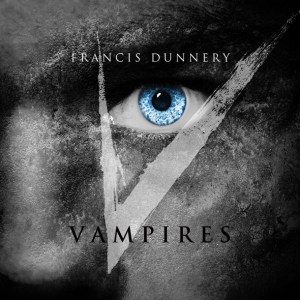
But Vampires is different. It goes the whole hog: he’s re-recorded not just one album but 100 minutes of It Bites classics, singing all the vocal parts himself (with much-improved body and range, though his vocals weren’t exactly shabby in the old days) and enlisting various musicians including ex-Go West drummer Tony Beard to navigate the musical twists and turns.

Two years in the making, the album is also a blast from the past in terms of its audio qualities – it was recorded without EQ or compression, only a small amount of the latter being added at mastering stage.


Francis discusses the new album and the It Bites days in this excellent interview for The Mouth magazine.

He reveals – for the first time, as far as I’m aware – the full story of how the band got signed to Virgin, Dunnery’s period squatting in South London, his relationship with John Beck, his favourite It Bites songs, the band’s split and loads more. It’s a must-listen for any fans.

You can also hear many excerpts from Vampires and make your own mind up about whether his new versions improve on the originals.