TACK>>HEAD: Friendly As A Hand Grenade 30 Years On

Tackhead have always been ahead of their time, but no one could have predicted quite how prescient their 1989 album Friendly As A Hand Grenade would prove.

When Trump became president in 2016, Gee Vaucher’s brilliant cover artwork went viral, though one wonders how many people knew the image’s origins.

In a way that’s a good metaphor for the band’s career. A supergroup of session players, and arguably the ultimate post-punk band in their effortless fusion of hip-hop, P-funk, agit-prop, dub, house, gospel, blues and industrial, Tackhead have never quite hit the mainstream, even while their respective careers flourished with other artists.

And that’s probably exactly how they like it. Tackhead has always been a kind of musical petri dish for each member’s explorations, kind of a funk version of 1980s King Crimson.

Bassist Doug Wimbish, drummer Keith LeBlanc and guitarist Skip McDonald had of course hooked up during their legendary sessions for Sugarhill Records, and vocalist Bernard Fowler was one of the great singers on the ’80s New York scene.

Add London-based mixologist/dub innovator Adrian Sherwood and it was a whole new thang, mixing the latest sampling technology with classic funk-rhythm-section smarts.

And if their second album Friendly, released 30 years ago this weekend, hasn’t dated as well as hoped, that’s more down to its mastering limitations (not enough bottom end) and occasional dearth of quality original material.

But when it works it really works, a thrilling mix of heavy guitar, funk basslines, tasty grooves, soulful vocals and scary samples, usually with a political element.

‘Mind And Movement’ steals a march on Heaven 17’s ‘We Don’t Need This Fascist Groove Thang’, a funky missive against Margaret Thatcher’s late-’80s policing policies. ‘Stealing’ is a grinding, gospel-tinged rail against TV evangelists.

The two ska cameos are pure filler, but side two is much better, kicking off with the classic Tackhead theme tune ‘Airborne Ranger’, and gradually adding in elements of old-school hip-hop and early house.

Friendly was a hit, reaching #3 on the UK Indie album chart and reportedly selling over 100,000 worldwide. The majors smelt a hit; EMI subsidiary SBK came calling with a big advance and huge recording budget (LeBlanc puts it at around £250,000), resulting in the 1990 major-label debut Strange Things, which had some brilliant moments but has been been described by a few band members since as ‘crap’.

Arguably the better follow-up to Friendly was the 1994 Strange Parcels album Disconnection, credited as a ‘A Tackhead Re-Duction’.

Elsewhere, Wimbish went on to great things with Living Colour, McDonald formed the potent Little Axe and Fowler became a key member of the Rolling Stones touring entourage. And they all continued to work with fascinating On-U Sound outliers Mark Stewart and Gary Clail.

But the ‘real’ Tackhead sound has probably never adequately been captured on record  – the gigs were (and are) where it’s at (and highly recommended is their live anthology Power Inc. Volume Three).

There was a memorable March 1989 show at London’s Town & Country Club, and I went to many great gigs in the capital during the early 1990s and beyond. The band’s fans were (and are) an incredibly disparate bunch, from Whirl-Y-Gig crusties to B-boys and musos.

And they’re still with us. Don’t miss them if they come to your town – they’re still doing some of the best stuff out there.

Prince: Batman 30 Years Old Today

At the beginning of 1989, the tabloids were full of rumours that Prince was in dire financial straits.

While that seems unlikely, with hindsight it does seem a curious decision for him to take on a soundtrack gig for such a huge mainstream movie, stepping right into the belly of the Warner Bros. beast.

But then it’s also not much of a surprise that he smashed Batman out of the park. On many levels, it was the perfect project for the time – the movie’s themes appealed to his post-Lovesexy spiritual concerns and also tapped into his own feelings about fatherhood. He explored those themes poignantly on ‘The Future’ and ‘Vicki Waiting’.

Musically, in the main he retreated from Lovesexy‘s album’s dense, complex, band-inspired sounds and went back to a minimalist approach, pushing his guitar right to the fore and making liberal use of samplers and a Fairlight.

But even though ‘The Future’, ‘Electric Chair’, ‘Partyman’, ‘Batdance’ and ‘Lemon Crush’ are essentially one-chord jams, Prince knows exactly how to hold the attention with false endings, escalating riffs, hysterical guitar solos and quirky chord voicings. The net result is a somewhat forbidding but still undeniably funky album.

Also he doesn’t scrimp on the dancefloor classics – put on ‘Partyman’, ‘Trust’ or ‘Batdance’ (a UK #2 and US #1) and to this day you’ll get any party started. Elsewhere, ‘Scandalous’ is a brilliantly-sung, sometimes funny seduction ballad in the tradition of ‘Do Me Baby’ and ‘International Lover’, while ‘The Arms Of Orion’ is a pretty – if somewhat trite – ballad.

The album was a smash hit, selling over a million copies in its first week of release and becoming his first US #1 album since Around The World In A Day. Prince was almost returning to his Purple Rain popularity, no doubt helped by the huge success of the movie.

But this kind of mainstream success was short-lived. Something was eating him up inside – in typical form, he regrouped immediately and took on a deeply personal project, the doomed Graffiti Bridge movie/album. Probably his least-remembered album of the ’80s – and arguably his last classic – Batman is ripe for rediscovery as we reach more end-of-the-decade, spiritual/political uncertainty.

Chick Corea Elektric Band: Light Years (1987)

Jazz/fusion of the late-’80s variety is sure to give any John Peel acolyte nightmares: visions of guys in tracksuit bottoms, trainers and vests, looking like extras from ‘Thirtysomething’, playing absurdly gymnastic jazz/rock based on corny ‘funk’ or Latin vamps, grinning at each other and the audience, using the cheesiest modern gizmos (Simmons electric drums, EWI wind instruments, guitar synths).

The Chick Corea Elektric Band (Corea: keyboards, Frank Gambale: guitar, John Patitucci: bass, Dave Weckl: drums) probably best epitomised this style. But guess what – revisiting their 1987 album Light Years recently, it emerges as one of the best and least ridiculous projects of Chick’s career.

He reins in the chops and gothic longeurs to produce a collection of really good themes and tight, attractive arrangements (though the three ‘extra’ tracks on the CD/streaming versions are disaster areas). The album is also musical catnip for me, bringing back memories of when I was first getting into jazz and fusion.

The thing is that Chick seems to actually relish including some pentatonic/blues-based harmony on Light Years. Some of his playing wouldn’t seem out of place in the music of Will Downing or Lonnie Liston Smith. There are even a few II-V-I chord changes. ‘Starlight’ and the title track are as catchy and immediate as David Sanborn’s ‘Run For Cover’ or ‘Hideaway’, though Marienthal’s alto tone is a bit too close to Dave’s for comfort. Weckl delivers lesson after lesson in Latin-flavoured funk and rock drumming. Gambale and Patitucci barely break sweat, or rather don’t get any room to show off, but still make a few telling contributions.

‘Time Track’ and ‘View From The Outside’ demonstrate everything that’s good about Light Years – catchy melodies, cool grooves and meticulous, gradually-escalating arrangements. The ridiculously technical last four bars of the former demonstrate some of the killer musical chops that are kept pretty much in the locker throughout the album, only to be brought out when strictly necessary.

I saw them live a couple of times around this time and of course the musicianship was incredible, even if the relentlessly ‘up’ stage presentation now looks pretty embarrassing.

Light Years is obviously good. It’s brutally, clinically good. It’s almost critic-proof. The Elektric Band were the Level 42 of high-octane fusion and this album is their World Machine. Of course it’ll always sound a bit like muzak to some, but that’s quite cool too. The CD’s inlay card features a really weird poem by Chick, kind of an ode to Scientology. It’s worth reading. And actually the album cover is pretty strange too…

Nik Kershaw: The Works 30 Years On

It was goodbye to Basildon and Braintree, hello to Bel Air and Beverly Hills.

Kershaw had always threatened the big-budget, US-recorded album, and in 1989 he delivered it. And, to no-one’s great surprise, it was an excellent collection, one of the best ‘Brit-Goes-Stateside’ pop records of the decade.

Recorded over four months in LA, The Works – released 30 years ago this week – saw Kershaw put together some of his best material to date with two top-notch drummers (Vinnie Colaiuta and Jeff Porcaro) in tow, the great Jerry Hey on horn arrangements, Paulinho Da Costa on percussion, ex-Zappa keyboardist Peter Wolf producing and backing vocals from Michael McDonald and Siedah Garrett.

And yet it was also the straw that broke the camel’s back, underselling drastically, cutting ties with MCA Records and leading Kershaw into decades of back-room writing and producing. But maybe he was happier that way (and he did write the enormo-hit ‘The One And Only’ for Chesney Hawkes a few years later).

But from August to December 1987, Kershaw was hob-nobbing with Rod Temperton, Quincy Jones and Toto, flirting with the kinds of scenes that he had mocked on ‘Radio Musicola’ and ‘City Of Angels’. Reportedly he didn’t get on very well with Wolf, virtually re-recording the entire album back in London alongside Australian producer Julian Mendelsohn (Level 42’s World Machine).

But hey, the hard work paid off. There’s nothing else in the ’80s pop canon quite like the techno/pop/fusion flash of ‘Don’t Ask Me’, ‘Wounded Knee’ and ‘Cowboys and Indians’, and Colaiuta’s extraordinary drum performances had players rushing to their practice rooms. In particular, the former track has that fill… If only Vinnie had played on a few of the other machine-driven tracks. And Kershaw coaxes Porcaro to play a classic half-time shuffle on the superb ‘Walkabout’.

It’s still hard to believe that ‘One Step Ahead’ and ‘Elisabeth’s Eyes’ (very influenced by Scritti) completely flopped as singles (though I would have gone with ‘Lady On The Phone’). They still sound great today, with brilliant choruses and nice grooves. ‘Burning At Both Ends’ may be the standout of the album, with its Middle-Eastern-flavoured hook and superb Siedah Garrett backup vox. Slightly less impressive are ‘Take My Place’ and ‘One World’; both could be Climie Fisher or Robbie Nevil.

The album disappeared without trace both in the UK and US. As far as solo pop success was concerned, the game was up. But it’s a shame that the kind of intelligent, superbly-played pop heard on The Works was unsustainable by the end of the ‘80s. As Nik so succinctly puts it on his website:

“Los Angeles for four months with producer Peter Wolf. Get to record with some legends: Jerry Hey, Larry Williams, Paulinho Da Costa, Jeff Porcaro, Vinnie Colaiuta. House in Nichols Canyon; Rented Mustang; Earthquake. Constantly bumping heads with Peter. End up finishing album myself in London. More record company upheaval; another MD; another A&R person. Not looking good. European tour with Elton John. Goodbye MCA. Time for a break...”

China Crisis: Diary Of A Hollow Horse 30 Years Old Today

‘File under: Victims Of A Cruel Medical Experiment’.

That was Q magazine’s memorable verdict on What Price Paradise, CC’s 1986 studio album. They had a point – it was producer team Langer & Winstanley’s unfathomable attempt to turn the Liverpudlians into Madness.

But when Steely Dan co-founder/co-songwriter Walter Becker came back onboard for ’89’s Diary Of A Hollow Horse, released 30 years ago today, normal service was resumed. It now sounds like a perfect follow-up to the 1985 classic Flaunt The Imperfection.

Becker was reluctant to record in England so persuaded the band to convene at George Benson’s Lahaina studio in Maui, Hawaii. He brought engineer Roger Nichols along for the sessions too, famous for his painstaking work on Steely Dan’s Aja and Gaucho. Nichols apparently taught all of the band how to scuba dive during their time off.

It’s hard to know what sort of expectations Virgin Records had for this album. What they ended up with is a kind of chamber pop, mainly the sound of a great, super-tight band playing live in the studio. The best tracks frequently evoke Steely Dan’s Katy Lied. The only concessions to ’80s music are the teeniest bit of reverb on the drums and the occasional synth overdub, adding colour in lieu of a horn section.

Becker’s real contribution seems to be on the arrangement side (typified by the tasty modulation for the guitar solo and flute arrangements on the vaguely ‘Deacon Blue’-esque ‘Sweet Charity In Adoration’), and he also brings in great backing singers Maxine Waters, Myrna Matthews and Linda Harmon, saxist Jim Horn, guitarist (and Countdown To Ecstasy engineer) Tim Weston and percussionist Paulinho Da Costa, who presumably used up most of the recording budget but is almost inaudible.

Virgin obviously computed the ‘hits’ as ‘Red Letter Day’ and ‘St Saviour Square’, summarily canning Becker’s versions of the songs and bringing in Mike Thorne to ‘re-produce’ them – the ploy didn’t work – the singles stiffed at #84 and #81 respectively, and they stick out like a sore thumb on the album. You can listen to all of the versions on YouTube.

Hollow Horse also didn’t work commercially, only reaching #58 in the UK album charts. But this was a period when some great pop/rock by the likes of Danny Wilson, It Bites, Love & Money and David Sylvian (all Virgin acts except for one…) also failed to find a big audience.

CC’s album sales diminished as the quality of their work increased – the game was up in terms of major-label support, but amongst fans of quality ’80s pop Hollow Horse has only gained status over the years.

The lads reproduced the album perfectly at London’s Dominion Theatre in spring 1989, a gig whose details elude me apart from the late Kevin Wilkinson’s superb drumming (and ahead-of-its-time, side-on kit placement) and vocalist Gary Daly proudly saying ‘That’s a good one, tha’!’ after ‘Day After Day’.

He had good reason to feel chuffed – Diary Of A Hollow Horse still sounds like a minor classic 30 years on.

Madonna: Like A Prayer 30 Years On

Here it is: Madonna’s artistic breakthrough, the first album of hers that was really geared to the CD-buying audience, and a fresh start after the distinctly dodgy years of 1987 and 1988.

Like A Prayer (weird title: didn’t someone in the Warner Bros. marketing department say, ‘Hey, it’s a bit similar to Like A Virgin‘?) was released 30 years ago this week.

It topped the US and UK charts, spawned six hit singles and has sold around 15 million copies to date.

It was a revelation on a few levels – Madonna’s singing voice had more range and richness. Her lyrics were getting personal. There were two songs about her marriage to Sean Penn, and three zoning in on family relationships.

She co-wrote and co-produced all the songs; by all accounts she knew exactly what she wanted and was present at all the tracking sessions, finding ever new ways of inspiring the performances she was after (see below).

She hooked up with co-producer/co-songwriter Pat Leonard to great effect. It was a classic double act – she provided melodies, street smarts and lyrics, he provided the classically-trained piano and arrangement skills. The result was her Sgt Pepper’s, a varied, ambitious, major work.

But how does Like A Prayer stack up these days? Here’s a track-by-track rundown of arguably Madonna’s greatest album.

‘Like A Prayer’: The lead-off single, a US and UK #1, once described by Rolling Stone magazine as ‘as close to art as pop music gets’. It was also highly controversial in its allusions to oral sex and an apparent conflation between religious/sexual ecstasy, not to mention the envelope-pushing video.

‘Express Yourself’: Great feminist party pop/funk tune co-written with Stephen Bray, inspired by Sly And The Family Stone and anchored by JR Robinson’s crisp grooving. Shep Pettibone’s single remix subsequently usurped the album version. David Fincher’s video cost a reported $5 million.

‘Love Song’: This duet with Prince was a curious meeting of pop giants, musically in the Lovesexy/Batman mould but lacking a great hook, though apparently they did initially write it eye to eye, Prince programming drums and Madonna donning a synth. Tapes were then worked on individually and sent back and forth between LA and Minneapolis. Whilst interesting, it’s nearer to a Prince B-side than something really memorable.

‘Til Death Do Us Part’: A coruscating portrait of her marriage breakup to Sean Penn, made even more poignant by its sprightly Scritti-style pop. Bassist Guy Pratt was the recipient of Madonna’s unique production style on this track. ‘What did you think of that?’ she asked him after one take. ‘Um… I think it was OK…’ was his response. ‘Did it make your d*ck hard?’ Madonna shot back!

‘Promise To Try’: A powerful ballad, featuring an uncharacteristically emotional vocal. According to Madonna, it was written completely spontaneously: ‘He (Leonard) just sat down and started playing, and I started singing.’

‘Cherish’: More Scritti-inspired pop fun, all major chords and twinkling synths, looking at happier times with Sean. Jeff Porcaro’s trademark shuffle is his one and only drumming appearance on the album.

‘Dear Jessie’: An inspired take on late-’60s psychedelia, almost like a children’s lullaby. A very cool, unexpected track.

‘Oh Father’: A gorgeous ballad in 6/4 with music by Leonard and lyrics by Madonna, written in a tiny rehearsal studio in the garment district of New York when Madonna was in ‘a very, very dark place’ during her tenure in the David Mamet play ‘Speed-the-Plow’. Madonna: ‘”Oh Father” is not just me dealing with my father. It’s me dealing with all the authority figures in my life’. The song’s intro alone can put a big lump in this writer’s throat. Madonna apparently coaxed the band through the song, telling bassist Pratt and drummer Jonathan Moffett in no uncertain terms where not to play. Apart from string section and guitar overdubs, they got it on the second full take, including Madonna’s live vocal. During the sessions, Moffett also asked her when he should come in. ‘You come in when I do this’, she replied, lifting up her blouse!

‘Keep It Together’: Another Stephen Bray co-write, this Go-Go-inspired ode to family togetherness, featuring some brilliant Randy Jackson bass, became a mainstay of her ‘Blond Ambition’ tour. If you play it loud you can also really hear the superb backing vocals of her regular live duo Niki Haris and Donna DeLory.

‘Pray For Spanish Eyes’: The point where Like A Prayer starts to run out of steam. A corny, soft-rock version compendium of Spanish clichés, complete with castanets and weary acoustic guitar, and a weirdly unmemorable melody.

‘Act Of Contrition’: And here’s the other stinker. Madonna free-associates awkwardly over a reversed version of the title track, with Prince’s backwards guitar track also ladled on to no great consequence.

Further reading: ‘Songwriters On Songwriting’ by Paul Zollo

‘My Bass And Other Animals’ by Guy Pratt

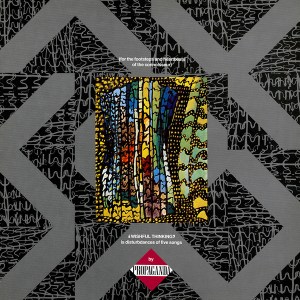
Propaganda: Wishful Thinking

ZTT Records – under the auspices of Trevor Horn – really used the remix format.

No throwaway, rush-released projects for them. Their remixes were petri dishes for sonic experiments and situationist pranks, many worthwhile and innovative.

And of course several remix albums were released on ZTT – Grace Jones’ Slave To The Rhythm was essentially one song done eight different ways, and there was also a whole Frankie Goes To Hollywood LP dedicated to ‘Two Tribes’ remixes.

But maybe a lesser-known example is Propaganda’s Wishful Thinking, a reworking of the Düsseldorf unit’s seminal 1985 album A Secret Wish, originally produced by Stephen Lipson (with one track – ‘Dr Mabuse’ –  helmed by Horn).

A Secret Wish’s stock seems to keep rising year after year, gaining more fans and sounding better than ever. But Wishful Thinking is a weird project, to say the least.

Co-remixer (alongside former tape op Bob Kraushaar) Paul Morley’s absurd liner notes quote Goethe and boast that the album is the result of ’39 studio hours’, which, by ZTT’s painstaking standards, doesn’t actually sound like much.

But it’s a sometimes thrilling collection just the same, regurgitating many of the original album’s sonic motifs but in a different order and a different place on the stereo spectrum.

‘Machined’ reimagines ‘P-Machinery’ as a mid-tempo minimalist piece, featuring mainly Claudia Brucken’s vocals and gentle drums.

‘Jewelled’ fuses the two versions of ‘Duel’ from the original album, mixing her ‘angry’ vocals with the backing from the ‘pop’ version. It’s pretty funny and genuinely surreal.

‘Loved’ exposes and amplifies Andy Richards’ gorgeous piano and synth from ‘The Murder Of Love’, finally revealing it as the fantastic pop song it is.

The two versions of ‘Dr Mabuse’ bring out Horn’s genius and natural flair for the dynamic, showcasing not one but two brilliant bass vamps and a whole host of other sonic delights (thrillingly, one version is used in the absurd opening credits of John Hughes’s 1987 movie ‘Some Kind Of Wonderful’).

But possibly the best track on Wishful Thinking is the closing ‘Thought’, an excerpt of the band’s version of Throbbing Gristle’s ‘Discipline’.

For anyone still fascinated by A Secret Wish, it’s required listening. The band probably hated it, though Brucken did donate one of her paintings for use on the cover (but then she was married to Morley at the time…).

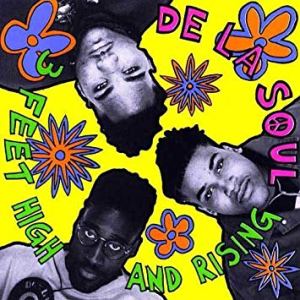
De La Soul: 3 Feet High And Rising 30 Years Old Today

The citizens of Punxsutawney have the groundhog to tell them whether there’ll be an early spring (much to Phil Connors’ disgust).

But my yardstick is generally: is it time to listen to 3 Feet High And Rising yet? Perhaps prompted by the recent freakishly-warm weather in London, the answer is a resounding yes.

Because De La Soul’s debut album, released 30 years ago today, can refresh the most jaded of pop palettes and may be the ultimate summer record.

At my school, it was all the rage and a relief from the incessant INXS, Simple Minds and U2. Probably because De La Soul were from the suburbs of Long Island rather than the inner city, they brought a playful spirit and much-needed humour to hip-hop.

It also reminded older music fans (or – let’s be honest – music critics) of that other ‘summer of love’ anthem, Sgt Pepper, even if the band denied any knowledge of that album.

To my ears, it was the first time sampling was used to bring about a truly surreal vision of music. This was a carefree world where it was perfectly normal for a ‘how to speak French’ lesson to accompany The Turtles’ ‘You Showed Me’, or for Sly Stone’s ‘Poet’ to back up some nursery-rhyme rapping.

Liberace, The Headhunters, Fats Domino; they were all fair game (though controversial – see below). If it sounded good, it was good.

There’s a silly-but-funny fake quiz show schtick running through the album and it’s not often you hear a whispered rap. Almost every track is under three minutes.

There are rhymes about school, haircuts and soap, and if you don’t like one song, there’ll be another one along very shortly.

3 Feet High And Rising was the gateway to some brilliant retro music too, especially for my generation who were too young or not even born the first time around.

A theory: it single-handedly led to a resurgence of interest in Hall & Oates, Steely Dan, early Michael Jackson and Funkadelic.

At the time of writing, the album is unavailable on streaming platforms, pending a stand-off between the band and Tommy Boy Records. Is it karmic payback for the boys being so trigger-happy with the samples? Who knows.

But it doesn’t stop 3 Feet High And Rising being a classic of the ’80s or any other decade.

Frank Gambale Live! 30 Years On

I’ll never forget it. Circa 1990, I was on holiday with my parents in Kent, near the Cliffs of Dover.

A summer storm was chucking it down. Holed up inside, I flicked through some French music stations on my longwave radio.

Suddenly I heard this absolutely ridiculous guitar playing – deafeningly loud, hysterical, but totally precise, with great phrasing and notes that spluttered out in absurdly wide intervals.

The tone was heavily distorted but the feel was closer to jazz/rock than metal. And the rhythm section didn’t sound too shabby either.

By this time, I had heard Allan Holdsworth, Paul Gilbert, Yngwie Malmsteen, John McLaughlin, some pretty outrageous guitarists, but this was different. Who the hell was it? I strained my ears and just about heard the French DJ utter the words ‘Frank Gambale’.

Yes, it was the Italian-Australian wunderkind, the man who introduced so-called ‘sweep picking’ to a wider audience than before. And the album was revealed to be Live!, released 30 years ago this week and recorded at LA’s jazz/rock haven The Baked Potato on 21st August 1988.

What was really weird was that I had heard Gambale with the Chick Corea Elektric band before this, and even seen them live a few times, but he seemed pretty anonymous in that band.

Not here. To this day, ‘Credit Reference Blues’, ‘Fe Fi Fo Funk’, ‘Touch Of Brasil’ and ‘The Natives Are Restless’ sound like guitar landmarks.

But he was way more than a chops phenomenon – he’s an excellent composer too, clearly influenced by Chick Corea and Larry Carlton but with some moves all of his own.

The album also introduced me to the fantastic Joey Heredia on drums, a completely original player who can do fiery jazz/rock, spicy Latin and Police-style rock, sometimes all in the space of one tune. And the excellent keyboard player Kei Akagi was moonlighting with Miles Davis while playing some sh*t-hot stuff on this album.

Frank Gambale Live! was a key artefact in the golden age of shred guitar, and it gained him some crossover success with metal fans and lots of coverage in guitar magazines.

Sadly his solo career refused to fire after this release, with only moments of 1990’s Thunder From Down Under subsequently holding much interest for me, but this was a sporadically brilliant live jazz/rock album – and one of the best. (It has to be said, there’s not much competition – Larry Carlton’s Last Nite, Weather Report’s 8:30, Jeff Beck With The Jan Hammer Group Live!, Mahavishnu’s Between Nothingness And Eternity, and…er…)

Narada Michael Walden: Looking At You, Looking At Me/The Nature Of Things/Divine Emotion

Singing drummers: the ’80s were chock-a-block with ’em.

But Narada seems a somewhat forgotten example, at least compared to the far more popular Phil C, Don H, Stevie W and Sheila E.

Yet he started the decade as the one you’d probably have put your money on, ending the ’70s as he did with an impressive run of R’n’B hits.

Narada had of course started his music career as a jazz/rock drumming tornado in the second incarnation of John McLaughlin’s mighty Mahavishnu Orchestra, going on to record famous fusion sides with Jeff Beck, Weather Report, Tommy Bolin, Alphonso Johnson and Jaco Pastorius.

During the ’80s, he was one of the most in-demand producers on the planet, helming Whitney Houston’s ‘I Wanna Dance With Somebody’, Aretha Franklin/George Michael’s ‘I Knew You Were Waiting For Me’ and Starship’s ‘Nothing’s Gonna Stop Us Now’. But his solo career was somewhat in limbo during this period, so it’s fascinating to check out a new, nicely-appointed three-album survey of his 1983-1988 output.

Looking At You, Looking At Me (1983) is the best of the three albums, but a frustratingly inconsistent record. Listening to the superb title track, you’d think he might have found hit his true metier, a languid, luxurious, West Coast pop/jazz, similar to the kind of music Al Jarreau or Manhattan Transfer were making at the time.

But an OK duet with Angela Bofill, passable cover of ‘Reach Out (I’ll Be There)’ and sick drum-machine/horn workout ‘Shake It Off’ aside, the rest of the album is fairly unmemorable R’n’B with occasional virtuosity from guitarist Corrado Rustici and bassist Randy Jackson.

The followup, 1985’s Nature Of Things, is even more problematic, sounding mainly like a kind of soft R’n’B version of the ‘Top Gun’ soundtrack, with way too many synth-based ballads. But Divine Emotion (1988) was a partial return to form, led by the effervescent title track (with one of the great ’80s basslines) which gave him a timely UK hit. Narada had obviously been prompted into action by his highly successful production work – his vocals and arrangements have never been better.

But while Divine Emotion sounds like a million dollars, there are still issues on the songwriting front. Put simply, only the title track, ‘But What Up Doh’ and closer ‘We Still Have A Dream’ have memorable hooks (the latter also features some brilliant jazz/rock kit work from Narada).

One wonders what might have happened if he had hooked up with some great ‘pop’ songwriters like Kenny Loggins, Rod Temperton, Michael McDonald, Carole Bayer Sager or even Burt Bacharach at the outset of the decade rather than relentlessly ploughing his own furrow; ‘Looking At Me, Looking At You’ offers tantalising possibilities.

But looking at his career as a whole, it’s all turned out fine – Narada’s always been one of the coolest, most talented musician/producers around, and apparently he’s a joy to work with.