Book Review: Into The Groove by Justin Lewis

If you’re looking for a good stocking-filler for the 1980s music fan in your life, you could do a lot worse than Justin Lewis’s ‘Into The Groove’.

He’s an experienced rock writer who’s come up with a deceptively simple book idea – take each day (or at least most of them) of the 1980s and document a key music event, reporting them in chronological order.

And it’s mostly fascinating stuff; he’s unearthed some really tasty morsels of 1980s music trivia. Who knew that ‘Stars On 45’ (the Dutch novelty act specialising in disco medleys) led to ‘answer’ tracks from Orange Juice, Squeeze and The Portsmouth Sinfonia? Or that Annie Lennox had to show MTV her birth certificate to prove she was not a ‘decadent transvestite’ before they permitted Eurythmics’ ‘Sweet Dreams’ video to be shown on the channel?

Or that Wham!’s biggest early influence was Level 42? (Apparently they loved Level’s combination of funk and ‘unfunky’ lyrics – presumably it was tracks like ‘Almost There’ and ‘Starchild’ that floated their boat…)

Who knew that the full-length version of George Michael’s ‘Faith’ begins with a church organ playing Wham!’s ‘Freedom’, that Adrian Edmondson was a prolific video director in the ‘80s, or that a UK top 5 from October 1986 was the first time that every song was performed by a female vocalist?

The book also serves as a good compendium of ‘making-of’ song stories. For example, we get the full background of Paul Hardcastle’s ‘19’, including all the copyright issues and the fact that Mike Oldfield, of all people, is now the recipient of a writing credit(!).

You’ll need YouTube at the ready too for fascinating curios, like Tom Waits’ disastrous appearance on live British TV in 1983 alongside Ian Hislop and Peter York. ‘Into The Groove’ also gets credit for expanding its purview beyond rock and pop – there’s interesting info about African, country and blues music too, but very little jazz.

There are some downsides – there’s no index or list of references, and Lewis tries hard to be impartial but his ‘rock snob’ credentials inevitably creep out, Costello, XTC and McCartney etc. getting the rare plaudits.

But no matter – this is a gripping read, amusing and informative, full of tasty trivia treats, a surprise on every page. Highly recommended.

‘Into The Groove’ is published by Elliott and Thompson.

Book Review: Whatever Happened To The C86 Kids? by Nige Tassell

In 1986, legendary mag NME issued a famous cassette compilation called C86.
Arguably it defined a musical generation, bringing together figureheads of the burgeoning British indie scene from Primal Scream to Bogshed, Stump to The Pastels.

The NME’s timing could hardly have been better – in 1986, ‘indie’ music was beginning to get a sound of its own, John Peel was entering his imperial phase as a Radio 1 presenter, the music press was right on board and independent labels were springing up all over the shop.

The cassette had a huge impact, but did it have an impact on the bands? And what are they up to these days? Nigel Tassell’s hugely enjoyable book tracks them all down and hears their stories. Some, like Half Man Half Biscuit, The Wedding Present, Primal Scream and Fuzzbox are still going strong, others, like The Soup Dragons and The Bodines burnt brightly for a few years. Other band members ended up as social workers, bike shop owners, solicitors, driving instructors.

The result is a friendly, mostly uplifting tome, a bit like one of those old VH1 ‘Bands Reunited’ shows in book form. A few themes emerge: the major labels sniffing around; Peel Sessions; the ‘name’ producer enlisted for that unsuccessful second album; Alan McGee/Creation Records. But this is not a tale of rampant egos and prima donnas – it’s all refreshingly low-key (with the possible exception of the chapter on Primal Scream) with a side order of provincial British history too.

Like or loathe the music on C86, this book also perfectly captures the never-to-be-repeated thrill of first getting together in the teenage bedroom and trying to write and rehearse songs. Inadvertently, it’s also a sad comment on the loss of music in pubs and clubs across this isle of noises.

Tassell’s brisk, chatty style may divide opinion, but it’s entirely appropriate for a mostly heartwarming companion piece to Giles Smith’s ‘Lost In Music’ and Nick Duerden’s ‘Exit Stage Left’, outlining the pros and cons of youthful musical obsession. Highly recommended.

Tassell discusses ‘Whatever Happened To The C86 Kids’ in this interview.

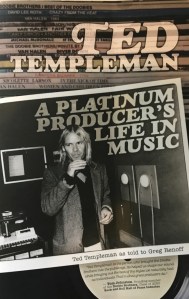
Book Review: A Platinum Producer’s Life In Music by Ted Templeman (as told to Greg Renoff)

You should never judge a person by their name.
movingtheriver assumed Ted Templeman – a favourite producer back in the day courtesy of his work with Van Halen, Little Feat, Doobie Brothers and more – was your typical seasoned/grizzled rock’n’roll journeyman.

But nothing could be further from the truth. Reading his enjoyable memoir (and looking at the cover), he turns out to be a mild-mannered jazz drumming prodigy turned pretty-boy frontman with late-‘60s baroque pop band Harpers Bizarre.

His story takes us from post-war Santa Cruz, California, to the upper echelons of the US music biz during boom time, when Templeman was a house producer for Warner Bros. (alongside Gary Katz, Michael Omartian, Jay Graydon and Lenny Waronker), becoming one of the wealthiest and best respected record execs of his era.

We learn about his youth studying the Cool School jazzers, then his pop band Harpers Bizarre gets signed by Warners and he’s mentored by Waronker, quickly learning what A&R actually means – choosing the right songs for the artist and assessing their commercial strengths and weaknesses. He also witnesses first-hand the weird action around the Doors, Beach Boys and Phil Spector.

But he quickly realises he’s not cut out for fronting a band, and moves on to being Warner Bros’s tape listener, hanging around Frank Sinatra sessions and getting the nod from Waronker to produce his pet project, the Doobie Brothers.

Then there are some fascinating sections on working with Van Morrison – he sees the frustrations of being a co-producer at first hand when they release the ‘wrong’ mix of ‘Tupelo Honey’. But he also sees Morrison’s more humorous side – during the recording of the live album It’s Too Late To Stop Now, Ted, sitting in the mobile studio outside The Rainbow, hears Van frequently saying, ‘Didja get that, Ted?’ into the mic between songs.

Templeman forges a long-term relationship with his engineer Donn Landee and starts working with Little Feat. He sparks a great friendship with their mainman Lowell George and is fascinated to find that he is a model airplane fan. But when pushed, Lowell claims he’s just learning about them so he he can fly in drugs from Mexico. He also learns a lot about drums working in Sunset Sound studio 1 with Richie Hayward.

Then there’s recording Carly Simon on Another Passenger, and her relationship with James Taylor, before Templeman first comes across Van Halen via a concert in Pasadena. They quickly become his second obsession, though he’s deeply unsure about Dave Lee Roth’s vocals and general attitude (the book is full of strikingly honest reflections, and he’s quick to admit when he’s wrong).

The main chunk of the book deals with recording Van Halen, from the classic debut to the painfully laboured 1984. He even confesses to initial scepticism about ‘Jump’, kvetching to Eddie: ‘I signed a heavy metal band’! But he somehow enlists Eddie to guest on rollerskating freak Nicolette Sheridan’s ‘Can’t Get Away From You’.

Templeman eventually becomes a great fan of Lee Roth, though advises him not to leave Van Halen and try to be a movie star (though still ends up producing Crazy From The Heat). He also worries about getting Sammy Hagar into VH, suggesting they change their name to Van Hagar, and refuses to produce 5150.

There’s an amusing meeting with Prince at Sunset Sound and the Purple One’s reaction to Templeman’s suggestion that Quincy Jones produce Purple Rain. And then there’s Allan Holdsworth, a Warner Bros. signing coming via Eddie Van Halen’s recommendation. Eddie and Templeman are contracted to co-produce Road Games, but Holdsworth refuses to allow them in the studio together while he’s recording! A baffled Eddie bows out, and then Holdsworth demands that a few tracks feature vocals against Templeman’s best advice (of course Allan has his own take on the Road Games debacle…).

The mild-mannered Michael McDonald is a regular character in the book, uncharacteristically going ballistic for not getting co-writing credit for Van Halen’s ‘I’ll Wait’. We learn about Aerosmith drummer Joey Kramer’s opinion of Templeman’s work on their comeback album Done With Mirrors, and Eric Clapton’s reaction to being told that his guitar tone sucks.

The last section of the book regards Templeman’s work on the ‘Wayne’s World’ soundtrack and then losing his job at Warners, leading to depression and alcoholism.

It’s one of those rare music books that takes you right into the process of trying to get quality, commercial performances from some of the biggest stars in the music business, and it’s full of good advice about producing/arranging and interesting musical/technical observations.

Sadly though, its message may fall on deaf ears these days when Pro Tools and bedroom recordings are all the rage, musicianship less so, but still it’s a fun, informative look at the peak of the studio scene. Highly recommended.

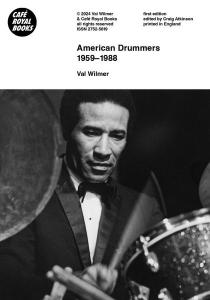
Book Review: American Drummers (1959-1988) by Val Wilmer

Val Wilmer has arguably been Britain’s leading jazz photographer (and writer of classic jazz book ‘As Serious As Your Life’) since she started taking pictures of musicians over 60 years ago.

And now Café Royal Books have issued a lovely budget paperback of Wilmer’s photos entitled ‘American Drummers 1959-1988’, which does exactly what it says on the tin (though note ‘jazz’ doesn’t appear – possibly because it’s a word with which some of the musicians therein have expressed difficulty).

To my knowledge, it’s the first book of its kind. And – befitting a truly original artist – Wilmer’s work generally defies expectations. For example it’s nothing like Francis Wolff’s meticulous, pristine, famous photos of players such as Art Blakey and Elvin Jones.

Instead her general focus is on the minutiae of the working drummer’s life – we see Andrew Cyrille and Marquis Foster unloading kits from their cars, Denis Charles practicing on the steps of a New York tenement, Zutty Singleton chatting with Count Basie outside a bar, Papa Jo Jones in a drum store, Ed Blackwell chilling with a newspaper, Blakey backstage.

But of course showmanship is one of the chief tools in the drummer’s armoury, and as such there are exciting shots of all-time great players in performance including Billy Higgins, Tony Williams, Milford Graves, Max Roach, Ronald Shannon Jackson and Kenny Clarke.

And the kicker: this wonderful book retails at around just £6.99 in the UK (as do the other Café Royal titles) – don’t miss it.

Tony Williams, Hammersmith Odeon, London, 1967


Book Review: Steely Dan (Every Album, Every Song) by Jez Rowden

The Steely Dan bibliography is relatively small – ‘Quantum Criminals’, Donald Fagen’s fine ‘Eminent Hipsters’ memoir, Don Breithaupt’s excellent study of Aja and ‘Steely Dan FAQ’ loom large, plus of course the rather good Expanding Dan site on Substack.

But Jez Rowden’s ‘Steely Dan: Every Album, Every Song’ is a worthy addition, and completely different to those titles. Rowden was (he died tragically and unexpectedly in March) best known for his writing on the Progressive Aspect website and as such his take on the Dan is more rooted in rock and pop than jazz or swing, a highly personal track-by-track analysis from a fan’s – rather than a muso’s – perspective.

And yet he nails their essence better than many scribes, as per this excerpt from the book’s Foreword: ‘The songs sparkled and fizzed, but with their penchant for jazz, R’n’B, soul and doo-wop, the pop songs they wrote were always going to be different: pop songs played by a rock band underpinned with jazz. The Groove was always where it was at for them.’

As befitting many other titles in Sonicbond’s ‘on track’ book series, Rowden eschews musician interviews in favour of quite emotional, personal writing, and his analysis of Steely’s notoriously obtuse lyrics is sometimes revelatory, illuminating the meaning of many songs (without recourse to the wackier theories on the fascinating Fever Dreams site) this writer has heard thousands of times. His moving portrait of the two protagonists in ‘Charlie Freak’ is a case in point.

But if completism is your thing, Rowden also goes to great lengths to cover all of Becker and Fagen’s output, from the earliest Brill Building demos to the solo work and various compilations, outtakes and live albums that have emerged. ‘Steely Dan: Every Album, Every Song’ is highly recommended and a fine testament for a good writer and a nice guy.

Book Review: Absolute Beginner by Kevin Armstrong

Most fans of 1980s pop and rock will have come across the name Kevin Armstrong, guitarist with Iggy Pop, Morrissey, Sinead O’Connor, John Lydon, Propaganda, Tin Machine, Prefab Sprout, Thomas Dolby and Paul McCartney, and famously part of David Bowie’s band at Live Aid.

His enjoyable new memoir ‘Absolute Beginner’ is that rare thing – a book by a British session player who has borne witness to massive egos, occasional artistic triumphs and typical music biz disappointments, all the while trying to get a reasonable guitar sound.

But the book is anything but a polite/completist career overview – Armstrong knows where the bodies are buried and doesn’t hold back on salacious details. He’s also blatantly honest about his own perceived musical shortcomings and mental health issues.

Finally the book comes over as something like a cross between Giles Smith’s ‘Lost In Music’ and Guy Pratt’s ‘My Bass And Other Animals’, with just as many laughs as both.

We learn about his misspent youth in the relatively salubrious environs of Orpington, Kent, nurturing his increasing interest in the guitar and music of David Bowie, Yes, Zappa and Roxy Music (and ponders whether Eno’s squealing synths caused him some hearing loss issues when watching Roxy supporting Alice Cooper). There are superb passages about the power of listening to a great album while studying the sleeve and indulging in ‘mild hallucinogens’.

The punk era sees Armstrong squatting in Brixton, hanging out with The Slits and recording with Local Heroes (on Charlie Gillett’s record label) and The Passions. There’s a whole chapter on collaborating with Thomas Dolby, lots on laying down Steve McQueen with Prefab (fronted by the ‘emotionally fragile’ and ‘shy’ Paddy McAloon) and some hilarious stories about playing in Jonathan Ross’s house band for ‘The Last Resort’.

But the real meat and drink of the book is the fabulous section on Live Aid, particularly illuminating the strange realities of the music industry when he returns alone to his tiny West London flat soon after performing for two billion people. There are also fascinating, funny stories about recording ‘Absolute Beginners’ and ‘Dancing In The Street’.

His dealings with Bowie during the Tin Machine era are also as intriguing as you might expect (as is his story about being ‘let go’ before the release of that band’s debut album, also nixing the rumour that Bowie gave up booze a long time before 1989…), as are those with the mercurial McCartney, the superstitious, over-sensitive Morrissey and bizarre O’Connor.

There are many revelations too around touring with Iggy Pop, as well as some refreshingly honest opinions on some of his bandmates (especially – and surprisingly – drummer Gavin Harrison…) and a fascinating detour into joining a choir led by Eno.

But Armstrong saves most of his bile for his late entrée into the world of TV advertising: ‘Blind optimism and over-confidence drew me inexorably into the seedy and frightening world of production music…a world so steeped in bullshit and doublethink that it beggars belief’!

‘Absolute Beginner’ is one of the most enjoyable music memoirs movingtheriver has read over the last few years. Just when you think you know where it’s going, it delivers yet another zinger. It’s an absolute must for any fans of Bowie, Iggy, Dolby or Prefab, while offering the casual 1980s and 1990s music fan loads of tasty morsels.

Book Review: Withnail & I (From Cult To Classic) by Toby Benjamin

The ‘Withnail’ cult shows no sign of waning. Writer/director of the 1987 movie Bruce Robinson spent some of lockdown discussing the film while co-star Richard E Grant posted regular line-readings on social media. And now there’s news of a long-awaited, Robinson-endorsed stage play.

So Toby Benjamin’s excellent ‘From Cult To Classic’ seems to have arrived at the perfect time. Authorised by Robinson and written with his full co-operation, it assembles a veritable cornucopia of ‘Withnail’ info.

The brilliantly blunt Robinson foreword almost had movingtheriver punching the air with excitement. Elsewhere letters from his personal collection show correspondence around the film’s financing and script editing. There are anotated script pages, detailed location administration and premiere tickets. We even see Robinson’s London to Cumbria train tickets for the shoot. Richard Curtis and Richard E also donate personal letters.

There are brilliant on-set photos, many by official snapper Murray Close, some donated by Robinson and the cast (including a great one of a clearly mullered Ringo Starr). All the main cast members give long, interesting interviews, as do many key bit-part players (The Irishman, the ‘Get in the back of the van!’ cop, Farmer Parkin) and the hairdresser, stills photographer, makeup artist, cinematographer, production manager, costume designer and soundtrack composers Rick Wentworth and David Dundas. We even hear from the owner of Crow Crag (Sleddale Hall).

There are a few minor quibbles – the book is dotted with ‘celebrity’ endorsements of the film but you’d be hard pressed to recognise any of them, outside of Matt Johnson, Charlie Higson and Diane Morgan, and no biographies are provided. Also the book’s ‘distressed’ interior design will probably divide opinion.

But if you’ve seen ‘Withnail’ more than once, you have to have this book. Absolutely unreservedly recommended to scrubbers and terrible c*nts everywhere.

Revealed! The Ultimate Christmas Present!

Give the only sensible Christmas present this year – the new book ‘John McLaughlin: From Miles and Mahavishnu to The 4th Dimension’, from the chap who brought you 2021’s ‘Level 42: Every Album, Every Song’.

Get informed, keep entertained, stay fashionable and slob out the modern way! Satisfaction guaranteed for you, your friends or family!

Get 30% off the list price by ordering directly on the Rowman & Littlefield website and entering discount code RLFANDF30 at the checkout (available as an eBook too).

Otherwise of course there are many other buying options – all the details here.

The reviews are in:

‘A must-have in every aspiring musician’s personal library.’ Billy Cobham

‘A wonderful insight into a true innovator and colossus of the guitar.’ Mark King (Level 42)

‘Scrupulously researched… A fluent career overview.’ **** MOJO, December 2023

‘The most comprehensive overview of McLaughlin’s career to make it into print thus far.’ **** Shindig!, January 2024

‘Enthralling… Details the many album releases in a highly readable style… Informative and thoroughly enjoyable, it’s easy to recommended this book.’ Jez Rowden, The Progressive Aspect

‘Phillips is the perfect guide through McLaughlin’s byzantine discography, his training enabling him to keep pace with the guitarist’s baffling mastery of time signatures, his passion earning to the trust of anyone still reeling from the early Mahavishnu Orchestra.’ *** Record Collector, December 2023

‘Comprehensive and thoroughly researched, Phillips’ book is a revelation. A must-read for guitar aficionados and McLaughlin devotees.’ Bill Milkowski, author of ‘Jaco’ and ‘Michael Brecker’

‘Riveting… Meticulous storytelling… The book is not just a narrative, it’s a visual feast.’ Jazz In Europe

‘A compelling study of the man, his music and his marvellous creative legacy.’ JazzViews

‘Paints the fullest picture yet of the guitarist’s life.’ Jazzed

‘Thorough and impassioned… The first book to fully illuminate the least-appreciated, least-documented periods in the extraordinary career of this wondrously free-spirited, prolific, perpetually questing artist.’ Booklist

Book Review: The Extraordinary Journey Of Jason Miles (A Musical Biography)

Surprisingly few musical memoirs take the reader right into the recording studios of the 1980s and 1990s, documenting what actually went down during the making of some classic albums.

In his enjoyable new book, Jason Miles – synth player/programmer for Miles Davis, Whitney Houston, Luther Vandross, Roberta Flack, David Sanborn, Diana Ross, George Benson, Will Downing, Marcus Miller, Chaka Khan, Scritti Politti and The Brecker Brothers – does just that, in the process outlining the joys and sorrows of the American music business in its money-drenched pomp.

‘The Extraordinary Journey Of Jason Miles’ traces the author’s young life as a teenage Brooklyn jazz fanatic to becoming a first-call studio sessionman for some of the biggest artists on the planet. The book is also notable for outlining the considerable pressures – and potential threats to one’s mental health – of coming up with the goods and harnessing the ever-evolving music technology when time is money.

There’s a memorably tense episode when things go very wrong on a Vandross session and an unsparingly honest view of putting together his Miles Davis-celebrating Kind Of New project with trumpeter Ingrid Jensen. Jason also outlines his struggles bringing award-winning tributes to the music of Grover Washington Jr., Ivan Lins, Weather Report and Marvin Gaye to life.

Printing problems bring about a few curious errors/typos but the book is an absolutely key text for Miles Davis fans, a fast-paced, brave, uncompromising read also featuring some superb photographs. There are also intriguing, fond portraits of musicians such as Bernie Worrell, Lenny White, Marcus Miller and Joe Sample.

Also it strikes movingtheriver that we don’t have much first-person documentation of great 1980s and 1990s Black music – ‘The Extraordinary Journey Of Jason Miles’ corrects that, and sheds more light on who actually played what on Tutu and Amandla, though sadly my favourite ‘80s Davis (and Miller) album Siesta barely gets a mention (Jason tells movingtheriver he will write about it in his second book, coming soon).

(Postscript – One of Jason’s gripes is the lack of credit he has received through his career – sure enough, my remastered CD copy of Davis’s Amandla only gives him a sole credit, on the classic track ‘Mr Pastorius’… But Jason assures movingtheriver that Warners has made corrections to more recent versions of the album).


Book Review: Season Of The Witch (The Book Of Goth) by Cathi Unsworth

Goth is back. Siouxsie Sioux is reforming The Banshees and appearing on the cover of MOJO. An old-school Tim Burton TV series is imminent.

The tabloid image of the 1980s is one of glamour, fun and money, but Goth was just as much of a phenomenon during the decade, the dark underbelly of late-20th century pop culture, music and fashion.

And now novelist and esteemed music journalist Cathi Unsworth has put together a fulsome tribute, following Goth from its roots in the novels of Charlotte Bronte and Bram Stoker to the bands and artists who created a hugely popular music genre in its own right.

A labour of love, ‘Season Of The Witch’ features vivid depictions of growing up in late-1970s arable Norfolk with Sid and Nancy, hunger strikes, Thatcher’s rise (Unsworth is convinced she’s the antichrist!), National Front/anti-Nazi marches and the Yorkshire Ripper on the telly, and local ghost stories providing the village gossip.

It’s hardly surprising that she, along with legions of other young people, looked to the dark side and specifically those harbingers of doom, Dennis Wheatley, Nico, Juliette Greco, Jim Morrison, Alesteir Crowley, The Stooges, Black Sabbath, Robert Smith, Siouxsie, Howard Devoto, Nick Cave and the three Ians of Goth: Curtis, McCulloch and Astbury.

What emerges is essentially a timeline of Goth, with particular emphasis on the key music acts and outliers. Unsworth posits some remarkable theories – for example, aligning Killing Joke’s debut album with disenfranchised London Black youth of the early 1980s – but somehow pulls them off, and there’s also a great section on Psychobilly’s birth in a sweaty Victorian pub in Hammersmith.

The musical analysis is sound (though arguably a book like Simon Reynolds’ ‘Rip It Up’ covered similar territory and with a lot more brevity/impact) and there are the occasional revelatory factoids about a recording session or songwriting inspiration.

But ‘Season Of The Witch’ is at its best when filtering the music through the prism of current affairs, whether the miners strike, Falklands War, Brighton Tory Conference bombing or Rupert Murdoch’s rise and rise. Prescient and enjoyable as it is, I wanted much more personal stuff – there was the opportunity for this to be the Goth version of Sylvia Patterson’s ‘I’m Not With The Band’.

The enjoyable, pithy ‘Season Of The Witch’ ends with key depictions of Goths in literature and movies – a glaring omission from the latter is Katrin Cartlidge’s remarkable performance as Sophie in Mike Leigh’s 1993 film ‘Naked’, surely the ultimate Goth of British cinema.

Unsworth talks about the book in this recent WORD podcast.